



1960
Jack Pierce
Horror Special Effects · Biography · Horror Filmography · Collaborators · Credits
Horror subgenres & themes
Most represented across this person's horror filmography:
MONSTER
• VAMPIRE
• MEDICAL
• WEREWOLVES
Biography
Jack Pierce and the makeup of Universal horror
Jack Pierce was the principal makeup artist behind many of the visual identities created during Universal Pictures’ classic horror period. His work on Frankenstein, The Mummy and The Wolf Man produced screen designs that became standard popular representations of characters whose literary or folkloric origins did not prescribe one fixed appearance. He also worked on Dracula, The Old Dark House, Bride of Frankenstein, Son of Frankenstein and numerous lower-budget horror productions made by Universal during the 1930s and 1940s.
Pierce belonged to a period before modern foam-latex prosthetics and premanufactured appliances became standard practice. His major transformations were often built directly onto an actor each day using cotton, collodion, spirit gum, greasepaint, hair and other materials. This approach required long preparation times and close daily contact between makeup artist and performer. It also allowed Pierce to adjust shapes directly to individual faces and to modify designs according to injury, age or narrative continuity from one film to another.
From Greece to the American film industry
Pierce was born in Greece on May 5, 1889 and emigrated to the United States while young. Sources differ in the transliteration of his birth name, which appears in several forms, including Yiannis Pikoulas and Janus Piccoulas. Like many workers entering the developing American film industry during the silent era, he moved through several jobs before establishing one technical specialization.
He worked in areas including acting, stunt work, camera assistance and theatre or cinema management before concentrating increasingly on makeup. This varied production experience gave Pierce an understanding of how makeup interacted with lighting, photography and the practical schedule of a film set. By the late 1920s he had become established at Universal and eventually headed the studio’s makeup department.
Universal before Frankenstein
Pierce joined Universal during a period when the studio already possessed an important history of grotesque character makeup through Lon Chaney’s silent films. Chaney had largely designed and applied his own transformations, meaning that the tradition was associated with an actor rather than with a centralized makeup department. Pierce represented a different industrial model in which a specialist could design appearances for several performers across multiple productions.
His work during the late silent and early sound periods included character transformations that attracted attention before the major horror cycle began. By the time Universal committed heavily to horror after the success of Dracula, Pierce was positioned to provide visual continuity across a rapidly expanding group of Gothic and supernatural productions.
Dracula and restrained character makeup
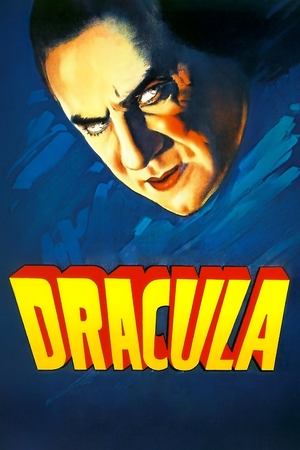
Pierce worked on Tod Browning’s Dracula in 1931, but Bela Lugosi’s appearance required an approach very different from the elaborate construction soon used on Boris Karloff. Dracula needed to remain socially convincing within drawing rooms and other human environments. The makeup therefore emphasized Lugosi’s existing face, carefully controlled hair and a formal screen appearance rather than transforming him into a visibly inhuman creature.
The assignment demonstrates that Pierce’s Universal work cannot be reduced to heavy prosthetics. Character makeup had to respond to acting style, cinematography and narrative function. Lugosi’s vocal and theatrical performance carried most of Dracula’s supernatural authority, leaving the makeup department to support rather than dominate the characterization.
Frankenstein and the construction of an enduring screen design
James Whale’s Frankenstein in 1931 gave Pierce the project that established his historical reputation. Mary Shelley’s novel supplies no detailed description corresponding to the flat-topped head, heavy brow, scars and neck electrodes that became familiar through Universal’s film. The screen Monster therefore required an original visual solution suitable for Boris Karloff’s face and Whale’s production design.
Pierce later described researching anatomy, surgery and burial practices while developing the design. The National Library of Medicine has documented his claims concerning study of medical and scientific subjects during preparation. The final appearance combined an enlarged cranium, altered brow, scar tissue and electrical contacts at the neck, giving the creature the appearance of a body reconstructed through surgery and laboratory intervention rather than a naturally occurring monster.
Boris Karloff and the collaborative construction of the Monster
The Frankenstein makeup developed through collaboration with Karloff as well as Pierce’s design work. Karloff removed a dental bridge to deepen one cheek and contributed observations about how his eyes appeared beneath the developing makeup. The actor’s thin face gave Pierce a structure that could support the heavy brow and cranial additions while retaining enough mobility for expression.
Daily application took several hours. Cotton and collodion were used to build forms directly on Karloff’s head and face, with greasepaint selected according to its appearance in black-and-white photography. Costume and footwear also contributed to the complete figure. The resulting Monster depended on makeup, Karloff’s physical performance, Whale’s direction, Charles D. Hall’s environments and Arthur Edeson’s cinematography, making the famous image the product of coordinated departments rather than one isolated effect.
Makeup designed for black-and-white photography
Pierce’s color choices were made for monochrome film rather than for natural appearance on set. Greenish or blue-green greasepaint could photograph as an appropriate dead or pallid gray when exposed under the lighting and film stocks of the period. Other performers might wear warmer makeup so their faces separated differently in the final image.
This relationship with cinematography is essential to understanding early screen makeup. The artist was designing for the photographic result rather than for someone standing beside the actor. Pierce’s best-known work therefore belongs to a technical system involving film stock, filters, lighting and laboratory processing as much as to sculpture or painting.
The physical demands of Frankenstein
Karloff endured extensive preparation and a heavy costume throughout production. Pierce’s makeup had to be removed after each working day, adding more time after already demanding shooting schedules. The actor also wore substantial boots and body supports used to alter his posture and proportions. Karloff later discussed the physical strain of the production and suffered long-term back problems.
The difficulty of the process became characteristic of Pierce’s reputation. His methods could achieve detailed results but required performers to tolerate lengthy applications and removals. During the 1930s the studio accepted that cost because the monsters themselves were major commercial attractions. Later production economics would favor techniques that reduced preparation time.
The Mummy and the aging of Boris Karloff
Karl Freund’s The Mummy in 1932 gave Pierce another major transformation. In the opening sequence Karloff appears as the ancient Imhotep after being discovered in his sarcophagus. Pierce constructed the desiccated appearance using layers of makeup materials and extensive bandaging, creating a body that appeared dried through thousands of years of burial.
The full mummy makeup reportedly required an exceptionally long application, with cotton, collodion, clay-like materials and many feet of bandage used around the actor. Most of the film subsequently presents Karloff as Ardath Bey, requiring a subtler aged face rather than the completely wrapped body. Pierce therefore designed two related stages of the same character rather than one reusable monster mask.
The Old Dark House and character makeup
Pierce continued working with James Whale and Boris Karloff on The Old Dark House. Karloff plays Morgan, the mute servant of the Femm household, and the makeup alters his face without turning him into a supernatural creature. Scars and roughened features support the character’s history and physical presence inside the house.
The assignment again shows the range of Pierce’s work during the period. Universal required makeup for ordinary aging, injuries and character distinction alongside its celebrated monsters. Horror provided the most visible examples, but Pierce’s department served the broader needs of studio production.
Bride of Frankenstein and continuity of injury
Pierce returned to the Frankenstein Monster for Bride of Frankenstein in 1935. Because the first film ends with the Monster trapped inside a burning mill, the sequel’s makeup needed to show the consequences of fire while preserving the basic design audiences recognized. Pierce modified the hairline, scars and damaged areas as part of this continuity.
The makeup also changed during the story as injuries gradually healed. Such adjustments demonstrate the difference between a fixed mask and Pierce’s daily construction method. The basic geometry remained stable while small details could be altered according to the character’s condition at a particular point in the narrative.
The Bride and Elsa Lanchester
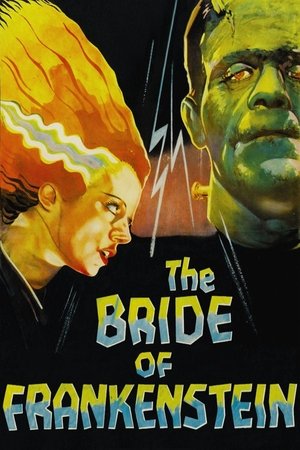
Elsa Lanchester played both Mary Shelley and the female creature in Bride of Frankenstein. The Bride’s design required a character clearly related to Frankenstein’s Monster while remaining visually independent. The high hair with white streaks became the most recognizable feature, accompanied by facial makeup that preserved much more of Lanchester’s natural appearance than Karloff’s transformation did.
James Whale had strong ideas about the complete screen image, and the final design emerged from collaboration among director, makeup, hair and costume departments. Lanchester later recalled Pierce as intensely committed to his work and described the demanding preparation required for the creature. The Bride’s extremely brief screen appearance nevertheless produced another image that remained central to Universal’s horror iconography.
Son of Frankenstein and maintaining an established monster
Son of Frankenstein in 1939 returned Karloff to the Monster for the final time in a feature film. Pierce preserved the basic appearance created in 1931 while adjusting it to the new production, lighting and condition of the character. By this point the design had become valuable studio property and could not be altered radically without risking audience recognition.
The situation illustrates how makeup design changes once a character becomes a franchise. Pierce had originally solved an open creative problem. Eight years later his job included protecting visual continuity within a product whose appearance was already embedded in publicity and popular culture.
Man Made Monster and Lon Chaney Jr.
George Waggner’s Man Made Monster in 1941 began an important period of collaboration between Pierce and Lon Chaney Jr. Chaney’s character undergoes electrical experiments that gradually alter his physical condition, requiring makeup to communicate transformation while leaving enough of the actor visible for a sympathetic performance.
The film preceded The Wolf Man and helped establish Chaney as Universal’s major new horror performer. Pierce would subsequently work on several of his most demanding monster assignments, giving the artist another actor whose face became closely associated with the studio’s makeup department.
The Wolf Man and applied hair techniques
Pierce’s design for The Wolf Man covered Chaney’s face with hair while retaining recognizably human structure beneath it. Hair was attached gradually and combined with dental and facial pieces. The transformation was sufficiently extensive to produce a clear monster image while allowing Chaney’s expressions to remain readable at close range.
The application and removal were uncomfortable, and Chaney complained publicly about the process. His comments are useful evidence of the practical cost of Pierce’s methods rather than proof of personal hostility between actor and makeup artist. Repeated Universal assignments continued bringing them together because the studio valued the resulting appearance.
Universal’s mummy sequels
Pierce also designed or supervised the makeup used on the Kharis series, which moved from Tom Tyler to Lon Chaney Jr. The later films were made for smaller budgets than the Karloff original and required a monster capable of recurring across economical productions. Chaney played Kharis in The Mummy’s Tomb, The Mummy’s Ghost and The Mummy’s Curse.
The makeup increasingly concealed the actor beneath wrappings and facial material. This practical design served the franchise by making the monster recognizable independently of the performer while also reducing the expressive possibilities available to Chaney. It represents another stage in Universal’s movement from individually developed prestige monsters toward repeatable series identities.
The Mad Ghoul and other Universal character work
Pierce’s 1940s horror work extended well beyond the principal monsters. The Mad Ghoul required David Bruce to appear increasingly corpse-like after scientific treatment. Pierce later recalled receiving a straightforward instruction that the character should resemble a fresh cadaver, leaving the precise design to the makeup department.
Assignments of this type demonstrate how his experience with decay, injury and artificial aging could be adapted to lower-budget productions. The effects attracted less publicity than Frankenstein or the Wolf Man, but they formed a significant portion of Pierce’s daily studio work during the horror cycle.
Working methods and reputation on set
Pierce became known for strict working habits and for applying many major makeups personally. Accounts from actors differ in tone. Some remembered the physical discomfort and his demanding manner, while others emphasized his dedication and craftsmanship. Boris Karloff maintained respect for Pierce and later publicly praised his work.
The contradictory recollections are consistent with the conditions of the job. Pierce often began work hours before principal photography and had to reproduce complex designs accurately every day. The process placed both artist and performer under considerable time pressure. His insistence on direct construction gave him control over results while making delegation and speed more difficult.
Built-up makeup and the arrival of foam appliances
Pierce’s major monsters were created largely through built-up techniques. Shapes were assembled directly on the actor rather than prepared entirely in advance as reusable facial appliances. The method could produce a close fit and allowed adjustment, but each application consumed considerable labor.
During the 1940s, foam rubber and preformed prosthetic pieces became increasingly attractive to studios because they could shorten daily preparation and allow departments to process performers more efficiently. This technological and industrial change placed Pierce’s preferred methods under pressure at exactly the time Universal itself was reorganizing production.
Departure from Universal in 1946
Pierce left Universal in 1946 after roughly two decades with the studio. Bud Westmore became head of the makeup department during the company’s postwar restructuring. Later accounts have sometimes presented the change entirely as a clash between artistry and inferior technology, but studio economics and production organization were also important. Faster application methods fit a system increasingly concerned with efficiency.
The difference became visible in later monster films. Abbott and Costello Meet Frankenstein used techniques associated with Westmore’s department rather than requiring the full daily procedures Pierce had developed for the original Frankenstein and Wolf Man makeups. The characters remained visually based on Pierce’s designs even after the production method had changed.
Freelance work after Universal
After leaving Universal, Pierce worked as a freelancer on films and television rather than controlling a major studio department. His assignments included character and aging makeup on productions with much smaller resources than the films that had established his reputation. He continued working into the 1960s.
One later assignment was Beyond the Time Barrier, where director Edgar G. Ulmer brought Pierce into a low-budget science-fiction production. Actress Darlene Tompkins later remembered the seriousness and enthusiasm with which Pierce approached makeup even under modest conditions. Such work shows that his professional career continued long after Universal, although without comparable institutional support.
Credit, authorship and collaborative monster design
Assigning authorship of Universal’s monsters requires some precision. Pierce was the principal makeup designer, but actors and directors contributed ideas and the finished images depended on costume, lighting and cinematography. Karloff’s decision to remove a dental bridge affected the Monster’s face. Whale controlled the overall visual conception of his films. Other departments determined posture, clothing and photographic appearance.
Recognizing this collaboration does not reduce Pierce’s contribution. He was responsible for translating ideas into a reproducible physical design that could survive hours of filming and return throughout sequels. The National Library of Medicine specifically identifies the enduring visual impact of Frankenstein’s Monster with Pierce’s transformation of Karloff, while film-history institutions continue using photographs of Pierce at work to illustrate the development of screen makeup.
Jack Pierce’s influence on horror makeup
The Monster, the Mummy and the Wolf Man became reference points for later makeup artists because they demonstrated different technical problems. Frankenstein required the construction of artificial anatomy. The Mummy required extreme aging and desiccation. The Wolf Man required the integration of hair and prosthetic alteration while retaining actor movement. Pierce developed each within the materials available before modern prosthetic systems became standard.
Later makeup artists adopted faster materials and more flexible appliances, making direct imitation of his working methods increasingly unnecessary. His influence persisted through the designs themselves and through the principle that a horror character could be created jointly through sculpture, paint, hair, costume and performance. The visual vocabulary established at Universal remained recognizable even after new generations of effects artists developed completely different techniques.
Jack Pierce’s historical position
Pierce died in Hollywood on July 19, 1968. By then the Universal monsters had already undergone a major revival through television distribution, merchandise and new horror cycles influenced by the original films. Their faces had become more culturally familiar than the names of many technicians responsible for creating them.
Subsequent film scholarship and institutional recognition restored Pierce to a more accurate position within the history of makeup. His career documents the transition from silent-era character transformation to a centralized studio makeup department and then to the prosthetic technologies that eventually displaced his preferred methods. Few makeup artists have produced so many designs that continued to define the public appearance of their subjects generations after the original films were made.
Selected Work
Notable Horror Collaborators
Notable collaborators and creative partners throughout Jack Pierce's horror career.
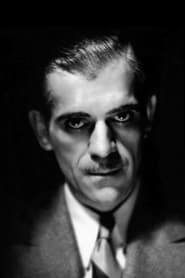 Boris Karloff
Makeup Artist / Actor Collaborator
Karloff became the performer most closely associated with Pierce’s major makeup achievements. Their horror work includes Frankenstein, The Old Dark House, The Mummy, Bride of Frankenstein and Son of Frankenstein, with Pierce repeatedly adapting his designs to Karloff’s face and the changing condition of individual characters.
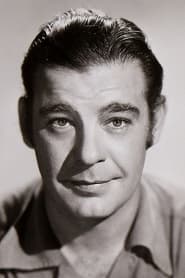 Lon Chaney Jr.
Makeup Artist / Actor Collaborator
Pierce worked extensively with Chaney during Universal’s 1940s horror cycle, including The Wolf Man, The Ghost of Frankenstein and the Kharis mummy films. Chaney consequently became one of the actors most frequently subjected to Pierce’s lengthy built-up monster makeup processes.
 Bela Lugosi
Makeup Artist / Actor Collaborator
Pierce worked on Lugosi’s appearance in Dracula and later Universal productions and also contributed to the makeup of White Zombie outside the studio. Their association spans Lugosi’s establishment as a horror star and several different approaches to supernatural and character makeup.
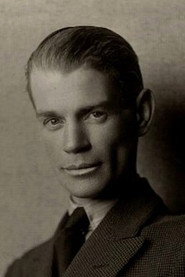 James Whale
Makeup Artist / Director Collaborator
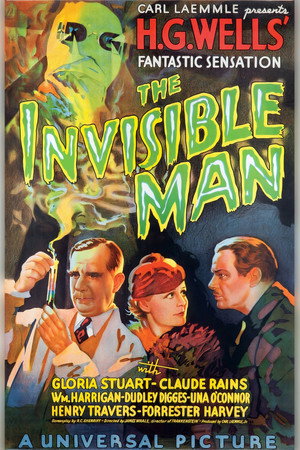
Whale and Pierce worked together on Frankenstein, The Old Dark House, The Invisible Man and Bride of Frankenstein. Their collaboration was fundamental to Universal’s early horror identity, with Whale shaping the films’ overall visual conception while Pierce developed the character makeup needed to function inside it.
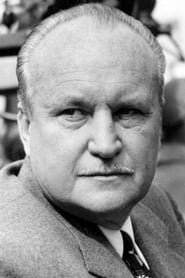 George Waggner
Makeup Artist / Director-Producer Collaborator
Waggner and Pierce worked within Universal’s second horror cycle on productions including Man Made Monster and The Wolf Man and on related studio genre work. Their collaboration was especially important in establishing Lon Chaney Jr. as the studio’s major new monster performer.
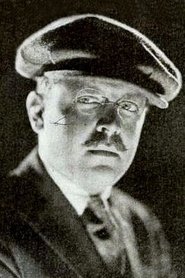 Erle C. Kenton
Makeup Artist / Director Collaborator
Kenton directed Pierce-designed monsters in The Ghost of Frankenstein, House of Frankenstein and House of Dracula. Their shared work covers the period in which Universal moved from individual monster sequels toward films combining several established horror properties in one production.
Jack Pierce Horror Movies
Special FX / Practical FX (39 credits)
1958
1958
1957
1949
1946
1946
1946
1946
1946
1945
1944
1944
1944
1944
1944
1943
1943
1943
1943
1942
1942
1941
1941
1940
1939
1939
1936
1935
1935
1935
1934
1933
1932
1932
1932
1931
1931
1928