


1956
George Robinson
Horror Cinematographer · Biography · Horror Filmography · Collaborators · Credits
Horror subgenres & themes
Most represented across this person's horror filmography:
VAMPIRE
• MONSTER
• WEREWOLVES
Biography
George Robinson and the cinematography of Universal horror
George Robinson was a prolific American cinematographer whose work provides a visual link between several phases of Universal horror. He photographed the Spanish-language Drácula made alongside Tod Browning’s 1931 film and later served as director of photography on productions including The Invisible Ray, Dracula’s Daughter, Son of Frankenstein, The Mummy’s Tomb, Frankenstein Meets the Wolf Man, Son of Dracula, House of Frankenstein and House of Dracula. His horror career therefore extends from the beginning of Universal’s sound cycle into its later monster-combination period.
Robinson spent much of his career at Universal and worked across westerns, mysteries, adventure films, comedies and serial-style productions as well as horror. That broad studio experience is important to his genre work. By the 1940s Universal monster films were often made quickly and economically, requiring cinematographers to create depth, atmosphere and visual continuity from standing sets and limited schedules.
Silent-era acting and the move behind the camera
George Hiram Robinson was born in California in 1890. He entered motion pictures during the silent era and appeared as an actor in a number of short films during the 1910s before moving permanently into camera work. The transition placed him among technicians who had learned filmmaking before standardized sound-stage practice and modern exposure systems.
Robinson eventually became a member of the American Society of Cinematographers and developed a long association with Universal. His career as a director of photography extended across decades, giving him experience with the transition from orthochromatic and early panchromatic stocks to increasingly sensitive black-and-white materials and later color processes.
The Spanish-language Drácula
One of Robinson’s most historically important early assignments was the Spanish-language Drácula produced at Universal in 1930 and released in 1931. George Melford directed, Carlos Villarías played Dracula and Lupita Tovar played Eva. The production used the same principal sets as the English-language film starring Bela Lugosi but worked with a separate cast and crew.
The Spanish company generally filmed at night after Tod Browning’s unit finished its daytime work. This unusual arrangement gave Robinson access to sets whose lighting solutions could be compared directly with Karl Freund’s work on the English-language version. The two films later became important case studies in the relationship between camera movement, lighting and staging during the early sound period.
Lupita Tovar’s recollection of Robinson’s lighting
Lupita Tovar later recalled that Robinson’s crew actively attempted to distinguish the Spanish version from the production filmed during the day. She specifically remembered darker shadows and additional atmospheric details within the sets. Her account provides valuable first-hand evidence because cinematographers of the period often left relatively little written documentation about routine studio assignments.
The restored Spanish Drácula has since allowed Robinson’s photography to receive substantially more attention than it did when the film was difficult to see. Its survival also demonstrates the importance of preservation to technical film history, since the work of cinematographers can disappear from scholarship when the films themselves become inaccessible.
The different visual possibilities of shared sets
The two Dracula productions show that a set does not determine one fixed screen image. Camera position, lens choice, contrast and actor blocking can make the same physical environment appear substantially different. Robinson’s night unit used architecture already constructed for Browning while finding new ways to photograph it.
This experience foreshadowed much of Robinson’s later Universal career. The studio repeatedly reused standing sets and familiar locations, especially in lower-budget horror. A cinematographer had to make such spaces serve new narratives without allowing every production to look identical.
The Invisible Ray
Robinson photographed The Invisible Ray in 1935 for release in 1936. Lambert Hillyer directed, with Boris Karloff as scientist Janos Rukh and Bela Lugosi as Dr. Felix Benet. The story combines speculative science with horror after Rukh is exposed to a powerful radioactive element known as Radium X.
John P. Fulton served as special cinematographer, creating a direct collaboration between principal photography and effects. Robinson had to establish the normal visual environment into which Fulton’s luminous and photographic effects could be inserted. The division of labor shows how Universal increasingly separated standard cinematography from specialized effects while requiring both departments to maintain one photographic style.
Karloff and Lugosi under Robinson’s camera
The Invisible Ray gave Robinson the two principal horror stars associated with Universal’s first sound cycle. Their characters are scientists rather than supernatural monsters, allowing lighting and close framing to work with largely unaltered faces. Jack Pierce contributed makeup, but Karloff’s transformation remained substantially less physically concealing than his Frankenstein or Mummy roles.
Robinson therefore photographed recognizable star performances while still working inside a story built around abnormal radiation and scientific danger. The assignment illustrates the flexibility of Universal horror during the final years of the Laemmle period.
Dracula’s Daughter
Robinson next photographed Dracula’s Daughter, directed by Lambert Hillyer and released in 1936. Gloria Holden plays Countess Marya Zaleska, who attempts to escape vampirism after the death of Dracula. Edward Van Sloan returns as Van Helsing, providing direct continuity with the 1931 English-language film.
The production required a different visual treatment from the Spanish Drácula. Zaleska spends substantial time in contemporary London interiors and the story emphasizes her effort to function within ordinary social environments. Robinson’s photography therefore alternates between conventional drawing rooms and spaces associated more strongly with ritual and supernatural danger.
The end of the first Universal horror cycle
Dracula’s Daughter was released during the corporate transition that removed the Laemmle family from Universal. The first major sound-horror cycle ended shortly afterward. Robinson remained with the studio and therefore experienced the institutional change directly rather than moving elsewhere when Gothic production temporarily contracted.
This continuity became important when Universal returned to its monster properties at the end of the decade. Robinson was already an experienced studio cinematographer familiar with the older films and with the standing production resources available on the lot.
Son of Frankenstein and the revival of Universal horror
Robinson photographed Rowland V. Lee’s Son of Frankenstein, released in 1939 after successful theatrical reissues demonstrated that audiences remained strongly interested in Dracula and Frankenstein. Boris Karloff returned as the Monster for the last time in a feature film, Bela Lugosi played Ygor and Basil Rathbone starred as Wolf Frankenstein.
The production was larger and more elaborate than many Universal horror films that followed. Jack Otterson’s sets employ extreme scale and angular geometry. Robinson’s lighting uses large areas of darkness and strong directional shadows to reinforce that architecture. American Cinematographer has specifically noted his use of radial composition and dramatic shadow patterns in related work with Rowland V. Lee.
Photographing Ygor and Frankenstein’s Monster
Karloff and Lugosi presented very different photographic requirements. Jack Pierce’s Monster makeup created broad artificial planes across Karloff’s head and face, requiring lighting that preserved sculptural form without flattening the prosthetic work. Lugosi’s Ygor makeup altered his neck and facial appearance more subtly, leaving expression and eye movement particularly important.
Robinson’s photography helps both performances remain legible inside sets that could easily dominate the actors. The film’s visual identity depends on the relationship between large architecture and carefully isolated faces rather than on one constant level of darkness.
The Mummy’s Tomb
Robinson served as director of photography on The Mummy’s Tomb in 1942, the film that introduced Lon Chaney Jr. as Kharis. Harold Young directed. The production was much smaller than Son of Frankenstein and reused footage from the earlier The Mummy’s Hand for its opening recap.
The picture illustrates the economic conditions of Universal’s 1940s monster production. Robinson had to photograph new material capable of joining an established franchise while working within a short schedule and relying extensively on standing sets. The visual demands were practical rather than prestigious, making consistency a central part of the cinematographer’s job.
Lon Chaney Jr. and heavily transformed performers
Chaney’s Kharis makeup concealed far more of the actor than the Larry Talbot scenes in the Wolf Man films. Robinson therefore had to create sufficient separation between the dark wrappings and equally dark night environments. Backlight and controlled highlights become especially useful when facial expression can contribute relatively little.
This kind of technical problem recurred throughout Universal horror. A monster recognized by silhouette still needed enough visible texture to avoid becoming an undifferentiated black shape. Robinson’s long studio experience gave him familiarity with the exposure requirements of Pierce’s makeup designs.
Frankenstein Meets the Wolf Man
Robinson photographed Frankenstein Meets the Wolf Man in 1942 for release in 1943. Roy William Neill directed, George Waggner produced and Curt Siodmak wrote the screenplay. Lon Chaney Jr. returned as Larry Talbot and Bela Lugosi played Frankenstein’s Monster.
The film became Universal’s first production constructed explicitly around the meeting of two established monster properties. Robinson had to preserve the visual conventions associated with both the Wolf Man and Frankenstein while bringing them into one continuous narrative. John P. Fulton supplied special photographic effects and Jack Pierce handled makeup.
The laboratory and the monster crossover
The climactic laboratory sequence combines large electrical equipment, the Frankenstein Monster, the transformed Wolf Man and eventual destruction. Principal photography therefore had to coordinate with effects material and stunt work while retaining readable screen geography.
The film became a model for Universal’s subsequent ensemble pictures. Robinson’s work helped establish the visual continuity from this first crossover into later productions where even more monsters would share the same film.
Son of Dracula
Robert Siodmak directed Robinson on Son of Dracula in 1943. Lon Chaney Jr. plays Count Alucard opposite Louise Allbritton and Robert Paige. The film relocates vampire mythology to the American South and gives Robinson a setting distinct from the European environments associated with the earlier Dracula films.
The production is particularly notable for visual effects involving Alucard’s transformations and movement, but Robinson’s principal photography establishes the nocturnal landscape in which those effects function. Swamps, estates and dark exterior environments create a Southern Gothic setting that separates the film visually from Universal’s earlier Transylvanian imagery.
Captive Wild Woman and Universal’s scientific horror
Robinson also photographed Captive Wild Woman in 1943, starring Acquanetta and John Carradine. The story involves experiments intended to transform an ape into a woman and belongs to Universal’s continuing interest in biological science as a source of horror.
The film was made within the studio’s economical wartime production system and reused material associated with earlier productions. Robinson’s involvement again demonstrates how frequently he moved between the famous monster franchises and less prestigious genre pictures during the same period.
House of Frankenstein
Robinson photographed Erle C. Kenton’s House of Frankenstein in 1944. Boris Karloff stars as Dr. Gustav Niemann, Lon Chaney Jr. returns as Larry Talbot, John Carradine appears as Dracula and Glenn Strange plays Frankenstein’s Monster. John P. Fulton handled special photographic effects.
The film required several different horror modes within a compact running time. Dracula’s section, the Wolf Man story and Frankenstein laboratory material each carry their own established visual associations. Robinson’s task was to make these episodes belong to one production while preserving enough distinction for audiences to recognize each property.
House of Dracula
Kenton and Robinson returned for House of Dracula in 1945. Chaney, Carradine and Strange again play the Wolf Man, Dracula and Frankenstein’s Monster. The screenplay organizes the monsters around Dr. Franz Edelmann’s attempts to treat vampirism and lycanthropy through medical procedures.
Using the same cinematographer on the two House films gave Universal substantial visual continuity. Sets, performers and monster makeup could be photographed according to methods already established during the previous production. This efficiency was valuable within the studio’s declining wartime horror budgets.
Working with Jack Pierce
Pierce and Robinson shared numerous Universal horror films, including Son of Frankenstein, The Mummy’s Tomb, Frankenstein Meets the Wolf Man, House of Frankenstein, House of Dracula and The Cat Creeps. Their departments depended directly on one another because makeup intended for black-and-white photography could appear very different under changes in lighting or exposure.
Robinson’s contribution was therefore partly interpretive. Pierce created the physical surface, while the cinematographer determined how strongly scars, hair and artificial anatomy registered on film. The enduring monster image depended on both stages.
The Cat Creeps and the end of the classical cycle
Robinson began photographing Kenton’s The Cat Creeps in 1946, with Elwood Bredell later completing portions of the production. The film combines mystery with suggestions of supernatural activity and arrived as Universal’s original monster cycle was losing commercial momentum.
The assignment provides a useful endpoint to Robinson’s sustained horror work of the period. He had photographed the Spanish Dracula during the genre’s early sound breakthrough and remained active through the point at which Universal was moving away from serious monster production.
Work outside horror
Robinson photographed a large number of westerns, adventures, mysteries and comedies during his career. This breadth explains the practical competence of his genre work. He was a studio cinematographer capable of adjusting to different stars, sets and schedules rather than a technician specializing exclusively in Gothic imagery.
Later assignments continued into the 1950s, when Hollywood production practices and film stocks had changed significantly from the conditions under which he photographed Drácula. His long career consequently spans a major period of technological development in American cinematography.
George Robinson’s place in horror cinematography
Robinson did not develop one easily summarized visual signature across every horror film he photographed. The productions were too different in director, budget and setting for such uniformity. His historical significance lies instead in his ability to adapt cinematography to several generations of Universal horror.
Few cinematographers worked so directly across both ends of the classical cycle. Robinson photographed one of the foundational Dracula productions in 1930, participated in the 1939 revival through Son of Frankenstein and then became a regular visual contributor to the monster crossovers of the 1940s. His filmography provides a continuous photographic record of how Universal horror changed over fifteen years.
Selected Work
Notable Horror Collaborators
Notable collaborators and creative partners throughout George Robinson's horror career.
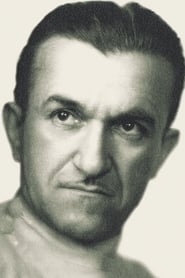 Jack Pierce
Cinematographer / Makeup Artist Collaborator
Robinson and Pierce shared numerous Universal horror productions, including Son of Frankenstein, The Mummy’s Tomb, Frankenstein Meets the Wolf Man, House of Frankenstein, House of Dracula and The Cat Creeps. Robinson’s lighting determined how Pierce’s monster makeup registered photographically on screen.
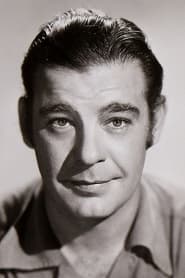 Lon Chaney Jr.
Cinematographer / Actor Collaborator
Robinson photographed Chaney in The Mummy’s Tomb, Frankenstein Meets the Wolf Man, Son of Dracula, House of Frankenstein and House of Dracula. Their recurring work covers three of Chaney’s principal Universal monster identities and much of the studio’s 1940s horror cycle.
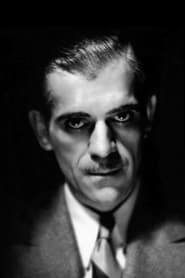 Boris Karloff
Cinematographer / Actor Collaborator
Robinson photographed Karloff in major genre productions including The Invisible Ray, Son of Frankenstein, Tower of London and House of Frankenstein. Their work extends from Karloff’s final feature appearance as Frankenstein’s Monster to his later return to the series as a scientist.
 Bela Lugosi
Cinematographer / Actor Collaborator
Robinson photographed Lugosi in The Invisible Ray, Son of Frankenstein and Frankenstein Meets the Wolf Man. The three films show Lugosi successively as scientist, Ygor and Frankenstein’s Monster during different stages of his Universal horror career.
 Erle C. Kenton
Cinematographer / Director Collaborator
Robinson photographed House of Frankenstein, House of Dracula and part of The Cat Creeps for Kenton. Their collaboration covers the director’s complete Universal monster-ensemble cycle and the later horror-mystery period immediately following it.
JF
John P. Fulton
Cinematographer / Special Effects Collaborator
Robinson and Fulton worked together on The Invisible Ray, Frankenstein Meets the Wolf Man and House of Frankenstein. Their collaboration required effects photography to match Robinson’s principal negative closely enough for laboratory composites to remain visually coherent.
George Robinson Horror Movies
Cinematography (21 credits)
1955
1955
1953
1951
1948
1946
1945
1944
1944
1943
1943
1943
1942
1939
1939
1936
1936
1935
1931
1930