

2013
Don Coscarelli
Horror Director · Biography · Horror Filmography · Collaborators · Credits
Biography
Don Coscarelli: Phantasm and a Career in Independent Horror
Don Coscarelli holds a distinctive position in American horror cinema. His filmography is not enormous compared with those of many genre directors, but a substantial part of his reputation rests on a universe that is entirely his own. With Phantasm, Coscarelli created one of the strangest independent horror films of the late 1970s, introducing the Tall Man, flying silver spheres, dwarf-like servants, dimensional gateways and a mythology that deliberately resists complete explanation. He subsequently returned to that world across three sequels as writer and director and remained creatively involved when the franchise eventually reached Phantasm: Ravager. Outside the series, films such as Bubba Ho-Tep and John Dies at the End extended his reputation for combining horror with eccentric humor, fantasy and characters who exist outside conventional heroic models.
Coscarelli's horror has rarely followed the most commercial version of whatever genre was dominant at the time. Even when his films contain familiar ingredients such as mortuaries, monsters, serial killers, undead creatures or apocalyptic threats, they tend to operate according to their own internal logic. His work repeatedly favors dreamlike transitions, unexplained phenomena, abrupt changes in tone and protagonists who confront enormous supernatural systems with improvised weapons and very limited resources. That independence of tone has been crucial to his longevity within cult horror.
From Independent Filmmaking to Phantasm
Coscarelli began making feature films while still very young, initially working outside horror. His early productions taught him the practical realities of low-budget filmmaking long before Phantasm: writing, directing and producing with small groups of recurring collaborators and finding ways to turn financial limitations into part of a film's identity. That working method became especially important when he moved toward horror. Instead of approaching the genre through a major studio system, he developed a film whose imagery and narrative could be shaped around the resources available to him.
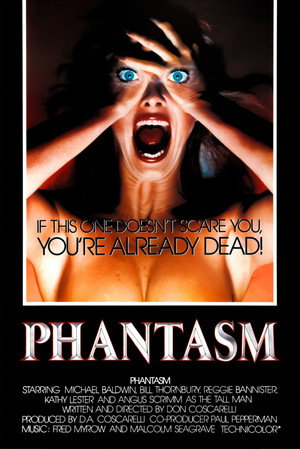
The result was Phantasm, released in 1979. Its basic narrative follows young Mike Pearson as he becomes convinced that something is deeply wrong at the local mortuary. His investigation draws in his older brother Jody and their friend Reggie and eventually exposes the Tall Man, an imposing undertaker-like figure connected to disappearing corpses, hooded creatures, metallic killing spheres and gateways to another world. The ingredients suggest science fiction as much as supernatural horror, but Coscarelli avoids establishing a stable boundary between the two. The audience experiences the story largely through Mike's fear and uncertainty, with dreams, apparent reality and impossible events frequently bleeding into one another.
That instability distinguishes Phantasm from a conventional monster narrative. The Tall Man is memorable partly because the film refuses to provide a complete system explaining him. Angus Scrimm's physical presence, severe expression and measured delivery give the character authority, but the mystery surrounding him is equally important. The film reveals enough to suggest a vast process occurring behind the mortuary while leaving its ultimate dimensions unresolved. Coscarelli later described the story in terms of enduring anxieties surrounding death and what might exist after it, a theme broad enough to sustain the film even when its individual events remain deliberately enigmatic.
The Tall Man, the Silver Sphere and Phantasm's Horror Identity
Several images created for Phantasm became lasting pieces of horror iconography. The Tall Man himself is the most obvious, but the flying silver sphere is equally important. A polished object moving through the sterile white corridors of the mausoleum becomes unexpectedly threatening, transforming something geometrically simple into a mechanical predator. The collision of funeral imagery with science-fiction machinery creates the visual contradiction at the center of the film. Graveyards, hearses and mortuaries suggest traditional death, while portals, alien environments and engineered creatures imply something much stranger.
Coscarelli's handling of the mausoleum is central to this effect. Its bright interiors are not the expected Gothic darkness of classic horror. The clean surfaces and long corridors feel almost abstract, giving the Tall Man's domain the quality of a space outside ordinary life. When the silver sphere attacks, the sudden physical violence interrupts this sterile environment with blood and mechanical brutality. The contrast became one of the franchise's most recognizable visual ideas.
The film's emotional structure is equally important. Beneath the supernatural mythology is Mike's fear of abandonment. His parents are dead, and he worries that Jody will leave him as well. That anxiety gives the increasingly impossible events a personal foundation. The Tall Man therefore represents more than an external monster. He enters a story already organized around death, separation and the possibility that the people Mike depends upon may disappear. This emotional simplicity helps anchor a film whose mythology remains intentionally unstable.
Building the Phantasm Franchise
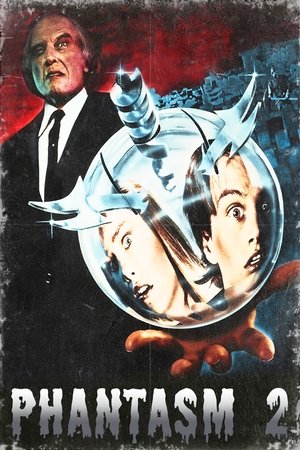
The success and cult following of Phantasm allowed Coscarelli to return to its world repeatedly, although each sequel was produced under different circumstances. Phantasm II, released in 1988, represented the franchise's largest move toward studio-backed production. Universal provided resources far beyond those of the original, allowing Coscarelli to expand the action, creature effects, weapons and physical scale of the conflict with the Tall Man. The sequel begins directly from the mythology established by the first film but turns the pursuit into a road movie through towns that appear to have been emptied by the Tall Man's activities.
The shift in scale changes the character of the series without eliminating its strangeness. Reggie Bannister becomes increasingly important, developing from the original film's friend and ice-cream vendor into an armed survivor capable of confronting the Tall Man directly. The quadruple-barrel shotgun associated with Reggie became another piece of franchise iconography, reflecting Coscarelli's willingness to merge surreal horror with increasingly physical action.
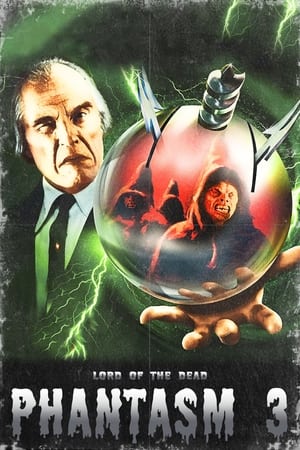
Phantasm III: Lord of the Dead continued that evolution while restoring A. Michael Baldwin as Mike. Reggie moves further toward the center of the narrative as the series expands into a landscape populated by survivors, abandoned locations and evidence of the Tall Man's growing reach. The tone incorporates more humor and action, but the central mythology remains unresolved. Rather than progressively explaining every mechanism introduced by the first film, Coscarelli continued adding possibilities, allowing the Tall Man and his world to remain larger than any single exposition could contain.
Phantasm IV: Oblivion and the Return to Dream Logic
Phantasm IV: Oblivion in 1998 moves away from some of the action-oriented momentum of the previous sequels and returns to a more introspective and fragmented atmosphere. Mike, Reggie, Jody and the Tall Man remain central, but the film becomes increasingly concerned with time, memory and the possible origins of the Tall Man. Coscarelli incorporated unused material originally shot for the first Phantasm, integrating images of the younger characters into a story made almost two decades later.
The technique gives Oblivion an unusual relationship with the franchise's own history. Rather than simply using flashbacks to summarize earlier films, Coscarelli repurposes old footage so that the past seems to coexist with the present. This suits a series in which dimensional movement and uncertain reality have existed from the beginning. The result does not provide a definitive explanation of the Tall Man. Instead, it extends the idea that his existence may operate across different times, identities and worlds.
Coscarelli's continued refusal to resolve everything is one of the most consistent features of the series. The Phantasm mythology accumulated information, but it never became a rigid encyclopedia of rules. Contradictions and unanswered questions became part of its appeal. That separates it from many long-running horror franchises in which later sequels progressively reduce a monster to a clearly documented origin story.
Angus Scrimm, Reggie Bannister and the Phantasm Ensemble
The continuity of Phantasm depends heavily on the performers Coscarelli repeatedly brought back. Angus Scrimm became inseparable from the Tall Man, giving the franchise a villain whose menace relies as much on posture and voice as on elaborate effects. Coscarelli had worked with Scrimm before Phantasm, and their relationship continued across decades. Scrimm ultimately appeared not only throughout the franchise but elsewhere in Coscarelli's horror work, including Incident On and Off a Mountain Road and John Dies at the End.
Reggie Bannister became equally important in a different way. What began as a supporting character gradually evolved into the durable hero of the series. Coscarelli has described recognizing qualities in Bannister that allowed the character to expand with each film. Reggie's ordinariness is essential: he is not introduced as a trained warrior or supernatural chosen figure. His persistence, humor and improvised toughness make him a particularly appropriate protagonist for Coscarelli's independent horror universe.
A. Michael Baldwin and Bill Thornbury provide the other essential connection to the original film through Mike and Jody. Their repeated returns allow Phantasm to function less like a conventional sequence of replacement casts and more like a continuing history shared by the filmmakers and characters. The passage of real time becomes visible on screen, adding another dimension to a franchise already preoccupied with mortality and loss.
Bubba Ho-Tep and Horror Outside Phantasm
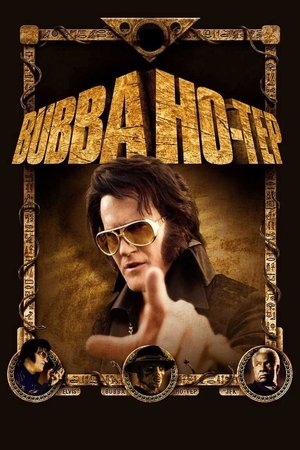
After Phantasm IV, Coscarelli made one of the most acclaimed films of his career with Bubba Ho-Tep. Adapted from Joe R. Lansdale's story, the film stars Bruce Campbell as an elderly man living in a Texas nursing home who claims to be the real Elvis Presley. Ossie Davis plays another resident who believes he is John F. Kennedy. Their already unusual situation becomes a horror story when an ancient Egyptian mummy begins feeding on the souls of residents.
The premise could easily have produced a simple parody, but Coscarelli treats the characters with considerably more sympathy. Horror and comedy remain essential, yet the film is also about aging, physical decline, regret and the possibility of recovering dignity when society has stopped paying attention. Elvis is not presented merely as a celebrity impersonation. Campbell's character is a man confronting the fact that his life may effectively be over before the supernatural threat gives him one final reason to act.
This combination of absurdity and sincerity is particularly characteristic of Coscarelli. The mummy can be grotesque and ridiculous while the fear of becoming irrelevant remains emotionally real. Bubba Ho-Tep consequently resembles Phantasm in an unexpected way: both use bizarre supernatural concepts to approach mortality. Where Mike fears death and abandonment as a teenager, the residents of the nursing home confront death from the opposite end of life.
Joe R. Lansdale and Incident On and Off a Mountain Road
Coscarelli returned to Joe R. Lansdale's fiction for Incident On and Off a Mountain Road, the premiere installment of the Masters of Horror anthology series in 2005. The story follows Ellen, whose car accident on an isolated road places her in the path of a violent killer known as Moonface. Unlike the cosmic mythology of Phantasm or the supernatural comedy of Bubba Ho-Tep, the episode begins from a recognizable survival-horror situation.
The narrative gradually complicates the expected victim-versus-killer structure through flashbacks showing Ellen's relationship with an intensely survivalist partner. Skills acquired in that earlier relationship become crucial when she must resist Moonface. Coscarelli combines pursuit, traps and physical violence with a structure that repeatedly recontextualizes the protagonist. Angus Scrimm also appears as Buddy, creating another connection between Coscarelli's independent work and the Phantasm family.
The two Lansdale adaptations reveal why the writer's material suited Coscarelli. Both filmmakers are comfortable with stories that mix recognizable genre structures with eccentric details and tonal shifts. Bubba Ho-Tep can move from melancholy to absurd comedy and monster action, while Incident combines slasher mechanics with survivalist psychology. Neither requires horror to remain tonally pure.
John Dies at the End and Cosmic Horror Comedy
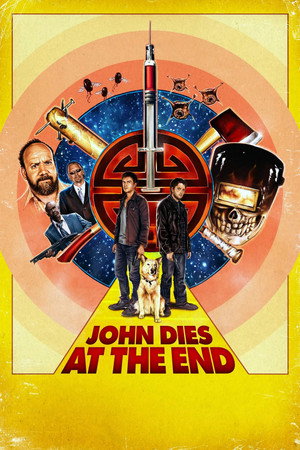
Coscarelli again embraced unstable genre boundaries with John Dies at the End, adapted from the novel published under the name David Wong by Jason Pargin. The film follows David and John as their encounter with a mysterious substance known as Soy Sauce exposes them to altered perception, monsters, parallel realities and threats that conventional logic cannot comfortably explain. The story combines horror, science fiction, conspiracy fiction and comedy at an extremely rapid pace.
The material fits Coscarelli because explanation is never permitted to dominate experience. Like Phantasm, the film introduces impossible events faster than its characters can construct a coherent system for understanding them. Monsters and dimensional phenomena coexist with deliberately ridiculous dialogue, while apparently minor details can suddenly become crucial. The result is less interested in presenting a stable supernatural mythology than in creating the sensation that ordinary reality has become unreliable.
Coscarelli also edited the film, continuing the unusually hands-on approach that characterized his earliest work. Despite the greater technical possibilities available decades after Phantasm, John Dies at the End retains the feeling of independent filmmakers solving visual problems inventively rather than attempting to imitate the scale of a studio blockbuster.
Phantasm: Ravager and Passing the Franchise Forward
Phantasm: Ravager marked the first feature in the series not directed by Coscarelli. David Hartman, who had previously worked with him on projects including Masters of Horror and John Dies at the End, directed the film and co-wrote it with Coscarelli. Coscarelli remained producer, co-writer and creator of the characters, making the project less a separation from his franchise than a controlled transition to another filmmaker. The production developed from smaller experiments involving Reggie Bannister before expanding into a feature.
The film returns to Reggie, Mike and the Tall Man while moving between different realities and possible versions of events. Age, memory and uncertainty become increasingly visible themes, giving the final appearance of Angus Scrimm as the Tall Man additional weight. Scrimm died before the film's commercial release but was able to see a completed version. His presence connects the last installment directly to a creative partnership that had begun before the original Phantasm.
Coscarelli's decision to allow Hartman to direct is significant because Phantasm had previously remained unusually concentrated around one filmmaker. For four films Coscarelli had controlled the central writing and directing functions, while the fifth retained his participation even as another director took responsibility for production. Few American horror franchises of comparable duration maintained that degree of continuity with their original creator.
Independent Horror, Dream Logic and Don Coscarelli's Style
Coscarelli's horror cinema is defined less by a single visual technique than by the freedom with which apparently incompatible ideas coexist. In Phantasm, funeral imagery becomes science fiction. In Bubba Ho-Tep, celebrity mythology and nursing-home melancholy become a mummy film. John Dies at the End combines cosmic horror with absurdist comedy and alternate realities. Even the more direct survival horror of Incident On and Off a Mountain Road complicates the expected relationship between victim, attacker and survival skills.
His films also show a persistent attraction to characters on the margins. Mike is a frightened orphan trying to keep his remaining family together. Reggie is an ordinary working man who gradually becomes an improbable action hero. The elderly protagonists of Bubba Ho-Tep have effectively been forgotten by the outside world. David and John stumble into cosmic responsibility without resembling traditional heroes. Coscarelli repeatedly places extraordinary threats in front of people who appear poorly equipped to confront them and then allows improvisation, loyalty and stubbornness to become their principal strengths.
This approach is closely connected to his history as an independent filmmaker. Coscarelli learned to create films by combining multiple responsibilities and relying on recurring collaborators. The original Phantasm credits him not only as writer and director but also producer, cinematographer and editor. That degree of involvement helped establish a personal visual and narrative language that later films could expand without entirely losing the handmade quality of the original.
Don Coscarelli's Legacy in Horror Cinema
Coscarelli's importance to horror rests first on Phantasm. The Tall Man, the silver spheres, the mausoleum and the recurring cry of "Boy!" established a mythology unlike the slasher franchises that would dominate much of American horror during the following decade. Although the series developed more action and humor as it continued, its central threat never became entirely ordinary. The Tall Man remained connected to questions of death, dimensional instability and realities that the protagonists could glimpse but never fully understand.
His wider work demonstrates that this achievement was not an isolated accident. Bubba Ho-Tep showed his ability to construct horror around aging and regret without sacrificing absurd comedy. Incident On and Off a Mountain Road demonstrated a more direct and physical form of survival horror. John Dies at the End returned to cosmic instability through an entirely different generation of characters and a much faster comic rhythm.
Across those films, Coscarelli has maintained an unusually personal relationship with genre filmmaking. His output is selective rather than prolific, but the films that define his horror career are strongly identifiable as his own. The continuity of collaborators, the persistence of independent production methods and the willingness to leave supernatural questions unresolved have allowed his work to remain distinct from more standardized franchise horror.
Selected Work
Notable Horror Collaborators
Notable collaborators and creative partners throughout Don Coscarelli's horror career.
 Angus Scrimm
HORROR ICON
Coscarelli's defining screen partner and the face of the Tall Man across the Phantasm saga, with additional appearances in Incident On and Off a Mountain Road and John Dies at the End.
 Reggie Bannister
FRANCHISE LEAD
A core presence throughout Phantasm whose ordinary ice-cream man evolved under Coscarelli into the series' enduring action-horror hero.
 A. Michael Baldwin
PHANTASM PROTAGONIST
The original Mike Pearson and one of the essential recurring performers linking the first Phantasm to its later mythology.
 Bill Thornbury
RECURRING ACTOR
Jody Pearson in the original Phantasm and a recurring figure whose later returns helped preserve the franchise's unusual continuity.
JL
Joe R. Lansdale
HORROR AUTHOR
The author behind Bubba Ho-Tep and Incident On and Off a Mountain Road, giving Coscarelli two of his most important horror projects outside Phantasm.
DH
David Hartman
FRANCHISE DIRECTOR
Worked with Coscarelli on Masters of Horror and John Dies at the End before directing and co-writing Phantasm: Ravager.
Don Coscarelli Horror Movies
Directing (8 credits)
2005
2005
2002
1998
1994
1988
1979
Writing (9 credits)
2016
2013
2005
2005
2002
1998
1994
1988
1979
Acting (4 credits)
2026
2015
2014
1997
Production (6 credits)
2018
2016
2013
2002
1998
1994
Editing (2 credits)
2013
1979
Cinematography (1 credits)
1979