


1935
Carl Laemmle Jr.
Horror Producer · Biography · Horror Filmography · Family · Collaborators · Credits
Horror subgenres & themes
Biography
Carl Laemmle Jr. and the creation of Universal horror
Carl Laemmle Jr. was the studio executive and producer who supervised Universal Pictures during the period in which the company established the most influential American horror cycle of the early sound era. Between the end of the 1920s and the loss of his family’s control of Universal in 1936, he backed productions including Dracula, Frankenstein, Murders in the Rue Morgue, The Old Dark House, The Mummy, The Invisible Man and Bride of Frankenstein. Those films introduced or consolidated screen versions of Dracula, Frankenstein’s Monster, the Mummy and the Invisible Man that became permanent parts of international popular culture.
Laemmle’s importance to horror was primarily industrial. He selected projects, approved budgets, hired or supported directors and permitted Universal’s technical departments to develop unusual makeup, set design and photographic effects. His period in charge also included prestige productions outside the genre, most notably All Quiet on the Western Front and Show Boat. Horror developed inside a wider attempt to modernize Universal during the transition to sound and raise the studio’s position relative to larger competitors.
The Laemmle family and Universal Pictures
Carl Laemmle Jr. was born in Chicago on April 28, 1908 into the family that controlled Universal Pictures. His father, Carl Laemmle, had built the company from the independent film business of the 1910s and established Universal City as one of the principal production centers in Hollywood. The younger Laemmle therefore entered film production with access unavailable to most contemporaries and faced persistent criticism that his authority resulted principally from his father’s ownership.
The accusation of nepotism was understandable because Universal employed numerous members of the Laemmle family and Junior reached executive responsibility while exceptionally young. It does not explain the films produced under his supervision. During his tenure Universal made several ambitious productions that differed markedly from the inexpensive westerns and programmers with which the company had long been associated. His record has consequently undergone substantial reassessment in histories of the studio.
Becoming head of production during the transition to sound
Laemmle Jr. assumed major production responsibilities at Universal while Hollywood was reorganizing around synchronized sound. The technological transition required investment in new equipment, sound stages and production procedures at the same time that studios were trying to determine what kinds of material benefited most from dialogue and music. Universal did not possess the financial strength of MGM, Paramount or Warner Bros., making expensive modernization particularly risky.
Junior favored higher production values and major literary properties. This strategy produced impressive films but also increased financial pressure during the Great Depression. The contradiction between artistic ambition and Universal’s limited capital would remain present throughout his period in control. Horror became unusually valuable because a successful genre film could use strong sets, makeup and atmosphere to create a distinctive identity without requiring the star salaries or enormous scale associated with some prestige productions.
All Quiet on the Western Front and early prestige production
Before Universal became identified internationally with sound horror, Laemmle Jr. produced Lewis Milestone’s All Quiet on the Western Front in 1930. Adapted from Erich Maria Remarque’s novel, the film required large battlefield sequences and represented a significant financial commitment. It won the Academy Award for Outstanding Production and established Junior as more than a nominal beneficiary of his father’s company.
The production is relevant to his horror career because it demonstrated the kind of filmmaking he wanted Universal to pursue. He was prepared to invest in strong directors and technical departments when he believed a property could distinguish the studio. The following year that policy was applied to Gothic and supernatural material with consequences that were even more durable for Universal’s identity.
Dracula and the decision to invest in Gothic horror
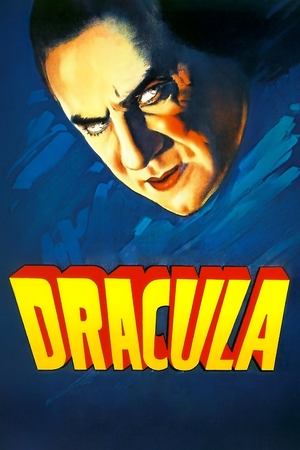
Universal acquired the screen rights necessary to adapt the stage version of Bram Stoker’s Dracula, which had already proved commercially successful in the theatre. Tod Browning directed the English-language film, with Bela Lugosi repeating the role he had played on Broadway. Laemmle Jr. served as producer and supported the production despite uncertainty about whether a supernatural subject could attract a broad audience in the new sound era.
Dracula opened in February 1931 and became a major success. Lugosi’s voice and theatrical performance were especially well suited to sound cinema, while Karl Freund’s photography and Charles D. Hall’s sets gave the production a visual identity different from contemporary crime and melodrama. The commercial result encouraged Universal to accelerate development of additional horror properties.
The Spanish-language Dracula and Universal’s multilingual production system
Universal simultaneously produced a Spanish-language version of Dracula for international markets. George Melford directed and Carlos Villarías played the Count, with Lupita Tovar as Eva. The production used the same principal sets as the English-language unit but generally filmed at night after Browning’s company had finished its work. George Robinson served as cinematographer and Paul Kohner supervised the Spanish-language production.
The existence of two versions shows the scale of Universal’s ambitions before dubbing became the dominant method of international distribution. Laemmle Jr. produced both films within a system that treated foreign-language versions as distinct productions rather than simple translations. The surviving Spanish Drácula has since become an important comparison point for scholars studying lighting, camera movement and performance in early sound cinema.
Frankenstein and the search for a second horror property
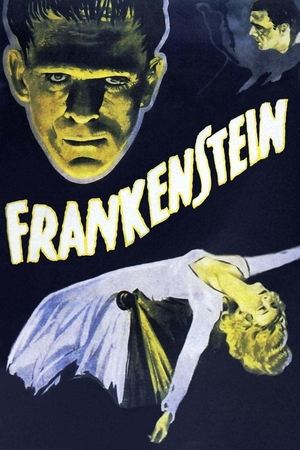
The success of Dracula led Universal directly toward Frankenstein. Development passed through several stages, including a version associated with director Robert Florey and a makeup test involving Bela Lugosi as the Monster. Laemmle Jr. eventually placed James Whale in charge of the film. Whale had already directed Waterloo Bridge for Universal and had an established theatrical reputation through Journey’s End.
The change proved decisive. Whale cast Boris Karloff as the Monster, Jack Pierce developed the makeup and Charles D. Hall designed the principal environments. Arthur Edeson photographed the film. Laemmle’s role was to maintain an institutional environment in which these specialists could solve the unusual problems created by the material. Frankenstein became another major success and gave Universal a second monster property with enormous sequel potential.
Boris Karloff and the emergence of a second horror star
Karloff entered Frankenstein without the public recognition Bela Lugosi had already gained from Dracula. His performance transformed his professional position almost immediately. Universal subsequently used him as the center of several horror productions and eventually marketed him by surname alone. Laemmle Jr. supported this development while avoiding a simple duplication of Dracula.
The studio’s horror identity therefore expanded around performers with very different screen personalities. Lugosi was associated with controlled speech and aristocratic menace. Karloff’s most famous roles depended heavily on makeup, bodily performance and characters whose physical appearance separated them from ordinary society. The combination gave Universal greater flexibility than a cycle dependent on one star.
Building a permanent horror production infrastructure
The success of Dracula and Frankenstein allowed Universal to reuse personnel and technical expertise across subsequent films. Jack Pierce’s makeup department could develop new transformations, Charles D. Hall’s art direction established reusable Gothic architectural traditions and John P. Fulton’s special-effects work expanded the range of supernatural events that could be shown convincingly.
This continuity mattered economically. Horror required specialized skills, but once Universal possessed those departments the knowledge could be transferred from one production to another. Laemmle Jr.’s most important contribution was therefore not the isolated approval of individual movies. His production policy allowed a studio-specific expertise in horror to develop over several years.
Murders in the Rue Morgue
Robert Florey directed Murders in the Rue Morgue, released in 1932 with Bela Lugosi as Dr. Mirakle. The film used Edgar Allan Poe’s title and elements of his story while constructing a substantially new plot around scientific experimentation. Karl Freund photographed the film, Jack Pierce handled makeup and Charles D. Hall again worked on art direction.
The production illustrates Universal’s attempt to exploit recognizable literary names while creating material tailored to performers already associated with the studio’s horror success. Lugosi’s character differs sharply from Dracula, but his presence allowed the marketing to retain a direct connection with the earlier hit. The picture also demonstrates the rapid pace at which Universal attempted to build a coherent horror brand after 1931.
The Old Dark House and James Whale’s importance to Universal
Whale followed Frankenstein with The Old Dark House, adapted from J. B. Priestley’s Benighted. Boris Karloff appears as Morgan within an ensemble including Ernest Thesiger, Charles Laughton, Melvyn Douglas and Gloria Stuart. Laemmle Jr. again backed Whale rather than requiring him simply to repeat the structure of Frankenstein.
The result broadened Universal horror away from laboratory science and supernatural monsters. An isolated house, extreme weather and an eccentric family create the danger. The film also gave Whale more space for black comedy and theatrical ensemble work, characteristics that became increasingly important to his later horror direction.
The Mummy and the creation of a new studio mythology
Universal released The Mummy in 1932 with Karl Freund directing and Boris Karloff as Imhotep. Unlike Dracula and Frankenstein’s Monster, the screen character was not adapted directly from one famous literary narrative. The studio developed its own modern Egyptian horror story during continued public fascination with archaeology and the discovery of Tutankhamun’s tomb.
Jack Pierce’s elaborate opening makeup transformed Karloff into a desiccated mummy, while most of the film presents him under subtler aging makeup as Ardath Bey. This decision prevented the character from becoming solely a wrapped creature and allowed Karloff to carry extensive dialogue. The production demonstrated Universal’s growing confidence that it could create its own horror mythology rather than depending exclusively on famous novels and plays.
The Invisible Man and investment in photographic effects
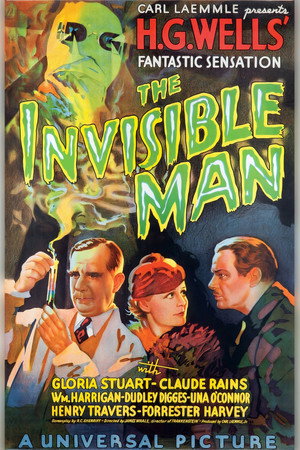
H. G. Wells’s The Invisible Man presented a completely different technical problem. James Whale returned to direct, Claude Rains was cast as Griffin and John P. Fulton’s special-effects department developed the complex optical work required to show clothing moving around an invisible body. Laemmle Jr. supported the project during a financially difficult period for Universal.
The resulting film became one of the studio’s major successes of 1933. Rains’s performance relies heavily on voice while Fulton’s effects create the physical presence of a character who is absent from the image. The film proved that Universal’s horror and science-fiction identity could depend on photographic innovation as strongly as on makeup.
The Black Cat and the pairing of Karloff and Lugosi
By 1934 Boris Karloff and Bela Lugosi were the performers most strongly identified with American horror. Universal placed them together in Edgar G. Ulmer’s The Black Cat, a film using Edgar Allan Poe’s name while telling an original story involving wartime history and occult practices. Karloff plays Hjalmar Poelzig and Lugosi plays Vitus Werdegast.
The commercial logic of the pairing was clear, but the production also demonstrates the latitude still possible within Laemmle-era horror. Charles D. Hall’s modernist sets differ sharply from the Gothic castles associated with earlier films, while Ulmer’s direction gives the picture an architectural identity unusual for Hollywood horror of the period.
Bride of Frankenstein and Laemmle’s confidence in James Whale
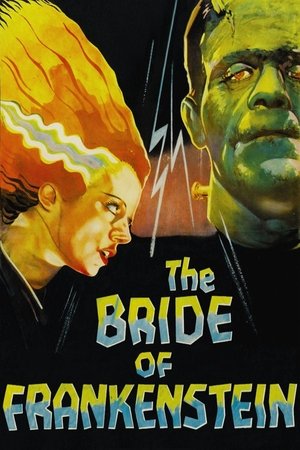
Universal wanted a sequel to Frankenstein soon after the original became successful. Whale resisted returning and went through several other projects before agreeing. By the time Bride of Frankenstein entered production, his status at Universal allowed him considerable influence over screenplay development, casting and tone. Laemmle Jr. supported that authority.
The production reunited Karloff, Colin Clive, Jack Pierce and Charles D. Hall while adding Elsa Lanchester, Ernest Thesiger, cinematographer John Mescall and composer Franz Waxman. John P. Fulton handled extensive effects work. The film became one of the most technically elaborate and critically durable products of the first Universal horror cycle.
Technical departments as a competitive advantage
The Laemmle-era horror films depended on a group of technicians whose work became increasingly sophisticated through repetition. Pierce could refine monster makeup from one film to another. Fulton expanded optical effects from basic laboratory tricks into complex compositing. Hall created large interiors and artificial landscapes capable of giving comparatively modest productions a distinctive scale.
Laemmle Jr. did not personally design these elements, and an accurate production history should not attribute their artistry to him. His importance lies in maintaining the budgets, contracts and project choices that kept these specialists working within the same studio environment. The resulting concentration of knowledge became one of Universal’s most valuable assets.
Horror and the broader Universal production slate
Although later history often identifies Junior almost exclusively with monsters, horror represented only part of his production policy. Universal also made important dramas, comedies and musicals under his supervision. John M. Stahl, William Wyler and James Whale worked on serious dramatic projects, while Show Boat became one of the studio’s most ambitious musical productions.
This broader context explains why the horror cycle achieved relatively high production values. Junior did not treat the genre solely as inexpensive filler. Several films received respected directors, unusual technical work and substantial development time. The studio’s financial position sometimes forced compromises, but the aspiration was closer to prestige production than to the later B-picture model Universal used for many 1940s monster sequels.
Censorship and the contraction of the first horror cycle
During the middle of the 1930s horror films faced increasing pressure from censorship bodies and organized social groups concerned about violence, sadism and supernatural material. The stricter enforcement of the Production Code after 1934 changed the boundaries within which studios could work. Films such as The Black Cat and The Raven attracted particular controversy.
Universal continued developing horror projects, including Dracula’s Daughter, but the industrial environment was becoming less favorable. The end of the first cycle coincided with a far more consequential change: the Laemmle family was losing financial control of Universal itself.
The financial crisis at Universal
Universal entered the mid-1930s under significant financial pressure. Laemmle Jr.’s preference for ambitious productions increased costs at a company without the deep capital reserves of the largest studios. Projects such as Sutter’s Gold and Show Boat required substantial expenditure while the company remained vulnerable to short-term financing problems.
The decline should not be attributed to one horror film or one isolated budget overrun. Universal had broader cash-flow problems during the Depression, and the Laemmles eventually obtained a $750,000 loan from Standard Capital while pledging their controlling interest as collateral. The financing arrangement became the mechanism through which outside investors acquired control of the company in 1936.
The end of the Laemmle era in 1936
By spring 1936 the family that had founded Universal no longer controlled the studio. J. Cheever Cowdin and the Standard Capital group took over, ending Carl Laemmle Sr. and Junior’s direct involvement in production. Show Boat, released shortly afterward, retained their names because it had been developed and supervised under the previous regime.
The change immediately altered Universal’s production priorities. Budgets were reduced and several creative relationships from the Laemmle era ended. The first major horror cycle effectively closed at the same time. Universal returned strongly to monster filmmaking only after the successful reissue of Dracula and Frankenstein later in the decade.
Universal horror after Carl Laemmle Jr.
The second Universal horror cycle relied heavily on properties developed during Junior’s administration. Frankenstein’s Monster, Dracula and the Mummy returned in sequels, while the Wolf Man was added in 1941. The production scale generally became more economical and the films increasingly emphasized serialized continuity and combinations of monsters.
This later phase demonstrates the long commercial value of decisions made during the earlier period. Universal could change actors, directors and producers because makeup designs, character names and established mythology remained recognizable. The monster catalogue became a durable studio asset independent of the executives who had originally financed it.
Later life and historical reassessment
Laemmle Jr. did not rebuild a comparable production career after leaving Universal. His period of professional authority was therefore unusually concentrated, largely ending before he reached thirty. He lived for more than four additional decades and died in 1979.
For many years accounts of Universal history treated him primarily as the privileged son whose expensive tastes contributed to the family losing the studio. Later scholarship has paid greater attention to the films produced under his supervision. The success of All Quiet on the Western Front and the extraordinary durability of the first Universal horror cycle make a purely dismissive assessment difficult to sustain.
Carl Laemmle Jr.’s place in horror history
Laemmle’s importance to horror is inseparable from the production system he controlled between 1931 and 1936. He backed the films that established Bela Lugosi and Boris Karloff as major genre stars, gave James Whale repeated opportunities to direct ambitious horror and maintained technical departments capable of producing some of the period’s most influential makeup, sets and visual effects.
The resulting films provided later Universal productions with a permanent library of characters and images. They also supplied models used by Hammer Films, television horror, parody, merchandising and countless later adaptations of Gothic literature. Laemmle Jr. was not the author of those individual creative achievements, but he was the executive under whose production policy they were assembled into the first coherent sound-era studio horror cycle.
Selected Work
Notable Horror Collaborators
Notable collaborators and creative partners throughout Carl Laemmle Jr.'s horror career.
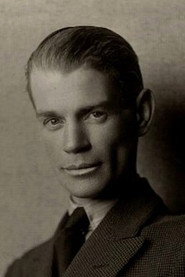 James Whale
Producer / Director Collaborator
Laemmle Jr. backed Whale during the most important period of Universal horror, including Frankenstein, The Old Dark House, The Invisible Man and Bride of Frankenstein. Their collaboration also extended into major non-horror productions and gave Whale exceptional creative importance within the studio.
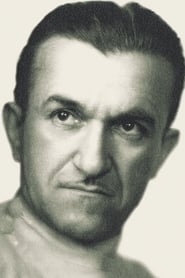 Jack Pierce
Producer / Makeup Department Collaborator
Pierce headed the makeup work on many horror productions made under Laemmle Jr., including Frankenstein, The Mummy and Bride of Frankenstein. Junior’s production regime gave Pierce repeated opportunities to develop the monster designs that became central assets of Universal horror.
CH
Charles D. Hall
Producer / Art Director Collaborator
Hall designed or supervised sets for numerous Laemmle-era horror films, including Dracula, Frankenstein, The Old Dark House, The Invisible Man and Bride of Frankenstein. His recurring art direction helped give Universal’s early sound horror a recognizable architectural identity.
JF
John P. Fulton
Producer / Special Effects Collaborator
Fulton became Universal’s principal special-effects photographer during Laemmle Jr.’s tenure and contributed to productions including Frankenstein, The Invisible Man and Bride of Frankenstein. His optical and miniature work expanded the kinds of supernatural events the studio could present convincingly on screen.
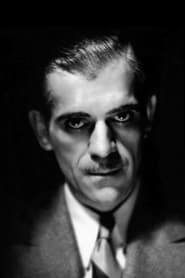 Boris Karloff
Producer / Actor Collaborator
Karloff became a major star through Universal horror productions made under Laemmle Jr., beginning with Frankenstein and continuing through The Old Dark House, The Mummy and Bride of Frankenstein. His rise gave the studio a second major horror performer after Bela Lugosi.
 Bela Lugosi
Producer / Actor Collaborator
Lugosi starred in Dracula and later appeared in several other horror productions developed during Laemmle Jr.’s period at Universal, including Murders in the Rue Morgue and The Black Cat. His success as Dracula was the first major commercial proof that the studio’s sound-era horror strategy could support a continuing cycle.
Carl Laemmle Jr. Horror Movies
Production (10 credits)
1934
1933
1933
1932
1932
1932
1931
1931
1931