

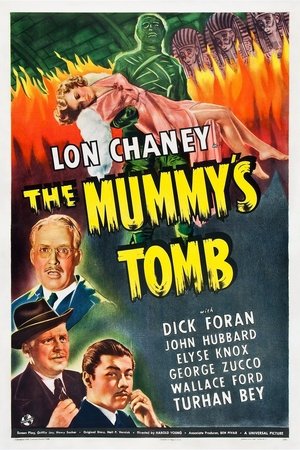
1943
John P. Fulton
Horror Special Effects · Biography · Horror Filmography · Collaborators · Credits
Horror subgenres & themes
Most represented across this person's horror filmography:
VAMPIRE
• MONSTER
• WEREWOLVES
• MEDICAL
Biography
John P. Fulton and photographic effects in Universal horror
John P. Fulton was one of the principal special-effects cinematographers of classical Hollywood and a central technician in the development of Universal horror. His best-known early achievement was the photographic illusion of invisibility in James Whale’s The Invisible Man in 1933. The effect required a combination of black-velvet photography, mattes, multiple generations of film and extensive laboratory work at a time when digital compositing was many decades away. Fulton later refined similar techniques for the Universal Invisible Man sequels and contributed effects to films throughout the studio’s monster cycle.
His career extended far beyond horror. After leaving Universal he became a leading effects specialist at Paramount and won Academy Awards for Wonder Man, The Bridges at Toko-Ri and The Ten Commandments. He also worked on films associated with Alfred Hitchcock and continued developing optical, miniature and composite effects until his death in 1966. Within horror history, however, Universal provided the environment in which he first demonstrated how photographic effects could create a monster whose defining feature was the absence of a visible body.
Early life and entry into motion-picture photography
Fulton was born in Beatrice, Nebraska, in 1902. His father, Fitch Fulton, worked as an artist and matte painter, providing an early family connection with visual design while reportedly discouraging his son from entering the unstable film industry. John initially pursued technical work outside cinema before moving toward camera employment during the 1920s.
He began as an assistant cameraman and acquired practical knowledge of exposure, lenses, film processing and optical composition. These skills were fundamental to effects photography, where the finished image often depended on several separately photographed elements being combined without visible differences in density or registration.
Universal and the growth of a specialized effects department
Fulton joined Universal during a period in which visual effects were becoming increasingly specialized. Silent cinema had already developed matte painting, miniatures and multiple exposure, but the studio horror productions of the early 1930s demanded that these methods interact convincingly with actors, elaborate sets and new sound-stage procedures.
Fulton eventually became one of the leading figures in Universal’s special-effects department. His responsibilities included optical photography, miniatures and effects created directly during production. The department worked closely with cinematographers and laboratory technicians because many illusions could only be completed after principal photography had ended.
Frankenstein and early horror effects work
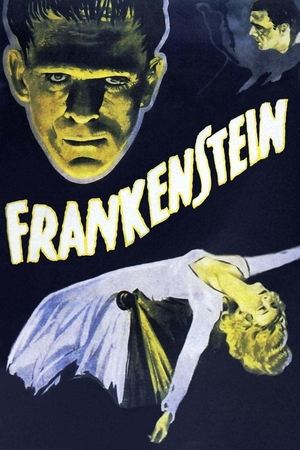
Frankenstein in 1931 was among Fulton’s first major genre assignments at Universal. James Whale’s production depended primarily on Jack Pierce’s Monster makeup and Charles D. Hall’s laboratory environments, but special-effects photography was also required for electrical and mechanical aspects of the creation sequence and other visual elements.
The film introduced Fulton to the production team that would dominate his early horror career. Whale, Pierce and Hall subsequently returned on projects in which effects became increasingly complicated. This continuity allowed different departments to develop working methods together rather than reconstructing an entirely new technical system for every film.
Effects as part of the Universal production system
Universal horror depended on a division of technical responsibilities. Pierce altered performers physically through makeup. Hall built environments. Cinematographers controlled the principal photographic image. Fulton’s department handled events that could not be produced convincingly through ordinary staging alone. The boundaries sometimes overlapped because effects photography had to match the lighting and perspective of the live-action material.
This collaboration is particularly important when evaluating early effects work. A successful composite does not exist independently of the set or camera negative into which it is inserted. Fulton’s skill lay partly in understanding how several departments could supply elements that survived repeated optical processing without breaking the illusion.
The Invisible Man and the central problem of invisibility
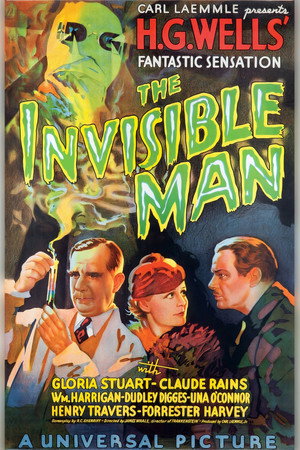
H. G. Wells’s The Invisible Man required Universal to place an invisible human figure physically inside ordinary scenes. Simple wire work could move small objects, but the most difficult sequences showed Griffin wearing clothing or bandages with empty space visible where his head or limbs should be. A practical costume alone could not produce the effect because the performer’s body would remain visible inside it.
Fulton developed a process in which the actor or double wore black velvet over portions of the body that needed to disappear and performed against a black velvet background. The clothing remained photographically visible while the covered body blended into the dark field. This element was then converted into mattes and combined with separately photographed background action.
Black velvet, mattes and optical compositing
The technique required several photographic generations. Fulton described photographing the moving clothing against black, creating intermediate positives and negatives and intensifying mattes before combining the result with the background. Any error in registration could produce visible outlines around the invisible figure. Differences in exposure could make one element appear artificially lighter or darker than the surrounding image.
Almost every effects shot therefore required substantial laboratory precision. Some frames were retouched by hand to remove imperfections. The process anticipated later traveling-matte methods conceptually even though the materials and workflow were entirely photochemical. The finished film remains historically important because the effect is integrated repeatedly into sustained action rather than reserved for one brief trick.
Claude Rains and performance inside the effects process
Claude Rains provided Griffin’s voice while much of the physical effects work required either the actor or a double to perform under bandages, costume and black covering. The technical process could not replace timing. Doors had to open at appropriate moments, objects had to appear to respond to an unseen body and visible clothing had to move with recognizable human weight.
Whale’s direction and Fulton’s photography therefore depended on performance even when the actor’s face was absent. The illusion works because the invisible character continues behaving physically within the environment. This integration distinguishes the film from a simple demonstration of optical technique.
The mirror and bandage-removal sequences
Some of the film’s most difficult effects combine several layers of image information at once. Griffin removes bandages in front of other characters, revealing empty space beneath them, and scenes involving mirrors require the effect to remain coherent from more than one apparent viewpoint.
These shots expanded the compositing problem because the audience knew exactly where a head should be located. Any visible seam or incorrect perspective would expose the mechanism immediately. Fulton and his team solved the sequences through careful masking, duplicate negatives and hand correction rather than through one universal procedure applied identically to every shot.
The commercial and technical impact of The Invisible Man
The Invisible Man became one of Universal’s major successes of 1933 and established Fulton as a leading effects specialist. The production demonstrated that photographic effects could carry a horror character as decisively as makeup. Jack Griffin became recognizable through bandages, clothing and voice while the central visual attraction remained the fact that his body could disappear entirely.
The success also created a technical franchise. Universal returned repeatedly to invisibility during the following decade, allowing Fulton to refine processes as film stocks, optical printers and laboratory methods improved.
Bride of Frankenstein
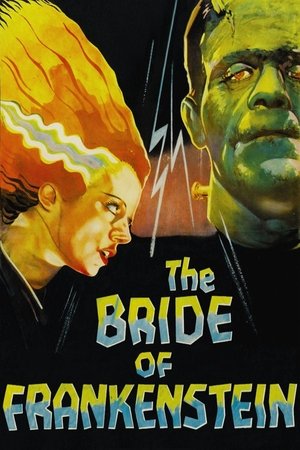
Fulton returned to work with James Whale on Bride of Frankenstein in 1935. The film required a broader variety of effects than the original Frankenstein, including miniatures, electrical apparatus, explosions and the small artificial people displayed by Dr. Pretorius. American Cinematographer has documented Fulton’s contribution alongside other effects specialists working on the production.
The miniature and optical work had to fit into one of Universal’s most elaborate Gothic environments. The final destruction of the tower combines detailed miniature construction, controlled pyrotechnics and high-speed photography. Such sequences demonstrate that Fulton’s work was never limited to invisibility.
The homunculi of Dr. Pretorius
Pretorius introduces Henry Frankenstein to a series of miniature people kept in glass containers. The sequence required photographic combination so that full-size performers could appear as tiny figures inside the vessels while interacting visually with the actors examining them.
The scene is technically playful rather than frightening, but it provides an important example of how effects could extend narrative ideas. Pretorius’s experiments become visible evidence of artificial life rather than information conveyed only through dialogue. Fulton’s department therefore contributes directly to characterization and story development.
The Invisible Ray
Fulton worked as special cinematographer on The Invisible Ray in 1936, photographed by George Robinson and starring Boris Karloff and Bela Lugosi. Karloff plays scientist Janos Rukh, whose exposure to a powerful radioactive element eventually makes his body dangerous to others.
The film required luminous and scientific effects rather than literal invisibility. Its combination of horror and speculative science gave Fulton another opportunity to develop images around forces that could not be photographed directly. AFI credits him specifically with special cinematography on the production.
Dracula’s Daughter
Fulton also contributed visual effects to Dracula’s Daughter, released in 1936. George Robinson photographed the film and Lambert Hillyer directed. The production continued Universal’s Dracula property while giving Gloria Holden’s Countess Marya Zaleska a markedly different narrative from Bela Lugosi’s Count.
Effects are less dominant here than in The Invisible Man, but Fulton’s presence demonstrates how Universal routinely assigned a specialist department even to horror films where supernatural events were relatively restrained. The technical infrastructure created during the early cycle had become part of standard studio production.
The Invisible Man Returns
Universal revived the Invisible Man concept in 1940 with The Invisible Man Returns, starring Vincent Price. Fulton returned to effects work and received an Academy Award nomination for the production. The sequel provided several opportunities to improve techniques first developed seven years earlier.
Better equipment and accumulated experience allowed more complicated interaction between the invisible figure and moving environments. Price’s vocal performance supplied a new personality while the visual system established by Fulton gave the franchise continuity independent of Claude Rains.
The Invisible Woman and Invisible Agent
Fulton continued working on variations of the concept in The Invisible Woman and Invisible Agent. The films shift among comedy, espionage and science fiction while retaining the technical challenge of representing an unseen body. His effects work received further Academy recognition during this period.
The repeated assignments are historically important because they document the evolution of one effects technique across different budgets and genres. Fulton could test new approaches rather than treating the 1933 solution as permanently fixed.
Frankenstein Meets the Wolf Man
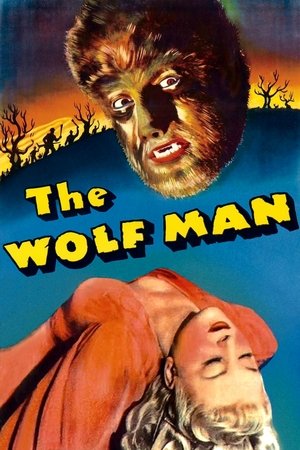
Fulton handled special photographic effects on Frankenstein Meets the Wolf Man in 1943, photographed by George Robinson. The production brought Lon Chaney Jr.’s Larry Talbot into the Frankenstein series and placed Bela Lugosi inside the Monster makeup.
The effects demands included supernatural transformations, laboratory equipment and the catastrophic destruction associated with the climax. By this stage Fulton was contributing to films built around Universal’s accumulated monster mythology rather than the isolated prestige productions of the early 1930s.
House of Frankenstein
House of Frankenstein in 1944 again credits Fulton with special photographic effects. George Robinson served as director of photography and Erle C. Kenton directed. Boris Karloff, Lon Chaney Jr., John Carradine and Glenn Strange brought several established horror properties into one film.
The project demonstrates the continuity of Universal’s technical personnel even as the artistic structure of the horror cycle changed. Fulton’s effects department remained capable of supporting resurrection, transformation and laboratory imagery after the studio’s monsters had become recurring franchise characters.
Working with George Robinson
Fulton and cinematographer George Robinson shared several important Universal genre productions, including The Invisible Ray, Frankenstein Meets the Wolf Man and House of Frankenstein. Their responsibilities were different but closely connected. Robinson photographed the principal negative while Fulton created special elements that had to match it.
Such relationships were especially important before computerized image correction. The effects department needed exact information about exposure, camera angle and lighting. Successful composites depended on the special-effects photography looking like part of Robinson’s original scene rather than material created separately.
Leaving Universal and moving to Paramount
Fulton eventually left Universal and joined Paramount after the death of effects-department head Gordon Jennings in the early 1950s. The move placed him inside another major studio with substantial resources and opened the next stage of his career.
By then his professional reputation extended far beyond horror. The techniques developed on supernatural films had applications in musicals, war pictures, adventure films and large-scale spectacle. The underlying problems remained similar: combine separately photographed elements so that the audience perceives one coherent physical event.
Alfred Hitchcock and effects hidden inside realistic filmmaking
Fulton contributed effects to several films associated with Alfred Hitchcock, including work connected with Rear Window, To Catch a Thief and Vertigo. These assignments differed from Universal horror because the effects were frequently designed to remain unnoticed rather than advertise a supernatural event.
The work demonstrates an important aspect of Fulton’s career. Spectacular invisibility made him famous, but professional effects photography often consists of constructing environments or transitions that viewers accept as ordinary. His technical range extended from obvious fantasy to images whose manipulation was intended to disappear completely.
Academy Awards and later technical recognition
Fulton won three Academy Awards for visual or special effects during his career. Wonder Man brought the first award, followed by The Bridges at Toko-Ri and Cecil B. DeMille’s The Ten Commandments. The latter required the famous parting of the Red Sea and became one of the most widely recognized effects sequences of 1950s Hollywood.
These achievements belong to different genres from his early horror work but developed from the same technical foundation. Multiple elements had to be planned before photography and combined through controlled optical processes. The scale increased dramatically while the requirement for precise photographic matching remained.
The importance of laboratory work
Fulton’s career is also a reminder that classical visual effects were created partly inside film laboratories. The visible set and camera work represented only one stage. Negatives, positives, mattes and optical copies were processed repeatedly before the final composite existed.
Every additional generation could reduce image quality, making exposure control and clean matte edges essential. Fulton’s reputation resulted from his ability to manage this entire chain rather than simply inventing clever tricks on set.
Death and unfinished late work
Fulton remained professionally active into the 1960s. He died in 1966 while working in Europe, ending a career that had begun in the silent-era camera departments and continued into increasingly sophisticated color effects photography.
He did not live to see digital compositing, but many of the conceptual problems solved by modern software are recognizable in his work: isolate part of an image, preserve movement and perspective, combine layers and prevent the join from becoming visible. The tools changed completely while the visual objective remained familiar.
John P. Fulton’s place in horror history
Fulton’s principal contribution to horror was the demonstration that photographic effects could create a recurring screen monster without requiring a visible creature. The Invisible Man depends on the audience accepting that a body occupies space even when none can be seen. The effect becomes part of performance and narrative rather than an isolated spectacle.
His work also connected Universal’s two major horror periods. He participated in the technically ambitious films of the Laemmle years and remained active when the studio later combined its monsters into sequels and ensemble productions. Few technicians contributed so directly to both the early prestige cycle and the franchise-oriented horror of the 1940s.
Selected Work
Notable Horror Collaborators
Notable collaborators and creative partners throughout John P. Fulton's horror career.
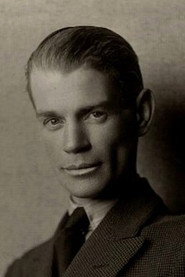 James Whale
Special Effects / Director Collaborator
Fulton worked on several Whale productions, including Frankenstein, The Invisible Man and Bride of Frankenstein. Their collaboration produced some of Universal’s most important early horror effects, with The Invisible Man making Fulton’s optical photography central to the title character itself.
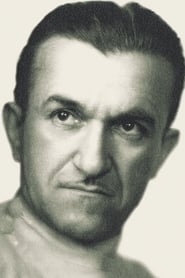 Jack Pierce
Special Effects / Makeup Collaborator
Fulton and Pierce worked within the same Universal horror production system across films including Frankenstein, Bride of Frankenstein and later monster productions. Pierce created physical transformations while Fulton handled photographic events that could not be achieved through makeup alone.
CH
Charles D. Hall
Special Effects / Art Direction Collaborator
Hall’s sets and Fulton’s effects shared several major Universal horror productions, including Frankenstein, The Invisible Man and Bride of Frankenstein. Their departments had to coordinate perspective, lighting and architecture so optical effects could be integrated convincingly into physical sets.
 Carl Laemmle Jr.
Special Effects / Producer Collaborator
Fulton developed much of his early horror work while Laemmle Jr. supervised Universal production. Frankenstein, The Invisible Man and Bride of Frankenstein were among the films in which the studio’s investment in specialized technical departments allowed Fulton to advance effects photography.
GR
George Robinson
Special Effects / Cinematography Collaborator
Robinson and Fulton shared several Universal genre productions, including The Invisible Ray, Frankenstein Meets the Wolf Man and House of Frankenstein. Robinson photographed the principal action while Fulton supplied special photographic elements that had to match his lighting and exposure.
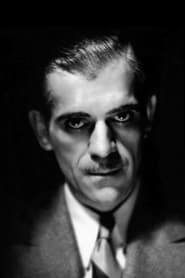 Boris Karloff
Special Effects / Actor Collaborator
Karloff appeared in several major horror productions involving Fulton’s effects work, including Frankenstein, Bride of Frankenstein and House of Frankenstein, with additional shared genre projects during the Universal period. Fulton’s photography frequently supported the laboratory and supernatural events surrounding Karloff’s characters.
John P. Fulton Horror Movies
Special FX / Practical FX (14 credits)
1943
1942
1942
1941
1941
1939
1935
1935
1933
1932
1932
1932
1931
Visual Effects (15 credits)
1958
1958
1945
1944
1944
1944
1944
1943
1942
1940
1940
1936
1935
1935
1931
Other Crew (1 credits)
1936