
1935
James Whale
Horror Director · Biography · Horror Filmography · Collaborators · Credits
Horror subgenres & themes
Most represented across this person's horror filmography:
MEDICAL
Biography
James Whale and the formation of Universal horror
James Whale directed four films between 1931 and 1935 that occupy a central position in the development of American horror: Frankenstein, The Old Dark House, The Invisible Man and Bride of Frankenstein. Their importance extends beyond the monsters and stories they introduced to popular culture. Whale brought theatrical experience, careful control of performance and an unusually mobile visual style into productions that helped define how Universal approached Gothic horror during the early sound period.
His career was broader than horror. Before entering Hollywood he became successful in British theatre, and after his early Universal films he directed drama, comedy, musical and adventure pictures including Waterloo Bridge, One More River, Show Boat and The Man in the Iron Mask. The extraordinary durability of his horror films later overshadowed that range. Whale himself attempted to move beyond the genre relatively early, an important distinction when considering the reputation that developed around him after his retirement from feature directing.
Dudley, working-class origins and artistic training
James Whale was born in Dudley, Worcestershire, England, on July 22, 1889, into a large working-class family. He showed an early interest in drawing and visual art and worked before establishing a professional life in theatre. These interests in composition, design and caricature remained relevant when he eventually moved into stage direction and film.
Whale’s route into professional directing differed markedly from that of filmmakers who had developed entirely inside the American studio system. His formative experiences came through wartime captivity and British theatre, where staging, actor movement and the organization of enclosed spaces were central practical concerns long before he worked with a motion-picture camera.
World War I and theatre in a prisoner-of-war camp
Whale served in the British Army during the First World War and was captured by German forces. During his period as a prisoner of war he became involved in theatrical productions staged inside the camp. He acted, designed and helped organize performances, gaining practical experience under unusual conditions.
After the war he pursued theatre professionally in Britain. He worked as actor and set designer before establishing himself increasingly as a director. The progression gave him familiarity with several components of stage production rather than only performance, which later contributed to his ability to coordinate actors and design departments in Hollywood.
Journey’s End and the move toward Hollywood
Whale’s major theatrical success came with R. C. Sherriff’s Journey’s End, a drama set among British officers in the trenches during the First World War. Whale directed the London production, which starred Colin Clive as Captain Stanhope and became a major success. His handling of an enclosed environment and a group of men under psychological pressure attracted international attention.
The success led directly toward cinema. Whale directed the 1930 film version of Journey’s End and brought Colin Clive into the production. That professional relationship later became crucial to Frankenstein. Whale also worked in Hollywood during the transition to sound, including dialogue-related work on large productions where studios needed theatre professionals experienced with spoken performance.
Waterloo Bridge and Universal
Whale directed Waterloo Bridge for Universal in 1931 before receiving the project that defined his relationship with the studio. The drama demonstrated his ability to handle actors and emotionally difficult material within commercial filmmaking. Universal, under Carl Laemmle Jr., was simultaneously assessing the major success of Dracula and looking for further horror properties.
Frankenstein had already undergone development under Robert Florey when Whale became attached. The change in director also altered casting and visual conception, beginning a production in which several of Whale’s preferred collaborators would become central to the future identity of Universal horror.
Frankenstein and the consolidation of Universal horror
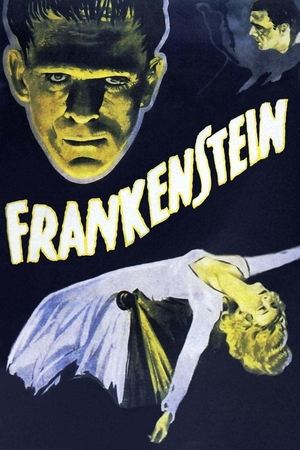
Frankenstein was released in 1931, the same year as Dracula, and became another major commercial success for Universal. Colin Clive plays Henry Frankenstein, Mae Clarke plays Elizabeth and Dwight Frye appears as Fritz. Boris Karloff, still relatively little known to general audiences, was cast as the Monster and underwent the elaborate transformation designed principally by makeup department head Jack Pierce.
Whale’s film draws from Mary Shelley, theatrical adaptations and material developed specifically for the screen. The criminal-brain subplot and several character relationships have no direct equivalent in the novel. The film therefore became its own version of the Frankenstein story rather than a close literary transcription, and that version strongly shaped later popular familiarity with the material.
Boris Karloff and the Monster
Karloff’s casting became one of the decisive choices in Whale’s career. His thin facial structure allowed Pierce to build the enlarged forehead, heavy brow and scars of the creature while preserving enough mobility for expression. Whale then gave the Monster sequences that depend heavily on gesture because the character has no conventional spoken dialogue.
The performance gained sympathy through scenes such as the encounter with the child Maria and through the Monster’s repeated confusion when confronted by violence or fear. This emotional dimension distinguished the film from a straightforward mad-scientist narrative and became one of the reasons Karloff’s interpretation survived as more than a visual icon.
Jack Pierce, Charles D. Hall and the visual production of Frankenstein
Whale’s horror films depended heavily on specialized collaborators. Jack Pierce developed the character makeup, while art director Charles D. Hall helped create the laboratory, village and Gothic environments surrounding the actors. Cinematographer Arthur Edeson photographed the film using stark contrast and compositions that reflected the influence of European visual styles already circulating through Hollywood.
The laboratory equipment assembled by Kenneth Strickfaden added another recognizable layer to the production. Whale integrated these components through staging and camera movement, particularly during the creation sequence. The resulting film established a model of laboratory Gothic that later Frankenstein adaptations and unrelated horror films repeatedly quoted.
German Expressionist influence and Whale’s visual style
Whale’s horror work is frequently connected with German Expressionist cinema, whose stylized sets, shadow patterns and distorted environments had influenced international filmmaking throughout the 1920s. Universal itself employed European-born technicians familiar with these traditions. Whale adapted such visual ideas within the resources of an American sound studio rather than reproducing one specific German film.
His camera was also often more mobile than the theatrical reputation of early sound cinema might suggest. Staircases, corridors and large constructed interiors allowed movement through depth, while careful blocking prevented dialogue scenes from becoming static records of stage performance. These formal qualities became more pronounced in his later horror films as Whale gained greater control at Universal.
The Old Dark House
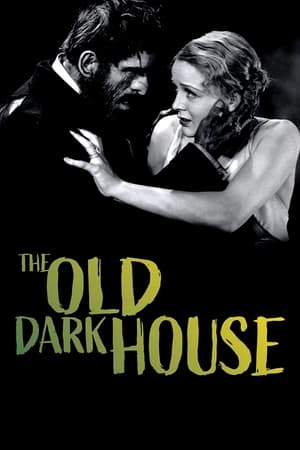
Whale followed Frankenstein with The Old Dark House in 1932, adapted from J. B. Priestley’s novel Benighted. A group of travelers caught in severe weather takes refuge in the isolated home of the Femm family. Boris Karloff plays Morgan, the household’s mute servant, alongside Ernest Thesiger, Eva Moore, Charles Laughton, Melvyn Douglas, Gloria Stuart and Raymond Massey.
The film combines menace with sustained black comedy and gives its ensemble considerably more importance than any single monster. Its structure became familiar through decades of haunted-house cinema: travelers isolated by weather, an eccentric family, concealed danger and an old building whose internal spaces determine the action. BFI has identified it as an influential early example of the form.
Humor within Whale’s horror
Dark humor became an increasingly conspicuous component of Whale’s horror films. The Old Dark House makes comedy part of character interaction rather than separating it into unrelated relief scenes. Ernest Thesiger’s Horace Femm and other performers can be funny while the situation remains threatening.
Whale continued this approach in The Invisible Man and especially Bride of Frankenstein. The humor distinguishes his work from Universal productions that treat Gothic atmosphere with greater solemnity. It also reflects his theatre background, where timing and performance style could change the meaning of dialogue without requiring changes in plot.
R. C. Sherriff and The Invisible Man
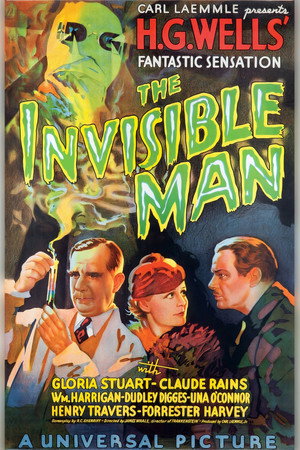
Whale reunited with R. C. Sherriff for The Invisible Man, released in 1933 and adapted from H. G. Wells. Their relationship dated back to Journey’s End, giving Whale a screenwriter whose dramatic instincts he understood well. Development of the project had passed through several treatments before Sherriff produced a screenplay that Whale could use.
Claude Rains was cast as scientist Jack Griffin despite limited film experience. Because the character spends much of the picture hidden beneath bandages or entirely invisible, voice becomes the principal means of performance through long sections. Whale’s own background in theatre and dialogue direction was particularly useful for a protagonist whose face could rarely communicate directly with the audience.
John P. Fulton and the effects of The Invisible Man
Special-effects artist John P. Fulton became central to The Invisible Man. The production used multiple photographic techniques, including black velvet, mattes and compositing, to remove visible portions of Rains’s body while allowing clothing, bandages or objects to move through the frame. The effects required close coordination among camera, laboratory, costume and performance departments.
The film’s success showed that Universal horror could generate a major monster without relying on Jack Pierce’s heavy transformation makeup. The technical problem was reversed: instead of building a new face onto an actor, Fulton’s effects had to erase the body while preserving convincing interaction with the environment.
Claude Rains and a different kind of Universal monster
Jack Griffin also differs psychologically from Frankenstein’s Monster. He begins as an educated scientist who has already made himself invisible and gradually becomes increasingly violent and grandiose. The screenplay connects this behavior partly with the drug used during the experiment, allowing Rains to move from controlled speech toward manic self-confidence.
Whale surrounds this escalation with comic supporting characters, including Una O’Connor, while allowing Griffin’s murders to remain serious within the story. The balance became characteristic of Whale’s later horror and contributed to the film’s unusual tone.
One More River and Whale outside horror
Whale continued seeking projects outside horror during the period between The Invisible Man and Bride of Frankenstein. One More River, adapted from John Galsworthy and written for the screen by R. C. Sherriff, deals with an abusive marriage and the social consequences faced by a woman attempting to leave it. Colin Clive again worked with Whale, this time in a realistic dramatic role.
The film is relevant to Whale’s career because it demonstrates that his visual control and interest in socially constrained characters were not limited to Gothic material. His horror reputation was already strong, but he did not regard himself primarily as a specialist and repeatedly pursued films in other genres.
Returning to Frankenstein
Universal wanted a sequel to Frankenstein almost immediately after the first film’s success. Whale initially resisted returning and rejected early story ideas. After the success of The Invisible Man, his position at the studio was strong enough for him to negotiate substantial creative freedom before agreeing to direct what became Bride of Frankenstein.
The production went through several writers and treatments. William Hurlbut ultimately provided the principal screenplay, while Whale shaped the material extensively during development. The director also insisted on completing One More River before beginning the sequel, demonstrating that the Frankenstein project was part of a broader career rather than an assignment he accepted automatically.
Bride of Frankenstein and expanded creative control
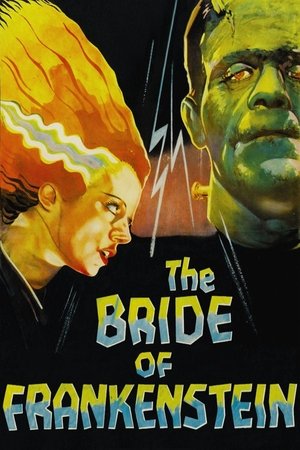
Bride of Frankenstein was released in 1935 with Karloff and Colin Clive returning and Elsa Lanchester cast both as Mary Shelley and the Bride. Ernest Thesiger plays Dr. Pretorius, a scientist who persuades Henry Frankenstein to participate in the creation of a female companion for the Monster. The sequel expands the Monster’s ability to communicate and gives Karloff substantially more dialogue and emotional interaction than in the first film.
Whale used the sequel to alter tone as well as mythology. Humor becomes more explicit, particularly through Pretorius and several supporting characters, while Franz Waxman’s score gives the film a musical dimension absent from the first Frankenstein. The production also contains more elaborate visual effects and miniature work, reflecting the greater resources available after the original film’s success.
The Monster, the hermit and language
One of the sequel’s major additions is the Monster’s encounter with a blind hermit who cannot respond to his appearance. The relationship allows the creature to learn basic speech and experience companionship outside immediate fear or violence. Karloff reportedly had reservations about giving the Monster dialogue, but the scenes became central to the film’s development of the character.
Whale stages the encounter with considerable simplicity compared with the laboratory spectacle elsewhere in the film. The sequence provides a direct explanation for the Monster’s later desire for a companion and gives the Bride experiment an emotional motive beyond scientific ambition.
Dr. Pretorius and Ernest Thesiger
Ernest Thesiger had already worked with Whale in The Old Dark House and became one of the director’s most memorable collaborators through Dr. Pretorius. The character is a scientist operating independently of Henry Frankenstein who has created miniature human beings and seeks to continue experiments with artificial life.
Thesiger’s highly mannered performance gives Pretorius a tone unlike the conventional laboratory scientist of contemporary horror. The character also allows Whale to place comedy and scientific transgression inside the same scenes without diminishing the narrative consequences of the experiment.
Religious imagery and censorship
Bride of Frankenstein contains conspicuous religious imagery, including visual references associated with crucifixion and resurrection. Critics and historians have interpreted these elements in different ways, and the film’s censorship history demonstrates that contemporary authorities were attentive to material they regarded as potentially irreverent.
It is useful to distinguish these documented images from later attempts to reduce the entire film to one allegorical interpretation. Whale combined religious references with Gothic fiction, comedy and artificial-creation themes. The density of this material is one reason the film has generated unusually extensive critical literature.
Whale’s sexuality and later queer interpretation
Whale was gay, and his sexuality was known within portions of his Hollywood social environment. Later scholarship has examined The Old Dark House and Bride of Frankenstein through queer readings, often concentrating on outsider characters, Ernest Thesiger’s performances and the unusual domestic or reproductive arrangements within the stories. BFI and other major film institutions now discuss these interpretations as an important component of Whale scholarship.
Biographical fact and textual interpretation should remain distinct. Whale’s sexuality is documented, while the precise meaning of individual scenes continues to be debated. The films support analysis from several perspectives, including class, gender, religion and authorship. Their historical significance does not depend on proving one exclusive coded message.
Charles D. Hall and Universal Gothic design
Art director Charles D. Hall worked across several of Whale’s major horror productions and was central to the physical environments associated with Universal Gothic cinema. Laboratories, staircases, cellars and oversized interiors gave actors spaces through which Whale could organize movement and camera position.
The collaboration helped establish visual continuity without making every film identical. Frankenstein requires a village and laboratory, The Old Dark House confines much of its ensemble within an eccentric residence and The Invisible Man moves through inns, laboratories and public spaces. Hall’s work supported the specific dramatic requirements of each production.
John P. Fulton and technical experimentation
John P. Fulton contributed special effects to several Whale films and became particularly important on The Invisible Man and Bride of Frankenstein. His department handled effects that could not be achieved through makeup or conventional set construction, including invisibility and several miniature or composite images.
Whale’s horror reputation therefore developed through collaboration with a stable group of technicians capable of solving unusual problems. Pierce created physical transformations, Hall organized environments and Fulton handled photographic impossibilities. Whale’s role was to integrate these specializations into coherent scenes and performances.
Carl Laemmle Jr. and creative freedom at Universal
Carl Laemmle Jr. was a crucial producer during Whale’s most important horror period. His support for ambitious Gothic productions allowed Universal to invest in properties that other studios had treated more cautiously after the transition to sound. Whale benefited directly from this environment.
The relationship became particularly important when Whale negotiated greater freedom for Bride of Frankenstein. The eventual end of the Laemmle family’s control of Universal altered the studio environment and coincided with the closing of the first major horror cycle, changing the institutional circumstances under which Whale had produced his most distinctive films.
Show Boat and the effort to move beyond horror
Whale directed the 1936 version of Show Boat, adapted from the Jerome Kern and Oscar Hammerstein II musical. The large-scale production demonstrated his ability to handle music, ensemble performance and material entirely outside horror. It remains one of the principal films used to correct the simplified image of Whale as exclusively a horror director.
He continued working in other genres, including comedy and period adventure. The Great Garrick and The Man in the Iron Mask show different aspects of his direction and his continuing interest in elaborate staging. None displaced the cultural visibility of his Universal horror work.
Changing studio conditions and the end of Whale’s feature career
Whale’s position in Hollywood weakened during the later 1930s as studio management changed and several projects performed below expectations. His opportunities became less compatible with the level of creative authority he had enjoyed during the Laemmle period. By the early 1940s he had largely withdrawn from feature-film direction.
His last years as an active filmmaker included projects that received far less attention than the early Universal pictures. He increasingly devoted time to painting and private life rather than attempting to recreate his earlier studio status.
Later life, illness and death
During the 1950s Whale experienced serious health problems, including strokes that affected his physical condition and independence. He died in 1957 by drowning in the swimming pool at his home. A suicide note discovered afterward established the death as intentional.
Later representations have sometimes transformed his final years into dramatic extensions of the monsters and outsiders in his films. Such connections belong to fictional or critical interpretation rather than documented biography. Whale’s late illness can be described directly without using it to explain retrospectively the meaning of work made more than two decades earlier.
Gods and Monsters and renewed interest in Whale
Bill Condon’s 1998 film Gods and Monsters, adapted from Christopher Bram’s novel Father of Frankenstein, presented a fictionalized version of Whale’s final period with Ian McKellen in the central role. The film received substantial critical attention and introduced Whale’s life to audiences who knew the Universal monsters without necessarily knowing their director.
The renewed interest coincided with film restoration and scholarship that expanded understanding of his career beyond Frankenstein. The Old Dark House in particular benefited from recovery and reassessment after having been difficult to see for decades.
James Whale’s influence on horror cinema
Whale directed only a small number of horror films, but each contributed something different to the genre. Frankenstein established one of cinema’s fundamental monster images. The Old Dark House became an important early model for ensemble horror inside an isolated residence. The Invisible Man joined a technically complex visual-effects concept with a strong vocal performance. Bride of Frankenstein expanded an existing monster film into a more elaborate mixture of horror, comedy and fantasy.
Later filmmakers repeatedly drew from the visual language and characters created during this period. Universal itself reused the Monster and related properties throughout the 1940s, while Hammer and other studios later reconstructed Frankenstein for new generations. Whale’s influence remained visible even when subsequent filmmakers rejected the precise tone of his versions.
James Whale’s historical position
Whale’s place in horror history results from a concentrated period of work rather than from a career devoted exclusively to the genre. Between 1931 and 1935 he worked with Universal at the moment when sound horror was developing into a stable commercial category and contributed four films whose technical and performative choices became long-term reference points.
His theatre background, recurring collaborators and willingness to combine serious material with carefully controlled humor gave those films an identity different from many later Universal sequels. Understanding Whale as a broader filmmaker also makes the achievement clearer. Horror represented one part of a career that included war drama, social melodrama, musical and historical adventure, yet it was the part in which his collaboration with Universal’s actors and technicians produced the most enduring results.
Selected Work
Notable Horror Collaborators
Notable collaborators and creative partners throughout James Whale's horror career.
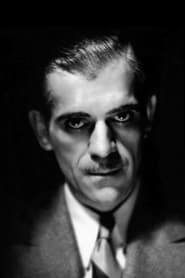 Boris Karloff
Director / Actor Collaborator
Whale directed Karloff in Frankenstein, The Old Dark House and Bride of Frankenstein. Their three horror films established Karloff as a major genre star and gave Whale the performer most closely associated with his contribution to Universal horror.
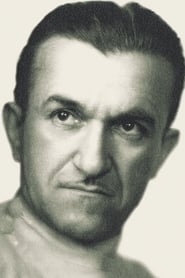 Jack Pierce
Director / Makeup Artist Collaborator
Pierce worked with Whale on Frankenstein, The Old Dark House, The Invisible Man and Bride of Frankenstein. His makeup designs supplied the physical transformations required by Whale’s productions and became a major component of Universal’s visual horror identity.
CH
Charles D. Hall
Director / Art Director Collaborator
Hall contributed art direction to several of Whale’s Universal horror films, creating laboratories, houses and Gothic interiors that gave the director spaces suitable for elaborate staging and camera movement. Their work was fundamental to the physical appearance of the early Universal cycle.
JF
John P. Fulton
Director / Special Effects Collaborator
Fulton worked on several Whale productions and became indispensable to The Invisible Man, where complex photographic effects created the title character’s screen presence. Their collaboration continued into the more technically elaborate world of Bride of Frankenstein.
 Carl Laemmle Jr.
Director / Producer Collaborator
Laemmle supported Whale during Universal’s most ambitious early horror period and produced several films central to the director’s reputation. His backing was especially important to the resources and creative freedom that allowed Whale to develop Frankenstein and its later sequel.
RS
R.C. Sherriff
Director / Writer Collaborator
Sherriff’s relationship with Whale began with Journey’s End and continued into film. Their horror collaborations include The Old Dark House and The Invisible Man, while additional non-horror work strengthened one of the most important writer-director partnerships of Whale’s career. The horror count falls below three, but the relationship is historically substantial.
James Whale Horror Movies
Directing (4 credits)
1933
1932
1931