



2026
Katharine Isabelle
Horror Actor · Biography · Horror Filmography · Collaborators · Credits
Horror subgenres & themes
Most represented across this person's horror filmography:
BODY HORROR
• WEREWOLVES
• HOME INVASION
• MEDICAL
Biography
Katharine Isabelle and the Modern Canadian Scream Queen
Katharine Isabelle became one of the most recognizable Canadian horror performers of her generation by moving repeatedly between vulnerable survivors, dangerous outsiders and women whose relationship with violence is far more complicated than conventional victimhood. Her breakthrough as Ginger Fitzgerald in Ginger Snaps established that identity at the beginning of the 2000s, but the role did not trap her inside one franchise. Over the following decades she moved through supernatural horror, slasher cinema, vampire films, home-invasion stories, body horror and television horror, repeatedly taking characters whose surface appearance hides something more unstable underneath. That flexibility allowed her to become a familiar genre presence without simply repeating Ginger in different costumes.
Isabelle's horror career is especially notable because two performances define very different stages of it. Ginger Fitzgerald turns adolescence, sexuality and bodily transformation into werewolf horror, while Mary Mason in American Mary transforms medical skill, body modification and revenge into a colder form of contemporary body horror. Between those roles lies a filmography that connects Canadian cult horror with major American franchises and a later generation of independent filmmakers who grew up watching the films that first made her recognizable.
Ginger Snaps and the Transformation of Ginger Fitzgerald
Ginger Snaps gave Isabelle the role that permanently connected her with horror. Ginger Fitzgerald and her younger sister Brigitte are outsiders in the suburban town of Bailey Downs, bonded by a fascination with death and an active rejection of the social world surrounding them. When Ginger is attacked by a creature on the same night she experiences her first menstrual period, the film connects lycanthropic transformation with puberty, sexuality and the sudden attention placed on a body that no longer feels entirely under its owner's control. Isabelle plays the change gradually, allowing confidence, aggression, appetite and physical transformation to emerge as different aspects of the same process.
The performance works because Ginger never becomes only a monster effect. Her transformation changes the relationship with Brigitte before it completely changes her body, and Isabelle makes that emotional separation as important as the growing claws, wounds and animal behavior. Ginger enjoys parts of the power that come with the transformation even while losing the ability to control where it leads. That ambiguity helped distinguish the film from werewolf stories built primarily around fear of becoming a creature. Ginger's horror is also the attraction of becoming someone capable of rejecting the limitations that previously defined her.
John Fawcett, Karen Walton and the Meaning of the Werewolf
Director John Fawcett and screenwriter Karen Walton created the framework that allowed Isabelle's performance to become more than a conventional transformation role. The film uses lycanthropy as a metaphor without reducing every event to a single symbolic meaning. Menstruation, sexual awakening, anger, social exclusion and the changing relationship between sisters all pass through the same horror mechanism. Fawcett's direction keeps the suburban environment recognizably ordinary while gradually allowing Ginger's physical changes to distort it, and Walton's screenplay gives the sisters a language and emotional intimacy strong enough to carry the film even before the creature material becomes dominant.
Fawcett remained connected with the franchise as executive producer on the two 2004 follow-ups, while Walton received a characters credit on Ginger Snaps 2: Unleashed. Their continuing presence matters because the central identity of the series depends on the Fitzgerald sisters rather than simply on a generic werewolf mythology. Even when later filmmakers change the period, tone and narrative structure, Ginger and Brigitte remain the conceptual center established by the first film.
Emily Perkins and the Fitzgerald Sisters
Emily Perkins is the defining acting partner of Isabelle's horror career. As Brigitte Fitzgerald, she shares the emotional center of all three Ginger Snaps films with Isabelle. The original film is built around the sisters' intense loyalty and the way Ginger's transformation begins to make that loyalty impossible to maintain. Perkins plays Brigitte as the more cautious and analytical sister, while Isabelle's Ginger increasingly embraces the physical and social power accompanying her change. The horror develops because neither sister can simply abandon the other even after their relationship becomes dangerous.
The connection continues through Ginger Snaps 2: Unleashed, where Ginger survives as a psychological presence haunting Brigitte, and Ginger Snaps Back: The Beginning, which reimagines the two actresses as nineteenth-century versions of the sisters facing another werewolf outbreak. The third film abandons modern Bailey Downs but preserves the essential relationship between Isabelle and Perkins. Across the trilogy, the actors become more constant than the chronology itself, making their pairing the franchise's most durable element.
Steven Hoban and the Continuity of the Ginger Snaps Trilogy
Producer Steven Hoban worked across all three Ginger Snaps films, providing production continuity as the series moved from the original contemporary story into two very different follow-ups. That role is especially important because the sequels were produced in the same period but pursue sharply different ideas. Unleashed follows Brigitte after the first film and turns the werewolf infection into a story of addiction, institutional confinement and the fear of inevitable transformation, while Ginger Snaps Back relocates Isabelle and Perkins into a historical setting and reinterprets their bond through another cycle of lycanthropy.
Hoban's recurring involvement helped preserve the identity of the series while directors Brett Sullivan and Grant Harvey took over from Fawcett. The films could change visual style and narrative structure without losing the actors and mythology that made the original distinctive. For Isabelle, that continuity meant Ginger could remain part of her horror identity even when the character no longer occupied the story in the same way.
Carrie, Freddy vs. Jason and Franchise Horror
After Ginger Snaps, Isabelle moved directly through several recognizable horror properties. In the 2002 television adaptation of Carrie, she played Tina Blake, placing her inside another story where adolescent cruelty and bodily transformation collide with violence. The role is very different from Ginger because Tina participates in the social aggression surrounding Carrie rather than occupying the position of the outsider, allowing Isabelle to move to the opposite side of a familiar teenage-horror dynamic.
Freddy vs. Jason then placed her inside one of the most explicit franchise crossovers in modern slasher cinema. Isabelle plays Gibb, a member of the group caught between Freddy Krueger's return and Jason Voorhees's killing spree. The role connects her directly with two of the genre's most recognizable monsters only a few years after Ginger Snaps had established her as a new horror figure in her own right. Rather than becoming identified exclusively with Canadian independent horror, Isabelle was now visible inside the mainstream slasher machinery that had shaped the previous two decades.
American Mary and the Reinvention of Katharine Isabelle
American Mary became the second defining horror performance of Isabelle's career. Written and directed by Jen and Sylvia Soska, the film casts her as Mary Mason, a medical student whose financial desperation draws her into underground body-modification surgery. What begins as an attempt to survive outside a medical system she increasingly despises develops into a new professional identity in which surgical precision, revenge and bodily autonomy become impossible to separate. Isabelle plays Mary with controlled intelligence rather than constant hysteria, allowing the character to become more frightening as she appears more composed.
The role also gave Isabelle a kind of authority she had rarely possessed in earlier horror films. Ginger's transformation eventually overwhelms her, while Mary learns to use specialized knowledge deliberately. Surgical instruments become tools of economic independence, self-protection and punishment, and Isabelle's restrained performance prevents the increasingly extreme procedures from turning Mary into a cartoonish mad doctor. Her work received the Best Actress award at the 2012 Screamfest Horror Film Festival, where the film also won Best Picture and Jen and Sylvia Soska won Best Director.
Jen and Sylvia Soska
Jen and Sylvia Soska became the most important directors of Isabelle's post-Ginger Snaps horror career. They built American Mary around a character who required Isabelle to carry nearly every tonal shift in the film, from financial anxiety and professional humiliation to surgical confidence, revenge and emotional detachment. Isabelle later described becoming absorbed in the screenplay immediately and praised the sisters' unusually unified approach to directing. Their collaboration produced a role that gave her established horror reputation a new center rather than merely trading on nostalgia for Ginger Fitzgerald.
The partnership continued with See No Evil 2, where Isabelle plays Tamara opposite Danielle Harris in the Soskas' continuation of the Jacob Goodnight slasher story. Tamara is deliberately unlike Mary: impulsive, morbid and fascinated by the killer's corpse before the morgue becomes a new killing ground. The second collaboration demonstrates why both Soska sisters belong among Isabelle's key horror connections. They did not simply direct her once in a career-defining film; they brought her back into a completely different horror register and used her screen persona in another way.
30 Days of Night: Dark Days and Torment
Isabelle continued expanding her horror range with 30 Days of Night: Dark Days, playing Stacey within the vampire resistance surrounding Stella Oleson after the events in Barrow. The film moves her into a world where vampires are organized predators rather than metaphors for adolescence or sexuality, and the character exists as part of a group that has already accepted the supernatural as a practical reality. The role adds another established horror mythology to a career increasingly defined by movement between franchises and independent productions.
In Torment, Isabelle takes the more conventional position of an endangered protagonist as Sarah Morgan, a woman whose family trip becomes a home-invasion nightmare. The film depends heavily on physical exhaustion and escalating psychological pressure, and director Jordan Barker specifically emphasized the demanding nature of Isabelle's performance. The role demonstrates the difference between merely appearing in horror and being able to carry sustained survival material: much of the tension depends on the audience remaining invested in Sarah while the home that should represent safety becomes increasingly impossible to control.
See No Evil 2 and the Pleasure of Playing Against Expectation
See No Evil 2 places Isabelle inside a morgue slasher opposite Danielle Harris and Glenn Jacobs. Her character Tamara is fascinated by death and by the body of serial killer Jacob Goodnight, allowing Isabelle to play with the audience's expectation that a veteran horror performer will recognize danger before everyone else. Instead, Tamara's attraction to the macabre draws her physically closer to the threat. The role is playful, sexual and deliberately reckless, sharply contrasting with the cold professional control of Mary Mason.
The film therefore becomes a useful example of Isabelle's ability to vary her genre persona. Horror casting often encourages performers to repeat the qualities that made an earlier role successful, but Isabelle has repeatedly accepted characters positioned differently in relation to fear. She can be the transforming monster, the intelligent avenger, the reckless victim or the experienced survivor without losing the recognition that decades of genre work bring to the screen.
The Girl in the Photographs and Late Slasher Horror
The Girl in the Photographs continued Isabelle's relationship with slasher cinema in a story built around killers who photograph their victims and use the resulting images to attract attention. She plays Janet within a film that connects contemporary image culture with the exhibitionism of murder. The production also carried a direct connection to Wes Craven, who served as an executive producer, giving the film an additional link to the modern slasher tradition shortly before his death.
For Isabelle, the film belongs to a period in which her casting itself had become part of horror recognition. By then audiences could connect her with werewolves, Freddy and Jason, body modification and multiple slasher films before the new story established its own rules. That accumulated genre memory became an asset independent filmmakers could use without requiring her to replay any one famous character.
Hannibal and Margot Verger
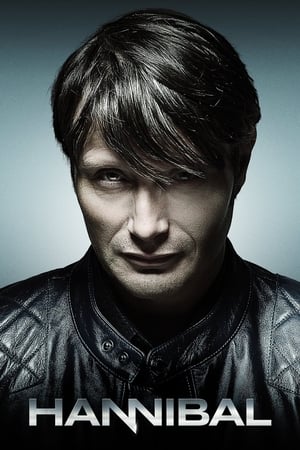
Television gave Isabelle one of her strongest later horror roles in Bryan Fuller's Hannibal, where she plays Margot Verger. Margot is trapped inside the violent psychological control of her brother Mason and enters the therapeutic orbit surrounding Hannibal Lecter. The series uses horror through psychology, mutilation, manipulation and elaborate visual tableaux rather than conventional slasher mechanics, giving Isabelle material very different from the films that first established her genre reputation.
Margot's survival depends upon recognizing how power moves between people who rarely state their intentions directly. Isabelle plays her with guarded intelligence and controlled anger, fitting naturally into a series where nearly every conversation can function as a threat. The role is important within her horror career because it demonstrates that her effectiveness does not depend upon practical gore surrounding her. She can create tension through stillness, withheld information and the sense that a character is constantly calculating how much of herself it is safe to reveal.
Night of the Animated Dead and the Return to a Horror Foundation
Isabelle later voiced Barbara in Night of the Animated Dead, an animated retelling of George A. Romero's Night of the Living Dead. The project connects her with one of the foundational texts of modern zombie cinema while requiring an entirely different performance tool: voice rather than physical presence. Barbara is a character defined by shock, fear and the rapid collapse of ordinary reality, and Isabelle's participation places another major horror tradition inside a filmography already spanning werewolves, vampires, slashers and body horror.
The role also illustrates how thoroughly Isabelle's career has become embedded in genre culture. By this stage she no longer needed a new franchise to establish her horror credentials; her presence itself carried associations accumulated over two decades. The animated format allowed those associations to enter a reinterpretation of an older classic without simply recreating one of her previous screen personas.
Katharine Isabelle's Horror Legacy
Katharine Isabelle's horror career is defined by two extraordinary centers and the network of collaborators surrounding them. John Fawcett, Karen Walton, Steven Hoban and Emily Perkins belong to the Ginger Snaps world that first gave her a lasting genre identity. Fawcett and Walton created a werewolf story in which female adolescence was not decorative background but the mechanism driving the horror, Hoban carried the property across the trilogy and Perkins made the relationship between Ginger and Brigitte strong enough to survive changes in chronology, director and setting.
Jen and Sylvia Soska then provided the second major transformation through American Mary. Instead of returning Isabelle to the role of threatened young woman, they made her the organizing intelligence of a body-horror film about surgical skill, exploitation and revenge, then brought her back for the entirely different slasher energy of See No Evil 2. Around those landmarks, Isabelle has continued moving through Carrie, Freddy vs. Jason, 30 Days of Night: Dark Days, Torment, The Girl in the Photographs, Hannibal and Night of the Animated Dead. The result is a horror career built not on one repeated character type, but on the ability to make transformation, danger and damaged identity feel different every time.
Photos (4)
Images: TMDB
Selected Work
Notable Horror Collaborators
Notable collaborators and creative partners throughout Katharine Isabelle's horror career.
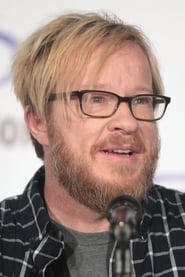 John Fawcett
Defining Horror Director & Creator
Fawcett directed Isabelle in Ginger Snaps and remained executive producer on both follow-ups, making him one of the principal architects of the horror role that defined her early career.
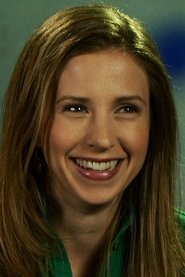 Emily Perkins
Defining Horror Co-Star
Perkins played Brigitte opposite Isabelle's Ginger across all three Ginger Snaps films, creating the sister relationship that became the emotional and thematic center of the franchise.
JS
Jen Soska
Defining Horror Director & Writer
Jen Soska co-wrote and co-directed American Mary around Isabelle's Mary Mason and later directed her again in See No Evil 2, establishing a major second phase of Isabelle's horror career.
SS
Sylvia Soska
Defining Horror Director & Writer
Sylvia Soska co-wrote and co-directed American Mary around Isabelle's Mary Mason and later directed her again in See No Evil 2, creating one of Isabelle's most important recurring horror collaborations.
 Karen Walton
Defining Horror Screenwriter
Walton wrote Ginger Snaps and helped create Ginger Fitzgerald, the breakthrough horror character that permanently connected Isabelle with the genre.
 Steven Hoban
Ginger Snaps Trilogy Producer
Hoban produced all three Ginger Snaps films, providing production continuity across Isabelle's original breakthrough, her return in Unleashed and the historical reimagining Ginger Snaps Back.
Katharine Isabelle Horror Movies
Acting (33 credits)
2026
2026
2026
2023
2021
2019
2018
2015
2014
2013
2013
2013
2012
2011
2011
2010
2010
2009
2005
2004
2004
2003
2002
2002
2001
2001
2000
2000
2000
1998
1995
1995