

2026
Ted Raimi
Horror Actor · Biography · Horror Filmography · Family · Collaborators · Credits
Horror subgenres & themes
Most represented across this person's horror filmography:
SPLATTER
• BODY HORROR
• SLASHER
• CANNIBAL
Biography
Ted Raimi and the Horror Repertory Player
Ted Raimi occupies a distinctive place in American horror because his career grew inside one of the genre's most recognizable creative families while developing an identity of its own. Long associated with the films of his brother Sam Raimi, he became part of the handmade chaos of the original Evil Dead circle before emerging from the background in one of the franchise's most physically demanding performances: the possessed Henrietta in Evil Dead II. From there, Raimi moved through slashers, supernatural horror, urban legends, Clive Barker adaptations and studio ghost stories while retaining the energy of a character actor willing to become strange, grotesque or completely unrecognizable whenever the material demanded it.
His horror career is especially valuable because it links several generations of genre filmmaking. Raimi was present when independent filmmakers in Michigan were creating effects, props and performances with almost no resources; he later worked inside the increasingly sophisticated practical-effects culture of the late 1980s and 1990s; and decades afterward he returned to the mythology that had started everything through Ash vs Evil Dead. Across that journey, he remained less a conventional horror star than a repertory performer: the familiar face, voice or body that filmmakers could reshape into something entirely different from one production to the next.
Detroit and the Homemade Roots of Evil Dead
Raimi grew up around the small filmmaking community that formed in Michigan around Sam Raimi, Bruce Campbell, Scott Spiegel and their friends. Before professional horror entered the picture, the group was already making short films together with whatever equipment, locations and performers were available. Ted appeared in several of those early productions and learned filmmaking in an environment where actors might also help with props, effects, camera work or any other problem that needed solving.
That collaborative mentality became essential to the creation of The Evil Dead. Ted appears among the so-called “fake Shemps,” the additional performers used throughout the production when the filmmakers needed bodies, doubles or replacement figures to complete shots after principal cast members were unavailable. The credit may be small on screen, but it places him inside the original machinery of a film that would become one of the defining independent horror productions of the 1980s.
The experience also established the pattern that would follow Raimi throughout his career. His relationship with horror was never limited to arriving on a finished set, performing a conventional supporting role and leaving. He emerged from a filmmaking culture in which physical endurance, improvisation and willingness to participate in bizarre practical solutions were part of the job.
Evil Dead II and the Transformation into Henrietta
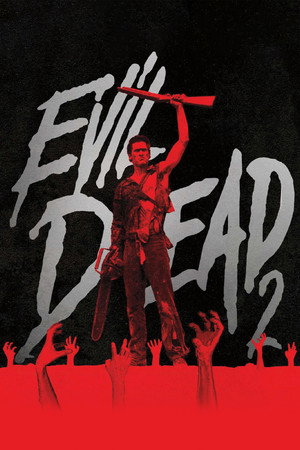
Evil Dead II (1987) gave Raimi the horror performance that most radically demonstrated what he was willing to endure for a role. He played the possessed form of Henrietta Knowby, the grotesquely transformed mother of Annie Knowby who has been locked beneath the cabin. The character required Raimi to disappear under an extensive combination of facial appliances and a full-body creature suit while still supplying the exaggerated physical performance that makes Henrietta feel like more than a static makeup effect.
The transformation was one of the production's most demanding effects achievements. Makeup designer Mark Shostrom oversaw Henrietta, while artists including Robert Kurtzman and Howard Berger contributed to the sculpting, fabrication and application process. Raimi spent long periods encased in heavy prosthetics and foam while performing on an already difficult set. The result remains one of the film's defining practical creatures precisely because actor and effect cannot easily be separated: Henrietta works because Raimi gives the artificial body movement, rhythm and personality.
The performance also reveals the theatrical side of Raimi's approach. Henrietta is broad, grotesque and frequently funny, but the comedy does not weaken the horror. Her movements are deliberately exaggerated because the entire Evil Dead II world operates somewhere between demonic possession, violent slapstick and live-action cartoon physics. Raimi understood the tone and pushed his body into the same unstable territory occupied by Bruce Campbell's Ash.
Scott Spiegel, Intruder and the Michigan Horror Circle
The filmmakers surrounding Evil Dead did not disappear after the series became successful. Their paths repeatedly crossed in other low-budget genre productions, and Scott Spiegel's Intruder (1989) became one of the clearest examples. Set largely inside a supermarket after closing time, the film turns an ordinary commercial space into a playground for elaborate slasher killings and practical gore.
Raimi appears as Joe, one of the store employees trapped inside the escalating violence. Bruce Campbell also appears briefly, while members of the broader Raimi-Spiegel circle contributed on both sides of the camera. The film preserved the do-it-yourself spirit of their earlier work while channeling it into the formal structure of the late-1980s slasher film.
Intruder is important to Raimi's horror history because it demonstrates that his place in the genre was not simply the consequence of being Sam Raimi's brother. He belonged to a larger creative network whose members wrote, acted, directed, produced and created effects for one another's films. Horror became a shared professional language developed over years rather than a single family connection.
Shocker and the Wider Horror Industry
That same period brought Raimi into horror productions beyond the Michigan group. Wes Craven's Shocker (1989) placed him inside a supernatural slasher built around executed murderer Horace Pinker, whose consciousness survives through electricity. Raimi's role is relatively small, but the film connected him with another major branch of late-1980s American horror at a moment when Craven was experimenting with how the slasher figure might survive beyond physical death.
The appearance helped establish a pattern that would become increasingly common throughout Raimi's career. He could move into an established horror filmmaker's world for a concentrated supporting performance without needing the film to revolve around him. His recognizable features and unusual comic timing made even brief appearances easy to remember, while his willingness to work within heightened genre material made him particularly useful to filmmakers interested in eccentric characters.
Skinner and the Horror Lead
Skinner (1993) gave Raimi one of the rare horror films built directly around him as the central threat. He plays Dennis Skinner, a seemingly unremarkable drifter whose private life is defined by murder and the removal of his victims' skin. The film belongs to the early-1990s wave of psychological serial-killer horror that followed the commercial and cultural impact of films such as The Silence of the Lambs, but Raimi approaches the role with the peculiar mixture of awkwardness and unpredictability that had already become part of his screen identity.
Raimi himself has been notably unsentimental about the film and has spoken critically about it in later interviews, even while acknowledging its persistent cult following. That tension is part of what makes Skinner interesting within his career. A production the actor did not regard as a major artistic achievement nevertheless gave horror audiences a rare opportunity to see him carry a feature as its principal monster rather than as part of an ensemble.
The role also differs sharply from Henrietta. Instead of hiding Raimi beneath an elaborate creature suit, Skinner depends upon the unsettling possibility that violence exists underneath an outwardly ordinary man. It therefore allowed him to explore psychological menace rather than supernatural grotesquerie and demonstrated a wider horror range than his association with Evil Dead might initially suggest.
Candyman and Urban Horror
Raimi appeared in Bernard Rose's Candyman (1992) as Billy, placing him inside one of the decade's most influential supernatural horror films. Adapted from Clive Barker's The Forbidden, the film transformed an urban legend into a story about memory, violence, belief and the physical spaces in which stories survive. Tony Todd's Candyman dominates the mythology, but the surrounding ensemble gives the world of the film the realism required for that mythology to feel plausible.
For Raimi, the appearance marked another movement away from the closed creative circle of the Evil Dead films. He was now moving freely through horror productions made by filmmakers with completely different visual and thematic sensibilities. The manic physical comedy of Sam Raimi, the slasher mechanics of Intruder and the controlled urban Gothic atmosphere of Candyman demanded different forms of performance, yet Raimi could function inside all of them.
Army of Darkness and the Raimi Repertory Tradition
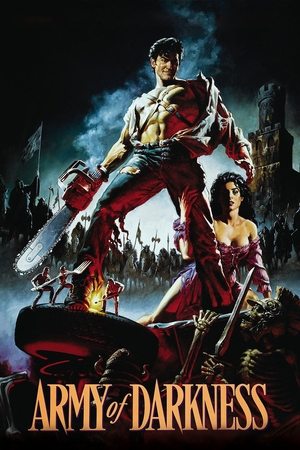
Army of Darkness (1992) returned Raimi to his brother's increasingly elaborate horror-comedy universe. Rather than giving him a single major character, the production used him in multiple small roles, including the cowardly warrior and other inhabitants of Ash's medieval nightmare. The casting reflects Sam Raimi's repertory approach: familiar performers appear repeatedly, sometimes transformed beyond immediate recognition, becoming part of the texture of the director's films rather than being confined to a single continuing character.
The film pushed the Evil Dead formula further toward fantasy, slapstick and adventure, but its monsters, skeleton armies and demonic possession still grew from the practical horror tradition that had shaped the earlier entries. Raimi's participation therefore connected the tiny independent production culture of the first film with a much larger studio-scale version of the same creative instincts.
Wishmaster and the Practical-Effects Horror Generation
Wishmaster (1997) placed Raimi inside another film built around practical monsters, prosthetics and recognizable horror talent. Directed by Robert Kurtzman, one of the effects artists who had helped create the physical horrors of Evil Dead II, the film gathered performers and technicians associated with several different genre franchises around the story of the Djinn.
The connection is significant because it illustrates how closely linked the horror community surrounding practical effects had become. Kurtzman, Howard Berger and Greg Nicotero had crossed paths with Raimi repeatedly through effects-heavy productions, and by the time of Wishmaster those relationships had developed into a broader professional network extending well beyond Sam Raimi's films.
Raimi's presence fits naturally into that environment. He had already demonstrated that he was comfortable performing under extreme makeup, reacting to physical creatures and working inside productions where practical effects dictated movement, timing and staging. The practical monster film was not simply another subgenre in which he appeared; it was one of the filmmaking environments in which his acting style had originally developed.
The Grudge and the Return to Supernatural Horror
Sam Raimi's Ghost House Pictures brought Ted into The Grudge (2004), Takashi Shimizu's American remake of his Japanese supernatural horror cycle. Raimi plays Alex Jones, one of the characters drawn into the expanding consequences of the curse. The film's approach to horror could hardly be more different from the aggressive splatter comedy of Evil Dead II: dread develops through repetition, silence, domestic spaces and the inevitability of supernatural contamination.
The role demonstrates how adaptable Raimi had become within horror. The performance does not require broad physical comedy or grotesque transformation. Instead, he functions as part of a restrained ensemble inside a story where characters gradually discover that ordinary explanations are useless. Robert Tapert's involvement as producer also connected the film back to the professional relationships that had begun decades earlier.
The Midnight Meat Train and Clive Barker Horror
The Midnight Meat Train (2008) returned Raimi to material derived from Clive Barker, years after his appearance in Candyman. Directed by Ryûhei Kitamura, the film follows a photographer investigating a series of brutal murders connected to the late-night subway system. Its visual language is far more graphic and stylized than Bernard Rose's restrained Gothic approach to Barker, illustrating how many different cinematic forms the author's horror could take.
Raimi's role is again part of an ensemble rather than the center of the narrative, but by this stage that had become one of his characteristic functions within genre cinema. His appearance provides another link between distinct periods of horror, connecting the independent practical-effects culture of the 1980s to a more polished and aggressively visual form of twenty-first-century splatter.
Drag Me to Hell and the Return of Sam Raimi Horror
Drag Me to Hell (2009) marked Sam Raimi's major return to feature-length supernatural horror after years dominated by larger studio productions. Ted appears in the film as a doctor, another relatively small role that nevertheless restores one of the familiar faces associated with the director's earlier work. Robert Tapert returned as producer, while effects artists with long connections to the Raimi circle again contributed to the film's combination of supernatural terror and grotesque comedy.
The significance of Ted's appearance is therefore larger than its screen time. Drag Me to Hell deliberately revives many qualities associated with the director's early horror: aggressive camera movement, physical humiliation, demonic assault, outrageous bodily effects and sudden transitions between fear and laughter. Including Ted inside that world reinforces the sense that Raimi's horror cinema functions through a recurring company of collaborators rather than through isolated productions.
Ash vs Evil Dead and the Return of Henrietta
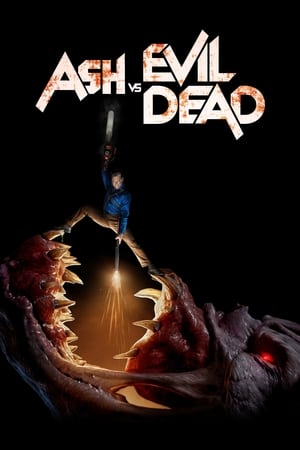
Nearly three decades after Evil Dead II, Raimi returned to the franchise in the television series Ash vs Evil Dead. He joined the cast as Chet Kaminski, an old friend of Ash Williams whose comic personality allowed Raimi to work directly opposite Bruce Campbell again in a substantial recurring role. Chet belongs to the same irresponsible, exaggerated social world as Ash, but Raimi gives him enough warmth that the character becomes more than a simple comic sidekick.
The series then offered something even more unusual: Raimi once again became possessed Henrietta. Returning to the character after almost thirty years required another full transformation, and Raimi described the experience as an opportunity for one final encounter with a role that had become unexpectedly iconic. The sequence reunited him physically and dramatically with one of the most demanding performances of his early career while allowing modern effects work to recreate the creature for a new generation of viewers.
The return also closed a remarkable circle. A performer who had begun as part of the improvised background machinery of The Evil Dead could now play both a new recurring character and one of the franchise's classic Deadites within the same television season. Few careers illustrate the continuity of the Evil Dead creative family as clearly.
Ted Raimi's Horror Legacy
Ted Raimi's importance to horror does not rest on a single franchise lead or one instantly recognizable screen persona. It comes from continuity. He was present during the homemade beginnings of Evil Dead, became physically inseparable from one of Evil Dead II's most memorable monsters, participated in the interconnected Michigan horror scene through films such as Intruder, moved through major genre works including Candyman, Wishmaster, The Grudge and The Midnight Meat Train, and finally returned to Henrietta decades later.
His strongest professional relationships reflect the collaborative culture from which he emerged. Sam Raimi repeatedly found new ways to use him. Bruce Campbell remained the most familiar performer beside him from the earliest productions onward. Scott Spiegel carried the Michigan filmmaking tradition into his own horror work. Robert Tapert helped turn those early experiments into sustainable productions, while artists such as Robert Kurtzman and Howard Berger literally transformed Raimi's body into part of horror effects history.
That history makes Raimi a particularly revealing kind of genre actor. He can be visible or hidden, comic or disturbing, a recognizable supporting player or a performer buried beneath layers of foam and latex. Horror gave him the freedom to treat acting as physical transformation, and his career in turn preserves the spirit of a filmmaking culture in which everybody on set was expected to become whatever the movie needed next.
Photos (5)
Images: TMDB
Selected Work
Notable Horror Collaborators
Notable collaborators and creative partners throughout Ted Raimi's horror career.
 Sam Raimi
Defining Director
His brother and defining creative partner, Sam repeatedly cast Ted across the Evil Dead cycle and returned to him throughout his horror career.
 Bruce Campbell
Defining Horror Co-Star
From their Detroit beginnings through repeated Evil Dead reunions, Campbell became the performer most closely associated with Raimi's recurring horror ensemble.
 Scott Spiegel
Early Horror Collaborator
A key member of the original Michigan filmmaking circle, Spiegel shared Raimi's early horror years and later directed him in Intruder.
 Robert Tapert
Defining Producer
Tapert helped build the productions that anchored Raimi's Evil Dead career and remained part of his later returns to supernatural horror.
 Robert Kurtzman
Makeup FX Collaborator
Kurtzman helped create the physical transformation of Henrietta and repeatedly crossed paths with Raimi throughout the practical-effects era of horror.
 Howard Berger
Makeup FX Collaborator
Berger helped bring Henrietta to life and remained part of the effects teams surrounding several of Raimi's most memorable genre appearances.
Ted Raimi Horror Movies
Acting (40 credits)
2025
2024
2023
2020
2019
2019
2017
2015
2014
2010
2009
2008
2008
2007
2006
2005
2005
2005
2004
2004
2002
2001
1997
1996
1995
1993
1992
1992
1992
1991
1990
1989
1989
1987
1987
1985
1985
1981
1981