


2011
Scott Spiegel
Horror Director · Biography · Horror Filmography · Collaborators · Credits
Horror subgenres & themes
Most represented across this person's horror filmography:
SPLATTER
• BODY HORROR
• CANNIBAL
• POSSESSION
Biography
Scott Spiegel and the Michigan school of independent horror
Scott Spiegel was an American writer, director, producer and actor whose importance to horror developed through several distinct stages of independent filmmaking. He belonged to the Michigan group that also included Sam Raimi, Bruce Campbell, Ted Raimi, Josh Becker and Rob Tapert, participated in the amateur filmmaking culture from which The Evil Dead emerged, co-wrote Evil Dead II, directed the supermarket slasher Intruder, later entered established horror franchises through From Dusk Till Dawn 2: Texas Blood Money and Hostel: Part III, and eventually became a producer through Raw Nerve. His career therefore connects the Super 8 experimentation of the 1970s with independent horror production of the 2000s.
Spiegel did not develop through film school or through a conventional studio apprenticeship. His education came from making movies continuously with friends, showing them to local audiences, studying which gags or shocks produced reactions and then trying increasingly ambitious versions of the same techniques. Comedy, horror and physical action were never sharply separated in this environment. That mixture became particularly important to his later writing because the grotesque humor of Evil Dead II grew naturally from jokes and visual experiments the group had already been testing for years.
Birmingham, Michigan and learning cinema with friends
Spiegel was born in Michigan in 1957 and grew up in Birmingham, where his social circle eventually became one of the most productive groups of young independent filmmakers to emerge outside the established American film industry. He met Sam Raimi and Bruce Campbell while still young, and their friendship developed partly around a shared enthusiasm for movies, comedy and performance. The group watched films, acted in local theater and began creating their own productions with inexpensive equipment.
Spiegel later emphasized how fortunate he had been to grow up alongside Raimi and Campbell because each member of the group contributed different interests and abilities. Their parents tolerated and often encouraged increasingly elaborate experiments. Before any of them possessed professional careers, filmmaking had already become a collective activity in which one person might direct one project, act in another, operate the camera for a friend or help construct whatever prop a particular joke required.
Super 8 filmmaking as a practical education
The early films were made primarily for experience and for the immediate pleasure of showing them to audiences. Spiegel worked as actor, writer, director and producer across numerous small productions, learning the elementary mechanics of staging, photography and editing through repetition rather than theory. He and his friends could screen finished work at parties or arrange showings at their former school, giving them direct evidence of whether a scare or joke communicated successfully.
This audience relationship mattered. Spiegel recalled noticing when viewers responded strongly to particular visual surprises, and the group treated those reactions as information that could be used in later films. Their education was consequently unusually empirical. They conceived an effect, photographed it, placed it before an audience and then discovered immediately whether timing and framing had achieved the intended response.
The Three Stooges and the formation of Spiegel’s comic horror
The Three Stooges became an important shared influence, especially for Spiegel and Raimi. Their physical comedy depended on bodies being hit, thrown, humiliated and reorganized through precise timing. That language could move surprisingly easily into horror once the consequences became bloodier. Spiegel and Raimi recognized that violent slapstick and horror effects could occupy the same scene without necessarily neutralizing each other.
This influence should not be reduced to isolated references. It affected their conception of cinematic rhythm. An object could become part of a joke, a performer could react with exaggerated physicality and a threatening event could escalate until it became absurd without ceasing to function as horror. Spiegel carried that sensibility through his writing and directing, particularly when characters were trapped in environments filled with objects that could suddenly become weapons, obstacles or sources of visual comedy.
Retail work and the observation of ordinary spaces
Before filmmaking became a viable profession, Spiegel worked extensively in retail. He held jobs as a bag boy, stock worker, checker and manager, particularly at the Walnut Lake Market near his home. The experience gave him detailed familiarity with the physical environment of a grocery store: aisles, storerooms, loading areas, freezers, checkout equipment and the routines performed after customers had left.
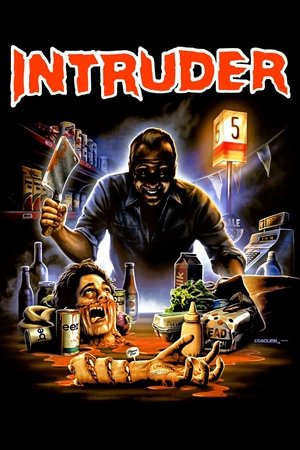
This knowledge later became unusually valuable for horror. Spiegel understood that an ordinary workplace already contained machinery, sharp tools, narrow passageways and concealed spaces that could become threatening when the building was emptied at night. Rather than invent an abstract slasher location, he eventually built Intruder from a space he had personally occupied for years.
Night Crew and the first version of Spiegel’s supermarket horror
Spiegel used the Walnut Lake Market for the short film Night Crew, shot after hours with members of his filmmaking circle. The project functioned as an early prototype for the feature he would eventually direct as Intruder. It allowed him to test the fundamental idea of transforming routine supermarket work into a contained murder environment long before financing for a feature existed.
The connection between Night Crew and Intruder reveals how Spiegel often developed material. An inexpensive short could serve as a laboratory in which locations, effects and dramatic situations were tested. If the idea continued to interest him, it could later be expanded rather than discarded simply because the first version had been made with amateur resources.
Attack of the Helping Hand! and physical comedy before Evil Dead II
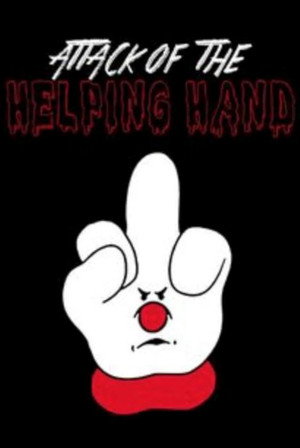
Another important Super 8 experiment was Attack of the Helping Hand!, which Spiegel wrote and directed as a parody of contemporary advertising. A domestic product mascot becomes physically aggressive, turning a deliberately absurd object into a threat. Bruce Campbell participated and Sam Raimi appeared as a milkman.
The short is important to Spiegel’s later horror writing because it demonstrates his interest in autonomous objects years before Evil Dead II. A disembodied hand attacking a character can function simultaneously as a monster and as slapstick. When Raimi and Spiegel later developed the possessed-hand sequence for Ash, they were returning to a type of gag they had already explored in their amateur films rather than inventing the mixture of violence and object comedy for the first time on a professional production.
Within the Woods and the transition toward professional horror
Spiegel played Scotty in Within the Woods, Raimi’s short proof-of-concept designed to demonstrate that the group could make an effective horror film and thereby attract financing for what became The Evil Dead. Bruce Campbell and Ellen Sandweiss also appeared, while Rob Tapert participated in the production structure.
For Spiegel, the project connected the informal Super 8 culture with a new objective: filmmaking as a professional career. The methods remained familiar, with friends performing multiple jobs and limited resources forcing invention, but the film now had a clear industrial purpose. It existed partly to persuade investors that this group of young filmmakers could sustain horror beyond the scale of local screenings.
The Evil Dead and the collective working culture
Spiegel was unable to participate extensively in principal photography on The Evil Dead because of other commitments, although he remained connected with the group and participated through the tradition of substitute performers known within the production as Fake Shemps. His absence prevented him from becoming one of the original Renaissance Pictures partners, but it did not end his involvement with the creative community around the film.
That distinction is important to his career. Spiegel was never simply an employee who entered the franchise after its success. He belonged to the filmmaking circle from which it originated and had already worked with Raimi and Campbell for years. When Raimi later required a co-writer for the sequel, Spiegel brought a shared comic vocabulary and production history that an outside screenwriter would not have possessed.
Thou Shalt Not Kill... Except and the attempt to build a parallel career
During the period when Raimi, Campbell and Tapert were establishing themselves through The Evil Dead and Crimewave, Spiegel worked closely with Josh Becker on Thou Shalt Not Kill... Except. Spiegel co-wrote and helped produce the film, which grew from the earlier short Stryker’s War. He later described the feature as an important personal turning point because it convinced him that filmmaking might become a genuine livelihood.
The production continued the Michigan method of friends exchanging functions. Bruce Campbell contributed to the underlying story, Sam Raimi performed an unusually aggressive role and several members of the wider group participated. The film itself did not transform Spiegel financially, but it became another completed feature that could demonstrate professional capability while he waited for a larger opportunity.
Moving to Los Angeles and preserving the Michigan network
Spiegel eventually moved to Los Angeles, where the informal relationships developed in Michigan remained remarkably important. For a period he shared living space within a circle that included Sam Raimi, Joel and Ethan Coen, Frances McDormand, Holly Hunter and other young filmmakers and performers who were themselves moving from marginal independent work toward substantial careers.
The environment illustrates how Spiegel’s professional life depended heavily on networks of creative friendships. Scripts were discussed in houses rather than corporate development offices, people helped one another obtain introductions and one project generated contacts for the next. Spiegel later became particularly notable for connecting individuals who might otherwise not have met, an ability that eventually became important to his work as a producer.
Writing Evil Dead II with Sam Raimi
After the commercial difficulties surrounding Crimewave, Raimi returned to the property that had established him and asked Spiegel to co-write Evil Dead II. The bulk of their writing took place in Los Angeles. Their longstanding friendship meant they already possessed a common language of physical comedy, horror references and homemade cinematic tricks.
Spiegel helped push the screenplay toward a mixture of possession horror and aggressive slapstick rather than simply reproducing the relatively straight tone of the first feature. The decision was not arbitrary. Their early shorts had repeatedly combined macabre situations with absurd physical humor, and Raimi explicitly connected the new approach with material Spiegel had already created in films such as Attack of the Helping Hand!.
Writing through performance and improvised visual jokes
The Raimi-Spiegel writing process could become physically demonstrative. Ideas were not always developed through abstract discussion at a desk. Objects in the room could be manipulated, voices tried and actions performed until a visual gag suggested a complete sequence. Spiegel recalled that the scene in which objects inside the cabin appear to laugh at Ash developed after he animated a lamp while making a joke during a writing session.
This method helps explain why Evil Dead II feels unusually dependent on physical events. The screenplay does not merely provide dialogue and plot for later visualization. Many scenes already originate in movement, props and imagined camera behavior. Spiegel was therefore contributing not just verbal material but a form of writing rooted in the practical filmmaking experiments of his adolescence.
Bruce Campbell and writing for extreme physical performance
Spiegel had known Bruce Campbell since youth and understood the performer’s willingness to submit to unusually demanding physical comedy. That familiarity gave the writers freedom to construct scenes in which Ash fights his own body, collides with the environment and moves between terror and exaggerated comic reaction.
Campbell’s performance became the point at which Raimi and Spiegel’s influences converged. Three Stooges timing, horror makeup and action choreography could all be directed toward one actor whose character remained recognizable through increasingly absurd situations. Spiegel’s contribution to the screenplay is therefore closely connected with his long personal knowledge of Campbell as a performer rather than merely with dialogue credited on the page.
The possessed hand and the recycling of an old comic idea
The possessed-hand sequence became one of the clearest examples of Spiegel’s earlier filmmaking feeding directly into professional horror. He had already made a short centered on an independently moving hand-like object, while the group had years of experience turning mundane props into performers. Evil Dead II intensified the idea by attaching it physically to Ash before separating it from his body.
The sequence demonstrates Spiegel’s understanding of comic escalation. A supernatural problem becomes bodily conflict, the conflict becomes mutilation and the severed body part continues functioning as an independent antagonist. Each stage is more extreme than the previous one while remaining connected to the same simple physical premise.
From screenwriter to feature director
Spiegel continued wanting to direct his own material. The supermarket concept developed years earlier as Night Crew remained available, and producer Lawrence Bender eventually approached him about making an inexpensive horror feature. Spiegel and Bender developed the project under severe budget limitations before additional financing allowed it to expand.
For Spiegel, Intruder represented the opportunity to combine several parts of his experience in one film: years working inside grocery stores, Super 8 experimentation, the visual energy of the Michigan filmmaking group, practical gore effects and a network of friends willing to appear or work behind the camera. His first feature as director was therefore not an attempt to imitate an unfamiliar commercial formula but an enlargement of material he had been developing for years.
Directing Intruder from knowledge of a real workplace
The supermarket setting gave Spiegel unusually detailed control over environmental horror. Because he understood how stores functioned after closing, the film could use stocking routines, storage areas and commercial equipment as part of suspense rather than treating shelves merely as decoration. A normal workplace becomes progressively isolated as employees discover that someone is moving through it with violent intent.
Spiegel also used the restricted location as an opportunity for inventive camera placement. Objects and shelving could become framing devices, and the camera could occupy unusual positions that emphasized the artificial abundance of merchandise surrounding increasingly brutal events. The visual experimentation preserved something of his Super 8 mentality inside a professional feature.
Practical gore and the next generation of effects artists
Intruder also connected Spiegel with young makeup-effects artists associated with what became KNB EFX Group, including Greg Nicotero, Robert Kurtzman and Howard Berger. Several had already worked within the wider Evil Dead II production environment. Their effects gave the film a degree of graphic violence substantially greater than its modest budget might suggest.
This collaboration demonstrates another characteristic of Spiegel’s career: he frequently worked inside communities of people who were themselves on the verge of larger careers. The limited production could offer artists enough freedom to attempt memorable work, while their technical ambition increased the apparent scale of Spiegel’s film.
Sam, Ted and Bruce inside Spiegel’s directorial debut
Spiegel brought members of his Michigan circle into Intruder. Sam Raimi and Ted Raimi played supermarket employees, while Bruce Campbell appeared briefly as a police officer. Dan Hicks, who had performed in Evil Dead II, received an important role. The casting created continuity between Spiegel’s own feature and the filmmaking culture in which he had developed.
These appearances were not simply promotional cameos by famous friends. Several of the performers had been working together since amateur productions, and Spiegel understood their habits intimately. Intruder became one of the clearest examples of the Michigan group continuing to support individual members even after their careers had begun moving in different directions.
A career extending beyond horror screenwriting
Spiegel’s writing career was never completely confined to horror. He and Boaz Yakin worked on the screenplay for Clint Eastwood’s The Rookie, giving Spiegel experience inside a major studio action production. He also continued writing and directing comedy and other material during periods when horror projects were not available.
This broader work mattered because Spiegel never possessed the uninterrupted directing career of Raimi. His professional survival depended on moving among writing, directing, producing, acting and development. The variety later helped him when he became responsible for independent horror projects whose producers were expected to understand several stages of production simultaneously.
Scott Spiegel as a connector inside independent American cinema
Spiegel became known among colleagues for introducing filmmakers and producers to one another. One of the most consequential examples involved Quentin Tarantino and Lawrence Bender. After meeting Tarantino through mutual industry contacts and being impressed by his scripts and encyclopedic film knowledge, Spiegel helped circulate his material and introduced him to Bender.
This contribution sits outside Spiegel’s own horror filmography but reveals an important professional ability. He recognized enthusiasm and talent in other people and used his network to create opportunities. The same instinct later became central when he moved more substantially into producing.
From Dusk Till Dawn 2 and working inside an existing horror property
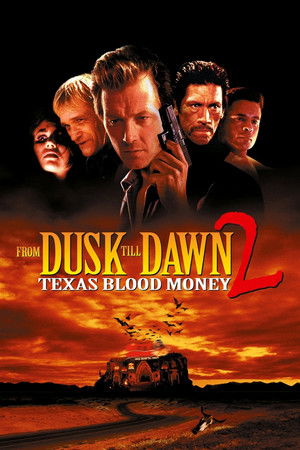
Spiegel returned prominently to horror direction with From Dusk Till Dawn 2: Texas Blood Money. He developed the story with Boaz Yakin and co-wrote the screenplay with Duane Whitaker. The production placed him inside a franchise already associated with Robert Rodriguez and Quentin Tarantino while giving him responsibility for creating a separate crime-horror story within that world.
The assignment required a different professional discipline from Intruder. Spiegel was no longer creating a completely independent property from personal experience. He had to work within existing vampire mythology, production expectations and direct-to-video economics while still finding opportunities for unconventional camera placement and visual humor.
Boaz Yakin and a long professional relationship
Boaz Yakin became one of Spiegel’s most substantial later collaborators. Their relationship crossed screenwriting, production and eventually company ownership. After working together on projects including From Dusk Till Dawn 2, the two became partners with Eli Roth in Raw Nerve.
The partnership is important because it marks Spiegel’s transition from filmmaker seeking financing to filmmaker capable of helping create financing structures for others. Decades after making shorts with friends in Michigan, he was now participating in a company designed to develop and produce new low-budget horror.
Raw Nerve and a return to independent horror economics
Spiegel, Eli Roth and Boaz Yakin formed Raw Nerve around a shared interest in producing comparatively inexpensive genre films with enough creative freedom to remain aggressive. The approach was compatible with Spiegel’s entire professional history. He had begun by making movies outside conventional industry structures and understood how much could be accomplished when filmmakers controlled costs carefully.
Raw Nerve participated in projects including 2001 Maniacs and Hostel. Tim Sullivan later recalled that Raw Nerve supplied crucial early financing for 2001 Maniacs when the project had repeatedly struggled to remain alive. The company therefore functioned not merely as a vanity label but as a mechanism capable of giving independent horror the initial capital required to attract additional backing.
Eli Roth and Spiegel’s role as an experienced producer
Eli Roth represented a younger generation of horror filmmaker, but his partnership with Spiegel was based partly on shared enthusiasm for aggressive genre cinema and knowledge of low-budget production. Spiegel and Yakin read early material for Hostel and participated in Raw Nerve while Roth developed the screenplay. Spiegel subsequently served as executive producer on the first two films.
This relationship gave Spiegel a new role in horror history. He was no longer only the filmmaker who had grown up beside Raimi. He had become an experienced producer assisting a younger director whose work would itself influence mainstream horror during the 2000s.
Producing rather than directing as creative participation
Spiegel’s years as writer and director informed the way he approached producing. He understood what low-budget filmmakers needed because he had spent decades attempting to solve the same problems himself. Notes on scripts, discussions about practical feasibility and decisions about financing could be made from direct production experience rather than purely administrative judgment.
His producer career also allowed him to participate in more horror than his relatively small feature-directing filmography would suggest. Raw Nerve connected him to projects whose directors retained their own stylistic identities while Spiegel contributed at the level of development and production.
Hostel and the changing economics of extreme horror
The success of Hostel demonstrated that extremely violent independent horror could still reach a broad theatrical audience when produced at controlled cost. Spiegel’s involvement placed him within another important transition in horror economics, from the handmade independent films of his youth to a period in which relatively inexpensive productions could receive global studio distribution.
The film also connected several strands of his professional life. Quentin Tarantino, whom Spiegel had known before Tarantino’s directing career, presented the film. Eli Roth directed through the Raw Nerve partnership. Spiegel and Yakin participated as executive producers. The production therefore emerged partly from professional relationships Spiegel had helped build over many years.
Hostel: Part III and returning from producer to director
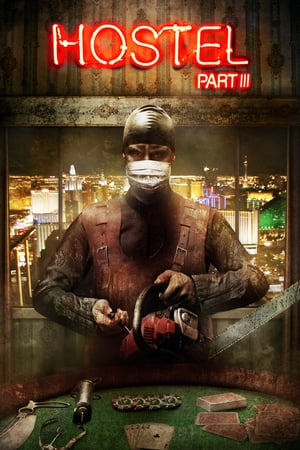
Spiegel eventually moved from producing the franchise to directing Hostel: Part III. Sony supplied an existing script that Spiegel then adapted with producer Chris Briggs to the realities of a production budget of approximately three million dollars and a twenty-day schedule. Spiegel openly discussed the challenge of staging complicated violence and action without a second unit.
The assignment again placed practical filmmaking ahead of abstract ambition. Spiegel needed to determine what the production could actually deliver within fixed resources. His decades of low-budget work became particularly relevant because the director had to reduce or redesign ideas without losing the basic identity audiences expected from the franchise.
Characters, gore and Spiegel’s view of horror entertainment
Spiegel enjoyed graphic effects and understood the audience pleasure associated with exaggerated screen violence, but he did not regard gore alone as sufficient. While discussing Hostel: Part III, he emphasized that spectacular deaths worked better when audiences had some investment in the characters involved. This attitude is consistent with his earlier filmmaking, where physical effects were usually placed inside clearly constructed comic or suspense situations.
For Spiegel, horror entertainment remained connected with audience reaction. The same filmmaker who had once projected homemade movies at parties was still thinking about when viewers would laugh, recoil or cheer. Production scale changed dramatically across the decades, but his underlying relationship with genre spectatorship remained remarkably consistent.
Acting, cameos and the survival of the Fake Shemp tradition
Spiegel continued appearing in small acting roles throughout his career. Many were cameos in projects made by friends and collaborators, preserving the informal tradition developed during the Michigan years. Raimi in particular continued placing familiar members of the old group into later productions regardless of how large his directing career became.
These appearances are minor compared with Spiegel’s writing and producing, but they document the durability of the relationships surrounding him. The Fake Shemp concept had originated as a practical solution for incomplete casts on low-budget productions and eventually became a private tradition linking films made under completely different industrial circumstances.
Preserving memories of an independent filmmaking generation
During his later career Spiegel participated extensively in interviews, audio commentaries and retrospective material concerning the early Michigan films, Evil Dead II, Intruder and the filmmakers who emerged from that group. His recollections became valuable because many of the formative projects had been produced informally and were poorly documented at the time.
Spiegel remembered not only completed films but houses, grocery stores, school screenings, abandoned projects and individual jokes that later developed into professional sequences. These accounts help reconstruct an environment in which several major film careers developed through friendships and continuous experimentation rather than through established institutions.
Death and recognition of Spiegel’s place in horror
Scott Spiegel died in 2025 at the age of sixty-seven. Tributes from the horror community emphasized both his own films and his importance to the people around him. Bruce Campbell described Spiegel as a major part of his formative years, recalling the period when they worked ordinary jobs together before any member of the group possessed a professional film career.
The response also demonstrated that Spiegel’s influence cannot be measured solely by directing credits. His fingerprints exist across early Raimi horror, Evil Dead II, independent slasher cinema, the career networks surrounding Tarantino and Bender, Raw Nerve and the Hostel cycle. He repeatedly occupied the space between filmmaker, collaborator and facilitator.
Scott Spiegel’s contribution to horror
Spiegel’s most important contribution to horror was helping preserve the experimental freedom of amateur filmmaking as he moved into professional production. His writing on Evil Dead II converted years of slapstick shorts and practical jokes into a form of horror comedy whose physical imagination became enormously influential. Intruder transformed firsthand knowledge of an ordinary workplace into an unusually inventive slasher environment. Raw Nerve later allowed him to apply the lessons of independent production to filmmakers from another generation.
His career also demonstrates how horror movements develop through communities rather than isolated auteurs. Spiegel’s relationships with Sam Raimi, Bruce Campbell, Ted Raimi, Boaz Yakin, Eli Roth and numerous other filmmakers repeatedly created new projects and opportunities. He was never the most commercially famous member of the Michigan group, but he remained one of its most characteristic figures: a filmmaker formed by cheap cameras, practical jokes, borrowed locations and friends willing to help make the next movie.
Selected Work
Notable Horror Collaborators
Notable collaborators and creative partners throughout Scott Spiegel's horror career.
 Sam Raimi
Writer-Director / Filmmaking Collaborator
Raimi and Spiegel began making films together in Michigan and remained connected throughout their careers. Their shared horror work includes Within the Woods, The Evil Dead, Evil Dead II and Intruder, with Spiegel co-writing Evil Dead II and Raimi later acting under Spiegel’s direction in Intruder.
 Bruce Campbell
Writer-Director / Actor Collaborator
Campbell and Spiegel developed as filmmakers together in Michigan and collaborated repeatedly on horror from their Super 8 period onward. Their shared work includes Attack of the Helping Hand!, Within the Woods, The Evil Dead, Thou Shalt Not Kill... Except, Evil Dead II and Intruder.
 Ted Raimi
Filmmaking / Actor Collaborator
Ted Raimi belonged to the same Michigan filmmaking circle as Spiegel and collaborated with him across The Evil Dead, Evil Dead II and Intruder. Spiegel later recalled Raimi as a consistently willing participant in the group’s productions and cast him as Produce Joe in his feature directorial debut.
 Eli Roth
Producer / Director Collaborator
Spiegel and Roth became partners in Raw Nerve and worked together on 2001 Maniacs, Hostel and Hostel: Part II. Their collaboration linked Spiegel’s experience in independent horror production with the generation of filmmakers that drove the genre’s commercially successful extreme-horror cycle of the 2000s.
 Boaz Yakin
Writer-Producer Collaborator
Yakin became one of Spiegel’s longest later-career collaborators. They developed the story for From Dusk Till Dawn 2: Texas Blood Money and later became partners in Raw Nerve, sharing horror production work on 2001 Maniacs, Hostel and Hostel: Part II.
Scott Spiegel Horror Movies
Directing (9 credits)
1999
1989
1981
1979
1979
1974
1973
1969
Acting (21 credits)
2014
2012
2009
2007
2005
2002
1999
1991
1990
1989
1989
1989
1987
1985
1981
1981
1978
1978
1974
1973
1969
Writing (7 credits)
1999
1989
1987
1985
1981
1979
1969
Production (5 credits)
2011
2007
2006
2005
1979
Special FX / Practical FX (1 credits)
1969