


2007
Lionel Atwill
Horror Actor · Biography · Horror Filmography · Collaborators · Credits
Horror subgenres & themes
Most represented across this person's horror filmography:
VAMPIRE
• WEREWOLVES
Biography
Lionel Atwill and American horror cinema of the 1930s and 1940s
Lionel Atwill became one of the most frequently employed actors in American horror during the first fifteen years of the sound era. His genre career began with leading roles in Warner Bros. productions such as Doctor X and Mystery of the Wax Museum and continued through independent films and a long sequence of Universal productions including Son of Frankenstein, Man Made Monster, The Ghost of Frankenstein, Frankenstein Meets the Wolf Man, House of Frankenstein and House of Dracula. He moved between mad scientists, police officials and other authority figures according to the requirements of each production.
Atwill arrived in Hollywood with an established theatre career rather than developing first as a horror specialist. His vocal control and stage experience suited early sound cinema, particularly roles requiring long passages of formal dialogue. The combination of this background with his distinctive screen presence made him useful to studios during the rapid expansion of horror after Dracula and Frankenstein. By the 1940s he had become part of Universal’s recurring company of genre performers alongside Bela Lugosi and Lon Chaney Jr.
England and the theatre
Lionel Alfred William Atwill was born in Croydon, England, on March 1, 1885. He developed his professional reputation principally through the stage and later became successful in the United States. Broadway records document a substantial career extending through drama and comedy, with Atwill working as actor, director and producer. His roles included classical and contemporary material well before Hollywood associated him strongly with horror.
This theatrical background remained evident after he moved into sound cinema. Early talkies valued performers capable of delivering dialogue reliably under technically restrictive recording conditions. Atwill’s established stage technique made the transition comparatively natural, and his early film career quickly included major parts rather than a long apprenticeship in minor screen roles.
Doctor X and Warner Bros. horror
Michael Curtiz directed Atwill in Doctor X in 1932, one of Warner Bros.’ earliest major attempts to enter the horror market created by Universal’s successes. Atwill plays Dr. Jerry Xavier, head of a medical academy investigated in connection with a series of murders. Fay Wray plays his daughter Joanne, while Lee Tracy provides the reporter character through whom much of the investigation proceeds.
The film was photographed in the early two-color Technicolor process, giving it an appearance markedly different from Universal’s contemporary black-and-white Gothic films. Warner Bros. attempted to combine horror with the faster dialogue and urban settings associated with its house style. Atwill’s Dr. Xavier is central to the mystery while remaining distinct from the actual murderer, allowing the actor to occupy an ambiguous position without being reduced immediately to a conventional villain.
Mystery of the Wax Museum
Atwill reunited with Curtiz and Fay Wray for Mystery of the Wax Museum in 1933. He plays sculptor Ivan Igor, whose London wax museum is destroyed by fire after his business partner decides to collect insurance money. Years later Igor operates a new museum in New York, where missing bodies begin to resemble newly displayed wax figures.
The film again used two-color Technicolor and combined horror with a fast-moving newspaper investigation led by Glenda Farrell. Atwill’s role is physically demanding because Igor appears disabled and later reveals a disfigured face. The production gave him one of the most substantial horror leads of his career and established the basic narrative later reworked by Warner Bros. as House of Wax in 1953.
The Vampire Bat
The Vampire Bat, produced independently in 1933, reunited Atwill with Fay Wray in a film designed partly to capitalize on the contemporary popularity of vampire and mad-scientist horror. Atwill plays Dr. Otto von Niemann, whose medical authority becomes increasingly important as unexplained deaths occur in a German village.
The production was made with considerably fewer resources than the Warner films but benefited from sets and performers familiar from larger studio horror. Atwill’s participation helped give the inexpensive film a direct connection with the current cycle of major genre productions. His work with Wray across Doctor X, Mystery of the Wax Museum and The Vampire Bat became one of his most substantial early horror collaborations.
Murders in the Zoo
Atwill played wealthy zoologist Eric Gorman in Paramount’s Murders in the Zoo in 1933. Gorman uses animals and zoological knowledge to murder men he believes are pursuing his wife. The opening sequence, in which a victim is found with his mouth forcibly closed, established a level of physical cruelty that contributed to the film’s reputation during the pre-Code period.
The role differs from the scientific characters Atwill frequently played because Gorman’s violence is driven by obsessive jealousy rather than research or supernatural ambition. Turner Classic Movies identifies the film as one of the performances that consolidated his horror reputation before his later Universal period.
Horror roles and major-studio character work
Atwill continued working outside horror throughout the 1930s and appeared in substantial studio productions including Captain Blood, The Devil Is a Woman and other dramas and adventures. Horror therefore represented one prominent strand of a broader character-actor career. His ability to move into supporting roles allowed him to remain active after the cycle of leading horror vehicles associated with the early 1930s began to contract.
This wider career is important because later monster films sometimes reduce Atwill to short authority roles. Earlier productions demonstrate that studios had previously trusted him with leading characters capable of carrying entire mysteries or horror narratives.
Son of Frankenstein and Inspector Krogh
Atwill entered Universal’s principal monster cycle with Son of Frankenstein in 1939. He plays Inspector Krogh, the local police official responsible for monitoring events surrounding the return of Wolf Frankenstein, played by Basil Rathbone. Boris Karloff returned as the Monster and Bela Lugosi played Ygor.
Krogh has lost an arm during an earlier encounter with the Monster, giving the character a personal connection to the Frankenstein history while still functioning as a competent investigator. The role became one of Atwill’s most recognizable performances and demonstrated how effectively he could operate on the side of social order after years of mad-scientist and murderer parts.
The Universal repertory system
The success of Son of Frankenstein coincided with Universal’s renewed investment in horror. During the next several years Atwill appeared repeatedly in films involving the studio’s monsters, although he rarely played the same character twice. His familiarity to audiences became useful in productions built increasingly around recurring properties.
This repertory structure explains why Atwill appears alongside many of the same actors and technicians across unrelated roles. Bela Lugosi, Lon Chaney Jr. and Jack Pierce recur throughout his 1940s horror work. Directors and producers changed more often, while the studio retained a recognizable group of performers and department heads.
Man Made Monster
George Waggner directed Atwill opposite Lon Chaney Jr. in Man Made Monster in 1941. Atwill plays Dr. Paul Rigas, who subjects Chaney’s Dan McCormick to escalating electrical experiments after discovering his unusual resistance to current. The experiments eventually allow Rigas to control McCormick and turn him into a lethal human conductor.
The role returns Atwill to the scientific antagonist familiar from several earlier films. Its historical importance also comes from Chaney. Man Made Monster became the actor’s first Universal horror lead and directly preceded The Wolf Man. Atwill therefore participated in the production that helped establish the principal new monster star of Universal’s second cycle.
The Ghost of Frankenstein
Atwill appeared as Dr. Bohmer in Erle C. Kenton’s The Ghost of Frankenstein in 1942. The film continued the story of Son of Frankenstein with Lon Chaney Jr. replacing Boris Karloff as the Monster and Bela Lugosi returning as Ygor. Atwill’s character is again a scientist, but his position within the Frankenstein narrative differs from the villainous Rigas in Man Made Monster.
The production demonstrates the increasingly modular nature of Universal horror. Established performers could be reassigned to new characters while monsters and narrative continuity supplied franchise recognition. Atwill’s presence became part of that recurring human ensemble even though the individual characters changed from film to film.
Frankenstein Meets the Wolf Man
Atwill next appeared as Dr. Mannering in Frankenstein Meets the Wolf Man in 1943. Roy William Neill directed, George Waggner produced and Curt Siodmak wrote the screenplay. Lon Chaney Jr. returned as Larry Talbot while Bela Lugosi played Frankenstein’s Monster.
Mannering initially becomes involved through Talbot’s attempts to understand or end his werewolf condition and later participates in the Frankenstein laboratory sequence. The film became Universal’s first direct meeting between two established monster properties, placing Atwill inside an important stage in the transition from individual sequels toward ensemble horror.
The legal case and its effect on Atwill’s career
During this period Atwill became involved in a widely publicized legal case connected with events at a private party held at his home. He was convicted of perjury in 1942 for testimony given to a grand jury. Contemporary and later records indicate that the conviction was subsequently overturned, but the publicity damaged his professional position and restricted the scale of roles available to him. AFI notes the lasting effect on his career.
The episode should be separated from the fictional screen image that had already associated Atwill with criminal and transgressive characters. Its relevance is professional: after having worked in important supporting roles and major studio productions, he increasingly appeared in smaller assignments. Horror remained one of the areas where his established screen identity continued to provide employment.
House of Frankenstein
Erle C. Kenton directed Atwill in House of Frankenstein, released at the end of 1944 and widely distributed in 1945. The film assembled Boris Karloff as Dr. Gustav Niemann, Lon Chaney Jr. as Larry Talbot, John Carradine as Dracula and Glenn Strange as Frankenstein’s Monster. Atwill appears as Inspector Arnz.
The character is comparatively small, reflecting Atwill’s changed professional circumstances, but the film itself represents a major stage in Universal’s monster-combination strategy. The actor who had entered the studio cycle through a prominent role in Son of Frankenstein was now part of a production built around several accumulated franchises.
House of Dracula
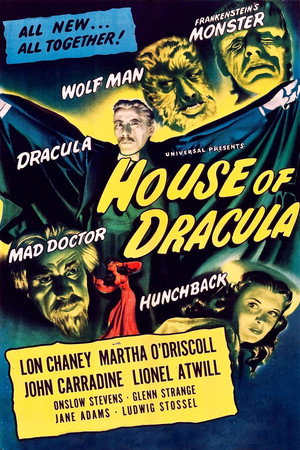
Atwill returned for House of Dracula in 1945, again directed by Kenton. Lon Chaney Jr., John Carradine and Glenn Strange return as the Wolf Man, Dracula and Frankenstein’s Monster. Atwill plays Inspector Holtz, another authority figure within a narrative centered on Dr. Franz Edelmann’s attempts to treat supernatural conditions through medicine.
Atwill was seriously ill during this late period. House of Dracula became one of his final horror features, and Turner Classic Movies notes that cancer was already affecting him during production.
Final work and death
Atwill continued working during the final months of his life and remained active in serial and feature production. His final Universal appearances belonged to the declining stage of the studio’s original monster era, shortly before the characters were shifted increasingly toward parody and nostalgia.
He died in Pacific Palisades, California, on April 22, 1946. His career had extended from major theatrical work through the emergence of sound horror and into the franchise-oriented Universal productions of the 1940s. Broadway records also preserve his activity as a stage director and producer, providing a broader picture than the genre roles for which he later became best remembered.
Lionel Atwill’s contribution to horror
Atwill’s horror career is unusual for its continuity across different studios and phases of the genre. At Warner Bros. he carried leading horror mysteries during the first response to Universal’s success. Independent productions used the same authority in lower-budget settings. Universal later incorporated him into its recurring monster ensemble.
His roles also document a change in the type of work available to horror performers over the period. Dr. Xavier and Ivan Igor are central characters around whom entire films are constructed. By the later Universal cycle Atwill more often plays doctors or inspectors supporting monsters who had become the principal commercial attraction. The progression provides a clear view of how American studio horror itself changed between the early 1930s and the end of the Second World War.
Selected Work
Notable Horror Collaborators
Notable collaborators and creative partners throughout Lionel Atwill's horror career.
 Bela Lugosi
Acting Collaborator
Atwill and Lugosi shared several important Universal horror productions, including Son of Frankenstein, The Ghost of Frankenstein and Frankenstein Meets the Wolf Man, with additional overlap in the studio’s broader genre repertory. Their recurring work links the 1939 revival directly with the monster sequels of the early 1940s.
 Lon Chaney Jr.
Acting Collaborator
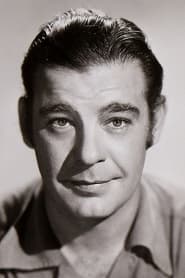
Atwill worked opposite Chaney in Man Made Monster and later shared The Ghost of Frankenstein, Frankenstein Meets the Wolf Man, House of Frankenstein and House of Dracula. Their films cover most of Chaney’s rise and development as Universal’s principal 1940s monster performer.
 Jack Pierce
Actor / Makeup Artist Collaborator
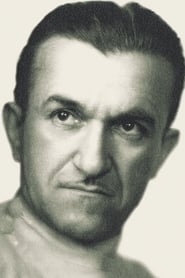
Pierce worked on numerous Universal horror productions featuring Atwill, including Son of Frankenstein, Man Made Monster, The Ghost of Frankenstein, Frankenstein Meets the Wolf Man and House of Dracula. The collaboration spans both Atwill’s scientist roles and his later authority figures within the monster cycle.
 Fay Wray
Acting Collaborator
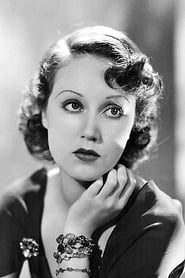
Wray and Atwill shared Doctor X, Mystery of the Wax Museum and The Vampire Bat during the first major expansion of American sound horror. Their three films place the pair across Warner Bros. prestige horror and lower-budget independent production within a concentrated two-year period.
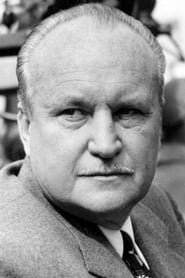 George Waggner
Actor / Director-Producer Collaborator
Waggner directed Atwill in Man Made Monster and later produced The Ghost of Frankenstein and Frankenstein Meets the Wolf Man. Their three shared horror films trace Universal’s movement from the introduction of Lon Chaney Jr. to the studio’s first direct monster crossover.
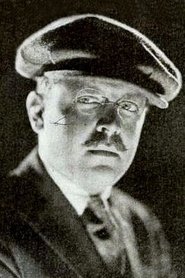 Erle C. Kenton
Actor / Director Collaborator
Kenton directed Atwill in The Ghost of Frankenstein, House of Frankenstein and House of Dracula. Their work together covers the later Frankenstein cycle and the two principal Universal ensemble films that brought multiple classic monsters into a single production.
Lionel Atwill Horror Movies
Acting (20 credits)
1966
1945
1945
1944
1943
1942
1942
1942
1942
1941
1939
1939
1939
1935
1933
1933
1933
1933
1932