Joseph LoDuca and the musical identity of modern horror
Joseph LoDuca developed one of the longest sustained careers in contemporary horror music through a professional path that began far outside the conventional Hollywood scoring system. A Detroit musician with backgrounds in rock, jazz, classical guitar and composition, he entered film almost accidentally when Sam Raimi, Rob Tapert and Bruce Campbell needed music for their first feature, The Evil Dead. LoDuca had never scored a film. Raimi had never worked with a professional film composer. The collaboration consequently took shape through experimentation, with both composer and director learning the scoring process as they worked.
That beginning became the foundation of a relationship extending across the original Evil Dead trilogy, Ash vs Evil Dead and other productions associated with Raimi, Tapert and Campbell. LoDuca later became a major television composer, worked internationally and entered another long-running horror property through Curse of Chucky, Cult of Chucky and the Chucky television series. Across these projects he developed an approach based less on one recognizable horror sound than on finding a musical language specific to each story. His scores can move between chamber strings, orchestral writing, electronics, percussion, manipulated acoustic sound, rock and instruments drawn from many musical traditions.
Detroit and a musical education without genre boundaries
LoDuca grew up in Detroit, Michigan during a period when the city supported an unusually rich mixture of jazz, rock, rhythm and blues, classical music and commercial recording. He played music from an early age and spent his teenage years performing in rock bands. His interests spanned several musical traditions, and he later described himself as someone who pursued good music without much concern for genre boundaries.
He initially studied literature at the University of Michigan before deciding that music needed to become the center of his professional life. His musical interests expanded through jazz, classical guitar, composition and music from different cultures. This lack of stylistic specialization eventually became extremely useful in film and television, where one composer may be required to move from intimate drama to violence, comedy, historical atmosphere and supernatural material within the same project.
Jazz, guitar and learning to respond in the moment
Jazz became particularly important to LoDuca’s development because improvisation requires musicians to understand harmony and structure while responding immediately to changing circumstances. He later connected this background directly with film scoring, especially horror, where the emotional direction of a scene can shift abruptly from tension to violence, relief or comedy.
LoDuca also developed as a guitarist and remained closely connected with the instrument throughout his career. Guitar never restricted him to a rock-oriented scoring language. Instead, it became one part of a much larger palette that eventually included traditional orchestral instruments, synthesizers, unusual percussion, processed sound and instruments collected or recorded from different musical cultures.
Detroit jazz and the development of a working musician
Before film became a sustainable profession, LoDuca worked as a performing musician. After periods of musical study and time in New York, he returned to Detroit and formed a fusion group that became a regular presence at Baker’s Keyboard Lounge, one of the city’s historic jazz venues. The group recorded and toured, giving LoDuca experience not only as a composer but as a working performer responsible for communicating directly with other musicians.
This performing background distinguished his later approach to orchestration. LoDuca drew on the expressive possibilities of live performance in his approach to orchestration. Even after electronic tools transformed film production, he continued using live performers whenever their individual character could contribute something difficult to reproduce synthetically.
An accidental introduction to film scoring
LoDuca did not spend his student years planning a career as a horror composer. He has recalled mentioning almost casually to an acquaintance that he thought he might be good at writing music for films. That acquaintance was involved with people helping Sam Raimi, Rob Tapert and Bruce Campbell complete a low-budget feature being produced in Michigan.
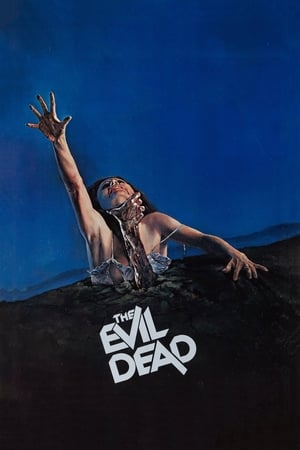
Within a short period LoDuca found himself meeting the young filmmakers in the informal office from which they were attempting to finish The Evil Dead. Their request was direct: could he create frightening sounds? LoDuca prepared a demo, the filmmakers responded positively and he was hired. The assignment became his first film score and one of the most important professional decisions of his life.
Learning film music while scoring The Evil Dead
LoDuca entered The Evil Dead with confidence as a musician but virtually no practical knowledge of synchronization. Digital workstations did not exist, the video equipment available to him was primitive and precise musical timing required calculations that contemporary composers can perform automatically. He learned the technical language of film scoring while actually producing the score.
He later remembered using stopwatches, calculations, click-track information and repeated viewing to determine when musical events had to meet the image. This difficult process forced him to understand the relationship between musical time and edited film at a fundamental level. Every synchronization point required deliberate calculation during composition.
Limitation as a creative principle
The first Evil Dead score was created with severely limited resources. LoDuca worked with a small group of string players, early synthesizers and whatever additional sounds he could construct or manipulate. Decades later he identified those restrictions as one of the reasons the score fit the film so effectively.
This experience established a principle that remained important throughout his career: choosing limitations can help define a score. Unlimited access to instruments does not automatically create stronger musical identity. A restricted palette can force the composer to discover unusual relationships among a small number of sounds and can give a production a character that a generic large orchestra might not provide.
Creating dread without abandoning melody
LoDuca’s horror writing developed around contrast. Sustained tension becomes less effective when music remains continuously aggressive, so lyrical passages can reset the audience before violence or supernatural activity returns. Melody and dissonance work together in his scores to shape the tension.
This principle emerged naturally in The Evil Dead, where scenes move between quiet isolation, mounting dread, graphic violence and increasingly extreme visual behavior. LoDuca learned to use the score to manage those shifts in intensity throughout the film.
Sam Raimi and learning film language together
LoDuca’s relationship with Sam Raimi became unusual because both men were learning significant parts of their professions simultaneously. The Evil Dead was LoDuca’s first feature score and Raimi’s first major feature production. Neither approached the collaboration with rigid expectations established by years inside studio filmmaking.
The result created a professional shorthand that survived as their careers expanded. Raimi understood LoDuca’s willingness to experiment, while LoDuca learned the director’s preference for exaggerated camera movement, sudden tonal shifts and a highly physical relationship between suspense and comedy. Their later projects benefited from decades of shared experience and an established musical understanding.
Rob Tapert and the production relationship behind the music
Producer Rob Tapert became equally important to LoDuca’s career. Tapert remained involved with the Evil Dead films and later built television and film production structures through which LoDuca received some of his largest assignments. Their work together extended far beyond the original franchise into horror, fantasy and television.
Tapert also became one of the producers who understood how music could solve structural problems late in production. LoDuca’s familiarity with the filmmakers meant that he could sometimes be asked to strengthen tone, tension or continuity after picture editing had already established the basic rhythm. Years of shared work reinforced that trust.
Bruce Campbell and music built around a changing horror hero
Bruce Campbell became another recurring collaborator from LoDuca’s earliest film work onward. As Ash Williams developed from frightened survivor into an increasingly comic and self-confident horror hero, LoDuca had to adjust the musical language surrounding him. The score could no longer respond only to supernatural danger. It also had to support a protagonist whose behavior increasingly changed the tone of the films themselves.
The relationship continued outside the original trilogy. LoDuca scored projects directed or led by Campbell and eventually returned to Ash through television. Few composer-performer relationships in horror extend across such a long period while following the same central character through radically different stages of presentation.
Evil Dead II and the expansion of the musical vocabulary
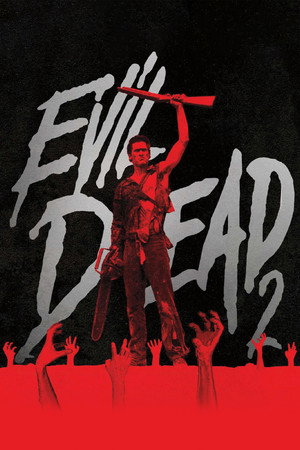
When LoDuca returned for Evil Dead II, both his experience and the production resources available to him had increased substantially. The score could use a broader ensemble and more sophisticated orchestration while retaining musical connections with the first film. The larger palette mirrored a sequel whose visual and tonal ambitions had expanded dramatically.
The more difficult challenge was tonal rather than technical. Raimi increasingly combined horror with physical comedy, yet LoDuca discovered that the music usually worked best when it refused to announce that a scene was funny. The supernatural threat needed to retain musical seriousness even when the image became absurd.
The score as the straight man in horror-comedy
LoDuca eventually described this principle through the language of comedy: the score frequently acts as the straight man. If the image already contains an outrageous performance or violent joke, music that also tries to be funny can weaken the effect by explaining the joke twice.
Instead, LoDuca generally treats the horror as real from the perspective of the score. Comedy then emerges from the collision between musical seriousness and visual excess. Only when a sequence becomes so openly farcical that complete seriousness is impossible does the music join the joke directly. This became one of the most consistent lessons he carried from Evil Dead into later horror-comedy work.
Army of Darkness and learning to change scale without losing identity
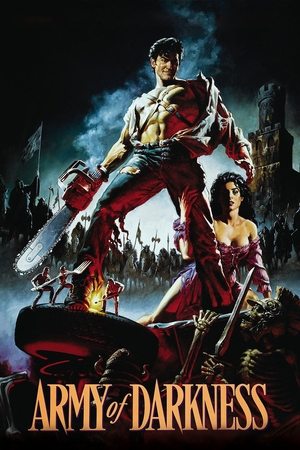
Army of Darkness required another substantial change in musical language. Ash had moved out of the isolated cabin and into a medieval fantasy environment containing battles, skeleton armies and deliberate references to adventure cinema. LoDuca responded by drawing on the large-scale historical and fantasy scores he had heard while growing up.
The important professional lesson was that franchise continuity did not require repeating the same instrumentation indefinitely. The first film’s small string ensemble had been appropriate to one production environment. A larger orchestral language was appropriate to another. Musical identity could survive through dramatic attitude even when the actual sound palette changed substantially.
Remaining in Michigan while the filmmakers moved outward
LoDuca made an unusual career decision by remaining based in Michigan while many of his collaborators moved deeper into the national film industry. Raising his family there allowed him to maintain a stable personal base while continuing to accept scoring assignments that required recording elsewhere.
Detroit also possessed a substantial advertising industry connected with the automobile business. LoDuca wrote and produced music for commercials, which supplied continuous professional work and allowed him to build recording facilities and acquire equipment while film assignments remained intermittent. Commercial work therefore helped finance the infrastructure that later supported his film and television career.
Advertising as technical preparation for screen composition
Commercial composition required LoDuca to work quickly, synchronize accurately and change musical style according to the identity of each client. These demands were excellent training for television, where schedules eventually became much more intense than those of his early films.
The advertising work also encouraged technological independence. By building his own studio environment, LoDuca could compose, experiment and produce material without remaining physically attached to a Hollywood scoring facility. This flexibility became increasingly valuable as digital communication made long-distance collaboration routine.
Moving beyond Evil Dead without abandoning horror
The success of the Raimi films inevitably caused other filmmakers to associate LoDuca with genre music. He accepted horror, science-fiction and fantasy projects while simultaneously broadening into television and international cinema. His objective was not to reproduce an identifiable Evil Dead sound whenever a monster appeared.
Instead, LoDuca has described film composition as storytelling. The useful question is not simply how to make a scene frightening, but what distinguishes one frightening story from another. Finding that difference determines instrumentation, theme and texture more effectively than relying on a standard collection of horror devices.
Necronomicon and international recognition of the Evil Dead sound
French filmmaker Christophe Gans approached LoDuca partly because he admired the Evil Dead scores. Their collaboration on Necronomicon placed the composer inside another form of supernatural horror inspired by H. P. Lovecraft. LoDuca developed material with a more romantic and operatic character than the rough chamber language of his earliest Raimi work.
The assignment demonstrated that international filmmakers were responding not simply to particular sounds but to LoDuca’s willingness to create strong musical identity within fantastic material. His later reunion with Gans on Brotherhood of the Wolf expanded that relationship into a much larger European production.
Television and the transformation of LoDuca’s working method
After Army of Darkness, long-form television became a major part of LoDuca’s career. Series including Hercules: The Legendary Journeys and Xena: Warrior Princess required enormous quantities of dramatic music under weekly production schedules. Individual episodes could contain more than half an hour of score, leaving little time for revision.
The workload forced LoDuca to trust his first musical response and to develop a production system capable of delivering orchestral, synthetic and ethnically influenced music rapidly. Music editors, assistants, orchestrators and recording musicians became essential collaborators. The composer could no longer treat every cue as an isolated studio experiment completed entirely by himself.
Television as a school for musical storytelling
The sheer volume of television scoring refined LoDuca’s ability to establish character, situation and geography quickly. A recurring series needs enough thematic consistency for the audience to recognize characters while still allowing individual episodes to develop distinctive musical worlds.
This experience later became especially valuable when he returned to horror television. A serialized horror score cannot simply provide thirty versions of the same threat music. Relationships change, characters acquire histories and comedy or emotional drama may occupy as much screen time as supernatural violence.
A wider instrumental vocabulary
LoDuca’s television work encouraged extensive use of instruments from different musical traditions. Bagpipes, flutes, unusual percussion, horns and vocal sounds could be combined with conventional orchestral writing and synthesizers. His objective was rarely strict historical authenticity. Instead, unusual timbres helped create fictional cultures and distinguish one dramatic environment from another.
This broadened palette later became useful in horror because unfamiliar sounds can generate tension without relying on familiar orchestral clichés. LoDuca often begins with an acoustic source and processes it until the original instrument becomes difficult to identify, creating textures that retain organic irregularity while functioning like electronic sound design.
Composition and sound design moving closer together
As music technology developed, LoDuca increasingly treated sound manipulation as part of composition. An instrument could be recorded, processed, reversed, detuned or combined with other material until its identity changed completely. The boundary between conventional score and sound design therefore became increasingly flexible.
This process is particularly useful in horror, where the audience does not necessarily need to identify the source producing an unsettling sound. An organic performance can retain the tiny irregularities of a human musician while digital processing pushes it into an unfamiliar sonic space.
Horror without personal horror fandom
LoDuca has made an important distinction between professional effectiveness in horror and personal enthusiasm for being frightened. He has admitted that horror films could affect him strongly and that he was never someone who actively sought extreme scary movies for entertainment. The Exorcist disturbed him enough to interfere with his sleep.
This distance may have been professionally useful. LoDuca approaches horror less as a collector of established genre sounds than as a musician responding to dramatic situations. He does not need to demonstrate fandom through musical quotation unless the story itself calls for historical reference.
Ghost House Pictures and returning to Raimi-Tapert horror
When Sam Raimi and Rob Tapert developed Ghost House Pictures, LoDuca again became part of their horror production network. He scored films including Boogeyman and The Messengers, working with directors other than Raimi while the producers remained familiar collaborators.
This arrangement demonstrates how the relationship had evolved. LoDuca was no longer simply Raimi’s personal composer. Tapert and Raimi trusted him as a genre storyteller capable of entering productions directed by other filmmakers and finding a musical approach compatible with their broader production goals.
Scoring horror for directors other than Raimi
Working for different directors prevented LoDuca’s horror language from becoming tied permanently to one filmmaking style. The Pang brothers on The Messengers, Pascal Laugier on Saint Ange and other genre filmmakers approached atmosphere and pacing very differently from Raimi.
For each new project, LoDuca reconsidered the dramatic structure before deciding which techniques to use. Across his horror scores, that experience gave him a wider range of musical approaches suited to different stories.
Ash vs Evil Dead and returning after more than two decades
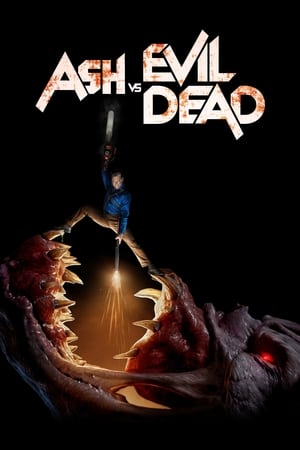
Ash vs Evil Dead brought LoDuca back into the franchise more than twenty years after Army of Darkness. Sam Raimi publicly described him as the sound of Evil Dead, acknowledging how strongly LoDuca’s music had become associated with the property despite the long gap.
The television format presented a new challenge. Instead of scoring one contained feature, LoDuca had to sustain the musical identity across episodes and seasons while introducing new characters, locations and supernatural situations. He read scripts ahead of time when possible and developed recurring thematic rules capable of surviving the constantly changing story.
Updating Evil Dead without pretending that time had stopped
The television continuation could not simply reproduce the instrumentation of 1981. Ash had aged, production technology had changed and the series incorporated contemporary television pacing alongside the deliberately retro personality of its protagonist. LoDuca therefore preserved orchestral and chamber-horror elements while allowing rock influence, electronics and newer production techniques into the score.
The balance reflects one of his recurring professional principles. Continuity does not mean sonic preservation. A franchise score remains effective when it responds to the current story while acknowledging the music audiences already know.
Returning to the original score through A Nightmare Reimagined
Decades after completing his first film score, LoDuca returned to the music of The Evil Dead and rewrote it as Evil Dead: A Nightmare Reimagined. He deliberately retained the essential small-ensemble concept that had been imposed originally by limited resources, even though he now possessed access to vastly greater technical possibilities.
The project allowed him to reconsider inexperienced decisions from the perspective of a mature composer without destroying the identity created by those early limitations. It also demonstrated his continuing appreciation for the original instrumentation, whose character reflected both artistic choices and the production’s limited resources.
From reconstructed score to live horror performance
The rewritten material eventually developed into Evil Dead in Concert, in which the film is screened while musicians perform LoDuca’s score live. The project transformed music originally assembled through difficult low-budget synchronization into a concert work performed before contemporary audiences.
This return closed an unusual professional circle. The score that taught LoDuca how synchronization worked became material requiring another level of synchronization decades later, now performed live by musicians decades after the original production’s work with basic video equipment.
Entering the Chucky franchise
LoDuca began another major horror relationship when he was introduced to Don Mancini for Curse of Chucky. The property already possessed a long musical history created by several composers, so LoDuca’s first question concerned whether Mancini expected him to reproduce established themes. Instead, he was given room to develop a fresh musical approach suited to the new film.
This situation differed substantially from returning to Evil Dead, where LoDuca himself had helped create the original musical identity. With Chucky he entered an existing franchise and had to respect decades of audience familiarity without pretending that he had composed the earlier films.
Don Mancini and a second sustained horror partnership
Don Mancini became one of the most important horror collaborators of LoDuca’s later career. After Curse of Chucky, LoDuca returned for Cult of Chucky and then composed the music for Mancini’s Chucky television series. The relationship gave him three distinct stages of one property: a return to darker feature horror, an increasingly experimental sequel and a serialized television continuation.
Mancini’s willingness to change tone within the franchise suited LoDuca’s broad musical instincts. Chucky can function as frightening murderer, grotesque comedian, melodramatic partner and manipulative presence within adolescent drama. The composer therefore cannot reduce him to one villain motif without ignoring much of what the character is doing.
Scoring Chucky as a character
LoDuca approached Chucky as a fully developed character with a distinct musical personality. When the character becomes threatening, the score can treat him as something far larger than the doll visible on screen. The discrepancy emphasizes the menace of the personality inhabiting the doll.
At the same time, the doll’s apparent innocence remains musically useful. LoDuca experimented with toy-like and detuned sounds capable of referring to childhood while allowing distortion to reveal the threat underneath. This combination creates a sonic identity tied directly to the central contradiction of the character.
Modern electronics and the Chucky television sound
The television series required LoDuca to interact with a contemporary soundtrack containing substantial licensed pop music. He allowed elements of the soundtrack’s contemporary production to shape his own scoring palette. Acoustic sources could be heavily processed, while synthesizers and contemporary textures helped connect the horror with the younger protagonists.
The approach demonstrates how far his technology had developed since The Evil Dead. The composer who once calculated synchronization manually now had access to enormous digital control over pitch, texture and recorded sound. Yet the basic decision remained the same: choose a limited group of musical ideas appropriate to the story and make them emotionally intelligible.
Emotional themes inside a slasher franchise
LoDuca has emphasized that the Chucky series required more than music for murder and suspense. The younger characters possess relationships and family problems that continue even when Chucky is absent. The score therefore needed themes capable of supporting affection, uncertainty and adolescent emotional development without turning every quiet scene into generic melodrama.
This is another example of his broader principle that horror scoring is still dramatic scoring. A composer who responds only when violence occurs fails to support the characters whose safety eventually gives the violence meaning.
Horror-comedy across different generations
The decades separating The Evil Dead from Chucky allowed LoDuca to apply one enduring lesson to very different forms of horror-comedy. Both Ash and Chucky can be extremely funny, yet he generally avoids competing with their dialogue musically. The character already provides the punch line.
Music instead establishes danger, emotion or scale and lets humor arise from the contrast. LoDuca has repeatedly returned to the straight-man analogy because it provides a practical answer to one of horror-comedy’s hardest scoring problems: how to let the audience laugh without telling them musically that nothing on screen matters.
Jazz thinking inside horror composition
LoDuca later connected his jazz background directly with his horror work. Jazz musicians become comfortable with dissonance, rhythmic complexity and rapid response. Horror requires similar flexibility because scenes may turn sharply from stillness into motion or from tension into sudden violence.
The connection is conceptual rather than stylistic. His horror scores do not necessarily sound like jazz. What transfers is an ability to listen to the dramatic moment, understand the structure underneath it and react quickly without losing musical coherence.
Theme and atmosphere as complementary tools
LoDuca has resisted the idea that modern horror must choose between thematic composition and abstract sound design. Strong themes can help audiences understand characters and relationships, while unusual textures can create environments in which conventional melody would feel too familiar.
His later work increasingly combines both approaches. A recognizable motif may emerge from processed sound, or an acoustic instrument may be transformed until it functions more as atmosphere than melody. This flexibility reflects a career that began before digital scoring and continued through the period when composition and sound manipulation became increasingly interconnected.
Remaining a performer inside a technological profession
Despite the expanding role of software, LoDuca has remained interested in playing instruments himself and in recording musicians. Physical performance introduces small variations of attack, timing and tone that can be valuable precisely because they are not perfectly controlled.
His studio environment consequently functions as both electronic laboratory and collection of playable instruments. A sound may begin with an acoustic performance and end as something unrecognizable after processing. For LoDuca, technology expands the possibilities available to performers and composers.
Recognition outside horror
LoDuca’s broader career eventually brought substantial industry recognition. His television work earned numerous Emmy nominations and two wins, including recognition for Xena: Warrior Princess and Legend of the Seeker. His international work included a César nomination for Brotherhood of the Wolf.
These achievements are important to his horror biography because they demonstrate that the composer who entered filmmaking by improvising a frightening score for an inexpensive Michigan production developed into a highly versatile professional capable of large orchestral television, international cinema and several unrelated musical genres.
A career built on recurring creative relationships
LoDuca’s professional history is notable for unusually long relationships. Sam Raimi, Rob Tapert and Bruce Campbell connect his first feature to work made decades later. Don Mancini and David Kirschner created another recurring horror partnership through Chucky. Television producers and directors likewise returned to him across multiple series.
These relationships suggest that his principal professional strength is not one immediately recognizable sonic signature. Filmmakers return because LoDuca adapts himself to changing stories while preserving the trust established through earlier work. His long-standing creative relationships connect projects with very different musical requirements.
Joseph LoDuca’s contribution to horror music
Joseph LoDuca’s contribution to horror comes from demonstrating how musical versatility can create continuity across radically different forms of genre storytelling. He helped define the changing sound of the original Evil Dead cycle, returned decades later to translate that identity into serialized television and then entered the Chucky franchise without attempting to imitate the composers who preceded him.
His career also documents enormous technological change in screen composition. The young musician who synchronized his first feature with calculators, primitive video equipment and a tiny ensemble eventually worked with large orchestras, digital processing and modern television production while retaining principles discovered on that first film: limitations can create identity, the story determines the palette, comedy often works best when the music plays straight and the emotional reality of the characters matters as much as the monster. Those principles have allowed LoDuca to remain relevant to horror across more than four decades without reducing the genre to one musical formula.