


2026
Peter Stormare
Horror Actor · Biography · Horror Filmography · Family · Credits
Horror subgenres & themes
Most represented across this person's horror filmography:
CANNIBAL
• BODY HORROR
• CLOWN
• WITCHCRAFT
Biography
Peter Stormare and the Art of Unsettling Presence
Peter Stormare has built one of the most recognizable careers in modern character acting by making unpredictability feel natural. He can be funny, menacing, pathetic, spiritual or absurd, sometimes within the same performance, and that instability has made him especially valuable to horror, supernatural fiction and darker genre cinema. Directors repeatedly turn to Stormare when they need a figure who can enter a scene and alter its temperature immediately, whether he is playing a demon, an investigator, a criminal, a cult-like authority figure or simply someone whose intentions cannot be read at first glance.
Unlike performers whose horror identity depends on one defining franchise, Stormare's relationship with the genre comes from the consistency of his presence across very different kinds of dark material. He has moved through psychological horror, supernatural horror, demonic fantasy, grotesque action-horror and horror-adjacent thrillers without ever seeming like a guest from another cinematic world. Even when he appears briefly, he tends to leave a strong afterimage because he understands how to weaponize rhythm, silence, accent, posture and sudden tonal shifts.
His value to horror lies not only in the strangeness of his face or voice, though both are unmistakable, but in the feeling that his characters are always carrying additional information. Stormare often plays men who seem to know more than they are saying, or who enjoy letting others remain uncertain. That quality is particularly effective in horror because the genre thrives on incomplete knowledge. The audience senses there is more behind the performance, and that tension alone can make a character memorable.
From Sweden to the Stage
Peter Stormare was born Rolf Peter Ingvar Storm on August 27, 1953, in Kumla, Sweden. He later adopted the stage surname Stormare, partly to distinguish himself professionally. Before international film audiences knew him, he developed through theatre, which remains essential to understanding his screen work. Many actors build intensity through overt emotional display, but Stormare often works through control. He knows how to hold still, how to wait, and how to make a small gesture feel charged.
His stage background became especially important through his work at the Royal Dramatic Theatre in Stockholm, where he was associated with one of Sweden's most important theatrical institutions. He also worked under Ingmar Bergman, a connection that matters less as a prestige credential than as evidence of the kind of discipline from which his performances emerged. Theatre trained him to think in terms of timing, atmosphere and spatial presence, all of which later became central to his film identity.
This European foundation helped distinguish him once he moved into international cinema. Stormare never developed the smooth neutrality often expected from actors who cross into English-language work. Instead, he retained his specific rhythms, accent and physical oddness, turning them into strengths. Horror and dark genre cinema benefited enormously from that refusal to become generic.
The Screen Persona That Horror Loves
Stormare's face and voice naturally suggest contradiction. He can appear intelligent and deranged, warm and threatening, mystical and vulgar, often in rapid succession. Many actors with strong visual identities get trapped in repetitive villain roles, but Stormare's gift is that he can keep even familiar types unstable. A criminal may suddenly seem wounded, a priest may become sinister, and a comic scene may slide unexpectedly toward danger.
This makes him ideal for horror, which often depends on figures who cannot be categorized too quickly. Stormare understands that genre characters become more unsettling when they resist easy explanation. He rarely pushes for simple realism in these parts. Instead, he often gives them a heightened quality that remains just grounded enough to work within the film's reality. The result is a performance style that feels slightly off-center, which is exactly where horror often wants to live.
He is also unusually effective at playing characters who seem spiritually corrupted or morally detached. Some actors make evil look theatrical. Stormare often makes it look casual. That quality became crucial in one of his most memorable genre performances, his version of Satan in Constantine.
Fargo, International Recognition and the Value of Silence
Although Fargo is not a horror film, it remains one of the performances that explains why Stormare later fit the genre so well. As Gaear Grimsrud, he says very little, yet he dominates scenes through blankness, sudden brutality and the sense that ordinary moral communication has simply stopped working. The role gave many viewers their first clear sense of how effective Stormare could be when playing someone who behaves according to an opaque internal logic.
The character is not supernatural, but he is treated almost like a force rather than a normal man. Stormare's stillness does much of the work. He does not need speeches or explanatory psychology. Presence becomes meaning. Horror repeatedly uses the same principle, and after Fargo it became easy to imagine him in darker, stranger and more overtly macabre material.
The performance also made him visible to American filmmakers looking for actors who could bring immediate character definition without requiring extensive setup. That helped open the path toward a long run of supporting roles across thrillers, fantasy, science fiction and horror.
Bruiser and the George A. Romero Connection
One important stop in Stormare's horror filmography is George A. Romero's Bruiser (2000). The film follows a man whose face becomes a blank white mask after years of humiliation, allowing Romero to build a story around alienation, revenge and identity loss. Stormare appears as Detective Hollinger, part of the world trying to make sense of increasingly violent events.
Bruiser is not the most famous title connected to either Romero or Stormare, but it matters because it places the actor inside a form of late Romero horror that is more psychological than apocalyptic. Instead of zombies or large-scale social collapse, the film deals with emotional erasure and the fantasy of escaping one's own powerless identity. Stormare fits the atmosphere because he seems perfectly at home in films where social reality begins drifting into nightmare logic.
The role also shows another reason he works in horror. He can play secondary figures without treating them as secondary. Even when he is not the monstrous center of the film, he contributes to the mood by suggesting a world filled with people who are slightly damaged, slightly untrustworthy or simply harder than expected.
Constantine and One of Modern Genre Cinema's Most Memorable Satans
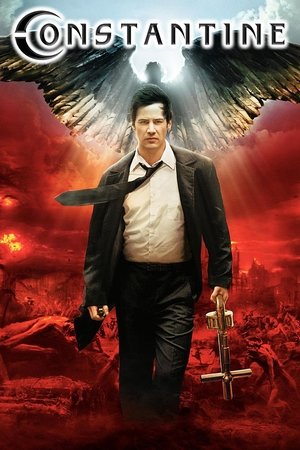
If one performance permanently confirmed Stormare's value to supernatural horror audiences, it was his appearance as Lucifer in Constantine (2005). The role is relatively brief, but it became iconic because Stormare rejects the temptation to play Satan as grand, remote or operatic. His Lucifer is intimate, curious, amused and physically unpleasant, a being who enjoys closeness because closeness itself becomes invasive.
Everything about the performance is carefully chosen. The white suit, the tar-like feet, the languid voice, the calm amusement and the almost affectionate cruelty combine to create a devil who does not need theatrical rage to dominate the scene. Stormare understands that evil becomes more disturbing when it behaves as though winning is effortless. He never appears rushed. He arrives with the certainty of someone to whom time and outcome make little difference.
The performance is also a masterclass in tonal control. Constantine moves between occult detective story, religious fantasy and horror imagery, and Stormare enters at the exact point where all those strands need a final embodiment. He provides not just a villain but a presence that feels metaphysically larger than the plot. Many audiences remember his Lucifer more vividly than characters with far more screen time, which says a great deal about how efficiently he can define a dark figure.
The Physicality of the Supernatural
One reason Stormare's Lucifer works so well is that he never treats the supernatural as something abstract. He gives the performance physical unpleasantness. The character drips, leans, invades space and moves with a soft, almost playful confidence that becomes disgusting precisely because it is so casual. Stormare understands that horror often becomes stronger when metaphysical ideas are made bodily.
This quality appears elsewhere in his genre work too. He often plays characters whose bodies seem slightly out of tune with the environment around them. They may slouch oddly, move too slowly, smile at the wrong time or speak with unexpected softness. The result is not a conventional monster performance but something equally useful: a human being whose physical behavior suggests that his moral or spiritual alignment is not like everyone else's.
That skill allows Stormare to move easily between naturalistic thrillers and overt supernatural horror. He brings enough reality to make the fantastic believable, and enough strangeness to keep the real from ever feeling fully safe.
Hansel & Gretel: Witch Hunters and the Grotesque Fairytale World
Stormare also appeared in Hansel & Gretel: Witch Hunters (2013), a film that blends action, dark fantasy and horror-inflected fairytale imagery. The tone is broader and more comic-book-like than in Constantine or Bruiser, but it still depends on performers who can make grotesque material feel inhabited rather than merely decorative.
This kind of production is a good fit for Stormare because he is comfortable in worlds where exaggeration is part of the language. Some actors become self-conscious in heightened genre settings, especially when the film mixes violence, humor and fantasy. Stormare rarely has that problem. He can adjust to a stylized environment without breaking the reality of the scene from within.
That flexibility is an important part of his horror identity. He is not limited to one tone. He can function in bleak, serious material, but he can also thrive in films where horror overlaps with pulp, comic-book energy or black comedy.
Character Acting and the Horror Ecosystem
Stormare's career is a useful reminder that horror does not depend only on canonical scream queens, final girls or franchise monsters. It also depends on character actors who can enrich the edges of a film. Priests, detectives, doctors, occult intermediaries, killers, criminals and damaged authority figures often shape the atmosphere in which the horror operates, and Stormare has spent much of his career strengthening exactly that kind of supporting architecture.
In many genre films, the audience needs to believe that the world extends beyond the protagonist's immediate crisis. Stormare helps create that impression because his characters never feel like empty plot devices. Even a small role seems to come with a history, a private logic or an interior damage the film does not fully explain. That density is valuable in horror, where suggestion is often more effective than complete explanation.
He also belongs to a class of performer who can elevate uneven material. Not every genre project in a long career will be a masterpiece, but certain actors justify attention because they bring personality, conviction and a specific texture even when the surrounding film is less distinguished. Stormare has often done exactly that.
Voice, Accent and the Sound of Unease
Stormare's voice is one of his great tools. It can sound intimate or threatening without major changes in volume, and his accent, rather than being smoothed into neutrality, remains a significant part of his screen identity. In horror and supernatural fiction, where sound is often as important as image, that vocal particularity matters enormously.
He knows how to make a line feel unexpectedly personal, as though the character were speaking directly into another person's fear rather than simply delivering dialogue. This quality strengthens villains, demons and dubious helpers alike. A generic line can become memorable simply because Stormare locates an unusual rhythm inside it.
That vocal control also supports humor. Several of his darker performances contain comic undercurrents, but the comedy rarely cancels the threat. Instead, the two feelings reinforce each other. The character becomes harder to read because the audience is never completely sure where amusement ends and violence begins.
Why He Works in Dark Genres
Some actors enter horror because they can project terror. Stormare more often enters horror because he can project disturbance. He does not always need to be frightening in an obvious way. Sometimes it is enough that he makes the scene feel less stable. That destabilizing quality is precious in horror because the genre frequently depends on shifting the audience away from normal emotional footing.
He can also play spiritual corruption without losing intelligence. This is crucial. Horror villains and supernatural figures often become less effective when they seem stupid, but Stormare's darker characters usually appear alert, curious or amused. Their danger comes partly from awareness. They know what they are doing, and they often enjoy the fact that others do not fully understand the situation yet.
This combination of intelligence, unpredictability and physical oddness has kept him relevant to genre filmmakers for decades. Even as styles within horror change, those fundamental qualities remain useful.
Peter Stormare's Horror Legacy
Peter Stormare may not belong to horror in the same franchise-defined way as some other genre icons, but his place in the broader horror landscape is secure because he represents a different kind of necessity. He is the actor who can deepen a supernatural film, sharpen a psychological one and lend personality to grotesque fantasy without losing tonal control. Horror repeatedly needs performers who can make the strange feel specific, and Stormare has spent much of his career doing exactly that.
Bruiser links him to George A. Romero's later psychological horror. Constantine gave him one of modern fantasy-horror cinema's most memorable Satans. Hansel & Gretel: Witch Hunters showed how naturally he fits heightened, violent fairytale worlds. Across these and other dark genre appearances, the pattern remains consistent: Stormare enters with a presence that is immediately legible and yet never fully explainable.
That may be the key to his enduring power. He does not merely play sinister people. He creates the impression that a character belongs to a reality running slightly parallel to everyone else's. In horror, that quality is invaluable. It means the performance can carry mystery even after the plot has explained the basics.
More broadly, Stormare demonstrates how important strong character acting remains to genre cinema. Horror is built not only from monsters and victims but from all the unsettling figures between them, the people who guide, mislead, threaten, tempt or simply make the world feel wrong. Peter Stormare has been one of the most effective modern specialists in exactly that space.
Known Among Horror Fans For
Peter Stormare Horror Movies
Acting (20 credits)
2025
2022
2021
2018
2017
2015
2014
2013
2013
2011
2011
2010
2010
2009
2008
2007
2005
2005
2000