


2025
Robert Kurtzman
Horror Special Effects · Biography · Horror Filmography · Collaborators · Credits
Horror subgenres & themes
Most represented across this person's horror filmography:
SLASHER
• SPLATTER
• BODY HORROR
• CANNIBAL
Biography
Robert Kurtzman and the Creation of Modern Practical Horror
Robert Kurtzman is one of the central special makeup effects artists to emerge from the American horror boom of the 1980s, but his importance to the genre extends considerably beyond makeup. As a co-founder of KNB EFX Group with Gregory Nicotero and Howard Berger, Kurtzman helped build one of the most influential practical-effects companies in modern filmmaking. As the creator of the original story that became From Dusk Till Dawn, he conceived one of the defining vampire films of the 1990s. As the director of Wishmaster, he helped introduce the Djinn, another enduring horror character whose mythology expanded into a franchise.
Across more than four decades, Kurtzman has worked as sculptor, makeup artist, effects designer, supervisor, writer, producer and director. His horror credits move through an extraordinary range of styles: the biological mutations of From Beyond, the possessed bodies of Evil Dead II, the surgical grotesquerie of Bride of Re-Animator, the hidden victims of The People Under the Stairs, the armies of the dead in Army of Darkness, the supernatural body horror of Jason Goes to Hell, the creatures of In the Mouth of Madness, the human knife wounds of Scream, the vampire transformations of From Dusk Till Dawn and Vampires, and later projects including The Woman, Late Phases, Tusk, Gerald's Game, The Haunting of Hill House and Doctor Sleep.
His career also illustrates the history of practical horror itself. Kurtzman entered the profession when foam latex, mechanical puppets, creature suits and prosthetic appliances were experiencing an extraordinary period of innovation. He survived the industry's transition toward digital effects, left KNB to establish his own companies, and continued creating physical monsters long after computer imagery had become standard. For Kurtzman, practical effects were never simply a nostalgic technique. They remained a filmmaking language capable of putting something tangible in front of an actor and giving the camera a real object to photograph.
From Ohio Monster Fan to Professional Makeup Artist
Kurtzman was born in Crestline, Ohio, on November 25, 1964. Like many artists who entered special makeup effects during the 1980s, he began as a fan of monsters before he understood that creating them could become a profession. Horror films, monster imagery and the physical transformation of actors fascinated him, eventually directing his attention toward the artists responsible for what appeared on screen.
After high school he spent a period at art school but quickly concluded that he wanted direct experience in the motion-picture effects industry. He moved to Los Angeles while still in his teens and enrolled in a short makeup course, but the most important education came from working inside actual effects shops. Kurtzman has repeatedly emphasized that the profession was learned through production, observation and repetition rather than through a conventional academic route.
The low-budget horror industry provided exactly that opportunity. Effects crews often worked for very little money and extremely long hours, but young artists were exposed to every stage of the process. A person might sculpt an appliance, help create its mold, run the material, paint the finished piece and then travel to set to apply or operate it. Kurtzman learned inside an environment where specialization was a luxury and where solving a problem rapidly could be more valuable than producing a perfect object that arrived too late for filming.
Re-Animator, Ghoulies, Troll and the Low-Budget Effects School
Kurtzman entered the industry at a particularly active moment for independent genre filmmaking. Companies such as Empire Pictures were producing horror and fantasy projects at a rapid pace, creating constant demand for creature and makeup artists. Kurtzman worked on low-budget productions connected to films such as Re-Animator, Ghoulies and Troll, gaining experience while the practical-effects boom accelerated around him.
These films taught an important lesson that would remain central to his career: a limited budget does not reduce the audience's expectations for a monster. A creature still has to function in front of the camera, an appliance must survive the actor's movement and a gore gag has to operate at the exact moment the director needs it. Low-budget production therefore became a technical education in efficiency.
Kurtzman worked within the shops of established artists including John Carl Buechler and Mark Shostrom. The crews surrounding these artists contained many young people who would later become important effects figures themselves. Information moved quickly between productions. A sculpting solution discovered on one film could be adapted for the next, while failed mechanical systems became lessons carried into future projects.
Night of the Creeps and From Beyond
Two 1986 horror films helped establish Kurtzman inside the effects community. Fred Dekker's Night of the Creeps combined alien parasites, zombies, college comedy and 1950s science-fiction influences. The film required creatures small enough to crawl through mouths, infected bodies and increasingly elaborate undead makeup as the invasion expanded. Kurtzman worked within the makeup-effects crew at a time when filmmakers were deliberately testing how much physical monster work could be placed on screen.
Stuart Gordon's From Beyond provided another major experience. Working under Mark Shostrom, Kurtzman was involved with makeup effects for a story in which contact with another dimension causes radical physical mutation. The effects progress from apparently minor alterations of human anatomy toward creatures whose bodies can no longer be understood according to ordinary biological rules.
Kurtzman later recalled travelling to Italy for the production and taking responsibility for substantial on-set application work. From Beyond therefore gave him more than a workshop credit. He had to understand how designs performed under actual shooting conditions, how prosthetics interacted with lighting and movement, and how a complicated makeup had to be maintained throughout a production day.
The film became one of the defining American body-horror productions of the decade, and its physical transformations remain a useful illustration of the period in which Kurtzman learned his craft. Silicone and digital manipulation were not available as modern audiences know them. Distorted anatomy had to be sculpted, molded, fabricated and physically placed into the frame.
Evil Dead II and the Future KNB Partnership
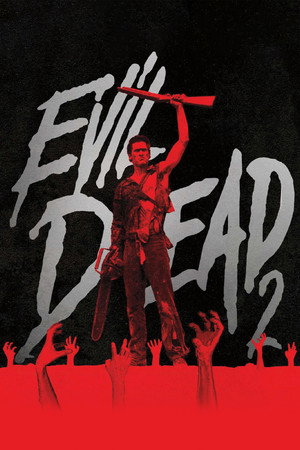
Evil Dead II became one of the most important productions in Kurtzman's professional life. Mark Shostrom supervised the special makeup effects, while the crew included Kurtzman, Gregory Nicotero, Howard Berger, Shannon Shea, Aaron Sims and other young artists. Kurtzman has remembered the film as one of his favorite experiences because the crew was young, intensely enthusiastic and willing to work almost continuously to make Sam Raimi's increasingly extreme ideas possible.
Raimi's approach demanded more than straightforward gore. Possessed faces stretch into exaggerated forms, bodies transform, hands acquire independent life, corpses become physical comedy and the film repeatedly crosses the boundary between frightening imagery and slapstick violence. The effects crew therefore had to think like performers as well as technicians. A mechanical head or prosthetic face might need to produce a reaction precisely timed to Bruce Campbell's movement or Raimi's camera.
Kurtzman, Nicotero and Berger discovered that their skills complemented one another particularly well. All three were already taking significant responsibility in the shops where they worked, and all three wanted more control over complete productions. Their relationship during this period became the basis for one of the most important effects companies in modern genre filmmaking.
Founding KNB EFX Group
In 1988 Kurtzman, Nicotero and Berger founded KNB EFX Group. The company name came directly from their surnames: Kurtzman, Nicotero and Berger. The operation began in a small workshop of roughly eight hundred square feet and expanded dramatically over the following years as the founders built a reputation for speed, reliability and ambitious practical work.
The first objective was simple but difficult. The three artists needed credits as supervisors rather than as employees inside somebody else's shop. They therefore accepted small independent productions and extremely limited budgets, sometimes providing more work than the production could realistically afford because every completed film demonstrated that KNB could manage an entire effects department.
Horror became the natural proving ground. Independent filmmakers needed blood effects, corpses and creatures, and KNB needed projects that would allow the company to show what it could do. The relationship was mutually beneficial. A small slasher received effects that looked more expensive than its budget suggested, while KNB gained the portfolio necessary to move toward larger productions.
Within a relatively short period, the company was working across established franchises and studio films. KNB became associated with the practical horror of the late 1980s and early 1990s while simultaneously proving capable of realistic prosthetics and effects outside the genre. That versatility was crucial to the company's survival when the horror market changed.
A Nightmare on Elm Street and the Slasher Effects Economy
Kurtzman's career intersected repeatedly with the A Nightmare on Elm Street series. Before KNB became established, he worked on A Nightmare on Elm Street 3: Dream Warriors within Mark Shostrom's effects environment. The franchise was an ideal training ground for practical artists because Freddy Krueger could alter reality according to the fears and dreams of his victims.
Unlike a conventional masked killer, Freddy required makeup that allowed Robert Englund to perform while surrounded by fantasy effects that could change radically from scene to scene. Victims became puppets, bodies distorted and dream imagery transformed into physical objects. The films therefore demanded both recurring character makeup and one-off effects designed around individual deaths.
After KNB was established, the company contributed to later Elm Street production. This placed Kurtzman at the intersection of one of the defining practical-effects franchises of the decade while the company was still building its independent identity.
Bride of Re-Animator and the Construction of a Human Body
Bride of Re-Animator became one of the most demanding makeup assignments associated with Kurtzman's early KNB years. Brian Yuzna's sequel expands Herbert West's experiments beyond simple resurrection. West and Dan Cain attempt to assemble a new woman from pieces of different corpses, turning the Frankenstein concept into explicit anatomical horror.
Kurtzman has identified the Bride makeup as one of the most difficult character makeups he ever helped create. The performer required a large number of prosthetic pieces covering much of the body. Application could take approximately nine hours, with Kurtzman, Howard Berger and other artists working together while the actress repeatedly changed position so the pieces could be attached across the front and back.
The result demonstrates why KNB developed such a strong reputation inside horror. The Bride is not merely a wounded person. Her entire body has to communicate that she has been assembled surgically from separate human beings. Seams, different anatomical regions and the unnatural integration of those parts become the character design itself.
The film also required smaller reanimated body combinations and grotesque biological effects. KNB's ability to combine full-body prosthetics, puppets and anatomical gore helped turn the sequel into a practical-effects showcase.
Halloween, Leatherface and the Major Horror Franchises
KNB quickly became part of several established horror series. Work surrounding Halloween 5: The Revenge of Michael Myers connected Kurtzman and the company to the mythology of Michael Myers. Leatherface: The Texas Chainsaw Massacre III placed the team inside another foundational American horror franchise.
These films required a different type of discipline from the supernatural excess of Nightmare on Elm Street or Re-Animator. Michael Myers and Leatherface already possessed established visual identities. Effects work had to strengthen the violence surrounding those characters without changing what audiences recognized about them.
The assignments also demonstrated how rapidly KNB had progressed. Within only a few years of its formation, the company was no longer trying simply to obtain supervisory credits. It had become part of the infrastructure supporting some of the genre's most recognizable properties.
Misery and Horror Without Monsters
Rob Reiner's adaptation of Stephen King's Misery gave KNB an opportunity to prove that its artists were capable of horror effects far removed from supernatural creatures. The terror of the film depends on physical vulnerability. Paul Sheldon is trapped by Annie Wilkes, and the audience must believe that the damage inflicted upon his body is happening to an ordinary human being.
Kurtzman and KNB contributed special makeup effects to a production where success depended on invisibility. An effect that looked impressive in isolation would fail if viewers began admiring the prosthetic rather than reacting to the injury. The work therefore required anatomical credibility and careful integration with performance, camera position and editing.
Projects such as Misery helped KNB move beyond the reputation of being simply the company to call for gore. The founders could create monsters when required, but they could also produce realistic physical trauma that served a dramatic film without announcing itself as an effects sequence.
The People Under the Stairs and Wes Craven
Wes Craven became one of Kurtzman and KNB's most important horror collaborators. The People Under the Stairs required makeup effects for characters who had been mutilated and imprisoned inside the hidden spaces of a house controlled by violent adults. The designs needed to be disturbing without turning the victims themselves into conventional monsters.
The distinction is central to Craven's film. The people living under the stairs initially appear frightening because the audience sees them through the perspective of characters who do not understand them. Their physical damage later becomes evidence of abuse. Makeup therefore carries narrative information. The altered bodies reveal the cruelty of the household rather than simply providing grotesque imagery.
Kurtzman and KNB would continue working with Craven through projects including Wes Craven's New Nightmare, Vampire in Brooklyn and the Scream films. That relationship gave the effects company a role in several different reinventions of American horror during the 1990s.
Army of Darkness and Learning to Think Like a Director
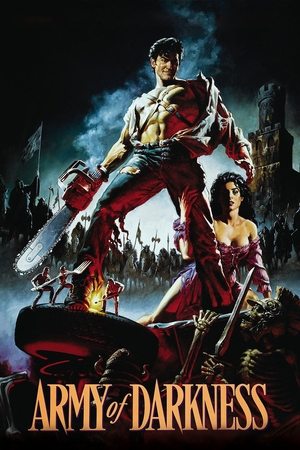
Sam Raimi's Army of Darkness became important not only as an effects project but also in Kurtzman's development as a filmmaker. KNB supervised a large amount of creature and makeup work for the medieval continuation of Ash Williams' story. The film required Deadites, skeletal warriors, prosthetic characters, mechanical puppets and extensive physical effects across large battle sequences.
Raimi often encouraged the effects artists to invent additional action inside the frame. Kurtzman has recalled being given storyboards and asked to determine what more could be done with the puppets, suits and creatures available. The crew would stage effects action for Raimi to evaluate later.
This responsibility introduced Kurtzman to the mechanics of directing. Designing an effect was no longer sufficient. He was thinking about where the camera should be placed, how movement should be timed and how separate pieces of action would cut together. Raimi jokingly referred to him as a young director in training.
The experience proved decisive. Kurtzman had already wanted to direct, but Army of Darkness showed him that years spent designing effects sequences had effectively provided an unconventional education in filmmaking.
Tales from the Darkside and Jason Goes to Hell
Kurtzman increasingly took responsibility for complete effects sequences. On Tales from the Darkside: The Movie, he designed important transformation material, including the gargoyle sequence that closes the anthology. Human anatomy progressively gives way to an inhuman form, requiring multiple stages that preserve continuity as the transformation develops.
Jason Goes to Hell: The Final Friday pushed him further toward directing. The film radically alters the familiar Friday the 13th structure by presenting Jason Voorhees as a supernatural entity capable of passing between human bodies. KNB created possession effects, gore and transformations while Kurtzman directed second-unit effects material.
Again, the boundaries between makeup artist and filmmaker were beginning to disappear. Kurtzman was not merely delivering props to set. He was determining how those effects should be photographed and how visual action could communicate the supernatural mechanics of the story.
In the Mouth of Madness and John Carpenter
John Carpenter's In the Mouth of Madness provided KNB with a different kind of creature challenge. The film follows investigator John Trent into a reality increasingly controlled by the fictional horror of novelist Sutter Cane. Human bodies distort, monstrous beings emerge and the distinction between literature, madness and physical reality collapses.
Kurtzman worked as a special makeup effects supervisor, helping create the physical manifestations of Carpenter's Lovecraftian world. The film required monsters that could appear only briefly yet suggest an enormous reality existing beyond ordinary human perception. Practical creatures were therefore designed not simply as individual antagonists but as fragments of something much larger.
Kurtzman continued working with Carpenter across Village of the Damned, Vampires, Ghosts of Mars and other genre projects. He also handled effects under extraordinarily improvised conditions for Carpenter's anthology Body Bags, later recalling that practical makeup sometimes had to be created wherever space was available rather than inside the idealized environment of a clean makeup trailer.
Wes Craven's New Nightmare and Horror Becoming Self-Aware
Wes Craven's New Nightmare brought Kurtzman back into Freddy Krueger territory through a film radically different from the conventional Elm Street sequels. Actors and filmmakers play fictionalized versions of themselves while a supernatural force adopts the image of Freddy and begins crossing into reality.
KNB contributed special makeup effects within a film that treats horror production itself as part of the narrative. The people responsible for creating fictional monsters become characters threatened by a version of the monster they helped construct. For effects artists such as Kurtzman, the premise had a particularly interesting resonance because the film collapses the separation between fabrication and supposed reality.
The Craven collaboration continued with Vampire in Brooklyn, allowing KNB to move from metafictional slasher horror toward physical vampire transformation, and soon reached its greatest cultural impact through Scream.
Creating From Dusk Till Dawn
The project that most clearly establishes Kurtzman as something more than an effects artist began years before its eventual release. Around 1988 he developed a treatment for a film that would begin as a crime story and abruptly transform into a siege against vampires. Kurtzman was interested in contained survival films such as Night of the Living Dead and Assault on Precinct 13, where characters become trapped in a location and must survive waves of attackers.
The central structural idea was deliberately disruptive. Audiences would begin watching one type of film and, without warning, discover that they were actually inside another. Kurtzman intended the project partly as a showcase for practical effects and originally hoped to direct it himself.
He and producer-writer John Esposito searched for someone to turn the treatment into a screenplay. An unknown Quentin Tarantino supplied writing material that impressed them, and Kurtzman hired him for approximately $1,500 to create the screenplay. The agreement became Tarantino's first paid feature screenwriting job. In exchange, KNB would later work on effects for Reservoir Dogs, including the notorious ear sequence.
The script proved extremely difficult to finance. Its combination of brutal criminals, profanity, sexual material and vampires confused companies that wanted films to remain inside recognizable categories. Kurtzman spent years trying to get the project produced while simultaneously building his effects career.
The Original From Dusk Till Dawn Proof of Concept
During the production period surrounding Army of Darkness, Kurtzman created a short proof-of-concept film designed to show potential financiers what From Dusk Till Dawn could become. He built elements rapidly, filmed the material on 35mm over a short period and assembled the footage using resources available through the Army of Darkness production environment.
The short emphasized exactly what Kurtzman wanted from the larger movie: action, monsters, physical creature effects and an aggressive grindhouse attitude. It still did not immediately solve the financing problem, but it preserved his original conception of the project.
Decades later, the short became a historical artifact in its own right. In 2026 Kurtzman presented a newly restored version at the Popcorn Frights Film Festival during the thirtieth-anniversary celebration of the eventual feature film. The event demonstrated how important the project remained within his career. What began as an unfinanceable effects showcase had become one of the principal works associated with his name.
Robert Rodriguez, Quentin Tarantino and the Film That Finally Happened
The situation changed after Tarantino became internationally successful and Robert Rodriguez expressed interest in directing From Dusk Till Dawn. Kurtzman faced a practical decision. He could continue waiting for someone to finance the relatively small version he hoped to direct, or allow Rodriguez to make a much larger production immediately.
Kurtzman agreed on conditions that preserved his connection to the project. He received story and producing credit, while KNB would handle the special makeup effects. Rodriguez took over directing and Tarantino remained screenwriter and actor.
The completed film retained the structural shock at the heart of Kurtzman's concept. Seth and Richie Gecko begin the story as criminals escaping toward Mexico while holding a family hostage. Only after arriving at the Titty Twister does the movie suddenly reveal that the establishment is filled with vampires. The crime film effectively ends and a siege movie begins.
For KNB, the second half became an enormous practical-effects laboratory. Vampires transform, bodies burn, heads and limbs are destroyed and human characters mutate into increasingly grotesque creatures. Tom Savini's Sex Machine develops into a giant rat-like vampire, one of Kurtzman's favorite creations from the film. The practical effects turn the bar into a constantly changing physical battlefield rather than a collection of interchangeable vampire attacks.
From Dusk Till Dawn as Practical-Effects Cinema
Kurtzman has described the film as a labor of love for practical effects, and its structure supports that interpretation. Once the vampires appear, nearly every section of the environment becomes an opportunity for another physical gag. Stakes penetrate bodies, sunlight destroys creatures, improvised weapons produce explosions of flesh and individual vampires can possess their own unique transformation.
The effects also reflect KNB's accumulated experience. The company had spent years learning from zombie films, body horror, slashers and supernatural franchises. From Dusk Till Dawn allowed those traditions to coexist inside one production. Realistic wounds could appear beside mechanical monsters and exaggerated fantasy transformations without the film needing to choose a single visual language.
The resulting movie became one of the major cult horror titles of the 1990s and later expanded into sequels and a television adaptation. Kurtzman's original idea therefore developed into a franchise even though he never directed the feature version he initially imagined.
The Demolitionist and Moving into Directing
Kurtzman finally made his feature directing debut with The Demolitionist. Although the film operates primarily as comic-book action and science fiction rather than pure horror, it was essential to his next major horror achievement. Working with limited resources, Kurtzman demonstrated that he could supervise an entire feature rather than only its effects department.
Sam Raimi saw the film and later recommended Kurtzman when producers were searching for a director capable of handling a heavily effects-driven horror project on a demanding schedule. That project became Wishmaster.
Wishmaster and the Djinn
Released in 1997, Wishmaster gave Kurtzman the opportunity to direct a film constructed almost entirely around the kind of practical horror he had spent his career creating. The screenplay introduces an ancient Djinn who grants wishes in deliberately destructive ways while attempting to free his species into the human world.
Kurtzman understood that the concept depended on making individual deaths imaginative. A wish could be interpreted literally or maliciously, allowing almost any form of transformation or bodily destruction. The film therefore functions as a catalogue of practical-effects possibilities rather than a slasher in which every victim is killed through the same basic method.
Andrew Divoff became central to the film's success as the Djinn. Kurtzman wanted the human form, Nathaniel Demerest, to be unsettling even before the full creature was visible. Divoff's voice and controlled performance created an antagonist who could threaten people through conversation, while prosthetic makeup transformed him into the increasingly elaborate supernatural form associated with the franchise.
Wes Craven joined as executive producer, giving the project additional visibility and helping strengthen its production position. The film also surrounded Divoff with performers strongly associated with horror, including Robert Englund, Tony Todd and Kane Hodder.
The Practical Horrors of Wishmaster
Wishmaster arrived during the early expansion of affordable digital effects, but Kurtzman approached the movie from the perspective of an artist trained in physical transformation. Many of its most memorable sequences therefore depend on prosthetics, mechanical effects, creature work and bodily distortion performed in front of the camera.
The film intentionally operates like a showcase. Each victim creates a new effects problem. Human anatomy can become stone, flesh can distort according to the literal wording of a wish and an elaborate party sequence becomes an opportunity for multiple simultaneous transformations.
Some digital imagery inevitably reflects the technological limitations of the period, but the physical elements have given the film much of its continuing appeal. The Djinn became recognizable enough to support several sequels, turning a standalone effects-driven production into another horror franchise associated directly with Kurtzman.
Scream and the New Slasher
During the same period, KNB worked extensively on Wes Craven's Scream. The project required the opposite effects philosophy from Wishmaster. Ghostface possesses no supernatural powers. The victims are ordinary people attacked with knives, so the makeup effects need to preserve the vulnerability of real human bodies.
Kurtzman and KNB supervised wounds and corpses while Craven and Kevin Williamson rebuilt the slasher around characters who understood the conventions of the films they inhabited. The result helped revive theatrical American horror after a period in which many established franchises had declined.
KNB remained involved through Scream 2 and Scream 3, giving Kurtzman a sustained connection to one of the most influential horror franchises of the 1990s. The work again demonstrates his range. The same artist associated with giant vampire creatures and impossible Djinn transformations could also supervise realistic stabbing effects whose purpose was to keep the threat grounded.
Vampires and John Carpenter
John Carpenter's Vampires gave Kurtzman, Nicotero and Berger another opportunity to reinterpret a classic monster. Carpenter rejected the elegant Gothic image of the vampire in favor of violent predators hunted through the American Southwest. The physical effects emphasize burns, wounds and bodily destruction more strongly than romantic supernatural beauty.
The work earned Kurtzman, Berger and Nicotero the Saturn Award for Best Makeup. The recognition came after years in which KNB had moved between independent gore films and large studio productions, demonstrating that the company's horror craftsmanship could receive major genre-industry recognition without abandoning the practical methods on which it was built.
Leaving KNB and Building a New Effects Identity
Kurtzman left KNB in the early 2000s after roughly fifteen years of helping build the company. By that point the operation had expanded enormously from its original small workshop and had accumulated hundreds of film and television credits. His departure did not represent an exit from effects work. Instead, he returned to Ohio and developed new production and makeup operations under his own name.
Precinct 13 Entertainment allowed Kurtzman to combine effects creation with independent production. Later operations including Creature Corps and Robert Kurtzman MUFX continued the practical-effects side of his career. Moving away from the enormous Hollywood shop environment also allowed him to work directly with smaller horror filmmakers whose projects reminded him of the low-budget productions on which he had learned his craft.
Cabin Fever and a New Generation of Gore
Eli Roth's Cabin Fever arrived at a moment when American horror was again becoming increasingly interested in visible bodily damage. The story replaces a conventional killer with a flesh-destroying infection, making makeup effects essential to the progression of the disease.
Kurtzman's effects background was ideally suited to this form of horror. Infection can begin as a small discoloration and progressively consume the body, requiring continuity across multiple stages rather than a single isolated wound. The makeup work associated with the film received Best Makeup recognition at Sitges, further connecting Kurtzman with the emerging generation of early-2000s American horror filmmakers.
The Woman and Returning to Independent Horror
Lucky McKee's The Woman represented the type of project Kurtzman continued to value after leaving KNB. The film is smaller and more confrontational than a studio franchise, centering on a family man who captures a feral woman and imprisons her in an attempt to force her into his idea of civilization.
The physical violence becomes progressively severe as the supposed normality of the household collapses. Kurtzman's makeup effects support a film where bodily injury is inseparable from abuse, control and the characters' moral degradation.
He continued working with independent directors because those productions could still offer effects challenges that larger films sometimes avoided. The financial scale might be smaller, but the opportunity to create an unusual monster or particularly disturbing transformation could make the work more attractive than another conventional studio assignment.
Late Phases and Rebuilding the Werewolf
Adrián García Bogliano's Late Phases offered Kurtzman one of those challenges. When approached about the werewolf film, he made clear that he did not want simply to reproduce another familiar version of a creature he had already seen countless times.
The film centers on a blind veteran who discovers that a werewolf is attacking residents of his retirement community. Its creatures therefore needed enough physical presence to support direct confrontations while possessing an identity distinct from decades of cinematic werewolves.
Kurtzman's attitude toward the assignment reveals his broader practical philosophy. Familiar monsters remain useful only if the filmmaker and effects team discover a reason to build them again. The challenge is not merely technical competence but finding a physical design that belongs specifically to that story.
Tusk and the Human Walrus
Kevin Smith's Tusk became one of Kurtzman's most recognizable modern effects projects because its central transformation is difficult to separate from the movie itself. Justin Long plays Wallace Bryton, who is kidnapped by Howard Howe and surgically reconstructed into a grotesque approximation of a walrus.
Kurtzman was immediately attracted to the project because the creature was not another conventional vampire or werewolf. Smith described a design evoking Frankenstein and The Texas Chain Saw Massacre, a human being physically assembled into something that resembles an animal through stitched flesh and surgical modification.
The resulting suit deliberately avoids elegance. Wallace does not become a magical animal. He remains visibly human material forced into an impossible configuration. The horror comes from recognizing the person inside the constructed body.
Kurtzman and Smith continued their relationship through Yoga Hosers, extending the connection between Kurtzman's effects work and Smith's increasingly bizarre horror-comedy universe.
Gerald's Game, The Haunting of Hill House and Mike Flanagan
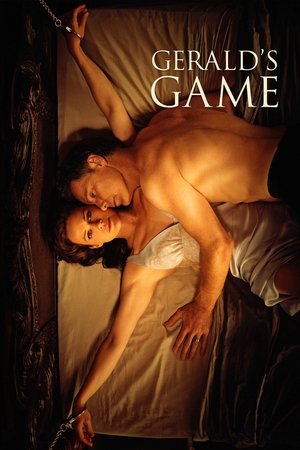
Kurtzman became involved with several projects connected to Mike Flanagan, whose horror frequently depends on a mixture of emotional realism and sudden physical brutality. Stephen King's Gerald's Game contains one of the clearest examples. Much of the film is psychologically contained, but its most notorious physical sequence requires an effect whose realism makes the audience almost instinctively recoil.
The Haunting of Hill House presented a different challenge. The series contains numerous ghosts whose appearances vary according to death, memory and the visual logic of individual scenes. Kurtzman served as special makeup effects department head, overseeing prosthetics for hero ghosts, injuries and aging work.
The project demonstrates how practical makeup remained valuable inside modern high-resolution television. Ghosts could not depend only on darkness or rapid editing. Many needed to survive sustained photography while still appearing physically wrong enough to belong to Hill House.
Doctor Sleep and Returning to Stephen King Horror
Kurtzman continued into Flanagan's Doctor Sleep, the sequel to The Shining based on Stephen King's novel. The story required makeup effects across supernatural violence, aging, injury and characters whose bodies carry the consequences of attacks by the True Knot.
The production again demonstrates how Kurtzman's modern work differs from the practical-effects boom in which he began. Digital tools are now part of the filmmaking environment, but physical prosthetics remain useful whenever an actor needs to interact with a wound, corpse or altered body directly.
Kurtzman never treated that coexistence as a defeat for practical effects. His career adapted by identifying the shots and characters where physical material provided advantages that digital imagery could not reproduce as efficiently or emotionally.
Robert Kurtzman MUFX and Continuing Horror Work
Through Robert Kurtzman MUFX, Kurtzman continued creating special makeup effects into the 2020s. Recent work has included independent and studio productions, while his professional identity remains strongly associated with the combination of design, fabrication and on-set execution that defined his earliest career.
Projects such as Marshmallow and other contemporary horror productions demonstrate that he remains active rather than functioning solely as a retrospective figure from the practical-effects era. His name continues to appear on new films decades after the productions that established KNB.
In 2026 he also worked within the new Scary Movie production, another connection to a franchise whose entire comedy depends on the physical vocabulary of horror films. Even in parody, makeup effects need to reproduce the visual logic of the genre accurately enough for the joke to function.
From Dusk Till Dawn at Thirty
The thirtieth anniversary of From Dusk Till Dawn in 2026 provided a particularly clear measure of Kurtzman's legacy. The Popcorn Frights Film Festival celebrated him as a major effects artist and filmmaker, screening the feature together with a restoration of his original proof-of-concept short. Kurtzman also presented Wishmaster with Andrew Divoff, linking the two projects that most clearly established his identity outside special makeup effects.
The event highlighted an unusual fact about his career. Many major effects artists become associated with creatures they created for other filmmakers. Kurtzman possesses that legacy, but he also originated stories and directed horror films whose identities extend beyond the effects department. From Dusk Till Dawn began in his imagination before Tarantino wrote the screenplay or Rodriguez directed it. Wishmaster carries his decisions as director as well as his understanding of creature cinema.
The KNB Partnership and the Practical Horror Generation
The partnership between Robert Kurtzman, Gregory Nicotero and Howard Berger remains one of the most important creative relationships in modern special makeup effects. The three did not merely share a company name. They emerged from the same period of apprenticeship, lived and worked closely together and developed an operation capable of handling multiple major productions simultaneously.
KNB became a bridge between generations. Its founders learned from artists including Mark Shostrom, John Carl Buechler, Kevin Yagher, Tom Savini and others who helped define the 1970s and 1980s practical-effects tradition. KNB then became a place where younger artists learned the same process while filmmaking technology changed around them.
The company also demonstrated that horror effects expertise could become useful throughout the larger film industry. The discipline required to make a severed body convincing could be applied to realistic injury work, aging makeup, animals, historical prosthetics or fantasy creatures. Horror therefore supplied the laboratory in which techniques were developed before they moved into every other kind of production.
Robert Kurtzman's Place in Horror History
Robert Kurtzman belongs in horror history for several independent reasons. As an effects artist, he participated in the practical-effects revolution that gave 1980s and 1990s horror much of its physical identity. As a KNB founder, he helped institutionalize that craft and turn a partnership among three young artists into one of Hollywood's major effects companies. As a creator, he conceived From Dusk Till Dawn. As a director, he transformed Wishmaster into the beginning of another horror franchise.
His filmography also connects unusually large portions of modern horror history. Kurtzman worked on films associated with Sam Raimi, Wes Craven, John Carpenter, Stuart Gordon, Brian Yuzna, Robert Rodriguez, Kevin Smith, Lucky McKee, Mike Flanagan and numerous independent directors. He contributed to Freddy Krueger, Jason Voorhees, Michael Myers, Leatherface, Ghostface, vampires, werewolves, zombies, Lovecraftian creatures and monsters without established mythology.
That breadth distinguishes him from an artist known primarily for one iconic makeup. Kurtzman's legacy is a system of making horror physical. Sometimes the result is a carefully hidden wound that audiences never consciously identify as an effect. Sometimes it is a giant vampire rat fighting inside the Titty Twister. Sometimes it is a human being sewn into the form of a walrus. The underlying challenge remains the same: turn an impossible image into something that can occupy real space in front of the camera.
More than forty years after moving from Ohio to Los Angeles as a young monster enthusiast, Kurtzman remains active in the profession that fascinated him as a teenager. Practical effects have changed, filmmaking has changed and KNB itself continued along a different path after his departure, but the body of work he helped create remains embedded throughout American horror. Few effects artists can claim significant creative connections to so many major horror filmmakers, and fewer still can add the creation of one cult franchise and the direction of another to the same career.
Selected Work
Notable Horror Collaborators
Notable collaborators and creative partners throughout Robert Kurtzman's horror career.
 Gregory Nicotero
KNB EFX Partner
Kurtzman's defining professional partnership. He and Gregory Nicotero worked together on Evil Dead II before co-founding KNB EFX Group with Howard Berger in 1988, beginning a vast run of horror effects collaborations across the following fifteen years.
 Howard Berger
KNB EFX Partner
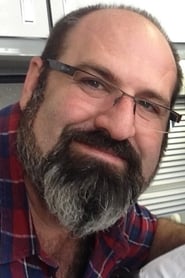
A founding partner and one of Kurtzman's closest practical-effects collaborators. Berger, Kurtzman and Nicotero developed their working relationship during the 1980s before building KNB into one of the most important makeup and creature effects companies in genre cinema.
 Wes Craven
Director Collaborator
One of Kurtzman and KNB's most important recurring horror filmmakers. Their work together includes The People Under the Stairs, Wes Craven's New Nightmare, Vampire in Brooklyn and the original Scream trilogy, spanning several phases of Craven's 1990s horror career.
 John Carpenter
Director Collaborator
A major recurring horror relationship through Body Bags, In the Mouth of Madness, Village of the Damned, Vampires and Ghosts of Mars. Carpenter repeatedly used Kurtzman and KNB for creature, transformation and special makeup work.
 Sam Raimi
Director Collaborator
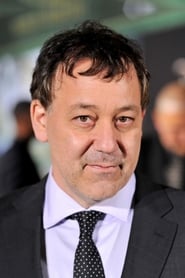
Kurtzman worked with Raimi on Evil Dead II and later supervised extensive KNB creature work for Army of Darkness. Raimi also encouraged Kurtzman's development as a filmmaker and recommended him to the producers who ultimately hired him to direct Wishmaster.
 Robert Rodriguez
Director Collaborator
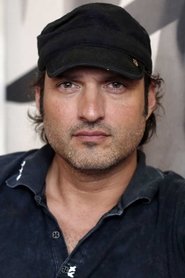
A defining creative relationship through From Dusk Till Dawn and The Faculty. Rodriguez ultimately brought Kurtzman's long-developed vampire concept to the screen while Kurtzman and KNB supplied the practical creature effects that dominate the film's horror half.
Robert Kurtzman Horror Movies
Special FX / Practical FX (44 credits)
2025
2022
2021
2021
2019
2018
2018
2017
2015
2014
2013
2013
2008
2001
2001
2000
1999
1997
1997
1995
1995
1995
1995
1993
1993
1993
1993
1993
1992
1992
1992
1991
1991
1991
1990
1990
1990
1989
1989
1987
1986
1986
1986
Directing (5 credits)
2007
2007
1997
1995
1991
Acting (7 credits)
2025
2024
2023
2016
2010
1997
1986
Writing (5 credits)
2014
2007
1996
1995
1991
Visual Effects (3 credits)
2025
2006
2005
Production (6 credits)
2023
2018
2013
2010
2007
1996
Cinematography (1 credits)
2007
Other Crew (2 credits)
2022
2022