
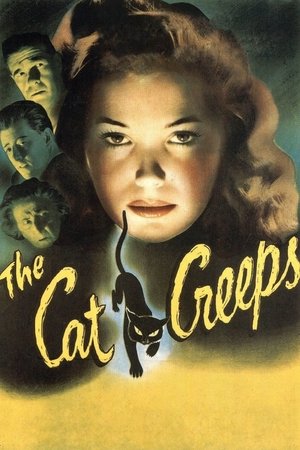
1946
Erle C. Kenton
Horror Director · Biography · Horror Filmography · Collaborators · Credits
Horror subgenres & themes
Most represented across this person's horror filmography:
VAMPIRE
Biography
Erle C. Kenton and American studio horror
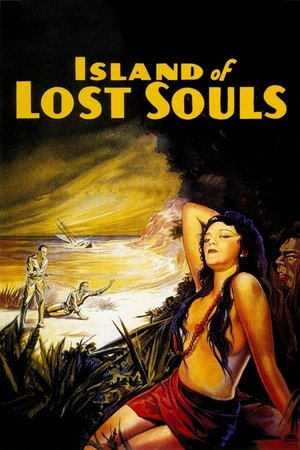
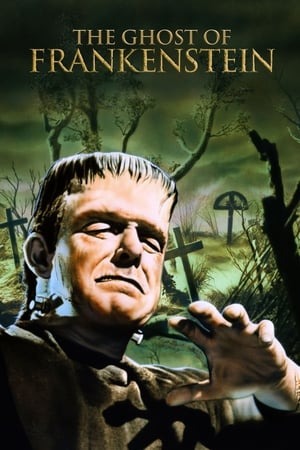
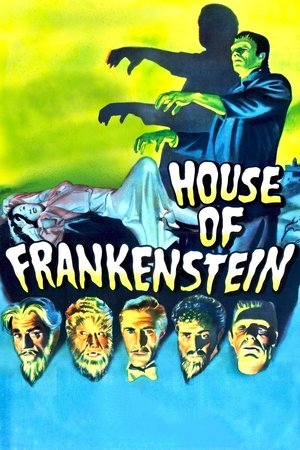
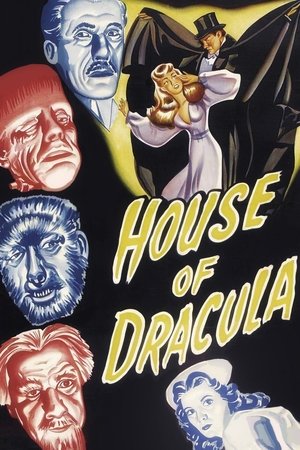
Erle C. Kenton directed horror films during two distinct periods of American studio cinema. In 1932 he made Paramount’s Island of Lost Souls, an adaptation of H. G. Wells’s The Island of Doctor Moreau that became one of the most disturbing major-studio horror productions of the pre-Code period. A decade later Kenton entered Universal’s monster cycle with The Ghost of Frankenstein and subsequently directed House of Frankenstein and House of Dracula, two films that consolidated the studio’s practice of combining several established monsters in a single narrative.
Horror represents only one portion of a much longer directing career. Kenton had worked in comedy and silent cinema before the sound era and continued directing a broad range of commercial material between his genre assignments. That background helps explain the efficiency of his Universal work, where films involving complicated franchise continuity and several recognizable performers had to be completed within schedules typical of the studio’s lower-budget productions.
Mack Sennett and silent comedy
Kenton entered filmmaking during the silent period and became associated with Mack Sennett’s comedy organization. AFI records him as director on Sennett productions during the early 1920s, including A Small Town Idol. Work in this environment required careful control of physical action and efficient production because comedy shorts and features were made in significant volume.
He continued directing throughout the 1920s, moving among comedy, melodrama and other commercial forms. By the arrival of sound he had already accumulated substantial practical experience. His later horror films therefore came from an established studio craftsman rather than from a director whose career had developed specifically around macabre material.
The transition to sound
Kenton continued working through the difficult industrial transition from silent production to synchronized dialogue. His early sound films included dramas and comedies made for several companies. This adaptability helped preserve a directing career during a period when many silent filmmakers struggled to adjust to new production methods.
By the beginning of the 1930s he was working at Paramount, where the studio was exploring horror and fantastic material following the commercial success of Universal’s Dracula and Frankenstein. The assignment that resulted became far more historically durable than most of Kenton’s previous films.
Island of Lost Souls
Island of Lost Souls, released in 1932, was adapted from H. G. Wells’s 1896 novel The Island of Doctor Moreau. Charles Laughton plays Dr. Moreau, a scientist living on an isolated island where he conducts experiments intended to transform animals into human form. Richard Arlen plays Edward Parker, who discovers the experiments after being stranded there, while Leila Hyams plays Parker’s fiancée Ruth.
Bela Lugosi appears as the Sayer of the Law and Kathleen Burke as Lota, the Panther Woman. The screenplay was credited to Waldemar Young and Philip Wylie, with cinematography by Karl Struss. Kenton therefore worked with a strong group of performers and technicians on a production considerably more ambitious than the lower-budget Universal horror films he would direct a decade later.
Charles Laughton as Dr. Moreau
Laughton’s Moreau is central to the film’s identity. He approaches vivisection and forced biological transformation as a controlled scientific program and exercises direct authority over the hybrid beings created through his experiments. The performance gives the film a human antagonist whose actions are more disturbing than the physical appearance of the creatures around him.
Kenton stages Moreau’s laboratory as a working environment rather than a remote supernatural chamber. The House of Pain, as the creatures call it, is associated with surgical experimentation and punishment. This emphasis helped distinguish the film from Universal’s contemporary Gothic monsters and gave the adaptation a form of biological horror unusually explicit for a major studio production in 1932.
The Sayer of the Law and Bela Lugosi
Lugosi plays one of the animal-human inhabitants beneath heavy makeup, a substantial departure from the controlled appearance of Dracula. His Sayer of the Law recites the rules imposed by Moreau on the island’s creatures, reinforcing the scientist’s attempt to regulate beings he has created artificially.
The role is supporting rather than dominant, but it became one of Lugosi’s most recognizable transformed characters outside Universal. Kenton uses the collective presence of the creatures to establish a social order built entirely around Moreau’s authority and the fear of punishment.
Censorship and the reception of Island of Lost Souls
The film encountered censorship problems because of its treatment of vivisection, sexual implications and biological experimentation. AFI records that it was banned in Britain as being contrary to accepted standards concerning nature, part of a broader controversy that followed the film internationally.
The production’s later reputation benefited from the development of film preservation and reassessment of pre-Code horror. Its treatment of forced evolution and scientific cruelty appears unusually severe compared with many later studio films made after enforcement of the Production Code became stricter in 1934.
Kenton after Island of Lost Souls
Kenton did not immediately become a specialist horror director following the film. He returned to the broad commercial assignments that had characterized his earlier career. Comedies, dramas and other studio productions occupied most of the following decade.
This gap is significant because the horror industry itself changed substantially during those years. When Kenton returned to the genre at Universal in the early 1940s, the studio was producing sequels to characters created during the period when Island of Lost Souls had first appeared. Kenton therefore participated in two very different industrial forms of horror.
The Ghost of Frankenstein
The Ghost of Frankenstein, released in 1942, marked Kenton’s entry into the principal Universal monster series. The film continued directly from Son of Frankenstein. Lon Chaney Jr. became the first actor after Boris Karloff to play the Monster in a Universal feature, while Bela Lugosi returned as Ygor. Sir Cedric Hardwicke played Dr. Ludwig Frankenstein and Lionel Atwill appeared as Dr. Bohmer.
George Waggner produced the film, with a screenplay by W. Scott Darling based on a story by Eric Taylor. Jack Pierce handled makeup and Hans J. Salter contributed the score. The production therefore placed Kenton inside the established technical system of Universal horror rather than asking him to create a completely new visual world.
Continuing Frankenstein without Boris Karloff
The most important industrial challenge of The Ghost of Frankenstein was maintaining the franchise after Karloff left the Monster role. Pierce’s makeup design provided visual continuity, while Chaney supplied a physically imposing new performance. Lugosi’s Ygor created a direct narrative connection with Son of Frankenstein.
The film also develops the idea of transferring Ygor’s brain into the Monster. This decision became important to Frankenstein Meets the Wolf Man, even though later editing of that film removed much of the dialogue required to explain the resulting characterization. Kenton’s sequel therefore influenced continuity beyond its own ending.
Universal horror as serialized production
By the time Kenton entered the series, Universal’s monster films had become more explicitly serial than the first productions directed by James Whale. Characters could survive apparent death, performers could change and events from one film could be used to justify another combination of properties. The emphasis was increasingly on keeping recognizable monsters available for future productions.
Kenton’s experience as a studio craftsman suited this system. His responsibility was to deliver clear narrative continuity and make established monsters function inside new stories. The films were made within a stable production infrastructure that already possessed makeup designs, laboratory equipment and a group of performers familiar to horror audiences.
House of Frankenstein
Kenton returned to Universal monster cinema with House of Frankenstein, produced by Paul Malvern and released in late 1944. Boris Karloff returned to the Frankenstein series in a new role as Dr. Gustav Niemann. Lon Chaney Jr. again plays Larry Talbot, John Carradine appears as Dracula and Glenn Strange takes over the role of Frankenstein’s Monster. J. Carrol Naish plays Daniel, Niemann’s assistant.
The film brings several monsters into one production but does not keep them together continuously. Their individual stories are connected through Niemann’s journey and experiments. This structure allowed Universal to advertise several established properties simultaneously without constructing every scene around direct conflict among them.
Boris Karloff’s return to the Frankenstein series
Karloff’s presence gave House of Frankenstein a direct connection with the actor who had created the studio’s most famous Monster. Instead of returning to the makeup, he plays the scientist who eventually revives Glenn Strange’s version of the creature. The casting acknowledged Karloff’s association with the series while allowing another actor to continue the Monster identity.
Kenton therefore directed Karloff in a Frankenstein film without attempting to recreate James Whale’s earlier actor-director relationship. The production belongs to a later franchise phase in which historical familiarity with the performers had itself become part of the commercial appeal.
Glenn Strange and a new Frankenstein Monster
Glenn Strange’s casting established the performer who would continue as the Monster in House of Dracula and Abbott and Costello Meet Frankenstein. His height and physical proportions suited the already standardized Pierce design. By this stage the role required less individual development than Karloff had received because the visual identity of the Monster was firmly established.
Kenton’s direction treats the Monster largely as one component within an ensemble production. This reduced dramatic emphasis reflects Universal’s broader strategy during the mid-1940s, when several classic properties could be combined within compact running times.
Larry Talbot and House of Frankenstein
Lon Chaney Jr. retains greater character continuity because Larry Talbot had always been associated with the same actor. His story again centers on the search for release from lycanthropy. The recurrence gives the film a human narrative that carries across different monster appearances.
This distinction between Talbot and the other properties is important. Dracula and Frankenstein’s Monster could change performers while remaining recognizable through costume and makeup. The Wolf Man remained tied directly to Chaney’s human performance, giving Kenton a character whose continuity depended as much on the actor as on the transformation.
House of Dracula
Kenton directed House of Dracula in 1945 with Paul Malvern again producing. John Carradine returns as Dracula, Lon Chaney Jr. as Larry Talbot and Glenn Strange as Frankenstein’s Monster. Onslow Stevens plays Dr. Franz Edelmann, whose medical research becomes the device connecting the supernatural characters. Lionel Atwill appears as Inspector Holtz.
The premise begins with Dracula and Talbot independently seeking treatment for their conditions. Medical explanation is therefore placed alongside supernatural continuity, a development consistent with Universal’s long history of combining scientific and Gothic material. George Robinson photographed the film, John B. Goodman and Martin Obzina handled art direction and Jack Pierce remained responsible for makeup.
The end of the serious Universal monster ensemble
House of Dracula became the final major Universal feature of the period to combine its principal monsters entirely within a serious horror framework. The next important gathering, Abbott and Costello Meet Frankenstein, reorganized the same properties around comedy while retaining Chaney and Strange and bringing Bela Lugosi back as Dracula.
Kenton’s two House films therefore occupy the final stage of Universal’s original monster-combination cycle. They preserved the characters through a period when individual sequels had already exhausted many of their original narrative possibilities.
George Robinson and the visual continuity of the House films
Cinematographer George Robinson photographed both House of Frankenstein and House of Dracula. His work provided visual continuity across productions sharing several characters and sets. The partnership with Kenton operated within the studio’s economical production system, where familiar Gothic environments had to remain effective despite increasingly compressed budgets.
Robinson’s involvement also connects Kenton’s films with a wider body of Universal horror photography. He worked on numerous genre productions during the period and became one of the technicians responsible for maintaining the studio’s established black-and-white Gothic appearance after the prestige cycle of the early 1930s.
Jack Pierce and the continuation of established monsters
Pierce worked with Kenton on The Ghost of Frankenstein, House of Frankenstein and House of Dracula. By this period his role involved maintaining designs audiences already recognized while adapting them to new performers such as Lon Chaney Jr. and Glenn Strange.
The collaboration illustrates an important difference between Kenton’s 1932 and 1940s horror films. Island of Lost Souls was built around a new group of creatures for one story. Universal’s later productions required Kenton to work with monster identities already carrying a decade of screen history.
Television and the later career
Like many experienced studio directors, Kenton eventually moved into television as opportunities in feature production changed. His long career had already crossed the silent era, the transition to sound and two major periods of American horror. Television offered another production system built around speed and reliable professional technique.
This broader career explains why his horror films differ so substantially from one another. Kenton did not cultivate one personal horror formula across decades. He adapted his directing to the production system and genre requirements of each period.
Erle C. Kenton’s place in horror history
Kenton’s reputation within horror rests on four films with very different historical functions. Island of Lost Souls belongs to the experimental freedom of pre-Code studio horror and remains one of the most important adaptations of H. G. Wells’s work. The Ghost of Frankenstein documents Universal’s attempt to continue a major monster series after the departure of its defining actor.
House of Frankenstein and House of Dracula represent a later stage in which the studio’s monsters had become sufficiently established to share one production. Kenton’s career therefore crosses the movement from ambitious standalone horror toward the franchise ensemble model that became an important feature of genre filmmaking in subsequent decades.
Selected Work
Notable Horror Collaborators
Notable collaborators and creative partners throughout Erle C. Kenton's horror career.
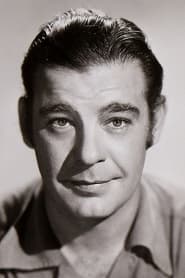 Lon Chaney Jr.
Director / Actor Collaborator
Kenton directed Chaney as Frankenstein’s Monster in The Ghost of Frankenstein and later as Larry Talbot in House of Frankenstein and House of Dracula. Their three films span two different Universal monster identities and the studio’s transition into ensemble horror.
 Lionel Atwill
Director / Actor Collaborator
Atwill appeared under Kenton’s direction in The Ghost of Frankenstein, House of Frankenstein and House of Dracula. His changing roles as scientist and authority figure made him part of the recurring human repertory surrounding Universal’s monsters.
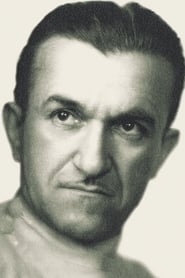 Jack Pierce
Director / Makeup Artist Collaborator
Pierce handled makeup on The Ghost of Frankenstein, House of Frankenstein and House of Dracula. Their collaboration maintained the established visual identities of Frankenstein’s Monster and the Wolf Man while adapting those designs to changing performers and ensemble productions.
GR
George Robinson
Director / Cinematographer Collaborator
Robinson photographed House of Frankenstein and House of Dracula, giving Kenton’s two principal monster-ensemble films strong visual continuity. The relationship falls below the standard three-title threshold but covers Kenton’s complete House cycle at Universal.
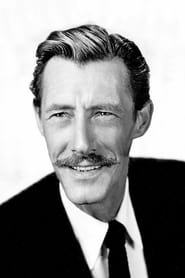 John Carradine
Director / Actor Collaborator
Carradine played Dracula for Kenton in House of Frankenstein and House of Dracula. The two-film collaboration established the actor’s principal Universal interpretation of the Count and covers both of Kenton’s major ensemble horror productions.
 Glenn Strange
Director / Actor Collaborator
Strange played Frankenstein’s Monster in House of Frankenstein and House of Dracula under Kenton’s direction. The two films established the version of the Monster that Strange later carried into Abbott and Costello Meet Frankenstein, making the relationship historically important despite the two-title count.
Erle C. Kenton Horror Movies
Directing (5 credits)
1945
1944
1942
1932
Production (1 credits)
1932