


2026
Howard Berger
Horror Special Effects · Biography · Horror Filmography · Collaborators · Credits
Horror subgenres & themes
Most represented across this person's horror filmography:
SLASHER
• SPLATTER
• BODY HORROR
• CANNIBAL
Biography
Howard Berger and the Practical Effects Backbone of Modern Horror
Howard Berger is one of the key special makeup effects artists to emerge from the practical-effects boom of the 1980s and one of the figures most responsible for carrying that tradition into modern horror. As a co-founder of KNB EFX Group with Robert Kurtzman and Gregory Nicotero, Berger helped create creatures, corpses, wounds, monsters, transformations and prosthetic characters for an extraordinary range of horror films and television productions. His work stretches from George A. Romero's Day of the Dead and Sam Raimi's Evil Dead II through the slasher franchises of the late 1980s, the resurgence of horror in the 1990s, the extreme practical effects of From Dusk Till Dawn and Planet Terror, the elaborate creatures of The Mist and Fright Night, and the sustained television horror worlds of The Walking Dead and Anne Rice adaptations.
Berger belongs to a generation for whom horror effects were physical objects before they were digital images. Faces were sculpted in clay, molds were made by hand, foam appliances were run and painted, dentures were built, puppets were engineered, blood systems were hidden beneath costumes and creature suits had to survive long shooting days under difficult conditions. That background gave him an unusually complete understanding of how an effect moves from an idea to a finished shot. It also shaped KNB's reputation. Berger, Kurtzman and Nicotero did not specialize in one monster or one technique. They became a company filmmakers could call when a production needed the impossible to exist physically in front of the camera.
Growing Up with Monsters
Berger was born in California on December 20, 1964 and grew up surrounded by movies. His father worked in post-production sound, giving him an early awareness that films were constructed by people working behind the screen. Berger became fascinated with monsters while still a child. He has described being drawn to classic creature movies, monster magazines and the idea that someone had to physically create the faces and bodies that frightened him. Famous Monsters of Filmland was particularly important because it revealed that creatures were not simply mysterious images but the result of artists, materials and techniques that could be learned.
He later identified artists such as Rick Baker, Stan Winston, Dick Smith and Rob Bottin as major inspirations. Seeing Baker speak at a science-fiction convention strengthened his belief that makeup effects could become an actual profession. Berger began studying how masks, appliances and creatures were made, developing practical skills before he had access to a professional studio. The fascination was not simply with gore. He was interested in transformation, in the ability to take a recognizable human face and turn it into something that could not exist naturally.
After high school he entered the professional effects world at a moment when American horror and science-fiction cinema were demanding increasingly elaborate practical work. Studios and independent productions alike needed artists capable of creating transformations, monsters and physical violence directly on set. Berger moved through several shops and learned from more experienced artists, absorbing the craft in the apprenticeship-heavy environment that defined the industry at the time.
Early Effects Work and the Road to Day of the Dead
One of Berger's early professional environments was the low-budget genre world surrounding effects artist and filmmaker John Carl Buechler. These productions offered young artists an accelerated education because limited budgets required small crews to perform many different jobs. Berger learned to sculpt, mold, fabricate, paint and apply prosthetics rather than remaining confined to a single narrow specialty. The work could be exhausting, but it forced effects artists to solve problems rapidly and economically.
A major turning point came when Berger was invited to Pittsburgh to work with Tom Savini on George A. Romero's Day of the Dead. Savini's effects crew was responsible for some of the most graphic zombie imagery yet attempted in American horror. The film demanded decomposing faces, exposed anatomy, dismemberments, bites, torn bodies and large numbers of undead performers. Berger entered an environment where practical gore had to function under intense scrutiny because Romero frequently allowed the effects to remain visible long enough for audiences to examine them.
The experience was important for more than technical reasons. Berger met Gregory Nicotero during the production. The two immediately developed a strong personal and professional connection. Berger had also recently met Robert Kurtzman, another young effects artist trying to establish himself in Los Angeles. These relationships would become the foundation of KNB EFX Group.
Day of the Dead also connected Berger directly with the Romero-Savini school of practical horror. The film's effects are not decorative. They define the physical reality of Romero's apocalypse. The zombies must look like dead bodies continuing to move, while attacks have to convey the full brutality of living people being torn apart. Working inside that system gave Berger an early education in the difference between an impressive sculpture and an effect designed specifically for camera, editing, lighting and performance.
Evil Dead II and the Birth of a Creative Partnership
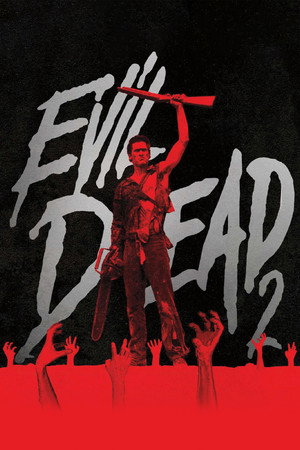
Berger's next major horror experience became even more influential. Robert Kurtzman, Gregory Nicotero and Berger all worked on Sam Raimi's Evil Dead II under makeup effects supervisor Mark Shostrom. It was the first production on which the three future KNB founders worked together. The film placed them inside one of the most demanding and inventive practical-effects environments of the decade.
Berger was given responsibility for many of Bruce Campbell's makeup effects. His work included versions of Evil Ash, the possessed hand material and the distorted mirror double. He sculpted and fabricated appliances, worked with dentures and participated in the constant adjustments demanded by Raimi's exaggerated visual style. Berger has recalled that Raimi repeatedly pushed the designs toward broader expressions, larger forms and a more extreme visual language rather than subtle realism.
This approach suited Evil Dead II. The film exists in a space between horror and violent physical comedy, where possession can be grotesque and absurd at the same time. Berger and the effects crew therefore could not treat every transformation as a conventional realistic wound. The makeup had to survive Raimi's aggressive camera movement, Bruce Campbell's physical performance and the intentionally excessive tone of the film.
Berger later remembered the production as one of the defining experiences of his career. The crew worked long days under difficult conditions in North Carolina, often fabricating effects themselves from beginning to end. Instead of handing a sculpt to one department and receiving a finished appliance from another, the artists frequently sculpted, molded, ran foam, painted and applied their own work. That complete involvement gave Berger an understanding of practical effects as a continuous process rather than a collection of isolated specialties.
The three young artists also discovered that they worked unusually well together. Nicotero had strong organizational instincts, Kurtzman brought design and fabrication ideas, and Berger developed into a highly effective shop and set supervisor. Their different strengths complemented one another. The partnership created on Evil Dead II would soon become formal.
Freddy Krueger, Chucky and the Late-1980s Horror Workshop
After Evil Dead II, Berger continued moving through the effects shops responsible for some of the most important genre films of the period. He worked with Kevin Yagher's operation and became involved with the Freddy Krueger makeup on A Nightmare on Elm Street 4: The Dream Master. Berger specifically worked on Robert Englund's application, placing him inside a franchise in which special makeup had become inseparable from the identity of the villain.
Freddy presented a different challenge from the transformations in Evil Dead II. The burned face had to remain recognizable across close-ups, dialogue scenes and extended performance. The appliance could not simply create a monster. It had to allow Robert Englund to act through the prosthetics. Berger's experience with Freddy reinforced one of the central principles of successful character makeup: the design must serve the performer rather than bury the performance beneath material.
Around the same period Berger worked within the effects environment surrounding Child's Play. The late 1980s were an extraordinary period for physical horror characters. Freddy Krueger, Chucky, Michael Myers, Jason Voorhees and other franchise figures required recurring effects teams capable of reproducing recognizable designs while developing new wounds, transformations and mechanical variations for each sequel.
Berger was therefore learning his craft inside a marketplace where practical effects were not an accessory to horror but one of its principal selling points. Posters and trailers promised monsters, transformations and deaths that audiences had not seen before. Effects artists were expected to invent those images under limited time and financial conditions.
Founding KNB EFX Group
By 1988 Berger, Robert Kurtzman and Gregory Nicotero had reached the same conclusion: they were already carrying substantial responsibility inside other people's shops, and they wanted to create an operation of their own. The three founded KNB EFX Group, taking the initials from Kurtzman, Nicotero and Berger. What began in a small workspace would become one of the most prolific practical-effects companies in the American film industry.
The company's earliest projects were not prestigious studio showcases. KNB deliberately accepted low-budget genre assignments because the partners needed credits showing that they could supervise complete productions rather than merely work as crew members. One of the first important jobs was Scott Spiegel's Intruder, an independently produced slasher whose violent supermarket murders gave the young company an opportunity to demonstrate detailed gore effects.
That period established the working culture that would define KNB. The partners frequently gave productions more than their budgets technically purchased because they understood that every successful effect could lead to another film. The immediate financial return was often secondary to building relationships with directors and proving that KNB could solve problems other companies might refuse or price beyond the production's means.
The strategy worked. KNB quickly became associated with horror sequels and low-budget genre productions, creating practical effects for films connected to major franchises. The company worked on A Nightmare on Elm Street 5: The Dream Child, Halloween 5: The Revenge of Michael Myers, Bride of Re-Animator, Leatherface: The Texas Chainsaw Massacre III and other projects where the effects department was expected to deliver the imagery horror audiences had paid to see.
Bride of Re-Animator, Halloween 5 and Franchise Horror
Bride of Re-Animator gave KNB an opportunity to work within the grotesque biological universe established by Stuart Gordon's Re-Animator. Brian Yuzna's sequel expands Herbert West's experiments from resurrected corpses toward the construction of new bodies assembled from unrelated human remains. That concept naturally depended on physical effects. The horror had to look surgical, anatomical and absurd at the same time.
The film's composite bodies and reanimated fragments fit perfectly with the skills KNB was developing. Effects were not simply meant to simulate injury. They became characters. Limbs, heads and stitched combinations of human tissue had to move and perform within the scene. This type of work strengthened KNB's reputation as a company capable of integrating prosthetics, puppetry and mechanical effects into elaborate horror sequences.
Halloween 5 placed Berger and KNB in a different franchise tradition. Michael Myers himself depends less on elaborate makeup than Freddy Krueger or the creatures of Re-Animator, but the surrounding violence requires effects that can remain convincing beside the simple iconic figure of the Shape. The assignment helped establish KNB as a company able to move between monster creation and realistic injury work without imposing the same visual approach on every film.
Misery and the Value of Invisible Horror Effects
Rob Reiner's Misery demonstrated another side of Berger and KNB's work. The adaptation of Stephen King's novel contains no supernatural creature. Its horror comes from captivity, obsession and physical violence. The effects therefore had to appear realistic enough that the audience would experience them as injuries rather than as makeup demonstrations.
The famous destruction of Paul Sheldon's legs represents precisely this kind of practical problem. KNB's wider work on the film illustrates how special makeup can become most effective when audiences stop thinking about technique altogether. Berger's career frequently alternated between spectacular monsters and effects designed to disappear into the reality of a scene.
This flexibility became crucial to KNB's expansion beyond low-budget horror. The company could create a dismembered body for a gore film and then produce invisible prosthetics or realistic human replicas for a dramatic production. That range eventually allowed Berger and his partners to move into larger studio projects without abandoning horror.
The People Under the Stairs and Wes Craven
Berger developed an important professional relationship with Wes Craven during the 1990s. KNB supervised special makeup effects for The People Under the Stairs, one of Craven's most physically grotesque films. The story combines urban social horror, Gothic architecture and a hidden population of mutilated children imprisoned inside a house controlled by violent adults.
The makeup effects are essential to the revelation of the people hidden inside the walls and beneath the stairs. Their bodies must communicate years of abuse without turning them into anonymous monsters. The horror depends on understanding that the frightening figures inside the house are victims before they are threats.
Berger continued working on Craven projects through Wes Craven's New Nightmare, Vampire in Brooklyn, Scream and Scream 2. The relationship gave KNB access to several radically different forms of horror: metafictional Freddy Krueger mythology, vampire transformation, slasher wounds and realistic corpse work.
Army of Darkness and Practical Horror on a Massive Scale
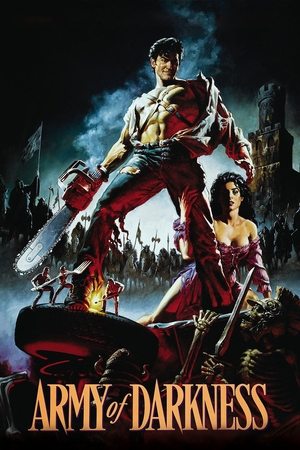
Sam Raimi returned to Berger and KNB for Army of Darkness, the third film in the Evil Dead cycle. The assignment was dramatically larger than Evil Dead II. Raimi wanted armies of Deadites, skeletons, witches and grotesque characters surrounding Bruce Campbell's Ash inside a medieval fantasy-horror setting.
KNB was responsible for large numbers of skeleton puppets, creature suits, masks and character makeups. Berger and Kurtzman spent months supervising practical work on set, frequently preparing far more creatures than a conventional effects budget might have supported. Berger has recalled how Raimi would look at storyboards containing a few monsters and immediately ask whether every available puppet or performer could be placed into the shot.
This created an effects philosophy based on abundance. If the shop possessed forty Deadites, Raimi wanted forty Deadites. If ten puppets were available, he wanted all ten. Berger and the KNB crew therefore had to think not only like artists but like a small practical-effects production unit capable of maintaining large numbers of costumes, prosthetics and puppets over extended night shoots.
The project strengthened the long professional relationship between Berger and Raimi. Berger has repeatedly described the loyalty between KNB and the director as something built during these early years, when the company frequently delivered more than it was contractually required to provide. The investment produced a collaboration that continued into later Raimi projects and eventually returned fully to horror with Drag Me to Hell.
Jason Goes to Hell and the Anatomy of a Franchise Killer
KNB entered another major slasher franchise with Jason Goes to Hell: The Final Friday. The film attempts to expand the mythology of Jason Voorhees beyond the familiar structure of a masked killer physically pursuing victims. Jason's supernatural essence moves between bodies, forcing the effects department to create possession, mutation, wounds and grotesque physical transitions.
For Berger and KNB, the project represented the kind of assignment the company had become particularly well equipped to handle. Instead of one hero creature, the film required a chain of effects whose visual continuity had to convince the audience that the same evil force was moving through different human hosts. The gore remained important, but the larger challenge was establishing a physical language for possession.
New Nightmare, In the Mouth of Madness and 1990s Metahorror
Wes Craven's New Nightmare brought Berger back to the Freddy Krueger mythology under very different conditions from A Nightmare on Elm Street 4. Craven's film transforms the franchise into a story about horror filmmaking itself, with actors and filmmakers playing versions of themselves while an ancient evil adopts the identity of Freddy.
Berger and KNB worked on the special makeup effects surrounding the production, while Freddy's principal makeup was handled separately. The project nevertheless placed Berger inside one of the decade's major attempts to rethink the relationship between horror movies, their creators and their audiences.
John Carpenter's In the Mouth of Madness similarly uses horror fiction as a force capable of destabilizing reality. Berger, Kurtzman and Nicotero worked on special makeup effects for the film, helping create the distorted bodies and creatures that increasingly invade John Trent's world. The film's Lovecraftian imagery requires monsters that appear only partially comprehensible, figures whose physical forms suggest that ordinary human anatomy is no longer reliable.
The Carpenter collaboration continued through later projects, including Vampires, Ghosts of Mars and the Masters of Horror episode Cigarette Burns. This gave Berger another long-running relationship with a filmmaker whose horror style changed dramatically from project to project.
From Dusk Till Dawn and Six Weeks of Vampire Chaos
From Dusk Till Dawn became one of the defining practical-effects showcases of Berger's career. Directed by Robert Rodriguez from Quentin Tarantino's screenplay and based on a story originally developed by Robert Kurtzman, the film changes genre halfway through. What begins as a violent crime story suddenly becomes a siege against vampires inside the Titty Twister nightclub.
The transformation created an enormous effects workload. The second half contains vampire makeups, mechanical bodies, burn effects, dismemberments, creature transformations and repeated blood gags. Berger has described the vampire section as approximately six weeks of near-continuous effects work. KNB established a facility close to the set so that new bodies, appliances and props could be created as Rodriguez developed additional ideas during filming.
Berger and Gregory Nicotero divided responsibilities in a way that reflects their long partnership. Nicotero stayed close to the shooting unit and communicated what Rodriguez needed next, while Berger coordinated the shop and prepared the necessary bodies, costumes and effects. This rapid exchange allowed the production to remain spontaneous without sacrificing practical execution.
The film is a perfect example of KNB's value to filmmakers. Rodriguez could invent additional moments because he had an effects team capable of responding immediately. A burning vampire, an exploding body or a new creature could become possible not because it had been planned months earlier but because the shop understood how to improvise within the physical limitations of the set.
Scream and the Return of the Slasher
Berger served as special makeup effects supervisor on Wes Craven's Scream. The film famously revived the American slasher by allowing its characters to understand horror conventions while still being vulnerable to them. Because Ghostface is fundamentally human, the violence required a very different effects strategy from the monsters of From Dusk Till Dawn.
The deaths needed to look physically painful without becoming so exaggerated that they undermined the film's tension. Casey Becker's murder, Steve Orth's mutilation, Principal Himbry's death and the escalating violence of the final party sequence all depend on practical effects that preserve the sense that ordinary human bodies are being attacked by knives rather than by supernatural forces.
KNB was also briefly involved in the process surrounding Ghostface's visual identity. Before the production secured permission to use the existing Fun World mask discovered during location work, Craven asked Berger and Nicotero's company to develop an alternative version. The production ultimately used the commercial mask as the defining Ghostface face, although KNB's involvement remains part of the character's development history.
Berger returned as effects supervisor for Scream 2, continuing the collaboration with Craven as the franchise expanded its violence while retaining the physical vulnerability of the killers and victims. The films demonstrate another reason KNB became so widely used: the company could move from giant creatures to a realistic knife wound without treating one assignment as less important than the other.
Vampires and John Carpenter
John Carpenter's Vampires reunited Berger with Kurtzman and Nicotero for a violent reinterpretation of vampire mythology. Rather than elegant Gothic aristocrats, Carpenter presents vampires as physically powerful predators hunted by an organized team. KNB's makeup effects emphasize wounds, burned bodies and the brutality of close-range combat.
The work earned Berger, Kurtzman and Nicotero the Saturn Award for Best Makeup. The recognition was particularly appropriate because Vampires represents the company operating at the intersection of traditional monster makeup and late-1990s action horror. The vampires have to remain recognizably human while still appearing capable of surviving injuries that would kill ordinary people.
The Faculty and Robert Rodriguez
Berger continued working with Robert Rodriguez on The Faculty, where KNB handled special makeup and creature effects. The film updates invasion and body-snatcher narratives for a 1990s high-school setting. Human characters become hosts for alien organisms, forcing the effects team to move between subtle physical signs of infection and increasingly elaborate creature transformations.
The project again demonstrated the advantage of a company with experience across several kinds of horror. KNB could create a small anatomical detail suggesting that a character had changed and then escalate toward a full creature effect when the story demanded it. Berger, Kurtzman and Nicotero shared the principal makeup and creature-effects credit, extending the partnership that had already produced From Dusk Till Dawn.
The Mist and Creature Horror
Frank Darabont's The Mist brought KNB into another Stephen King adaptation, this time centered on creatures emerging from an apparently unnatural fog. The film uses digital effects for several large organisms, but practical makeup and creature work remain essential to the tactile horror experienced by the people trapped inside the supermarket.
KNB's involvement reflects Berger's ability to work inside productions where practical and digital effects are not competing systems. By the 2000s, the most effective genre productions increasingly combined the two. Physical elements could give actors something tangible to react to and provide realistic surfaces for close interaction, while digital work could extend movement or scale beyond what a mechanical creature could achieve.
Planet Terror and the Return of Extreme Practical Gore
Robert Rodriguez's Planet Terror, produced as part of Grindhouse, allowed Berger and KNB to return to the deliberately excessive physical horror associated with the company's early reputation. Berger served as special makeup effects designer on a film filled with infected bodies, ruptured flesh, amputations, mutations and grotesque transformations.
The aesthetic deliberately evokes exploitation cinema, but the effects are far more technically sophisticated than the low-budget films being referenced. Berger and the KNB crew could exploit decades of accumulated knowledge while making the results look dirty, excessive and immediate. The project earned Berger, Nicotero and Jake Garber a Saturn Award nomination for makeup.
Planet Terror also demonstrates how KNB's relationship with filmmakers could survive across decades. Rodriguez had already relied on the company during From Dusk Till Dawn and The Faculty. When he needed another movie built around physical genre spectacle, KNB remained part of the creative vocabulary.
Drag Me to Hell and Returning to Raimi Horror
Sam Raimi's Drag Me to Hell marked an important return. After years spent largely outside feature horror, Raimi made a supernatural film that deliberately revived the aggressive physical comedy, grotesque faces and bodily humiliation associated with his early work. KNB handled major makeup effects, corpses and practical props, reconnecting Raimi with the effects tradition that had helped define Evil Dead II.
Berger and Nicotero's involvement carried an obvious historical resonance. More than two decades had passed since the young artists worked for Mark Shostrom on Evil Dead II, yet the same basic creative relationship remained useful. Raimi still wanted exaggerated physical reactions, disgusting close-ups and effects that could be staged directly around performers.
The film proved that practical horror had not become obsolete in the digital era. In the right hands, prosthetics, puppets and physical fluids could create a sense of comic violation that polished digital imagery would have difficulty reproducing. Berger's career therefore connected the garage-level experimentation of the 1980s with a studio horror production made more than twenty years later.
Fright Night and Reinventing the Vampire
Berger personally supervised major makeup work on the 2011 remake of Fright Night. He was a fan of Tom Holland's original film and approached the new production with the challenge of redesigning a vampire for contemporary audiences without losing the physical transformation that had made the earlier movie memorable.
The film progressively changes Colin Farrell's Jerry from an attractive human predator into a creature with increasingly exaggerated anatomical features. This staged transformation reflects one of Berger's strongest areas: designing prosthetic progressions that allow a performer to remain recognizable while moving gradually away from ordinary humanity.
The project also allowed KNB to combine practical makeup with digital assistance. Rather than treating computer imagery as a replacement for prosthetics, the production could use both tools according to what each shot required. Berger had reached a point in his career where the practical-effects artist's job was no longer to resist digital technology but to understand where physical material still gave the strongest result.
The Walking Dead and the Industrial Scale of Zombie Makeup
The Walking Dead became one of KNB's largest long-term horror projects and brought the company's zombie expertise to television on an unprecedented scale. Gregory Nicotero became the creative figure most publicly associated with the series' walkers, eventually working as director and executive producer, but Berger remained part of KNB's larger effects infrastructure and was credited across the life of the series.
The production transformed zombie makeup into a continuing industrial process. A feature film might require large numbers of undead performers for several weeks. The Walking Dead required new walkers season after season, each with enough variation to prevent the apocalypse from becoming visually repetitive. The effects teams developed systems for background masks, partial appliances, hero makeups, prosthetic wounds and mechanical bodies depending on how closely a particular walker would be photographed.
This work represents the mature form of the practical tradition Berger entered on Day of the Dead. The underlying principles remained recognizable: decomposition had to be physically believable, injuries needed anatomical logic and blood effects had to function on camera. The difference was scale. Techniques developed by small groups of enthusiasts in the 1980s had become part of one of television's largest horror productions.
Interview with the Vampire and the Anne Rice Universe
Berger returned to vampire horror in a very different aesthetic context with AMC's Interview with the Vampire. As special makeup effects creator and department head, he helped design a vampire world built less around monstrous transformation than around beauty, physical perfection and carefully controlled signs of inhumanity.
Berger has explained that Anne Rice's writing influenced the design process. The vampires needed to appear individual rather than as members of a single generic species. Eye color became especially important because the production wanted supernatural identity to remain visible even when the characters otherwise appeared completely human. Dentures also had to function during dialogue and performance rather than simply appear for an isolated attack shot.
The blood work required another kind of control. Scenes of feeding can move rapidly from sensuality to extreme violence, meaning blood quantities, placement and flow must support the emotional tone rather than simply increase gore. Berger's decades of experience allowed the production to use physical effects in a world whose vampires were intended to appear elegant even when committing brutal acts.
His work continued inside AMC's larger Anne Rice universe, including Mayfair Witches and later Talamasca: The Secret Order. These projects demonstrate how far Berger's horror career had travelled from the industrial tunnels of Day of the Dead. The materials and techniques evolved, but the essential task remained the same: translate supernatural concepts into physical details that actors can wear, touch and perform through.
The KNB Philosophy
Howard Berger's importance to horror cannot be separated from KNB EFX Group. The company survived because its founders treated special makeup as both art and production engineering. A beautiful sculpture that cannot be applied quickly enough is not useful. A mechanical effect that works perfectly in the workshop but fails under set lighting is not successful. Berger developed a reputation as someone capable of understanding those practical pressures while still protecting the visual quality of the work.
He has repeatedly emphasized teamwork as one of the central pleasures of filmmaking. KNB's growth from a tiny shop into a major effects facility depended on hiring artists with different strengths and creating a system in which sculptors, mold makers, painters, mechanics, hair specialists and on-set applicators could work toward the same design.
This structure also allowed KNB to adapt when the industry changed. The decline of the 1980s horror boom could have destroyed a company identified only with gore. Instead, Berger and his partners expanded into realistic prosthetics, animatronics, replica animals, fantasy characters and mainstream studio productions. Their Oscar-winning work on The Chronicles of Narnia: The Lion, the Witch and the Wardrobe became the clearest institutional recognition of that versatility, even though horror remained one of the company's creative foundations.
Howard Berger's Place in Horror History
Berger's horror legacy is unusually broad because it is connected to several generations of filmmakers rather than to a single iconic monster. He learned on a Romero zombie film, helped create Bruce Campbell's possessed transformations for Sam Raimi, applied Freddy Krueger makeup, helped establish KNB during the slasher era, supervised effects for Wes Craven, worked repeatedly with John Carpenter and Robert Rodriguez, returned to studio horror with Drag Me to Hell and Fright Night, and later contributed to long-form television worlds built around zombies, vampires and witches.
The continuity matters. Practical horror effects are sometimes discussed as though they belonged to a closed historical period before digital cinema. Berger's career contradicts that idea. His work survived because practical effects changed alongside production technology. The craft moved from hand-painted foam appliances and mechanical puppets toward silicone prosthetics, digital design support and hybrid practical-digital workflows without abandoning the principle that a physical object in front of the camera can create a unique relationship between actor, director and audience.
Berger also represents the collaborative nature of horror effects history. The most important images rarely belong to one artist working alone. Day of the Dead came from Savini and a crew of young artists. Evil Dead II emerged from Mark Shostrom's shop and a group that included Berger, Kurtzman, Nicotero, Shannon Shea and Aaron Sims. KNB itself depended on the different abilities of its founders and generations of craftspeople who passed through the company.
What distinguishes Berger is the duration of that collaboration. More than four decades after he first began making monsters professionally, he remained active inside horror productions and still described the work in terms of the same fascination that had drawn him to monster movies as a child. The scale became larger, the materials improved and the industry changed, but the fundamental attraction remained the ability to take something imagined and make it physically exist in front of a camera.
Selected Work
Notable Horror Collaborators
Notable collaborators and creative partners throughout Howard Berger's horror career.
 Gregory Nicotero
KNB EFX Partner
Berger's closest long-term effects collaborator. They met on Day of the Dead, worked together on Evil Dead II and co-founded KNB EFX Group in 1988, building decades of horror work across films including Army of Darkness, Scream, Vampires, The Faculty and modern television horror.
 Robert Kurtzman
KNB EFX Partner
A founding creative partner from Berger's earliest professional years. Kurtzman, Berger and Nicotero first worked together on Evil Dead II before forming KNB EFX Group, sharing a vast run of horror projects through the company's first fifteen years.
 Sam Raimi
Director Collaborator
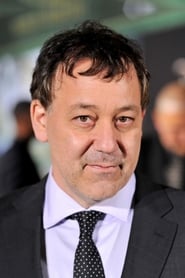
One of Berger's defining horror filmmakers. Their relationship began on Evil Dead II, expanded massively through Army of Darkness and returned to practical supernatural horror with Drag Me to Hell, creating a collaboration that spans multiple eras of Raimi's career.
 Wes Craven
Director Collaborator
A major recurring horror collaboration through The People Under the Stairs, Wes Craven's New Nightmare, Vampire in Brooklyn, Scream and Scream 2. Berger and KNB supplied Craven with effects ranging from Gothic deformity to vampire transformation and realistic slasher violence.
 John Carpenter
Director Collaborator
Berger repeatedly worked inside Carpenter's later horror worlds, including In the Mouth of Madness, Vampires, Ghosts of Mars and Masters of Horror: Cigarette Burns. Their collaborations moved from Lovecraftian creatures to brutal vampire and supernatural makeup effects.
 Robert Rodriguez
Director Collaborator
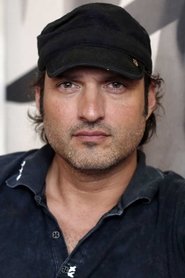
A major effects partnership built around highly physical genre filmmaking. Berger and KNB worked with Rodriguez on From Dusk Till Dawn, The Faculty and Planet Terror, creating vampires, alien transformations, infected bodies and some of the most elaborate practical gore of their respective periods.
Howard Berger Horror Movies
Special FX / Practical FX (50 credits)
2026
2014
2012
2009
2009
2008
2007
2007
2007
2006
2006
2006
2006
2006
2006
2006
2006
2006
2005
2005
2005
2004
2001
2000
1999
1999
1997
1997
1995
1995
1995
1995
1993
1993
1993
1993
1993
1992
1992
1992
1991
1991
1990
1990
1990
1989
1989
1987
1987
1986
Acting (9 credits)
2026
2024
2022
2011
2011
2006
1997
1986
1985
Other Crew (2 credits)
2022
2022
Production (1 credits)
2010