

2026
Pino Donaggio
Horror Music & Sound · Biography · Horror Filmography · Collaborators · Credits
Horror subgenres & themes
Most represented across this person's horror filmography:
ANIMAL
• EVIL DOLL
• MEDICAL
• BODY HORROR
Biography
Pino Donaggio: Horror Composer and Master of Melodic Suspense
Pino Donaggio occupies a distinctive place in horror film music. Unlike composers whose careers developed primarily within genre cinema, Donaggio entered film after establishing himself as a classical violinist and successful popular singer-songwriter, then found in horror and psychological suspense an unusually natural setting for his melodic instincts. Beginning with Nicolas Roeg's Don't Look Now in 1973 and continuing through landmark films including Carrie, Piranha, Tourist Trap, Dressed to Kill, The Howling, The Black Cat, Body Double, Crawlspace, Raising Cain, Trauma and Seed of Chucky, he developed a body of work in which romantic melody and psychological unease repeatedly occupy the same musical space. His horror scores rarely depend on continuous aggression. Their disturbing power often comes instead from the collision between beauty, vulnerability and sudden violence.
That approach made Donaggio particularly effective for filmmakers interested in horror as an emotional experience rather than merely a mechanism for shocks. His music can establish tenderness before a death, desire before danger, or apparent serenity before a violent rupture. Across several decades he returned to this contrast in different forms, combining orchestral lyricism, dissonance, unusual instrumental colors and sharply timed suspense writing. The result is a horror filmography that crosses supernatural tragedy, animal horror, slasher imagery, psychological thrillers, body horror and grotesque black comedy while retaining a recognizable musical identity.
Don't Look Now and the Beginning of a Horror Career
Donaggio's entry into film music came through Nicolas Roeg's Don't Look Now in 1973, an adaptation of Daphne du Maurier's story about grief, premonition and death in Venice. The setting created an unexpected connection between filmmaker and composer: Donaggio was already a successful musician when Roeg encountered him during the production, and the assignment became his first feature-film score. It was an unusually significant debut. Rather than treating the supernatural story as conventional horror, Donaggio built much of the score around fragile melodic material, particularly piano and strings, giving the film an emotional intimacy that exists alongside its accumulating sense of doom.
The opening death of the Baxters' daughter establishes the film's central wound, and Donaggio's music remains connected to that loss throughout the story. A simple theme can sound childlike, tender or ominous depending on its context, reflecting a film in which memories, visions and future events appear to overlap. The score does not explain the supernatural elements. Instead, it strengthens the uncertainty surrounding them and keeps the emotional reality of bereavement at the center. That combination became important to Donaggio's later horror work: melody is not a respite from fear, because the melody itself can carry the memory of something terrible.
Don't Look Now became one of the defining supernatural films of the 1970s, and Donaggio's contribution immediately demonstrated qualities that would recur throughout his genre career. He could write unabashedly beautiful music without neutralizing horror, and he understood how music associated with love, innocence or melancholy could become disturbing through repetition and dramatic placement. His first film score therefore established much more than a new professional direction. It introduced the tension between lyricism and terror that would become one of his signatures.
Carrie and the Beginning of the Brian De Palma Collaboration
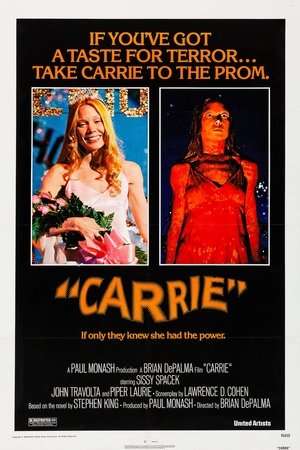
Donaggio's most important long-term filmmaking relationship began with Brian De Palma's Carrie in 1976. Adapted from Stephen King's novel, the film required music capable of moving between adolescent vulnerability, religious terror, romantic expectation and catastrophic violence. Donaggio supplied a score that could accommodate all of those registers. His lyrical writing gives Carrie White's emotional isolation genuine pathos, while the supernatural and violent passages draw on a far harsher vocabulary.
The score also engages directly with the tradition of Alfred Hitchcock and composer Bernard Herrmann that was central to De Palma's cinema. The stabbing string figures associated with Carrie's telekinetic power unmistakably evoke Herrmann's music for Psycho, but they function inside a broader score whose emotional language is recognizably Donaggio's own. Instead of making Carrie merely threatening, the music repeatedly reminds the viewer of her vulnerability. The famous prom sequence therefore has unusual musical force because the horror emerges from an atmosphere that had briefly suggested acceptance, romance and escape.
Carrie became a major horror landmark and established Donaggio as a composer exceptionally well suited to De Palma's visual language. Their partnership continued across films in several genres, but its most characteristic work repeatedly returned to murder, voyeurism, divided identity and psychological instability. Donaggio's ability to shift rapidly from romantic orchestration to musical violence complemented De Palma's own fascination with beauty interrupted by danger.
Dressed to Kill, Body Double and De Palma's Cinema of Fear
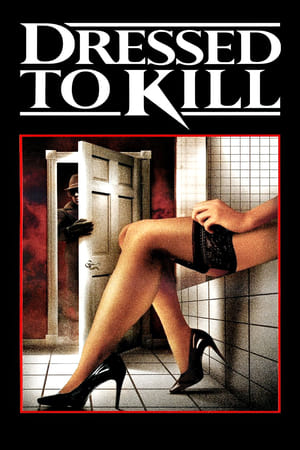
In Dressed to Kill in 1980, Donaggio and De Palma pushed their shared language of eroticism and threat into particularly elaborate territory. The score is often lush and openly romantic, especially during sequences built around attraction, fantasy and pursuit, yet that beauty creates vulnerability rather than security. As the film moves toward murder, suspicion and nightmare, Donaggio transforms the same elegant orchestral world into something unstable and frightening. The music participates in De Palma's manipulation of the audience, making sensuality and fear difficult to separate.
The collaboration continued through Blow Out and reached another genre-oriented peak with Body Double in 1984. Once again, the film revolves around looking, desire, performance and murder, subjects for which Donaggio's combination of romantic melody and suspense writing was especially effective. His music can make an image feel seductive before revealing the danger contained within it. This is one reason his work with De Palma differs from more conventionally abrasive horror scoring: the music frequently encourages emotional or sensual involvement before the film turns that involvement against the viewer.
When Donaggio returned to De Palma for Raising Cain in 1992, the film's fractured personalities and psychological manipulation allowed the composer to revisit ideas that had run through their earlier work. The score again moves between melodic passages and more agitated suspense material, supporting a narrative in which identity itself becomes unstable. Taken together, these films made the Donaggio-De Palma partnership one of the most recognizable director-composer relationships associated with American psychological horror and thriller cinema of the late twentieth century.
Piranha and The Howling: Horror with Joe Dante
Donaggio's work with Joe Dante demonstrated that his horror vocabulary was not dependent on De Palma's style. He composed the music for Piranha in 1978, Dante's satirical creature feature about genetically altered fish attacking swimmers and vacationers. The film combines exploitation-horror mechanics with humor and a deliberately irreverent tone, requiring a different balance from the tragic atmosphere of Don't Look Now or the operatic psychology of Carrie. Donaggio nevertheless provides the threat with musical seriousness when necessary, helping the attacks retain their impact even as the film plays with genre conventions.
The partnership became more important to horror history with The Howling in 1981. Dante's werewolf film combines transformation horror, media satire, sexuality and black humor, culminating in groundbreaking practical effects. Donaggio's score supports the film's shifting identity, moving between atmospheric tension and stronger orchestral statements without reducing the material to simple monster music. The score contributes to the feeling that violence and transformation are intruding into an apparently recognizable modern environment.
The Howling became one of the essential werewolf films of its period, and Donaggio's involvement placed him at the center of another major branch of early 1980s American horror. By this point, only a few years after his first soundtrack, his genre credits already included supernatural horror, telekinetic horror, animal attacks, psychological murder and werewolves. The variety is significant because his identity as a horror composer was based less on one musical formula than on his capacity to adapt a strong melodic voice to very different forms of fear.
Tourist Trap, Crawlspace and David Schmoeller
Another sustained horror collaboration developed with director David Schmoeller. Their first major project together was Tourist Trap, released in 1979, a strange combination of roadside Americana, slasher imagery, telekinesis and animated mannequins. The film's artificial faces and deserted setting required music that could intensify its dreamlike quality as well as its violence. Donaggio responded with a score that uses melody, eerie vocal textures and electronic elements alongside more traditional suspense techniques, giving the film an identity that is playful, uncanny and threatening at once.
Donaggio reunited with Schmoeller for Crawlspace in 1986, starring Klaus Kinski as a murderous landlord who spies on the women living in his apartment building. The material is claustrophobic and voyeuristic, and the score moves through mounting tension, eccentric details and moments of unexpected melancholy. Rather than treating the killer only as a source of shock effects, the music helps sustain the oppressive psychological atmosphere of the building itself.
Their horror work also included Catacombs, extending a collaboration that gave Donaggio a recurring connection to independently produced American genre cinema alongside his more prestigious international projects. These films are important to his horror profile because they show that his elaborate melodic style could function inside relatively modest productions. Even when budgets and scale changed, he continued to treat horror scoring as dramatic composition rather than generic background music.
The Black Cat, Trauma and Italian Horror Connections
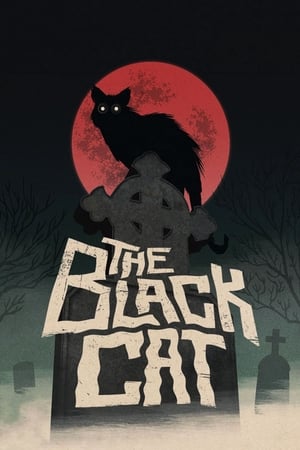
Although Donaggio became strongly associated with American and British productions, his horror career also intersected with important Italian filmmakers. In 1981 he composed the score for Lucio Fulci's The Black Cat, a loose Edgar Allan Poe adaptation made during Fulci's extraordinarily productive period in horror. The film is more restrained than the director's most extreme work of the era, emphasizing rural atmosphere, supernatural suggestion and a succession of mysterious deaths. Donaggio's presence gives it a musical character distinct from the Fabio Frizzi scores most closely associated with Fulci's late 1970s and early 1980s horror cycle.
More than a decade later, Donaggio worked with Dario Argento on Trauma in 1993. The collaboration brought together a director whose cinema had long depended heavily on music and a composer already experienced in combining psychological disturbance with pronounced melodic themes. Trauma deals with murder, damaged families and emotional instability, material well matched to Donaggio's ability to move between vulnerability and menace. He later collaborated with Argento again on Do You Like Hitchcock?, reinforcing a late-career connection between two figures whose work had developed along different paths through Italian and international genre cinema.
Later Horror and Seed of Chucky
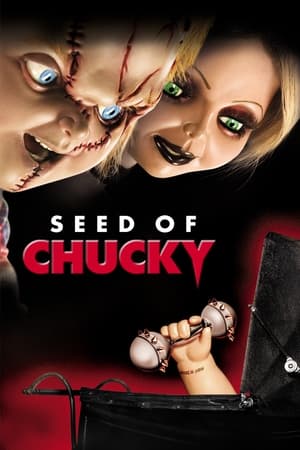
Donaggio continued working in horror long after the period most closely associated with his classic scores. One of his most visible later genre assignments was Don Mancini's Seed of Chucky in 2004, the fifth feature in the Child's Play series. By this stage the franchise had moved decisively toward self-parody, grotesque comedy and reflexive commentary on its own mythology. The project therefore required a very different sensibility from Don't Look Now or Carrie, but Donaggio's participation illustrates the breadth of his relationship with horror. He was able to work inside a franchise built around a murderous doll while retaining the orchestral craft developed over decades of film composition.
His later filmography has never been restricted to horror, and that distinction is essential to understanding his career. Donaggio is not primarily significant because he accumulated the largest possible number of genre credits. His importance comes from the concentration of notable horror films within a much wider body of work and from the unusually strong identity of the music he contributed to them.
Pino Donaggio's Style and Influence on Horror Music
The most recognizable characteristic of Donaggio's horror scoring is the coexistence of lyricism and menace. Romantic themes, delicate piano writing, expressive strings and clear melodic lines can occupy the same score as dissonant orchestral attacks, nervous rhythmic figures and harsher textures. This produces a specific type of unease. Instead of announcing continuously that something frightening is happening, the music allows beauty and horror to contaminate each other.
That quality is especially apparent across Don't Look Now, Carrie and the De Palma films. Grief can become supernatural dread, romantic longing can lead toward murder, and an apparently graceful theme can acquire disturbing associations because of the images surrounding it. Donaggio's classical training is audible in the discipline of his orchestral writing, while his background in popular song is reflected in his instinct for memorable melodic ideas. Horror gave him a space in which those two sides of his musical identity could interact with unusual intensity.
His work also belongs to a tradition of horror scoring shaped by Bernard Herrmann, particularly through De Palma's fascination with Hitchcock. Yet Donaggio never functioned simply as a Herrmann imitator. The explicit reference to Psycho in Carrie is part of a score whose emotional center is markedly different, and his strongest horror music often depends on themes whose tenderness would be unusual in a purely shock-oriented soundtrack. Later filmmakers and audiences have continued to recognize this quality, with the scores for films such as Don't Look Now, Carrie, Dressed to Kill and The Howling remaining central examples of his film work.
Legacy in Horror Cinema
Pino Donaggio's place in horror history rests on a relatively rare combination of range and consistency. His genre career began with one of the defining supernatural films of the 1970s, continued through a major Stephen King adaptation, became closely connected to Brian De Palma's exploration of psychological and voyeuristic horror, and expanded through collaborations with Joe Dante, David Schmoeller, Lucio Fulci and Dario Argento. Those relationships placed him inside several different traditions of horror cinema without requiring him to abandon his own musical character.
From the haunted Venice of Don't Look Now to Carrie's prom, the mannequins of Tourist Trap, the transformations of The Howling and the elaborate murder scenarios of De Palma's cinema, Donaggio repeatedly demonstrated that horror music could be frightening without surrendering melody. His strongest scores do not simply accompany fear. They make emotional beauty part of the mechanism through which fear is created.
Selected Work
Notable Horror Collaborators
Notable collaborators and creative partners throughout Pino Donaggio's horror career.
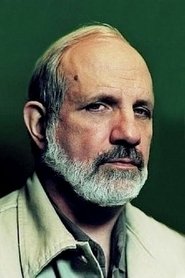 Brian De Palma
Key Director
Donaggio's defining filmmaking partner, from Carrie through Dressed to Kill, Blow Out, Body Double and Raising Cain.
 David Schmoeller
Cult Horror Director
Director of Tourist Trap, Crawlspace and Catacombs, three distinctive horror projects shaped by Donaggio's atmospheric scores.
 Joe Dante
Horror Director
Worked with Donaggio on Piranha and The Howling, two key early films in Dante's development as a major horror filmmaker.
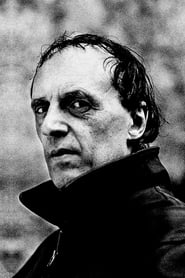 Dario Argento
Italian Horror Director
Collaborated with Donaggio on Two Evil Eyes, Trauma and Do You Like Hitchcock?, connecting two major figures of Italian genre cinema.
 Nancy Allen
Recurring Actress
A recurring presence in Donaggio-scored Brian De Palma films including Carrie, Dressed to Kill and Blow Out.
 Dennis Franz
Recurring Actor
Appeared in several Donaggio-scored De Palma films, including Dressed to Kill, Blow Out and Body Double.
Pino Donaggio Horror Movies
Music & Sound (32 credits)
2025
2013
2011
2005
2004
1996
1993
1992
1991
1991
1990
1990
1990
1989
1988
1988
1986
1985
1983
1981
1981
1981
1981
1980
1980
1979
1978
1978
1976
1976
1973