



2026
John Carradine
Horror Actor · Biography · Horror Filmography · Family · Collaborators · Credits
Horror subgenres & themes
Most represented across this person's horror filmography:
VAMPIRE
• ANIMAL
• HAUNTED HOUSES
• ZOMBIE
Biography
John Carradine and a Lifetime in Horror Cinema
John Carradine occupied an unusual position in the history of horror. He was never simply a horror actor, and many of the most prestigious films in his career belonged to westerns, historical drama and literary adaptation. Yet few performers remained connected to horror for so long or passed through so many of its changing forms. Carradine appeared during the original Universal monster era, became one of the studio's screen Draculas, worked in Poverty Row chillers and mad-scientist films, moved through the increasingly eccentric exploitation cinema of the 1960s and 1970s, and survived long enough to become a living emblem of classical horror in films such as The Howling, The Monster Club and House of the Long Shadows.
His physical presence made him immediately useful to the genre. Tall and gaunt, with an elongated face and one of the most recognizable voices in American character acting, Carradine could suggest aristocracy, madness, intelligence and decay without altering his appearance very much. He could play a sophisticated murderer, a scientist whose experiments had crossed every ethical boundary, an occult figure or an aging monster and still make each role belong to the same larger screen personality. Horror producers understood that even a small Carradine role brought with it decades of associations.
That association can obscure the seriousness of his background. Carradine considered himself a classical actor and maintained a lifelong devotion to Shakespeare and the stage. His screen career included major work with John Ford and appearances in some of the most celebrated American films of the studio era. Horror therefore inherited an actor trained for material far removed from low-budget monster pictures. One of the reasons Carradine could give authority to inexpensive productions was precisely that he did not appear to change his conception of acting simply because the budget had collapsed around him.
Richmond Reed Carradine and the Road to the Stage
John Carradine was born Richmond Reed Carradine in New York City on February 5, 1906. Before acting became his profession, he studied art and developed ambitions as a painter and sculptor. That early attraction to visual art belonged to a restless period in which he travelled, sold sketches and gradually moved toward theatre. He made his professional stage debut in New Orleans in 1925 and continued developing as an actor through repertory work and classical performance.
Shakespeare became a lifelong obsession. Carradine possessed the vocal equipment for it: a deep, resonant delivery capable of making even ordinary dialogue sound ceremonial. Later accounts of his Hollywood years repeatedly describe him reciting Shakespeare away from the camera, sometimes to colleagues and sometimes simply because the material remained central to his idea of himself as an actor. His ambitions were not limited to being a supporting player in films. He wanted to perform Hamlet, Macbeth and the major classical roles that gave theatre actors a sense of artistic continuity stretching far beyond Hollywood.
This distinction between Carradine's ambitions and his eventual popular image is essential to understanding his horror career. He did not emerge from a background devoted specifically to monsters or macabre entertainment. Horror gradually appropriated a set of qualities he had developed elsewhere: theatrical diction, physical severity, the ability to hold attention while standing almost motionless and a willingness to treat extravagant situations with absolute seriousness.
Hollywood, Cecil B. DeMille and John Ford
After reaching California, Carradine worked around the film industry while continuing to pursue theatre. He initially appeared under names including Peter Richmond before adopting John Carradine professionally. By the middle of the 1930s he had established himself as a character actor and became associated with the companies of major filmmakers including Cecil B. DeMille and, most importantly, John Ford.
Ford repeatedly used Carradine because his appearance could register quickly and strongly even when a role was not large. In Stagecoach, Carradine played the elegant gambler Hatfield, while in The Grapes of Wrath he portrayed the former preacher Jim Casy. Those performances belong to a completely different level of American production from many of the horror films Carradine would later accept, yet they reveal the foundation of his effectiveness within the genre. His characters could possess dignity and menace simultaneously. He looked capable of belonging to an older world governed by codes, rituals and private convictions.
Carradine's work outside horror remained substantial throughout his life, and reducing his career to monsters would distort it. What matters for horror history is that this broader career gave him unusual credibility. When he later appeared in films made with a fraction of the resources available to Ford, audiences were not simply seeing another exploitation performer. They were seeing a recognizable representative of classical Hollywood carrying that history into much smaller productions.
The Invisible Man, The Black Cat and the Edges of Universal Horror
Carradine's earliest connections with horror came before he became an established genre personality. He appeared in small, sometimes uncredited roles in Universal productions including The Invisible Man and The Black Cat. These appearances did not yet make him part of the studio's monster pantheon, but they placed him physically inside the environment that had defined American screen horror during the 1930s.
This early presence later acquired retrospective significance. Carradine would eventually return to Universal not as background texture but as one of its monsters. His career therefore overlaps two phases of the studio's horror history: the period when Dracula, Frankenstein's Monster and the Invisible Man were becoming screen icons, and the later period when Universal increasingly combined established monsters within shared films.
The distinction matters because Carradine did not inherit Dracula as a performer untouched by the older cycle. He had already worked around the studio and its actors. When he finally became the Count during the 1940s, he entered an established tradition while attempting to create an interpretation distinct from Bela Lugosi's.
Captive Wild Woman and the Mad Scientist
Captive Wild Woman in 1943 marked a much more substantial step into horror. Carradine plays Dr. Sigmund Walters, whose experiments involve transforming an ape into a human woman. The premise belongs to a long horror tradition in which scientific ambition becomes inseparable from violation of the body, but Carradine's performance avoids making Walters merely a shouting caricature.
His controlled delivery is important. Carradine often played scientists as men who regarded grotesque experiments as logical extensions of professional inquiry. That calmness makes the violation more disturbing. The character does not need to behave like a lunatic because his actions already reveal how completely scientific purpose has displaced moral restraint.
The role established a pattern that low-budget horror would return to repeatedly. Carradine looked believable as a man with specialized knowledge, yet his appearance suggested that knowledge might be dangerous. Doctors, researchers and occult authorities became natural parts for him because the actor could make exposition sound like ritual. Even when a screenplay needed to explain improbable science quickly, his voice gave the explanation a weight beyond the dialogue itself.
Voodoo Man and Poverty Row Horror
Voodoo Man, released in 1944, placed Carradine alongside Bela Lugosi and George Zucco in the kind of economical supernatural production that would become another major strand of his career. Directed by William Beaudine for Monogram, the film centers on Lugosi's Dr. Richard Marlow and his attempts to use occult ceremonies to restore his wife. Carradine plays one of the men assisting in the rituals.
The production illustrates how rapidly Carradine could move between very different levels of Hollywood. He could appear in major studio films and then enter pictures produced cheaply for audiences primarily seeking familiar faces and reliable genre situations. That movement later became one of the defining characteristics of his filmography. Carradine did not build a protected star identity that required every project to possess prestige. He worked continuously.
For horror, that willingness was enormously useful. Producers could surround Lugosi, Carradine and other recognizable actors with inexpensive sets and limited schedules while still advertising a cast connected with established screen traditions. The resulting films varied dramatically in quality, but Carradine's seriousness often prevented them from collapsing completely into self-parody.
Bluebeard and the Horror of the Human Killer
One of Carradine's strongest 1940s horror performances came not as a supernatural monster but as the central figure of Edgar G. Ulmer's Bluebeard. He plays Gaston Morrell, a Parisian artist and puppeteer whose outward refinement conceals a pattern of murder. The role is ideal for Carradine because it turns qualities usually associated with culture and sophistication into sources of unease.
Morrell does not require makeup or supernatural powers. The danger comes from the division between public identity and private compulsion. Carradine's severe face can seem romantic in one composition and cadaverous in the next, while his voice makes the character sound educated enough to control a room even when the viewer already knows that control conceals violence.
The film also demonstrates why Carradine's horror career should not be understood only through monsters. His most characteristic screen quality was ambiguity. He could look like a man who belonged to civilized society while suggesting that civilization was a performance. That ambiguity made Dracula a natural role, but it was already fully functional when he played an ordinary human murderer.
The Mummy's Ghost and Universal Monster Continuity
Also in 1944, Carradine entered another established Universal series with The Mummy's Ghost. Lon Chaney Jr. returned as Kharis, while Carradine played Yousef Bey, the high priest charged with restoring the mummy and Ananka to Egypt. The role places Carradine within the ritualistic structure that had become central to Universal's later Mummy films, where ancient commands are transmitted through successive priests and Kharis acts as the physical instrument of that tradition.
Carradine's vocal style made him particularly well suited to this material. Incantations, historical explanations and solemn warnings could easily become mechanical exposition, but he delivered them with the gravity of theatrical speech. The effect is not naturalistic, nor does it need to be. Universal's monster cinema increasingly depended on performers capable of sustaining a world in which curses, reincarnation and ancient loyalties were treated as facts.
The film also brought Carradine together with Lon Chaney Jr., one of his most important recurring horror co-stars. Their paths would cross again as Universal combined its monsters and later when producers gathered aging genre actors together for nostalgic value.
House of Frankenstein and Becoming Count Dracula
House of Frankenstein gave Carradine the horror role with which he would become most closely associated outside his later cult appearances. Universal assembled Dracula, the Wolf Man and Frankenstein's Monster in the same production, with Boris Karloff returning to the franchise as the scientist Dr. Niemann, Lon Chaney Jr. as Lawrence Talbot, Glenn Strange as the Monster and Carradine as Count Dracula.
Carradine inherited a character whose screen identity had already been defined overwhelmingly by Bela Lugosi. Rather than attempting a direct imitation, he favored a more restrained and aristocratic conception. Carradine later expressed a desire to move closer to aspects of Bram Stoker's description, including an older and more distinguished appearance. Universal did not adopt every detail he wanted, but the resulting Dracula is noticeably different from Lugosi's hypnotic theatricality.
Carradine's Count is controlled and conversational. He does not need to dominate every scene through grand gestures because the actor's physical presence already creates an impression of authority. The effect is particularly useful in a film where Dracula is only one component of a larger monster assembly. Carradine establishes a distinct character quickly, before the narrative moves on to the other creatures and plotlines.
House of Frankenstein therefore changed Carradine's position within horror. He was no longer merely a familiar character actor appearing in macabre films. He had become one of the performers entrusted with an established monster identity.
House of Dracula and Carradine's Interpretation of the Count
Carradine returned as Dracula in House of Dracula the following year. The film again combines several Universal monsters, but its premise is unusual because Dracula and Lawrence Talbot seek medical treatment for their conditions. Carradine's Count approaches Dr. Franz Edelmann apparently hoping to escape vampirism, allowing the character to operate for a time within the language of illness and cure rather than pure supernatural predation.
This framework suited Carradine's restrained interpretation. His Dracula can enter a laboratory or drawing room without immediately transforming the scene into theatrical spectacle. The danger resides in the possibility that civility is merely another stage of predation. Carradine's naturally aristocratic bearing allows the Count to move among ordinary people while remaining visibly separate from them.
The two Universal performances established Carradine as one of the important screen Draculas of the classical era. Lugosi remained the defining image for popular culture, but Carradine offered an alternative based on age, dignity and a slightly more literary conception of the character. He would return to Dracula or Dracula-like roles later in his career, turning the Count into a recurring point of reference across several decades.
The Face of Marble and the Working Horror Actor
The Face of Marble reunited Carradine with director William Beaudine in another low-budget production built around scientific experimentation and the return of the dead. Carradine plays Dr. Randolph, whose experiments gradually move beyond conventional medicine toward increasingly uncanny results. The film combines laboratory science, supernatural suggestion and melodrama in the economical manner typical of Poverty Row filmmaking.
What is most revealing is how naturally Carradine fits the production. By this stage he had already played major roles for celebrated directors and Dracula for Universal, yet he continued appearing in films whose resources were minimal. Contemporary recollections of the production describe him rehearsing or reciting Shakespeare even while working on material far removed from classical theatre.
That contrast became almost symbolic of Carradine's career. The performer who considered Shakespeare central to his artistic identity could spend his working day in a modest horror film without treating the two worlds as mutually exclusive. The result was a filmography in which high cultural ambition and exploitation cinema coexist constantly.
The Black Sleep and a Gathering of Horror Veterans
The Black Sleep in 1956 became one of the most remarkable assemblies of classical horror personalities outside Universal's own monster rallies. Basil Rathbone leads the film as surgeon Sir Joel Cadman, while Bela Lugosi, Lon Chaney Jr., John Carradine and Tor Johnson appear among the figures surrounding his grotesque neurological experiments.
Carradine plays Bohemund, one of the doctor's damaged human subjects. The role is not large, but it uses Carradine's physical intensity in a different manner. Rather than making him the controlling scientist or elegant villain, the film turns him into the result of somebody else's violation. His presence therefore contributes to a gallery of bodies transformed by experimentation.
The film also demonstrates how horror history was already beginning to recycle its own stars. Lugosi, Chaney and Carradine carried associations formed through earlier monster cinema, and their appearance together gave the production a significance beyond the individual characters they played. Horror audiences were becoming increasingly aware not only of monsters but of the actors who had embodied the genre.
Carradine would benefit from that process for the rest of his life. As the classical era receded, his age did not necessarily reduce his value to horror producers. It increased his usefulness as a physical connection with the past.
The Unearthly and the Permanence of the Mad Scientist
The Unearthly returned Carradine to the role of a scientist violating human boundaries. As Dr. Charles Conway, he conducts experiments intended to manipulate longevity and human glands, using vulnerable people as subjects. The production is small and its science deliberately fantastic, but Carradine approaches Conway with the same severe conviction that had supported his earlier laboratory roles.
By the late 1950s the mad scientist had become almost a second horror identity for Carradine alongside Dracula. Both roles exploit similar qualities. The scientist possesses secret knowledge, speaks with authority and regards ordinary moral objections as obstacles. Dracula possesses ancient knowledge, speaks with authority and treats human lives as resources. Carradine's physical and vocal style could support either figure with very little adjustment.
The repetition did not necessarily produce identical performances because Carradine understood how much could be achieved through degrees of control. Some of his scientists appear openly sinister while others become frightening precisely because they behave as though nothing unusual is occurring. That refusal to signal madness too aggressively often improved films whose premises were already extravagant enough.
Billy the Kid Versus Dracula and the Monster in the Wrong Genre
In 1966 Carradine returned openly to Dracula in Billy the Kid Versus Dracula, directed by William Beaudine. The premise combines the vampire film with the western, placing one of Gothic horror's most famous figures in direct conflict with an American frontier legend. The collision is deliberately bizarre, and the modest production became one of the most notorious titles in Carradine's career.
Carradine himself was reportedly highly critical of the film, but his commitment on screen remains characteristic. He does not perform Dracula as though apologizing for the premise. The Count still uses hypnotic authority, deception and predatory control, while the western characters around him respond from an entirely different genre tradition.
The film is significant within Carradine's career because it demonstrates how completely Dracula had become part of his public identity. More than twenty years after House of Frankenstein, producers could still place Carradine in a cape and expect the association to function immediately. Dracula was no longer simply a role he had played. It had become part of the actor's commercial iconography.
The Exploitation Years and the Value of a Familiar Name
During the 1960s and 1970s Carradine's horror career became increasingly connected to independent and exploitation filmmaking. He appeared in productions involving mad science, vampires, monsters, occult threats and science-fiction horror, sometimes in substantial roles and sometimes for only enough screen time to place his name on promotional material.
This phase can appear indiscriminate when viewed as a filmography, but it reflects the economics of genre filmmaking during the period. A recognizable veteran could give a low-budget film a degree of legitimacy and provide distributors with a name audiences already associated with horror. Carradine's willingness to work, combined with his distinctive appearance, made him exceptionally valuable within that system.
Films such as The Astro-Zombies illustrate the process. Carradine could provide exposition and scientific authority in a production built around lurid concepts and limited means. His presence did not transform such films into prestige cinema, but it created continuity between them and older forms of screen horror. The mad doctors of inexpensive late-1960s exploitation could appear to belong to the same lineage as Universal laboratories because Carradine himself had lived through both periods.
This also explains why the uneven quality of his later filmography does not diminish his importance to horror history. Carradine became part of the infrastructure of low-budget horror. His face and voice could stabilize material whose production circumstances were unstable.
Nocturna and the Persistence of Dracula
Carradine's connection with Dracula continued late into his career. In Nocturna, released in 1979, he again appeared as the Count, now incorporated into a film that combined vampire mythology with contemporary nightlife and erotic fantasy. The distance from Universal's House of Frankenstein is enormous, yet Carradine supplies continuity simply by appearing.
This persistence demonstrates how screen monsters survive through actors as well as stories. Carradine's Dracula changed according to the production surrounding him, but audiences could recognize a historical line connecting the elegant Universal vampire of the 1940s with the much looser exploitation culture of the 1970s.
Few performers had the opportunity to revisit a major horror archetype across such a long period. Carradine's repeated association with Dracula therefore becomes a miniature history of the genre itself, showing how the vampire could migrate from studio Gothic horror into hybrid, camp and exploitation forms without losing its basic cultural recognition.
The Howling and a New Generation of Horror
Joe Dante's The Howling in 1981 used Carradine in a particularly intelligent way. He plays Erle Kenton, one of the residents of the isolated community known as the Colony. The character's name evokes director Erle C. Kenton, who had directed Carradine as Dracula in both House of Frankenstein and House of Dracula.
The reference is more than a private joke. The Howling belongs to a generation of horror made by filmmakers deeply conscious of genre history. Carradine's presence allows the film to carry that history inside its cast. He is not asked simply to reproduce Dracula or another Universal character. Instead, his aging body and accumulated screen identity become part of a modern werewolf film whose special effects and explicit transformations belong to a completely different technological era.
As Erle, Carradine conveys weariness more than grandeur. The role acknowledges age rather than disguising it, and the effect is melancholy. A performer associated with monsters for decades now inhabits a community of monsters as an old man who understands exactly what he is.
The casting illustrates how Carradine's horror value had changed. In the 1940s he could be the new face of Dracula. By the 1980s he represented memory. Younger horror filmmakers could use him to establish a connection with traditions they admired while still making films that looked and behaved differently from classical horror.
The Monster Club and Horror Looking Back at Itself
The Monster Club also appeared in 1981 and placed Carradine opposite Vincent Price in an anthology structured around a meeting between a horror writer and a vampire. Carradine plays the writer R. Chetwynd-Hayes, named after the British author whose stories inspired the film, while Price plays the vampire who introduces him to a nightclub populated by monsters.
The premise openly celebrates horror as a culture with its own mythology, categories and traditions. Casting Carradine and Price reinforces that self-awareness. Both actors arrived with decades of associations that the film did not need to explain. Their faces already carried memories of vampires, madmen, haunted houses and Gothic villains.
Carradine's performance is comparatively gentle, allowing Price to handle much of the supernatural theatricality. This reversal is important. Carradine no longer needs to be the threatening presence. By this stage simply placing him inside a monster club produces the necessary historical resonance.
House of the Long Shadows and the Gathering of Horror Royalty
House of the Long Shadows in 1983 provided perhaps the clearest expression of Carradine's status as a surviving representative of classical horror. The film brought him together with Vincent Price, Christopher Lee and Peter Cushing, placing four actors associated with different strands and generations of screen horror within the same Gothic mystery.
The importance of the casting exceeds the individual plot. Carradine represented a direct line back to American studio horror of the 1930s and 1940s. Cushing and Lee embodied the Hammer revival that had transformed British Gothic horror from the late 1950s onward. Price carried his own history through American Gothic, Roger Corman's Poe cycle and increasingly self-aware horror performance. Bringing them together effectively turned casting into a historical event.
Carradine was the oldest of the group and his physical frailty was increasingly visible, but that only strengthened the sense of continuity. Horror had changed enormously since his first Universal appearances, yet he remained present. The actor who had stood beside Karloff, Lugosi and Chaney could now stand beside Lee, Cushing and Price.
Few individual careers create such a clear bridge between generations. House of the Long Shadows may not have become the defining film of any of its stars, but as a meeting point in horror history it has a significance that extends beyond its narrative.
The Voice, the Face and the Carradine Horror Persona
Carradine's horror identity depended heavily on physical contradiction. He was tall enough to appear imposing, but his narrow body could also seem fragile. His face suggested age even when he was relatively young, which allowed him to play characters who seemed burdened by history. His eyes could register intelligence or mania with only a small change in expression.
The voice completed the effect. Carradine's theatrical training gave his speech a resonance uncommon in low-budget cinema. Dialogue describing monsters, rituals or impossible experiments could sound absurd when delivered casually, but Carradine gave words shape and rhythm. He could make exposition sound like a proclamation without necessarily shouting.
This ability was particularly useful in horror because genre films constantly require actors to establish realities that the audience knows are impossible. Somebody must persuade the viewer that a vampire is real, that a laboratory procedure can resurrect the dead or that an occult ritual possesses genuine power. Carradine could provide that persuasion through performance even when the surrounding production offered little visual evidence.
The Classical Actor Inside Exploitation Cinema
Carradine's devotion to Shakespeare remained one of the great contradictions of his career. He founded and toured with theatrical companies, performed classical roles and reportedly used income from film work to support stage ambitions. At the same time, the need to work continuously drew him through an extraordinary number of films of radically different quality.
For some actors such a career might produce visible contempt for low-budget assignments. Carradine usually avoided that trap. Even when a film was weak, he tended to approach dialogue with the same formal concentration that had made him effective in more prestigious work. This did not always rescue the material, but it gave audiences the impression that the character believed completely in the world of the film.
Horror benefited from that professionalism. The genre has always depended on actors capable of protecting fantastic material from ridicule. Carradine understood instinctively that the quickest way to destroy a monster film was to behave as though the actor was superior to it.
From Karloff and Lugosi to Price and Dante
The extraordinary historical span of Carradine's horror career becomes clearest through the people around him. During the classical period he worked with Boris Karloff, Bela Lugosi and Lon Chaney Jr. He played Dracula while Glenn Strange wore the Frankenstein makeup and Universal was assembling its monsters into shared adventures. Later he worked within the inexpensive horror economy that kept many classical performers active after the original studio cycles had ended.
Decades later, Carradine shared the screen with Vincent Price and appeared for Joe Dante, a filmmaker whose generation had grown up watching and studying the very films in which Carradine had participated. In House of the Long Shadows, he appeared beside Christopher Lee and Peter Cushing, connecting Universal-derived American horror with the Hammer tradition in a single cast.
This continuity is more important than the quality of any individual late film. Carradine became one of the people through whom horror could physically remember itself. He was not merely referenced by younger filmmakers. He could still walk into their movies.
Why John Carradine Worked So Well as Dracula
Carradine's Dracula never displaced Bela Lugosi in popular iconography, but his interpretation remains important because it demonstrated that the character could survive a substantial change in performance style. Lugosi's Dracula possessed hypnotic theatrical magnetism and an instantly identifiable accent. Carradine offered something colder and more patrician.
His gaunt features made the Count seem older, while his voice suggested someone accustomed to command. The resulting vampire could pass briefly as a distinguished gentleman before the predatory nature of the character became unavoidable. Carradine was particularly interested in the literary Dracula and reportedly wanted aspects of Stoker's physical description reflected more clearly in the makeup and costume.
The role also fitted the larger pattern of his career. Carradine repeatedly played men whose authority concealed danger. Dracula is the ultimate version of that figure: cultured, articulate and apparently controlled while existing entirely through predation. Carradine therefore did not need to invent a completely new acting language for the Count. The part concentrated qualities that were already fundamental to his screen presence.
Age, Arthritis and the Transformation of His Screen Presence
As Carradine grew older, severe arthritis increasingly affected his movement and the appearance of his hands. Rather than ending his horror career, physical age changed the kinds of associations filmmakers could draw from him. The elegant menace of his younger Dracula gradually became something more fragile, eccentric and spectral.
In lesser productions, producers sometimes used him almost as a living horror prop, giving him limited scenes primarily because his name and face remained marketable. In stronger films, however, age became dramatically meaningful. The Howling uses Carradine's weariness as part of Erle Kenton's character, while House of the Long Shadows gains much of its historical atmosphere from the visible age of its veteran stars.
The transformation shows how durable Carradine's basic screen identity was. Horror did not require him to remain physically powerful. His authority had always depended more on face, voice and presence than on action. Even when mobility declined, those qualities remained available.
A Filmography Without Conventional Hierarchy
Carradine's career resists the conventional assumption that important actors move steadily toward greater prestige. He could appear in major American films, perform Shakespeare on stage and then accept work in a production whose entire budget might have been smaller than the cost of a sequence in one of his earlier studio pictures. His filmography repeatedly moves upward and downward in production scale without following a simple trajectory.
This can make Carradine difficult to evaluate if every film is treated equally. The important distinction is between his value as an actor and the value of the productions themselves. Some of his horror films are historically important. Others survive largely because of their casts or their eccentricity. A few are remembered chiefly because Carradine appeared in them.
Yet the sheer continuity has historical meaning. He experienced almost every economic level of twentieth-century American genre filmmaking. Through Carradine it is possible to follow horror from major-studio Gothic production to Poverty Row, independent regional filmmaking, exploitation circuits, international co-productions and the self-conscious horror revival of the early 1980s.
Death in Milan
John Carradine remained active almost until the end of his life. He died in Milan on November 27, 1988, at the age of eighty-two while visiting Italy. By then his screen career had extended for more than half a century and encompassed hundreds of film and television appearances as well as extensive theatrical work.
His death closed one of the longest direct connections with the era in which American sound horror first established its major icons. Carradine had entered films when Universal's monsters were still relatively new cultural phenomena and lived long enough to see them become objects of nostalgia, scholarship, parody and revival.
That extraordinary span explains why his horror legacy cannot be measured solely by the number of masterpieces in which he appeared. Carradine's importance also comes from duration. He remained available to horror while the genre repeatedly changed around him.
John Carradine's Horror Legacy
John Carradine belongs among horror cinema's defining character actors because his career joins periods that are usually discussed separately. His early Universal appearances connect him to the first great sound-horror cycle. Captive Wild Woman and The Mummy's Ghost placed him inside the studio's 1940s monster production. House of Frankenstein and House of Dracula made him one of cinema's Draculas. Voodoo Man, The Face of Marble, The Black Sleep and The Unearthly demonstrate the importance of familiar horror performers to lower-budget production, while later exploitation films carried his screen identity into increasingly strange territory.
By the time of The Howling, The Monster Club and House of the Long Shadows, Carradine had become more than a performer cast in horror. He had become part of horror history itself. Younger filmmakers and audiences could look at him and see the accumulated memory of Dracula, mad scientists, Poverty Row laboratories and Universal monster rallies.
His career also demonstrates the value of seriousness in genre performance. Carradine appeared in films ranging from acknowledged classics to productions with almost no resources, yet his best horror work rarely depends on mocking the premise. He understood that impossible material becomes more effective when the actor behaves as though nothing could be more important.
That may be his most enduring contribution to the genre. John Carradine could enter a laboratory, castle, crypt or monster club and make it feel as though he belonged there. Across more than five decades, horror repeatedly changed its monsters, its budgets and its audiences. Carradine remained recognizable throughout, carrying the voice and bearing of an older theatrical world into every new form the genre invented.
Known Among Horror Fans For
Notable Horror Collaborators
Notable collaborators and creative partners throughout John Carradine's horror career.
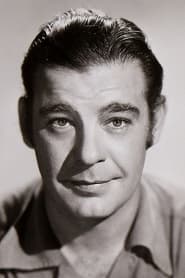 Lon Chaney Jr.
Horror Co-Star
One of Carradine's most important recurring horror co-stars. They appeared together in The Mummy's Ghost, House of Frankenstein, House of Dracula and The Black Sleep, linking Universal's monster cycle with the later horror-star ensemble tradition.
 Bela Lugosi
Horror Co-Star
Carradine and Lugosi crossed several eras of classical horror through The Black Cat, Voodoo Man and The Black Sleep. Their shared films connect Universal's early Gothic period with Poverty Row horror and the later nostalgic gathering of veteran monster stars.
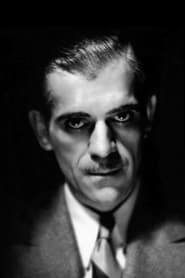 Boris Karloff
Horror Co-Star
Carradine shared the screen with Karloff in The Black Cat, House of Frankenstein and The Black Sleep, three productions spanning very different phases of American horror and bringing together two of the genre's most recognizable character actors.
 William Beaudine
Director / Actor
Beaudine directed Carradine in Voodoo Man, The Face of Marble and Billy the Kid Versus Dracula, making their collaboration an unusually clear thread through Carradine's low-budget horror career from the 1940s to the 1960s.
 Erle C. Kenton
Director / Actor
Kenton directed Carradine in House of Frankenstein and House of Dracula, the two Universal films that established Carradine's distinctive interpretation of Count Dracula and permanently connected him with the studio's monster pantheon.
 Vincent Price
Horror Co-Star
Carradine and Price appeared together in The Monster Club and House of the Long Shadows, two late-career productions that deliberately used their accumulated horror identities and transformed veteran casting into a celebration of genre history.
John Carradine Horror Movies
Acting (102 credits)
2013
2003
1995
1992
1990
1987
1986
1986
1986
1986
1986
1985
1985
1985
1983
1983
1983
1982
1982
1981
1981
1981
1981
1980
1980
1980
1979
1978
1978
1978
1977
1977
1977
1976
1976
1975
1975
1974
1974
1973
1973
1973
1973
1973
1972
1972
1972
1971
1971
1970
1970
1970
1970
1970
1969
1969
1969
1969
1969
1969
1969
1968
1968
1968
1968
1967
1967
1967
1966
1966
1965
1965
1965
1964
1962
1960
1959
1959
1959
1958
1957
1956
1956
1949
1949
1946
1945
1944
1944
1944
1944
1944
1944
1944
1943
1943
1942
1939
1935
1934
1933