



2019
Yûichi Matsui
Horror Special Effects · Biography · Horror Filmography · Collaborators · Credits
Horror subgenres & themes
Most represented across this person's horror filmography:
SPLATTER
• BODY HORROR
• FOLK
• GHOST
Biography
Yûichi Matsui and the Physical Face of Japanese Horror
Yûichi Matsui is one of the special makeup effects artists whose work runs quietly through several major phases of modern Japanese horror. His career stretches from the experimental underground imagery of the 1980s through the extreme body horror of the 1990s, the international rise of J-Horror around the turn of the millennium and the later continuation of franchises such as Ju-on. Films including Death Powder, Rusted Body: Guts of a Virgin III, Splatter: Naked Blood, Audition, Pulse, Ichi the Killer, The Happiness of the Katakuris, 2LDK, Gozu, The Grudge, Noroi: The Curse, The Great Yokai War, Masters of Horror: Imprint, Retribution, One Missed Call 3, Shutter and the later Ju-on films connect Matsui to an unusually broad spectrum of Japanese genre filmmaking.
Matsui's importance is particularly visible because the films rarely require the same kind of physical effect twice. He has worked with mutilation, wounds, distorted bodies, corpses, supernatural apparitions, demons, traditional yokai and deliberately exaggerated splatter. In some productions his work is designed to confront the audience directly, as in the extreme violence of Audition or Ichi the Killer. In others, including Pulse, Noroi and Retribution, makeup has to exist inside a quieter horror language where an image can become disturbing precisely because it appears only briefly and without visual excess.
This adaptability placed Matsui inside the careers of filmmakers with radically different approaches to horror. Takashi Miike repeatedly used him for films in which physical effects could become grotesque, comic or confrontational. Kiyoshi Kurosawa worked with him on horror built around absence, contamination and psychological unease. Takashi Shimizu and Masayuki Ochiai brought him into the visual world of Ju-on, while other directors used his skills for extreme independent films whose bodily imagery depended almost completely on practical execution.
Death Powder and the Experimental Underground
One of Matsui's earliest major horror credits was Shigeru Izumiya's Death Powder in 1986. The film occupies an unusual position in Japanese horror and cyberpunk, combining industrial environments, artificial humans, hallucinatory imagery and a deliberately fragmented sense of reality. Its story concerns conspirators who steal an android whose body releases a mysterious substance capable of altering perception and physical experience.
Matsui's makeup work belongs to a film in which the human body is never completely stable. Flesh, technology and hallucination begin to overlap, and the visual experience becomes increasingly difficult to divide into objective reality and psychological distortion. Rather than using special makeup only to simulate wounds, Death Powder treats altered physical form as part of an experimental audiovisual assault.
The film predates the international recognition later given to Japanese cyberpunk productions and shows Matsui already working at the intersection between horror and bodily transformation. The materials available to independent Japanese filmmakers were limited compared with large studio productions, making practical ingenuity particularly important. Effects had to create images strange enough to suggest a transformed reality without relying on modern digital manipulation.
Rusted Body and Extreme Physical Horror
In 1987 Matsui worked as special makeup effects artist and moldmaker on Kazuo "Gaira" Komizu's Rusted Body: Guts of a Virgin III. The film belongs to the Japanese ero-guro and splatter tradition in which sex, mutation, violence and bodily destruction deliberately collide. For an effects artist, this kind of production requires the makeup itself to carry a large proportion of the horror.
Komizu's films do not hide their interest in physical grotesquerie. Bodies become sites of transformation and violation, and practical effects are exposed directly rather than protected by restrained editing. Matsui therefore worked in an environment where artificial flesh, wounds and sculpted anatomical forms needed to survive close visual attention despite modest resources.
The project helped establish a thread that would continue throughout Matsui's career. Long before J-Horror became internationally identified with pale ghosts and minimal supernatural imagery, he had already worked inside a very different Japanese horror tradition based on splatter, erotic grotesquerie and the destruction of the physical body.
Splatter: Naked Blood and the Horror of Pain
Hisayasu Satô's Splatter: Naked Blood in 1996 pushed that relationship with bodily horror considerably further. Matsui served as special effects makeup artist on a film built around an experimental drug that transforms pain into pleasure. The premise requires increasingly severe self-mutilation because the affected characters no longer interpret physical damage in the way a healthy human body should.
The horror comes from the contradiction between what the audience sees and what the characters feel. Extreme wounds are presented while the victims themselves respond with satisfaction rather than fear. Matsui's effects therefore have to remain convincing enough that viewers instinctively understand the physical damage even when the performances communicate the opposite emotional response.
Naked Blood became notorious among fans of Japanese extreme horror for sequences of self-injury that depend heavily on practical makeup. The film does not use violence merely as an interruption to the narrative. Its entire concept depends on showing the body being damaged while psychological sensation has been fundamentally altered. That places Matsui's work at the center of the film's thematic idea rather than at its decorative edges.
Audition and the Violence Hidden Behind Restraint
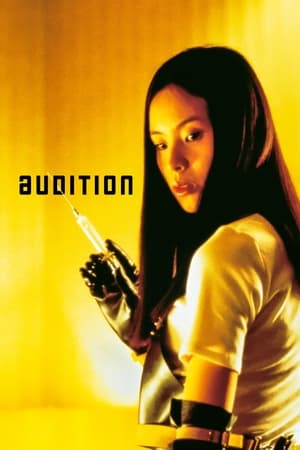
Takashi Miike's Audition became one of the most internationally important films associated with Matsui. For much of its running time, the movie barely resembles extreme horror. Widower Shigeharu Aoyama participates in a false audition arranged to help him meet a potential romantic partner and becomes fascinated by Asami Yamazaki. The early sections move slowly through loneliness, courtship and subtle indications that something about Asami's history is wrong.
The horror eventually becomes physical with extraordinary force. Matsui was responsible for the special makeup effects that support the film's final movement into torture, mutilation and bodily violation. The notorious sequence involving piano wire cutting into flesh depends on a practical effect capable of remaining disturbing at close range. The image does not exist independently from Miike's direction and the sound design, but the physical credibility of the wound is crucial to the sequence's impact.
The contrast between restraint and violence makes Matsui's work particularly effective. Had the entire film been filled with gore, the final effects might have become routine. Instead, the audience spends most of Audition watching ordinary bodies in ordinary spaces. When those bodies are finally penetrated, cut and damaged, the practical makeup suddenly becomes the visual expression of a threat that the film has spent more than an hour withholding.
The film became internationally influential and was later repeatedly discussed in relation to the more explicit strain of horror that developed during the following decade. Matsui's work therefore occupies a significant position in the visual history of modern extreme horror even though the effectiveness of Audition depends largely on how sparingly that physical violence is used.
Pulse and the Minimalism of J-Horror
Kiyoshi Kurosawa's Pulse required almost the opposite approach. Released in 2001, the film explores isolation, death and technological communication through characters gradually confronting ghostly presences connected with computers and the internet. Rather than constructing an effects spectacle, Kurosawa builds horror through empty spaces, unnatural movement and the feeling that ordinary reality is slowly becoming depopulated.
Matsui handled special makeup effects within that restrained environment. The production combined physical work with optical and digital techniques, but its most disturbing images rarely behave like conventional monster reveals. Corpses, bodies and supernatural traces appear as elements inside otherwise normal spaces, and their power depends on remaining integrated into Kurosawa's bleak visual world.
This demonstrates the breadth of Matsui's craft particularly clearly. The artist responsible for the explicit bodily violence of Naked Blood and Audition could also work within a horror film in which too much visible makeup would immediately destroy the atmosphere. Pulse requires physical effects to support absence rather than spectacle.
The film became one of the principal works of the international J-Horror cycle and remains among Kurosawa's most widely discussed films. Matsui's participation connected him directly with the atmospheric branch of Japanese horror at the same time that his collaboration with Miike was moving toward increasingly explicit physical extremity.
Ichi the Killer and the Limits of Screen Violence
Also released in 2001, Takashi Miike's Ichi the Killer placed Matsui at the opposite extreme. Adapted from Hideo Yamamoto's manga, the film constructs a criminal world around sadism, masochism and characters whose identities are inseparable from their relationship with pain. Matsui served as special makeup effects artist on a production whose international notoriety became closely connected with its violence.
The film demanded wounds and bodily damage that could shift between disturbing realism and grotesque exaggeration. Kakihara's scarred and modified face is part of his identity, while torture and mutilation repeatedly turn the human body into a visual object. Violence in Ichi the Killer can be horrific, absurd and deliberately excessive within the same sequence.
Matsui's work had to accommodate that unstable tone. Effects could not always be treated with the restrained anatomical realism of a conventional thriller because Miike frequently pushes the film toward comic-book extremity. At the same time, the physical material must retain enough weight that the audience understands why characters respond to pain as something meaningful rather than as weightless fantasy.
The result became one of the major cult titles of Miike's career and another internationally visible showcase for Japanese practical gore. Together, Audition and Ichi the Killer demonstrate how different Miike's uses of violence could be and why an adaptable makeup artist was important to his cinema.
The Happiness of the Katakuris and Grotesque Horror Comedy
Matsui continued his collaboration with Miike on The Happiness of the Katakuris, a bizarre combination of horror, musical comedy, clay animation and family melodrama. The story follows a family running an isolated guesthouse whose visitors repeatedly die, forcing the Katakuris to conceal a growing collection of corpses.
The production uses death very differently from Audition or Ichi the Killer. Bodies and decomposition become part of an absurd comic universe in which characters can suddenly sing, dance or transform into animated figures. Special makeup therefore has to participate in a tone that refuses to treat death consistently as either tragic or frightening.
Matsui's presence across these Miike films is significant because each demands a different relationship between physical effects and audience response. Audition makes the viewer recoil. Ichi the Killer pushes violence toward confrontation and grotesque excess. The Happiness of the Katakuris allows corpses and bodily disaster to become part of a surreal family comedy.
2LDK and Intimate Violence
Yukihiko Tsutsumi's 2LDK in 2003 reduces horror to two women and one apartment. Rival actresses Nozomi and Lana begin with ordinary resentment and competition before their hostility escalates into increasingly destructive physical violence.
Matsui handled special effects makeup for a film where there is nowhere for the violence to escape. The apartment becomes progressively damaged while the women turn domestic objects into weapons. Because the cast and setting are so restricted, injuries remain highly visible and continuity becomes especially important. Every new wound has to reflect what has already happened in the escalating fight.
The project demonstrates another side of practical horror. No supernatural creature or complex transformation is required. Makeup instead records the accumulation of damage across a sustained confrontation, allowing the characters' bodies and the apartment around them to deteriorate together.
Gozu and Miike's Surreal Body Horror
Matsui returned to Miike's world with Gozu, one of the director's most surreal horror films. Beginning within a yakuza narrative, the story progressively abandons stable reality and introduces transformation, sexuality, doubled identity and grotesque physical imagery.
The film requires effects that feel strange even within Miike's already unpredictable cinema. Bodies become unstable and biological logic becomes increasingly unreliable. Matsui's practical work supports a narrative where the audience cannot assume that a person's physical form will remain fixed from one scene to the next.
This recurring concern with mutable flesh connects Gozu to several other Matsui projects. From the experimental transformations of Death Powder to the self-destruction of Naked Blood and the mutilated bodies of Ichi the Killer, his filmography repeatedly intersects with horror in which the body cannot be trusted to remain intact.
The Grudge and the International Expansion of J-Horror
In 2004 Matsui worked on Takashi Shimizu's American-backed The Grudge, produced in Japan with an international cast and released by Columbia Pictures. The film brought the mythology of Ju-on to a mass global audience while retaining Shimizu as director and shooting extensively within the Japanese production environment.
Matsui served as special effects makeup artist. The assignment demanded a form of supernatural makeup very different from Miike's splatter. Kayako and Toshio must remain recognizably human while also appearing unmistakably associated with death and the curse. Pale skin, altered physical states, corpses and violent aftermaths contribute to a ghost story whose principal images became internationally recognizable.
The film's commercial success placed Matsui inside one of the clearest points where Japanese horror crossed directly into Hollywood distribution. Instead of an American filmmaker simply remaking a Japanese property overseas, The Grudge retained Japanese director Takashi Shimizu and substantial Japanese crew participation. Matsui therefore became part of the practical-effects continuity between the original J-Horror aesthetic and its international expansion.
He returned for The Grudge 2, continuing the relationship with Shimizu and the franchise as its mythology expanded across Japan and the United States.
Noroi: The Curse and Effects Hidden Inside Found Footage
Kôji Shiraishi's Noroi: The Curse in 2005 offered another unusually restrained challenge. The film presents itself as an assembled documentary investigation into paranormal events, combining interviews, television footage and apparently amateur recordings into the story of filmmaker Masafumi Kobayashi's research into an ancient entity called Kagutaba.
Matsui worked as special makeup effects artist within a visual format that depends heavily on apparent authenticity. An elaborate prosthetic that looked too polished or theatrical could immediately break the documentary illusion. Physical abnormalities, injuries and supernatural traces therefore need to appear as though they were accidentally captured by cameras rather than deliberately staged for a horror feature.
The film became one of the most admired Japanese found-footage horror productions and illustrates Matsui's ability to subordinate technique to format. His job is not always to make audiences notice a makeup effect. Sometimes success means convincing them that the image might not be an effect at all.
The Great Yokai War and Traditional Creatures
Takashi Miike's The Great Yokai War expanded Matsui's work from human injury and ghosts toward traditional Japanese supernatural creatures. The film required a large population of yokai, each with distinct anatomy, texture and visual identity. Matsui worked among the artists responsible for the special makeup and physical creature elements.
In later discussion of the production, Matsui explained aspects of how the masks were constructed and emphasized the cooperative relationship between practical and digital departments. Rather than treating CGI as an enemy that would eventually eliminate traditional makeup, he argued that the two systems could support one another and that physical methods would not simply disappear.
That position reflects the larger trajectory of his career. Matsui began during a period when practical effects were often the only realistic method available for altered bodies and creatures. By the 2000s, digital tools had become standard, but productions such as The Great Yokai War demonstrated that actors, costumes and physical creature surfaces still provided information that digital work could extend rather than replace.
Imprint and the Physical Horror of Masters of Horror
Miike's Imprint, produced for the anthology series Masters of Horror, became another important showcase for Matsui. The episode follows an American journalist searching for a woman he once loved and gradually entering a story of prostitution, torture, deformity and supernatural revelation in nineteenth-century Japan.
Matsui was responsible for the special makeup effects, and the production was notable enough to generate a dedicated behind-the-scenes feature, Imperfect Beauty: Make Up and Special Effects of Imprint, in which Matsui himself appears alongside Miike and members of the cast.
The episode was controversial for its extreme content and was not initially broadcast by Showtime with the rest of the series. Its imagery includes deformity, torture and physical suffering presented with Miike's characteristic refusal to make the material comfortable. Matsui's makeup is therefore central to precisely the elements that made Imprint stand apart even within an anthology explicitly created by established horror filmmakers.
The project also brought his work into direct conversation with an international horror production system. Masters of Horror was built around recognizable directors from different countries and generations. Miike's episode remained unmistakably Japanese in setting and visual sensibility, while Matsui provided the physical effects required to make its most disturbing imagery tangible.
Retribution and Returning to Kiyoshi Kurosawa
Matsui reunited with Kiyoshi Kurosawa for Retribution in 2006. The film follows detective Yoshioka as he investigates a series of murders involving victims drowned in salt water and gradually discovers connections between the investigation, a mysterious woman in red and his own unstable perception.
Matsui is credited both as special makeup effects artist and special effects supervisor, giving him substantial responsibility for the physical side of Kurosawa's supernatural world. As with Pulse, however, the effectiveness of the film does not depend on constant spectacle. Kurosawa creates fear through repetition, architecture, sound and apparitions that appear with disturbing calm.
The makeup therefore needs to inhabit that restrained visual system. Dead bodies and supernatural presences must feel wrong without becoming so visually elaborate that they dominate scenes designed around psychological uncertainty. The collaboration demonstrates again how effectively Matsui could move between the confrontational horror of Miike and Kurosawa's quieter approach to the supernatural.
One Missed Call 3 and Continuing J-Horror Franchises
Also in 2006, Matsui worked on One Missed Call 3: Final, continuing another internationally recognized J-Horror franchise. The series turns an ordinary communication device into a mechanism announcing future death, combining technological anxiety with the curse structure familiar from Japanese supernatural horror of the period.
Matsui's involvement placed him across several of the major properties that defined international perceptions of J-Horror. He had worked on Pulse, the American Grudge films and Noroi, and now contributed to the continuation of One Missed Call. Few makeup artists are connected to such a broad sample of the movement's different visual styles.
Shutter and Another Japanese-American Horror Production
Masayuki Ochiai's Shutter in 2008 brought Matsui into another American remake of an Asian supernatural horror property produced partly through Japanese locations and personnel. The story revolves around spirit photography and a photographer who begins discovering disturbing forms inside his images after a fatal incident.
Matsui headed the special effects makeup work with assistants supporting the department. The film required ghostly bodies and supernatural physical states that could exist beside photographic and digital effects. As with The Grudge, the production illustrates how Japanese practical-effects artists continued contributing directly even when Asian horror stories were being reformatted for English-language audiences.
Ju-on: The Beginning of the End and The Final Curse
Matsui returned fully to the Ju-on mythology with Masayuki Ochiai's Ju-on: The Beginning of the End in 2014 and Ju-on: The Final Curse in 2015. He served as special makeup effects artist and moldmaker, continuing a franchise he had already encountered through the American Grudge films.
These later entries reinterpret elements of Kayako and Toshio's mythology while preserving the fundamental concept that violent death creates a curse capable of spreading from victim to victim. Practical makeup remains important because the franchise depends on the recurring visual recognition of its dead. The ghosts cannot become completely redesigned creatures without losing their identity.
Matsui's return is therefore particularly appropriate. More than a decade after The Grudge, he was still contributing physical effects to the same supernatural lineage while working under a different director and within a changed production era.
Practical Effects in a Changing Japanese Film Industry
Matsui's career spans one of the most consequential technological transitions in genre filmmaking. His earliest horror work emerged when physical makeup, puppetry, mechanical effects and in-camera techniques carried almost the entire burden of bodily transformation. By the 2000s, digital effects had become routine and could replace or extend images that previously required large practical constructions.
His comments regarding The Great Yokai War reveal an approach based on collaboration rather than competition. Practical and digital effects could solve different parts of the same problem. A performer might wear a physical mask because that gives actors and cinematographers a real surface, while computer imagery alters movement or anatomy that would be difficult to achieve mechanically.
This philosophy is visible across his filmography even when the audience does not know which department created a specific detail. Matsui's strongest horror work rarely exists to advertise technique. The effect must first belong to the film. That might mean an almost invisible corpse detail in a Kurosawa ghost story, a documentary-style abnormality in Noroi, an enormous population of yokai for Miike or the explicit destruction of flesh in Ichi the Killer.
Yûichi Matsui's Place in Japanese Horror
Yûichi Matsui's importance to horror is cumulative. He is not identified with a single monster in the way some makeup artists become inseparable from one franchise. Instead, his work connects several otherwise distinct traditions within Japanese genre cinema. Experimental cyberpunk, ero-guro splatter, extreme horror, supernatural J-Horror, found footage, yokai fantasy and international remakes all appear within the same career.
His collaborations with Takashi Miike alone demonstrate an unusual range. Audition requires realistic torture whose impact depends on being withheld until late in the film. Ichi the Killer turns bodily violence into grotesque excess. The Happiness of the Katakuris treats corpses through surreal comedy. Gozu destabilizes human anatomy and identity. The Great Yokai War demands an entire population of traditional supernatural beings. Imprint returns to explicit physical suffering inside a period ghost story.
His work with Kiyoshi Kurosawa proves that Matsui was equally capable when effects needed to disappear into atmosphere. Pulse and Retribution derive much of their fear from spaces that feel emptied of ordinary human life, and makeup has to strengthen that unease without overwhelming it.
The international expansion of J-Horror gave Matsui another historical role. Through The Grudge, The Grudge 2, Shutter and later Ju-on entries, his practical-effects experience moved between Japanese and American production systems while the visual language of Asian supernatural horror became globally familiar.
From the handmade body distortions of Death Powder in the 1980s to the later ghosts of Ju-on, Matsui's horror career documents almost three decades of change in Japanese screen effects. His contribution lies not in imposing one recognizable personal style on every production, but in giving radically different filmmakers the physical materials their particular nightmares required.
Selected Work
Notable Horror Collaborators
Notable collaborators and creative partners throughout Yûichi Matsui's horror career.
 Takashi Miike
Director Collaborator
Matsui's defining horror collaboration. His special makeup work appears across Miike films including Audition, Ichi the Killer, The Happiness of the Katakuris, Gozu, The Great Yokai War and Masters of Horror: Imprint, spanning extreme violence, body horror and supernatural creatures.
TI
Takashige Ichise
Producer Collaborator
A major production connection throughout the J-Horror period. Ichise and Matsui share projects including The Grudge, Noroi: The Curse, Retribution and the later Ju-on films, linking Matsui to several internationally important Japanese supernatural horror productions.
HY
Hideo Yamamoto
Cinematography Collaborator
A recurring visual collaborator within Matsui's work for Takashi Miike. Yamamoto photographed Audition, Ichi the Killer, The Happiness of the Katakuris, The Great Yokai War and Imprint while Matsui supplied special makeup effects for their horror imagery.
MO
Masayuki Ochiai
Director Collaborator
A recurring supernatural-horror collaboration through Shutter, Ju-on: The Beginning of the End and Ju-on: The Final Curse. Matsui provided physical ghost and injury effects across Ochiai's English-language and Japanese horror productions.
 Kiyoshi Kurosawa
Director Collaborator
Matsui worked inside Kurosawa's restrained supernatural horror language on Pulse and Retribution. The collaboration required practical makeup to support ghostly absence, death and physical unease without overwhelming Kurosawa's deliberately minimal visual approach.
 Takashi Shimizu
Director Collaborator
Shimizu and Matsui collaborated on the international expansion of the Ju-on mythology through The Grudge and The Grudge 2. Matsui's special makeup work helped preserve the physical identity of the Japanese curse as the franchise moved into Hollywood-backed production.
Yûichi Matsui Horror Movies
Special FX / Practical FX (27 credits)
2019
2014
2012
2008
2008
2007
2007
2006
2006
2006
2005
2004
2003
2002
2001
2000
1999
1998
1997
1996
1995
1988
1987
1986
1986
1986
Visual Effects (1 credits)
1991
Production Design / Art Department (1 credits)
2020