



2014
Elsa Lanchester
Horror Actor · Biography · Horror Filmography · Family · Collaborators · Credits
Horror subgenres & themes
Biography
Elsa Lanchester and the Few Minutes That Became Immortal
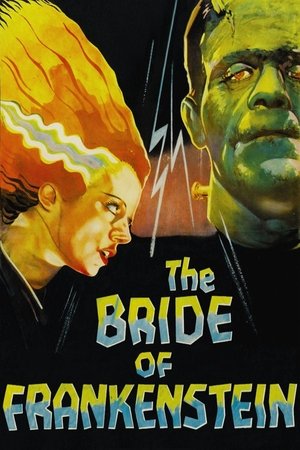
Elsa Lanchester occupies one of the strangest positions in horror history. Her most famous monster performance lasts only a few minutes, contains almost no conventional dialogue and belongs to a film in which several other characters receive far more screen time. Yet the Bride of Frankenstein became one of the most instantly recognizable figures ever created by horror cinema. The towering hair, white streaks, bandaged body, scarred face, startled movements and violent hiss transformed Lanchester into an icon whose cultural life quickly became larger than the role itself.
That image can obscure how unusual the performance actually is. Lanchester does not play the Bride as a romantic answer to Boris Karloff's Monster. She awakens frightened, disoriented and almost animalistic. Her eyes move rapidly through the laboratory, her head jerks toward unfamiliar sounds and her first sustained response to the Monster is rejection. In a film built around the desire to manufacture companionship, the newly created woman immediately demonstrates that life cannot be engineered into emotional obedience.
Lanchester's horror career was never extensive in the way that Boris Karloff, Bela Lugosi, Peter Cushing or Christopher Lee built careers repeatedly centered on the genre. Instead, she moved between drama, comedy, theatre, television and character roles for decades. That makes her place in horror more remarkable rather than less. One concentrated performance was powerful enough to keep her permanently inside the visual language of the genre.
Cabaret, Dance and the Making of an Eccentric Performer
Elsa Lanchester was born in London in 1902 and entered performance through dance, theatre and the bohemian entertainment culture of the 1920s. Before Hollywood established her as a character actress, she developed an unconventional stage identity built around comic songs, physical performance and a willingness to appear eccentric rather than conventionally glamorous.
She operated an after-hours London cabaret called the Cave of Harmony, where literary and artistic figures mixed with performers and where Lanchester developed a style that depended heavily upon facial expression, rhythm and sudden shifts between elegance and grotesque comedy. Those qualities later became unexpectedly useful in horror. The Bride does not need dialogue because Lanchester already understood how much character could be communicated through posture, eyes and movement.
Her early film appearances grew out of the same British artistic environment. Long before Universal transformed her into a monster, Lanchester had learned to make a small amount of screen time count. She frequently appeared as an eccentric supporting figure whose energy could alter the tone of a scene almost immediately.
Charles Laughton and the Move Toward Hollywood
Lanchester married Charles Laughton in 1929, forming one of the most important personal and professional relationships of her life. By the early 1930s both were working internationally, and Lanchester appeared opposite Laughton in The Private Life of Henry VIII, playing Anne of Cleves. The production helped increase her visibility with American audiences before the role that would permanently define her horror image.
Her career, however, never became simply an extension of Laughton's. Lanchester maintained a distinct identity based upon comic timing, physical eccentricity and the ability to turn supporting characters into memorable presences. Hollywood repeatedly used her in roles that required someone unusual rather than conventionally romantic.
This background helps explain why James Whale was such an appropriate director for her. Whale himself was drawn to performers who could combine theatrical intelligence with deliberate strangeness. Bride of Frankenstein would allow Lanchester to use qualities developed in cabaret and comedy inside one of the most elaborate Gothic horror productions of the 1930s.
James Whale and the Double Role
Bride of Frankenstein (1935) begins not in Frankenstein's laboratory but with Mary Shelley. Lanchester appears first as the young author sharing an evening with Percy Shelley and Lord Byron. The framing device places the entire continuation of the Frankenstein story inside her imagination before Lanchester later returns in radically altered form as the Bride herself.
The doubling is one of the film's most elegant ideas. The woman who tells the story eventually becomes the woman created inside it. Mary Shelley is articulate, composed and intellectually in control of the narrative. The Bride awakens without language, immediately surrounded by men who have decided why she exists.
James Whale understood the contrast. The film does not treat the second appearance merely as a makeup stunt. Lanchester's two characters occupy opposite relationships to creation. Mary is the creator of the story; the Bride is herself a creation.
Production material indicates that Lanchester was considered for both roles during development rather than being a last-minute solution. Whale also created a set whose combination of Gothic machinery, electrical energy, religious imagery and macabre humor demanded exactly the heightened performance style Lanchester could provide.
The Creation of the Bride
The Bride's entrance occurs near the climax, after Dr. Frankenstein and Dr. Pretorius have constructed a female body intended as a companion for the Monster. The sequence builds through machinery, storm imagery and electrical spectacle until the bandaged figure is raised upright and revealed to be alive.
Lanchester initially appears almost immobilized. Her body is tightly wrapped and elevated into an unnatural silhouette, forcing much of the performance into the face and neck. The limitation becomes an advantage. Every small head movement looks deliberate because the rest of the body cannot respond naturally.
When the bandages are removed, the Bride still does not behave like an ordinary resurrected woman. She scans the laboratory with rapid, nervous movements, reacting to the men around her as though she has entered an environment that makes no immediate sense.
The famous hiss completed the characterization. Lanchester later explained that she drew it from swans she had observed in London's Regent's Park. The inspiration is appropriate because the Bride simultaneously appears elegant and defensive. The sound is not human speech, but neither is it the roar of a conventional monster. It is a warning.
James Whale and the Architecture of an Icon
Whale's importance to Lanchester's horror legacy cannot be measured through the number of films they made together. One collaboration was enough. He recognized that the Bride did not require long exposition or extensive dialogue if every component of the entrance was controlled strongly enough.
The laboratory sequence is constructed around anticipation. The audience spends most of the film waiting for the female creature promised by the title. By delaying her appearance until near the end, Whale increases the pressure on the reveal. Lanchester has only a short period in which to justify an entire film being named after her character.
She succeeds because the performance is immediately legible without becoming simple. The Bride is frightened, alert, defensive and independent. Her rejection of the Monster creates tragedy, but nothing in Lanchester's behavior suggests she owes affection to a being simply because men designed her for that purpose.
That contradiction became one reason the character survived culturally. The image can be used romantically in posters, toys and later parodies, but the original Bride is not a romantic figure. Her first act of meaningful choice is refusal.
Jack Pierce and the Physical Transformation
The physical appearance of the Bride emerged from the close interaction between Whale's visual conception, Universal's production departments and makeup artist Jack Pierce. Pierce had already created the defining screen appearance of Karloff's Frankenstein Monster and approached monster makeup as a process of reconstructing the actor rather than merely decorating the face.
Lanchester recalled that the facial makeup alone required hours. Her body also had to be tightly bandaged for parts of the creation sequence, making the performance physically restrictive even before the elaborate hairstyle was considered.
The vertical hair transformed her head into an almost architectural shape. White streaks cut through the dark mass like electrical traces, visually connecting the Bride to the storm and machinery responsible for her animation. The scars at the neck complete the relationship with Frankenstein's Monster while leaving Lanchester's face sufficiently visible for the performance to remain expressive.
The result became one of the rare makeup designs whose silhouette is enough to identify the character. A viewer does not need to see the entire costume or even Lanchester's face. The hair alone can signify the Bride.
Boris Karloff and the Rejected Monster
Boris Karloff had already transformed Frankenstein's Monster into a tragic screen figure in Frankenstein, and the sequel gives the Creature an even greater capacity for communication and desire. He learns words, experiences friendship with the blind hermit and eventually asks Frankenstein to create someone like himself.
The Bride therefore enters the film as the answer to the Monster's loneliness. That expectation makes her immediate rejection especially painful. Karloff approaches her with hope, while Lanchester responds with alarm and disgust.
Their interaction is brief but became one of the most reproduced pairings in horror iconography. Posters, merchandise and later popular culture frequently place Monster and Bride together as if they were an established couple, even though the original film is built around the fact that she refuses him.
The difference between cultural memory and the actual scene is important. Lanchester's Bride became a romantic partner in popular imagery precisely because the visual pairing was irresistible, but the performance itself is defined by independence from the role everyone else has planned for her.
Ernest Thesiger, Pretorius and Male Creation
Ernest Thesiger's Dr. Pretorius provides much of Bride of Frankenstein with its distinctive theatrical energy. He encourages Henry Frankenstein to resume experimentation and ultimately becomes the intellectual force behind the creation of the Bride.
Pretorius treats creation with delight rather than moral hesitation. His miniature human beings, elaborate manners and amused relationship with the macabre make him one of the strangest figures in Universal horror. By the time Lanchester's Bride awakens, she is surrounded almost entirely by men celebrating an achievement they assume they understand.
Her reaction undermines that confidence. Pretorius and Frankenstein can construct the body, but they cannot dictate the consciousness that emerges inside it. The Bride's refusal is therefore more than a personal rejection of the Monster. It demonstrates the limit of the creators' control.
The relationship between Lanchester and Thesiger exists almost entirely within this climactic section, yet the dramatic connection is fundamental. Pretorius helps create the situation; the Bride proves that successful animation is not the same thing as successful ownership.
A Monster with Almost No Screen Time
One of the extraordinary facts about the Bride is how little screen time Lanchester needs to establish the character. She arrives late, speaks no conventional dialogue as the creature and disappears when the laboratory is destroyed. Yet nearly every element of the appearance has become culturally permanent.
The brevity prevents the character from becoming ordinary. There is no extended second act in which the audience becomes accustomed to seeing her walk through rooms or interact casually with other characters. She exists primarily as an event.
This differs sharply from Karloff's Monster, whose personality develops across the entire film. The Bride remains enigmatic because the audience sees only the first moments of a life that ends almost immediately.
The performance consequently became open to reinterpretation. Later films, television series, artwork, fashion and popular culture could imagine the personality the original film never had time to define completely.
The Ghost Goes West and Supernatural Comedy
Later in 1935, Lanchester appeared in The Ghost Goes West, a supernatural comedy directed by René Clair. The film concerns a Scottish ghost whose castle is purchased by an American businessman and physically relocated across the Atlantic.
The tone is far removed from Universal horror, but the production demonstrates how naturally Lanchester could move between the supernatural and comedy. Ghosts in her career were not automatically sources of terror. They could belong to satire, romantic fantasy or eccentric social comedy.
This flexibility became characteristic of her screen work. Lanchester rarely treated the macabre and the comic as opposing categories, which makes her especially compatible with the strange tonal mixture of Bride of Frankenstein.
The Spiral Staircase and Gothic Suspense
Robert Siodmak's The Spiral Staircase (1946) brought Lanchester back into a far more serious Gothic environment. The film follows Helen, a mute young woman trapped inside an isolated mansion while a murderer targets women he considers physically imperfect.
Siodmak and cinematographer Nicholas Musuraca construct the house through shadows, staircases, storms and subjective glimpses of the killer, blending Gothic horror with the visual language developing around film noir. Lanchester appears as Mrs. Oates, one of the servants inhabiting the increasingly dangerous household.
The role does not attempt to recreate the Bride. Mrs. Oates is talkative, earthy and capable of providing a different human texture inside a film dominated by fear and repression. Lanchester demonstrates how effective she could be within horror without needing transformation makeup or supernatural identity.
The film also places her inside another important branch of classical American horror. Universal gave her a monster icon; RKO-era Gothic suspense allowed her eccentric character acting to exist inside a far more psychologically grounded nightmare.
Willard and the Horror of the Family Home
Nearly four decades after Bride of Frankenstein, Lanchester entered a very different kind of horror with Daniel Mann's Willard (1971). Bruce Davison plays Willard Stiles, an isolated young man who develops an unusual relationship with rats and eventually uses them against people who humiliate or control him.
Lanchester plays his ailing mother Henrietta. The role is brief but important because Willard's psychological environment is inseparable from the oppressive domestic life surrounding him. The film does not begin with supernatural evil entering a healthy world. Its protagonist is already socially trapped before the rats become instruments of power and revenge.
Lanchester's casting also gives the film a subtle connection to an earlier generation of screen horror. The woman remembered as Frankenstein's artificial Bride now appears as the ageing mother of a new kind of horror protagonist, one whose monsters are ordinary animals responding to human control.
The contrast reveals how dramatically the genre had changed. Gothic laboratories and lightning have been replaced by workplace humiliation, loneliness and an uncomfortable suburban house, yet Lanchester remains completely at home inside the material.
Night Gallery and Green Fingers
Television allowed Lanchester to return again to supernatural material in Night Gallery. In the 1972 segment Green Fingers, written for television by Rod Serling, she plays Lydia Bowen, an elderly woman whose extraordinary relationship with plants becomes the central supernatural idea.
The story places Lanchester in another role perfectly suited to her ability to make eccentricity feel simultaneously comic and unsettling. Lydia initially appears vulnerable when confronted by a ruthless developer determined to obtain her property, but the balance of power gradually changes as the nature of her connection with the garden becomes clear.
The performance demonstrates a later development of the same screen quality Whale had recognized decades earlier. Lanchester could make an apparently fragile figure seem strange enough that the audience never completely understands what rules apply to her.
Her participation also connected classical Universal horror directly with the television anthology tradition that had become one of the genre's major homes by the early 1970s.
Terror in the Wax Museum and Arnold
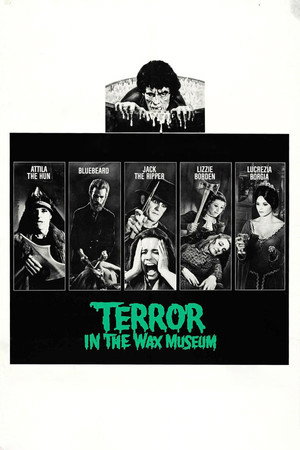
Lanchester continued appearing in macabre material during the early 1970s. Terror in the Wax Museum places her inside a murder mystery surrounded by wax figures of historical killers and notorious personalities, using the familiar museum setting that horror cinema had repeatedly associated with artificial bodies and hidden violence.
That same year she appeared in Arnold, a black comedy built around inheritance, murder and the bizarre premise of a woman marrying a dead man at his funeral. The film belongs to the grotesque comic tradition rather than serious Gothic terror, making it another natural environment for Lanchester's eccentric screen presence.
These later roles did not attempt to reproduce the stature of the Bride. Instead, they show how the reputation created in 1935 could accompany Lanchester through different kinds of macabre entertainment without requiring her to become trapped inside one monster persona.
Beyond Horror
Lanchester's career remained far broader than the horror films for which genre audiences remember her. She received Academy Award nominations for Come to the Stable and Witness for the Prosecution, worked extensively in comedy and drama and continued appearing in film and television for decades.
This broader career matters because the Bride was never the performance style she spent the rest of her life repeating. The role became iconic almost independently of her subsequent work. Lanchester could return to conventional character acting while popular culture continued reproducing the face she had worn for a few minutes in 1935.
Few horror actors have experienced such a complete separation between the duration of a performance and the size of its afterlife. Lanchester did not need a series of Bride sequels. The original image was already strong enough.
Elsa Lanchester's Horror Legacy
Elsa Lanchester's contribution to horror demonstrates why significance cannot be measured simply by counting credits. James Whale directed her in one horror film, yet that collaboration created one of cinema's permanent monsters. Boris Karloff shared only a brief encounter with her as the Monster, yet Monster and Bride became inseparable in popular imagery. Jack Pierce and the Universal makeup department helped construct a physical design recognized across generations.
Robert Siodmak later placed her inside the shadowed Gothic world of The Spiral Staircase, proving she could contribute to horror without becoming a creature. Daniel Mann used her very differently in Willard, where domestic pressure helps shape a young man whose relationship with rats becomes increasingly destructive. Television and later macabre comedies allowed still more variations.
But the Bride remains unavoidable. The character awakens, looks at the world, rejects the mate selected for her and dies within minutes. There is almost no conventional character development, yet Lanchester supplies enough movement, sound and personality to imply an entire consciousness arriving fully formed.
That is the paradox of Elsa Lanchester in horror. Her genre filmography is comparatively small, but one performance became larger than many entire careers. The Bride did not need to return because she never really disappeared.
Photos (3)
Images: TMDB
Selected Work
Notable Horror Collaborators
Notable collaborators and creative partners throughout Elsa Lanchester's horror career.
 James Whale
Defining Horror Director
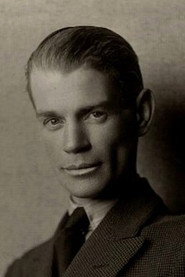
Whale cast Lanchester as both Mary Shelley and the Bride, creating the performance and imagery that permanently defined her place in horror history.
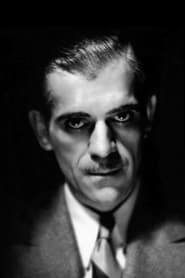 Boris Karloff
Iconic Horror Co-Star
Karloff and Lanchester shared only a brief encounter as Monster and Bride, but their pairing became one of the most enduring images in Frankenstein mythology.
 Jack Pierce
Defining Makeup Collaborator
Pierce's makeup work helped transform Lanchester into the Bride, completing a visual identity that became instantly recognizable far beyond the film itself.
 Robert Siodmak
Gothic Thriller Director
Siodmak brought Lanchester into the shadowed Gothic world of The Spiral Staircase, one of the most important horror-adjacent films of her later classical period.
 Ernest Thesiger
Defining Bride Co-Star
Thesiger's Dr. Pretorius stands at the center of the Bride's creation, making his theatrical performance inseparable from Lanchester's most famous horror sequence.
DM
Daniel Mann
Later Horror Director
Mann cast Lanchester as Willard Stiles' ailing mother, bringing her into a very different generation of American psychological and animal horror.
Elsa Lanchester Horror Movies
Acting (10 credits)
2000
1973
1973
1971
1970
1962
1946
1935
1935