

2026
Kevin Durand
Horror Actor · Biography · Horror Filmography · Credits
Horror subgenres & themes
Biography
Kevin Durand and a Career Built Around Monsters, Survivors and Villains
Kevin Durand has developed one of the most sustained horror careers among contemporary character actors without ever becoming restricted to the genre. His imposing height, unusual voice and ability to move between intimidation and vulnerability have repeatedly made him useful to filmmakers working with monsters, supernatural violence and physically extreme characters. Across projects including The Echo, Legion, Resident Evil: Retribution, Dark Was the Night, The Strain, Tragedy Girls, Swamp Thing, Locke & Key, Abigail, Clown in a Cornfield, Ready or Not 2: Here I Come and Ithaqua, Durand has played monsters, monster hunters, serial killers, apocalyptic warriors and ordinary men trapped inside supernatural situations.
Unlike actors who entered horror accidentally and later distanced themselves from it, Durand has spoken openly about growing up as a fan. He has recalled watching horror movies with his mother when he was extremely young and described those films as part of his childhood. That familiarity helped make his later genre work feel less like a temporary detour and more like a recurring professional home. Durand could participate seriously in a vampire apocalypse or a creature feature because he understood the pleasures of those stories from the audience side as well.
His size initially made him an obvious choice for threatening characters. At approximately six feet six inches tall, he could dominate a frame before speaking, and early casting frequently used that physical presence for villains, enforcers and dangerous outsiders. Horror eventually gave him opportunities to complicate that image. Vasiliy Fet in The Strain became a heroic exterminator fighting vampires. Paul Shields in Dark Was the Night is a grieving sheriff rather than a monster. Peter in Abigail is physically imposing but frequently comic and frightened. Durand's genre career gradually became less about looking dangerous and more about using audience expectations surrounding his appearance.
The Echo and Human Violence Inside Supernatural Horror
One of Durand's important early horror roles came in the 2008 supernatural film The Echo, directed by Yam Laranas as an English-language remake of his Filipino film Sigaw. Durand plays Walter, a violent police officer whose domestic abuse becomes inseparable from the supernatural cycle haunting an apartment building.
The film follows Bobby, an ex-convict who moves into the apartment of his deceased mother and begins hearing disturbing sounds from neighboring rooms. What initially appears to be an ongoing case of domestic violence gradually reveals itself as something trapped in repetition. Walter, his wife Gina and their daughter exist at the center of a supernatural history that Bobby cannot easily escape simply by recognizing what happened.
Durand's physical presence becomes especially effective because Walter's threat is grounded in recognizable human brutality before the full supernatural structure is understood. He is not frightening because makeup transforms him into a creature. He is frightening because authority, size and uncontrolled violence have become concentrated in one person. The supernatural element then preserves that violence beyond ordinary time.
Legion and the Archangel Gabriel
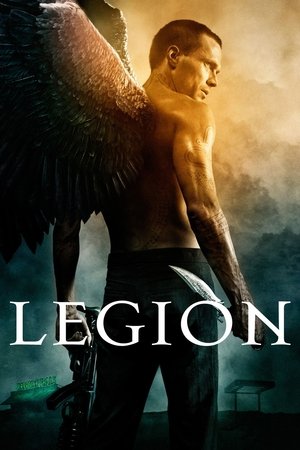
Durand moved into apocalyptic supernatural horror with Scott Stewart's Legion in 2010. The film imagines God losing faith in humanity and sending angels to destroy it, while the Archangel Michael rebels against that command in order to protect a pregnant woman whose child may represent humanity's future.
Durand plays Gabriel, the archangel sent to carry out divine judgment. The casting uses his physical scale immediately. Gabriel must appear capable of confronting Paul Bettany's Michael not simply as another soldier but as an almost mythological force. The climactic confrontation between the two characters is staged as both supernatural combat and a form of sibling rivalry, two sons carrying radically different interpretations of their father's will.
Durand approached the relationship through that emotional idea rather than treating Gabriel merely as an effects-driven villain. Gabriel believes he is obeying correctly. Michael believes compassion requires disobedience. Their conflict therefore comes from devotion rather than from a conventional struggle between good and evil.
Legion also demonstrated the type of genre character Durand would repeatedly inhabit. His size allows the film to introduce Gabriel as a physical threat, but the performance depends on calmness as much as violence. He does not need constant rage to dominate a scene. The character's certainty is enough.
Resident Evil: Retribution and Entering a Major Horror Franchise
In 2012 Durand entered the Resident Evil film series as Barry Burton in Resident Evil: Retribution. The character originated in Capcom's video games and had already developed a substantial fan identity before Durand played him. The film therefore required the actor to join an established horror mythology rather than create a role without audience expectations.
Paul W. S. Anderson's fifth Resident Evil film expands the franchise into a massive Umbrella Corporation simulation facility where Alice and her allies pass through artificial environments populated by infected humans, monsters and recreated figures from earlier films. Barry becomes part of the armed resistance attempting to extract Alice from the complex.
The role fitted Durand naturally. Barry is physically powerful, heavily armed and accustomed to moving directly toward threats that would send ordinary characters running. Yet Durand avoids making him simply another interchangeable action figure. His performance gives the group a sense of weight and reliability, allowing the character to feel appropriate beside a heroine who has already survived several films of biological horror.
For Durand, Resident Evil: Retribution represented another important connection between horror and action. Much of his genre career would continue occupying that boundary, where monsters and gore are combined with characters capable of fighting back rather than simply attempting escape.
Dark Was the Night and the Grieving Sheriff
Jack Heller's Dark Was the Night gave Durand one of his strongest horror lead roles. He plays Paul Shields, sheriff of an isolated community where strange animal disappearances, tracks and increasingly disturbing incidents suggest that something predatory has moved out of the surrounding forest.
The creature story is built around grief. Paul has lost his young son before the events of the film and blames himself for the death. His marriage has deteriorated, his confidence has collapsed and the responsibility of protecting the town arrives at the moment when he doubts his own judgment most strongly. The monster therefore threatens both the community and a man already psychologically weakened before it appears.
Durand was particularly enthusiastic about the role because it allowed him to play a vulnerable protagonist rather than another physically dominant antagonist. He described Paul as shattered by the death of his child and unable to trust himself completely. That internal damage becomes central to the suspense because the sheriff must convince other people that the threat is real while simultaneously questioning his own ability to respond to it.
The film deliberately withholds its creature for long periods. Tracks, missing animals and unexplained sounds create the threat before the audience receives a complete view. Durand's performance therefore carries much of the first half. Paul has to make uncertainty believable. If he immediately behaved like a conventional monster hunter, the film would lose the slow escalation that gives the creature its power.
Dark Was the Night also connected directly with Durand's affection for older horror. He responded to the film's restrained creature-feature structure and to the idea that fear can grow through implication rather than constant exposure. The result remains one of the clearest examples of Durand carrying a horror film primarily through dramatic performance.
The Strain and Vasiliy Fet
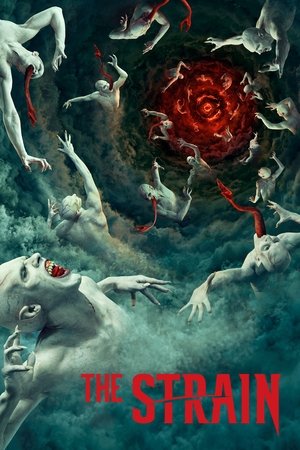
The largest horror role of Durand's career began in 2014 with FX's The Strain, created for television by Guillermo del Toro and Chuck Hogan from their novel trilogy, with Carlton Cuse serving as showrunner. Durand plays Vasiliy Fet, a New York exterminator whose professional understanding of rats, tunnels and infestation becomes unexpectedly valuable when an ancient strain of vampirism begins spreading through the city.
Fet was an ideal reversal of Durand's earlier screen image. He looks like someone who could have been cast immediately as the monster, yet he becomes one of the series' most dependable human heroes. His occupation also gives him an unusual position within vampire fiction. He does not begin as a doctor, soldier or supernatural expert. He understands vermin.
That expertise becomes increasingly important because del Toro and Hogan imagine vampirism partly as biological infestation. The Strigoi spread through parasitic worms, reproduce through infection and transform urban spaces into systems through which the population can be controlled. Fet already knows how rodents move through walls, basements, sewers and abandoned infrastructure. Once he accepts that the new infestation is supernatural, the basic logic of extermination still applies.
Durand was initially uncertain that del Toro and Cuse would see him as the character. He had lost a substantial amount of weight for Atom Egoyan's The Captive and looked very different from the large, robust figure described in the books. After reading the first novel and meeting with them, he was offered Fet immediately.
The character became one of the roles Durand valued most strongly. He repeatedly described how much fun he had playing Fet and how grateful he was that Cuse and del Toro had thought of him. The part also allowed him to build a character physically across several seasons rather than solve everything during a two-hour film.
Building Fet from the Books
Durand used the novels and graphic material to understand Fet's physicality but did not attempt to reproduce the character mechanically. He developed a particular voice influenced by Fet's Ukrainian family background and New York environment, allowing the accent to become stronger or weaker depending on whom the character was speaking with.
He also concentrated on the idea that Fet is one of the few people who becomes more fulfilled as civilization collapses. Most characters in The Strain lose the structures that previously gave their lives meaning. Fet experiences almost the opposite. Skills that once made him a working-class exterminator suddenly make him essential to human survival.
Durand described the character as containing an internal warrior waiting for the correct circumstances to emerge. The vampire apocalypse gives that side of Fet a purpose. Instead of being overwhelmed by the new world, he grows into it.
This makes Fet unusually enjoyable within an apocalyptic horror narrative. He experiences loss and fear like everyone else, but some part of him is energized by discovering that he can contribute directly to the survival of others. The professional exterminator becomes strategist, fighter and eventually one of the principal figures attempting to destroy the Master.
The Strain and the Return of the Monstrous Vampire
Durand was also attracted to the series because of its treatment of vampires. During the period when The Strain appeared, popular vampire fiction had frequently emphasized romance, beauty and emotional longing. Del Toro's Strigoi move aggressively in the opposite direction.
These vampires are diseased predators. Their anatomy changes, their reproductive system becomes parasitic and their feeding organ extends from the mouth like a biological weapon. Even characters who retain intelligence become part of a system built around infection and domination rather than seductive immortality.
Durand, a lifelong horror fan, responded strongly to that approach. He spoke enthusiastically about del Toro returning vampires to something genuinely frightening and about the extraordinary detail in the creature designs. For an actor who had grown up watching horror, the opportunity to spend four seasons physically fighting del Toro's version of the vampire was unusually satisfying.
By the end of The Strain, Fet had become one of the defining characters of Durand's career in any genre. The series gave him sustained horror visibility for four years and proved that his physical presence could anchor a heroic character just as effectively as a villain.
Tragedy Girls and the Serial Killer as Captive Mentor
Durand returned to slasher territory from a very different angle in Tyler MacIntyre's Tragedy Girls in 2017. He plays Lowell Orson Lehmann, a local serial killer captured by two teenage girls obsessed with murder and social-media fame.
The premise reverses the expected relationship between killer and victims. McKayla and Sadie do not simply escape Lowell. They imprison him and initially hope to learn from him before deciding that committing murders themselves will generate better material for their true-crime identity. Lowell becomes simultaneously threat, captive and unwilling professional reference point.
Durand's casting allows the film to establish the conventional slasher immediately. He looks like the figure who should dominate the story. Instead, the teenage protagonists repeatedly undermine that expectation and eventually become considerably more dangerous than the experienced killer they captured.
The role also fits Durand's ability to mix menace with comedy. Lowell must remain credible as a murderer even when the larger film is satirizing social media, true-crime celebrity and the teenage desire for recognition.
Swamp Thing and Jason Woodrue
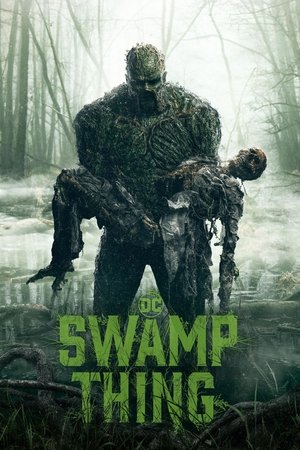
In 2019 Durand joined DC Universe's Swamp Thing as biogeneticist Jason Woodrue, a character whose comic history is deeply connected to the biological horror of the Swamp Thing mythology. The series explicitly embraced horror rather than treating the property primarily as conventional superhero television.
Woodrue arrives in Marais to investigate the extraordinary properties of the Louisiana swamp. His scientific curiosity develops into obsession, placing him on a path toward the monstrous identity associated with the Floronic Man. Durand was particularly suited to a character who begins as an intellectually arrogant human and moves toward physical transformation.
The series adapts ideas associated with Alan Moore's landmark Swamp Thing stories, including Woodrue's anatomical investigation of the creature. The discovery that Swamp Thing is not simply a transformed Alec Holland but plant matter carrying Holland's memories changes the entire meaning of the character.
For Durand, Swamp Thing added Southern Gothic and ecological body horror to an already broad genre filmography. Jason Woodrue is not initially a supernatural being. His danger comes from the belief that scientific discovery justifies increasingly destructive choices.
Locke & Key and Frederick Gideon
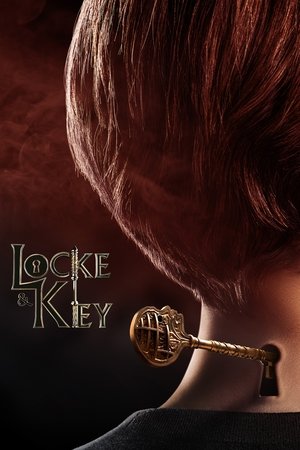
Durand returned to supernatural television in Netflix's Locke & Key as Captain Frederick Gideon. Introduced through the history of Keyhouse, Gideon is a Revolutionary War soldier whose contact with the supernatural establishes him as a violent figure long before he re-enters the modern story.
After being brought back through the Echo Key, Gideon becomes the principal antagonist of the third season. His resurrection connects colonial violence with the demon mythology surrounding the magical keys, allowing Durand once again to play a physically intimidating character whose threat expands beyond ordinary human limits.
The role has echoes of Gabriel in Legion and Woodrue in Swamp Thing. Durand frequently plays characters who believe strongly in a system of power larger than themselves and become dangerous precisely because they see domination as legitimate. Gideon brings that quality into a Gothic fantasy-horror environment centered on family trauma and inherited supernatural responsibility.
Abigail and the Comic Side of Vampire Horror
Matt Bettinelli-Olpin and Tyler Gillett's Abigail in 2024 returned Durand to vampire horror almost a decade after The Strain, but with a radically different tone. He plays Peter, one member of a criminal group hired to kidnap the young daughter of a wealthy man and guard her overnight inside an isolated mansion.
The criminals quickly discover that Abigail is not a helpless child. She is a vampire, and the house becomes a locked arena in which the kidnappers are gradually transformed into prey. Durand's size again creates an expectation that Peter should be the group member best equipped to fight the threat. The film repeatedly uses that expectation for comedy.
Peter is powerful but not especially subtle, and Durand embraces his limitations without making him a caricature disconnected from the danger. His reactions become funnier because the blood, injuries and vampire attacks remain physically extreme around him.
Durand spoke enthusiastically about the amount of fake blood used during production and about the pleasure of participating in a vampire movie whose rules reveal themselves gradually. The project also began an important new horror collaboration with Bettinelli-Olpin and Gillett.
Clown in a Cornfield and Returning to the Slasher
In 2025 Durand appeared in Eli Craig's Clown in a Cornfield, adapted from Adam Cesare's novel. He plays Arthur Hill, an influential figure in the declining town of Kettle Springs, where conflict between younger residents and an older generation develops alongside a series of killings associated with Frendo, the clown mascot of the town's abandoned corn-syrup factory.
The film returns Durand to slasher territory after Tragedy Girls, but its concerns are different. Frendo becomes a symbol of nostalgia, economic decline and the belief that a community can restore an idealized past by eliminating the people supposedly responsible for cultural change.
Durand described the film as part of a long horror tradition built around killer clowns while emphasizing the specific social conflict beneath its violence. Director Eli Craig approached the project as a genuine slasher rather than another complete deconstruction like Tucker & Dale vs. Evil, preserving suspense and gore while allowing humor to appear around the edges.
The film extended Durand's late-career return to theatrical horror immediately after Abigail, demonstrating that his association with the genre had become more active rather than less.
Ready or Not 2 and the Radio Silence Connection
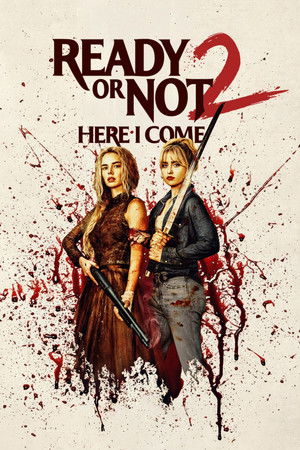
Durand reunited with Matt Bettinelli-Olpin and Tyler Gillett for Ready or Not 2: Here I Come in 2026. The sequel expands the deadly class mythology established by the original Ready or Not, placing Grace and her sister Faith inside a larger contest involving powerful families competing for control.
Durand joined an ensemble filled with performers strongly associated with horror, including Samara Weaving, Kathryn Newton, Sarah Michelle Gellar, Elijah Wood and filmmaker David Cronenberg. The project gave him two consecutive horror collaborations with Bettinelli-Olpin and Gillett after Abigail.
That relationship is especially appropriate for Durand's later genre career. Radio Silence films frequently combine violence, practical blood effects, ensemble comedy and characters whose assumptions about power collapse under extreme circumstances. Durand has repeatedly demonstrated that he can move comfortably between menace and absurdity without sacrificing either.
Ithaqua and Canadian Wilderness Horror
Durand continued his horror work in 2026 with Casey Walker's Canadian film Ithaqua. Set in the nineteenth-century wilderness during the decline of the fur trade, the film follows people trapped by famine, extreme cold and an unseen threat that gradually pushes the story from historical survival drama into folk horror.
The project brings Durand back toward the atmosphere of Dark Was the Night: isolated communities, wilderness, unseen predators and characters whose physical strength offers no guarantee of safety. The Canadian landscape also gives the film a cultural and geographical identity distinct from the urban apocalypse of The Strain or the American slasher worlds of his recent films.
Kevin Durand's Place in Modern Horror
Kevin Durand's horror career is defined less by a single iconic performance than by range and duration. He has been an abusive human monster in The Echo, a divine executioner in Legion, a video-game hero in Resident Evil: Retribution, a grieving sheriff in Dark Was the Night, a vampire exterminator in The Strain, a captured serial killer in Tragedy Girls, an obsessive scientist in Swamp Thing, a resurrected supernatural villain in Locke & Key and part of blood-soaked ensemble horror in Abigail and Ready or Not 2.
The common element is his ability to exploit and then reverse physical expectations. Filmmakers can introduce Durand and allow his size to communicate danger immediately. The more interesting roles then complicate that first impression. Fet is heroic. Paul Shields is emotionally broken. Peter in Abigail becomes comic because physical power cannot solve the supernatural problem confronting him.
His continuing attraction to horror also matters. Durand did not leave the genre behind after becoming established in mainstream film and television. Instead, some of his most substantial later work has returned to vampires, slashers, supernatural television and creature stories. For an actor who grew up watching horror from childhood, the genre became one of the most consistent threads connecting otherwise radically different stages of his career.
Selected Work
Kevin Durand Horror Movies
Acting (13 credits)
2026
2025
2024
2020
2019
2017
2014
2014
2012
2010
2008
1995