



2019
Jodelle Ferland
Horror Actor · Biography · Horror Filmography · Collaborators · Credits
Horror subgenres & themes
Most represented across this person's horror filmography:
HAUNTED HOUSES
• MONSTER
• SLASHER
Biography
Jodelle Ferland and the Children of Horror
Jodelle Ferland developed an unusually substantial horror filmography while still a child, repeatedly playing characters positioned between innocence and supernatural danger. Throughout the 2000s she became a recognizable presence in horror built around haunted children, ghosts, psychic forces and apparently vulnerable young characters whose true nature was not always what it seemed. Her most important genre roles include Mary Jensen in Kingdom Hospital, the multiple incarnations of Alessa in Silent Hill and Lillith Sullivan in Case 39, three very different performances that made particularly effective use of the contrast between childhood appearance and disturbing supernatural power.
Ferland later continued working within horror through films including The Messengers, Seed, The Cabin in the Woods, The Tall Man, The Unspoken and Neverknock, as well as television anthology appearances. Her genre career is notable not because she repeatedly played exactly the same kind of child, but because filmmakers used her presence in opposite ways. She could be the ghost asking for help, the innocent child trapped inside another identity, the apparent victim who turns out to be the source of the threat, or a recognizable horror presence used to immediately establish the supernatural history of a story.
Early Encounters with Horror
Ferland entered horror very early in her career. Roles in supernatural television and dark genre productions placed her repeatedly around stories involving ghosts, death and children exposed to forces that adults either could not perceive or could not understand. This became an especially productive screen identity because Ferland could perform stillness and seriousness without losing the sense that the character was genuinely young.
Horror involving children often depends on contradiction. A child can represent vulnerability, but the same appearance becomes unsettling when associated with death or supernatural knowledge. Ferland's early performances worked effectively on both sides of that structure. Directors could ask audiences to fear for her character or fear the character herself, sometimes within the same story.
Kingdom Hospital and Mary Jensen
One of Ferland's first major horror roles was Mary Jensen in Stephen King's Kingdom Hospital in 2004. The series reworked Lars von Trier's The Kingdom into an American supernatural hospital story involving ghosts, psychic communication and a building constructed over a site marked by historical suffering. Ferland appears throughout the series as Mary, the ghost of a young girl whose death is connected to the hospital's past.
Mary is visually designed around apparent vulnerability. She is a child trapped within a supernatural history created by adults, and much of the mystery depends on understanding what happened to her. Yet her presence also carries the uncanny quality central to ghost stories involving children. She can appear unexpectedly, possesses knowledge unavailable to the living characters and exists between the hospital's present and its buried history.
Ferland's performance does not depend on aggressive supernatural behavior. Mary is most effective when she appears quiet, frightened or watchful. The contrast between her appearance and the increasingly strange mythology surrounding the hospital allows the character to function as both victim and supernatural guide. This was an important step in Ferland's horror career because it demonstrated how effectively she could hold a central place inside a large supernatural narrative without needing to perform conventional monstrosity.
Silent Hill and the Defining Horror Role
Silent Hill in 2006 became the defining horror film of Ferland's early career. Directed by Christophe Gans and adapted from Konami's video game series, the film follows Rose Da Silva into the abandoned town of Silent Hill while she searches for her daughter Sharon. Ferland's role is considerably more complicated than that description initially suggests because she portrays Sharon Da Silva, Alessa Gillespie and the darker manifestation generally identified as Dark Alessa.
The decision to use the same young actress for these identities is fundamental to the film. Sharon initially represents the child Rose is attempting to protect, while Alessa belongs to the traumatic history of Silent Hill and Dark Alessa represents a far more threatening supernatural presence. Ferland therefore has to create distinctions while maintaining enough visual continuity for the relationships between the characters to remain meaningful.
The official production material for the film emphasized the difficulty of the casting. Gans recalled considering how to handle the multiple versions of the character before Ferland demonstrated that a single performer could sustain them. Her previous work in Kingdom Hospital was among the material that brought her to the filmmakers' attention. The casting became one of the film's strongest decisions because the same face can signify innocence, suffering and vengeance depending on costume, makeup, movement and performance.
Sharon, Alessa and Dark Alessa
Ferland's multiple performance in Silent Hill uses the horror tradition of the double in an unusually concentrated form. Sharon is the child at the center of Rose's maternal search, while Alessa is associated with persecution, religious fanaticism and the history that produced the nightmare version of Silent Hill. Dark Alessa introduces another layer, presenting childhood not as helplessness but as controlled supernatural power.
The effectiveness of these roles depends partly on restraint. Ferland does not attempt to differentiate the characters only through exaggerated vocal or facial changes. Much of the distinction is created through stillness, gaze and the different environments in which each version appears. The film's elaborate visual design does the rest, surrounding Ferland with ash, darkness, industrial decay and grotesque creatures while keeping the human tragedy of Alessa at the center of the mythology.
This made Silent Hill particularly important within Ferland's horror career. She was not simply the endangered child required by the plot. Her characters provide the connection between the ordinary world, Silent Hill's history and the supernatural forces controlling the town. The film effectively places several opposing meanings of childhood inside the same performer.
Masters of Horror and The V Word
The same year, Ferland appeared in The V Word, Ernest Dickerson's episode of the anthology series Masters of Horror. Written by Mick Garris, the story concerns two teenagers who enter a mortuary and encounter a vampire. Ferland plays Lisa, the younger sister of one of the central characters.
The role is smaller than her work in Silent Hill or Kingdom Hospital, but it is significant within the pattern of her early career. Before reaching adolescence, Ferland had already appeared in horror associated with Stephen King, Christophe Gans and the Masters of Horror anthology, placing her repeatedly inside projects designed specifically for established genre audiences.
The Messengers and the Ghost Child Image
The Messengers in 2007 continued Ferland's association with supernatural horror. Directed by Danny and Oxide Pang and produced through Ghost House Pictures, the film follows a family who move to an isolated farm where violent supernatural events begin to reveal the history of the previous occupants.
Ferland appears as one of the children connected to that earlier tragedy. The role is relatively limited, but her casting demonstrates how recognizable she had already become within supernatural horror. A child connected with the dead had become an image audiences could associate immediately with the kinds of stories in which Ferland had repeatedly appeared.
This was not simply repetition of Silent Hill. In The Messengers, the ghostly children belong to a hidden crime that must be uncovered, placing Ferland within a more traditional haunted-house structure. Her presence contributes to the gradual revelation that the apparent haunting is inseparable from violence committed by adults.
Seed and Extreme Horror
Also released in 2007, Uwe Boll's Seed placed Ferland within a much harsher form of horror. The film concerns serial killer Max Seed and adopts an intentionally brutal approach to violence. Ferland plays Emily Bishop, the daughter of the detective pursuing him.
Her role functions very differently from the supernatural children that had defined several earlier performances. Emily is human and vulnerable within a story where violence is explicitly physical rather than primarily spectral. The film therefore uses Ferland's established screen association with endangered children in an unusually grim context.
Seed is not among the defining films of Ferland's career, but it illustrates the range of horror productions in which she was working during this period. Within a remarkably short span she moved between supernatural television, video-game adaptation, ghost story and extreme serial-killer horror.
Case 39 and the Reversal of the Innocent Child
Case 39 provided Ferland with her other major horror role of the 2000s. She plays Lillith Sullivan, a young girl encountered by social worker Emily Jenkins, played by Renée Zellweger. Initially, Lillith appears to be the victim of terrifying parental abuse. Emily intervenes to protect her and eventually brings the child into her own home.
The film then reverses the assumptions on which that rescue is based. Lillith is not simply a vulnerable child caught in a dangerous family. The increasingly supernatural events surrounding her reveal that the apparent victim is herself the source of the threat. Ferland therefore performs one of horror's familiar child archetypes while exploiting the audience's expectation that an adult has a responsibility to protect her.
The role requires a very different strategy from Mary Jensen or Sharon. Lillith must initially appear credible as a frightened child because the entire structure depends on Emily making an understandable decision to save her. Ferland gradually changes the performance as the balance of power becomes clearer. Innocence becomes a mask rather than an essential quality of the character.
This reversal is what makes the role important within Ferland's horror filmography. Earlier stories had frequently placed her at the intersection of childhood and supernatural danger, but Case 39 makes that ambiguity the central mechanism of the narrative. The character's apparent helplessness becomes the means by which she gains access to her victim.
The Cabin in the Woods and Patience Buckner
Ferland appears briefly but memorably in The Cabin in the Woods as Patience Buckner, part of the undead Buckner family. Her screen time is limited, so the role should not be exaggerated within her career, but the film itself became an important piece of self-aware modern horror.
The Buckners represent one of the many familiar horror scenarios deliberately contained within the film's larger system. Ferland's presence therefore operates differently from her starring roles. Rather than carrying the emotional structure of the story, she becomes part of a recognizable horror archetype that the film exposes, categorizes and manipulates.
For an actress who had spent much of her childhood playing variations on uncanny, threatened or supernatural children, appearing as a member of the undead family in a film explicitly constructed from horror conventions has an appropriate place within her genre history.
The Tall Man and a Horror Story Built on Misdirection
Pascal Laugier's The Tall Man in 2012 gave Ferland another substantial role in a film designed to manipulate the audience's assumptions about the type of horror story being told. The inhabitants of the impoverished community of Cold Rock believe that a mysterious figure known as the Tall Man is responsible for the disappearance of local children. Ferland plays Jenny, one of the young people drawn into the mystery.
The film initially uses the language of supernatural horror, particularly the idea of an almost folkloric figure who removes children from their homes. As the story progresses, those assumptions are repeatedly challenged and the narrative changes direction. Ferland herself described being attracted to the screenplay because it did not develop in the way she expected from the many horror and thriller projects she had already encountered.
Her presence adds another layer to that manipulation. By this point audiences familiar with Ferland could reasonably associate her with supernatural children and dark secrets. The Tall Man can therefore benefit from genre expectations created not only by its premise but by the performer herself.
ParaNorman and Horror for Younger Audiences
Ferland also contributed her voice to the stop-motion horror comedy ParaNorman, playing Agatha Prenderghast, the young girl whose persecution lies behind the supernatural curse affecting the town. Although designed for a younger audience than Ferland's live-action horror films, the role continues several themes that had followed her through the genre.
Agatha is again a child transformed into something frightening by adult cruelty. The story initially encourages fear of the supernatural figure before revealing the suffering that produced her anger. This structure has obvious parallels with other horror stories in which Ferland appeared, particularly the relationship between victimization and supernatural vengeance.
The Unspoken and a Return to Haunted-House Horror
Ferland returned to a leading horror role in Sheldon Wilson's The Unspoken. She plays Angela, who becomes involved with a house connected to the unexplained disappearance of a family years earlier. The film returns her to familiar supernatural territory involving a threatening home, hidden history and the gradual discovery that the obvious explanation does not account for everything occurring inside the building.
By this stage Ferland was no longer being cast as the uncanny child who had defined much of her early horror career. Her position within the narrative had shifted toward the young adult investigating or experiencing the haunting. That transition is important because it allowed her genre identity to continue without requiring filmmakers to reproduce the same child-horror image indefinitely.
Neverknock and the Sheldon Wilson Collaboration
Ferland worked again with Sheldon Wilson on the television horror film Neverknock in 2017. The story is built around an urban legend involving a creature released when young people ignore warnings associated with an abandoned location. Ferland plays Leah among the group drawn into the consequences.
The film belongs to a much more direct form of supernatural horror than The Unspoken, using a monster that exploits the fears of its victims. The two films nevertheless make Wilson the clearest recurring horror director in Ferland's later career. They also demonstrate her continued connection to the genre after the child roles that had originally made her recognizable to horror audiences.
From Haunted Child to Horror Regular
Ferland's horror career is unusual because it developed alongside her own movement from childhood into adulthood. Early productions could use her appearance to create the uncanny contrast between innocence and death. Mary Jensen in Kingdom Hospital is a murdered child who carries supernatural knowledge. Silent Hill multiplies Ferland into innocent, victim and avenging supernatural presence. Case 39 deliberately weaponizes the expectation that a frightened child must be protected.
As Ferland became older, that specific casting mechanism could no longer function in the same way. Her horror work consequently changed. The Tall Man, The Unspoken and Neverknock place her within mysteries and supernatural situations without relying exclusively on the disturbing-child archetype.
This continuity gives her filmography more significance than a single famous childhood role would suggest. Ferland did not merely appear once in a successful horror film and move away from the genre. Horror remained a recurring part of her screen work across different stages of her career.
Jodelle Ferland's Horror Legacy
Jodelle Ferland's place in horror is defined above all by the unusual concentration of genre roles she accumulated at a young age. Kingdom Hospital established her as a central ghostly presence within Stephen King's supernatural television world. Silent Hill gave her the most complex horror performance of her childhood by requiring her to embody Sharon, Alessa and Dark Alessa. Case 39 reversed the endangered-child formula by revealing that the child apparently in need of rescue was the danger itself.
Around those central performances, The Messengers, Seed, Masters of Horror, The Cabin in the Woods, The Tall Man, ParaNorman, The Unspoken and Neverknock created a broader career unusually rich in supernatural and macabre material. The films differ enormously in tone and ambition, but together they made Ferland one of the more recognizable young horror performers of her generation.
Her strongest genre performances exploit a fundamental horror contradiction: the same child can appear to require protection and simultaneously possess knowledge or power that the adults around her cannot comprehend. Ferland proved particularly effective inside that uncertainty. Whether portraying a ghost, several manifestations of the same supernatural identity or a child whose apparent vulnerability conceals something dangerous, she repeatedly gave horror filmmakers a way to make innocence itself unstable.
Photos (10)
Images: TMDB
Selected Work
Notable Horror Collaborators
Notable collaborators and creative partners throughout Jodelle Ferland's horror career.
SW
Sheldon Wilson
Director / Actor
Wilson directed Ferland in The Unspoken and Neverknock, making him her clearest recurring horror director during the later part of her genre career.
 William B. Davis
Horror Co-Star
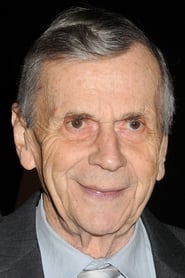
Ferland and Davis appeared together in The Messengers and The Tall Man, two horror productions from different stages of Ferland's career.
William B. Davis
Horror Co-Star
Ferland and Davis appeared together in The Messengers and The Tall Man, two horror productions from different stages of Ferland's career.
Jodelle Ferland Horror Movies
Acting (19 credits)
2019
2017
2015
2012
2012
2010
2009
2007
2007
2007
2006
2006
2006
2005
2005
2004
2004
2002
2002