


2012
Jessica Biel
Horror Actor · Biography · Horror Filmography · Family · Credits
Horror subgenres & themes
Biography
Jessica Biel and the Physical Demands of Modern Horror
Jessica Biel occupies a compact but significant place in twenty-first-century horror through three very different genre roles. In The Texas Chainsaw Massacre, she became the central survivor of one of the most commercially successful horror remakes of the early 2000s. In Blade: Trinity, she moved from victim to vampire hunter as Abigail Whistler. Nearly a decade later, The Tall Man gave her a psychologically ambiguous lead role in a film that deliberately begins with the language of supernatural horror before destabilizing the audience's assumptions about what kind of story it is watching.
These films do not constitute the majority of Biel's career, but they reveal a recurring willingness to treat genre acting as physically and emotionally demanding work. Biel has spoken particularly strongly about horror being underestimated as an acting discipline. While promoting Blade: Trinity, she recalled The Texas Chainsaw Massacre as one of the most difficult creative challenges she had faced and argued against the assumption that a horror film automatically requires less serious performance work. Her genre characters reflect that attitude. Erin spends much of Texas Chainsaw in sustained terror and exhaustion, Abigail is defined by physical preparation and controlled aggression, and Julia Denning in The Tall Man depends on withholding information from the audience while remaining emotionally believable.
The Texas Chainsaw Massacre and the Reinvention of Leatherface
Biel's most important horror role came with Marcus Nispel's The Texas Chainsaw Massacre in 2003. The film remade Tobe Hooper's 1974 landmark for a new generation while deliberately avoiding a shot-for-shot recreation. Produced by Michael Bay and Mike Fleiss, it became the first feature released by Platinum Dunes, the company that would subsequently become heavily associated with remakes of American horror properties.
Biel plays Erin, who travels through rural Texas with a group of friends before an encounter with a traumatized hitchhiker begins drawing them into the territory controlled by Leatherface and his family. The broad structure evokes Hooper's original, but the remake gives Erin considerably more conventional heroic agency than the earlier film gives its surviving character. She investigates disappearances, attempts rescues, physically confronts danger and ultimately becomes increasingly active in determining her own survival.
Accepting the film was not an obvious decision for Biel. She had become widely known through family television and initially felt intimidated by the idea of participating in a remake of a film with such an established reputation. She later explained that the screenplay and her meetings with Nispel convinced her that the project could function as its own work rather than simply reproduce the original.
Biel also prepared by engaging directly with the history surrounding the property. She watched the original film and investigated the real crimes of Ed Gein, whose case contributed elements to the broader mythology from which Leatherface emerged. During filming, she deliberately avoided seeing Andrew Bryniarski fully transformed into Leatherface until their characters encountered one another on camera. The decision was intended to preserve some genuine shock in her first reaction to the figure pursuing Erin.
Erin and the Physical Reality of Survival Horror
The performance became an exercise in sustained physical distress. Biel spends large sections of the film running, hiding, climbing, screaming and struggling through the heat and humidity of the Texas production. Her costume and appearance progressively deteriorate as Erin moves deeper into the nightmare. Dirt, sweat, blood and injuries accumulate rather than disappearing between sequences, allowing the character's body to register how long the ordeal has continued.
Biel has recalled arriving on set knowing that she would repeatedly have to generate extreme fear for the camera. The challenge was not simply producing a scream for an isolated shot. Erin remains under threat for long passages, requiring Biel to find variations in panic, shock and exhaustion so that the performance does not become emotionally flat.
The environment contributed significantly. Nispel and cinematographer Daniel Pearl, who had also photographed Hooper's original film, created a humid and decaying rural world filled with dirty interiors, abandoned industrial spaces and oppressive darkness. The remake is more polished than the documentary-like 1974 film, but its imagery emphasizes physical discomfort. Erin does not move through an abstract haunted environment. She is repeatedly forced into contact with mud, blood, human remains and enclosed spaces.
One sequence required Biel to hide in an area filled with rats. Contrary to what might be expected from the film's escalating horror, she later joked that the animals were among the least difficult elements of the production and that she found herself helping return wandering rats to their handlers. The contrast illustrates how horror filmmaking often reverses what appears frightening on screen. Technically simple scenes can require enormous emotional effort, while apparently disturbing practical elements may become routine once the actor understands how they are created.
A Final Girl for the Remake Era
Erin became one of the more recognizable final girls of the early-2000s remake cycle. The character is not merely preserved until the final minutes. She repeatedly attempts to intervene when other people are endangered, and the story gradually shifts from escape toward active resistance.
This distinction becomes especially important in the final confrontation with Leatherface. Erin has spent most of the film being physically overpowered by the environment and the people controlling it, but survival eventually requires her to act rather than simply continue running. Biel's athletic performance gives those sequences a direct physical quality that became useful almost immediately in the next major genre project of her career.
The film's commercial impact was substantial. Released in October 2003, The Texas Chainsaw Massacre opened at number one in the United States and earned many times its production budget. Its success helped establish Platinum Dunes and contributed to the studio appetite for modernized versions of established horror properties that would continue throughout the decade.
The remake also remained more culturally durable than much of the contemporary critical response suggested. Later horror filmmakers have cited it as an entry point into the genre, demonstrating that for younger viewers the image of Biel's Erin confronting Leatherface became part of their first experience with the Texas Chainsaw mythology rather than merely an imitation of an older classic.
Blade: Trinity and Becoming the Hunter
Biel moved from hunted survivor to professional monster hunter with David S. Goyer's Blade: Trinity in 2004. She plays Abigail Whistler, daughter of Abraham Whistler and member of the Nightstalkers, a group of human vampire hunters who join Blade when his conflict with the vampire world expands into a battle involving Dracula himself.
The role demanded a radically different type of preparation. Erin survives partly through desperation and improvisation. Abigail enters the film already trained to kill vampires. Biel underwent extensive physical preparation involving martial arts, boxing and archery so that the character's combat ability could appear integrated into her movement rather than added only through editing.
Biel particularly embraced the archery work. Abigail uses a compound bow as one of her principal weapons, creating a fighting style visually different from Blade's sword-based combat. The actress trained extensively so that drawing, aiming and moving with the weapon could become part of the character rather than a prop she handled only for close shots.
Abigail's aggression is also connected to the film's vampire mythology. She has grown up surrounded by the consequences of her father's war against vampires and approaches the conflict with a personal investment different from the more detached attitude of Ryan Reynolds' Hannibal King. Biel described the character as emotionally closed and driven partly by the amount of death that the vampire war has placed around her family.
From Blood-Soaked Victim to Vampire Slayer
The proximity between The Texas Chainsaw Massacre and Blade: Trinity makes the contrast between the roles particularly useful in understanding Biel's early genre work. In the first film, almost every physical action is defensive. Erin runs because Leatherface is behind her, hides because she cannot defeat him directly and attacks only when survival demands it. Abigail begins from the opposite position. She deliberately enters environments occupied by vampires because destroying them is her job.
Biel was comfortable with the blood and physical effects required by both productions. During interviews for Blade: Trinity, she joked that after the amount of fake blood used during Texas Chainsaw, gore was no longer particularly intimidating. The greater challenge was making Abigail feel like a character rather than a collection of action poses.
This concern reflects Biel's broader attitude toward genre. She resisted the idea that an action or horror role should become an excuse for a one-dimensional performance. Abigail's combat skills matter because of the personal history behind them, just as Erin's physical endurance in Texas Chainsaw matters because the audience has watched the character become progressively more desperate.
The Tall Man and Horror Built on Misdirection
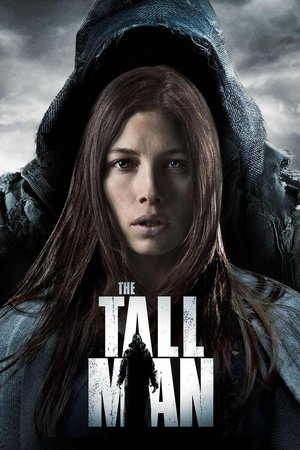
Biel returned to darker material in 2012 with Pascal Laugier's The Tall Man. The project was particularly intriguing because Laugier had previously directed Martyrs, one of the most extreme and divisive films associated with twenty-first-century French horror. Biel had seen Martyrs before accepting the role and later said that she found it brutal and difficult to watch but also elegant enough that she strongly wanted to work with Laugier.
The Tall Man initially presents itself through familiar supernatural-horror imagery. Children are disappearing from an isolated former mining community, and local residents attribute the disappearances to a mysterious figure known as the Tall Man. Biel plays Julia Denning, a medical professional living in the town whose apparent relationship to the mystery changes repeatedly as the film reveals new information.
The role required Biel to perform on two levels. Julia has information the audience does not possess, meaning her reactions must remain emotionally credible without revealing too early how much she knows. Biel and Laugier developed an extensive psychological history for the character to determine what she should genuinely feel in each scene and what the audience should be allowed to understand.
Biel described this process as one of the film's principal challenges. Laugier repeatedly pushed her to locate emotional reactions appropriate to Julia's actual situation rather than simply performing the apparent thriller occurring on the surface. The result allows the movie to change meaning without requiring Julia suddenly to become a completely different person.
Producing The Tall Man
Biel also served as an executive producer on The Tall Man, giving her a creative connection to the project beyond the leading performance. The film's deliberately difficult structure was part of what attracted her. She responded strongly to the screenplay because each major revelation forced her to reinterpret what she thought the film was doing.
She understood that the same ambiguity would create problems when the film was released. Biel openly acknowledged that The Tall Man was difficult to market because audiences expecting a conventional supernatural horror film could discover something much less comfortable and more morally ambiguous. Rather than regarding that difficulty as something that needed to be corrected, she defended the decision to leave viewers uncertain about how they should respond.
The film therefore represents the most psychologically complicated of Biel's horror roles. Texas Chainsaw generates horror through physical pursuit. Blade: Trinity turns supernatural monsters into combat opponents. The Tall Man places the instability inside the narrative itself, forcing the audience to reconsider victimhood, protection and the apparent monster promised by the title.
Jessica Biel's Place in Twenty-First-Century Horror
Jessica Biel does not have a large enough horror filmography to be considered a dedicated genre performer, but her three central horror roles occupy distinct positions within the development of mainstream genre cinema during the 2000s and early 2010s. The Texas Chainsaw Massacre belongs to the commercially important remake wave that reintroduced major 1970s and 1980s properties to younger theatrical audiences. Blade: Trinity represents the period when vampire horror increasingly overlapped with comic-book action. The Tall Man reflects a more ambiguous form of horror-thriller influenced by international genre filmmaking.
Her greatest contribution remains Erin in The Texas Chainsaw Massacre. The film placed Biel inside one of horror's foundational franchises at the moment she was moving decisively away from her television image, and the physical intensity of the performance helped establish that transition. The remake's financial success then contributed to an entire cycle of studio horror remakes, giving the role significance beyond the individual film.
Biel's comments about the production also provide a useful reminder of how demanding horror performance can be. The finished movie may reduce a sequence to several minutes of running, screaming or hiding, but the performer may spend days repeatedly generating panic and exhaustion under uncomfortable physical conditions. Biel regarded that experience not as lesser acting because it occurred inside a horror film, but as one of the strongest challenges she had been given. That attitude is central to why her relatively small horror filmography remains worth documenting in detail.
Selected Work
Jessica Biel Horror Movies
Acting (4 credits)
2004
2004
2003
Production (1 credits)
2012