



2021
Sion Sono
Horror Director · Biography · Horror Filmography · Family · Collaborators · Credits
Horror subgenres & themes
Most represented across this person's horror filmography:
TRUE CRIME
• BODY HORROR
• SPLATTER
Biography
Sion Sono and horror cinema
Sion Sono is a Japanese filmmaker, screenwriter, poet and performer whose career has moved repeatedly between independent cinema, crime, drama, black comedy, fantasy and horror. Born in Toyokawa, Aichi Prefecture, on December 18, 1961, he emerged from the Japanese independent-film scene of the 1980s before becoming internationally known through works that combined social alienation, extreme violence and unstable forms of identity. Horror became especially important after Suicide Club, the film that brought him to a wider genre audience and that Sono himself later described as a decisive step into commercial filmmaking.
Sono has never worked as a conventional horror specialist. His horror films differ sharply in subject and form, ranging from the networked suicides of Suicide Club and the fractured family structures of Noriko's Dinner Table to the grotesque supernatural premise of Exte: Hair Extensions, the serial-killer violence of Cold Fish, the unstable realities of Tag and the vampire mythology of Tokyo Vampire Hotel. Across these changes, recurring concerns include coercive groups, damaged families, sexual power, manipulated identities and the capacity of ordinary social environments to become threatening. His importance to horror therefore comes from a sustained body of genre work embedded inside a much broader career rather than from adherence to a single horror tradition.
Poetry, performance and the Pia Film Festival
Sono began as a poet and became involved with filmmaking while attending Hosei University. His earliest moving-image work retained a strong connection with poetry and performance. I Am Sion Sono!, made in the mid-1980s, places Sono himself before the camera, mixing autobiographical material with recitation and self-conscious performance. This period established an approach in which filmmaking could absorb writing, acting and direct personal expression instead of functioning only as conventional dramatic storytelling.
The Pia Film Festival provided the most important institutional route from those experiments toward professional production. Sono won the PFF Grand Prix with A Man's Flower Road and received support that enabled him to make Bicycle Sighs on 16 mm. He later recalled that even after this success he did not immediately think of film directing as a fixed profession. His early career moved between different artistic forms, and his independent features retained a comparatively loose relationship with commercial genre expectations. That background matters to his later horror because the theatrical speech, abrupt changes of tone and fascination with people performing versions of themselves were already present before explicit horror became central to his reputation.
From independent cinema to B-movie horror
During the early 1990s Sono spent an extended period in the San Francisco Bay Area. In interviews he has described watching large numbers of B-movies, exploitation films and horror films during this stay after having previously concentrated on more established film history in Japan. He cited Herschell Gordon Lewis's Two Thousand Maniacs! among the films associated with this rediscovery of low-budget genre cinema. Sono later connected the experience directly with his desire to return to Japan and make more confrontational popular films.
The encounter did not immediately turn him into a full-time horror director. Through the 1990s he continued making independent work, including The Room, which already explored a threatening urban environment and a concealed criminal identity. The larger change was conceptual. Exploitation cinema offered a way to combine material considered excessive or disreputable with the formal freedom he had developed through poetry and small-scale filmmaking. By the time Sono reached Suicide Club, horror could function simultaneously as popular genre, social provocation and a continuation of his earlier interest in collective behavior and alienation.
Suicide Club and Sono's breakthrough in horror
Suicide Club, released in Japan in 2002 after a 2001 festival premiere, became the crucial horror film of Sono's career. Its opening sequence, in which dozens of schoolgirls jump together in front of a train, immediately establishes the combination of graphic violence and social unease that made the film internationally distinctive. The subsequent investigation links apparently disconnected deaths with popular culture, communication networks and questions about whether individual acts can become contagious forms of collective behavior. Sono uses elements of police investigation and conspiracy while deliberately withholding a single explanation capable of resolving every event.
The film arrived during the international expansion of Japanese horror but differed markedly from the ghost-centered cycle most closely associated abroad with works such as Ring and Ju-On. Suicide Club emphasized contemporary youth culture, mass behavior and grotesque physical violence, and it mixed disturbing material with blackly comic or performative passages. Sono later described the project as the point at which he finally began to regard directing as his profession and entered commercial cinema after many years of independent experimentation. Its international circulation was equally significant. Fantasia awarded it the jury prize for Most Ground-Breaking Film in 2003, and the film developed a durable cult reputation that introduced many viewers outside Japan to Sono's work.
Noriko's Dinner Table and the horror of social identity
Noriko's Dinner Table returned to the world connected with Suicide Club while shifting the emphasis from mass death toward family, isolation and constructed identity. The film follows young people who leave established domestic roles and become involved with a service in which participants perform substitute family relationships for clients. Its connection with Suicide Club expands the earlier film's concern with social disconnection rather than simply repeating its violence or mystery structure.
This development made one of Sono's most persistent horror themes more explicit. Family identity in his work can be rehearsed, imposed or abandoned, and the roles that appear most socially natural may prove unstable. The internet also remains important as a place where isolated characters encounter alternative communities and identities outside the control of their immediate families. The result is psychological horror grounded in the possibility that belonging itself can become artificial. Nippon Connection later described the film in terms of damaged family structures and adolescents struggling with identity, an emphasis that helps explain why Noriko's Dinner Table remains central to Sono's horror even though it contains less sustained graphic spectacle than several of his later films.
Strange Circus, trauma and unreliable reality
Strange Circus concentrated Sono's interest in family dysfunction, sexual abuse, bodily violence and performed identity into one of his most overtly disturbing works of the mid-2000s. The film is structured around narratives whose relationship to reality changes as new information is introduced. Characters appear under different names and identities, while authorship and memory become part of the mystery. This creates a form of horror in which certainty about who is speaking, remembering or inventing events becomes progressively difficult to maintain.
The film also brought Sono's theatrical tendencies into close contact with grotesque and erotic imagery. Interiors, costumes and performances frequently emphasize artificiality, which becomes part of the story's concern with trauma and reconstruction rather than merely decorative excess. Strange Circus strengthened Sono's reputation within international cult and fantastic cinema and received the Berliner Zeitung Reader Jury award at the Berlin International Film Festival in 2006. It also continued his collaboration with special-effects artist Yoshihiro Nishimura and editor Junichi Ito, two technicians who contributed repeatedly to the physical and rhythmic character of Sono's horror during this period.
Exte: Hair Extensions and J-horror conventions
Exte: Hair Extensions brought Sono into direct contact with one of the most recognizable motifs of modern Japanese supernatural horror: long black hair. The premise concerns human hair taken from a corpse and sold as extensions, with lethal consequences for the people who receive it. Sono retained the basic structure of a supernatural curse while making the material more physically grotesque and tonally unstable than the restrained atmosphere associated with many internationally successful J-horror films.
The film is useful for understanding Sono's relationship with established genre conventions. He was willing to work with recognizable supernatural material, yet he treated the convention as something that could be exaggerated through bodily imagery, black comedy and deliberately excessive behavior. Yoshihiro Nishimura again contributed effects work, while Junichi Ito handled the editing. Through Exte, Sono demonstrated that his horror could engage directly with a familiar commercial cycle without abandoning the disruptive tone developed in Suicide Club and Strange Circus.
Cold Fish and the move toward human predators
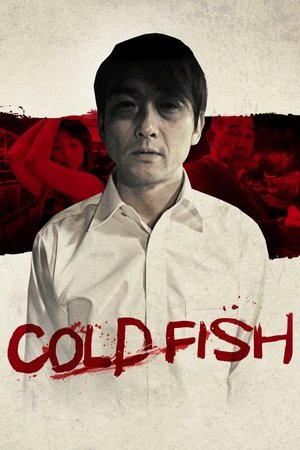
Cold Fish marked another major phase in Sono's horror. Inspired by an actual Japanese murder case involving pet-shop owners, the film follows the passive aquarium-shop owner Nobuyuki Shamoto after he is drawn into the orbit of the charismatic and violent Yukio Murata. Sono and co-screenwriter Yoshiki Takahashi used the factual case as the basis for a fictional story about domination, humiliation and complicity. The central source of terror is a human relationship in which one personality steadily overwhelms another.
The production was associated with Nikkatsu's Sushi Typhoon label and premiered in the Orizzonti section of the Venice Film Festival in 2010 before circulating widely through international genre festivals. Despite the label's association with extreme Japanese gore, Sono emphasized a more psychologically grounded approach. The film's dismemberment and bloodshed are substantial, yet the narrative devotes equal attention to Shamoto's deteriorating family life and his increasing inability to resist Murata's control. Denden's performance as Murata became one of the most memorable acting collaborations in Sono's horror career, while Megumi Kagurazaka played Shamoto's wife Taeko.
Cold Fish also illustrates the importance of Sono's recurring crew. Junichi Ito edited the film, Takashi Matsuzuka designed the production and Yoshihiro Nishimura's effects company contributed to its physical violence. Their work supports the movement from banal commercial and domestic spaces into increasingly extreme criminal environments. The horror arises through escalation: characters who begin inside recognizable everyday relationships are gradually made participants in acts that destroy the moral boundaries those relationships appeared to provide.
Guilty of Romance and the border between crime and horror
Guilty of Romance continued Sono's interest in criminal violence and sexual identity, drawing partly on a notorious murder case while developing a highly fictionalized narrative. The film moves among police investigation, erotic drama and psychological degradation as its characters adopt identities that differ sharply from their regulated public lives. It screened in the Directors' Fortnight at Cannes in 2011 and later won the Best Motion Picture award in the Official Fantastic competition at Sitges, demonstrating how Sono's work could circulate simultaneously through major international cinema institutions and genre festivals.
The film sits near the boundary of horror rather than fitting a single genre definition, which is important when assessing Sono's career accurately. Its murder imagery, bodily degradation and descent into violent obsession connect it to his horror work, while much of its structure belongs equally to erotic drama and crime cinema. For Sono, these categories frequently overlap around the same subjects: hidden selves, socially imposed roles and the destructive consequences of relationships governed by control. Megumi Kagurazaka's central performance, together with Junichi Ito's editing and Sohei Tanigawa's cinematography, also continued collaborations that crossed several phases of Sono's filmmaking.
Tag and the destruction of stable reality
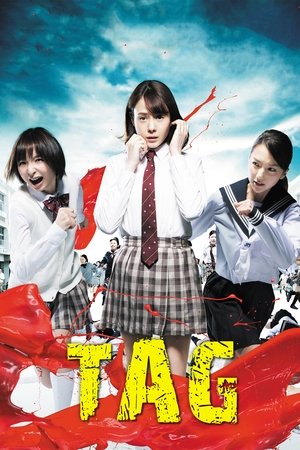
After moving through numerous genres during the first half of the 2010s, Sono returned to overt horror with Tag in 2015. The film begins with an abrupt massacre and repeatedly shifts the protagonist into environments in which her identity, companions and apparent reality change without warning. Instead of establishing a single supernatural system and explaining its rules, the narrative continually replaces the framework that seemed to govern the previous section.
This structure allowed Sono to revisit the unstable identity already central to Noriko's Dinner Table and Strange Circus through a faster and more openly surreal form of horror. School routines, weddings and other familiar social settings become temporary stages whose rules can collapse instantly. The film also demonstrates the persistence of Sono's practical-effects tradition: Yoshihiro Nishimura again worked on the production, while recurring collaborators helped connect the exaggerated violence to a filmmaking language that had developed over more than a decade of genre work. Tag received the Audience Award for Best Asian Feature at the 2015 Fantasia International Film Festival, reinforcing Sono's continuing relationship with international fantastic-film audiences.
Tokyo Vampire Hotel and serialized horror
Tokyo Vampire Hotel expanded Sono's horror into long-form streaming television. Released through Amazon Prime Video in 2017, the series was written and directed by Sono and built around rival vampire groups, apocalyptic danger and a hotel used to confine human survivors as a continuing source of blood. Amazon presented it as Sono's first completely original scripted drama series, while Nikkatsu later handled a feature-length festival version. The project gave him substantially more running time than a standard theatrical horror feature and allowed the mythology to develop through competing factions and extended set pieces.
Vampire mythology also provided a direct supernatural framework for concerns already familiar in Sono's work. The story is organized around hierarchy, captivity, inherited identity and groups seeking control over individual bodies. Its scale is larger than the domestic settings of Cold Fish, but the basic interest in systems that determine how people must live remains recognizable. The series also reunited Sono with Megumi Kagurazaka and continued his collaboration with editor Junichi Ito. Its combination of extensive gore, contemporary settings and serialized narrative showed that Sono's horror could move into streaming production without becoming detached from the physical excess associated with his earlier genre films.
The Forest of Love and late-period criminal horror
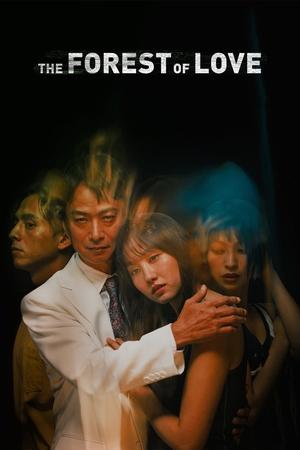
The Forest of Love, released by Netflix in 2019 and later expanded into the episodic version The Forest of Love: Deep Cut, returned Sono to criminal horror inspired by real events. The film draws from the case associated with convicted murderer Futoshi Matsunaga but uses fictional characters and situations rather than attempting a direct reconstruction. Its central figure, Jo Murata, gains control over a group through charm, deception, intimidation and escalating violence. A group of aspiring filmmakers becomes entangled in the process, bringing the act of making images back into the narrative.
The film revisits territory established by Cold Fish while emphasizing manipulation across a larger group. Violence is preceded by the destruction of shared judgment: characters increasingly accept Murata's definitions of relationships and events until their ability to resist him has been severely weakened. Denden returned in the cast, creating a significant link with Cold Fish, while Sohei Tanigawa photographed the film. Netflix itself positioned the work in relation to Cold Fish and Guilty of Romance, underscoring the continuity between Sono's later streaming production and the violent crime cycle that had become one of the best-known parts of his international career.
Collaborators and the construction of Sono's horror
Sono's reputation for rapid production and abrupt changes of genre can obscure the continuity created by recurring collaborators. Effects artist Yoshihiro Nishimura worked with him across a substantial group of horror titles, including Suicide Club, Noriko's Dinner Table, Strange Circus, Exte: Hair Extensions and Cold Fish, and later contributed to Tag. His makeup and practical-effects work helped Sono move between relatively ordinary settings and sudden graphic bodily destruction without requiring every film to adopt the same visual style.
Editor Junichi Ito provided another important form of continuity, working across Noriko's Dinner Table, Strange Circus, Exte, Cold Fish, Guilty of Romance and Tokyo Vampire Hotel, as well as several films outside horror. Production designer Takashi Matsuzuka and cinematographer Sohei Tanigawa likewise worked across important parts of Sono's broader career and several of his darker genre productions. These relationships matter because Sono's horror depends heavily on changes of rhythm and environment. A domestic drama can become a murder narrative, or a recognizable social space can be reorganized into an artificial stage, often within the same film.
Heart attack and Prisoners of the Ghostland
In February 2019 Sono suffered a heart attack and underwent emergency treatment while preparing Prisoners of the Ghostland. The medical emergency altered the production plans for what would become his first English-language feature. Sono later explained that the project had originally been planned around a location outside Japan, but his health made international travel impractical and the production was relocated to Japan. The change encouraged a hybrid setting that combined Western imagery with Japanese cultural and cinematic references.
Released in 2021 with Nicolas Cage in the leading role, Prisoners of the Ghostland blends post-apocalyptic fantasy, action, horror imagery, western conventions and samurai motifs. It is less central to Sono's horror reputation than Suicide Club or Cold Fish, but it represents the continuation of his long-standing interest in combining incompatible genre systems. It also marked a return to feature directing after a serious interruption in his health and realized an English-language project that Sono had discussed as an ambition years earlier.
Sexual misconduct allegations and legal response
In 2022 Japanese media published allegations from women who accused Sono of sexual misconduct and of using his professional position in connection with sexual advances. Sono issued a public statement in which he apologized for conduct he characterized as lacking consideration and respect while disputing important parts of the reports, and he subsequently pursued defamation litigation. The allegations became a major part of public discussion surrounding his career and affected the context in which his work and professional relationships were discussed.
Sono later reached a settlement in his defamation action against the publisher of Shukan Josei. The settlement did not produce a judicial determination of the underlying allegations. In May 2025 he appeared at the Foreign Correspondents' Club of Japan to present his position publicly and discuss his legal response to accusations he continued to contest. Because the dispute became a significant event in his professional biography, it forms part of a contemporary account of his career, while the allegations and Sono's denials require clear separation from facts established by court judgment.
Style, themes and contribution to horror
Sono's horror is distinguished by the way it connects physical extremity with crises of social identity. His films repeatedly place characters inside families, cult-like groups, workplaces, online networks or criminal relationships that redefine how they are expected to behave. Violence often arrives after those structures have already begun to fail. In Suicide Club, apparently individual deaths become a collective phenomenon; in Noriko's Dinner Table, family roles can be hired and performed; in Cold Fish, criminal domination gradually converts a passive man into an accomplice. Tokyo Vampire Hotel transfers the same concern into an explicitly supernatural hierarchy built around captivity and control.
His formal methods developed from several different stages of his career. Poetry contributed an emphasis on language and repetition, early self-performance encouraged a visible interest in acting and theatricality, and the American period strengthened his engagement with B-movie horror and exploitation cinema. Practical gore, black comedy and exaggerated performance coexist with long stretches of domestic or psychological observation. This combination can produce sharp tonal changes, but those changes are characteristic of a filmmaker who has rarely treated genre boundaries as permanent.
Sono's place in horror history is also tied to the international circulation of Japanese genre cinema after the turn of the century. He became recognizable abroad during a period when Japanese horror was often represented by controlled supernatural narratives, while his work offered a more abrasive mixture of contemporary social anxiety, sexual material, grotesque humor and explicit violence. Retrospectives and festival selections at institutions including Torino, Berlin, Cannes, Venice, Sitges and Fantasia placed his films across both auteur and genre contexts. The result is a horror career substantial enough to stand on its own inside his wider filmography, while remaining inseparable from the experimental, dramatic and exploitation traditions through which Sono developed as a filmmaker.
Photos (5)
Images: TMDB
Selected Work
Notable Horror Collaborators
Notable collaborators and creative partners throughout Sion Sono's horror career.
 Yoshihiro Nishimura
Director / Special Effects Collaborator
Nishimura was a major recurring technical collaborator in Sono's horror cinema, contributing special makeup and practical effects to Suicide Club, Noriko's Dinner Table, Strange Circus and Exte: Hair Extensions, with further work connected to Cold Fish and Tag. His effects work helped define the physical extremity of several key phases of Sono's genre career.
TM
Takashi Matsuzuka
Director / Production Designer Collaborator
Matsuzuka worked repeatedly as production designer on Sono's genre cinema, including Cold Fish, Tag, Tokyo Vampire Hotel and The Forest of Love. His collaboration spans the serial-killer, surreal and supernatural phases of Sono's horror work and helped shape both realistic environments and increasingly elaborate spaces.
ST
Sohei Tanikawa
Director / Cinematographer Collaborator
Tanigawa photographed several important Sono productions and contributed directly to the horror-related trajectory through Noriko's Dinner Table, Guilty of Romance and The Forest of Love. Their collaboration connects the psychological horror of Sono's mid-2000s work with the violent crime material that became prominent later in his career.
MK
Megumi Kagurazaka
Director / Actor Collaborator
Kagurazaka became a recurring performer during one of Sono's most prolific periods and appeared in three major horror or dark-genre works: Cold Fish, Guilty of Romance and Tokyo Vampire Hotel. Her roles moved from serial-killer crime horror and erotic psychological violence to Sono's large-scale vampire production.
TH
Tomoki Hasegawa
Director / Composer Collaborator
Hasegawa composed the music for three closely connected works in Sono's early horror development: Suicide Club, Noriko's Dinner Table and Exte: Hair Extensions. The collaboration covers Sono's breakthrough horror film, its associated psychological follow-up and his direct engagement with supernatural J-horror conventions.
Sion Sono Horror Movies
Directing (9 credits)
2019
2017
2015
2010
2007
2005
2005
2001
Writing (8 credits)
2019
2017
2015
2010
2007
2005
2005
2001
Music & Sound (2 credits)
2007
2005
Acting (2 credits)
2008
2001
Editing (1 credits)
2019