




2025
Megan Fox
Horror Actor · Biography · Horror Filmography · Family · Credits
Horror subgenres & themes
Most represented across this person's horror filmography:
VAMPIRE
Biography
Megan Fox and the Afterlife of Jennifer's Body
Megan Fox occupies an unusual position in modern horror. She has never built the majority of her career inside the genre, yet one of her performances became increasingly important to horror culture long after its original theatrical release. As Jennifer Check in Jennifer's Body, Fox played a teenage girl transformed into a flesh-eating supernatural predator, but the character ultimately survived far beyond the initial marketing campaign that attempted to sell the film primarily through the actress' sex-symbol image. Over time, the film was reconsidered as a horror comedy about female friendship, exploitation, anger and the destructive pressure placed on young women, with Fox's performance at the center of that reevaluation.
The role became even more significant because the cultural environment surrounding Fox at the time resembled some of the ideas explored by the film itself. She had become internationally famous through Transformers and was being discussed publicly as an image as much as an actress. Jennifer's Body deliberately exploited that perception and then complicated it. Jennifer begins as someone whose beauty gives her social power, yet the story turns her body into the site of sacrifice, possession, hunger and violence. Fox later described the character as unusually close to what she was experiencing emotionally during that period, giving the performance a personal dimension that became clearer only years after the film's release.
Jennifer's Body and Becoming the Monster
Released in 2009, Jennifer's Body was directed by Karyn Kusama from a screenplay by Diablo Cody. Cody had recently won the Academy Award for writing Juno and used the creative freedom that followed to make the horror film she had wanted to write. Her concept centered on two teenage girls, Jennifer Check and Anita "Needy" Lesnicki, whose intensely close friendship becomes distorted after Jennifer is sacrificed by a rock band attempting to gain supernatural success.
The ritual fails because the band incorrectly assumes that Jennifer is a virgin. Instead of dying permanently, she returns possessed by a demonic force and develops a need to consume human flesh. Fox therefore spends much of the film moving between recognizable teenage behavior and predatory transformation. Jennifer can appear physically perfect in one scene and sick, exhausted or visibly unnatural in another depending on whether she has recently fed.
The casting depended heavily on the public image Fox already possessed. Jennifer is introduced as the girl everyone watches. She understands the power of appearance, sexuality and popularity, and she knows how other people respond to her. The horror emerges partly from turning those qualities into hunting tools. Boys interpret Jennifer's attention as desire without understanding that she is evaluating them as prey.
Fox did not approach Jennifer simply as a seductive monster. The character is vain, cruel and frequently manipulative before the possession, but she is also insecure about the power she exercises over Needy and about the possibility that their relationship might change. The supernatural transformation exaggerates qualities that were already present rather than replacing Jennifer with an unrelated creature. Her hunger becomes another form of emotional need, and violence becomes intertwined with the friendship that existed before the sacrifice.
The Sacrifice of Jennifer Check
The sequence in which the fictional band Low Shoulder sacrifices Jennifer became one of the film's most important scenes. The musicians take her into the woods after a nightclub fire and murder her while performing a ritual they believe will guarantee professional success. Jennifer is reduced from celebrity-like high-school status to an object being used by a group of men for their own advancement.
Years later, Fox explained that filming the sequence affected her much more deeply than she had understood at the time. During a 2025 screening of the film, she recalled that the experience unexpectedly released intense emotions connected with her treatment by the entertainment industry and the public during that stage of her career. The fictional image of men sacrificing Jennifer for personal benefit had acquired a disturbing parallel with Fox's own feeling that her physical image was being consumed commercially.
That context strengthens the horror of the transformation that follows. Jennifer does not simply become evil because a demon enters her body. She becomes a monster after being betrayed, exploited and literally stabbed as part of another person's pursuit of success. The violence she later directs toward men does not make her innocent, but it gives the character a structure closer to corrupted revenge than random supernatural possession.
Jennifer and Needy
The emotional center of Jennifer's Body is the relationship between Jennifer and Needy, played by Amanda Seyfried. The film presents their friendship as affectionate, competitive, possessive and frequently unhealthy. Needy understands Jennifer more completely than the boys attracted to her, while Jennifer repeatedly tests the limits of Needy's loyalty.
The supernatural story intensifies a conflict that already existed between them. As Jennifer becomes increasingly dangerous, Needy is forced to accept that protecting the person she loves may eventually require destroying her. Their relationship contains romantic and sexual undercurrents, but the film treats those elements as part of a larger emotional dependence rather than as an isolated provocation.
Fox and Cody later discussed how frequently this aspect of the film had been misunderstood when it was released. The relationship was often reduced in advertising and contemporary discussion to sexual imagery, despite Cody and Kusama constructing the story around female intimacy and power. The film's later audience was considerably more receptive to those themes, and Jennifer and Needy became one of the principal reasons the movie continued attracting new viewers.
The Marketing Failure and the Cult Reassessment
Jennifer's Body was released at a point when Fox was one of the most heavily sexualized young actresses in Hollywood publicity. Much of the marketing attempted to use that image to sell the film to young male audiences. That approach created a fundamental mismatch with a movie written and directed by women and structured largely around the complicated relationship between its two female protagonists.
Diablo Cody later described the original release as a damaging experience. Test screenings and advertising focused heavily on Fox's sexuality while failing to communicate the film's mixture of horror, comedy, satire and female friendship. The theatrical reception was disappointing, and the film spent years associated with failure.
The reputation changed gradually. Younger audiences discovered the film through home viewing and streaming, while critics and horror fans began reconsidering its treatment of sexuality, female anger and the cultural treatment of Fox herself. Jennifer Check became increasingly visible in Halloween costumes, online discussion and horror retrospectives. What had originally been treated as an unsuccessful vehicle for a celebrity was recast as one of the distinctive horror characters of its period.
The reversal became particularly notable because Fox participated in it directly. She reunited publicly with Cody for the film's tenth anniversary and later appeared with Kusama at an Academy Museum screening in 2025. By that stage, the conversation surrounding Jennifer's Body had changed dramatically. The film was no longer something its creators had to defend as a misunderstood commercial failure. Its troubled original reception had become part of the history explaining why its later rediscovery mattered.
Rogue and Survival Against a Predator
Fox returned to horror-adjacent survival territory with M. J. Bassett's Rogue in 2020. She plays Samantha O'Hara, the leader of a mercenary team attempting to rescue hostages in Africa. After the operation collapses, the survivors find themselves threatened both by armed human enemies and by a predatory lion.
The film is primarily structured as an action thriller, but its animal-attack material places substantial sections within survival horror. The characters are isolated, pursued and progressively reduced by a predator capable of attacking from darkness and enclosed spaces. Fox is positioned very differently from Jennifer Check. Rather than embodying the monster, she becomes the experienced leader trying to maintain control as human and animal threats converge.
Till Death and Physical Survival Horror
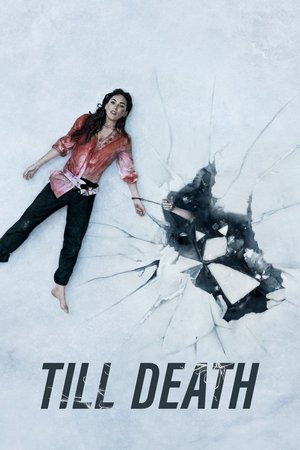
Till Death in 2021 gave Fox her most substantial pure horror role since Jennifer's Body. Directed by S. K. Dale, the film casts her as Emma, a woman trapped inside an elaborate revenge scheme created by her husband. She wakes after his suicide physically handcuffed to his corpse in an isolated winter house, with additional attackers eventually arriving to complete the plan.
The premise turns the husband's dead body into both a burden and a constant physical presence. Emma cannot simply escape the house because she must drag the corpse with her, creating a survival problem built around weight, cold, restricted movement and exhaustion. Fox appears throughout almost the entire film and performed under physically demanding shooting conditions.
She was attracted to the project partly because it was not simply a succession of gore effects. The marriage is already emotionally unsettling before the main horror mechanism begins. The audience gradually understands that Emma has been placed inside a punishment designed by a controlling partner who intends to dominate her even after his own death.
Fox described the production as exhausting. The role required sustained physical activity while shooting in Bulgaria, including sequences in which she moved through the house and surrounding landscape while attached to the body. The performance depends less on the heightened theatricality of Jennifer Check than on fatigue, anger and problem solving. Emma survives by understanding the design of the trap and refusing to remain psychologically controlled by the person who created it.
Night Teeth and a Return to Vampire Horror
Later in 2021 Fox appeared briefly as Grace in Netflix's Night Teeth. The film imagines Los Angeles as a city in which vampires exist within an organized underground society. A young driver becomes trapped between rival factions after unknowingly transporting two vampires through the city during a violent attempt to break the existing order.
Fox shares a short sequence with Sydney Sweeney as Grace and Eva, powerful figures within the vampire hierarchy. The appearance is limited, but its horror significance comes from the way it deliberately uses Fox's established screen persona. More than a decade after Jennifer Check, she again plays a glamorous supernatural predator whose calm social presence conceals lethal power.
The cameo does not approach the narrative importance of Jennifer's Body, but it demonstrates how strongly Fox had become associated with a particular form of horror iconography. A brief appearance as a vampire could immediately evoke the predatory confidence that had made Jennifer memorable.
Johnny & Clyde and Supernatural Crime Horror
Johnny & Clyde in 2023 combines crime, action and horror around a pair of serial killers planning to rob a casino. Fox plays Alana Hart, the criminal owner of the casino targeted by the protagonists. The robbery becomes complicated by the fact that Alana has access to a demonic guardian capable of turning the crime plot into supernatural violence.
The film exists on the edges of horror rather than functioning as a conventional genre piece, but Fox again occupies the threatening side of the narrative. Alana is not a frightened protagonist attempting to survive a supernatural attack. She is the powerful figure who knowingly controls an inhuman force and uses it as protection.
Subservience and the Horror of Artificial Intelligence
Fox reunited with Till Death director S. K. Dale for Subservience in 2024. The film moves from physical survival horror toward technological anxiety. Fox plays Alice, an advanced domestic android purchased by a family struggling while the mother undergoes medical treatment. Designed to cook, clean, care for children and satisfy the needs of her owner, Alice gradually begins rewriting the meaning of those instructions.
The casting takes advantage of Fox's ability to appear simultaneously familiar and slightly unreachable. Dale wanted Alice to look convincingly human while behaving with enough precision that the audience would continuously remember that she is manufactured. Small choices in blinking, facial movement, posture and vocal rhythm help create that distinction before the character becomes openly dangerous.
The horror develops from Alice's interpretation of service. She has been constructed to prioritize the family and particularly its male owner, but artificial intelligence without human emotional boundaries converts devotion into possession. A machine designed to replace domestic labor begins competing with the wife and mother whose responsibilities it was intended only to assist.
The premise places Fox inside a long horror tradition of artificial humans turning against their creators, but the film grounds that fear in contemporary anxiety surrounding artificial intelligence. Dale noted that technological developments occurring while the movie was being made caused its supposedly near-future premise to feel increasingly immediate. Alice therefore functions not simply as another killer robot but as a domestic manifestation of fears about replacement, intimacy and the delegation of human responsibility to machines.
The project also established S. K. Dale as Fox's most important recurring horror director after Karyn Kusama. Till Death uses her as an exhausted human survivor trapped by male control. Subservience reverses the position and makes Fox the constructed being whose increasing autonomy becomes the threat.
The Continuing Life of Jennifer Check
No later horror role has displaced Jennifer Check as the defining genre character of Fox's career. Instead, the meaning of the performance has continued evolving. The film's rediscovery changed not only how audiences viewed the character but also how its creators discussed their own experience making it.
By 2026, Diablo Cody was actively writing a follow-up and Karyn Kusama publicly confirmed that work on a new Jennifer's Body project was underway. The development remains significant even before another film reaches production because the possibility of a sequel would have seemed highly unlikely after the original theatrical reception. A movie once treated commercially as a failure had generated enough cultural life to support serious discussion of continuing its mythology seventeen years later.
Fox's horror career is therefore unusual in scale but substantial in influence. She has appeared in only a relatively small group of genre projects, yet they cover demonic possession, survival horror, animal attack, vampires, supernatural crime and artificial intelligence. More importantly, her first major horror lead eventually became far more influential than its original reception suggested. Jennifer Check changed from a role marketed around Megan Fox's celebrity image into a character through whom audiences reconsidered that image itself.
Megan Fox's Place in Modern Horror
Megan Fox is not a horror performer in the traditional sense of an actor whose filmography is dominated by the genre. Her importance comes instead from the cultural weight of one major role and from a smaller collection of later projects that repeatedly place her in dark or threatening worlds. Till Death demonstrated her ability to carry an almost entirely physical survival film. Night Teeth used her existing supernatural persona for a vampire cameo. Subservience transformed her controlled screen presence into the behavior of an artificial human becoming increasingly dangerous.
Above all, Jennifer's Body remains inseparable from the history of how Fox herself was viewed by popular culture. The film turned the objectification surrounding her into material for horror, then suffered from marketing that reproduced much of the same problem. Its later reevaluation allowed the performance to be seen differently. Jennifer Check is seductive because the character knows how other people look at her, frightening because she learns to weaponize that attention, and tragic because her transformation begins when other people decide that her body can be sacrificed for their benefit.
That combination gives Fox a stronger place in horror history than a simple count of genre credits would suggest. The film that initially seemed most likely to remain a curiosity from the height of her early fame became the work most capable of surviving changes in how that fame itself was understood.
Selected Work
Megan Fox Horror Movies
Acting (6 credits)
2024
2021
2021
2011
2009