


2010
Kim Jee-woon
Horror Director · Biography · Horror Filmography · Family · Collaborators · Credits
Horror subgenres & themes
Most represented across this person's horror filmography:
GHOST
• HAUNTED HOUSES
• PSYCHOLOGICAL
Biography
Kim Jee-woon and Korean Horror
Kim Jee-woon occupies an important place in modern South Korean horror despite having directed relatively few films that belong fully to the genre. Rather than building a long career around horror alone, he has repeatedly moved between genres, returning to horror when it offered the right structure for exploring memory, guilt, violence and unstable perception. The result is a concentrated body of work in which several films became major reference points for contemporary Korean genre cinema.
The Quiet Family introduced his fascination with death through macabre black comedy. The vampire short Coming Out treated supernatural identity with an unexpectedly casual and comic tone. His segment Memories in the anthology Three moved toward a much darker form of psychological and supernatural horror before A Tale of Two Sisters brought those concerns together in one of the defining Korean horror films of the early twenty-first century. Years later, I Saw the Devil removed the supernatural completely but pushed serial-killer and revenge horror toward extreme physical and moral violence.
Across these works, Kim repeatedly changes the rules of the genre rather than returning to a fixed formula. Horror can be absurd, melancholic, supernatural or brutally physical, but it is almost always shaped through strong visual control. Houses, empty streets, isolated landscapes and confined interiors become psychological spaces, while violence frequently exposes emotional or moral damage that existed before the horror itself became visible.
The Quiet Family and Macabre Black Comedy
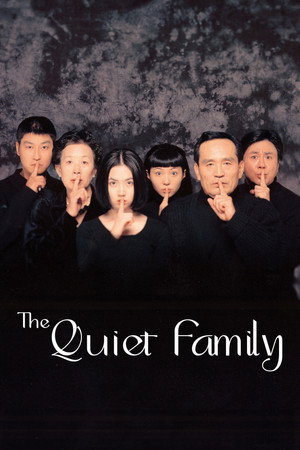
Kim made his feature directing debut with The Quiet Family in 1998. The film follows a family that opens a mountain lodge only to discover that their guests have an alarming tendency to die. Afraid that the deaths will destroy their new business, the family repeatedly hides the bodies, creating an escalating cycle of concealment, panic and increasingly grotesque complications.
The film operates primarily as a black comedy, but its entire comic mechanism depends on horror material. Corpses accumulate, bodies must be buried and reburied, and a peaceful family business becomes organized around death. Kim treats these events with deliberately unstable tone. A situation can move from morbid to ridiculous and back again without changing the underlying subject matter.
This ability to shift genre expectations became one of Kim's defining qualities. Rather than using horror as a fixed set of rules, he treats genre as something flexible. The audience may understand the visual language of a corpse, an isolated lodge or a nocturnal burial, yet Kim can redirect those familiar images toward comedy without completely removing their macabre quality.
The Quiet Family also introduced important performers who would remain connected with Kim's later cinema. Song Kang-ho appeared before becoming one of the central actors of modern Korean film, while Choi Min-sik would return more than a decade later to play the terrifying serial killer at the center of I Saw the Devil. The enormous difference between those two films demonstrates how widely Kim could vary tone while returning to some of the same performers.
Death as an Everyday Problem
One of the distinctive ideas in The Quiet Family is the transformation of death into practical inconvenience. The family does not enter the story intending to become killers or criminals. Their actions escalate because each attempt to solve one problem creates another. Burial becomes maintenance, concealment becomes routine and horror gradually becomes part of everyday family life.
This treatment of death would not remain characteristic of all Kim's later horror, but the film establishes his interest in characters attempting to impose order on events that refuse to remain controlled. The family continually believes it can contain the latest disaster, just as later characters in A Tale of Two Sisters and I Saw the Devil will attempt to manage situations whose psychological or violent consequences are much larger than they initially understand.
Coming Out and the Vampire as Identity
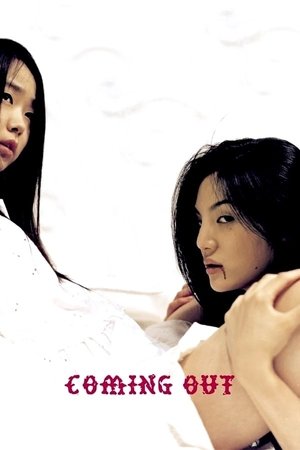
Kim returned to supernatural material with the 2000 short film Coming Out. Structured around a young woman revealing to her brother that she is a vampire, the film treats one of horror's oldest monsters through the visual language of a personal confession. The title itself turns vampirism into a secret identity that must be disclosed to family and friends.
The result is far lighter than Kim's later supernatural horror. Vampirism is strange and potentially dangerous, but the film does not build primarily toward terror. Instead, Kim uses the supernatural premise to examine how ordinary people react when something impossible is introduced casually into everyday life.
The short nevertheless has an important place in his horror development. It demonstrates that Kim was already interested in placing supernatural phenomena inside recognizably contemporary environments rather than constructing traditional Gothic worlds. The vampire does not arrive from a castle or ancient legend. She appears inside a family and explains herself directly to a camera.
Memories and the Turn Toward Psychological Horror
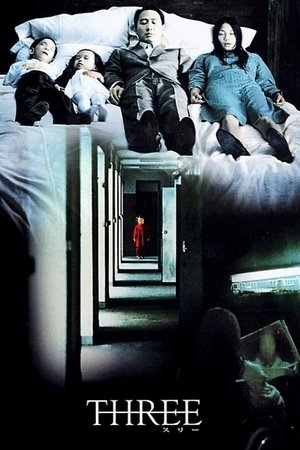
Kim's segment Memories in the 2002 anthology Three marked a much more direct movement into horror. The story follows a husband whose wife has disappeared and a woman who awakens alone with little understanding of where she is or what has happened. Their fragmented experiences gradually converge as missing memories begin to return.
The film uses empty urban spaces, disrupted memory and supernatural imagery to create an atmosphere of dislocation. Rather than introducing the central horror immediately, Kim allows the characters to move through environments that feel strangely incomplete. Roads and residential areas appear almost abandoned, creating the impression that the characters have become disconnected from ordinary life before they understand why.
The supernatural is closely connected with memory. Both central characters possess incomplete knowledge, and the audience receives information according to the same fragmented structure. Horror therefore emerges not simply from the appearance of a ghost but from the possibility that remembering will reveal something worse than forgetting.
Memories can be seen as a direct preparation for A Tale of Two Sisters. Both films use fractured perception, suppressed trauma, domestic relationships and supernatural imagery without allowing the viewer immediate access to a stable version of events. In each case, the revelation of the past changes the meaning of images already seen.
A Tale of Two Sisters
A Tale of Two Sisters, released in 2003, became Kim Jee-woon's central horror film and one of the most internationally recognized works of modern Korean psychological horror. Inspired by the traditional Korean story of Janghwa and Hongryeon, the film follows sisters Su-mi and Su-yeon after Su-mi returns home following psychiatric treatment. Their father is emotionally distant, while their stepmother Eun-joo appears increasingly hostile and unstable.
Kim does not reproduce the traditional tale literally. Instead, he uses its basic family structure as the foundation for a story about guilt, memory and traumatic loss. The house becomes the dominant environment, filled with patterned walls, heavy furniture, dark wooden surfaces and carefully controlled color. It is visually beautiful but almost suffocating.
The film repeatedly refuses to establish whether a disturbing event belongs to supernatural reality, memory or psychological disturbance. Apparitions appear, relationships behave strangely and chronology becomes difficult to trust. Kim makes this uncertainty productive rather than treating it simply as a puzzle. The audience is asked to experience the family's damaged emotional world before it possesses enough information to understand it.
The House as a Psychological Space
The house in A Tale of Two Sisters is one of the film's most important horror devices. Almost everything about its design suggests enclosure. Patterns repeat across wallpaper and furniture, corridors divide characters and rooms seem simultaneously elegant and oppressive. The family appears trapped inside a beautiful environment that has absorbed the memory of what happened there.
Cinematographer Lee Mo-gae photographs the interior with great attention to shadow, depth and color. The camera frequently allows darkness to remain inside the frame rather than illuminating every area clearly. This gives apparently ordinary domestic spaces the possibility of containing something unseen.
Kim's horror is therefore closely connected to anticipation. A room does not need to contain a visible ghost to become frightening. The viewer has learned to search the edges of the image and to question whether the house itself is preserving information the characters are unwilling or unable to confront.
Family Trauma and the Supernatural
The supernatural material in A Tale of Two Sisters cannot be separated from family trauma. Ghost imagery, unstable identity and suppressed memory all emerge from an event that the characters have failed to process. Kim does not use the supernatural merely to interrupt an otherwise ordinary family drama. The horror is the form through which the family's emotional damage becomes visible.
This gives the film a very different structure from a conventional haunted-house narrative. Discovering the source of the haunting does not simply identify an external entity that can be defeated. The revelation instead forces the audience to reconsider the relationships it believed it had been watching.
Su-mi's perception becomes especially important. The audience is drawn toward her interpretation of the household because she appears to be the character most actively resisting Eun-joo. As the film reveals more about the family's history, that apparently simple opposition becomes impossible to maintain.
Lim Soo-jung, Moon Geun-young and the Sisters
The performances of Lim Soo-jung and Moon Geun-young are essential to the film's emotional effect. The relationship between Su-mi and Su-yeon provides warmth inside an otherwise hostile household, making their scenes together appear initially to offer refuge from the stepmother and the increasingly disturbing environment.
Kim depends on the audience accepting the emotional reality of that bond. Without it, the later revelations would function merely as mechanical twists. Instead, the film gradually converts affection into grief, forcing earlier moments to acquire a different meaning once the viewer understands more about the family.
The horror therefore survives beyond the immediate supernatural imagery. The final impact comes from recognizing what the characters have lost and how memory has reorganized itself around that loss.
Yum Jung-ah and the Threat of the Stepmother
Yum Jung-ah's Eun-joo initially appears to occupy one of horror and fairy tale's oldest roles: the threatening stepmother. Her behavior moves between exaggerated friendliness, hostility and emotional instability, encouraging both Su-mi and the viewer to interpret her as the principal danger inside the house.
Kim deliberately uses the familiarity of that archetype. Because audiences already understand the image of the cruel stepmother, the film can create suspicion rapidly and then complicate it. Eun-joo remains connected with the family's trauma, but the apparent simplicity of her relationship with the sisters becomes increasingly unreliable.
The performance is effective because Yum can shift between theatrical excess and genuine menace. Moments that initially appear almost bizarre acquire darker significance when the film's structure becomes clearer.
Sound, Silence and the Construction of Dread
A Tale of Two Sisters is also notable for its restrained use of sound. Silence allows the house to become active because small noises acquire disproportionate importance. Footsteps, movement in another room or the sound of something under furniture can become more disturbing than an explicit musical cue.
Lee Byung-woo's score provides a contrasting emotional element, bringing melancholy into a film whose horror depends heavily on grief. The music does not simply announce supernatural danger. It reinforces the sense that the frightening events emerge from loss rather than from an unrelated external evil.
A Tale of Two Sisters and Korean Horror
The film arrived during a particularly strong period for South Korean cinema and became one of the era's internationally visible horror titles. Its success demonstrated that Korean horror could combine culturally specific source material with a visual language capable of travelling widely outside Korea.
The film was later remade in the United States as The Uninvited, further demonstrating the international reach of its central concept. The importance of Kim's film, however, lies less in the existence of the remake than in the lasting reputation of the original as a model of psychological horror structured around unreliable memory and domestic trauma.
I Saw the Devil and Horror Without the Supernatural
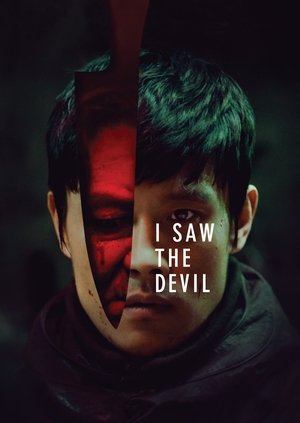
Kim returned to much darker genre territory with I Saw the Devil in 2010. The film follows intelligence agent Soo-hyun, played by Lee Byung-hun, after his fiancée is murdered by serial killer Kyung-chul, played by Choi Min-sik. Rather than killing Kyung-chul immediately after finding him, Soo-hyun repeatedly captures, injures and releases him so that revenge can be prolonged.
The film is often described through the Korean revenge-thriller tradition, but its sustained brutality, serial-killer material and emphasis on physical suffering also place it firmly within extreme horror territory. Kim removes ghosts and supernatural uncertainty entirely. The horror now comes from human beings who understand exactly what they are doing.
Kyung-chul is frightening because the film gives him no meaningful moral boundary. Violence appears to be a natural extension of appetite. Choi Min-sik avoids transforming him into a sophisticated criminal mastermind. He is dangerous because cruelty requires almost no justification.
Revenge Becoming Monstrous
The central horror of I Saw the Devil is not limited to Kyung-chul. Soo-hyun's revenge gradually transforms him as well. The initial desire to punish the killer is understandable, but the deliberate repetition of capture, torture and release creates new opportunities for violence against other people.
Kim turns revenge into a system that cannot remain morally controlled. Soo-hyun believes he is designing punishment, yet every decision allows Kyung-chul to continue acting. The distinction between hunter and monster therefore becomes progressively less secure.
This is where the film moves beyond a conventional serial-killer chase. Catching the killer is not the objective because Soo-hyun repeatedly succeeds in doing so. The horror lies in his refusal to end the process.
The Body in I Saw the Devil
Physical damage is shown with unusual intensity throughout I Saw the Devil. Stabbings, blunt-force trauma, mutilation and torture are not isolated climactic effects but recurring elements in the relationship between the two central characters.
Cinematographer Lee Mo-gae gives the violence a controlled visual form without making it less painful. The film can appear elegant immediately before becoming physically repulsive. That contrast creates an uncomfortable relationship between visual beauty and brutality, forcing the viewer to remain aware of the cinematic construction even during scenes designed to produce visceral discomfort.
The violence became controversial enough to create significant difficulties with Korean classification before release. That history reflects how far Kim had moved from the restrained supernatural dread of A Tale of Two Sisters. Both films are meticulously controlled, but one often frightens through what remains unseen while the other repeatedly forces the consequences of violence into view.
Choi Min-sik and the Return from The Quiet Family
Choi Min-sik's casting creates an important connection within Kim's horror filmography. He had appeared in The Quiet Family, where death was treated through grotesque black comedy, before returning in I Saw the Devil as one of the most brutal killers in modern Korean genre cinema.
The contrast shows the breadth of Kim's approach to horror. The same actor who participated in a film where bodies produced escalating absurdity could later embody a character for whom bodies are objects of predation. Kim did not simply move from comedy to horror in a straight line. He demonstrated that similar material could be reorganized through completely different tonal systems.
Lee Mo-gae and Kim Jee-woon's Horror Images
Cinematographer Lee Mo-gae represents one of Kim's most important horror collaborations. He photographed both A Tale of Two Sisters and I Saw the Devil, two films whose visual approaches are dramatically different.
In A Tale of Two Sisters, Lee helps turn a carefully designed domestic interior into a space of psychological dread. In I Saw the Devil, his photography follows violent movement through roads, interiors and night landscapes while maintaining an unsettling degree of visual precision.
The two films demonstrate that Kim's visual control is not tied to one specific horror aesthetic. Atmospheric supernatural horror and extreme serial-killer violence require different images, yet both depend on a carefully organized relationship between character and environment.
Kim Jee-woon and Genre Mutation
The most distinctive feature of Kim's horror career is his unwillingness to make the same horror film twice. The Quiet Family uses death for black comedy. Coming Out makes vampirism part of an intimate confession. Memories combines supernatural imagery with fractured memory. A Tale of Two Sisters builds Gothic psychological horror around family trauma. I Saw the Devil replaces the supernatural with extreme human cruelty.
These films share visual confidence and an interest in unstable emotional situations, but their tones and structures are radically different. Kim approaches horror as one genre among many that can be combined, dismantled or intensified according to the needs of a particular story.
Kim Jee-woon's Horror Legacy
Kim Jee-woon's horror legacy rests primarily on the unusual strength of a relatively small group of films. The Quiet Family introduced a director capable of finding comedy in corpses without removing their macabre quality. Coming Out treated the vampire through contemporary identity and digital filmmaking. Memories moved toward supernatural psychological horror through fragmented perception and suppressed memory.
A Tale of Two Sisters became the central achievement of this strand of his career, combining Korean folklore, Gothic domestic space, psychological instability and family trauma into one of the defining Asian horror films of its period. I Saw the Devil later demonstrated an entirely different capacity for horror, abandoning ghosts in favor of a prolonged confrontation between human cruelty and revenge.
What connects these works is Kim's understanding that genre is not a prison. Horror can change shape completely while still remaining horror. A corpse can produce laughter, a vampire can become a family secret, a house can preserve trauma and a revenge thriller can become more horrifying than a supernatural story. Kim Jee-woon's contribution to the genre lies precisely in that ability to move between forms without losing control of atmosphere, image or emotional violence.
Photos (7)
Images: TMDB
Selected Work
Notable Horror Collaborators
Notable collaborators and creative partners throughout Kim Jee-woon's horror career.
LM
Lee Mo-gae
Cinematographer
Lee photographed A Tale of Two Sisters and I Saw the Devil, the two central horror works of Kim Jee-woon's career, creating radically different visual systems for psychological supernatural horror and extreme serial-killer violence.
CM
Choi Min-sik
Actor
Choi worked with Kim in the macabre horror-comedy The Quiet Family before returning as serial killer Kyung-chul in I Saw the Devil, linking the director's first feature with his most extreme horror film.
OJ
Oh Jung-wan
Producer
Oh collaborated with Kim on the horror anthology Three and A Tale of Two Sisters, helping produce the period in which Kim moved decisively from black comedy toward supernatural and psychological horror.
KI
Ko Im-pyo
Editor
Ko edited both The Quiet Family and A Tale of Two Sisters, contributing to two very different early expressions of Kim's horror sensibility, from macabre black comedy to carefully controlled psychological dread.
LB
Lee Byung-woo
Composer
Lee provided music for Kim's Memories segment in Three and for A Tale of Two Sisters, helping shape the transition from the fragmented supernatural atmosphere of the anthology film to the melancholy Gothic horror of Kim's major 2003 feature.
Kim Jee-woon Horror Movies
Directing (6 credits)
2003
2002
2002
2001
1998
Writing (8 credits)
2010
2009
2003
2002
2002
2002
2001
1998