

1991
Umberto Lenzi
Horror Director · Biography · Horror Filmography · Collaborators · Credits
Horror subgenres & themes
Most represented across this person's horror filmography:
CANNIBAL
• HAUNTED HOUSES
• SPLATTER
• CLOWN
Biography
Umberto Lenzi and the changing forms of Italian horror
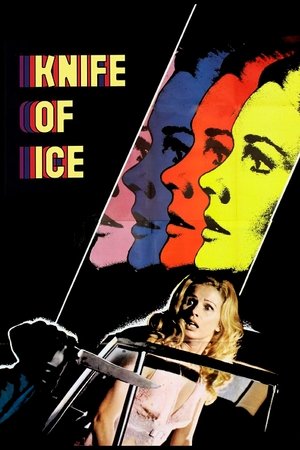
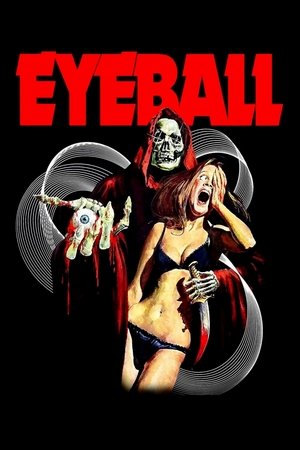
Umberto Lenzi was one of the most adaptable directors to emerge from postwar Italian popular cinema and an important figure in the development of giallo, cannibal horror, outbreak cinema and the lower-budget supernatural films that marked the final years of the Italian genre industry. His horror career extends from psychological thrillers such as Paranoia and Knife of Ice through Man from Deep River, Eyeball, Nightmare City, Eaten Alive!, Cannibal Ferox, Ghosthouse, Hitcher in the Dark and Black Demons. These films belong to very different production cycles, and Lenzi approached them as a professional director accustomed to changing style according to the market, available resources and narrative problem in front of him.
Lenzi’s historical importance cannot be reduced to the extremity of Cannibal Ferox. He was formally trained at the Centro Sperimentale di Cinematografia, worked as a critic and writer before establishing himself as a director and possessed an unusually broad knowledge of American and European cinema. He frequently identified classical American genre directors as professional models and regarded technical competence, narrative clarity and the ability to work efficiently with limited budgets as essential virtues. Horror became one of the areas where those principles produced their most internationally visible results, but the underlying method had been developed through adventure, spy films, thrillers, crime cinema and other commercial forms.
Cinephilia, law and the Centro Sperimentale di Cinematografia
Lenzi was born in Massa Marittima, Tuscany, on August 6, 1931. He became intensely interested in cinema while young and organized film clubs before entering the profession. He studied law at the University of Pisa and completed his degree before winning admission and a scholarship to the Centro Sperimentale di Cinematografia in Rome. The decision placed him inside Italy’s most important institutional environment for professional film training during a period when the country’s cinema was internationally prominent and its commercial production was rapidly expanding.
Lenzi graduated in directing in 1956. His diploma film, I ragazzi di Trastevere, drew inspiration from Pier Paolo Pasolini’s writing about working-class Roman youth. Lenzi later remembered discussing the screenplay with Pasolini himself. The project is significant because it shows that the filmmaker later identified with cannibals, serial killers and violent police films had entered cinema through a serious institutional education and an interest in contemporary Italian culture rather than through exploitation production alone.
Film criticism before professional directing
Lenzi wrote about cinema before and during the early stages of his professional career, contributing to publications including Bianco e Nero. Film criticism gave him an analytical relationship with genre that remained visible throughout his later interviews. He knew the history of the forms in which he worked and frequently distinguished his own intentions from the labels later applied by distributors and audiences.
This background helps explain the confidence with which Lenzi discussed influences decades later. He did not regard popular cinema as culturally separate from serious filmmaking. A western, thriller or horror film could be evaluated through direction, rhythm, visual organization and economy just as readily as a prestigious dramatic production. His frequent frustration with the dismissive treatment of Italian genre directors was partly rooted in this conviction.
American genre directors as professional models
Lenzi repeatedly named filmmakers including Raoul Walsh, Samuel Fuller, Henry Hathaway, Robert Siodmak, Nicholas Ray and Edgar G. Ulmer among the directors he admired. What interested him was not simply subject matter. He valued directors capable of producing forceful, visually effective films under restricted budgets and within recognizable commercial genres.
This model strongly influenced Lenzi’s idea of professional authorship. He did not believe a director needed to spend an entire career cultivating one prestigious category of film in order to possess a personal approach. A filmmaker could move from adventure to thriller, crime or horror while retaining control of pacing, actors and physical action. Lenzi’s own career became an unusually clear Italian example of that principle.
Learning to direct through genre mobility
Lenzi’s early feature career developed through commercial assignments including swashbucklers, historical adventures, films derived from Emilio Salgari, spy pictures and westerns. His first widely distributed feature as director was Queen of the Seas in 1961. During the following years he learned to work with international casts, co-production financing and locations selected partly for their commercial value in foreign markets.
The constant movement between genres became important when Lenzi entered horror. He rarely approached a production as if one established style had to be imposed regardless of material. Psychological thrillers required controlled interiors and performance. Jungle films depended on difficult physical locations. Outbreak horror needed rapid movement and mass action. Haunted-house productions relied on effects and atmosphere. The ability to switch methods became one of his defining professional characteristics.
The psychological thriller and Lenzi’s route into giallo
Lenzi’s first sustained connection with material now discussed alongside horror came through psychological thrillers at the end of the 1960s. He developed a group of films centered on wealthy characters, sexual manipulation, deception and murder, beginning with Paranoia and continuing through collaborations with Carroll Baker. Lenzi sometimes described these pictures as upper-class thrillers, distinguishing them from the more codified murder mysteries that came to dominate international definitions of giallo.
The distinction is useful because Lenzi’s suspense did not initially depend on an anonymous black-gloved murderer moving through a sequence of elaborate killings. He was interested in unstable relationships and in characters manipulating one another within villas, hotels and other affluent spaces. Sex, money and control become sources of threat before the films reveal their criminal structures.
Carroll Baker and the development of actor-centered suspense
Carroll Baker became a major collaborator during this transitional phase. After an established Hollywood career, she worked with Lenzi on Paranoia, So Sweet... So Perverse, A Quiet Place to Kill and later Knife of Ice. Lenzi remembered the collaboration positively and regarded several of these thrillers among the work of which he was most proud.
Baker’s presence encouraged Lenzi to organize suspense around performance rather than effects. Her characters could occupy very different positions within deception narratives, requiring viewers continually to reassess victimhood, manipulation and responsibility. This emphasis on people whose apparent identity cannot be trusted became an important part of Lenzi’s later giallo work even when the murder mechanisms grew more explicit.
Lenzi’s giallo method
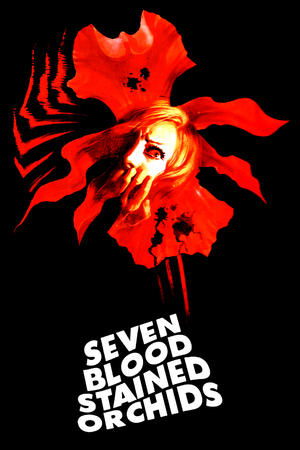
During the early 1970s Lenzi worked repeatedly within the expanding Italian giallo cycle. Oasis of Fear, Seven Blood-Stained Orchids, Knife of Ice and later Eyeball demonstrate his ability to move between psychological suspense and increasingly recognizable serial-killer structures. His films make use of uncertain memory, concealed motives, travel, unfamiliar locations and characters whose apparent social identities cannot be accepted immediately.
Lenzi approached giallo more directly than many of his later horror films because he frequently participated in writing as well as directing. Plot construction mattered substantially. Information had to be concealed without making the final solution impossible, and visual suspicion needed to move among several characters. His background in crime fiction and his later career as a mystery novelist make this continuing interest in investigative structures particularly important.
Suspicion, social environments and the human source of danger
Lenzi’s gialli rarely require supernatural explanations. Their horror develops from people entering situations in which ordinary social behavior cannot be trusted. Romantic partners, strangers, relatives and apparently respectable professionals may possess motives hidden from the protagonist. The method places tension inside human relationships rather than outside them.
This characteristic persisted even after Lenzi moved toward more graphic horror. His strongest films frequently remain interested in what people are willing to do when money, sexuality, fear or social authority changes the balance between them. Physical violence becomes an extension of those relationships rather than an entirely independent attraction.
Man from Deep River and the beginning of a new exploitation cycle
Man from Deep River in 1972 became one of the most consequential films of Lenzi’s career despite not having been conceived primarily as the beginning of a cannibal-horror movement. Lenzi later emphasized the influence of A Man Called Horse, whose structure follows an outsider gradually entering a culture that initially holds him captive. The new film transferred a comparable narrative into a Southeast Asian setting and added elements associated with Italian mondo cinema, including sensationalized rituals and explicit animal material.
Cannibalism occupies only part of the film, but international exploitation markets responded strongly to its combination of jungle location, cultural confrontation and graphic violence. In retrospect the production became an important precursor to the Italian cannibal cycle that expanded later in the decade. Lenzi’s name consequently became associated with a subgenre that had not yet existed as a clearly defined commercial category when he made the film.
Location shooting and the search for physical credibility
The jungle films allowed Lenzi to apply the practical values he admired in classical genre cinema. Real environments imposed heat, water, vegetation and movement problems that could not be reproduced completely inside a studio. Lenzi used those limitations as part of the image. Performers appear physically embedded in locations rather than isolated against decorative scenery.
This preference for direct physical interaction also affected his crime and later horror work. Lenzi liked bodies moving rapidly through real environments and generally favored immediate camera solutions over excessive formal preparation. His cinema often appears aggressive because the camera remains close to action and because performers seem to share the same physical space as stunts, effects and surrounding terrain.
The ethical problem of real animal killing
The cannibal films also contain the most serious ethical problem in Lenzi’s horror career. Man from Deep River and later productions include real animal deaths recorded for use in fictional entertainment. Lenzi defended some of these decisions in interviews by referring to food practices or local circumstances, but the fact remains that actual animal suffering was incorporated into commercial films to increase their impression of authenticity and extremity.
This material cannot be separated responsibly from Lenzi’s contribution to cannibal cinema. The films are historically influential, but their production methods belong to a period of exploitation filmmaking in which boundaries accepted by some crews and producers are now widely rejected. The use of real animal deaths is therefore part of Lenzi’s horror legacy as an ethical failure as well as a source of the disturbing realism for which the films became notorious.
Crime cinema and the intensification of physical violence
Lenzi spent much of the middle 1970s directing Italian crime films rather than horror. This phase is essential to understanding what happened when he returned to the genre. Police thrillers allowed him to work with car chases, beatings, firearms, urban movement and characters whose violence could be sudden and physically direct. The films required a fast production rhythm and an ability to stage action efficiently under commercial conditions.
By the time Lenzi returned decisively to horror around 1980, he had become a substantially more aggressive action director than the filmmaker who had made his earlier psychological thrillers. The later horror often moves at crime-film speed. Attacks occur in public spaces, groups move rapidly across locations and physical danger is staged through movement rather than through atmosphere alone.
Working inside the Italian commercial production system
Lenzi’s career was closely connected with the industrial structure of Italian genre cinema. Producers responded quickly to successful cycles and expected directors to deliver material that could be sold internationally. Lenzi understood this system and never pretended that every project originated from a private artistic obsession. He accepted assignments, rewrote available material and adapted himself to market changes.
This commercial pragmatism coexisted with strong opinions about his own work. Lenzi could dismiss films that became cult favorites while defending less celebrated productions that he believed had been misunderstood. He was particularly resistant to the idea that international audiences understood his career better simply because certain extreme titles had become famous on home video.
Nightmare City and a different form of mass horror
Nightmare City marked a major return to explicit horror in 1980. The screenplay originally involved conventional zombie material, but Lenzi later said that he changed the concept because he did not want simply to reproduce the undead films then dominating the international market. He insisted repeatedly that his attackers were living people transformed by radioactive contamination, not resurrected corpses.
The distinction mattered to him because it altered movement and behavior. The contaminated people can run, use weapons, organize attacks and require human blood. Lenzi considered them closer to infected or mutated humans than traditional zombies. Decades later he remained irritated when interviewers or filmmakers automatically categorized the production as a zombie film, an example of the importance he placed on distinguishing his own intentions from subsequent marketing labels.
Speed, public spaces and the collapse of ordinary order
Nightmare City also demonstrates how Lenzi’s crime-film experience migrated into horror. The threat spreads through an airport, television facilities, streets, hospitals and other recognizable spaces rather than remaining confined to one Gothic location. The film depends on momentum and the rapid collapse of institutions that normally organize urban life.
This approach differs substantially from his earlier gialli. Suspicion between a small number of characters is replaced by collective panic and physical attack. The change shows how Lenzi used different horror traditions according to the production rather than attempting to maintain a single signature form throughout his career.
Returning to cannibal cinema after the genre had become established
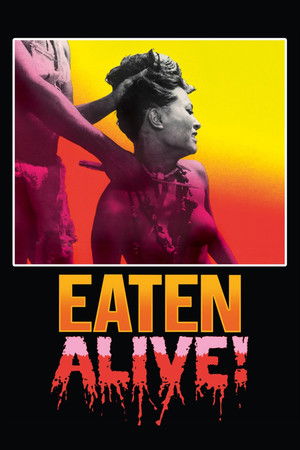
By 1980 the commercial situation surrounding cannibal films had changed dramatically from the circumstances of Man from Deep River. Ruggero Deodato and other directors had expanded the cycle, and the international market now recognized cannibal exploitation as a distinct product. Lenzi returned with Eaten Alive! and Cannibal Ferox under conditions in which producers and distributors expected considerably more explicit violence.
Lenzi later maintained that his earlier film had provided the essential starting point for the cycle and discussed a longstanding professional rivalry with Deodato concerning their respective places in its history. He also recalled having been approached for the project that became Jungle Holocaust before withdrawing over financial terms. Whatever priority is assigned within the broader history, Lenzi’s 1972 film clearly preceded the concentrated cannibal boom and his return in 1980 and 1981 occurred after the market had already learned to demand greater extremity.
Eaten Alive! and Lenzi’s exploitation pragmatism
Eaten Alive! combines jungle-cannibal material with a story influenced by contemporary awareness of destructive religious cults. Lenzi wrote the film and reused footage from earlier cannibal productions, a practice that reveals the economic pragmatism of the production environment. Material could be repurposed when producers needed to reduce costs and when viewers in different markets were not expected to have seen every source film.
The project is particularly characteristic of Lenzi as an industrial filmmaker. He could take an established commercial cycle, connect it with a recent real-world reference and build a feature around available performers, locations and existing footage. The result belongs to exploitation cinema not merely because of violent content but because the entire production strategy was designed around speed and market opportunity.
Cannibal Ferox and Lenzi as writer-director of extreme horror
Cannibal Ferox gave Lenzi unusually direct authorship within the cannibal cycle because he wrote and directed the film himself. The production combines anthropological pretensions, criminal violence and jungle horror around outsiders whose abuse of local people leads to increasingly brutal retaliation. The film was marketed internationally through claims of unprecedented violence and became one of the best-known titles associated with the video-nasty era.
Lenzi’s later attitude toward the film was complicated. He understood its commercial importance and participated extensively in retrospectives surrounding it, yet he frequently indicated that he preferred other work and found it strange when admirers treated Cannibal Ferox as the summit of his career. This difference between the director’s preferences and international cult reception became a recurring feature of his later public life.
Violence as physical action rather than abstract spectacle
Lenzi’s horror violence is often remembered for gore, but his directing method depended as strongly on bodies moving through space. Attacks are staged around doors, rooms, streets, jungle paths and vehicles. Even special-effects moments usually occur within a sequence of physical actions rather than as isolated tableaux intended solely for inspection.
This quality came from his broader genre background. Lenzi had learned action through adventures and crime films before becoming internationally identified with extreme horror. The violent image therefore tends to belong to a moving sequence with a clear spatial objective. Characters pursue, escape, fight or attempt to reach another location while the effects occur around them.
Lenzi’s uneasy relationship with his cannibal reputation
International audiences increasingly identified Lenzi with cannibal horror during the home-video era, while Lenzi himself continued insisting that these films represented only part of a much larger career. He often redirected interviewers toward his gialli and crime films and expressed surprise at the devotion surrounding productions he had regarded primarily as commercial assignments.
This tension is important because it prevents a distorted biography. Lenzi undeniably helped establish and later intensify Italian cannibal cinema, but he did not spend his career attempting to develop that one form. His professional identity was based on being able to direct whatever genre the industry required, while international cult culture selected a small number of extreme films as representative of everything he had done.
The decline of the Italian genre industry
During the 1980s the industrial system that had sustained Lenzi and other prolific Italian genre directors began contracting. International markets changed, American productions became increasingly dominant and domestic producers found it more difficult to finance the kinds of theatrical films that had circulated widely during previous decades. Veteran filmmakers increasingly accepted lower-budget projects intended for home video or television.
Lenzi responded as he had throughout his career: he adapted. His later horror became cheaper, more internationally packaged and frequently shot partly outside Italy. The reduction in resources is visible, but the period is historically valuable because it documents how a director formed during the prosperous decades of Italian commercial cinema attempted to continue working after that system had largely disappeared.
Ghosthouse and the Filmirage period
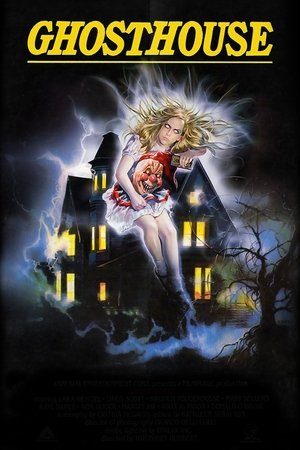
Ghosthouse brought Lenzi into collaboration with Joe D’Amato’s Filmirage operation, which specialized during the late 1980s in inexpensive English-language genre productions designed substantially for international markets. Lenzi wrote the original story and directed under the pseudonym Humphrey Humbert. Shooting in the United States helped give the production an outwardly American identity despite its Italian financing and creative leadership.
This production method was common within the final phase of Italian exploitation. English-speaking casts, American locations and pseudonyms could help films circulate in markets where overtly Italian genre production had become more difficult to sell. Lenzi’s participation demonstrates how completely he understood the commercial logic of the industry in which he had spent his career.
Returning to psychological violence with Hitcher in the Dark
Lenzi continued working with Filmirage on Hitcher in the Dark, again using the Humphrey Humbert credit. The story returns to a human serial predator rather than supernatural horror, reconnecting the director with the psychologically disturbed killers and identity problems of his earlier thrillers. Lenzi conceived the story while Olga Pehar wrote the screenplay.
The production is especially revealing of his late career because it combines an older psychological-thriller interest with the economics of direct international exploitation. Lenzi was no longer operating with the production conditions available to his 1970s gialli, but the underlying fascination with unstable identity and predatory behavior remained recognizable.
Olga Pehar and Lenzi’s late horror work
Olga Pehar was Lenzi’s wife for more than five decades and also became an important professional collaborator during the later stage of his career. She worked in continuity and script supervision on numerous productions and increasingly participated in writing. Their horror collaborations include The House of Witchcraft, House of Lost Souls, The Hell’s Gate, Hitcher in the Dark and Black Demons.
The collaboration is important because it belongs to the period when Lenzi frequently had to develop horror under severe financial limitations. Pehar’s work crossed the boundary between maintaining continuity on set and shaping scripts, giving their professional relationship a breadth unusual among his other late collaborators. Her death in 2015 preceded Lenzi’s by less than two years.
The cursed-house television productions
Late in the 1980s Lenzi was commissioned to direct horror for a proposed Italian television cycle. The House of Witchcraft and House of Lost Souls were developed within a group of supernatural productions that also involved Lucio Fulci. The films were created for television conditions but encountered problems because their violent content did not fit comfortably within the intended broadcast environment and they circulated substantially through home video instead.
The episode illustrates the unstable position of Italian horror during this period. Producers recognized that a genre audience still existed, particularly through rental markets, while mainstream television remained uncertain about how much violence could be accommodated. Lenzi was therefore making horror for an industry whose traditional theatrical route and newer television route were both becoming unreliable.
The Hell’s Gate and late supernatural horror
The Hell’s Gate developed from a story by Lenzi with a screenplay created in collaboration with Olga Pehar. The film uses an underground setting and occult danger, representing a more conventional supernatural form than the director’s earlier realism-oriented horror. Its production scale was extremely restricted compared with the years when Italian genre films could rely on more substantial international financing.
For Lenzi, projects of this kind were professional assignments and opportunities to keep directing. Their existence also demonstrates his refusal to withdraw simply because the industry had changed. He continued adapting familiar horror structures to whatever resources remained available.
Black Demons and the end of Lenzi’s horror directing
Black Demons in 1991 became Lenzi’s final horror feature. Shot in Brazil, it combines zombie imagery and voodoo material within a production whose limited budget Lenzi later criticized. Olga Pehar wrote the screenplay from Lenzi’s story, and Lenzi himself performed additional camera work.
The production closes an unusually broad horror trajectory. A director who had entered suspense through affluent psychological thrillers and helped establish jungle exploitation finished his horror career working with supernatural resurrection on a very small international production. The distance between those periods reflects changes in both Lenzi and the Italian industry around him.
Writing as a constant part of Lenzi’s career
Lenzi was never exclusively a director. He wrote or co-wrote many of his films, had worked as a critic before directing and retained a strong interest in literature and history. After theatrical directing opportunities diminished, writing became increasingly important to his public identity.
His later novels frequently combined murder investigation with the history of Italian cinema, particularly Cinecittà during the Fascist and wartime periods. Lenzi explained that his prose remained strongly visual and that he organized chapters according to habits developed through cinema. The novels therefore continued interests in mystery and film history that had been present long before his cannibal reputation.
Historical memory and Lenzi’s later interviews
During the final decades of his life Lenzi became an important source of first-hand information about Italian commercial filmmaking. Interviews with specialist publishers and home-video companies allowed him to discuss actors, producers, censorship, international co-productions and the practical conditions under which films had been made. His strong personality and willingness to criticize both colleagues and his own productions made these accounts particularly distinctive.
His memories require the same caution applied to any retrospective testimony. Dates and details could change between interviews, and Lenzi sometimes made broad claims while defending his place in genre history. Nevertheless, the interviews preserve the perspective of a filmmaker who had participated directly in several commercial cycles that had largely disappeared by the time scholars and collectors began studying them systematically.
Cult rediscovery and international recognition
Home video and later Blu-ray restoration dramatically changed Lenzi’s international reputation. Films that had originally circulated through grindhouses, dubbed prints or censored releases became available in restored editions accompanied by interviews and historical essays. Audiences outside Italy could examine his gialli, crime films and horror as parts of one career rather than as isolated exploitation curiosities.
Filmmakers including Quentin Tarantino and Eli Roth contributed to this reassessment by discussing Lenzi publicly and drawing attention to Italian genre cinema. Lenzi enjoyed the recognition while sometimes disagreeing strongly with the films younger admirers selected as his greatest achievements. That disagreement itself became part of his late persona: he appreciated cult audiences but continued insisting on his own hierarchy of the work.
Death and the preservation of Lenzi’s work
Umberto Lenzi died in Rome on October 19, 2017 at the age of eighty-six. By that point he had already lived through a substantial reversal in the cultural position of the cinema in which he had worked. Films once dismissed as disposable commercial products were being restored, published in archival editions and discussed within histories of giallo, Italian crime cinema, cannibal films and European horror.
The Centro Sperimentale di Cinematografia later emphasized both Lenzi’s education and the breadth of his intellectual interests, while his unpublished writing materials entered the Luigi Chiarini Library collection. Such preservation provides an important corrective to the simplified image of Lenzi as merely a director of notorious gore films.
Umberto Lenzi’s contribution to horror history
Lenzi’s contribution to horror comes from range as much as extremity. He helped develop psychological and erotic Italian thrillers before the international giallo formula became fully standardized, participated in the genre’s early-1970s expansion, directed a crucial precursor to the cannibal boom, brought the speed and physicality of crime cinema into outbreak horror and continued working through the impoverished supernatural and home-video production environment of the late 1980s.
His horror also contains unresolved contradictions. Lenzi was an educated cinephile who embraced highly commercial production, a director who became famous for films he did not necessarily consider his best, and a craftsman whose pursuit of physical impact sometimes crossed serious ethical boundaries through real animal killing. Those contradictions are essential to his historical position. He was neither simply an auteur hidden inside exploitation nor merely a director following trends. He was a highly trained genre professional whose ability to move with the Italian film industry placed him at several important transitions in European horror over more than twenty years.
Photos (1)
Images: TMDB
Selected Work
Notable Horror Collaborators
Notable collaborators and creative partners throughout Umberto Lenzi's horror career.
 Eugenio Alabiso
Director / Editor Collaborator
Alabiso edited Lenzi horror and giallo productions including Oasis of Fear, Seven Blood-Stained Orchids, Man from Deep River and Eaten Alive!. Their recurring collaboration spans the transition from Lenzi’s early-1970s suspense films into the jungle horror cycle that later became central to his international reputation.
 Franco Fantasia
Director / Actor-Assistant Director Collaborator
Fantasia worked with Lenzi on at least four horror productions: Seven Blood-Stained Orchids, Knife of Ice, Eaten Alive! and Black Demons. His roles changed from performer to assistant director, making the relationship one of the recurring professional links between Lenzi’s early giallo period and his final horror production.
OP
Olga Pehar
Director / Writer-Continuity Collaborator
Pehar was Lenzi’s wife and an important recurring collaborator during his late horror period. Their shared horror work includes The House of Witchcraft, House of Lost Souls, The Hell’s Gate, Hitcher in the Dark and Black Demons, with Pehar contributing through continuity, script supervision and increasingly through screenwriting.
Umberto Lenzi Horror Movies
Directing (16 credits)
1989
1989
1989
1989
1989
1988
1981
1980
1980
1975
1972
1972
1972
1971
1969
Writing (15 credits)
1991
1989
1989
1989
1989
1989
1988
1988
1981
1980
1975
1972
1972
1971
1969
Acting (4 credits)
2019
2016
2015
1980
Cinematography (1 credits)
1991
Production (1 credits)
1975
Other Crew (1 credits)
1989