


2023
Dario Argento
Horror Director · Biography · Horror Filmography · Family · Collaborators · Credits
Horror subgenres & themes
Most represented across this person's horror filmography:
POSSESSION
• VAMPIRE
• WITCHCRAFT
• ZOMBIE
Biography
Dario Argento and the Terror of Seeing Too Much
Dario Argento built much of his cinema around a deceptively simple idea: seeing something does not mean understanding it. Again and again, his characters witness a murder, notice an image, remember a room or encounter a detail whose real meaning escapes them. The truth has often been visible from the beginning, hidden not by darkness but by perception itself.
That obsession with vision became one of the foundations of Argento's cinema. Cameras stalk victims before killers appear. Mirrors, windows, paintings, photographs and memories become unreliable evidence. Buildings conceal information inside their architecture. Violence arrives both as physical destruction and as carefully constructed spectacle, placing the audience in the uncomfortable position of wanting to look at precisely what the characters should fear seeing.
Across giallo, supernatural horror and psychological thriller, Argento developed one of the most recognizable styles in genre cinema. Elaborate camera movement, extreme close-ups, saturated color, aggressive music and meticulously designed murder sequences frequently become more important than conventional realism. At his strongest, Argento does not ask the audience to believe that the world behaves normally. He creates a different visual logic and asks the viewer to enter it.
From Film Criticism to Sergio Leone
Dario Argento was born in Rome on September 7, 1940, into a family already connected to the visual arts. His father, Salvatore Argento, worked as a film producer, while his mother, Elda Luxardo, was a photographer. Before becoming a director, Argento worked as a film critic and then as a screenwriter, contributing to numerous productions during the second half of the 1960s.
One of the most important projects from this period was Sergio Leone's Once Upon a Time in the West (1968). Argento and Bernardo Bertolucci participated in developing the story with Leone, an experience that placed the young writer alongside filmmakers with an encyclopedic understanding of genre cinema. The western was being rebuilt through memories of earlier westerns, an approach that anticipated something fundamental in Argento's later work: genre conventions could be remembered, rearranged and pushed into unfamiliar shapes.
By the time Argento moved behind the camera, he had already spent years thinking about movies both critically and practically. His directorial career would repeatedly reveal that background. His films often understand exactly what the audience expects from a genre, then manipulate that expectation through framing, editing, sound and withheld information.
The Bird with the Crystal Plumage and the Argento Giallo
Argento made his directorial debut with The Bird with the Crystal Plumage (1970). American writer Sam Dalmas witnesses what appears to be an attempted murder inside a Roman art gallery. He is separated from the attack by enormous glass doors, close enough to see the scene clearly but unable to intervene.
The situation almost functions as a blueprint for Argento's career. Sam has witnessed the event, yet something about his interpretation is wrong. Solving the mystery eventually depends upon reconsidering what was visible from the beginning.
The film took conventions already present in Italian giallo and gave them an unusually precise visual identity. Black leather gloves, subjective camera movement, an amateur investigator, sexual anxiety, fragmented memory and elaborate attacks would all become recurring elements in Argento's work. The success of the film also helped establish the giallo as a commercially powerful form in the early 1970s.
The Cat o' Nine Tails (1971) and Four Flies on Grey Velvet (1971) followed, completing what later became known as Argento's informal Animal Trilogy. The three films are not narratively connected, but all revolve around mysteries in which perception, memory, technology and apparently insignificant clues become unstable sources of knowledge.
Deep Red: The Image Was There All Along
With Deep Red (1975), Argento brought the ideas of his early gialli into a more elaborate and confident form. Pianist Marcus Daly witnesses the murder of a psychic and becomes obsessed with identifying the killer. Once again, the central problem is not that the protagonist failed to see the truth. He saw something crucial and failed to understand its significance.
Memory becomes another crime scene. Marcus knows that something about the location of the murder has changed, but he cannot immediately identify what is missing. The audience shares his problem because Argento has also placed essential visual information directly before the viewer.
The film expands many of the techniques that would define Argento's mature style. The camera becomes increasingly mobile and curious. Childhood imagery and fragmented memories intrude into the investigation. Architecture contains buried histories. Violence becomes more elaborate, yet the mystery remains rooted in the unreliable relationship between seeing and knowing.
Music also became increasingly central. The score, associated with Giorgio Gaslini and Goblin, helped establish the aggressive progressive rock sound that would become inseparable from Argento's most celebrated period. Rhythm, repetition and electronic textures make the music an active component of the suspense rather than a passive accompaniment.
Suspiria: Horror Becomes a Fever Dream
Suspiria (1977) marked a radical movement away from the investigative logic of the giallo. American ballet student Suzy Bannion arrives at a prestigious academy in Freiburg and gradually discovers that the institution conceals a coven of witches.
The story is relatively simple. The world surrounding it is not.
Color transforms the academy into a space that seems detached from normal reality. Reds, blues and other intense hues overwhelm rooms, corridors and characters. Architecture becomes theatrical and threatening. Shadows, decorative patterns, windows and walls appear to belong less to an ordinary building than to a nightmare with its own geometry.
Goblin's score intensifies that unreality. Percussion, synthesizers, whispered voices and repeating musical figures frequently announce danger before Suzy understands that danger is present. Image and sound operate together until the academy seems to possess its own atmosphere and consciousness.
Argento's murder sequences become audiovisual constructions in which beauty and brutality exist simultaneously. The violence is horrifying, but it is also composed with a degree of color, rhythm and movement that makes the viewer acutely aware of the act of watching.
Suspiria became the first part of what would eventually be called the Three Mothers trilogy. Its cultural influence has extended far beyond Italian horror, and its combination of saturated color, music and supernatural imagery remains one of the most recognizable examples of Argento's style.
Dawn of the Dead and George A. Romero
Argento's importance to horror during this period extended beyond the films he directed. He became closely involved with George A. Romero's Dawn of the Dead (1978), providing important early financial support for the production and securing the right to create his own version for non-English-speaking markets.
Romero later recalled that Argento invited him to Rome while the screenplay was being developed and that their agreement allowed Argento to prepare a separate European cut without interfering with Romero's own version. Goblin also provided music connected to the production.
The two versions reveal the difference between the filmmakers. Romero's cut gives greater space to character interaction, satire and dark humor. Argento's version is leaner, more aggressive and more heavily driven by Goblin's music, pushing the material closer to relentless apocalyptic horror.
The international success of Dawn of the Dead also had major consequences for Italian horror, contributing to the commercial environment in which filmmakers including Lucio Fulci would soon create their own highly influential zombie films.
Inferno and the Architecture of the Three Mothers
Inferno (1980) expanded the supernatural mythology introduced by Suspiria. The story moves primarily to New York, where an apparently ordinary building hides a supernatural history connected to another of the Three Mothers.
If Suspiria resembles a poisoned fairy tale, Inferno becomes even more fragmented. Characters enter and leave the narrative unexpectedly. Information passes between people who may not survive long enough to understand it. Cause and effect become less reliable, while architecture grows increasingly important.
Rooms conceal mechanisms, buildings contain forgotten spaces and apparently ordinary structures seem designed around supernatural forces. One of the film's most memorable sequences leads beneath a flooded floor into a submerged room, transforming architecture itself into a journey into the impossible.
The trilogy established the idea of ancient supernatural powers connected to specific buildings and cities. Argento would finally complete the cycle twenty-seven years later with The Mother of Tears in 2007.
Tenebrae and the Violence of Looking
After the supernatural worlds of Suspiria and Inferno, Argento returned to giallo with Tenebrae (1982). American crime novelist Peter Neal arrives in Rome to promote a book and discovers that a murderer appears to be using his fiction as inspiration.
The premise allowed Argento to confront criticism surrounding violent entertainment. The protagonist is an author whose work becomes associated with real murder, while the film itself was made by a director already known internationally for highly stylized screen violence.
Visually, Tenebrae rejects the darkness implied by its title. Bright modern interiors, pale surfaces and open spaces expose violence rather than conceal it. Murder no longer needs gothic shadows. It can erupt in daylight or inside apparently clean, rational architecture.
The famous camera movement across the exterior of a house demonstrates how far Argento had pushed the relationship between camera and spectator. The camera leaves ordinary human perspective behind, moving across the building as though it possesses an independent curiosity. BFI identifies this increasingly untethered camera as one of the defining developments of Argento's work during this period.
The camera in an Argento film is not always an innocent observer. It can resemble the killer's gaze, the victim's gaze or something that belongs only to cinema itself.
Phenomena: Insects, Adolescence and the Supernatural
Phenomena (1985) combines several strands of Argento's cinema. Jennifer Connelly plays Jennifer Corvino, a student at a Swiss boarding school who possesses an extraordinary connection with insects while a killer targets young women in the surrounding area.
The film moves freely between giallo, supernatural horror, forensic investigation and dark fairy tale. Insects operate simultaneously as scientific evidence and as something approaching a supernatural extension of Jennifer herself.
This collision between rational investigation and impossible phenomena fits naturally within Argento's world. Science can uncover part of the truth, but another layer remains beyond conventional explanation.
The film also returns to the image of a young woman entering an institution that should provide safety. Like the academy in Suspiria, the school becomes a hostile environment whose adult structures offer little protection.
Demons and the Next Generation of Italian Horror
Argento also played an important role behind the work of other Italian horror filmmakers. He produced and co-wrote Lamberto Bava's Demons (1985), a film in which a mysterious screening inside a cinema triggers a demonic outbreak among the audience. Argento is credited as producer and screenwriter alongside Lamberto Bava, Dardano Sacchetti and Franco Ferrini.
The concept is particularly appropriate to Argento's interests because cinema itself becomes the mechanism of infection. Images shown on the screen begin to reproduce themselves among the spectators until the distance between horror film and horror audience disappears.
Argento's influence on the following generation also extended to Michele Soavi. He later co-wrote and produced Soavi's The Church (1989), another supernatural horror film built around architecture, buried evil and corrupted sacred space.
Opera: The Audience Is Forced to Watch
Opera (1987) contains perhaps the most literal expression of Argento's obsession with spectatorship. Young singer Betty is unexpectedly given the leading role in a production of Verdi's Macbeth. A killer linked to her past begins murdering people around her.
The killer does not simply attack Betty. He restrains her and places needles beneath her eyes so that closing them becomes physically dangerous. She is forced to watch murders committed directly in front of her.
The device turns a recurring Argento theme into a physical mechanism. Betty occupies the same contradictory position as the horror spectator. She desperately wants to escape the image, yet the structure of the experience makes looking unavoidable.
The film also pushes Argento's camera toward increasingly impossible perspectives. Movement through the opera house eventually escapes ordinary human vision altogether. Cinema can occupy positions unavailable to the human body, allowing Argento to transform the camera itself into an active participant in the spectacle.
Two Evil Eyes and Edgar Allan Poe
Argento reunited with George A. Romero for Two Evil Eyes (1990), an anthology inspired by Edgar Allan Poe. Each director handled a separate story, bringing together two filmmakers who had become major international figures in horror through very different approaches.
The collaboration reinforced an important quality of Argento's career. His cinema is unmistakably connected to Italian genre filmmaking, yet it constantly communicates with American horror, European art cinema, classical literature, progressive rock, expressionism and the work of other filmmakers.
Trauma, The Stendhal Syndrome and Asia Argento
During the 1990s Argento increasingly worked with his daughter Asia Argento. She appeared in Trauma (1993), The Stendhal Syndrome (1996) and The Phantom of the Opera (1998), becoming one of the central performers of this later phase of his career.
The Stendhal Syndrome is particularly important within Argento's recurring fascination with images. Asia plays police detective Anna Manni, who experiences overwhelming psychological and physical reactions in the presence of works of art.
Paintings cease to behave as passive objects. They affect perception, disorient Anna and appear capable of absorbing her consciousness into the image. Art becomes something that acts upon the spectator.
The film's treatment of sexual violence, trauma and changing identity is among the most disturbing material in Argento's filmography. Once again, visual beauty provides no protection. The act of looking can become psychologically dangerous in itself.
The Mother of Tears and the End of the Three Mothers Trilogy
Argento finally completed the Three Mothers trilogy with The Mother of Tears (2007), twenty-seven years after Inferno and thirty years after Suspiria. Asia Argento plays Sarah Mandy, whose discovery of an ancient object contributes to the awakening of Mater Lachrymarum in Rome.
The enormous gap between installments inevitably meant that the final chapter emerged from a different period of filmmaking. It does not reproduce the visual language of Suspiria or Inferno, but it completes the mythology of supernatural powers hidden within modern cities and connected to structures most people pass without understanding their significance.
The Later Films and a Changing Horror Industry
Argento continued directing through the 2000s with films including Sleepless (2001), The Card Player (2004), Giallo (2009) and Dracula 3D (2012).
Sleepless returned explicitly to familiar giallo structures, including black gloves, childhood trauma and murder investigation. The Card Player introduced internet technology into a story in which police are forced to witness murders through online video, giving Argento another variation on spectatorship and involuntary observation.
After Dracula 3D, Argento did not direct another feature for approximately a decade. During the same period, restored editions, retrospectives and renewed critical interest continued to introduce his earlier work to audiences in formats capable of reproducing its color and visual detail far more faithfully than many older home-video releases.
Vortex and Argento in Front of the Camera
One of the most unexpected later chapters of Argento's career came when Gaspar Noé cast him opposite Françoise Lebrun in Vortex (2021). Argento plays an elderly film critic whose life with his wife gradually deteriorates as illness, age and dementia transform their domestic world.
There is little conventional horror in the film, yet its erosion of memory and identity creates a form of terror radically different from the elaborate murders associated with Argento's own cinema. The director who spent decades controlling the spectator's view became an actor inside another filmmaker's highly controlled visual structure.
Dark Glasses and the Return to Giallo
Argento returned to feature directing with Dark Glasses (2022), his first feature in roughly ten years. The film follows Diana, a sex worker who loses her sight after an attack associated with a serial killer and later forms a bond with a young boy affected by the same violence.
Blindness gives Argento's long fascination with vision an obvious new dimension. After decades of films about people who see something incorrectly, incompletely or too late, he constructed a thriller around a protagonist forced to survive without sight.
The film also returned him explicitly to the giallo structure that had defined the beginning of his career. More than fifty years after The Bird with the Crystal Plumage, murder, pursuit and unstable perception remained central to his cinema.
Color, Architecture and the Argento Nightmare
Argento's visual identity cannot be reduced to colorful lighting. In his strongest films, color changes the emotional rules of physical space. Red can turn a room into a warning. Blue can make an ordinary corridor feel detached from reality. Bright white surfaces can expose violence instead of hiding it.
Architecture is equally important. The academy in Suspiria, the New York building in Inferno, the houses of Deep Red and Tenebrae and the theatrical spaces of Opera do more than contain the action. Their geometry controls what characters can see, where information can be hidden and how danger can move.
Rooms preserve evidence. Walls contain forgotten histories. Doors reveal spaces that should not exist. A mystery can be solved by finally understanding a building that has been visible throughout the story.
Argento therefore turns location into a form of memory. The past is not simply remembered by characters. It can be physically embedded in the spaces surrounding them.
Music and the Sound of Argento
Music is inseparable from Argento's cinema. Ennio Morricone scored the films of the Animal Trilogy, bringing melody, experimentation and dissonance into Argento's early thrillers. With Deep Red, the progressive rock sound associated with Goblin became another defining element of his work.
The relationship reached one of its most famous expressions in Suspiria. The music does not remain quietly underneath the images. Percussion, voices and repeated motifs can dominate scenes and announce supernatural danger before the characters understand what is happening.
Claudio Simonetti, both through Goblin and independently, became one of the musicians most closely associated with Argento's cinema. The relationship helped establish a form of horror scoring in which music could be as aggressive and memorable as camera movement, editing or special effects.
Argento's murder sequences are frequently remembered as combinations of sound and image. Music gives violence rhythm, while repetition allows the audience to anticipate danger before anything appears on screen.
Women, Violence and the Gaze
Any serious examination of Argento also has to confront his repeated aestheticization of violence against women. Female bodies occupy the center of many of his most elaborate murder sequences, and this aspect of his work has generated criticism and debate for decades.
At the same time, women frequently occupy the strongest perceptual positions in his supernatural films. Suzy Bannion uncovers the secret of the academy. Jennifer Corvino possesses an ability adults cannot explain. Betty survives a killer who attempts to control what she sees. Anna Manni experiences art with an intensity capable of destabilizing her understanding of reality.
The contradiction cannot be resolved by pretending one side does not exist. Argento's cinema is simultaneously fascinated by beauty, vulnerability, visual control and physical destruction. That tension is one reason his work remains both influential and contested.
Dario Argento in the 2020s
Argento has remained active well into his eighties. His return to feature directing with Dark Glasses and his central acting role in Vortex were followed by continued work as a writer and the development of additional directing projects.
In 2026 he clarified that he contributed to the story and screenplay of Carne della mia carne, directed by Gabriele Altobelli, but did not direct the film himself.
Argento has also confirmed that he is preparing a new film with Isabelle Huppert. In September 2026 he said that filming was expected to take place in Paris and described the project as influenced by the surrealism surrounding Mexican cinema of the 1940s. He also said that another Italian screenplay was already completed and intended as a subsequent directing project.
More than half a century after his directorial debut, Argento therefore continues to treat horror, mystery and cinematic perception as an active language rather than as a closed chapter of his career.
Dario Argento's Style and Legacy
Dario Argento's cinema is built around a central contradiction. His films repeatedly suggest that looking is dangerous, yet almost everything about their construction demands that the audience continue looking.
In The Bird with the Crystal Plumage, the witness sees the crucial event but misunderstands it. In Deep Red, essential information is visible before the protagonist recognizes its meaning. In Tenebrae, the camera begins to move beyond ordinary human perspective. In Opera, a woman is physically prevented from closing her eyes. In The Stendhal Syndrome, looking at art becomes an overwhelming physical and psychological experience.
The black gloves became one of Argento's most famous visual signatures, but the perspective surrounding them is more important than the gloves themselves. The camera may temporarily become the killer, follow the victim or detach itself from both. It can reveal a clue without explaining that the clue matters.
Color, architecture, music and violence all contribute to the same instability. They can make an image so powerful that interpretation becomes secondary. The viewer may remember a room, a camera movement, a Goblin theme or the physical details of a murder long after the mechanics of the mystery have faded.
This helps explain why Argento's strongest films can remain effective even when conventional realism begins to weaken. Their logic is often closer to memory, dreams and sensory association. An image can survive independently of the chain of events surrounding it.
His influence extends through giallo, supernatural horror, slasher cinema, music videos and filmmakers drawn to subjective cameras, saturated color, elaborate set pieces and the collision between beauty and violence. What remains more difficult to imitate is the uncertainty beneath the style.
Dario Argento made horror from the instability of perception.
His characters often see the truth before they understand it. By the time the image makes sense, the nightmare has already begun.
Known Among Horror Fans For
Notable Horror Collaborators
Notable collaborators and creative partners throughout Dario Argento's horror career.
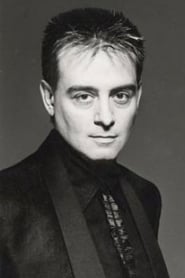 Claudio Simonetti
Defining Music Collaborator
Simonetti is one of the defining musical collaborators of Argento's horror career, sharing films including Suspiria, Tenebrae, Demons, Opera, The Mother of Tears and Dracula 3D, as well as Argento's involvement with Dawn of the Dead.
FF
Franco Fraticelli
Defining Editing Collaborator
Fraticelli edited an extraordinary run of Argento horror and giallo productions, including The Bird with the Crystal Plumage, The Cat o' Nine Tails, Deep Red, Suspiria, Inferno, Tenebrae, Phenomena and Opera.
 Franco Ferrini
Screenwriting Collaborator
Ferrini became one of Argento's most persistent writing collaborators across films including Phenomena, Opera, Two Evil Eyes, Sleepless and Dark Glasses, while also contributing to Argento-produced horror such as Demons, Demons 2 and The Church.
 Michele Soavi
Directing Collaborator
Soavi worked closely within Argento's horror circle across Tenebrae, Phenomena and Opera before directing Argento-backed productions including The Church and The Sect, with Demons forming another major shared genre project.
 Lamberto Bava
Director and Producing Collaborator
Bava collaborated with Argento on Inferno and Tenebrae before directing Demons and Demons 2, two major horror films developed and produced with Argento.
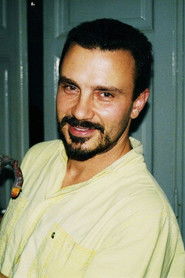 Sergio Stivaletti
Special Effects Collaborator
Stivaletti became a major practical effects collaborator within Argento's horror cinema, sharing productions including Phenomena, Demons, Opera, The Church and The Sect.
Dario Argento Horror Movies
Directing (24 credits)
2022
2012
2010
2007
2005
2005
2005
2004
2001
1998
1996
1993
1990
1987
1985
1982
1980
1977
1975
1973
1971
1971
1970
Writing (30 credits)
2026
2023
2022
2018
2012
2010
2007
2005
2004
2001
1998
1997
1996
1993
1991
1990
1989
1987
1986
1985
1985
1982
1980
1978
1977
1975
1973
1971
1971
1970
Acting (16 credits)
2023
2022
2022
2019
2016
2004
2001
1997
1992
1987
1985
1982
1980
1977
1975
1973
Production (16 credits)
2022
2007
2004
2001
1997
1996
1993
1991
1990
1989
1987
1986
1985
1985
1978
1973
Music & Sound (2 credits)
1978
1977
Other Crew (3 credits)
2011
1994
1989