


1981
Mario Bava
Horror Director · Biography · Horror Filmography · Family · Collaborators · Credits
Horror subgenres & themes
Most represented across this person's horror filmography:
HAUNTED HOUSES
• HORROR ANTHOLOGY
• POSSESSION
• SLASHER
Biography
Mario Bava and the Foundations of Modern Italian Horror
Mario Bava was one of the decisive architects of modern horror cinema, a filmmaker whose importance extends far beyond the relatively small number of features he directed. Trained as a cinematographer, effects technician and visual problem-solver before becoming a director, he approached filmmaking less as an exercise in literary prestige than as a craft of transformation. Cheap sets could become labyrinthine castles, a few painted surfaces could suggest vast landscapes, colored lamps could turn ordinary interiors into fever dreams, and limited production resources could be converted into images with a scale and atmosphere that exceeded what was physically available on the set. That practical ingenuity became the basis of a style whose influence reached Gothic horror, the giallo, science-fiction horror and the slasher film.
Bava did not invent Italian horror by himself, and his career emerged from a much wider industrial culture of technicians, producers and genre filmmakers. His position is nevertheless exceptional because he repeatedly appeared at moments when new forms were taking shape. He helped complete I Vampiri, a landmark in the return of Italian horror during the sound era, then made his official solo feature debut with Black Sunday, one of the films that established Italian Gothic horror internationally. The Girl Who Knew Too Much and Blood and Black Lace became foundational works in the development of the giallo. Planet of the Vampires demonstrated how science fiction and horror could be fused through design and atmosphere, while A Bay of Blood anticipated important features of the later slasher cycle. Across these very different films, the continuity is Bava himself: a director who thought through lenses, shadows, color, movement and effects.
From Sanremo to the Italian Film Industry
Mario Bava was born in Sanremo in 1914 into a family already connected to the technical foundations of Italian cinema. His father, Eugenio Bava, worked as a cameraman, effects specialist, sculptor and optical technician during the silent era and later at the Istituto Luce. Mario originally had strong interests in painting, an important background for a filmmaker whose mature work would so often depend on composition, texture and the manipulation of color. Rather than entering cinema immediately as an auteur in the conventional sense, he learned through practical work, assisting his father and developing skills in photography, lighting, miniatures, matte work and effects.
By the late 1930s and 1940s Bava was working professionally as a camera operator and cinematographer. He photographed short films associated with Roberto Rossellini and went on to work across an extraordinary range of Italian productions. The importance of this long apprenticeship cannot be overstated. By the time he became a fully credited feature director, he had spent roughly two decades solving other filmmakers' visual problems. He knew how to make faces, sets and miniatures photograph effectively, how to hide limitations inside lighting schemes, and how to create depth where the studio offered very little. The later Bava style did not emerge suddenly with horror. It was the result of years spent mastering the material mechanics of the image.
Riccardo Freda, I Vampiri and the Return of Italian Horror
A crucial stage in Bava's movement toward directing came through his collaboration with Riccardo Freda. I Vampiri, released in 1957, is historically important as an early Italian horror feature of the sound era and as a production on which Bava's responsibilities expanded beyond cinematography. Freda left the project before completion after a dispute with the producers, and Bava finished the remaining work. Contemporary accounts differ on the exact balance of responsibility in some later Freda productions, so it is more accurate to describe Bava as a major technical and, in specific cases, directorial contributor than to retroactively claim entire films for him.
The collaboration nonetheless demonstrated what Bava could do when a production needed to be rescued quickly. On I Vampiri, his lighting and effects were central to a story that fused Gothic imagery, crime and pseudo-scientific horror. The transformation effects created for Gianna Maria Canale, achieved through controlled changes in lighting and makeup rather than expensive optical post-production, are a particularly clear example of Bava's approach. The effect is not merely a trick placed on top of the story. It turns the physical mechanics of cinematography into the event itself, a principle that would recur throughout his career whenever a wall, face, room or landscape seemed to change before the viewer's eyes.
Bava's work with Freda continued to blur the boundary between cinematography, effects and direction. On Caltiki, the Immortal Monster, later recollections disagreed about exactly how much material Bava directed, but his responsibility for photography, effects and miniature work is central to the film's visual identity. The uncertainty itself reflects the production culture from which he emerged, where a trusted technician could assume additional duties when budgets, schedules or conflicts demanded it. By the end of the 1950s, Bava had already demonstrated that he could do far more than photograph another director's images.
Black Sunday and the Birth of a Horror Auteur
Black Sunday, released in 1960, was Bava's official solo feature directing debut and immediately established the visual language most closely associated with his Gothic cinema. Very loosely derived from Nikolai Gogol's Viy, the film opens with the execution of the witch Asa Vajda, played by Barbara Steele, and the hammering of a spiked mask onto her face. Even before its supernatural plot fully begins, the sequence announces a new relationship between beauty and violence. Bava composes the scene with the ceremonial gravity of classical Gothic horror while allowing the physical cruelty to become startlingly direct.
The film's black-and-white photography is essential to its power. Bava uses fog, branches, stone corridors, crypts and moving light not simply as decorative atmosphere but as a system of spatial uncertainty. Rooms appear deeper than they are, entrances seem to emerge out of darkness, and faces can become almost sculptural under the lighting. Barbara Steele's dual role as Asa and Katia turns that visual instability into a dramatic principle. The same face can represent corruption and innocence, ancient vengeance and threatened youth, depending on makeup, framing and light.
Black Sunday became internationally important because it proved that an Italian horror film could possess an identity distinct from both Universal's classical monsters and Hammer's contemporary Gothic revival. Bava clearly understood those traditions, but he intensified them through a more erotic, tactile and morbid visual sensibility. The film's international circulation also introduced Steele as one of the defining faces of European Gothic horror. For Bava, it demonstrated that the skills he had accumulated as a technician could sustain an entire film rather than merely embellish somebody else's direction.
Hercules in the Haunted World and Horror Inside the Peplum
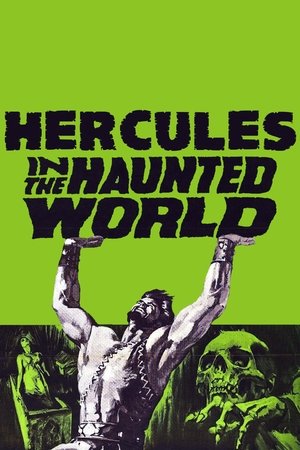
Bava did not immediately become a horror specialist after Black Sunday. The Italian industry was structured around rapidly changing commercial cycles, and he moved through sword-and-sandal adventures, historical spectacles, westerns, spy films and comedy. Hercules in the Haunted World is especially revealing because it shows how easily his horror instincts could enter another genre. On paper it belongs to the peplum cycle, with Reg Park as Hercules and Christopher Lee as the villainous Lico, but Bava continually redirects the material toward tombs, underworld landscapes, supernatural menace and hallucinatory color.
The production also became another demonstration of his ability to manufacture scale. Limited sets, movable architectural elements, painted extensions and controlled lighting create a world far more elaborate than the resources suggest. Red, violet and blue illumination detach the environments from naturalism and turn them into emotional spaces. This approach would become one of Bava's signatures in color. He rarely used colored light merely to indicate a realistic source. Color could be expressive in itself, assigning fear, desire or unreality to a room even when no plausible lamp inside the story could explain it.
The Girl Who Knew Too Much and the First Shape of the Giallo
With The Girl Who Knew Too Much, Bava moved from Gothic horror toward the modern urban thriller. The film follows an American visitor to Rome who believes she has witnessed a murder and becomes drawn into an investigation shaped by uncertainty, coincidence and her own fascination with mystery fiction. Its title openly plays with Alfred Hitchcock, but Bava's contribution was not simple imitation. He brought the mechanisms of crime fiction into a recognizably Italian setting and began assembling a vocabulary that later filmmakers would push into far more violent territory.
The importance of the film to the giallo lies in its combination of amateur investigation, subjective perception, tourism, modern urban space and serial murder. Rome is both attractive and threatening. Streets and stairways that should belong to the everyday city become zones in which the protagonist cannot be sure whether what she has seen will be believed. Bava's black-and-white photography repeatedly makes modern locations behave like Gothic ones, using darkness and architecture to isolate the heroine even when she is far from castles or crypts.
The American release, retitled The Evil Eye, was altered substantially, including changes to music and tone. That history is important because Bava's films were frequently reshaped for different markets, sometimes enough to affect how they were understood for decades. The original Italian version makes clearer how The Girl Who Knew Too Much belongs to a transitional moment. It still contains humor and romantic elements, but the basic machinery of the later giallo is already visible.
Black Sabbath and the Anthology as a Laboratory of Fear
Black Sabbath allowed Bava to compress several different kinds of horror into a single anthology. The three stories move between contemporary menace, supernatural Gothic terror and the macabre consequences of violating the dead. Rather than seeking one consistent form, Bava treats the film almost as a demonstration of how many emotional registers horror can sustain. A telephone becomes an instrument of intimate fear, a rural landscape becomes the territory of the wurdalak, and a dead medium transforms a domestic interior into one of the most oppressive spaces in his filmography.
The segment often known as The Drop of Water is particularly representative of Bava's control over objects and sound. A corpse, a ring, dripping water and carefully arranged interior space generate a chain of dread in which ordinary domestic details become unbearable. The effect depends less on narrative complexity than on timing, repetition and the grotesque stillness of the dead body. Bava understood that horror could be built from the audience's anticipation of movement rather than movement itself.
Black Sabbath also belongs to the period in which Bava's collaboration with cinematographer and camera operator Ubaldo Terzano reached its most important stage. Their work exploited mobile camerawork, richly layered compositions and increasingly expressive color. The film's different international versions again complicate its history, but the Italian cut preserves the range of tones more clearly and shows Bava treating anthology form as an opportunity to test distinct visual systems within the same production.
The Whip and the Body: Gothic Desire and Sadomasochism
The Whip and the Body pushed Bava's Gothic cinema toward a more explicitly erotic form. Christopher Lee plays Kurt Menliff, whose return to a decaying aristocratic household revives a destructive relationship with Nevenka, played by Daliah Lavi. The film treats desire as something inseparable from cruelty, memory and death. Its central relationship is not a conventional romance interrupted by horror. The relationship itself is the source of horror, built around attraction to humiliation, domination and pain.
Bava's color design turns the castle into a psychological environment. Blues, reds and purples move across walls and faces with little concern for realistic illumination, making the interiors appear to respond to the characters' emotional states. The beach, corridors and bedrooms seem less like stable locations than zones where memory and desire repeatedly return. The result is one of Bava's clearest demonstrations that Gothic horror could be modern in its psychology even while retaining castles, ghosts and aristocratic decay.
The film also illustrates the industrial conditions under which he worked. Bava sometimes directed under Anglicized pseudonyms, part of a wider Italian practice intended to make local genre productions appear more international. The name attached to the print could change, but the visual authorship remained unmistakable. Few filmmakers of the period used color with such little interest in naturalism and such confidence that emotional atmosphere could justify the most artificial lighting choices.
Blood and Black Lace and the Giallo Transformed
If The Girl Who Knew Too Much established an early giallo structure, Blood and Black Lace transformed that structure into a fully developed visual system. Set around a fashion house, the film follows the murders of models by a faceless killer whose black gloves, dark clothing and obscured features became central to later giallo iconography. The mystery remains important, but Bava repeatedly allows the murder sequences to overwhelm conventional detective logic. Each killing becomes an autonomous composition of color, movement, architecture and violence.
The fashion setting is essential. Mannequins, fabrics, mirrors and posed bodies already blur the distinction between people and objects before the killer begins turning living women into carefully arranged images of death. Bava and Ubaldo Terzano use intense reds, greens and purples against deep shadows, creating a visual world in which naturalistic lighting has almost disappeared. The beauty of the images does not soften the violence. Instead, beauty and cruelty become deliberately difficult to separate.
The film's influence on later Italian thrillers is enormous. Dario Argento and the filmmakers who expanded the giallo during the 1970s developed the form in their own directions, but many of its most recognizable components are already organized here: the anonymous killer, fetishized gloves and weapons, subjective stalking, elaborate death scenes, unstable sexuality, modern design and a plot whose sensory impact can matter more than procedural plausibility. Blood and Black Lace is therefore not simply an early entry in a genre. It is one of the films that taught later directors what that genre could look like.
Planet of the Vampires and Horror in Outer Space
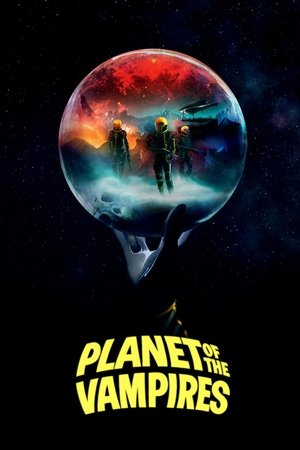
Planet of the Vampires carried Bava's methods into science fiction. Its explorers land on the planet Aura, where an external force drives crew members toward violence and the dead become vehicles for alien possession. The production had limited resources, but Bava uses fog, colored lighting, forced perspective, sound and costume design to create an environment that feels larger than its physical sets. The alien planet is less a geographical location than a continuous atmospheric condition.
The film's most famous imagery involves the discovery of enormous skeletal remains and an abandoned alien craft, scenes that later became central to discussions of its relationship with Ridley Scott's Alien. Claims of direct influence have varied over the years, so the safest conclusion is not that Bava single-handedly supplied the later film, but that Planet of the Vampires belongs unmistakably to the visual prehistory of modern science-fiction horror. Its mixture of exploratory science fiction, corpse possession, hostile landscape and ancient extraterrestrial remains anticipates combinations that would become much more familiar later.
More important than any single line of influence is the film's demonstration that Bava's horror depended on spatial design rather than Gothic period settings. The same director who could make a crypt frightening could make a planetary surface frightening because his real subject was not architecture itself but the instability of the image. Fog hides distance, colored light destroys normal depth cues, and bodies cease to guarantee identity once they can be occupied by something else.
Kill, Baby... Kill! and the Dream Logic of the Gothic
Kill, Baby... Kill! brought Bava back to the supernatural Gothic, but with a style even less constrained by ordinary space. The story concerns a village haunted by the ghost of a child whose appearances precede death. Bava combines medical investigation, superstition, family guilt and spectral revenge, yet the film's lasting power comes from the way its locations gradually stop behaving according to rational geography. Stairways, rooms and passages repeat, characters seem to chase themselves through impossible spaces, and a child's face at a window can destabilize an entire composition.
The production was financially troubled, and accounts of the shoot emphasize how little money remained available as filming progressed. That scarcity makes the finished result even more revealing. Bava's solution was not to hide the poverty through conventional realism but to push further into stylization. Colored light, fog, camera movement and selective framing turn limitation into abstraction. The village becomes less a physical place than a closed nightmare in which every route seems to return to the same trauma.
The film's influence can be felt in later supernatural horror built around uncanny children, repeating spaces and images that are frightening because they are simultaneously beautiful and wrong. It also represents Bava at one of his purest points as a visual storyteller. Plot matters, but the film's deepest logic is sensory. Fear is generated through recurrence, rhythm and the suspicion that the world on screen has quietly abandoned the rules governing ordinary reality.
Hatchet for the Honeymoon and the Killer as Protagonist
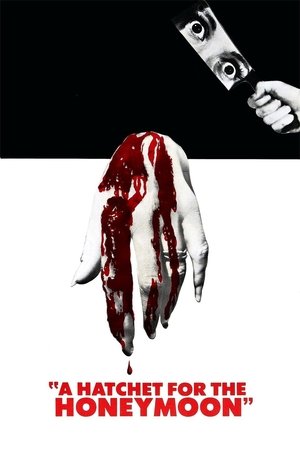
Hatchet for the Honeymoon returns to murder but approaches the giallo from an unusual angle by identifying its killer almost immediately. John Harrington, a fashion-house owner who murders brides, is not a hidden figure waiting to be exposed in the final reel. The film instead focuses on his compulsion, his fragmented memory and his attempt to understand the childhood trauma connected to his crimes. Bava therefore removes one of the genre's central pleasures, the revelation of identity, and replaces it with psychological entrapment.
The fashion milieu inevitably recalls Blood and Black Lace, but the two films operate differently. In the earlier film the killer is part of an intricate murder mystery and the victims are arranged within a world of mannequins and couture. In Hatchet for the Honeymoon, the killer's own subjectivity becomes the unstable space. The supernatural material involving his wife further complicates the narrative until a man accustomed to controlling death finds himself unable to control the dead.
The film is also characteristic of Bava's willingness to dismantle formulas he had helped establish. Rather than repeating the anonymous black-gloved killer exactly, he asks what remains when the audience already knows who is responsible. The answer is that suspense can come from the killer's incomplete self-knowledge and from the gradual transformation of his apparently controlled environment into another trap.
A Bay of Blood and the Road to the Slasher Film
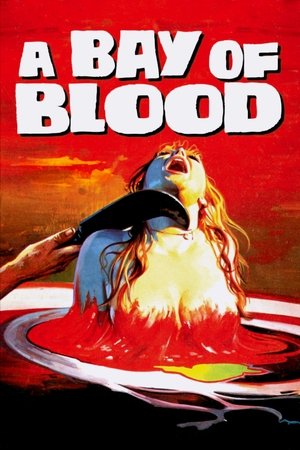
A Bay of Blood represents one of Bava's most important interventions in the future of horror. Built around property, inheritance and a chain of betrayals, the film refuses to organize violence around a single stable monster. Characters kill and are killed as greed spreads through the ensemble, producing a structure in which almost anyone can become predator or victim. The moral world is correspondingly bleak. Violence is not an invasion of an innocent community but part of the community's basic logic.
The murders are unusually graphic and varied for the period. Carlo Rambaldi's effects contribute to a series of killings staged with a directness that later slasher films would make familiar. The arrival of young visitors around the bay also creates a recognizable prototype for the body-count structure of later American horror. Several commentators have noted particularly close parallels between individual deaths in Bava's film and deaths in Friday the 13th Part 2. The relationship is important not because every later slasher can be reduced to Bava, but because A Bay of Blood demonstrates that many of the form's visual and structural pleasures were already available in 1971.
Bava also turns the natural environment into part of the violence. The bay is beautiful, but ownership of it produces murder after murder. This creates a sharp contrast with the urban fashion world of Blood and Black Lace. In one film artificial elegance conceals exploitation and death; in the other, apparently peaceful nature becomes the territory over which people destroy one another. The settings change, but Bava's pessimism about possession and desire remains.
Baron Blood and the Commercial Return to Gothic Horror
Baron Blood returned Bava to castles, ancestral violence and supernatural resurrection at a moment when the Italian Gothic cycle that had helped establish his reputation no longer occupied the same commercial position. The film stars Joseph Cotten and Elke Sommer and was produced by Alfredo Leone. Its story of a murderous nobleman brought back through an occult ritual has familiar Gothic components, but Bava approaches them with the experience of a director who had spent the previous decade moving through giallo, science fiction, pop fantasy and increasingly graphic violence.
The film's commercial performance proved important for Bava's next project. Leone subsequently gave him unusual freedom to make Lisa and the Devil, a far more personal and dreamlike work. That transition reveals an important tension in Bava's career. Commercial assignments sometimes restricted him, but successful assignments could also create temporary opportunities for experimentation. He remained a filmmaker inside a producer-driven genre industry, constantly negotiating between what could be sold and what he wanted to explore visually.
Lisa and the Devil and the Dream of Complete Freedom
Lisa and the Devil is among Bava's most personal and elusive films. Elke Sommer plays Lisa, a tourist who becomes lost and enters a strange household where identities, memories and relationships seem to repeat across time. Telly Savalas appears as the enigmatic Leandro, a servant whose resemblance to an image of the devil immediately destabilizes the boundary between ordinary reality and supernatural design. Rather than building toward a conventional explanation, the film allows repetition and dream logic to become its organizing principles.
The production is particularly significant because Alfredo Leone gave Bava a degree of freedom he rarely enjoyed. The result is less concerned with satisfying genre mechanics than with atmosphere, memory, death and the sense that characters may be trapped inside roles that existed before they arrived. Mannequins become doubles, gestures recur, and the villa behaves like a stage on which the same emotional patterns are being performed again. The film's visual density connects it to Bava's Gothic work, but its narrative opacity makes it feel closer to a nightmare that refuses to translate itself into a simple solution.
Its commercial history was painful. When the original version proved difficult to sell, new possession material was created and the film was reworked into The House of Exorcism, attempting to capitalize on the international success of demonic-possession cinema. The altered version obscured the qualities that made Lisa and the Devil distinctive. Later availability of Bava's preferred version contributed to its critical reassessment and to a broader revaluation of the director as more than an efficient maker of disposable genre pictures.
Rabid Dogs and the Rejection of the Bava Look
Rabid Dogs is one of the great anomalies in Bava's filmography. A violent crime story centered on criminals, hostages and a car journey, it largely abandons the Gothic spaces, artificial color worlds and elaborate effects associated with his reputation. The result is harsh, claustrophobic and deliberately ugly. Much of the film's pressure comes from keeping incompatible people trapped together inside a vehicle while physical heat, fear and aggression accumulate.
The change in style demonstrates that Bava was not simply a decorative filmmaker dependent on colored lamps and fog. When the story required a stripped-down approach, he could remove the visual luxuries that had become his signature and build tension through faces, confinement and duration. Production difficulties prevented the film from receiving a normal release during his lifetime, and later versions complicated its textual history, but its survival significantly expanded understanding of what Bava could do.
Rabid Dogs also belongs to a darker period of Italian popular cinema in which crime films absorbed contemporary anxieties about violence, instability and social breakdown. Bava does not transform this material into a supernatural nightmare. He allows human behavior itself to supply the horror, making the film an extreme expression of the pessimism already present beneath the stylization of A Bay of Blood.
Shock and the Final Theatrical Horror Film
Shock, released in 1977, became Bava's final theatrical feature as director and brought him back to the haunted-house form in a contemporary domestic setting. Daria Nicolodi plays a woman returning with her family to a house connected to traumatic events in her past. The film gradually makes the home unstable through possession, memory and the disturbing behavior of a child. The supernatural threat is inseparable from family history, allowing ordinary rooms to become psychologically charged without the need for a traditional castle or remote village.
Lamberto Bava, who had spent years working beside his father, was deeply involved in the production and is associated with portions of the direction as well as the screenplay. That collaboration gives Shock an additional historical position as a bridge between generations of Italian horror filmmaking. Mario's methods remain visible in the camera tricks, sudden transformations of space and deceptively simple practical illusions, while Lamberto would soon move into a directing career of his own.
One of the film's most memorable effects involves a child's movement transforming unexpectedly into that of an adult, achieved through staging and camera placement rather than elaborate technology. It is a small example of the philosophy that had guided Bava from the beginning. The effectiveness of an image was not proportional to the money spent on it. What mattered was understanding exactly what the camera needed to reveal and what the audience would supply for itself.
Color as an Instrument of Fear
Bava's use of color remains one of the most immediately recognizable elements of his cinema. He was not the first horror director to use saturated color, nor was every Bava film built around the same palette, but he repeatedly treated light as an expressive force independent of realistic motivation. Rooms could be flooded with red, green, blue or violet because the emotional temperature of the scene demanded it. The image did not need to explain where every color originated.
This approach reached different forms in The Whip and the Body, Blood and Black Lace, Planet of the Vampires and Kill, Baby... Kill!. In Gothic settings, color makes architecture feel haunted from within. In the fashion-house world of Blood and Black Lace, it turns luxury into menace. On the planet Aura, it eliminates ordinary spatial orientation and creates an environment that seems chemically hostile. Bava's colors are therefore not a decorative signature applied unchanged across genres. They are a flexible way of making physical spaces express psychological states.
His influence on later horror color design is difficult to isolate because it spread through multiple traditions, particularly Italian genre cinema. What can be stated with confidence is that filmmakers who followed him inherited a model in which horror lighting no longer needed to apologize for artificiality. A red room could be frightening precisely because it did not resemble normal life.
The Camera, Depth and the Construction of Impossible Space
Bava's background as a cinematographer also shaped the way he organized depth. Foreground objects, doorways, veils, branches, furniture and architectural frames frequently divide the image into layers. Characters can appear trapped inside compositions before the story explicitly traps them. Moving cameras then reveal or conceal information by sliding between those layers, making space itself part of suspense.
This technique was especially useful on restricted sets. By placing material close to the lens, controlling focus and lighting separate planes differently, Bava could make a small area feel complex. Matte paintings and miniature elements extended that illusion when necessary. The result is often theatrical in construction but cinematic in effect. The viewer senses a world beyond the physical boundaries of the studio because Bava controls exactly how much of those boundaries can be seen.
His best spatial effects rarely call attention to themselves as demonstrations of technique. They are absorbed into mood. A corridor feels endless, a room appears to change size, or a landscape suggests scale that was never actually built. This is one reason restorations of his films have strengthened his reputation. Improved image quality allows viewers to appreciate both the richness of the construction and the delicacy with which practical limitations were hidden.
Special Effects, Matte Paintings and the Art of Making Almost Nothing Look Expensive
Bava's reputation as a technical magician was earned through an unusually broad command of practical filmmaking. He could supervise effects, paint, manipulate lighting, devise miniature shots and understand how those elements would register photographically. This made him particularly valuable inside an industry where schedules were short and budgets often unstable. A director without technical knowledge might respond to missing resources by reducing ambition. Bava frequently responded by finding another optical path to the same impression.
Glass paintings and mattes allowed him to extend buildings or landscapes without constructing them. Miniatures could be integrated through perspective and lighting. Smoke hid transitions between real and artificial space. A carefully chosen lens could make a small set appear deeper. These methods were not unique to Bava, but his ability to combine them while also directing performances and shaping atmosphere made them unusually central to his authorship.
The philosophy behind the tricks is more important than cataloguing every individual effect. Bava understood that cinema does not need to reproduce reality in front of the camera. It needs to produce a convincing image from the camera's point of view. That distinction allowed him to create some of European horror's most memorable spaces with resources that were often radically smaller than they appeared.
Violence, Bodies and the Beauty of the Murder Set Piece
Bava's relationship with screen violence changed significantly across his career. Black Sunday shocked through isolated moments of bodily violation within a Gothic framework. Blood and Black Lace made murder more prolonged and visually elaborate, turning individual deaths into set pieces. A Bay of Blood pushed still further toward explicit bodily damage and a rapidly accumulating body count. These films form a rough trajectory toward forms of violence that would become common in later horror.
What makes Bava's violence distinctive is the tension between aesthetic control and physical cruelty. The murder scene may be beautifully lit, compositionally elegant and technically ingenious while depicting something brutal. This contradiction would become central to debates around the giallo and slasher traditions, where spectatorship itself is complicated by the pleasure of looking at images of death. Bava does not resolve that contradiction. His films often intensify it.
At the same time, it would be misleading to reduce his horror to gore. Some of his strongest sequences contain little explicit violence. The dead medium in Black Sabbath, the child at the window in Kill, Baby... Kill!, or the oppressive domestic spaces of Shock depend on anticipation, stillness and the corruption of ordinary perception. Bava's importance lies partly in his ability to work at both extremes, from quiet dread to sudden physical assault.
Mario Bava and the Evolution of the Giallo
Bava's place in the history of the giallo rests primarily on a sequence of films rather than a single invention. The Girl Who Knew Too Much provided an early modern murder mystery organized around an amateur witness and unstable perception. Blood and Black Lace codified a far more aggressive visual vocabulary of anonymous killers, gloves, fetishized weapons, eroticized danger and stylized murder. Hatchet for the Honeymoon then inverted the mystery by making the killer's identity known, while A Bay of Blood fragmented the role of killer across a corrupt ensemble and pushed the body-count structure toward the slasher.
This progression shows that Bava's contribution was not simply the creation of a checklist. He kept altering the relationship between viewer, killer and victim. Sometimes the audience investigates with the protagonist; sometimes it watches a killer stalk from a privileged position; sometimes the killer is known but does not fully understand himself; sometimes nearly everyone becomes capable of murder. Later giallo filmmakers would expand the genre through more complex mysteries, sexual pathology, political anxiety and increasingly elaborate violence, but Bava had already demonstrated its extraordinary flexibility.
Influence on Argento, Carpenter and Later Horror
Bava's influence is most obvious within Italian horror, where directors including Dario Argento inherited a visual culture that Bava had helped transform. Blood and Black Lace provided a crucial model for the stylized giallo, while Kill, Baby... Kill! demonstrated how supernatural horror could use color and spatial disorientation without abandoning Gothic imagery. Argento's cinema became recognizably his own, but the possibility of treating murder, architecture and color as autonomous cinematic attractions had already been powerfully established.
The connection to American horror is equally important. A Bay of Blood is routinely discussed as a precursor to the slasher, particularly in relation to the Friday the 13th cycle. John Carpenter's Halloween emerged from a different production context and owes major debts to several earlier traditions, but Bava belongs to the lineage that made the masked or faceless killer, subjective stalking and highly controlled visual suspense central to modern horror. His influence is therefore best understood as a network rather than a single direct line.
Filmmakers and critics including Joe Dante, Martin Scorsese, Tim Burton and Guillermo del Toro have participated in the long reassessment of Bava's work, whether through explicit admiration, references or the broader circulation of his films among later generations. What was once dismissed as disposable exploitation became increasingly visible as a coherent body of visual invention. That reevaluation changed not only Bava's reputation but also the critical status of Italian popular cinema more generally.
A Director Formed by the Filone System
Understanding Bava also requires understanding the Italian filone system in which he worked. Popular cinema frequently organized itself around commercially successful cycles, with producers moving rapidly toward whatever type of film appeared marketable at a given moment. Bava therefore moved through Gothic horror, peplum, giallo, science fiction, westerns, spy films, sex comedy, comic-book adaptation and crime. This variety was not evidence of indecision. It was the normal condition of a craftsman working inside a highly responsive genre industry.
The system created both limitations and opportunities. Scripts could be weak, financing unstable and schedules extremely short, but rapid production also allowed technicians with imagination to experiment without the institutional weight surrounding prestige cinema. Bava's artistry developed inside those constraints rather than outside them. He did not need to stop being an artisan in order to become an auteur. His authorship can be seen precisely in the recurring solutions he found while serving material that was often initiated for commercial reasons.
This is why his filmography can look inconsistent if judged only by genre or narrative prestige. A Gothic masterpiece can sit beside a western or comedy made because the market demanded it. Yet the same visual intelligence repeatedly resurfaces. Bava's career is less a straight line of personal projects than a record of one technician-director continually imposing imagination on whatever industrial problem arrived next.
Mario Bava's Horror Legacy
Mario Bava died in Rome in April 1980, just as another cycle of horror filmmaking was accelerating internationally. By then the American slasher was beginning to turn structures he had explored years earlier into a major commercial form, while Italian horror was moving through the work of filmmakers who had inherited part of the visual freedom he helped establish. His son Lamberto was beginning his own directing career, extending the family's connection to cinema into a third generation.
Bava's legacy cannot be contained by the label of stylist, even though style is central to his achievement. He changed horror by demonstrating that technical limitations could become sources of invention. He helped move Italian Gothic horror into international circulation, supplied essential building blocks for the giallo, imagined science-fiction horror through color and atmosphere, and created a body-count film whose influence can be traced into the slasher tradition. At the same time, films such as Lisa and the Devil and Rabid Dogs show how misleading it would be to treat him as a director who simply repeated formulas he had helped create.
What unifies the career is a belief in the constructed image. Bava understood cinema as an art of controlled deception in which a piece of glass, a colored lamp, a miniature, a camera movement or a carefully hidden edge could alter the apparent size and meaning of the world. Horror was the ideal territory for that philosophy because horror depends on making spectators doubt what they see while forcing them to keep looking. Few filmmakers of his generation turned that contradiction into such a durable body of work.
Photos (1)
Images: TMDB
Selected Work
Notable Horror Collaborators
Notable collaborators and creative partners throughout Mario Bava's horror career.
 Riccardo Freda
Director / Cinematographer
A foundational collaborator in Mario Bava's transition from cinematographer and effects specialist to director. Their work together on I Vampiri and Caltiki, the Immortal Monster placed Bava at the center of the revival of Italian horror in the late 1950s, with Bava assuming substantial technical and directorial responsibilities when production circumstances required it.
UT
Ubaldo Terzano
cinematographer
A crucial visual collaborator during Bava's foundational period, working with him across Black Sunday, The Girl Who Knew Too Much, Black Sabbath, The Whip and the Body and Blood and Black Lace as camera operator or cinematographer.
MS
Mario Serandrei
editor
A key editorial collaborator on Bava's early horror and giallo films. Serandrei edited Black Sunday, The Girl Who Knew Too Much, Black Sabbath and Blood and Black Lace, and also contributed to the screenplay of Black Sunday.
AR
Antonio Rinaldi
cinematographer
An important cinematography collaborator during Bava's color period, with horror credits together including Planet of the Vampires, Kill, Baby... Kill!, Five Dolls for an August Moon and Baron Blood.
 Carlo Reali
editor
A major collaborator during Bava's later period, editing A Bay of Blood, Baron Blood and Lisa and the Devil, three films that show the director moving from proto-slasher violence back into Gothic and dreamlike horror.
RN
Roberto Nicolosi
composer
Composer for several of Bava's foundational genre films, including Black Sunday, The Girl Who Knew Too Much and Black Sabbath, helping define the sound of his early horror and giallo work.
Mario Bava Horror Movies
Directing (19 credits)
1981
1980
1979
1977
1975
1973
1972
1971
1970
1970
1966
1965
1964
1963
1963
1963
1961
1960
1959
Cinematography (14 credits)
1977
1975
1972
1971
1970
1970
1966
1965
1964
1963
1961
1960
1959
1957
Writing (13 credits)
1975
1973
1972
1971
1970
1968
1966
1965
1964
1963
1963
1961
1957
Special FX / Practical FX (3 credits)
1960
1959
1957
Acting (2 credits)
1963
1959
Other Crew (3 credits)
2011
1980
1970
Visual Effects (1 credits)
1960
Editing (1 credits)
1970
Production Design / Art Department (1 credits)
1970