



2026
Danielle Harris
Horror Actor · Biography · Horror Filmography · Collaborators · Credits
Horror subgenres & themes
Biography
Danielle Harris and a Life Inside the Slasher Film
Danielle Harris has spent an unusual portion of her screen career inside horror mythology. She entered the genre as a child playing Jamie Lloyd in Halloween 4: The Return of Michael Myers and Halloween 5: The Revenge of Michael Myers, returned to the same franchise as an adult in Rob Zombie's two Halloween films, became Marybeth in the Hatchet series and continued working steadily across slashers, supernatural horror, post-apocalyptic horror and independent genre productions. The continuity is remarkable because Harris did not simply become associated with one character. Horror repeatedly found new ways to use the history audiences already carried with her.
That history also changed the meaning of her later performances. When Harris appears in a slasher as an adult, viewers familiar with Jamie Lloyd already remember a child pursued by Michael Myers. When she confronts Victor Crowley as Marybeth, the role arrives with decades of accumulated final-girl associations. Harris has therefore become one of the performers through whom different periods of American slasher cinema connect directly: the studio franchise sequels of the late 1980s, the self-aware horror of the 1990s, the remake cycle of the 2000s and the practical-effects revival represented by Hatchet.
Halloween 4 and the Introduction of Jamie Lloyd
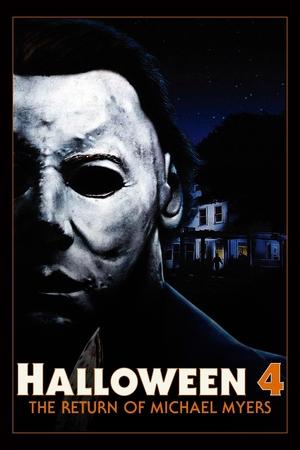
Halloween 4: The Return of Michael Myers introduced Harris to horror audiences in 1988 as Jamie Lloyd, the young daughter of Laurie Strode and niece of Michael Myers. The film returns Michael to the center of the franchise after Halloween III had attempted to move the series into anthology territory. Jamie consequently becomes the new family connection through which Michael's return to Haddonfield acquires personal meaning, while Donald Pleasence returns as Dr. Samuel Loomis to provide continuity with the earlier films.
Harris carries an unusually demanding role for a child performer because Jamie spends much of the film frightened, hunted and attempting to understand why a figure she barely knows is trying to kill her. The character is vulnerable without being passive. As the night escalates, Jamie must repeatedly respond to immediate danger while depending upon older characters whose ability to protect her becomes increasingly uncertain. The final image, which places Jamie in a clown costume echoing the young Michael Myers from the original film, gives Harris one of the franchise's most disturbing endings and temporarily suggests that violence may have reproduced itself inside another generation of the family.
Ellie Cornell and the Emotional Core of Halloween 4
Ellie Cornell's Rachel Carruthers becomes the most important human relationship surrounding Jamie during Halloween 4. Rachel is Jamie's foster sister and spends much of the film trying to protect her while Michael systematically destroys the ordinary world around them. Their relationship gives the movie an emotional structure stronger than a simple sequence of chases because Jamie's survival depends upon someone who has chosen to remain responsible for her even when that responsibility becomes physically dangerous.
Cornell returned with Harris in Halloween 5, allowing the relationship to continue rather than reset completely between sequels. This two-film connection is particularly important to Harris because Rachel belongs to the first stage of her horror identity. Before Harris became an adult genre performer or a convention figure associated with multiple franchises, the audience knew her primarily as Jamie, and Cornell was the performer most directly responsible for giving that child character a believable family bond inside the films.
Donald Pleasence and Dr. Loomis
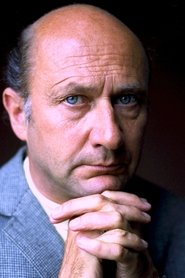
Donald Pleasence shared both Halloween 4 and Halloween 5 with Harris as Dr. Samuel Loomis. The connection is significant because Loomis and Jamie occupy different but complementary positions within the mythology. Loomis understands Michael through years of obsession and failed containment, while Jamie experiences him through family inheritance and immediate terror. Pleasence brings the accumulated history of the original films into the sequels, while Harris represents the new generation upon which that history is being imposed.
In Halloween 5, the relationship becomes darker as Loomis grows increasingly desperate to use Jamie's strange connection with Michael in order to locate and stop him. Harris spends substantial portions of the film portraying a traumatized child whose ability to communicate has been severely disrupted by the previous events, forcing much of the performance into physical reaction rather than conventional dialogue. Pleasence responds with a version of Loomis whose obsession has become more severe, creating an uncomfortable dynamic in which the person attempting to save Jamie is also willing to push her toward the source of her trauma.
Halloween 5 and the Burden of Survival
Halloween 5: The Revenge of Michael Myers asks Harris to continue Jamie after the apparent rupture represented by the previous film's ending. Rather than simply turning her into another killer, the sequel presents a child deeply altered by what happened and increasingly connected to Michael through experiences she cannot easily explain. The film therefore changes the nature of her vulnerability. Jamie is still physically hunted, but the threat now appears capable of entering her emotional and psychological life as well.
Harris again carries much of the film despite being surrounded by older performers and an established franchise mythology. The role requires fear, trauma, physical endurance and repeated scenes in which Jamie struggles to make adults understand information she cannot communicate normally. Whatever the later direction of the franchise, these two films established Harris permanently within horror culture before she had entered adolescence, making her relationship with the genre fundamentally different from performers who discovered horror only after already building adult careers elsewhere.
Returning to Horror as an Adult
Harris did not remain continuously inside horror immediately after the two Halloween sequels. She worked across television and mainstream film while growing into adult roles, but the association with Jamie Lloyd never disappeared. By the late 1990s she began returning visibly to genre material, including Urban Legend, where she plays Tosh, the aggressively unconventional roommate of Alicia Witt's Natalie. The role is smaller than Jamie but significant because it places Harris inside the post-Scream slasher revival while audiences who remembered the 1980s films could recognize a former child survivor now inhabiting a new generation of horror.
This pattern would become increasingly important. Harris did not attempt to distance herself permanently from the genre that had first made her recognizable. Instead, she gradually embraced horror as a continuing professional community. Independent filmmakers, convention audiences and established franchises increasingly treated her not merely as a former child actor from Halloween but as a performer whose history inside the genre could itself become part of the appeal of new projects.
Rob Zombie and the Return to Halloween
Rob Zombie brought Harris back into the Halloween universe in 2007, but the casting deliberately avoided simply restoring Jamie Lloyd. Harris instead plays Annie Brackett, a character inherited from John Carpenter's original film and now positioned beside Scout Taylor-Compton's Laurie Strode. The decision gives Harris a peculiar relationship with the remake: she is simultaneously part of the new continuity and a living connection with an earlier branch of the franchise that Zombie is otherwise reconstructing from the beginning.
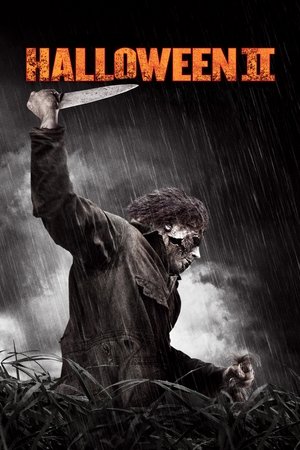
The role also allows Harris to reverse her original position inside the mythology. Jamie was the child being protected from Michael; Annie is now one of the teenagers entering direct danger. Zombie's version subjects the character to a particularly brutal attack while allowing her to survive into the sequel, giving Harris the opportunity to continue Annie as someone visibly changed by what Michael did. That survival becomes far more important in Halloween II, where the aftermath of violence is treated as an ongoing condition rather than a temporary obstacle before another chase begins.
Scout Taylor-Compton and Halloween II
Scout Taylor-Compton and Harris share both of Zombie's Halloween films as Laurie Strode and Annie Brackett. Their relationship becomes especially important in Halloween II, where Laurie and Annie are no longer simply friends moving through an ordinary teenage world before Michael arrives. Both are survivors living inside the consequences of the previous film, and their friendship now exists alongside physical scars, anger, instability and memories of the same violent night.
This makes the Harris-Taylor-Compton connection substantially different from a routine slasher pairing. The sequel gives survival psychological weight and allows Harris to play Annie as someone attempting to build a functioning life despite having already experienced Michael at close range. Her eventual death therefore works through accumulated history rather than only immediate suspense. The audience has watched Annie survive once, live with the consequences and become part of Laurie's damaged support system before Michael destroys that fragile stability.
Adam Green and the Move into Hatchet
Adam Green became one of the most important filmmakers in Harris's adult horror career. Harris had been interested in Green's work before Hatchet II, and when the role of Marybeth became available for the sequel he approached her about taking over the character. Harris later described the project as a rare opportunity to carry a horror film again in a way she had not experienced since the early Halloween movies. Green deliberately made Marybeth more aggressive and active in the sequel, transforming the character from a survivor escaping Victor Crowley into someone returning to the swamp specifically to confront him.
The collaboration fitted naturally into Harris's evolving genre identity. Green built the Hatchet films as a conscious celebration of practical-effects slasher cinema and filled them with performers connected to horror history. Harris therefore enters a franchise that openly values the cultural memory attached to its cast. Her presence connects the series to Halloween, while Kane Hodder's Victor Crowley connects it directly to the physical legacy of Jason Voorhees. The resulting film places two performers already strongly identified with slasher history on opposite sides of a new franchise.
Kane Hodder and Marybeth Against Victor Crowley
Kane Hodder became Harris's defining physical antagonist through Hatchet II and Hatchet III. As Victor Crowley, Hodder represents exactly the kind of unstoppable masked killer Harris had encountered as Jamie Lloyd decades earlier, but Marybeth responds from an entirely different position. She is an adult who understands what Crowley is and deliberately returns to the territory where he killed members of her family. Harris therefore gets to play the survivor not as prey waiting for another attack but as someone attempting to reverse the direction of the hunt.
The confrontation continues through Hatchet III, where Marybeth has already survived direct combat with Crowley and remains tied to the attempt to destroy him permanently. The films allow Harris and Hodder to communicate through radically different performance styles: Harris carries emotional reaction, dialogue and exhaustion, while Hodder creates a largely nonverbal monster through physical aggression. Harris returned briefly as Marybeth in Victor Crowley, extending the connection and confirming that the character remains part of the franchise mythology even when she is no longer the principal protagonist.
Hatchet III and the Final Girl as Combatant
Hatchet III pushes Marybeth even further away from the vulnerable-child identity that first defined Harris in horror. The character enters the film after an apparently successful attack on Crowley, covered in evidence of the violence she has already survived. Rather than spending the entire story discovering what the monster is, Marybeth begins with knowledge that other characters struggle to accept. Harris therefore occupies a position closer to the experienced survivor who understands the rules while institutions remain skeptical.
The transformation across her horror career is striking. Jamie Lloyd depends upon adults to understand and stop Michael Myers. Marybeth possesses the knowledge herself and becomes frustrated by adults who fail to believe her. Harris can therefore revisit familiar slasher structures from the opposite side of experience. The genre that first cast her as a frightened child eventually gives her characters who enter danger already knowing what surviving a monster requires.
Stake Land and Horror Beyond the Slasher
Harris also moved outside conventional slasher cinema with Stake Land, Jim Mickle's post-apocalyptic vampire film. She plays Belle, a pregnant survivor travelling through a devastated America where vampiric creatures and violent human groups have both become threats. The film's atmosphere is substantially different from the theatrical brutality of Hatchet or the franchise machinery of Halloween. Survival is quieter, more exhausted and connected to the gradual disappearance of ordinary civilization.
The role demonstrates why Harris's horror identity should not be reduced entirely to final-girl mythology. Belle exists inside a group whose survival depends on cooperation, and pregnancy gives the journey another dimension of vulnerability without reducing the character to helplessness. Stake Land allows Harris to work within a bleak American horror landscape where danger comes from both monsters and human ideology, expanding the range of genre environments attached to her career.
Among Friends and Moving Behind the Camera
Harris made her feature directorial debut with Among Friends, a horror-comedy about a dinner party that becomes an elaborate confrontation among people whose secrets have been exposed. Directing gave her a new position within a genre she had experienced primarily as a performer since childhood. Rather than reacting to someone else's construction of suspense, violence and character, Harris now had to determine how the entire production would organize those elements. She later described the experience as more educational than she had expected and expressed a desire to continue directing.
The project is important because it demonstrates that Harris's relationship with horror had developed beyond acting and convention recognition. Years spent around slasher productions, makeup effects, stunt work and independent genre filmmaking gave her practical knowledge of how horror is constructed from the production side. Among Friends therefore represents an extension of the same career rather than a separate experiment: someone who entered horror as a child survivor eventually became responsible for deciding where the camera should be when the violence begins.
See No Evil 2 and Modern Slasher Survival
Jen and Sylvia Soska cast Harris as Amy in See No Evil 2, another film that deliberately uses performers already associated with contemporary horror. The story takes place largely inside a morgue after the body of killer Jacob Goodnight is delivered there and unexpectedly resumes its murderous activity. Harris again occupies familiar slasher territory, but the setting changes the mechanics. Corridors, examination rooms and storage areas create a contained environment in which a place designed to hold the dead becomes controlled by someone who refuses to remain dead.
The film reinforces Harris's position as a performer filmmakers can place directly at the center of genre expectations. Audiences familiar with her history naturally anticipate that she may survive, understand the killer or become the principal opponent, and the movie can exploit those expectations rather than pretending the casting carries no meaning. This accumulated relationship between actor and audience is one of the defining features of the later stage of her career.
Independent Horror and the Scream Queen Identity
Harris continued appearing across a large number of independent horror projects including supernatural films, slashers and psychological horror. Titles such as Blood Night: The Legend of Mary Hatchet, Inoperable and other low-budget productions kept her closely connected to the genre even when individual projects differed widely in scale. The frequency of these appearances eventually transformed the phrase “scream queen” from a description of her early association with Halloween into a broader account of an adult career intentionally embedded within horror.
Harris has also spoken openly about the horror convention community and the network of performers surrounding it. People such as Kane Hodder, Tony Todd and other genre veterans became colleagues encountered repeatedly both on productions and through fan events. That community matters because independent horror frequently develops through relationships that continue outside any one film. Harris's longevity inside the genre is therefore connected not only to recognizable roles but to participation in a professional ecosystem where filmmakers and performers repeatedly return to one another.
Danielle Harris and the Continuity of Halloween
Few performers embody the strange continuity of the Halloween franchise as clearly as Harris. She first entered it as Jamie Lloyd opposite Donald Pleasence and Ellie Cornell during the late-1980s continuation of the original timeline. Nearly twenty years later Rob Zombie brought her into a completely separate continuity as Annie Brackett, this time opposite Scout Taylor-Compton and a new interpretation of virtually every major character. Harris therefore belongs simultaneously to two incompatible versions of Haddonfield without playing the same person in both.
That unusual position gives her career historical value beyond nostalgia. The two periods reflect very different approaches to slasher filmmaking. Halloween 4 and Halloween 5 belong to the era when established franchises were producing annual or near-annual sequels around recognizable killers. Zombie's films belong to the remake cycle, where filmmakers reconstructed classic properties through personal visual and thematic styles. Harris provides a direct human connection between those industrial eras.
Danielle Harris's Horror Legacy
Danielle Harris has remained visible in horror because the genre repeatedly allowed her to grow into different positions rather than preserve her permanently as the child from Halloween 4. Donald Pleasence and Ellie Cornell belong to the foundational period in which Jamie Lloyd established her as a horror performer. Rob Zombie and Scout Taylor-Compton represent the return to Haddonfield from a completely different perspective. Adam Green and Kane Hodder then gave her Marybeth, allowing Harris to confront another major slasher figure as an adult protagonist rather than as a child trying to escape one.
The progression creates a career unusually suited to the history of modern slasher cinema. Harris has been the endangered child, traumatized survivor, teenage victim, adult final girl, horror director and veteran performer whose casting carries its own genre associations. She has worked inside long-established franchises and new properties deliberately created in conversation with those older films. Each stage adds another layer to the audience's understanding of the next one.
What ultimately distinguishes Harris is therefore continuity without simple repetition. Horror audiences have watched her encounter monsters at radically different ages and from radically different positions of power. Jamie Lloyd made her recognizable because she could communicate terror convincingly as a child. Marybeth demonstrated decades later that the same performer could turn survival into aggression. Between those roles lies one of the genre's clearest examples of an actor growing up inside horror rather than merely passing through it.
Photos (7)
Images: TMDB
Selected Work
Notable Horror Collaborators
Notable collaborators and creative partners throughout Danielle Harris's horror career.
 Adam Green
Defining Horror Director & Writer
Green cast Harris as Marybeth in Hatchet II and carried the character through Hatchet III and Victor Crowley, giving her one of the defining adult roles of her horror career.
 Kane Hodder
Defining Horror Co-Star
Hodder's Victor Crowley became the principal physical antagonist to Harris's Marybeth across the Hatchet sequels, creating one of the central survivor-versus-monster relationships of her adult horror career.
 Rob Zombie
Defining Halloween Director
Zombie brought Harris back into Halloween as Annie Brackett and directed her in both Halloween and Halloween II, reconnecting her with the franchise nearly two decades after Jamie Lloyd.
 Donald Pleasence
Formative Horror Co-Star
Pleasence shared both Halloween 4 and Halloween 5 with Harris, with Dr. Loomis and Jamie Lloyd providing two of the principal continuing perspectives on Michael Myers.
 Ellie Cornell
Defining Early Horror Co-Star
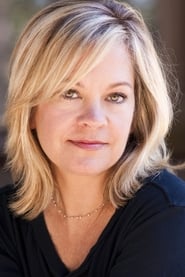
Cornell played Rachel Carruthers opposite Harris in Halloween 4 and Halloween 5, creating the protective sister relationship at the emotional center of Harris's earliest horror work.
 Scout Taylor-Compton
Recurring Halloween Co-Star
Taylor-Compton played Laurie Strode opposite Harris's Annie Brackett in both Rob Zombie Halloween films, with Halloween II developing their relationship through the trauma left by the first film.
Danielle Harris Horror Movies
Acting (48 credits)
2025
2024
2024
2023
2023
2020
2020
2020
2019
2019
2018
2018
2017
2017
2016
2016
2016
2015
2014
2014
2014
2014
2014
2013
2013
2013
2012
2012
2012
2012
2011
2011
2011
2011
2010
2010
2010
2010
2009
2009
2008
2007
2007
1998
1991
1989
1988
Directing (4 credits)
2026
2012
2011
2008
Production (4 credits)
2026
2024
2023
2009
Writing (2 credits)
2026
2011