



2025
Hideo Nakata
Horror Director · Biography · Horror Filmography · Collaborators · Credits
Horror subgenres & themes
Most represented across this person's horror filmography:
GHOST
• HAUNTED HOUSES
• SEXUAL
Biography
Hideo Nakata and modern Japanese horror
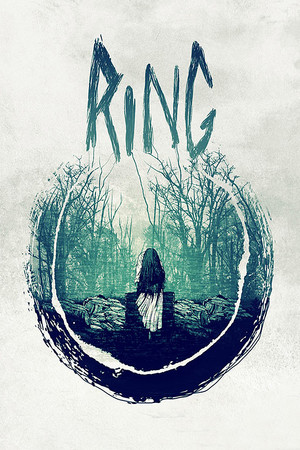
Hideo Nakata is one of the central filmmakers associated with the international emergence of Japanese horror at the end of the twentieth century. Born in Okayama Prefecture on July 19, 1961, he entered the Japanese film industry through its studio system and spent years as an assistant director before developing his own work in horror. His international reputation changed dramatically with Ring in 1998, whose combination of Japanese ghost traditions, contemporary technology and restrained supernatural terror became one of the defining models of the J-horror cycle. The film's success extended far beyond Japan, generated sequels and remakes, and helped establish a renewed international market for Japanese supernatural cinema.
Nakata's importance to horror cannot be reduced to Ring alone. Before Sadako became an international horror icon, he had already explored the presence of a female ghost within the machinery of filmmaking in Don't Look Up. He subsequently directed Ring 2, Dark Water, the American production The Ring Two, the period ghost story Kaidan, The Complex, Ghost Theater, Sadako, Stigmatized Properties, It's in the Woods and The Forbidden Play, among other horror and supernatural projects. His work spans more than three decades and moves between modern urban legends, traditional kaidan, haunted buildings, cursed media and psychological horror.
Although Nakata has also directed dramas, thrillers, documentaries and commercial projects outside horror, supernatural storytelling has remained central to his work well beyond his international breakthrough. His strongest horror films tend to avoid constant shocks and graphic violence. Fear develops through waiting, sound, empty spaces, indirect glimpses and characters who gradually recognize that ordinary environments are governed by supernatural rules they cannot control. That approach became especially influential after Ring, but its foundations were already present in Nakata's education within the Japanese studio system and in his first encounters with directing ghost stories.
From Okayama to Nikkatsu and the Japanese studio system
Nakata moved to Tokyo for university and studied at the University of Tokyo, where his original academic direction was in the sciences before he transferred toward Asian studies. During his student years he became an intensive filmgoer and later recalled watching hundreds of films in repertory cinemas. His education in cinema was therefore formed partly outside formal production, through sustained viewing of Japanese and international film history. Max Ophüls was among the directors who made a particularly strong impression on him, and Nakata has described Letter from an Unknown Woman as one of the films that encouraged him to imagine working on the other side of the screen.
After graduating, Nakata joined Nikkatsu in 1985. The company was no longer operating at the industrial scale of its classical period, but it still offered young filmmakers access to professional production and to directors with long experience inside Japanese commercial cinema. Nakata spent approximately seven years working as an assistant director. His credits and recollections from this period involve filmmakers including Hiroyuki Nasu, Masaru Konuma, Shinichiro Sawai, Tatsumi Kumashiro, Yasuo Furuhata and Eiichi Kudo. The experience exposed him to very different methods of handling actors, staging scenes and solving practical production problems.
Masaru Konuma became particularly important to Nakata's development. Konuma was closely associated with Nikkatsu's Roman Porno production, and Nakata later made the documentary Sadistic and Masochistic about him. Nakata has discussed how Konuma and Tatsumi Kumashiro developed contrasting strategies for implying or withholding sexual material under censorship restrictions. That education in deciding what a camera should reveal, what it should conceal and how an audience responds to information withheld from the frame later became relevant to Nakata's horror. He did not enter Nikkatsu intending to specialize in the genre, but the practical discipline of suggesting more than could be shown became part of his directing vocabulary.
Nakata's first horror-related directing work arrived with Curse, Death & Spirit in 1992. During the following years he also spent time in Britain researching and filming material for a documentary on director Joseph Losey, eventually released as Joseph Losey: The Man with Four Names. This period outside Japan broadened his professional experience but did not immediately provide a stable directing career. When he returned to fiction, the project that established the essential characteristics of his supernatural filmmaking was a modest production set inside the film industry he already knew intimately.
Don't Look Up and the foundations of Nakata's ghost cinema
Don't Look Up, released in 1996 and also known as Ghost Actress, follows a director working on a film when disturbing images and apparitions begin intruding into the production. Nakata provided the original story and collaborated with screenwriter Hiroshi Takahashi, beginning one of the most important creative relationships of his early horror career. Yūrei Yanagi played the filmmaker at the center of the story, while the setting allowed Nakata to use the mechanics of a studio, projection and recorded images as sources of supernatural uncertainty.
The film was made economically and did not become a major commercial success in Japan, yet it was crucial to Nakata's development. The ghost appears in incomplete glimpses and through images whose origin is uncertain. Cinema itself becomes vulnerable to contamination: footage contains material that should not be present, and the process of making a fictional film becomes inseparable from evidence of something supernatural. This interest in a recorded image capable of carrying a presence from one context into another directly anticipates the cursed videotape at the center of Ring.
Nakata later acknowledged that his experience with Don't Look Up affected the way he approached Sadako. He felt that revealing too much of the ghost in the earlier film had reduced its effectiveness. When making Ring, he consequently concealed Sadako's face behind her hair and restricted the information available to the viewer. The experience shaped his approach to staging supernatural figures: a ghost could become more disturbing when its appearance remained incomplete and the audience had to imagine what the image refused to show.
Don't Look Up also established a collaboration with Hiroshi Takahashi that would become decisive when Nakata was hired to adapt Koji Suzuki's novel Ring. The earlier film showed that Nakata could create atmospheric supernatural horror on limited resources. Its festival exposure helped bring his work to the attention of people involved in the later production, making it an important bridge between his years as a studio assistant and the film that transformed his international career.
Ring and the international breakthrough of J-horror
Ring was based on Koji Suzuki's bestselling novel about a videotape whose viewers die seven days after watching it. Nakata directed from a screenplay by Hiroshi Takahashi, with Takashige Ichise among the producers, Junichiro Hayashi as cinematographer, Nobuyuki Takahashi as editor and Kenji Kawai as composer. Several of these collaborators would work with Nakata again, giving the film a creative continuity that extended into later Japanese horror productions. Nanako Matsushima played journalist Reiko Asakawa, with Hiroyuki Sanada as her former husband Ryuji and Miki Nakatani as Mai Takano.
The adaptation made significant changes to Suzuki's material. The protagonist became a woman and mother, which placed the investigation of the curse alongside Reiko's need to protect her son. The film also reduced some of the novel's scientific explanations and concentrated more strongly on the supernatural figure of Sadako Yamamura. Her appearance draws upon the visual heritage of Japanese female ghosts while placing that tradition inside a contemporary technological environment. The cursed image exists on a VHS cassette, travels through copying and culminates in one of the most recognizable sequences in modern horror when Sadako moves from the recorded image into physical space through a television screen.
Nakata approached much of the film with restraint. The deaths caused by the curse are generally not staged as extended scenes of physical violence, and long sections of the film follow an investigation that gradually reveals the curse. He has cited Robert Wise's The Haunting as an important reference for creating supernatural fear without showing its source directly. Sound also became essential. Kenji Kawai's music and the detailed treatment of telephones, televisions, environmental noise and distorted recorded images made the devices themselves an unsettling part of the film's atmosphere.
The success of Ring changed the position of Japanese horror internationally. Japanese supernatural cinema obviously had a history extending far beyond 1998, and contemporaries such as Kiyoshi Kurosawa were already exploring modern forms of unease, but Ring provided a commercial and visual template that could travel exceptionally well. The BFI has described it as a catalyst for the J-horror boom. The film circulated widely through festivals and international distribution, won the main feature award at Sitges in 1998 and eventually inspired Gore Verbinski's American remake The Ring in 2002.
Its influence extended beyond direct remakes. The combination of technological anxiety, long-haired female ghosts, domestic vulnerability and subdued supernatural dread became internationally recognizable as part of J-horror, even when later filmmakers used those elements differently. Nakata did not invent the Japanese ghost tradition or every formal characteristic associated with the cycle, but Ring became the film through which many international viewers encountered them. Its commercial reach helped create opportunities for other Japanese horror films and established Sadako as a figure capable of surviving numerous sequels, reinterpretations and crossovers.
Ring 2 and the development of the Sadako mythology
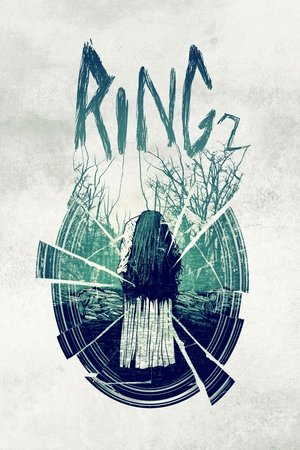
Ring was originally released alongside Spiral, an adaptation of Suzuki's literary sequel directed by another filmmaker. After Spiral failed to reproduce the success of Ring, a different cinematic continuation was developed. Nakata returned to direct Ring 2 in 1999, again working with screenwriter Hiroshi Takahashi, producer Takashige Ichise, composer Kenji Kawai and editor Nobuyuki Takahashi. Miki Nakatani's Mai Takano moved to the center of the story, while characters and consequences from Nakata's first film were continued directly.
The sequel expanded the mythology beyond the seven-day mechanism that had provided the first film with such an exact structure. Psychic abilities, the transmission of Sadako's power and attempts to understand or control supernatural energy occupy more of the narrative. The result is less self-contained than Ring, reflecting the difficulty of continuing a story whose first film had depended strongly on mystery. It nevertheless reinforced the visual and thematic identity Nakata had established and confirmed Sadako's capacity to sustain a continuing screen mythology.
The rapid transformation of Ring into a franchise also affected Nakata's career. International attention increasingly identified him with horror even though his interests remained broader. During the following years he directed projects outside straightforward supernatural cinema, including Chaos and Last Scene, but the success of Sadako had created expectations surrounding his name. Nakata's eventual return to Koji Suzuki material with Dark Water showed that he could revisit supernatural horror without merely repeating the narrative machinery of Ring.
Dark Water and horror inside the family home
Dark Water, released in 2002, was adapted from Koji Suzuki's short story Floating Water. Takashige Ichise produced the film, Yoshihiro Nakamura and Kenichi Suzuki wrote the screenplay, Junichiro Hayashi handled cinematography, Nobuyuki Takahashi edited and Kenji Kawai again composed the music. Hitomi Kuroki plays Yoshimi Matsubara, a mother going through a difficult divorce who moves with her young daughter Ikuko into an aging apartment building. What begins with leaking water, unexplained sounds and objects associated with another child gradually develops into a story about abandonment, motherhood and a dead girl whose presence has become attached to the building.
The setting gives Nakata a different physical environment from Ring. Instead of a curse distributed through recorded media, the supernatural is embedded in architecture. Ceilings leak, corridors feel empty, elevators become uncomfortable transitional spaces and water spreads across surfaces that should separate one apartment from another. Nakata frequently allows these details to accumulate before providing overt confirmation that a ghost is present. The ordinary problems of an inadequate apartment and an unresponsive building administration remain intertwined with the supernatural, making it difficult for Yoshimi to establish a secure home for her daughter even before the haunting is fully understood.
Motherhood had already been important in Ring, where Reiko's investigation becomes urgent after her son watches the videotape. In Dark Water the relationship between mother and child becomes the emotional center of the entire film. Yoshimi is fighting for custody while simultaneously struggling against assumptions about her reliability. Her fear for Ikuko therefore exists inside a broader crisis over whether she can maintain the family structure she is trying to preserve. The ghost story intensifies the pressures already shaping Yoshimi's home life.
Nakata later observed that the recurrence of mothers protecting children across Ring, Dark Water and eventually The Ring Two was partly connected to the source material and partly to his own attraction to such stories. Dark Water gave this concern its most concentrated expression. The film became another major international title in the J-horror cycle and was remade in the United States by Walter Salles in 2005. Its reputation also demonstrated that Nakata's contribution to the genre was not dependent solely on Sadako. Water, domestic isolation and parental responsibility created a distinct supernatural world while preserving his preference for suggestion and emotional tension over continuous spectacle.
Hollywood and The Ring Two
The success of the American remake of Ring made Nakata a natural candidate for work in Hollywood. After earlier projects failed to materialize, he accepted DreamWorks' offer to direct The Ring Two, released in 2005. The film was a sequel to Gore Verbinski's American The Ring rather than a remake of Nakata's Japanese Ring 2. Naomi Watts returned as Rachel Keller and David Dorfman as her son Aidan, while Nakata entered a production system substantially larger and more controlled than the Japanese films on which his reputation had been built.
The project placed Nakata in an unusual position. An American studio franchise derived from his own Japanese film had developed a visual identity through another director, and he was now being asked to continue that version. Nakata concentrated strongly on the relationship between Rachel and Aidan and on the threat posed by Samara, the American equivalent of Sadako. The story again returned to the idea of a mother attempting to protect a child from supernatural possession, creating a thematic connection with both Ring and Dark Water despite the different production context.
Nakata later spoke openly about the difficulties of Hollywood filmmaking and documented aspects of the experience in Foreign Filmmakers' Guide to Hollywood. The production required extensive negotiation within a studio structure in which the director did not exercise the same kind of authority associated with smaller Japanese projects. The Ring Two received a less enthusiastic critical response than Ring or Dark Water, but its importance within Nakata's biography is substantial. Few directors identified with the original J-horror boom were placed so directly inside the American remake cycle that their own work had helped generate.
The experience did not lead Nakata to remain permanently in Hollywood. He continued to work internationally, later directing the British production Chatroom, but returned repeatedly to Japan and to supernatural material. His next major horror feature provided almost the opposite context from a modern American studio sequel: a ghost story rooted in a narrative tradition dating back to the nineteenth century.
Kaidan and the older tradition of Japanese ghost stories
Kaidan, released in 2007, allowed Nakata to engage explicitly with a classical Japanese ghost narrative. The screenplay by Satoko Okudera was derived from a story associated with storyteller San'yūtei Enchō, and the film moves into a historical setting, a departure from the apartments, televisions and recording technologies associated with Nakata's international reputation. Takashige Ichise produced, Junichiro Hayashi served as cinematographer and Kenji Kawai composed the score, preserving important creative connections with Nakata's earlier horror.
The plot develops from murder, inherited consequences and relationships marked by jealousy and supernatural retribution. Hitomi Kuroki, who had played the mother at the center of Dark Water, returned in a very different role. The film gave Nakata the opportunity to work directly with the cultural tradition from which the visual language of the female Japanese ghost had partly developed. Kaidan situates a yūrei and its supernatural vengeance within a period world where ghost stories are already part of the narrative culture.
This return to historical material is useful in understanding Nakata's place within J-horror. His most influential films modernized ghost imagery, but he was aware of the theatrical, literary and cinematic traditions behind that imagery. The long-haired female apparition associated internationally with Sadako was not a creation without precedent. Kaidan made the relationship with earlier Japanese supernatural storytelling more explicit and demonstrated that Nakata's horror could move away from contemporary technological anxiety while retaining interests in guilt, repetition and the persistence of the dead within relationships among the living.
The Complex and Ghost Theater
After several projects in thriller and other genres, Nakata made a prominent return to supernatural horror with The Complex in 2013. The film premiered at the International Film Festival Rotterdam, where it was presented as a return by one of the best-known representatives of J-horror. Atsuko Maeda plays a young woman who moves with her family into an apartment complex where unexplained sounds, an isolated child and the death of an elderly neighbor gradually expose a supernatural history. The setting inevitably recalls the residential unease of Dark Water, but the film develops its own narrative around memory, grief and deceptive perceptions.
The Complex reunited Nakata with composer Kenji Kawai and cinematographer Junichiro Hayashi, whose visual work had already been important to Ring, Dark Water and Kaidan. Nakata also participated in developing the story, while Junya Kato and Ryuta Miyake were credited with the screenplay. The production was accompanied by a television prequel series, extending its haunted-apartment mythology beyond the feature film. By this stage J-horror was no longer the international novelty it had been around the turn of the millennium, so Nakata's return was received in the context of a genre whose conventions had become widely familiar.
He followed with Ghost Theater in 2015, a project that returns conceptually to territory from Don't Look Up. Once again the supernatural enters a performance environment, this time a stage production in which actresses compete for roles while a mysterious presence disrupts rehearsals and causes deaths. Junya Kato and Ryuta Miyake again wrote the screenplay, and Junichiro Hayashi again served as cinematographer. The resemblance to Nakata's first major ghost feature is not simply a matter of theatrical setting. Both films are interested in spaces where people deliberately manufacture illusion, only for an uncontrolled presence to appear within that artificial environment.
These films show Nakata continuing to work with the vocabulary that had helped establish J-horror while adapting it to later production contexts. Haunted buildings, female apparitions and uncertainty about what characters perceive remained available to him, but they no longer carried the novelty they possessed when Ring reached international audiences. His later horror increasingly sought new narrative frameworks for the supernatural language he had helped popularize internationally.
Sadako and a new cycle of supernatural films
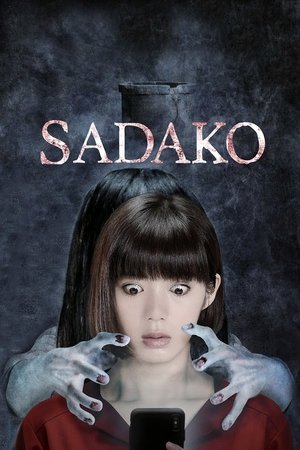
Nakata returned directly to the Ring mythology with Sadako in 2019. More than twenty years had passed since his original film, during which the character had appeared in sequels, 3D films and crossover productions made by other directors. Nakata's return therefore took place after Sadako had evolved from the mysterious center of one supernatural investigation into a durable Japanese horror franchise. The film acknowledges that cultural transformation while reconnecting the character with the director most closely identified internationally with her original cinematic form.
The same period marked a renewed concentration on horror in Nakata's filmography. The Woman Who Keeps a Murderer, also released in 2019, moved toward psychological horror and fragmented identity. Stigmatized Properties followed in 2020, drawing on material by Tanishi Matsubara concerning apartments and houses associated with deaths and other disturbing events. The film places supernatural folklore within contemporary entertainment culture, following a comedian who lives in properties with traumatic histories as material for television. The premise allowed Nakata to return to haunted domestic spaces while incorporating the modern circulation of supposedly true ghost experiences through media.
In 2022 he directed It's in the Woods, another supernatural project in which an isolated environment conceals an unexplained threat. The Forbidden Play followed in 2023. The film explores the concept of the ikiryō, a spirit associated with a living person, expanding its supernatural vocabulary beyond the familiar yūrei, the ghost of someone who has died. Nakata discussed the distinction while presenting the film at Sitges, where he received the festival's Time Machine Award in recognition of his horror career. The award had particular historical resonance because Sitges had honored Ring twenty-five years earlier.
Nakata continued the haunted-property cycle with Stigmatized Properties: Possession in 2025. By this stage his relationship with horror covered more than thirty years from Curse, Death & Spirit and Don't Look Up. The later films have not reproduced the historical impact of Ring, but their existence is important when assessing his career. Horror was not simply the genre that brought Nakata international recognition in the late 1990s. He continued returning to supernatural cinema long after the original J-horror export boom had ended.
Restraint, sound and the construction of supernatural fear
Nakata's best-known horror is characterized by an emphasis on anticipation. He has repeatedly discussed the effectiveness of comparatively quiet horror and his preference for allowing fear to develop before showing its source directly. His admiration for Robert Wise's The Haunting is consistent with this method. Doors, empty corridors, sounds from neighboring rooms and objects that appear where they should not be can become threatening long before a ghost enters the frame. The viewer searches the image for evidence, building tension during intervals when no supernatural figure is visible.
Sound is central to this approach. Ring uses telephones, television noise, environmental sounds and Kenji Kawai's score to make familiar technology feel unstable. Dark Water transforms dripping, rainfall and the presence of water within walls into recurring warnings that the apartment cannot provide safety. Silence and reduced musical emphasis can be equally important because they leave space for minor sounds to acquire disproportionate significance. Nakata's horror frequently makes the audience listen for the supernatural before clearly seeing it.
His use of female ghosts also depends heavily on controlled revelation. Sadako's hair prevents the face from functioning as an immediately readable human expression, while her physical movement transforms an otherwise familiar body into something difficult to interpret. Nakata arrived at this strategy partly through his dissatisfaction with how clearly the ghost had been shown in Don't Look Up. The image later became an enormously influential franchise icon, although its original impact depended on carefully withholding visual information.
Domestic spaces are another recurring element. Apartments, bedrooms, corridors and family environments allow supernatural horror to occupy locations associated with privacy and protection. In Dark Water an apartment cannot keep water or the past outside. In The Complex, neighboring units and shared walls conceal histories the protagonist does not understand. Stigmatized Properties makes the traumatic history of residential space the premise itself. These environments are practical settings for low-key suspense, placing supernatural danger inside familiar homes and everyday routines.
Recurring collaborators in Hideo Nakata's horror
Nakata's most important horror films were created through recurring professional relationships. Screenwriter Hiroshi Takahashi worked with him on Don't Look Up before writing Ring and Ring 2. Their collaboration helped establish the transition from the filmmaking ghost story of Nakata's first feature breakthrough to the adaptation that made J-horror internationally recognizable. Takahashi's role was especially important in restructuring Koji Suzuki's novel for cinema and shaping the film around Reiko, Sadako and a more concentrated supernatural framework.
Producer Takashige Ichise provided another major connection across the cycle. His work with Nakata includes Ring, Ring 2, Dark Water and Kaidan. Ichise subsequently became one of the producers most strongly associated with the international expansion of Japanese horror, including work connected to other major J-horror properties. His repeated collaboration with Nakata linked the director's films to a broader industrial network capable of moving Japanese supernatural cinema into international markets.
Kenji Kawai contributed music to several key Nakata films, including Ring, Ring 2, Dark Water, Kaidan, The Incite Mill and The Complex. Because Nakata's horror relies heavily on sound and controlled atmosphere, the composer's contribution extends beyond providing conventional accompaniment. Kawai's work functions alongside ambient and technological sound, helping establish environments in which musical cues remain sparse and unsettling, allowing danger to develop without constant signaling.
Cinematographer Junichiro Hayashi photographed Ring, Dark Water, Kaidan, The Complex and Ghost Theater. His repeated presence across films separated by almost two decades created a visual continuity within Nakata's supernatural work even as settings moved from contemporary urban Japan to a historical ghost story and back again. Editor Nobuyuki Takahashi similarly worked on Ring, Ring 2 and Dark Water, three of the films most important to Nakata's international reputation, contributing to the deliberate pacing associated with his early J-horror period.
Actor Yūrei Yanagi provides a different kind of continuity. He played the filmmaker in Don't Look Up, later appeared in Ring 2, returned in Kaidan and appeared again in The Complex. His recurring presence connects different stages of Nakata's horror career from the pre-Ring period through the director's return to supernatural filmmaking in the 2010s. Together these collaborators show how the recognizable qualities of Nakata's horror took shape through sustained work with writers, producers, technicians and performers.
Hideo Nakata's influence and place in horror history
Nakata occupies a major position in modern horror because Ring became one of the principal films through which Japanese supernatural cinema reached a mass international audience at the end of the 1990s. Its success helped create the industrial conditions for a wider J-horror cycle and for a series of American remakes of Japanese properties. Gore Verbinski's The Ring, Takashi Shimizu's American The Grudge, Walter Salles's Dark Water and other productions were part of a period when Hollywood treated Japanese horror as a significant source of adaptable material. Nakata eventually became part of that process himself by directing The Ring Two.
The historical importance of Ring should not obscure the earlier and parallel development of Japanese horror by other filmmakers. Kiyoshi Kurosawa had already created distinctive psychological and supernatural works, while directors such as Takashi Shimizu later developed their own major franchises. Nakata's particular importance lies in the combination of commercial success, international accessibility and a visual concept capable of becoming immediately recognizable across cultures. Sadako's emergence from the television turned an older ghost tradition into an image inseparable from late twentieth-century media technology.
Dark Water strengthened Nakata's position by showing that the restrained supernatural method could operate without the Ring mythology. Its focus on motherhood, abandonment and deteriorating domestic space became influential in its own right and generated another American remake. Don't Look Up was also remade internationally, further demonstrating how ideas from Nakata's relatively modest early horror work continued circulating after J-horror became commercially valuable outside Japan.
His later career adds another dimension to that legacy. Nakata did not spend every subsequent decade trying to reproduce Ring. He moved into thrillers, literary adaptations, documentaries and projects for different national industries, then repeatedly returned to ghosts and haunted spaces. Kaidan connected his contemporary reputation with older Japanese storytelling, while The Complex, Ghost Theater, Sadako, Stigmatized Properties and The Forbidden Play demonstrate an ongoing engagement with supernatural horror after the international J-horror cycle had ceased to be a new phenomenon.
The result is a horror career with both historical impact and unusual duration. Nakata helped turn a cursed videotape into one of modern horror's most recognizable objects, but the larger body of work shows a filmmaker consistently interested in the relationship between ordinary spaces and invisible presences. Film sets, apartments, televisions, water-damaged ceilings, theatres and residential properties become places where evidence of another reality accumulates slowly. His strongest work depends on the delay between suspecting that something is present and finally being forced to confront it, a method that became one of the defining contributions of late twentieth-century Japanese horror to international genre cinema.
Photos (2)
Images: TMDB
Selected Work
Notable Horror Collaborators
Notable collaborators and creative partners throughout Hideo Nakata's horror career.
HT
Hiroshi Takahashi
Director / Screenwriter Collaborator
Takahashi was a formative writing collaborator in Nakata's early horror career. He wrote Don't Look Up, Ring and Ring 2, helping develop the progression from Nakata's first major ghost film to the two productions that established Sadako and brought J-horror to a large international audience.
 Kenji Kawai
Director / Composer Collaborator
Kawai composed music for a substantial group of Nakata's horror and dark-genre productions, including Ring, Ring 2, Dark Water, Kaidan, The Incite Mill and The Complex. His scores became an important part of the restrained sound design and atmosphere associated with several major phases of Nakata's career.
TI
Takashige Ichise
Director / Producer Collaborator
Ichise was one of the most important producers in Nakata's horror career, working with him on Ring, Ring 2, Dark Water and Kaidan. Their collaboration spans the original J-horror breakthrough, its immediate sequel, Nakata's other major international ghost film and his later return to traditional kaidan.
JH
Jun'ichirô Hayashi
Director / Cinematographer Collaborator
Hayashi photographed Ring, Dark Water, Kaidan, The Complex and Ghost Theater, giving him one of the longest technical collaborations in Nakata's horror filmography. Their shared work stretches from the international emergence of J-horror through Nakata's supernatural films of the 2010s.
NT
Nobuyuki Takahashi
Director / Editor Collaborator
Takahashi edited Ring, Ring 2 and Dark Water, three central films in Nakata's supernatural career. His work contributed to the controlled pacing, investigative structure and gradual escalation of dread that became strongly associated with Nakata's early international horror reputation.
 Yūrei Yanagi
Director / Actor Collaborator
Yanagi worked with Nakata across several different periods of his horror career, beginning as the filmmaker protagonist of Don't Look Up and later appearing in Ring 2, Kaidan and The Complex. Their collaborations connect Nakata's pre-Ring ghost cinema with his later returns to supernatural horror.
Kenji Kawai
Director / Composer Collaborator
Kawai composed music for a substantial group of Nakata's horror and dark-genre productions, including Ring, Ring 2, Dark Water, Kaidan, The Incite Mill and The Complex. His scores became an important part of the restrained sound design and atmosphere associated with several major phases of Nakata's career.
TI
Takashige Ichise
Director / Producer Collaborator
Ichise was one of the most important producers in Nakata's horror career, working with him on Ring, Ring 2, Dark Water and Kaidan. Their collaboration spans the original J-horror breakthrough, its immediate sequel, Nakata's other major international ghost film and his later return to traditional kaidan.
JH
Jun'ichirô Hayashi
Director / Cinematographer Collaborator
Hayashi photographed Ring, Dark Water, Kaidan, The Complex and Ghost Theater, giving him one of the longest technical collaborations in Nakata's horror filmography. Their shared work stretches from the international emergence of J-horror through Nakata's supernatural films of the 2010s.
NT
Nobuyuki Takahashi
Director / Editor Collaborator
Takahashi edited Ring, Ring 2 and Dark Water, three central films in Nakata's supernatural career. His work contributed to the controlled pacing, investigative structure and gradual escalation of dread that became strongly associated with Nakata's early international horror reputation.
Yūrei Yanagi
Director / Actor Collaborator
Yanagi worked with Nakata across several different periods of his horror career, beginning as the filmmaker protagonist of Don't Look Up and later appearing in Ring 2, Kaidan and The Complex. Their collaborations connect Nakata's pre-Ring ghost cinema with his later returns to supernatural horror.
Hideo Nakata Horror Movies
Directing (20 credits)
2023
2022
2020
2020
2019
2019
2015
2013
2010
2007
2005
2002
2000
1999
1998
1997
1996
1992
1985
Writing (5 credits)
2015
2013
2009
2002
1996
Acting (2 credits)
2023
2001