


2022
Asia Argento
Horror Actor · Biography · Horror Filmography · Family · Collaborators · Credits
Horror subgenres & themes
Most represented across this person's horror filmography:
POSSESSION
• VAMPIRE
• ZOMBIE
Biography
Asia Argento and a Life Inside Horror Cinema
Asia Argento grew up closer to horror cinema than almost any performer of her generation. Born in Rome on September 20, 1975, she entered a filmmaking family in which the fantastic, the violent and the psychologically disturbing were not distant genres but part of everyday creative life. Her father Dario Argento had already transformed Italian horror and giallo through films such as The Bird with the Crystal Plumage, Deep Red, Suspiria and Inferno, while her mother Daria Nicolodi had become one of the most recognizable performers associated with that body of work. Asia's later relationship with horror therefore developed inside a cinematic tradition she had known since childhood, but her own screen identity quickly became more confrontational, physical and emotionally exposed than a simple continuation of either parent's career.
Her horror filmography is unusually concentrated around transformation. She begins as a child surrounded by demons and Gothic architecture, becomes the vulnerable center of Trauma, endures psychological and physical fragmentation in The Stendhal Syndrome, enters obsessive Gothic romance in The Phantom of the Opera, fights through George A. Romero's zombie apocalypse in Land of the Dead, and later becomes the central figure confronting the final Mother in The Mother of Tears. Across these films, Argento repeatedly plays characters forced into hostile worlds where identity, sexuality, violence and survival become impossible to separate.
Growing Up in the Argento World
Asia Argento's childhood placed her inside a particularly intense corner of Italian cinema. The name Argento already carried international associations with stylized murder, elaborate color, supernatural mythology and films in which fear was expressed through architecture, music and the body. At the same time, Daria Nicolodi's performances had given several of Dario Argento's films an emotional and physical presence that extended beyond the director's formal experimentation. Asia therefore inherited access to the mechanics of filmmaking as well as an early awareness that horror could be treated as a serious artistic language rather than disposable entertainment.
That environment did not mean her career developed only through her father. She worked for filmmakers outside the family from an early age and gradually built a screen identity across Italian and international cinema. What makes the horror work especially interesting is that she repeatedly returned to it even while working in drama, crime films, experimental cinema and large commercial productions. Horror remained less a separate phase of her career than a recurring language through which some of her most physically demanding performances were created.
Demons 2 and a Childhood Entrance Into Horror
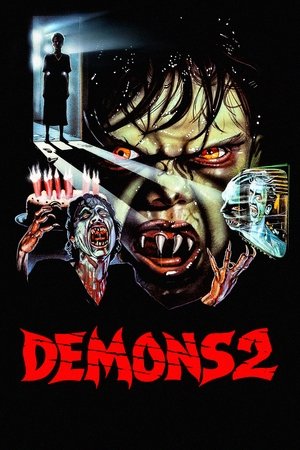
Argento made her feature-film debut at the age of ten in Lamberto Bava's Demons 2 (1986), produced by Dario Argento. She plays Ingrid Haller, one of the residents trapped inside an apartment building after a demonic infection begins spreading through the structure. The film extends the aggressive practical-effects style of the original Demons, replacing the cinema setting with a modern residential tower where television becomes the doorway through which supernatural contamination enters ordinary domestic space.
The role is relatively small, but its position at the beginning of her career is remarkable. Argento's first feature already placed her inside the specific ecosystem of Italian horror that had developed around Dario Argento, Lamberto Bava, special-effects artists and genre technicians during the 1980s. Rather than entering cinema through children's entertainment and discovering horror later, she began inside a production filled with transformations, blood effects and demonic imagery. That beginning created a continuity that would become increasingly visible as she grew older.
The Church and Michele Soavi's Gothic Horror
Three years later, Argento appeared as Lotte in Michele Soavi's The Church (1989), another production connected to Dario Argento. The film began during development as a possible continuation of the Demons concept but evolved into a separate Gothic horror story centered on a cathedral built over the site of a medieval massacre. Ancient evil gradually emerges through the building itself, turning religious architecture into a mechanism of supernatural imprisonment.
Argento's presence in The Church strengthened the connection between her childhood acting and the Italian horror community around her family. Soavi belonged to the generation that had worked alongside Argento, Bava and other major genre filmmakers before becoming an important horror director in his own right. Asia therefore appeared early in two films that connected the established masters of Italian horror with a younger group of filmmakers trying to push the genre into the 1990s. Long before she became the leading actress in her father's films, she had already been present inside that transition.
Becoming an Actress Outside Horror
During her teenage years, Argento worked increasingly outside horror, appearing in Italian films that allowed her to develop independently from the family name. These roles were important because they prevented her from becoming exclusively identified as a child performer from her father's genre circle. She worked with filmmakers including Cristina Comencini, Nanni Moretti and Michele Placido, developing a screen persona capable of moving between naturalistic drama and more stylized material. By the early 1990s, she was no longer simply a young actress with famous parents but a performer capable of carrying emotionally demanding roles.
This broader experience would become essential when she returned to horror under Dario Argento's direction. The roles he gave her required more than conventional fear reactions or victim performances. His films increasingly placed her at the psychological center of stories involving trauma, identity and bodily violation. Her experience outside horror allowed those characters to be treated as dramatic protagonists rather than merely components of genre machinery.
Trauma and the First Major Collaboration With Dario Argento
Trauma (1993) marked the first feature directed by Dario Argento in which Asia played the central female role. She portrays Aura Petrescu, a young Romanian woman living in the United States who becomes connected to a series of murders committed by a killer using a mechanical garrote. Aura is introduced in a state of extreme vulnerability, dealing with an eating disorder, psychiatric treatment and a family environment filled with secrets. The murders gradually force her into an investigation whose emotional consequences are inseparable from her own history.
The film occupies an unusual position in Dario Argento's career because it was made largely in the United States while retaining many elements associated with his Italian gialli. The killer, the elaborate murder method, fragmented memories and investigation structure are recognizably Argento, but the locations and production environment create a different atmosphere. Asia's performance becomes the bridge between those elements because Aura remains emotionally exposed even when the film moves through familiar thriller mechanics.
The father-daughter collaboration inevitably gave the material an additional dimension, but its importance should not be reduced to biography. Asia was required to carry scenes of fear, alienation and psychological instability while remaining the audience's principal connection to a complicated mystery. Trauma established a creative relationship that Dario Argento would return to repeatedly over the following two decades.
Aura Petrescu and Vulnerability as a Horror Performance
Aura differs from many earlier Argento protagonists because vulnerability is present from the opening moments rather than developing only after the murders begin. She is already struggling with her relationship to her body and with adults attempting to control or diagnose her. The murder investigation therefore does not disrupt a stable life but enters one already marked by emotional instability. Asia plays the character with a mixture of defensiveness and fragility that prevents Aura from becoming a conventional giallo investigator.
This becomes important because Argento's later roles for his daughter would continue moving toward protagonists whose psychological states are part of the horror rather than simply reactions to it. In The Stendhal Syndrome, that process becomes much more extreme. Trauma can therefore be seen as the beginning of a period in which the director's fascination with perception, identity and female protagonists became increasingly concentrated through Asia's performances.
The Stendhal Syndrome and a Major Horror Performance
The Stendhal Syndrome (1996) became one of the most demanding roles of Asia Argento's career and one of the darkest films directed by her father. She plays Anna Manni, a police detective pursuing a serial attacker in Florence who suffers from Stendhal syndrome, a condition in which exposure to powerful works of art triggers overwhelming psychological and physical reactions. The opening sequence inside the Uffizi Gallery immediately establishes that perception itself cannot be trusted. Paintings appear to become physical spaces, sound changes and Anna seems capable of entering art rather than merely observing it.
The killer uses her condition and her vulnerability against her, beginning a process of psychological destruction that continues long after the initial encounter. The film becomes less interested in the conventional question of identifying a murderer than in what violence does to Anna's sense of self. Her appearance, behavior and relationship with other people gradually change as trauma becomes internal rather than simply remembered. Asia's performance carries that transformation through multiple emotional states without providing the audience with a stable version of the character to which it can easily return.
The role required an unusually exposed form of acting, and the film remains one of the most discussed collaborations between father and daughter. Asia later spoke about how far the two of them went creatively while making films together, describing the set as a space that allowed them to explore extreme material with professional distance. Whatever interpretation viewers bring to that collaboration, The Stendhal Syndrome demonstrates how completely Dario Argento trusted her to carry material built around psychological disintegration rather than conventional suspense alone.
Art as a Physical Threat
The central concept of The Stendhal Syndrome connects directly with Dario Argento's lifelong interest in art as something capable of becoming dangerous. Architecture, painting, music and visual beauty frequently produce unease in his films, but here the relationship becomes literal because Anna's sensitivity to art alters her physical perception. The museum is not a neutral cultural environment. It becomes a place where beauty overwhelms the nervous system and creates vulnerability.
Asia's performance is essential because the concept could easily become merely decorative. Her physical reactions make the syndrome part of the character rather than an excuse for surreal imagery. The audience experiences the paintings partly through the way Anna responds to them, which transforms aesthetic experience into a form of horror. This interaction between body and image became one of the most distinctive aspects of the film.
Identity and Transformation
As The Stendhal Syndrome progresses, Anna's identity becomes increasingly unstable. She changes her appearance, adopts more traditionally masculine behavior and attempts to rebuild herself around the idea of strength. These changes do not erase what happened to her, however, and the film gradually suggests that the boundary between survival and psychological absorption has become dangerously unclear. Asia plays the transformation without turning it into a simple empowerment narrative.
The character's instability is part of why the film remains disturbing. Horror does not end when the immediate attacker is removed because trauma has already altered the internal structure of the protagonist. Argento had often ended earlier films by restoring some degree of order after the killer was revealed. The Stendhal Syndrome refuses that comfort, and Asia's performance becomes the means through which the consequences continue beyond the mechanics of the original crime.
The Phantom of the Opera and Gothic Obsession
Asia returned under her father's direction for The Phantom of the Opera (1998), playing Christine Daaé opposite Julian Sands as the Phantom. Dario Argento's version abandons the familiar disfigured-mask mythology and instead presents the Phantom as a physically attractive man raised beneath the Paris Opera by rats. The change turns the story away from tragic concealment and toward a more explicitly physical relationship between attraction, violence and obsession.
Christine occupies the center of that conflict because she is drawn between the world above the opera and the Phantom's subterranean existence. Asia's performance moves through curiosity, fear and attraction while the film surrounds her with the elaborate machinery, tunnels and performance spaces of the opera house. The architecture becomes another Argento environment in which beauty and danger occupy the same location. The role also required her to work inside a much more overtly Gothic form of horror than either Trauma or The Stendhal Syndrome.
The film divided audiences sharply, but it remains important within Asia Argento's horror career because it demonstrates how differently her father could use her. Aura Petrescu is fragile and psychologically exposed, Anna Manni becomes increasingly fractured, while Christine belongs to an extravagant world of operatic desire and monstrous romance. The performances form a progression rather than repetitions of the same female protagonist.
Scarlet Diva and Taking Control Behind the Camera
In 2000, Asia Argento made her feature directing debut with Scarlet Diva, which she also wrote and starred in. The film is not conventional horror, but it matters to her genre identity because it shifts control of the image from performer to filmmaker. Argento plays actress and filmmaker Anna Battista in a highly personal story involving celebrity culture, sexuality, drugs, isolation and the exploitation surrounding the entertainment industry. The deliberately abrasive digital aesthetic creates a sense of immediacy very different from the controlled visual worlds associated with her father.
Directing allowed Argento to define a personal cinematic language built around confession, physical exposure and confrontation. That language would continue in The Heart Is Deceitful Above All Things, another film outside traditional horror whose subject matter becomes emotionally brutal. These projects demonstrate that the extremity associated with her performances in horror was not simply something imposed by genre directors. When controlling the films herself, she remained interested in discomfort, damaged bodies and characters living close to emotional collapse.
The Heart Is Deceitful Above All Things
The Heart Is Deceitful Above All Things extended Argento's directorial work into an even more disturbing dramatic environment. She directed, co-wrote and acted in the film, playing the mother of a child subjected to an unstable life of neglect, violence and exploitation. Although the film is classified primarily as drama, its emotional experience can approach horror because the danger originates entirely from human behavior rather than supernatural forces. Argento refuses to provide the reassuring structure that might make the material easier to process.
The film is relevant to understanding her horror performances because it reveals how strongly she is drawn to characters living inside environments where safety has collapsed. That interest links her own filmmaking with roles such as Anna Manni or Aura Petrescu even though the genres are different. In each case, the body becomes a site where external violence leaves internal consequences. The distinction between psychological drama and horror becomes less important than the emotional intensity with which the experience is presented.
Land of the Dead and Entering Romero's Zombie World
Asia Argento entered one of horror cinema's foundational franchises when George A. Romero cast her as Slack in Land of the Dead (2005). The film marked Romero's return to his zombie series twenty years after Day of the Dead and imagined a world in which survivors have created a fortified city divided by extreme social inequality. Wealthy residents occupy the luxury tower of Fiddler's Green while the poor survive in dangerous streets below, and armed crews travel outside the walls to retrieve supplies from territory controlled by the dead.
Slack is introduced in a brutal arena where humans use zombies as entertainment and condemned people can be thrown into direct combat with them. She survives through aggression and physical competence rather than waiting for rescue, immediately establishing herself as one of the film's strongest characters. After joining Riley's group, she becomes part of the attempt to prevent both human conflict and an increasingly organized zombie population from destroying the city.
The casting created an important connection between two major horror traditions. Asia Argento arrived from the family most strongly associated with Italian giallo and supernatural horror, while Romero had created the modern cinematic zombie. Her presence in Land of the Dead therefore carried genre history even before the character was introduced. The collaboration also allowed her to work with a director whose approach to horror was politically and visually very different from her father's.
Slack and the Romero Survivor
Slack fits naturally into Romero's tradition of survivors who are defined more by practical behavior than conventional heroism. She understands quickly that the social structure inside the fortified city is as dangerous as the zombies outside it. The film repeatedly contrasts the violence used against the dead with the violence humans direct against one another, and Slack has already experienced the cruelty of that system personally when the story introduces her.
Argento gives the character an aggressive physical confidence that differs sharply from several of her earlier horror roles. Anna Manni and Aura Petrescu are psychologically destabilized by what happens around them, while Slack enters the story already adapted to catastrophe. The shift demonstrates the range of her genre work because Romero uses her not as the center of psychological horror but as part of an ensemble functioning inside a large-scale apocalyptic world.
The Mother of Tears and the Completion of the Three Mothers
In 2007, Asia again became the protagonist of a Dario Argento supernatural horror film with The Mother of Tears, the long-awaited conclusion to the Three Mothers mythology begun with Suspiria and continued in Inferno. She plays Sarah Mandy, an art-restoration student whose involvement with an ancient urn helps unleash Mater Lachrymarum, the Mother of Tears, upon Rome. As supernatural violence spreads through the city, Sarah discovers that her own family history connects her directly to the forces she is trying to understand.
The film places Asia inside one of her father's most important mythological structures rather than a standalone thriller. Suspiria and Inferno had established the idea of three ancient witches whose influence extends across different cities and buildings, but the trilogy had remained incomplete for decades. Casting Asia as the woman confronting the final Mother created a generational link between Dario Argento's classic supernatural period and his later work.
The role also differs from her earlier collaborations because Sarah gradually develops access to supernatural abilities herself. She is not simply investigating evil or surviving its consequences. The story gives her an inherited relationship with the occult, allowing her to become an active participant in the mythology. Asia therefore moves from victim and investigator in the earlier films toward a protagonist capable of confronting supernatural power directly.
Daria Nicolodi and the Generational Dimension
The Mother of Tears also carries a particularly strong family dimension because Daria Nicolodi appears as Elisa Mandy, Sarah's deceased mother, who assists her daughter from beyond death. The casting brings three generations of the Argento creative world into the same film: Dario directing, Asia leading the story and Nicolodi appearing within the supernatural mythology. The relationship between mother and daughter becomes part of the film's mechanism rather than remaining outside the screen.
This gives the film a resonance that extends beyond its place in the Three Mothers trilogy. Nicolodi had been deeply connected with Dario Argento's supernatural cinema during the period in which Suspiria and Inferno were created, while Asia belonged to the later phase of his career. The Mother of Tears temporarily brings those histories together. The result is one of the clearest examples of how family, performance and horror mythology overlap within the Argento filmography.
Violence in The Mother of Tears
The Mother of Tears is among the most graphically violent films in Dario Argento's later career. The supernatural outbreak is represented not through a slow accumulation of isolated murders but through a city apparently losing its moral and social structure as the witch's influence spreads. Violence becomes public, chaotic and contagious, creating a form of apocalypse very different from the enclosed spaces of Suspiria or Inferno.
Asia's performance provides the continuity through this escalation because Sarah begins as someone connected with restoration and historical objects rather than occult combat. The discovery of her abilities occurs gradually as ordinary explanations become impossible. Her movement through Rome therefore gives the audience a human perspective inside a film increasingly committed to grotesque spectacle. Even when the surrounding horror becomes excessive, Sarah remains the point through which the mythology must be understood.
Dracula 3D and Another Argento Gothic
Asia worked once more under her father's direction in Dracula 3D (2012), playing Lucy Kisslinger. The film adapts Bram Stoker's vampire mythology through a deliberately old-fashioned Gothic approach, with Thomas Kretschmann as Dracula and Rutger Hauer as Abraham Van Helsing. By this stage, Asia's collaborations with Dario Argento stretched across almost two decades and covered giallo, psychological horror, Gothic romance, supernatural mythology and vampire cinema.
Her participation in Dracula 3D therefore belongs to a much larger pattern rather than standing as an isolated late-career appearance. Few performers have been used by the same horror director across such different forms of genre material while also changing so dramatically in age and screen identity between films. The collaborations document both the evolution of Dario Argento's later cinema and Asia's development from teenage protagonist to established performer.
The Dario Argento Collaboration
The creative relationship between Dario and Asia Argento became one of the most unusual recurring collaborations in modern horror. He directed her in Trauma, The Stendhal Syndrome, The Phantom of the Opera, The Mother of Tears and Dracula 3D, each time placing her inside material involving intense physical or psychological danger. Their films together span almost twenty years, which allows the audience to watch both the actress and the filmmaker change while retaining a recognizable willingness to approach extreme material.
The relationship inevitably attracts interpretations based on the fact that they are father and daughter, particularly because several of the roles involve sexuality, bodily violence and psychological exposure. Asia herself has discussed the unusual intensity of working with her father and the degree to which the film set created a professional space in which they could explore material that would be emotionally difficult outside cinema. What matters on screen is the extraordinary level of trust required by these performances. Dario repeatedly built films around his daughter's ability to carry material that could not function through visual style alone.
Beyond the Argento Name
Reducing Asia Argento's horror career to her father would ignore several important collaborations. Lamberto Bava gave her first feature role in Demons 2, Michele Soavi directed her in The Church, and George A. Romero placed her inside his most important creation with Land of the Dead. These directors represent very different branches of horror history, from Italian demonic spectacle and Gothic cinema to the socially conscious American zombie tradition.
Her ability to move among those filmmakers demonstrates that the Argento name opened a cultural context but did not define every role she played. Her performance style is often more physically confrontational and emotionally exposed than the classical elegance associated with many earlier Italian horror actresses. Even when working inside highly stylized films, she tends to make the character feel immediate and unstable. That quality became one of the strongest links between her genre roles.
The Body as the Center of Horror
Asia Argento's most important horror performances repeatedly make the body central to the character's experience. Aura's relationship with food and physical control forms part of Trauma, Anna Manni's psychological collapse in The Stendhal Syndrome changes her physical behavior and appearance, and Christine's relationship with the Phantom is built around attraction and danger. Slack survives through direct physical action, while Sarah Mandy gradually discovers that supernatural power exists within her own inherited identity.
This emphasis also appears in Argento's work as a director outside conventional horror. Her films frequently treat the body as something exposed to desire, exploitation, addiction, violence and social judgment. The continuity suggests why she fits so naturally within horror even when much of her career exists beyond it. For Argento, psychological experience is rarely abstract. It tends to become visible through physical behavior.
A Different Kind of Scream Queen
Asia Argento does not fit neatly into the traditional definition of a scream queen. She has certainly played women pursued by killers and supernatural forces, but her characters rarely exist only to survive attacks. They are psychologically complicated before the horror begins, and the experience frequently changes them in ways that cannot be repaired by the final scene. Her strongest performances treat survival itself as ambiguous rather than automatically triumphant.
This distinguishes her from many performers identified primarily through slasher cinema. Asia's horror identity comes instead from repeated confrontation with extreme states of mind. Fear, desire, aggression and trauma frequently occupy the same character, making the audience uncertain whether it is watching a victim, survivor or someone being transformed into something entirely different. That ambiguity is central to her effectiveness in the genre.
Italian Horror Across Generations
Asia's career also provides an unusual connection between different generations of Italian horror. As a child she appeared in films made by Lamberto Bava and Michele Soavi within the creative environment surrounding Dario Argento. As an adult she became one of the principal performers in Dario's later work while Italian horror itself was losing much of the industrial infrastructure that had supported the genre during the 1970s and 1980s. Her filmography therefore crosses the transition from a functioning national horror industry into an era in which major Italian genre productions became much less frequent.
This historical position makes her important beyond individual performances. Demons 2 and The Church belong to the final major wave of internationally distributed Italian horror from the classic period, while The Stendhal Syndrome, The Mother of Tears and Dracula 3D come from very different production environments. Asia remains present across both periods, becoming one of the human links between them.
From Italian Horror to George A. Romero
The move from Dario Argento's cinema to George A. Romero's Land of the Dead carries particular historical significance because Argento and Romero had already been connected decades earlier. Dario Argento helped support and shape the international version of Romero's Dawn of the Dead, while Goblin's music became inseparable from the European experience of that film. Asia's appearance in Romero's later zombie cycle therefore creates another connection between two horror traditions whose histories had already intersected long before she became an actress.
The relationship is especially appropriate because neither filmmaker treated horror as empty spectacle. Their methods were radically different, but both used genre imagery to engage with deeper concerns, whether social hierarchy, psychological instability, sexuality or the collapse of ordinary reality. Asia's career moves between those approaches without requiring one to resemble the other. She becomes a point at which Italian stylization and Romero's social horror briefly meet on screen.
Directing, Acting and Control of the Image
Argento's work as a director changes the way her horror performances can be understood. She knows what it means to control framing, performance and editing rather than existing only as the object being photographed. That experience becomes particularly relevant given how often her acting roles involve characters placed under extreme visual scrutiny. The relationship between performer and camera is something she has experienced from both sides.
Her own films are not primarily horror, but they share an interest in emotional extremity and uncomfortable self-exposure. This prevents a simple division between "Asia Argento the horror actress" and "Asia Argento the filmmaker." Both sides of the career are interested in people living beyond conventional emotional safety. Horror simply provides one of the most direct languages through which that interest can be expressed.
The Stendhal Syndrome as a Career Centerpiece
Among all of Asia Argento's horror films, The Stendhal Syndrome remains particularly important because it concentrates many of the themes that recur throughout her work. Art, perception, violence, sexuality, identity and performance become inseparable as Anna Manni attempts to reconstruct herself after trauma. The film demands enormous physical and emotional commitment from its lead, and Asia remains on screen through transformations that gradually destabilize the audience's understanding of who the protagonist has become.
The film also represents one of Dario Argento's most serious attempts to examine the psychological consequences of violence rather than using murder primarily as visual spectacle. That shift depends heavily on Asia because the horror must remain attached to Anna after individual attack sequences are over. Her performance provides the continuity that allows the film to move from giallo investigation toward psychological tragedy. For that reason, the role stands among the strongest examples of her value to horror cinema.
The Mother of Tears and Horror as Inheritance
If The Stendhal Syndrome represents Asia's most psychologically intense collaboration with her father, The Mother of Tears makes inheritance itself part of the story. Sarah Mandy discovers that her connection to supernatural forces comes through her mother, turning family history into a source of power rather than simply background information. The casting of Daria Nicolodi strengthens that idea because the fictional inheritance is mirrored by a real history of women connected to Dario Argento's cinema.
This makes the film unusually self-referential without requiring direct knowledge of the family's history. A viewer can experience it simply as supernatural horror, but anyone familiar with Suspiria, Inferno, Nicolodi and Asia's career will see additional layers. The film effectively places Asia inside the mythology created before her acting career began and asks her to complete it. Few horror performers have occupied such a literal position between personal and cinematic inheritance.
Asia Argento's Place in Horror Cinema
Asia Argento occupies a singular position in horror because her career connects family history, Italian genre cinema and international horror without belonging completely to any one of them. She began as a child in Demons 2 and The Church, became the leading performer in several of Dario Argento's most psychologically aggressive later films, entered George A. Romero's zombie mythology and eventually returned to the supernatural world of the Three Mothers. Those films span radically different approaches to horror but repeatedly use her willingness to make emotional disturbance physically visible.
Her most important characters are not passive witnesses. Aura Petrescu, Anna Manni, Christine Daaé, Slack and Sarah Mandy occupy stories in which identity is constantly pressured by danger, desire or supernatural influence. The characters respond differently, but none can simply return to the person she was before the story began. Argento's horror performances are therefore built around transformation more than survival alone.
Her career also demonstrates how horror traditions can pass between generations without remaining unchanged. She inherited access to one of the genre's most famous surnames, but the performances that matter are distinctly her own: abrasive, exposed, physical and frequently uncomfortable. Working with Dario Argento gave her some of the most demanding roles of her career, while collaborations with Bava, Soavi and Romero placed that work inside a much wider history of horror filmmaking.
For iHorrorDB, the essential point is that Asia Argento is not simply adjacent to horror because of her family. Horror is embedded throughout her career from her first feature onward. She has been child witness, endangered protagonist, fractured detective, Gothic heroine, zombie fighter and supernatural heir, crossing from the final decades of classic Italian horror into twenty-first-century international genre cinema. That continuity makes her one of the most distinctive performers linking the old Italian horror tradition with the modern era.
Known Among Horror Fans For
Notable Horror Collaborators
Notable collaborators and creative partners throughout Asia Argento's horror career.
 Franco Ferrini
Screenwriting Collaborator
Ferrini contributed to several horror films featuring Argento, including Demons 2, The Church, Trauma, The Stendhal Syndrome and Dark Glasses, making him one of the most persistent creative collaborators across her Italian horror career.
 Sergio Stivaletti
Special Effects Collaborator
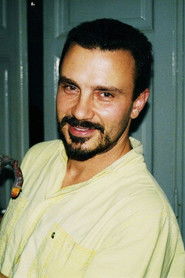
Stivaletti worked across several major Argento horror productions featuring Asia, including Demons 2, The Stendhal Syndrome, The Phantom of the Opera, The Mother of Tears and Dracula 3D, contributing writing, practical effects and special makeup effects.
 Coralina Cataldi-Tassoni
Recurring Horror Co-Star
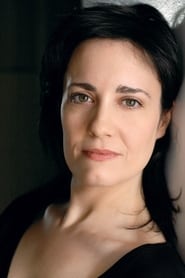
Cataldi-Tassoni appeared alongside Argento in three horror films spanning more than two decades: Demons 2, The Phantom of the Opera and The Mother of Tears.
 Massimo Antonello Geleng
Production Design Collaborator
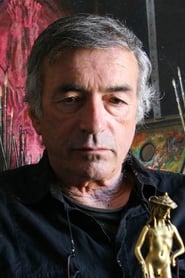
Geleng helped construct the visual worlds of three horror films starring Argento: The Stendhal Syndrome, The Phantom of the Opera and Dracula 3D.
Asia Argento Horror Movies
Acting (15 credits)
2017
2012
2007
2006
2005
2001
2001
1998
1997
1996
1994
1993
1989
1986
Directing (1 credits)
1994
Writing (1 credits)
1994
Production (1 credits)
2022