

2025
Mark Gatiss
Horror Director · Biography · Horror Filmography · Family · Collaborators · Credits
Horror subgenres & themes
Biography
Mark Gatiss and British horror
Mark Gatiss is an English writer, actor, director and producer whose relationship with horror extends across comedy, television drama, literary adaptation, documentary and the preservation of British supernatural traditions. Born in Sedgefield, County Durham, on October 17, 1966, he became widely known as one of the four creators of The League of Gentlemen, whose mixture of northern social observation, grotesque characterization and horror imagery established many of the interests that would recur throughout his later career. Gatiss subsequently wrote supernatural stories for Doctor Who, created the BBC ghost-story anthology Crooked House, presented major documentaries on horror history, co-created a new adaptation of Dracula and became the principal modern writer-director associated with the BBC tradition of A Ghost Story for Christmas.
Horror occupies a distinctive place in Gatiss's work because it is simultaneously a creative genre and a subject of historical interest. He has written original supernatural fiction, adapted M. R. James, Arthur Conan Doyle, E. Nesbit and E. F. Benson, examined Hammer, Universal, European horror and other traditions as a documentary presenter, and repeatedly discussed the films and television productions that formed his own taste. His horror is particularly connected with British Gothic culture: old houses, libraries, museums, Christmas ghost stories, Victorian and Edwardian literature, Hammer cinema and the television supernatural drama of the 1960s and 1970s. At the same time, his work frequently combines the macabre with comedy, reflecting an approach developed through The League of Gentlemen in which grotesque material and laughter can occupy the same fictional world.
County Durham, horror films and early influences
Gatiss grew up in a working-class family in County Durham. His parents worked in connection with psychiatric hospitals, and part of his childhood was spent living close to the large hospital environment at Winterton. Gatiss has resisted attempts to explain his later fascination with horror entirely through that background, but he has acknowledged that the institutional landscape and unusual experiences surrounding his upbringing became part of his memory. More directly important were the books, films and television programs he encountered from an early age. He developed strong interests in Doctor Who, Sherlock Holmes, H. G. Wells, ghost stories and British horror cinema, particularly the Gothic tradition associated with Hammer.
Television was central to this education. Gatiss has repeatedly described watching horror films and discussing them obsessively while growing up, at a time when older genre cinema remained visible through British television schedules. The films of Hammer and the broader British Gothic tradition existed alongside science fiction, classic Hollywood horror and supernatural television. He was also strongly affected by the tradition of the Christmas ghost story. Productions derived from M. R. James and other supernatural writers became part of his understanding of horror as something capable of being intimate and domestic rather than dependent on continuous violence or spectacle.
Another early influence was the relationship between horror and comedy. Gatiss did not develop the idea that the two forms needed to remain separate. British television and cinema provided numerous examples of macabre material appearing alongside absurdity, parody or social comedy, while filmmakers and performers associated with horror could themselves move easily between tones. That sensibility later became essential to The League of Gentlemen. It also explains why Gatiss's subsequent supernatural work could be considerably more restrained than the League while still emerging from the same personal fascination with death, monsters, ghosts and Gothic imagery.
Bretton Hall and The League of Gentlemen
Gatiss studied theatre arts at Bretton Hall College in Yorkshire, where he met Steve Pemberton and Reece Shearsmith. Jeremy Dyson, who studied nearby at the University of Leeds, subsequently completed the group that became The League of Gentlemen. The four shared interests in comedy, performance and horror, although their work was not designed according to a predetermined formula for combining genres. Their collaboration developed through stage material before achieving wider recognition at the Edinburgh Festival Fringe, where the group won the Perrier Award in 1997. A BBC Radio 4 series followed before The League of Gentlemen transferred to television in 1999.
The fictional town of Royston Vasey provided an unusually flexible environment for the group's interests. The series could move from recognizable northern social behavior into body horror, murder, kidnapping, medical grotesquerie and Gothic imagery without abandoning comedy. Gatiss played numerous characters, including veterinarian Mr Chinnery, the butcher Hilary Briss and Mickey Michaels. Briss in particular allowed the series to build a sustained horror narrative around the mysterious substance sold as "special stuff", while other storylines involved monstrous families, ritualized local behavior and characters whose ordinary appearance concealed increasingly disturbing lives.
Gatiss later described horror as part of the series' creative DNA. The group shared affection for figures such as Lon Chaney and for the British horror films they had watched when younger. This became still more explicit in The League of Gentlemen Christmas Special, structured partly as a tribute to anthology horror. The format recalled the portmanteau films associated particularly with Amicus, while the stories incorporated vampires, curses and other supernatural material. The League of Gentlemen's Apocalypse in 2005 extended the group's cinematic references through a story in which their fictional world collides with its creators and contains an invented seventeenth-century horror project influenced by films such as Witchfinder General and The Blood on Satan's Claw.
The League established a pattern that remained important throughout Gatiss's career. His horror interests were not limited to one franchise or one kind of monster. They included the history of genre cinema, British regional culture, Gothic literature and the transformation of ordinary behavior into something uncanny. The group also created his longest-running horror-related collaborations, particularly with Pemberton and Shearsmith, both of whom continued developing their own forms of black comedy and psychological horror after the League's original television run.
Doctor Who, Gothic television and supernatural writing
Gatiss's lifelong interest in Doctor Who became professionally important before the series returned to television. He wrote fiction connected with the property during the years in which it was absent from regular broadcasting, and when Russell T Davies revived the program Gatiss became one of the writers brought into the new series. His first episode, The Unquiet Dead, transmitted in 2005, deliberately combined science fiction with a Victorian ghost-story atmosphere. Charles Dickens appears as a character, a séance becomes central to the plot and apparently dead bodies return to movement, allowing Gatiss to place the revived series directly in conversation with the Gothic material that had shaped his childhood interests.
Several later Doctor Who scripts returned to horror conventions. Night Terrors builds fear around childhood anxiety, a domestic setting and grotesque doll-like figures. The Crimson Horror uses Victorian industrial imagery, bodily transformation and a hidden community, with a title that openly evokes nineteenth-century sensational fiction. Sleep No More experiments with found-footage and recorded-image conventions, constructing the episode from apparently recovered visual material. Other scripts move further toward adventure or science fiction, demonstrating that Gatiss's contribution to the series cannot be classified simply as horror, but supernatural and Gothic forms remained among the genres to which he returned most naturally.
His acting work also intersected repeatedly with horror-related television. He appeared in Steven Moffat's Jekyll, played a vampire elder in Being Human and took smaller roles in productions ranging from Psychoville to Victor Frankenstein. These appearances were secondary to his writing and directing contribution to horror, yet they reinforced the extent to which the genre remained present across different parts of his career rather than existing in one isolated body of work.
Crooked House and the return of the television ghost story
In 2008 Gatiss created and wrote Crooked House, a three-part supernatural anthology for BBC Four directed by Damon Thomas. The stories are connected by the history of the fictional Geap Manor and move across different periods before reaching the present day. Gatiss appears as the curator who introduces the history associated with an architectural fragment from the demolished house. The structure allowed him to combine several traditions important to his horror interests: the English haunted house, antiquarian ghost fiction, anthology cinema and the compact supernatural television drama.
The influence of M. R. James is visible in the emphasis on objects, historical investigation and consequences emerging from the past, but Crooked House was not conceived simply as imitation. The three-part structure allowed Gatiss to move through different historical settings and kinds of haunting while preserving one geographical source of supernatural contamination. The final story places the uncanny inside an intentionally ordinary modern house, an approach Gatiss later identified as particularly interesting because it brings Gothic disturbance into an environment designed to appear completely contemporary and familiar.
Crooked House was important because it demonstrated that Gatiss's knowledge of British horror history could be converted into original dramatic production. The project preceded his later stewardship of A Ghost Story for Christmas and established several characteristics that continued there: short running times, limited locations, carefully chosen period details and an emphasis on atmosphere rather than elaborate visual effects. It also showed his interest in television horror as a historical form worth continuing rather than merely celebrating retrospectively.
A History of Horror and Horror Europa
Gatiss addressed horror history directly in the 2010 BBC Four documentary series A History of Horror with Mark Gatiss. Presented and written by Gatiss, the three-part series approached the genre as a personal history shaped by the films that had influenced him. Rather than attempting an exhaustive chronological catalogue, it concentrated on major traditions and periods including Universal horror, British Gothic cinema and later transformations in American horror. Gatiss interviewed filmmakers, actors and other figures connected with the films while visiting locations and archives associated with the genre.
The documentaries established Gatiss as a public historian and advocate for horror as well as a practitioner. His presentation emphasized connections among film cycles, production companies and changing cultural attitudes. Hammer occupied an important place, reflecting both its significance to post-war British horror and its influence on Gatiss personally. The series also addressed filmmakers and productions that had sometimes been marginalized in general histories of cinema despite their importance to horror audiences.
In 2012 Gatiss followed the series with Horror Europa, expanding the geographical focus to continental European horror. The documentary included material on German expressionism, French fantastique, Italian Gothic and giallo, Spanish horror and other national traditions. Interview subjects included Dario Argento, Barbara Steele, Jorge Grau, Guillermo del Toro and figures connected with filmmakers such as Mario Bava. Film historian Jonathan Rigby again worked as a consultant, providing continuity with A History of Horror.
These documentaries matter to Gatiss's horror career because they document the breadth of the tradition from which his own work draws. His later ghost films are consciously British and literary, but his understanding of horror is not restricted to that area. Universal monsters, Hammer Gothic, European art horror, exploitation cinema and modern genre filmmaking all belong to the historical framework he has discussed publicly. The documentaries also helped establish his role as an intermediary between specialist horror culture and a broad television audience.
M. R. James and A Ghost Story for Christmas
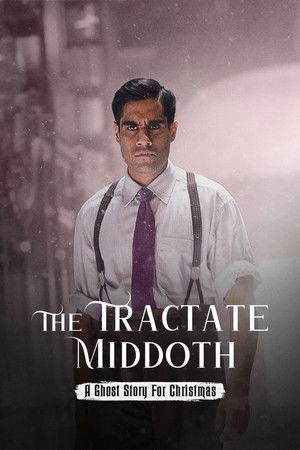
Gatiss's most sustained contribution to supernatural television began with his adaptation of M. R. James's The Tractate Middoth in 2013. The production continued the BBC tradition commonly known as A Ghost Story for Christmas, whose best-known original run began in the 1970s under director Lawrence Gordon Clark. Gatiss had admired those adaptations since childhood and approached the format with an awareness of both James's original fiction and the visual language developed by earlier BBC productions. The Tractate Middoth centers on a librarian, an obscure text, an inheritance and the consequences of disturbing knowledge that should have remained buried.
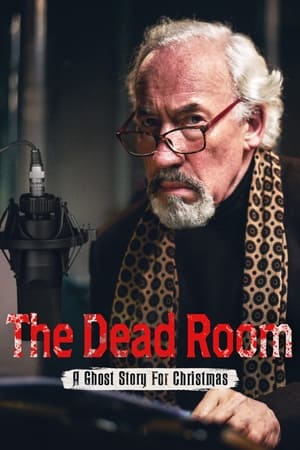
After a gap of several years, Gatiss returned with The Dead Room in 2018. Unlike most entries in the strand, it was an original story rather than a direct literary adaptation. Simon Callow plays a veteran radio performer recording ghost stories while memories from his own past begin intruding into the studio. The production allowed Gatiss to reflect directly on the tradition he was continuing, using a professional storyteller as the protagonist and turning the recording environment into the haunted space. The following year he adapted James's Martin's Close, starring Peter Capaldi, setting much of the story around the historical trial of a man accused of murder and the evidence provided by supernatural appearances.
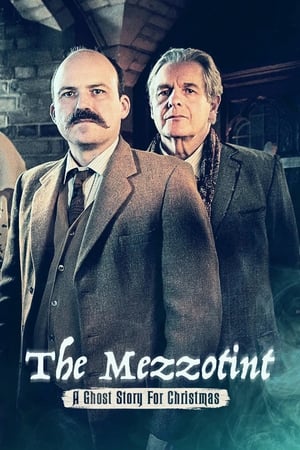
From 2021 the productions became effectively annual. The Mezzotint, starring Rory Kinnear, adapts James's story of an apparently ordinary print whose image changes over time to reveal a disturbing sequence of events. The premise is especially compatible with Gatiss's interest in restrained supernatural storytelling because the threat emerges through observation and gradual alteration rather than continuous action. Count Magnus followed in 2022, moving the production to Sweden and adapting one of James's more difficult stories, in which an English traveller becomes fascinated by the history of an aristocrat associated with cruelty and forbidden knowledge.
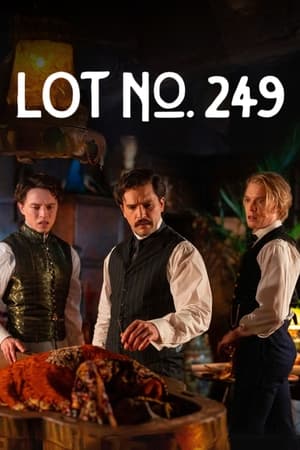
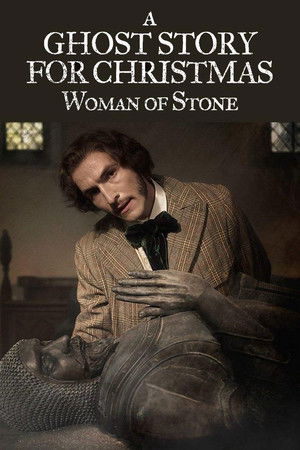
Gatiss subsequently widened the literary sources beyond James. Lot No. 249 in 2023 adapted Arthur Conan Doyle's story about an Oxford student suspected of using an Egyptian mummy against his enemies. The choice connected the Christmas horror strand with Gatiss's long-standing engagement with Doyle through Sherlock, while also returning to the history of mummy fiction that later became central to classic horror cinema. In 2024 he adapted E. Nesbit's Man-Size in Marble as Woman of Stone, and in 2025 turned to E. F. Benson for The Room in the Tower, a story built around recurring dreams that gradually become physical reality.
Across these productions Gatiss developed a recognizable model of small-scale television horror. The films generally run around half an hour, use limited casts and rely heavily on setting, performance and implication. Their deliberate historical quality is not an attempt to modernize every source into contemporary horror. Instead, Gatiss treats older literary forms and the BBC's own supernatural television heritage as living material. The continuity of the strand has become one of his most important contributions to British horror because it preserves a form of short television ghost story that had otherwise become irregular after the 1970s.
Dracula and the Hammer tradition
Gatiss's fascination with vampire cinema eventually led to one of his largest horror projects. Together with Steven Moffat, his collaborator on Sherlock, he created the three-part BBC and Netflix series Dracula, first broadcast in 2020. Claes Bang played Count Dracula, while Gatiss and Moffat reworked Bram Stoker's novel across three feature-length episodes. The first engages directly with Castle Dracula and Jonathan Harker's imprisonment, the second expands the Demeter voyage into a self-contained maritime horror narrative and the third transfers the conflict into the modern world.
The adaptation reflects Gatiss's extensive knowledge of earlier Dracula cinema, particularly the Hammer tradition associated with Christopher Lee. It does not attempt to reproduce any single predecessor, but it openly works within an accumulated history of screen Dracula interpretations. The series emphasizes the Count's intelligence, appetite and ability to manipulate those around him while restructuring characters and relationships from Stoker's novel. The Van Helsing role is radically transformed through Sister Agatha and her modern descendant, both played by Dolly Wells.
Gatiss also appears as Frank Renfield in the contemporary section, giving him a direct acting role inside the mythology he and Moffat had reconstructed. The production represents a different scale from his Christmas ghost stories. It uses extensive sets, effects and international distribution, but remains connected to the same historical approach: classic horror material is treated with awareness of both literary origins and decades of screen adaptation. The result placed Gatiss directly within the lineage of the British vampire tradition that had been one of his earliest genre interests.
Preserving British supernatural traditions
Gatiss's horror work in the 2010s and 2020s increasingly combined creation with preservation. His documentaries recovered and contextualized genre history, while the Christmas ghost stories restored an older television format through new productions. His documentary M. R. James: Ghost Writer examined the author whose influence runs through much of his supernatural work, connecting literary biography with the continuing appeal of James's fiction. Gatiss has repeatedly discussed James not simply as a source of plots but as a writer particularly suited to compact television adaptation because the stories often depend on contained settings, antiquarian curiosity and carefully delayed supernatural consequences.
The annual ghost films also preserve the association between Christmas and horror that had long existed in British literary and broadcasting culture. Gatiss has discussed childhood memories of the original BBC adaptations and of reading supernatural stories during the festive period. His productions maintain that seasonal context rather than treating it as an accidental scheduling decision. The stories often take place in historical or academic environments, but their effectiveness depends on the same domestic circumstance as their predecessors: viewers encounter a short supernatural tale on television during Christmas.
His choice of authors gradually expanded the definition of the tradition. Moving from James to Doyle, Nesbit and Benson allowed the strand to represent a broader history of British supernatural fiction while maintaining stylistic continuity. Lot No. 249 brought a physical monster into a format often associated with invisible or ambiguous apparitions, while Woman of Stone and The Room in the Tower recovered stories from writers less automatically connected by modern audiences with horror television. This curatorial aspect distinguishes Gatiss from filmmakers whose engagement with older genre material is limited to individual adaptations.
Horror, comedy and historical consciousness
Across Gatiss's career, horror rarely exists without awareness of previous horror. The League of Gentlemen draws upon British Gothic cinema and anthology traditions while transforming them through grotesque comedy. Crooked House incorporates the structure and atmosphere of earlier television ghost stories. Dracula responds to a century of vampire cinema. A Ghost Story for Christmas consciously continues both literary and broadcasting traditions. This historical awareness is also explicit in his documentary work, making Gatiss unusual among contemporary horror creators in the extent to which scholarship, fandom and production overlap.
That does not mean his work functions primarily as quotation. His strongest horror projects use historical forms to create new contexts. Royston Vasey transformed the Gothic into northern social comedy. The Dead Room placed the ghost-story tradition inside a radio studio and made nostalgia itself part of the haunting. The Mezzotint used the changing image of an old engraving as a visual mechanism suited to television. Dracula shifted from nineteenth-century Gothic to a modern setting while preserving the central conflict between the vampire and those attempting to understand him.
Comedy remains important even when it recedes from the foreground. Gatiss has described horror and laughter as closely related parts of his sensibility, a relationship shared with several of his League collaborators. His ghost stories are generally played seriously, but occasional wit and eccentricity prevent them from becoming exercises in solemn imitation. That balance reflects the wider British horror tradition he admires, in which performers and writers could move between the macabre and comic without regarding the two as incompatible.
Mark Gatiss's contribution to horror
Mark Gatiss occupies a significant position in contemporary British horror because his contribution extends beyond individual films or performances. He helped make horror a central component of The League of Gentlemen, one of the most distinctive British television comedies of its period, and subsequently developed an independent body of supernatural writing and directing. Crooked House demonstrated his ability to construct original television ghost stories, while Dracula placed him inside one of the genre's most enduring screen traditions. His documentaries established him as a knowledgeable public advocate for horror history, particularly British and European cinema.
His longest-lasting contribution may be his stewardship of A Ghost Story for Christmas. Beginning with The Tractate Middoth and continuing through The Room in the Tower, Gatiss turned an intermittent revival into a recurring body of new supernatural television. These productions preserve the short-form ghost story at a time when much television drama has moved toward serialized narratives and longer seasons. They also maintain connections among literature, broadcasting history and contemporary production, introducing writers such as M. R. James and E. F. Benson to viewers who may not know the original texts.
Gatiss therefore belongs to horror through several complementary roles: writer, director, performer, historian and curator of genre traditions. His career does not consist exclusively of horror, and major projects such as Sherlock, theatre work and historical drama occupy substantial areas outside it. Nevertheless, supernatural fiction and horror history recur from his earliest success with The League of Gentlemen through decades of subsequent television. That continuity, combined with his deliberate preservation of British ghost-story culture, gives his work a substantial place within modern British horror.
Selected Work
Notable Horror Collaborators
Notable collaborators and creative partners throughout Mark Gatiss's horror career.
SP
Steve Pemberton
Writer-Actor / Horror Comedy Collaborator
Pemberton and Gatiss developed their shared interest in horror through The League of Gentlemen, its Christmas horror anthology and The League of Gentlemen's Apocalypse, later reuniting in related dark-comedy work including Psychoville. Their collaboration helped establish the mixture of grotesque comedy, Gothic imagery and British horror references that defined Gatiss's early career.
 Reece Shearsmith
Writer-Actor / Horror Comedy Collaborator
Shearsmith and Gatiss were founding members of The League of Gentlemen and shared a long-standing interest in horror, contributing together to the television series, its explicitly horror-influenced Christmas special and The League of Gentlemen's Apocalypse. Gatiss later appeared in Psychoville, continuing their professional connection within British horror and black comedy.
SM
Steven Moffat
Writer-Creator / Gothic Television Collaborator
Moffat became one of Gatiss's most important television collaborators and their horror-related work culminated in Dracula, which they created and wrote together. Their wider association also connects Gatiss with Moffat's Jekyll and with supernatural and Gothic Doctor Who material, making the partnership important to Gatiss's modern reinterpretation of classic British horror.
IB
Isibeal Ballance
Writer-Director / Producer Collaborator
Ballance became the principal producer of Gatiss's modern Ghost Story for Christmas cycle from The Dead Room onward. Their collaborations include The Dead Room, Martin's Close, The Mezzotint, Count Magnus, Lot No. 249, Woman of Stone and The Room in the Tower, forming the most sustained production partnership in Gatiss's supernatural directing career.
BM
Blair Mowat
Director / Composer Collaborator
Mowat composed music for numerous entries in Gatiss's later supernatural television work, including The Dead Room, Martin's Close, The Mezzotint, Count Magnus, Lot No. 249, Woman of Stone and The Room in the Tower. His scores provided musical continuity across the modern BBC Christmas ghost-story cycle.
KM
Kieran McGuigan
Director / Cinematographer Collaborator
McGuigan became a recurring cinematographer on Gatiss's Ghost Story for Christmas productions, photographing The Mezzotint, Lot No. 249, Woman of Stone and The Room in the Tower. Their collaboration helped establish the controlled period imagery and restrained visual atmosphere of the later entries in Gatiss's supernatural cycle.
Reece Shearsmith
Writer-Actor / Horror Comedy Collaborator
Shearsmith and Gatiss were founding members of The League of Gentlemen and shared a long-standing interest in horror, contributing together to the television series, its explicitly horror-influenced Christmas special and The League of Gentlemen's Apocalypse. Gatiss later appeared in Psychoville, continuing their professional connection within British horror and black comedy.
SM
Steven Moffat
Writer-Creator / Gothic Television Collaborator
Moffat became one of Gatiss's most important television collaborators and their horror-related work culminated in Dracula, which they created and wrote together. Their wider association also connects Gatiss with Moffat's Jekyll and with supernatural and Gothic Doctor Who material, making the partnership important to Gatiss's modern reinterpretation of classic British horror.
IB
Isibeal Ballance
Writer-Director / Producer Collaborator
Ballance became the principal producer of Gatiss's modern Ghost Story for Christmas cycle from The Dead Room onward. Their collaborations include The Dead Room, Martin's Close, The Mezzotint, Count Magnus, Lot No. 249, Woman of Stone and The Room in the Tower, forming the most sustained production partnership in Gatiss's supernatural directing career.
BM
Blair Mowat
Director / Composer Collaborator
Mowat composed music for numerous entries in Gatiss's later supernatural television work, including The Dead Room, Martin's Close, The Mezzotint, Count Magnus, Lot No. 249, Woman of Stone and The Room in the Tower. His scores provided musical continuity across the modern BBC Christmas ghost-story cycle.
KM
Kieran McGuigan
Director / Cinematographer Collaborator
McGuigan became a recurring cinematographer on Gatiss's Ghost Story for Christmas productions, photographing The Mezzotint, Lot No. 249, Woman of Stone and The Room in the Tower. Their collaboration helped establish the controlled period imagery and restrained visual atmosphere of the later entries in Gatiss's supernatural cycle.
Mark Gatiss Horror Movies
Directing (10 credits)
2024
2023
2022
2021
2019
2018
2013
1995
1971
Acting (19 credits)
2023
2020
2018
2013
2009
2009
2008
2007
2007
2005
2005
2004
2002
2001
1996
1995
1995
1994
1971
Writing (17 credits)
2025
2024
2023
2022
2021
2020
2019
2018
2013
2013
2008
2005
1996
1996
1995
1994
1971
Production (5 credits)
2020
2019
2018
2008
2005
Creator (1 credits)
2008