


2018
Rutger Hauer
Horror Actor · Biography · Horror Filmography · Family · Collaborators · Credits
Horror subgenres & themes
Biography
Rutger Hauer and the Horror of the Unreadable Man
Rutger Hauer brought an unusual kind of danger to horror cinema. He rarely needed grotesque makeup, elaborate weapons or conventional displays of madness to become frightening. His strongest genre performances are built on uncertainty. A character may smile, speak quietly or appear almost sympathetic while the audience remains unable to determine what he will do next. That quality reached its purest form in John Ryder, the apparently motiveless killer of The Hitcher, but it followed Hauer through vampires, supernatural killers, futuristic monsters and late-career cult horror.
Hauer's screen presence was unusually contradictory. His height, pale features and intense eyes could make him immediately threatening, yet he was equally capable of suggesting melancholy, intelligence and vulnerability. Horror filmmakers could therefore use him as something more complicated than a conventional villain. He could be predator and tragic figure simultaneously, a human being who behaves like a monster or a monster whose humanity remains disturbingly visible.
His horror filmography is scattered across a much larger career that includes European drama, science fiction, fantasy, action and television. Yet the genre repeatedly returned to the same fundamental quality: Rutger Hauer could make a character impossible to read.
Paul Verhoeven and the Formation of a Screen Presence
Hauer was born in Breukelen in the Netherlands in 1944 and developed his acting career through Dutch theatre and television. The most important early professional relationship was with director Paul Verhoeven, who cast him in the television adventure series Floris in 1969 and then repeatedly brought him into feature films.
Turkish Delight, Keetje Tippel and Soldier of Orange established Hauer as one of the most prominent Dutch actors of his generation. Their collaboration eventually continued into the internationally produced Flesh+Blood. These were not horror films in the conventional sense, but they established qualities that later genre directors would exploit constantly: physical confidence, sexual danger, emotional unpredictability and the ability to remain charismatic while behaving aggressively.
Verhoeven therefore belongs to Hauer's horror story indirectly but fundamentally. Before American filmmakers began casting him as killers, vampires and unnatural figures, the Dutch films had already demonstrated that Hauer could occupy morally unstable territory without simplifying a character into hero or villain.
Blade Runner and the Threat That Became Human
Ridley Scott's Blade Runner (1982) gave Hauer the performance that permanently shaped his international image. As replicant leader Roy Batty, he begins as a physically dangerous fugitive pursued by Harrison Ford's Deckard, yet the film gradually complicates the relationship between hunter and hunted.
Batty possesses extraordinary strength and is capable of violence, but his actions are driven by the knowledge that his artificially limited life is about to end. The apparent monster is therefore also a being terrified of mortality. By the final confrontation, Hauer transforms the threat into one of the film's most emotionally complex figures.
Hauer was directly involved in shaping Batty's famous final speech, helping reduce and reformulate the scripted material into the concise meditation on disappearing memory associated with the character. The moment became central to his screen identity because it contained the contradiction filmmakers would repeatedly seek from him: physical menace suddenly revealing extraordinary sensitivity.
Blade Runner is science fiction rather than horror, but its importance to Hauer's later genre casting is difficult to separate. Directors now understood that his face could represent danger without removing sympathy. That ambiguity would become terrifying when transferred from an artificial man seeking life to a human-looking killer apparently seeking nothing at all.
The Hitcher and John Ryder
Robert Harmon's The Hitcher (1986) gave Hauer his defining horror performance. C. Thomas Howell plays Jim Halsey, a young driver who makes the seemingly ordinary decision to pick up a hitchhiker while travelling across the American Southwest. The stranger introduces himself as John Ryder.
Almost immediately, Ryder reveals that the encounter is not accidental in any ordinary sense. He threatens Jim, disappears and repeatedly returns, leaving murder and destruction around him while manipulating the police into believing that Jim may be responsible.
What makes Ryder frightening is the absence of a satisfying explanation. The film never provides the conventional psychological history that would make him understandable. He does not need money, revenge or an identifiable personal grievance. His attention toward Jim gradually becomes the motive.
Hauer resists the obvious performance choices of a screen psychopath. Ryder can be calm, amused and strangely intimate. Violence often appears to require almost no emotional effort. The effect is more disturbing than constant rage because the audience cannot use ordinary behavior to predict what comes next.
Robert Harmon and the Construction of an Enigma
Robert Harmon understood that John Ryder would become less frightening if the film explained him too completely. Screenwriter Eric Red had already created a powerful road-horror premise, but Harmon and Hauer pushed the character toward greater ambiguity rather than providing conventional villain psychology.
The American highway becomes essential to that approach. Ryder repeatedly appears where he should not logically be able to appear, disappears after enormous acts of violence and seems almost capable of controlling the landscape around Jim. Nothing explicitly establishes him as supernatural, yet the film allows that possibility to hover around him.
Harmon also avoids turning the violence into constant graphic spectacle. Several of the film's most notorious acts are powerful because the audience understands what Ryder is capable of without being given every physical detail.
Hauer supplies the final layer. His stillness makes Ryder feel as though he is studying Jim rather than merely hunting him. The killer seems less interested in survival than in discovering what the young man will become when pushed far enough.
C. Thomas Howell and the Predator-Victim Relationship
The relationship between Hauer and C. Thomas Howell is the dramatic structure of The Hitcher. Jim Halsey begins as an ordinary young man whose greatest mistake is an act of generosity toward a stranger. Ryder gradually removes every ordinary protection around him.
The police become dangerous because they believe Jim is responsible for Ryder's crimes. Other people become potential victims simply because Jim encounters them. Even escape becomes uncertain because Ryder continues reappearing across an enormous landscape.
Hauer and Howell therefore play something more complicated than villain and hero. Ryder repeatedly gives Jim opportunities to resist him and appears almost contemptuous when the younger man fails to act decisively. The violence begins to resemble a grotesque test.
This strange relationship explains why the film remains more unsettling than a straightforward serial-killer thriller. Ryder does not merely want Jim dead. He seems determined to force him into understanding the world according to Ryder's own rules.
The Horror of Motivation Without Explanation
John Ryder became one of Hauer's most important contributions to horror because he belongs to the tradition of killers who become more frightening as explanation disappears. The character possesses a name but almost nothing resembling a biography.
Hauer later resisted the idea that he simply played conventional villains. That attitude is visible in Ryder. The actor does not perform the character as someone announcing his own evil. Ryder behaves as though the audience's categories are irrelevant to him.
This allows the film to remain psychologically unstable. At different moments Ryder resembles a serial killer, a supernatural force, a death wish given physical form or an adversary attempting to create another version of himself.
The film never settles the question, and Hauer's refusal to explain the character through performance is essential to that ambiguity.
Split Second and the Monster in Future London
Split Second (1992), directed principally by Tony Maylam, moved Hauer into a fusion of science fiction, police thriller and creature horror. He plays Harley Stone, a damaged detective hunting the entity responsible for killing his former partner.
The story takes place in a flooded future London whose permanent darkness and waterlogged streets create an environment already approaching apocalyptic horror before the creature fully appears. Stone believes himself connected to the killer and pursues it with obsessive intensity.
Hauer plays the detective as an exaggerated version of the damaged genre cop: exhausted, heavily armed, compulsive and surviving on anger. The performance is deliberately larger than the restraint of John Ryder, but the film again exploits his ability to suggest a man living dangerously close to the thing he is hunting.
When the killer is finally revealed as something non-human, the film moves completely into monster cinema. Hauer functions as the human anchor inside a production that mixes serial-killer structure with biological and demonic imagery.
Buffy the Vampire Slayer and Lothos
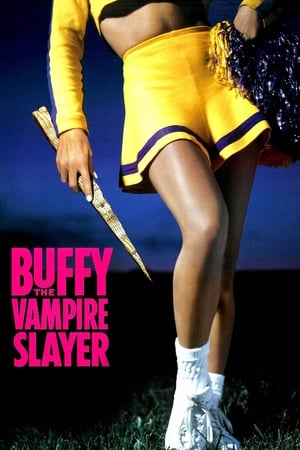
The same year, Hauer became a vampire in Buffy the Vampire Slayer (1992), the film written by Joss Whedon and directed by Fran Rubel Kuzui that preceded the later television phenomenon. Hauer plays Lothos, the ancient vampire opposed by Kristy Swanson's Buffy.
Lothos uses many qualities already associated with Hauer but redirects them toward overt supernatural villainy. He is elegant, calm and amused by human resistance, behaving less like a feral creature than an aristocratic predator who has survived long enough to regard vampire hunters as recurring inconveniences.
The film is broader and more comic than The Hitcher, particularly through Paul Reubens' performance as Lothos' lieutenant Amilyn, but Hauer generally plays the central vampire with enough seriousness to preserve a genuine threat underneath the comedy.
The role also demonstrated how naturally his appearance could fit vampire mythology. The pale features, controlled voice and emotional distance required almost no major transformation to move Hauer from human menace into supernatural aristocracy.
Salem's Lot and Kurt Barlow
Hauer returned to vampire horror in the 2004 television adaptation of Stephen King's Salem's Lot. Directed by Mikael Salomon, the miniseries casts him as Kurt Barlow, the ancient vampire whose arrival begins the destruction of the Maine community at the center of the story.
The role differs sharply from the almost silent monstrous Barlow of Tobe Hooper's 1979 adaptation. Hauer's version speaks, manipulates and possesses a far more recognizably human personality.
This approach naturally plays to his strengths. Barlow does not need to remain hidden in darkness to become threatening. Hauer can allow intelligence and confidence to perform the work that creature makeup might otherwise accomplish.
The role also connected him directly with one of horror literature's major modern vampire stories, decades after The Hitcher had established his ability to make an entirely human-looking figure seem almost supernatural.
Dracula III: Legacy and Becoming Dracula
In Dracula III: Legacy (2005), directed by Patrick Lussier, Hauer moved from playing a vampire master inspired by Stephen King to Dracula himself. The direct-to-video production follows vampire hunters into Eastern Europe as they pursue the Count during a period of violent political instability.
Hauer appears relatively late, but the casting carries obvious genre history. His screen persona had already contained elements traditionally associated with cinematic vampires: physical authority, aristocratic detachment, sexuality and the possibility of sudden violence.
The role does not attempt to imitate Bela Lugosi or Christopher Lee. Hauer brings the same weathered unpredictability visible throughout his later career, making Dracula another variation on the enigmatic predators he had played for decades.
Hobo with a Shotgun and the Return of the Cult Hero
Jason Eisener's Hobo with a Shotgun (2011) gave Hauer one of his most substantial late-career genre roles. Developed from Eisener's winning fake trailer created for a Grindhouse competition, the feature expands the deliberately outrageous premise into an exploitation nightmare filled with sadistic criminals, corrupt authority and extreme gore.
Hauer plays the unnamed Hobo as the one comparatively grounded figure inside a city that behaves according to cartoonishly violent rules. He arrives dreaming of buying a lawnmower and beginning a modest life, only to encounter a society so corrupt that ordinary morality seems impossible.
The performance succeeds because Hauer does not compete with the film's exaggeration. Eisener encouraged him to play the character seriously. While villains scream and violence becomes absurdly excessive, Hauer gives the Hobo exhaustion, dignity and a simple moral purpose.
That contrast allowed the film to use his accumulated screen history without reducing him to parody. The actor once associated with beautiful artificial perfection in Blade Runner appears aged, dirty and physically worn, but the authority remains.
Hauer later compared the enthusiastic audience response to Hobo with a Shotgun with the response he remembered from an early screening of The Hitcher. The connection is revealing. Both films depend upon filmmakers understanding exactly what kind of presence Hauer can bring to extreme genre material.
The Rite and Religious Horror
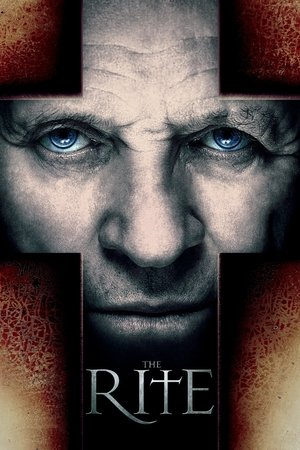
Hauer also appeared in The Rite (2011), a supernatural horror film centered on exorcism and religious doubt. He plays Istvan Kovak, father of seminarian Michael Kovak.
The role is not one of the film's supernatural antagonists, but it contributes to the psychological and familial history surrounding Michael's conflicted relationship with faith and death. Hauer's presence is quieter than in the more flamboyant horror roles associated with him.
The film demonstrates another side of his genre usefulness. He did not always need to embody the monster. By late career his face carried enough gravity that a relatively contained supporting role could give a supernatural story an immediate sense of history.
Dario Argento and Dracula 3D
Dario Argento's Dracula 3D (2012) created an unusual reversal in Hauer's vampire career. After playing Lothos, Kurt Barlow and Dracula himself, he now became Abraham Van Helsing, the hunter attempting to destroy Thomas Kretschmann's Count Dracula.
The casting therefore places Hauer on both sides of vampire mythology across his career. The qualities once used to make him the supernatural predator become useful to the older man who understands what the predator is.
Argento's film belongs to a very different phase of European horror from the director's 1970s and 1980s work, but the collaboration brings together two figures whose careers had each travelled through several generations of genre cinema.
Hauer's Van Helsing is not important because it replaced the more famous interpretations of the character. Its interest lies in accumulated screen history. A performer who had spent decades embodying dangerous outsiders now carries the authority of the person expected to confront one.
True Blood and the Return to Vampire Television
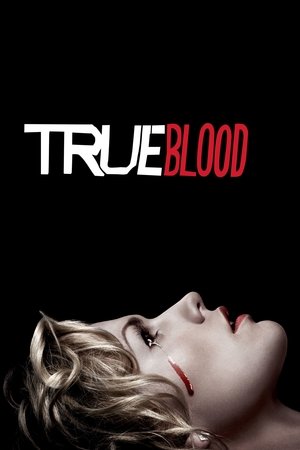
Hauer joined True Blood during the later seasons of HBO's supernatural series as Niall Brigant. The role placed him inside another modern mythology involving vampires, faeries and competing supernatural communities.
By this point Hauer did not need to establish genre credibility. His presence automatically carried memories of earlier vampire and science-fiction roles into a series built upon the collision of supernatural species and contemporary society.
The appearance also demonstrates how television had become an increasingly important home for ambitious horror and fantasy. An actor whose early international reputation had been constructed primarily through cinema could now move naturally into serialized supernatural storytelling.
Channel Zero: Butcher's Block
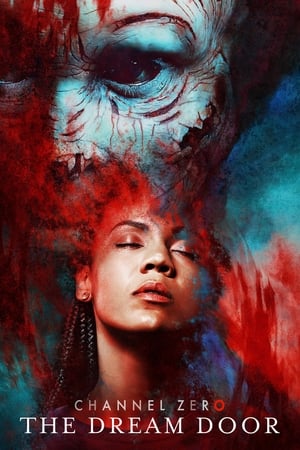
One of Hauer's most substantial final horror roles came in the third season of Channel Zero, subtitled Butcher's Block. He plays Joseph Peach, a patriarch connected to the deeply disturbing family mythology at the center of the season.
The role takes advantage of Hauer's age rather than attempting to disguise it. Joseph possesses the calm confidence of someone who believes ordinary human morality no longer applies to him, allowing the actor to return to the unnerving stillness that had made John Ryder so effective decades earlier.
The surrounding series belongs to a newer generation of television horror shaped by internet folklore and surreal imagery, yet Hauer fits naturally within it. The medium and visual language had changed; his ability to make politeness threatening had not.
Age, Menace and the Evolution of the Hauer Persona
Hauer's horror persona changed as he grew older. The young actor could represent physical perfection, sexual danger and explosive violence. The older Hauer increasingly became effective through weariness, authority and the accumulated knowledge visible in his face.
Hobo with a Shotgun uses physical deterioration sympathetically. Dracula 3D converts age into Van Helsing's experience. Channel Zero turns it into disturbing patriarchal authority.
The progression prevented Hauer from becoming trapped in attempts to reproduce John Ryder or Roy Batty indefinitely. Filmmakers could use the audience's memory of those characters while allowing age to change the meaning of his presence.
Rutger Hauer's Horror Legacy
Rutger Hauer never belonged exclusively to horror, but the genre understood something essential about him. His most frightening characters are rarely frightening because they behave like obvious monsters. They are frightening because humanity and monstrosity remain impossible to separate.
Paul Verhoeven developed the volatile charisma that first made Hauer a major European actor. Ridley Scott turned that charisma into the tragic artificial life of Roy Batty. Robert Harmon and C. Thomas Howell then helped create the film in which Hauer's ambiguity became pure terror: The Hitcher.
Later roles expanded rather than repeated that image. Split Second made him the damaged hunter of a creature. Buffy the Vampire Slayer turned him into an aristocratic vampire. Salem's Lot gave him Kurt Barlow, while Dracula III: Legacy made him Dracula himself. Jason Eisener reinvented him as an exhausted exploitation hero in Hobo with a Shotgun, and Dario Argento eventually placed him on the opposite side of vampire mythology as Van Helsing.
The connection running through those characters is unpredictability. Hauer could make stillness dangerous and violence strangely calm. Even when a screenplay clearly identified him as villain, hero, monster or hunter, the performance often resisted remaining inside that category.
That resistance is the central reason his best horror work survives. John Ryder is terrifying because the audience never discovers exactly what he wants. Decades later, Hauer could enter a new horror production and carry that same uncertainty with him. Rutger Hauer made the unreadable human face into a monster of its own.
Selected Work
Notable Horror Collaborators
Notable collaborators and creative partners throughout Rutger Hauer's horror career.
 Robert Harmon
Defining Horror Director
Harmon directed Hauer as John Ryder in The Hitcher, the defining horror performance of his career and one of the most enigmatic human killers of 1980s horror.
ER
Eric Red
Defining Horror Screenwriter
Red created John Ryder and the relentless road nightmare of The Hitcher, providing Hauer with the character most permanently associated with his horror career.
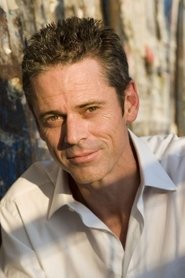 C. Thomas Howell
Defining Horror Co-Star
Howell's Jim Halsey is the essential counterpoint to Hauer's John Ryder, and their predator-victim relationship drives the entire nightmare of The Hitcher.
TM
Tony Maylam
Creature Horror Director
Maylam cast Hauer as damaged detective Harley Stone in Split Second, placing him at the center of a dark science-fiction creature horror story.
 Patrick Lussier
Vampire Horror Director
Lussier cast Hauer as Dracula in Dracula III: Legacy, completing an important progression through the vampire roles of his horror career.
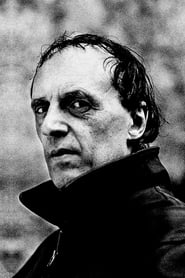 Dario Argento
Gothic Horror Director
Argento reversed Hauer's long association with vampire characters by casting him as Van Helsing in Dracula 3D.
Rutger Hauer Horror Movies
Acting (19 credits)
2018
2016
2012
2011
2011
2011
2008
2007
2006
2005
2004
2001
1998
1997
1995
1992
1992
1986
Production (1 credits)
1995