


2026
Matthew Lillard
Horror Actor · Biography · Horror Filmography · Collaborators · Credits
Horror subgenres & themes
Most represented across this person's horror filmography:
SLASHER
• HAUNTED HOUSES
Biography
Matthew Lillard and Two Generations of Horror Villains
Matthew Lillard holds an unusual place in modern horror because his genre identity was built in two distinct waves separated by almost three decades. In the 1990s he became permanently associated with Stu Macher, one of the killers in Wes Craven's Scream, a performance whose manic humor and volatility helped define the film's balance between slasher violence and self-aware comedy. Years later, after a long career that moved through comedy, drama, animation and family entertainment, Lillard returned to major horror as William Afton in Five Nights at Freddy's, placing him at the center of another franchise with a completely different generation of fans.
Between those two landmarks, Lillard continued to intersect with horror in ways that reinforced his affinity for characters who combine nervous energy, humor and danger. He was part of John Waters' Serial Mom before Scream, played psychic Dennis Rafkin in the supernatural remake Thir13en Ghosts, remained connected to monster culture through Scooby-Doo, returned to William Afton in Five Nights at Freddy's 2, reprised Stu Macher in Scream 7 and joined Mike Flanagan's 2026 adaptation of Stephen King's Carrie. Horror has never represented the majority of Lillard's filmography, but some of the most enduring images of his career belong to the genre.
Serial Mom and an Early Connection to Horror Culture
One of Lillard's earliest major feature roles came in John Waters' 1994 black comedy Serial Mom. He plays Chip Sutphin, the horror-obsessed son of Beverly Sutphin, a seemingly perfect suburban mother whose private response to everyday irritation is murder. The film sits between satire, crime comedy and serial-killer horror, using exaggerated violence to dismantle the mythology of respectable suburban life.
Chip is particularly relevant to Lillard's later horror career because the character is already positioned as a consumer of gore cinema. He works in a video store, talks enthusiastically about horror movies and responds to the discovery that his mother may be a serial killer with the fascinated disbelief of someone whose movie obsessions have suddenly entered reality. The role placed Lillard inside a film that understood violence through popular culture before Scream turned that relationship between audiences and horror conventions into the center of its story.
John Waters uses the Sutphin family to create a world in which murder becomes spectacle. Beverly's crimes attract television attention, courtroom obsession and celebrity culture, while Chip's knowledge of exploitation cinema provides a comic bridge between fictional violence and actual killing. Lillard's naturally animated screen presence suited a character who can be horrified by his mother and simultaneously fascinated by the extraordinary situation developing around the family.
Scream and the Reinvention of the Slasher
Two years later, Scream transformed Lillard's connection to horror completely. Written by Kevin Williamson and directed by Wes Craven, the film arrived at a moment when the American slasher had become heavily dependent on sequels, repetition and familiar formulas. Rather than pretending that earlier horror films did not exist, Scream made knowledge of those formulas part of the narrative. Its teenagers watch horror movies, discuss survival rules, recognize clichés and still discover that awareness does not protect them from real violence.
Lillard plays Stu Macher, one of the most energetic members of Sidney Prescott's social circle. For much of the film Stu appears primarily as comic relief. He is loud, impulsive, constantly joking and prone to reacting to serious situations with exaggerated enthusiasm. That behavior becomes much darker after the revelation that Stu and Billy Loomis have been operating together as Ghostface.
The pairing between Lillard and Skeet Ulrich is fundamental to the finale. Billy is comparatively controlled and focused on the plan, while Stu becomes increasingly chaotic as events collapse around them. The contrast gives the killers different psychological textures even though they have worked together. Stu's humor does not disappear once his identity is exposed. Instead, the comedy becomes more disturbing because the audience understands that the apparently ridiculous teenager has participated in murder while treating much of the experience like an elaborate game.
Lillard later described the production as something he never expected to become historically important. During filming he believed they were making a small horror movie that might disappear quickly. Three decades later, he was still discussing how difficult it had been to imagine what Scream would become. That lack of expectation contributed to the looseness of the performance. Lillard was not trying to construct a future horror icon. Stu emerged from the actor's physical energy, improvisational instinct and chemistry with the rest of the cast.
Stu Macher, Comedy and Violence
Stu remains distinctive among slasher killers because Lillard never separates humor cleanly from violence. The character is funny before the revelation, funny during the murders and still funny while bleeding heavily in the kitchen at the end. That continuity prevents the final act from feeling as though a hidden serious villain has suddenly replaced the teenager the audience knew earlier.
Several of the character's most memorable moments depend on Lillard's delivery rather than elaborate horror staging. Stu mocks the conventions Randy Meeks explains during the party, casually promises that he will be right back, participates in Billy's plan with increasing hysteria and finally begins worrying about how his parents will react after realizing that the situation has escaped their control. The humor makes him memorable, but it also communicates immaturity. Stu has committed adult violence without possessing anything resembling adult emotional control.
Lillard and Ulrich have repeatedly discussed how differently they approached their characters. Ulrich treated Billy with intense preparation, while Lillard brought a looser and more physical quality to Stu. Craven reportedly incorporated some of Lillard's naturally awkward movement into the Ghostface performance, reinforcing the idea that the masked killer was not an invulnerable supernatural figure. Ghostface could stumble, crash into objects and lose control because the person beneath the costume was human.
The Long Afterlife of Stu Macher
Although Stu appeared to die when Sidney Prescott dropped a television onto his head, the character developed an unusually persistent afterlife in Scream fandom. For decades, viewers debated whether he might have survived. Lillard encouraged the possibility and repeatedly joked that Stu was still alive. Later entries in the franchise added visual references and Easter eggs that kept the speculation active even when the character did not physically return.
The importance of that fan conversation demonstrates how strongly the original performance survived outside the narrative. Stu was not the primary planner of the murders and did not become the recurring face of Ghostface, yet his personality remained one of the most quoted and discussed elements of the 1996 film. The mixture of comic energy, apparent stupidity, cruelty and emotional collapse made him difficult to replace with a more conventional slasher antagonist.
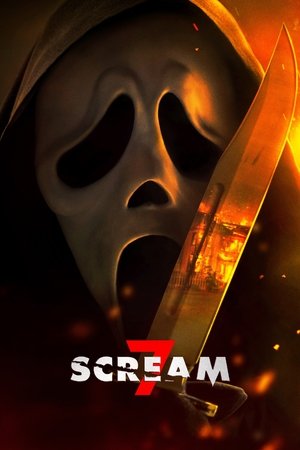
That endurance eventually led back to the franchise itself. In 2026 Lillard officially returned as Stu Macher in Scream 7, directed by original screenwriter Kevin Williamson. The film arrived thirty years after the original and placed Lillard back inside the mythology that had established his horror identity. The return also confirmed something that had become clear through decades of conventions and fan discussions: Stu Macher had developed cultural significance far beyond the amount of screen time he originally received.
Thir13en Ghosts and Dennis Rafkin
Lillard returned to direct supernatural horror in 2001 with Thir13en Ghosts, Steve Beck's remake of the 1960 William Castle film. He plays Dennis Rafkin, a psychic who has helped collector Cyrus Kriticos locate and capture a group of violent spirits. When Cyrus' elaborate glass house becomes a trap, Rafkin is one of the few characters who fully understands how dangerous the imprisoned ghosts actually are.
The role uses many of Lillard's familiar strengths while placing them in a more sympathetic character. Rafkin is anxious, physically reactive and frequently overwhelmed by supernatural stimuli. His psychic sensitivity forces him to experience the pain and violence connected to the ghosts, giving the film an emotional interpreter for threats that other characters initially cannot see. His nervous behavior therefore has a genuine cause rather than functioning only as comic eccentricity.
Rafkin is also burdened by guilt. He helped Cyrus capture the ghosts and understands that his abilities were used as part of a larger and more dangerous scheme. As the house begins releasing its prisoners, Rafkin shifts from reluctant participant toward someone trying to prevent further deaths. The character became one of the most remembered human elements of the film, especially as Thir13en Ghosts developed a substantial cult following after its original theatrical release.
The film also demonstrates how effectively Lillard could function in horror without playing the killer. Stu Macher is frightening because uncontrolled energy conceals murderous intent. Dennis Rafkin is sympathetic because similar nervous energy reflects genuine terror and trauma. The physical intensity remains recognizable, but the moral position is reversed.
Monster Culture and Scooby-Doo
The live-action Scooby-Doo films are primarily family comedy and fantasy rather than straightforward horror, yet Lillard's long association with Shaggy Rogers kept him connected to the visual language of monsters, haunted locations and supernatural mysteries. He played Shaggy in Scooby-Doo in 2002 and Scooby-Doo 2: Monsters Unleashed in 2004 before eventually becoming the principal voice of the character in animation.
The connection matters to his broader genre persona because Shaggy represents the frightened witness to monsters, almost the opposite of Stu Macher. Lillard could therefore become culturally recognizable both as someone behind the mask in a major slasher and as a character whose defining response to monsters is panic. That contrast helped create an unusual relationship with several generations of viewers before his eventual return to adult horror.
Five Nights at Freddy's and William Afton
The 2023 adaptation of Five Nights at Freddy's gave Lillard his most important horror role since Scream. Directed by Emma Tammi and based on Scott Cawthon's game franchise, the film centers on an abandoned family restaurant whose animatronic mascots are connected to the murdered children haunting the building. Lillard initially appears as career counselor Steve Raglan, the man who sends Mike Schmidt to work the night shift at Freddy Fazbear's Pizza. The apparent supporting character is eventually revealed to be William Afton, the serial murderer responsible for the deaths at the center of the mythology.
Lillard entered the project without the deep familiarity possessed by many fans. He knew of the games but had not played them extensively. After receiving the role, he began studying the franchise, watching gameplay and exploring the mythology with his son. Creator Scott Cawthon encouraged him to concentrate particularly on the first three games, giving the actor a manageable path into an unusually dense fictional universe.
Emma Tammi explained the long-term importance of Afton to Lillard by comparing him to Voldemort within the Five Nights at Freddy's universe. The character might not dominate every installment, but his actions create the history from which the franchise's horror develops. That idea attracted Lillard because it promised something very different from Stu Macher. Stu is a teenager committing murders during a single catastrophic plan. Afton is an older architect of horror whose crimes have produced an entire supernatural system.
Lillard has spoken about the pressure involved in playing a character already surrounded by an enormous fan community. Unlike a new role that allows an actor to invent freely, William Afton arrived with years of theories, game appearances, visual iconography and expectations. Lillard therefore approached the performance with an awareness that even relatively small choices would be examined by people who knew the material in extraordinary detail.
Spring Bonnie, William Afton and Franchise Horror
The climax of Five Nights at Freddy's allows Lillard to reveal Afton more fully. The corporate disguise of Steve Raglan disappears and the character enters the restaurant as the murderer connected to the yellow rabbit costume. The transformation gives Lillard another masked horror identity, but one very different from Ghostface. The costume belongs to the fictional mythology itself and links Afton directly to the murders of children whose spirits now inhabit the animatronics.
For viewers who knew Lillard primarily through Scream, the casting carried obvious genre resonance. A performer remembered as one of the killers behind Ghostface was now becoming the human origin of another horror franchise's central evil. Yet the performance avoids simply reproducing Stu. Afton is more controlled, more deliberate and far more conscious of his authority over the world he created.
The film became a major commercial success and demonstrated how large the Five Nights at Freddy's audience had become beyond gaming. For Lillard, it also created the possibility of something he had not really possessed after Scream: an ongoing horror villain role designed from the beginning to exist across multiple films.
Five Nights at Freddy's 2 and the Reunion with Skeet Ulrich
Lillard returned as William Afton in Five Nights at Freddy's 2 in 2025. Emma Tammi again directed, while Scott Cawthon continued writing the film's mythology for the screen. The sequel expanded the history surrounding Freddy Fazbear's Pizza and explored the consequences of Afton's earlier crimes.
The film also produced a remarkable horror reunion by bringing Skeet Ulrich into the franchise. Nearly thirty years after appearing together as Stu Macher and Billy Loomis in Scream, Lillard and Ulrich were now connected inside another major horror property. Ulrich played Henry Emily, a figure tied to the origins of the Freddy's story, while Lillard continued as Afton.
Lillard publicly expressed enthusiasm about Ulrich joining the franchise and described the Five Nights at Freddy's audience as exceptionally passionate. The reunion had obvious nostalgic value for horror fans, but it also demonstrated how the careers of the two actors had returned to the genre through completely different mythology. The pairing that once embodied the human killers beneath Ghostface now belonged to a universe of haunted machinery, murdered children and supernatural revenge.
Scream 7 and the Return to Stu
In 2026 Lillard completed another circle by returning to Scream. Kevin Williamson, whose original screenplay created Stu Macher, directed Scream 7, while Neve Campbell again played Sidney Prescott. Lillard's participation officially brought Stu back into the franchise after decades of speculation about whether the character could ever appear again.
The return was significant regardless of the mechanics used by the story because it acknowledged the extraordinary persistence of the character. Stu had spent almost thirty years surviving through quotations, fan theories, convention appearances and discussions about the original Ghostface partnership. Lillard had continually engaged with that audience, and the franchise finally converted that cultural afterlife into a new screen appearance.
The film also emphasized how much horror had changed around Lillard. The original Scream was built around VHS-era movie knowledge and teenage conversations about slasher rules. By 2026 the series existed in a landscape of legacy sequels, digital manipulation, true-crime culture and fandoms capable of maintaining detailed theories for decades. Stu's return therefore connected the analogue self-awareness of the original film with a much newer form of horror nostalgia.
Carrie and Matthew Lillard's 2026 Horror Renaissance
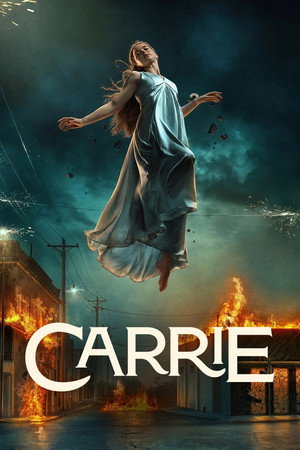
Lillard's horror presence continued almost immediately with Mike Flanagan's 2026 television adaptation of Stephen King's Carrie. The Prime Video series reimagines King's story in the social-media era, placing Carrie White's isolation and telekinetic awakening inside a school environment shaped by viral humiliation and digital bullying. Lillard plays Principal Grayle, one of the adults responsible for navigating the consequences of that increasingly hostile environment.
Lillard connected personally with the material through his own memories of feeling like an outsider and being bullied. He also approached the role as a father, responding to the story's interest in how adults protect, fail or misunderstand young people in crisis. Rather than revisiting earlier adaptations in preparation, he chose to work from the new version created by Flanagan and the ensemble around him.
The project places Lillard inside another major branch of modern horror culture: the contemporary Stephen King adaptation. It also arrives at a point when his genre identity has become unusually active again. Within a short period he returned to William Afton, reunited professionally with Skeet Ulrich, re-entered the Scream franchise and joined a new interpretation of one of King's foundational horror novels.
Matthew Lillard's Place in Modern Horror
Lillard's importance to horror does not come from an enormous number of credits. It comes from the unusual longevity and generational spread of the roles that matter most. Stu Macher belongs to the 1990s reinvention of the slasher, a period when horror became openly self-conscious about its own rules. Dennis Rafkin represents the effects-heavy supernatural horror of the early 2000s. William Afton belongs to a form of twenty-first-century transmedia horror that developed first through games, online theories and fan communities before moving into blockbuster cinema.
Across those roles, Lillard repeatedly uses instability as an acting tool. His characters move quickly between humor, fear, anger and menace. Stu can transform a joke into a threat without changing his basic personality. Rafkin appears frantic because he experiences supernatural violence more directly than everyone around him. Afton hides predatory control beneath a professional identity before revealing the authority he believes he possesses over the world of Freddy Fazbear's Pizza.
That adaptability explains why Lillard could disappear from major horror for long stretches without losing his connection to the genre. Scream continued circulating. Thir13en Ghosts developed cult status. Horror conventions kept Stu Macher alive in fan culture. Then Five Nights at Freddy's introduced him to viewers who may not even have been born when Scream was released.
By 2026, Matthew Lillard was no longer simply the actor who had once played one of Ghostface's original killers. He had become a performer connecting several eras of horror: the video-store and slasher culture of the 1990s, the supernatural studio horror of the early 2000s, the game-driven franchise horror of the 2020s and the continuing reinvention of classic literary horror through projects such as Carrie. Few actors have returned to the genre after such long intervals and found themselves attached to another villain with the potential to become as recognizable to a new generation as their first.
Selected Work
Notable Horror Collaborators
Notable collaborators and creative partners throughout Matthew Lillard's horror career.
 Neve Campbell
Scream Co-Star
Campbell and Lillard are linked by the beginning and the modern return of the Scream mythology. They first faced each other as Sidney Prescott and Stu Macher in Scream and reunited three decades later in Scream 7.
 Skeet Ulrich
Horror Co-Star
Lillard and Ulrich created the original Ghostface partnership as Stu Macher and Billy Loomis in Scream. Nearly thirty years later they were brought together again within the Five Nights at Freddy's universe in Five Nights at Freddy's 2.
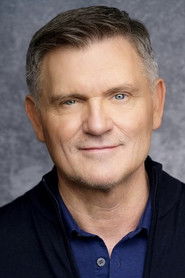 Kevin Williamson
Writer / Director Collaborator
Williamson created Stu Macher in his screenplay for the original Scream and returned to Lillard three decades later as the director and co-writer of Scream 7, making him the key creative link between Lillard's two appearances in the franchise.
ET
Emma Tammi
Director Collaborator
Tammi directed Lillard as William Afton in both Five Nights at Freddy's and Five Nights at Freddy's 2. Their collaboration established his interpretation of the franchise's central human villain for a new generation of horror audiences.
SC
Scott Cawthon
Creator / Writing Collaborator
As the creator of Five Nights at Freddy's and a principal screenwriter of its film adaptations, Cawthon provided the mythology behind William Afton and directly shaped the character Lillard plays in both feature films.
 Josh Hutcherson
Five Nights at Freddy's Co-Star
Hutcherson and Lillard anchor opposite sides of the Five Nights at Freddy's film story across the first two movies, with Mike Schmidt uncovering the crimes and supernatural legacy created by Lillard's William Afton.
Matthew Lillard Horror Movies
Acting (26 credits)
2026
2026
2025
2023
2023
2022
2022
2020
2019
2016
2015
2013
2011
2011
2011
2010
2010
2005
2001
2000
1998
1997
1997
1996
1990
1990