



2024
Christopher Lee
Horror Actor · Biography · Horror Filmography · Family · Collaborators · Credits
Horror subgenres & themes
Biography
Christopher Lee and the Authority of Gothic Horror
Christopher Lee became one of horror cinema's defining figures because he could make the supernatural feel authoritative. His height, voice, physical control and almost aristocratic presence allowed him to enter a scene already carrying a sense of power, whether he was playing Dracula, Frankenstein's Creature, a resurrected mummy, an occult scholar or the ruler of an isolated pagan community. Yet the image that made him famous also threatened to imprison him. For decades Lee fought against the assumption that a face associated with monsters could only belong to monsters, even while continuing to give horror some of its most memorable performances.
His importance to the genre cannot be separated from the transformation of British horror during the late 1950s. Hammer Films took stories associated with nineteenth-century literature and the black-and-white Universal tradition and rebuilt them in colour, filling the screen with blood, physical violence, sexuality and Gothic architecture. Peter Cushing gave these films nervous intelligence and moral intensity; Lee gave them physical danger. Together, under directors such as Terence Fisher, they helped create a new language for Gothic horror whose influence would extend far beyond Britain.
Lee's career eventually became much larger than Hammer. He worked throughout Europe, entered folk horror with The Wicker Man, played villains in James Bond and Star Wars, became Saruman for Peter Jackson and repeatedly returned to Gothic cinema through filmmakers such as Tim Burton. The remarkable part is not simply that he remained active for so long. It is that the qualities horror discovered in him during the 1950s remained useful more than half a century later.
Before Hammer: Learning to Command the Frame
Christopher Frank Carandini Lee was born in London on May 27, 1922. After military service during the Second World War, he moved toward acting and began appearing on screen during the late 1940s. His early career gave little indication that he would become one of the most recognizable faces in genre cinema. He spent years in small roles, supporting parts and brief appearances, working through the British film industry without receiving the kind of role that could transform him into a star.
By the time Hammer changed the direction of his career, Lee had already accumulated more than thirty film appearances. He could be seen in productions ranging from Corridor of Mirrors and Hamlet to Scott of the Antarctic and The Crimson Pirate, frequently appearing as soldiers, foreigners, officials or men whose physical appearance made them immediately noticeable. Casting directors did not always know what to do with his unusual height and strongly defined features. The qualities that complicated conventional casting would soon become enormous advantages in horror.
That long apprenticeship mattered. Lee learned how to create presence without depending upon dialogue or narrative importance, because many of his early roles gave him little of either. He became especially aware of movement, posture and the way an actor could communicate before speaking. When Hammer eventually needed a performer capable of turning a nearly silent monster into something physically compelling, Lee had already spent years learning how much could be accomplished simply by entering the frame correctly.
The Curse of Frankenstein and the Birth of Hammer Horror
The Curse of Frankenstein (1957) changed both Lee's career and British horror. Directed by Terence Fisher and starring Peter Cushing as Baron Victor Frankenstein, the film reimagined Mary Shelley's story with an intensity that separated it from earlier screen versions. Colour allowed Hammer to make laboratories, wounds, corpses and surgical imagery newly immediate, while Jimmy Sangster's screenplay shifted much of the moral horror toward Frankenstein himself. Lee was cast as the Creature, hidden beneath grotesque makeup and given very little conventional dialogue.
The performance depended upon the exact qualities Lee had developed during his years in minor roles. His Creature is physically large but strangely vulnerable, moving with the damaged uncertainty of a being whose body has been assembled rather than naturally born. Lee does not attempt to recreate Boris Karloff's Universal monster. The face, movement and emotional register are different, allowing Hammer's Creature to exist as something more pitiful and unstable. The result gave Lee his first major horror identity while simultaneously demonstrating that he could dominate scenes even when much of his face was concealed.
The film was also the beginning of one of the most important partnerships in British genre cinema. Lee and Peter Cushing had appeared in some of the same earlier productions without actually working together closely, but The Curse of Frankenstein placed them at the center of the same film. Their contrasting screen qualities immediately complemented one another. Cushing could appear precise, cerebral and controlled even when playing obsession, while Lee's size and stillness gave him a physical authority that could turn threatening with very little movement.
The international success of The Curse of Frankenstein showed Hammer that classical Gothic material could become commercially powerful again if presented with enough energy and visual intensity. The following year the company turned to another monster whose screen history seemed firmly established. That decision would permanently change Lee's public identity.
Dracula: The Vampire Becomes Physical
Dracula (1958), released in the United States as Horror of Dracula, transformed Christopher Lee into an international star. Bela Lugosi's Dracula had established an image of hypnotic elegance and ceremonial menace that remained dominant for decades. Lee retained the aristocratic authority of the character but added something far more physical. His Dracula could be charming and controlled, then suddenly become ferocious, bloodshot and animalistic, collapsing the distance between sophisticated nobleman and predator.
Terence Fisher's film also brought sexuality much closer to the surface. Lee's Dracula is attractive precisely because he is dangerous, and the women he approaches are not presented merely as passive victims of a supernatural spell. Desire, fear and repression become entangled with vampirism. In colour, with blood visible against pale skin and dark clothing, the vampire became a creature of appetite rather than simply a figure emerging from shadows. Lee's height amplified this transformation because Dracula could seem to occupy more space than everyone around him even before violence began.
Peter Cushing's Van Helsing provided the necessary counterweight. Where Dracula represented appetite, instinct and physical dominance, Van Helsing responded with discipline, knowledge and action. Their confrontation gave Hammer a pairing powerful enough to become part of horror iconography. Lee and Cushing would work together repeatedly across horror, fantasy and adventure, sometimes as enemies and sometimes as allies, until audiences began to associate the presence of one with the possibility of the other.
The success of the film created a problem Lee would never completely escape. Dracula had made him famous, but fame immediately encouraged repetition. Lee understood the value of the character and remained permanently associated with him, yet he also became increasingly frustrated by scripts that offered less complexity than the original film and drifted further from Bram Stoker's novel. His relationship with Dracula therefore became both essential and adversarial: the role gave him immortality within horror cinema while constantly threatening to reduce the rest of his career to a cape and a pair of fangs.
Peter Cushing and the Hammer Partnership
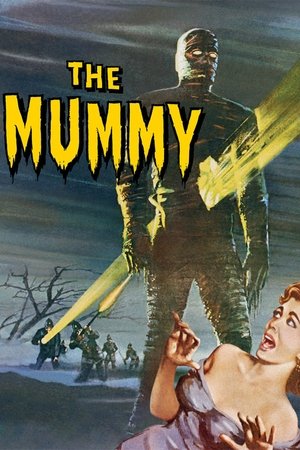
The relationship between Christopher Lee and Peter Cushing became much larger than a single monster cycle. In The Hound of the Baskervilles (1959), Cushing played Sherlock Holmes while Lee appeared as Sir Henry Baskerville, allowing both actors to move outside the simple monster-hunter opposition that audiences already recognized. That same year The Mummy reversed the balance again, with Lee transformed into the resurrected Kharis and Cushing attempting to stop him. Their collaborations demonstrated how easily Hammer could rearrange the same performers while preserving the chemistry that made audiences want to see them together.
Off screen, the partnership developed into a genuine friendship, which gives their screen antagonism an additional historical resonance. They were radically different performers but approached even extravagant material with seriousness. Neither treated horror as something requiring embarrassment or condescension. When the scripts demanded Gothic excess, they played the emotional reality underneath it, helping Hammer's monsters, scientists and occult threats retain credibility even when the productions were operating with limited budgets and highly theatrical premises.
The pairing also became important to the identity of Hammer itself. The studio had directors, writers, composers and designers whose contributions were essential, but Lee and Cushing became its most immediately recognizable human faces. Their names could communicate an entire atmosphere before the film began: laboratories, crypts, old houses, supernatural threats and the collision between rational investigation and ancient evil. Even when they appeared separately, audiences carried memories of the films they had made together.
Beyond Dracula: Mummies, Witches and European Gothic
Lee's horror career expanded rapidly beyond Hammer's Dracula cycle. The Mummy gave him another nearly wordless monster, but one very different from Frankenstein's Creature. Kharis moves with the weight of ritual and punishment, less like a confused artificial being than an ancient force continuing an obligation beyond death. Once again Lee's physical control became more important than dialogue, proving that his effectiveness in horror did not depend solely upon the voice that would later become one of his most famous characteristics.
He also worked in horror outside Hammer, allowing his screen presence to enter other national traditions. The City of the Dead explored witchcraft and occult survival within an American Gothic setting filmed in Britain, while Lee's increasingly international career took him through productions made across continental Europe. The expansion mattered because it prevented his horror identity from becoming completely synonymous with one studio, even if Hammer remained the central institution in his reputation.
Mario Bava's The Whip and the Body (1963) offered Lee one of his most striking European Gothic roles. As the sadistic aristocrat Kurt Menliff, he enters a story built around forbidden desire, cruelty and obsession. Bava surrounds him with saturated colour, deep shadow and decaying architecture, creating a Gothic environment whose eroticism is more openly disturbing than much of Hammer's work. Lee's established association with aristocratic menace becomes part of the film's language, but Bava redirects that presence toward a story in which desire itself seems diseased.
The film demonstrates how adaptable Lee's screen image had become. A director did not need to cast him as Dracula in order to invoke the cultural memory of Dracula. His voice, stature and elegance already carried Gothic associations that could be reused, distorted or challenged. Lee had become not simply an actor who appeared in horror films, but a visual and vocal signifier of the genre.
The Burden of Returning to Dracula
Lee returned to the role of Dracula for Hammer in Dracula: Prince of Darkness (1966), eight years after the original. The film famously gives Dracula no spoken dialogue, forcing Lee to build the performance almost entirely from movement, expression and physical attack. His resurrection from blood and ashes is spectacular, but the character increasingly functions as a destructive force rather than the seductive figure who had dominated the 1958 film. The change reflects a larger problem that would follow the Hammer sequels: the icon remained powerful even when the scripts gave the actor less to explore.
More sequels followed, including Dracula Has Risen from the Grave, Taste the Blood of Dracula and Scars of Dracula. Lee continued to bring intensity to the role, but the repetition became increasingly difficult for an actor determined to demonstrate that his range extended far beyond vampires. The character was repeatedly resurrected because audiences recognized his commercial value, creating an almost absurd parallel with Dracula himself. No matter how definitively the vampire seemed to die, industrial demand found another way to bring him back.
Hammer eventually attempted to modernize the series with Dracula A.D. 1972, transporting Dracula and Van Helsing into contemporary London. The Satanic Rites of Dracula followed, combining vampirism with conspiracy, scientific threat and modern corporate power. These films are fascinating partly because they reveal a studio attempting to preserve an older Gothic icon while horror cinema around it was changing rapidly. Lee's final Hammer Dracula therefore belongs to a very different genre landscape from the 1958 original that had created the phenomenon.
Lee also played the Count outside Hammer in Jesús Franco's Count Dracula (1970), a production intended to move closer to elements of Stoker's novel. The existence of multiple Lee Draculas makes his relationship with the character more complicated than a single franchise. He repeatedly sought aspects of Stoker's conception that commercial Gothic cinema had simplified, even while knowing that his own face had become one of the principal reasons audiences no longer imagined Dracula without remembering the movies.
The Devil Rides Out and Christopher Lee on the Side of Good
The Devil Rides Out (1968) gave Lee one of the most important opportunities of his Hammer career because it placed his authority on the opposite side of the supernatural conflict. As the Duc de Richleau, he is not the monster, cult leader or threatening aristocrat. He is the knowledgeable figure capable of recognizing occult danger before everyone around him understands what they are facing. The same commanding presence that made Dracula frightening becomes a source of protection.
Directed again by Terence Fisher and adapted by Richard Matheson from Dennis Wheatley's novel, the film treats Satanism and ritual magic with unusual seriousness for its period. Lee's performance is essential to maintaining that tone. De Richleau speaks about supernatural forces with absolute conviction, and because Lee refuses to distance himself from the material, the audience is encouraged to accept the threat on the same terms. His authority turns exposition into dramatic force rather than simply explanation.
The role also exposed an important limitation in the way Lee was often cast. Horror cinema had repeatedly recognized that he looked powerful, but power does not automatically mean evil. The Devil Rides Out demonstrates how effective he could be when intelligence, experience and command were used heroically. It remains one of the clearest examples of what Hammer could achieve when the qualities audiences associated with Lee were developed rather than merely repeated.
The Wicker Man and a Different Kind of Horror
By the early 1970s, British horror was changing. The Gothic castles, laboratories and Central European villages associated with Hammer no longer occupied the entire landscape of the genre. The Wicker Man (1973), directed by Robin Hardy from a screenplay by Anthony Shaffer, placed its horror on a Scottish island that initially seems bright, musical and almost welcoming. Lee plays Lord Summerisle, the educated and charismatic leader of a community whose pagan beliefs gradually reveal the true purpose of a visiting policeman's investigation.
The performance is effective because Summerisle does not behave like a conventional horror villain. He is articulate, relaxed and entirely comfortable inside the belief system of the island. He does not need Dracula's sudden animal violence because his authority is social rather than supernatural. The inhabitants of Summerisle already accept his worldview, and the outsider is the person who appears increasingly isolated. Lee therefore becomes frightening through confidence rather than rage.
Edward Woodward's Sergeant Howie arrives with a rigid Christian certainty that initially seems capable of judging everything around him. The island repeatedly challenges that certainty through sexuality, ritual, education and religion, until the investigation becomes a confrontation between incompatible systems of belief. Lee's Summerisle is crucial because he does not present paganism as secret shame. He explains the island's customs openly and calmly, giving the final revelation an unsettling sense of communal logic.
The film was mishandled on its original release and circulated in compromised versions before gradually developing into one of the central works associated with British folk horror. Lee consistently championed it during his lifetime, recognizing that the film allowed him to escape the mechanical repetition that had begun to surround his Gothic roles. Lord Summerisle remains one of his greatest horror performances precisely because almost nothing about it depends upon the screen monster that first made him famous.
Fu Manchu, Occult Villains and the Limits of Typecasting
Lee's enormous productivity meant that his filmography also contains roles that have aged much less comfortably. During the 1960s he played Sax Rohmer's Fu Manchu in a series of films built around a racial stereotype that had already existed in Western popular culture for decades. Lee approached the character as another imposing mastermind, but the conception itself belongs to a tradition of Orientalist villainy that is now inseparable from the way those films are assessed. The series illustrates how easily his screen authority could be transferred from Gothic aristocrats to almost any form of exoticized villain.
At the same time, Lee increasingly wanted to escape the idea that sinister appearance and deep voice automatically defined the boundaries of his acting. He appeared in adventure films, detective stories, historical productions and comedies, playing both heroes and villains. Billy Wilder's The Private Life of Sherlock Holmes cast him as Mycroft Holmes, and roles outside horror gradually helped change the industry's assumptions about what he could do. His career was too large to fit comfortably inside the graveyard image that had made him famous.
This tension remained productive. Lee could leave horror for years without ever completely leaving the cultural identity horror had created around him. Filmmakers continued to cast him partly because audiences carried memories of Dracula, Hammer and Gothic cinema into new performances. Typecasting restricted opportunities, but it also created a reservoir of meaning that later directors learned to use deliberately.
The Last Hammer Years and the End of an Era
By the 1970s, Hammer's dominance of British horror was weakening. Audiences had changed, censorship had changed and films such as The Exorcist, The Texas Chain Saw Massacre and a new generation of American horror were pushing the genre toward different forms of realism and extremity. Hammer attempted to respond with contemporary settings, greater sexuality and new combinations of occult material, but the studio could no longer rely on the formula that had worked so effectively during the previous decade.
Lee appeared in To the Devil a Daughter (1976), Hammer's second adaptation of Dennis Wheatley and one of the company's final major horror productions of its classical period. Playing Father Michael Rayner, Lee again used religious authority in a sinister direction, becoming the leader of an occult plan involving a young woman played by Nastassja Kinski. The film belongs to a world already transformed by post-Exorcist supernatural horror, far removed from the Victorian Gothic of the early Hammer years.
The decline of Hammer did not end Lee's relationship with horror. Instead, it transformed him into a living connection with an earlier era of the genre. House of the Long Shadows (1983) made that history explicit by bringing Lee together with Peter Cushing, Vincent Price and John Carradine. Whatever the limitations of the film itself, the casting recognized that these actors had become part of horror history independent of any individual character they had played.
Beyond Horror: Scaramanga, Saruman and the Persistence of Menace
Lee's ability to carry danger into other genres became especially visible when he played Francisco Scaramanga in The Man with the Golden Gun (1974). The James Bond villain is not supernatural, but many of the qualities developed through Gothic horror remain intact: elegance, controlled speech, physical confidence and the sense that violence is never far beneath civilized behavior. Lee could now use the audience's familiarity with his sinister authority without repeating any specific horror role.
Decades later, Peter Jackson would use the same qualities on an enormous scale when casting Lee as Saruman in The Lord of the Rings. The role introduced him to audiences who may never have encountered his Hammer films, yet Saruman belongs naturally to the lineage of characters Lee had spent his career refining. He is educated, commanding and initially respectable, with corruption emerging through voice and authority rather than obvious monstrosity. Lee's age strengthened the performance because decades of screen history had made his presence feel almost institutional.
George Lucas used him similarly as Count Dooku in the Star Wars prequels. Once again Lee plays a man whose elegance makes danger more convincing rather than less. These late blockbusters gave his career an extraordinary second global life, but they did not replace the horror image. They demonstrated how thoroughly that image had entered the vocabulary of popular cinema. The actor once considered too unusual for conventional leading roles had become the ideal embodiment of authority across some of the world's largest fantasy franchises.
Tim Burton and the Return to Gothic Cinema
Tim Burton understood Christopher Lee not simply as an actor but as part of Gothic film history. Lee appeared in several Burton productions, and his presence functions almost like a bridge between Hammer's physical Gothic world and Burton's highly designed modern version of the tradition. In Sleepy Hollow (1999), a film deeply indebted to the atmosphere and visual language of Hammer horror, Lee appears briefly as the Burgomaster who sends Ichabod Crane toward the supernatural mystery waiting for him.
The role is small, but its cultural meaning is much larger than its screen time. Burton fills the film with fog, blood, decapitations, artificial landscapes and British character actors, deliberately constructing a world that remembers earlier Gothic cinema. Placing Lee near the beginning gives that lineage a human face. He does not need to play Dracula again because the film already understands what his presence evokes.
Lee continued working with Burton in projects including Charlie and the Chocolate Factory, Corpse Bride, Alice in Wonderland and Dark Shadows. These collaborations show how his later career transformed typecasting into historical authority. The Gothic identity that once threatened to confine him had become something younger filmmakers actively wanted to inherit.
Voice, Movement and the Architecture of a Christopher Lee Performance
Much of Lee's reputation eventually centered on his voice, and for good reason. The depth and precision of his speech could give even improbable dialogue a sense of certainty. Yet focusing only on the voice overlooks the physical discipline that made his early horror performances possible. Frankenstein's Creature and the Mummy required him to communicate extensively through posture and movement, while Dracula often becomes most frightening when language stops and physical attack begins.
Lee understood the dramatic value of stillness. Because he was unusually tall, excessive movement could easily have made performances theatrical in the wrong way. Instead, he frequently allowed other characters to move around him while maintaining a controlled center of gravity. The effect was one of stored force. A sudden step forward, change of expression or movement of the head could become more threatening because the body had previously seemed completely controlled.
His face also allowed contradictory qualities to coexist. Lee could appear aristocratic without seeming delicate, intelligent without seeming harmless and physically threatening without needing to abandon elegance. This combination explains why he worked so well as Dracula and why directors continued returning to similar forms of authority throughout his career. Horror did not simply discover that Christopher Lee could look frightening. It discovered that sophistication itself could become frightening when attached to sufficient power.
Christopher Lee's Style and Legacy
Christopher Lee's contribution to horror begins with Dracula but cannot be contained by him. His 1958 performance permanently altered the cinematic vampire by combining aristocratic control with sexual attraction and sudden physical violence. Hammer's colour Gothic style amplified those qualities, but Lee supplied the body that made them convincing. Countless later screen vampires inherited some part of that combination, whether they followed it directly or reacted against it.
His partnership with Peter Cushing also helped establish a model for British horror performance in which extreme material was treated with complete seriousness. Neither actor needed to apologize for the genre. Their commitment allowed Hammer's limited resources and theatrical settings to become part of a coherent world rather than evidence that the films should not be taken seriously. Lee carried that discipline into European Gothic, occult horror, folk horror and eventually the international blockbusters of his later career.
The range of his horror work is particularly important. Frankenstein's Creature depends upon damaged movement, Dracula upon predatory authority, the Duc de Richleau upon moral confidence and Lord Summerisle upon ideological certainty. These characters do not work for the same reasons, even though they are connected by the unmistakable presence of the same performer. Lee's longevity made it possible to watch the cultural meaning of that presence change across decades.
By the end of his life, Christopher Lee no longer needed to appear in a horror film to carry horror history with him. Directors could place him inside fantasy, mystery or Gothic pastiche and immediately activate memories of Hammer, Dracula and an entire tradition of British genre cinema. He received major recognition late in his career, including a knighthood, a BAFTA Fellowship and a BFI Fellowship, while continuing to work well into his nineties. He died on June 7, 2015, at the age of 93.
What survives is more complicated than the familiar image of a tall man in a black cape. Lee helped modernize the screen vampire, gave physical form to several of Hammer's most important monsters, demonstrated that Gothic authority could be heroic as well as evil and later became a bridge between classical horror and filmmakers raised on the films he had made. His career shows how typecasting can restrict an actor while also creating an icon, and how an icon can eventually become larger than the role that created it.
Known Among Horror Fans For
Notable Horror Collaborators
Notable collaborators and creative partners throughout Christopher Lee's horror career.
 Peter Cushing
Frequent Co-Star
Lee's most important recurring screen partner and one of his closest friends. Their many films together include The Curse of Frankenstein, Dracula, The Hound of the Baskervilles, The Mummy and The Gorgon, creating one of the defining actor pairings in British horror.
 Terence Fisher
Defining Director
The director most closely associated with the creation of Lee's Hammer horror identity. Fisher directed him in The Curse of Frankenstein, Dracula, The Hound of the Baskervilles, The Mummy, The Gorgon, Dracula: Prince of Darkness and The Devil Rides Out among other films.
AH
Anthony Hinds
Hammer Producer
A crucial figure in Lee's rise at Hammer. Hinds and Terence Fisher were among the first filmmakers at the studio to recognise Lee's potential, with Hinds producing both The Curse of Frankenstein and Dracula and later contributing to Dracula: Prince of Darkness.
 Jimmy Sangster
Screenwriting Collaborator
One of the writers who helped define the Hammer roles that transformed Lee into a horror icon. Sangster wrote The Curse of Frankenstein, Dracula, The Mummy and Dracula: Prince of Darkness.
JB
James Bernard
Musical Collaborator
The composer whose music became inseparable from several of Lee's most important Hammer performances, including The Curse of Frankenstein, Dracula, Dracula: Prince of Darkness, The Devil Rides Out and later Dracula films.
 Robin Hardy
Folk Horror Collaborator
Director of The Wicker Man, which gave Lee one of the most important roles of his career as Lord Summerisle. Lee strongly championed the film after its troubled original release and later reunited with Hardy for The Wicker Tree.
Christopher Lee Horror Movies
Acting (86 credits)
2015
2013
2012
2011
2010
2000
2000
1999
1998
1996
1994
1994
1992
1992
1991
1991
1991
1990
1989
1985
1985
1985
1984
1983
1981
1977
1977
1976
1976
1976
1976
1975
1973
1973
1973
1973
1973
1972
1972
1972
1972
1971
1971
1970
1970
1970
1970
1970
1970
1969
1969
1968
1968
1968
1968
1967
1967
1967
1966
1966
1966
1965
1965
1964
1964
1964
1963
1963
1963
1962
1961
1961
1960
1960
1960
1959
1959
1959
1959
1958
1958
1957
1955
1955
1954
Production (1 credits)
1973