

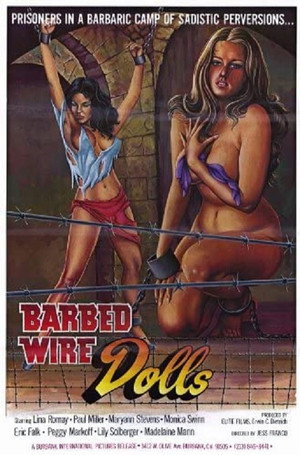


2005
Lina Romay
Horror Actor · Biography · Horror Filmography · Family · Collaborators · Credits
Horror subgenres & themes
Most represented across this person's horror filmography:
SEXUAL
• CANNIBAL
• POSSESSION
• MEDICAL
Biography
Lina Romay and the Erotic Nightmares of Jesús Franco
Lina Romay became one of the defining faces of Jesús Franco's horror cinema during the period when his Gothic monsters, erotic obsessions and increasingly personal visual experiments began to merge into a single filmmaking language. Born Rosa María Almirall in Barcelona in 1954, she entered Franco's orbit in the early 1970s and rapidly became far more than an occasional performer. Across the following decades she served as actress, creative partner and, on a number of productions, a practical collaborator behind the camera. Her horror roles repeatedly occupy the unstable territory that Franco favored most: women caught between victimhood and predation, desire and death, waking reality and dream, physical identity and supernatural transformation.
Romay's importance to Franco's horror is not simply a matter of frequency. The camera often treats her as the point through which the film itself becomes uncertain. In one production she can be an aristocratic vampire, in another a woman pulled into an occult revenge, and in another a divided figure whose identity appears to exist in more than one body. Her willingness to perform with unusual physical and emotional openness allowed Franco to push European Gothic horror toward something more intimate and dreamlike, while Romay developed a screen presence capable of remaining recognizable even when the surrounding films changed radically in budget, setting and narrative logic.
Female Vampire and Countess Irina Karlstein
Female Vampire became the early role most closely associated with Romay and one of the clearest statements of the creative territory she and Franco would explore together. She plays Countess Irina Karlstein, an isolated vampire whose need to drain life from her victims is inseparable from sexual contact. The film takes the familiar aristocratic vampire and strips away much of the traditional Gothic machinery, replacing castles and elaborate mythology with sparse locations, bodies, silence and the hypnotic repetition of encounters. Romay carries much of the horror through movement, gaze and the melancholy isolation surrounding Irina rather than through conventional exposition.
The production existed in different versions that emphasized horror and explicit sexuality to different degrees, but the central figure remains Romay's Countess. Her performance prevents Irina from becoming only a predatory fantasy. The character appears trapped inside the mechanism that keeps her alive, moving through a cycle of desire and death that she does not seem capable of escaping. That mixture of eroticism, fatalism and supernatural identity became fundamental to Romay's place within Franco's cinema and established a model that later films would repeatedly reshape.
Orloff, Frankenstein and Howard Vernon
Romay's early horror work also placed her inside two of Franco's longest-running areas of obsession: the Orloff cycle and his repeated reworking of classical monsters. The Sinister Eyes of Dr. Orloff returns to the medical nightmares associated with the director's breakthrough Gothic films, while The Erotic Rites of Frankenstein takes the Frankenstein mythology into the more feverish and transgressive territory that defined Franco's 1970s work. These films helped establish Romay as a performer who could move easily between psychological threat, mad-scientist imagery and supernatural exploitation without needing the protection of a conventional heroic role.
Howard Vernon became one of her most important recurring horror co-stars because he connected Romay's period of Franco's cinema directly with the director's earlier Gothic history. Vernon had already embodied Dr. Orloff and other sinister authority figures long before Romay joined the company. They later shared films including The Erotic Rites of Frankenstein, The Obscene Mirror, The Perverse Countess, Lorna, the Exorcist and Revenge in the House of Usher. The contrast between Vernon's controlled old-world menace and Romay's more volatile presence helped Franco create continuity across productions that were otherwise made under very different circumstances.
Lorna, Exorcism and the Horror of Possession
Lorna, the Exorcist places Romay inside a supernatural revenge story in which sexuality becomes the route through which an old pact invades a younger generation. Pamela Stanford plays Lorna, while Romay's character is drawn into a conflict that does not obey ordinary psychological or physical boundaries. Franco uses possession, memory and erotic threat without constructing the film around the conventional religious procedures suggested by its English title. The result is closer to a nightmare of inherited desire and revenge than to a traditional exorcism narrative, and Romay becomes the human surface on which that supernatural pressure is made visible.
Exorcism continues the movement toward horror in which ritual, obsession and bodily threat become difficult to separate. Romay again works inside a Franco world where the apparent explanation for violence is never entirely stable, and where performance can move abruptly from ordinary behavior into trance, terror or physical surrender. This ability to inhabit uncertainty became one of her strongest qualities as a horror actor. Rather than confronting a monster at a safe distance, her characters frequently discover that the threat has already entered perception, desire or identity.
Monica Swinn and Doriana Grey
Monica Swinn became another important recurring presence around Romay during the middle of the 1970s. The two shared Female Vampire, The Obscene Mirror, The Perverse Countess, Exorcism, Doriana Grey and The Sadist of Notre Dame, placing them together across several of the films in which Franco most aggressively mixed horror with psychological and erotic material. Their repeated casting helped create the feeling of a repertory company in which familiar performers could be reorganized into completely different configurations of victim, observer, predator and accomplice.
Doriana Grey gives Romay one of the clearest opportunities to turn that instability into the character itself. She plays linked female identities whose relationship is expressed through a strange psychic and sensual connection, while Swinn appears as a journalist drawn toward the mystery. The film is less interested in a conventional explanation than in the sensation that identity can be divided across bodies. Romay's performance therefore becomes both the subject and the special effect: the horror depends upon the idea that one person can exist in a state of impossible emotional and physical doubling.
Antonio Mayans and the 1980s Franco Repertory
Antonio Mayans became one of Romay's most important recurring collaborators during Franco's 1980s period. Their shared horror work includes Night of the Skull, White Cannibal Queen, Revenge in the House of Usher, Mansion of the Living Dead, Macumba Sexual, Night Has a Thousand Desires and Alone Against Terror. By this stage Franco was often working with very small crews and recurring performers in Spain, allowing actors to move quickly between productions and sometimes take additional responsibilities behind the camera.
Mayans and Romay consequently became part of a compact filmmaking unit rather than isolated stars hired for individual films. Their familiarity gives the later productions a distinctive continuity even when the stories are unrelated. Mayans could play an investigator, lover, authority figure or participant in an occult mystery while Romay shifted between endangered protagonist, supernatural presence and psychologically unstable central figure. Together they became two of the most recognizable faces of Franco's later low-budget horror cycle.
Mansion of the Living Dead and Night Has a Thousand Desires
Mansion of the Living Dead returns Romay to a more explicitly Gothic form of horror while preserving the minimal production style of Franco's early-1980s work. Credited as Candy Coster, she plays Candy, one of a group of women who arrive at an almost deserted resort and become connected with a nearby former monastery inhabited by murderous undead monks. The film is characteristic of Romay's horror career because an apparently ordinary holiday setting gradually becomes detached from normal reality. Empty hotel spaces, religious imagery and nocturnal attacks turn leisure into confinement, while Romay provides the human center through which that transformation is experienced.
Night Has a Thousand Desires gives her another of the period's strongest horror roles as Irina, a nightclub performer whose telepathic act becomes entangled with a death prediction and a series of events that may be murders, visions or dreams. The film returns to one of Franco's favorite structures: a woman whose perception becomes unreliable while the viewer is denied a stable explanation. Romay carries the uncertainty because Irina experiences the story before she understands it, allowing the film to move through fear, psychic dislocation and murder without settling into a simple supernatural rule.
Daniel White and the Sound of Franco's Horror
Composer Daniel White is one of the most important behind-the-scenes figures connecting Romay's horror performances. His music accompanies films including Female Vampire, The Erotic Rites of Frankenstein, Exorcism and Revenge in the House of Usher. Franco often worked with extremely limited resources, which made music unusually important: a score could make a hotel room, coastline or inexpensive interior feel detached from ordinary reality and help create the hypnotic atmosphere that the images alone could not always provide.
White's recurring scores are especially significant around Romay because so many of her performances depend upon mood rather than conventional exposition. Long stretches of looking, walking, dreaming or waiting become part of the horror, and music supplies emotional pressure without requiring the characters to explain what they are experiencing. His work therefore belongs to the same creative system as Romay's physical performance and Franco's camera, helping transform sparse productions into the strange suspended worlds that define much of their shared horror.
Behind the Camera
Romay's collaboration with Franco increasingly extended into production work. She received assistant-director credits on horror titles including Bloody Moon and Macumba Sexual, and she also worked in editing and other practical capacities on several productions. This is important to her horror biography because it changes the usual description of Romay as merely Franco's muse. A muse is observed; Romay increasingly helped make the films themselves.
The working conditions of Franco's cinema made that participation especially valuable. Small crews, rapid schedules and limited budgets rewarded people who understood how the director worked and could move between responsibilities without slowing production. After years of performing in front of Franco's camera, Romay understood the rhythm of his sets intimately. Her behind-the-scenes work therefore represents a natural development of a creative partnership in which performance, production and personal collaboration had become difficult to separate.
Lina Romay's Horror Legacy
Lina Romay's horror legacy is inseparable from Jesús Franco, but it should not be reduced to the simple label of muse. Franco gave her the films through which she became a cult horror figure, yet Romay supplied qualities those films required: physical fearlessness, emotional directness and the ability to perform characters whose identity could shift between victim, monster, dreamer and object of obsession. Female Vampire, Lorna, the Exorcist, Exorcism, Doriana Grey, Mansion of the Living Dead and Night Has a Thousand Desires reveal different versions of the same creative trust between performer and director.
The collaborators surrounding her help define the structure of that career. Howard Vernon connected Romay with the earlier Gothic history of Franco's cinema. Antonio Mayans became a central partner in the later Spanish productions. Monica Swinn repeatedly shared the director's most unstable horror worlds with her, Pamela Stanford confronted her from the supernatural center of Lorna, the Exorcist, and Daniel White gave several of the films their distinctive musical atmosphere. Romay died in Málaga in February 2012 after a long creative and personal partnership with Franco, leaving behind one of the most recognizable screen presences in European cult horror.
Known Among Horror Fans For
Notable Horror Collaborators
Notable collaborators and creative partners throughout Lina Romay's horror career.
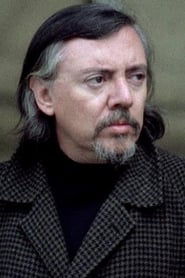 Jesús Franco
Defining Horror Director & Creative Partner
Franco directed Romay through the central horror roles of her career, from Female Vampire and Lorna, the Exorcist to Mansion of the Living Dead and Night Has a Thousand Desires.
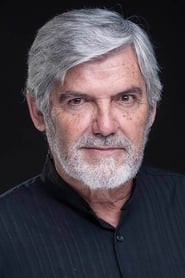 Antonio Mayans
Recurring Horror Co-Star
Mayans became one of Romay's principal collaborators in Franco's later horror period, sharing films including Mansion of the Living Dead, Macumba Sexual, Revenge in the House of Usher and Night Has a Thousand Desires.
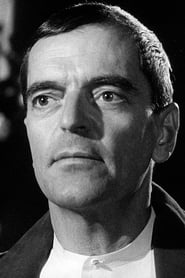 Howard Vernon
Recurring Franco Horror Co-Star
Vernon connected Romay's films with Franco's earlier Gothic tradition, sharing The Erotic Rites of Frankenstein, Lorna, the Exorcist, The Obscene Mirror and Revenge in the House of Usher.
 Monica Swinn
Recurring Horror Co-Star
Swinn repeatedly shared Franco's horror world with Romay across Female Vampire, Exorcism, Doriana Grey and The Sadist of Notre Dame, becoming a key presence in her 1970s genre period.
DW
Daniel White
Defining Horror Composer
White scored several of Romay's major Franco horror films, including Female Vampire, The Erotic Rites of Frankenstein, Exorcism and Revenge in the House of Usher.
 Pamela Stanford
Defining Horror Co-Star
Stanford played the supernatural force at the center of Lorna, the Exorcist opposite Romay and also shared other Franco productions with her, making their confrontation one of Romay's defining horror pairings.
Lina Romay Horror Movies
Acting (35 credits)
2003
2002
2002
2001
2000
1999
1999
1998
1998
1997
1988
1986
1985
1984
1983
1983
1982
1982
1980
1979
1977
1976
1976
1975
1974
1974
1974
1974
1974
1973
1973
1973
1973
1973
Directing (8 credits)
2012
2012
2001
1985
1983
1981
1981
1980
Editing (3 credits)
1998
1996
1981
Writing (2 credits)
2005
2002
Production Design / Art Department (2 credits)
2012
2012
Special FX / Practical FX (1 credits)
2012
Production (2 credits)
2012
2012