


2024
Sid Haig
Horror Actor · Biography · Horror Filmography · Collaborators · Credits
Horror subgenres & themes
Biography
Sid Haig and the Long Road to Captain Spaulding
Sid Haig built one of the most unusual careers in American cult cinema. For decades he was the kind of character actor audiences recognized immediately even when they did not know his name: physically imposing, unmistakable in appearance and equally convincing as a criminal, outlaw, eccentric or dangerous authority figure. He moved through exploitation cinema, science fiction, television, action films and horror without ever becoming a conventional leading man. Then, more than forty years after beginning his screen career, Captain Spaulding transformed him into one of the most recognizable faces of twenty-first-century horror.
That late transformation can make Haig's career appear to begin with Rob Zombie, but his connection with outsider cinema reached back to the earliest years of his professional life. Long before the smeared clown makeup, Haig had already worked with Jack Hill, Roger Corman, Pam Grier and filmmakers operating at the edges of the Hollywood system. He had appeared in Spider Baby, travelled through the Philippine exploitation cycle, played heavies across countless television series and developed a screen presence based on physicality, timing and an ability to make bizarre characters feel completely committed to their own reality.
Fresno, Pasadena and the Development of a Physical Actor
Haig was born in Fresno, California, in 1939 and studied acting at the Pasadena Playhouse after high school. His route toward performance had already included dance and music, experiences that helped make physical control an important part of his acting. Director Jack Hill would later emphasize Haig's versatility and the way his background as a dancer allowed him to use his body unusually well on screen. That quality mattered throughout a career in which Haig was frequently cast because of his size and appearance but rarely relied on size alone.
His performances often contain an unexpected mobility. Threatening characters can suddenly become comic, while apparently relaxed characters can become dangerous without a major change in volume or expression. Haig understood that physical presence becomes more effective when it can change rhythm. Instead of simply standing in a scene as the large intimidating man, he could make that body awkward, playful, predatory or unexpectedly graceful depending upon the character.
Jack Hill and Spider Baby
One of the decisive relationships in Haig's career was with director Jack Hill. By the time Hill prepared Spider Baby, Haig had already worked with him on earlier projects, and the director brought him in to meet the producers for the role of Ralph Merrye. Haig later remembered demonstrating the character physically because Ralph had almost no conventional dialogue, immediately establishing the strange childlike behavior that would define the performance.
Spider Baby was filmed in 1964 but remained unreleased for several years after financial problems involving its producers delayed distribution. Haig plays Ralph as an adult man governed by childish impulses, animal instinct and sudden violence. The character can appear playful one moment and predatory the next, giving Haig an opportunity to combine physical comedy with genuine unease. Even this early in his career, the performance contains elements that would resurface decades later in Captain Spaulding: humor does not neutralize danger, and danger does not prevent the character from being funny.
The film also connected Haig with Lon Chaney Jr., linking a young exploitation actor with an earlier generation of American horror. Yet Spider Baby was only the beginning of the Hill-Haig partnership. Their collaboration would move far beyond Gothic horror and become one of the central professional relationships of Haig's early career.
Jack Hill, Exploitation Cinema and Pam Grier
During the 1970s, Haig became a recurring presence in Jack Hill's exploitation films. He appeared in productions including The Big Doll House, The Big Bird Cage, Coffy and Foxy Brown, frequently working alongside Pam Grier. These films moved through prison cinema, crime, action and what became known as blaxploitation, placing Haig inside one of the most energetic areas of independent American filmmaking during the period.
The relationship with Hill worked because the director did not treat Haig simply as a large man who could stand in the background and look threatening. Haig later praised Hill for making his intentions clear and then allowing actors enough freedom to do their work. That trust gave Haig room to create characters rather than merely perform functions within the plot. Hill, for his part, later described Haig as a versatile performer capable of doing almost anything.
His repeated work with Pam Grier is another important part of this period. Haig and Grier appeared together across several productions, eventually creating a professional connection strong enough for Quentin Tarantino to exploit decades later. Although many of these films fall outside horror, they are essential to understanding why Haig became so effective within the genre. Exploitation cinema taught him how to play extreme material without apologizing for it and how to create memorable characters quickly inside films built around speed, sensation and strong visual personalities.
Television, Science Fiction and the Professional Heavy
Alongside his film work, Haig accumulated an enormous number of television appearances. His credits stretched across series such as Batman, Star Trek, Mission: Impossible, Get Smart, Gunsmoke, Charlie's Angels, The Rockford Files, Fantasy Island, The Dukes of Hazzard, The A-Team and MacGyver. The work made him one of those durable character actors capable of entering an established television world, defining a role quickly and disappearing again after an episode.
One of his more substantial science-fiction roles came as Dragos in Jason of Star Command, where Haig played the recurring villain rather than another anonymous weekly heavy. The part gave him a larger theatrical canvas and eventually acquired an unexpected significance: Rob Zombie saw Haig in the series when he was young and remembered the actor long before casting him as Captain Spaulding.
The sheer quantity of television work demonstrated Haig's reliability, but it eventually created a professional problem. He was increasingly offered variations on the same character: another criminal, another man with a gun, another physically threatening heavy. The work continued, but the range he believed he possessed was becoming progressively harder to use.
Walking Away from Typecasting
By 1992, Haig had become sufficiently frustrated with repetitive casting that he effectively stepped away from screen acting. He later explained that he no longer wanted to play the same unintelligent heavy with different clothes and a different weapon. The decision was significant because character actors rarely possess the economic security of major stars; refusing an established type can mean refusing the work that the industry is most willing to provide.
The hiatus reveals an important part of Haig's attitude toward acting. His objection was not to genre cinema or low-budget filmmaking. He had spent much of his career happily working in both. What frustrated him was repetition without character. He wanted the opportunity to perform rather than simply reproduce an image that casting directors already understood.
During this period Quentin Tarantino approached him about Pulp Fiction. Haig ultimately declined the proposed role, a decision he later discussed with regret, but Tarantino did not forget him. Several years later he brought Haig back to the screen in Jackie Brown, casting him as the judge. The appearance had additional resonance because Pam Grier, Haig's former Jack Hill co-star, was now at the center of Tarantino's film.
Tarantino and the Return to the Screen
Jackie Brown represented a small role but an important transition. Haig was again appearing in a film created by a director deeply familiar with the exploitation cinema in which he had built his earlier career. Tarantino understood the history carried by Haig's face and could use that history rather than reducing the actor to another anonymous villain.
Haig later appeared briefly in Kill Bill: Volume 2, but his renewed screen career would take a much larger turn through another filmmaker whose imagination had been shaped by cult cinema. Rob Zombie did not simply recognize Haig as an old character actor. He understood that the accumulated associations surrounding him could become part of a new horror character.
House of 1000 Corpses and the Birth of Captain Spaulding
House of 1000 Corpses introduced Captain Spaulding, the character that permanently changed Haig's relationship with horror audiences. Spaulding operates a roadside gas station, fried-chicken restaurant and grotesque tourist attraction dedicated to murderers and local legends. In another actor's hands, the combination of clown makeup, profanity and carnival imagery could have remained a visual gimmick. Haig gave the character an internal life.
Spaulding is funny because he enjoys controlling the atmosphere around him. He can behave like a vulgar roadside entertainer, an irritated businessman or a dangerous criminal without treating those identities as contradictions. Haig understands that the clown makeup does not need to produce madness by itself. The real threat comes from the intelligence behind it: Spaulding knows exactly how uncomfortable other people find him and frequently uses that discomfort as entertainment.
The performance also allowed Haig to escape the typecasting that had driven him away from acting. Captain Spaulding is certainly dangerous, but he is not another interchangeable gunman. The role depends upon comic timing, personality, verbal aggression and charisma. Instead of disappearing into the background of somebody else's film, Haig becomes one of the first images viewers associate with Zombie's cinematic world.
Bill Moseley, Sheri Moon Zombie and the Firefly Family
The expanded role of Captain Spaulding in The Devil's Rejects placed Haig beside Bill Moseley's Otis and Sheri Moon Zombie's Baby as one of the three central figures of the Firefly family. The shift is important. House of 1000 Corpses introduces Spaulding as a grotesque gatekeeper leading outsiders toward the nightmare, while The Devil's Rejects places him directly inside the violent family at the center of the story.
Haig, Moseley and Sheri Moon Zombie developed a screen chemistry built around radically different energies. Otis is aggressive and ideological, Baby combines childishness with cruelty, and Spaulding brings age, authority and obscene humor. The characters are monstrous toward almost everyone outside their circle, yet their interactions with one another create the recognizable behavior of a family with its own loyalties, arguments and history.
The change also demanded a broader performance from Haig. Removed from the brightly colored roadside attraction, Spaulding becomes part of a harsher outlaw film. The clown remains present, but the character is no longer protected by the theatrical environment that originally introduced him. Haig demonstrates that Spaulding still works when reduced to personality, dialogue and relationships with the other characters.
The Horror Career After Spaulding
The success of Captain Spaulding opened a new phase of Haig's career. Instead of being remembered primarily by exploitation specialists, he became immediately recognizable to a younger horror audience and began appearing regularly in genre productions. Films such as Night of the Living Dead 3D, Hatchet III, Bone Tomahawk and Death House placed him within very different corners of contemporary horror.
Rob Zombie also continued to bring Haig into his recurring ensemble. He appeared in Halloween as Chester Chesterfield and worked on The Lords of Salem, continuing a professional relationship that extended beyond Captain Spaulding alone. Around those films developed another network of recurring collaborators including Bill Moseley, Sheri Moon Zombie, producer Andy Gould, makeup-effects artist Wayne Toth and actors who repeatedly moved through Zombie's productions.
This late period also transformed Haig into a major presence within horror fan culture. Convention appearances allowed audiences who knew Captain Spaulding to encounter the actor behind him and often led them backward into Spider Baby, the Jack Hill films and the enormous television career that had preceded Zombie. A character created near the end of Haig's working life therefore became a gateway into nearly half a century of cult-film history.
3 from Hell and the Final Captain Spaulding Appearance
Rob Zombie originally conceived 3 from Hell around Captain Spaulding, Otis and Baby, continuing the trio established in The Devil's Rejects. Shortly before production, however, it became clear that Haig's declining health would prevent him from performing the role as originally written. Zombie restructured the screenplay and created a new central character while preserving a smaller appearance for Haig.
The resulting Spaulding scene is brief, but its significance extends beyond screen time. Haig had returned once more to the character that transformed the final decades of his career, and the circumstances surrounding the production make the performance function as a farewell. He died on September 21, 2019, at the age of eighty, only days after the film's theatrical event release.
Captain Spaulding therefore became both a late-career reinvention and the final major thread connecting Haig to horror audiences. Few actors receive such a substantial change in public identity so late in their careers. Haig had already accumulated decades of work before the character existed, yet Spaulding created an entirely new generation of viewers who regarded him not as a familiar supporting actor from older films but as a contemporary horror figure in his own right.
Sid Haig's Horror Legacy
Sid Haig's career connects periods of genre filmmaking that are usually treated as separate histories. Spider Baby belongs to the strange independent horror of the 1960s. His work with Jack Hill connects him with the exploitation boom and the rise of Pam Grier in the 1970s. His television career represents the working life of the American character actor, moving constantly between established series and genres. Captain Spaulding then places the same performer inside the aggressive revival of exploitation aesthetics that became prominent in American horror during the 2000s.
The continuity between those periods is Haig himself. His strongest characters depend upon a combination of physical presence and unpredictability. Ralph Merrye can move between childlike behavior and predation. The heavies of the Hill films frequently combine menace with eccentricity. Captain Spaulding converts vulgar comedy into intimidation without signalling precisely when the transition has occurred. The roles are separated by decades, but the underlying actor remains recognizable.
His career also demonstrates the importance of recurring creative relationships. Jack Hill recognized Haig's versatility early and repeatedly found different uses for him. Quentin Tarantino remembered the history represented by Haig and Pam Grier. Rob Zombie then built a completely new horror identity around qualities that had been visible since Spider Baby. Bill Moseley and Sheri Moon Zombie became the screen family surrounding that identity, while a recurring production ensemble helped carry it across multiple films.
Captain Spaulding may remain the image most closely associated with Sid Haig, but the character is more meaningful when placed at the end of the much longer journey that produced him. The clown did not create Haig's ability to combine comedy, menace and physical performance. It finally gave those abilities a role large enough, strange enough and memorable enough for horror audiences to recognize what had been present throughout his career.
Photos (6)
Images: TMDB
Selected Work
Notable Horror Collaborators
Notable collaborators and creative partners throughout Sid Haig's horror career.
 Rob Zombie
Career-Defining Director
Zombie gave Haig his defining late-career role as Captain Spaulding and repeatedly brought him back into his horror ensemble across House of 1000 Corpses, The Devil's Rejects, Halloween, The Lords of Salem and 3 from Hell.
 Bill Moseley
Defining Co-Star
Moseley became one of Haig's most important recurring co-stars. As Otis and Captain Spaulding they formed two sides of the Firefly family, returning together across the franchise and other genre productions.
 Sheri Moon Zombie
Defining Co-Star
Sheri Moon Zombie and Haig became two of the recurring faces of Rob Zombie's cinema. Baby and Captain Spaulding form part of the central Firefly family, with the actors reappearing together across several additional Zombie films.
 Wayne Toth
Makeup FX Collaborator
Toth repeatedly handled special makeup effects on Zombie productions featuring Haig, connecting the actor with the practical makeup and character design surrounding Captain Spaulding and his later appearances.
AG
Andy Gould
Producing Collaborator
Gould produced several of the Rob Zombie films featuring Haig, including House of 1000 Corpses and The Devil's Rejects, making him a recurring production collaborator during Haig's major horror revival.
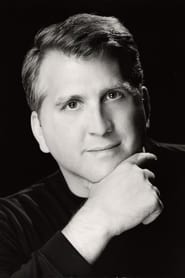 Daniel Roebuck
Recurring Co-Star
Roebuck and Haig repeatedly appeared within Rob Zombie's recurring acting ensemble, sharing Halloween, The Devil's Rejects, The Lords of Salem and 3 from Hell in the current iHorrorDB catalogue.
Sid Haig Horror Movies
Acting (48 credits)
2022
2020
2020
2019
2019
2019
2018
2018
2018
2015
2015
2013
2013
2013
2013
2012
2012
2012
2012
2011
2011
2009
2009
2008
2007
2007
2007
2007
2006
2006
2006
2005
2005
2004
2003
1987
1985
1982
1981
1979
1976
1973
1973
1972
1967
1966
1960
Production (3 credits)
2019
2019
2009
Other Crew (1 credits)
2009