
2022
Rob Zombie
Horror Director · Biography · Horror Filmography · Family · Collaborators · Credits
Horror subgenres & themes
Most represented across this person's horror filmography:
HALLOWEEN
• SLASHER
• BODY HORROR
• CLOWN
Biography
Rob Zombie and the Cinema of American Horror Excess
Rob Zombie entered filmmaking after already building an artistic identity saturated with horror imagery, exploitation cinema, monsters, carnival culture and American popular trash. When he finally directed his first feature, he did not approach horror as a new territory to be discovered. The visual language had already surrounded his music, artwork, stage shows and music videos for years. Cinema allowed him to expand that world into characters, locations and recurring groups of performers who gradually formed one of the most recognizable repertory companies in contemporary American horror.
His films repeatedly return to violent families, grotesque entertainers, isolated roads, decaying Americana, masked killers and characters living outside conventional morality. Yet the style has never remained completely fixed. House of 1000 Corpses is psychedelic and aggressively artificial; The Devil's Rejects strips much of that color away for a brutal road movie; the two Halloween films reconstruct a canonical slasher mythology around childhood and trauma; The Lords of Salem moves toward occult atmosphere and dream logic; 31 becomes a contained survival nightmare; and The Munsters abandons brutality almost entirely for affectionate horror comedy.
Horror Before the Movies
Born Robert Bartleh Cummings in Haverhill, Massachusetts, in 1965, Zombie developed his public identity first through music. White Zombie emerged from the New York underground during the 1980s before eventually combining heavy music with samples, B-movie imagery, monster culture and an increasingly elaborate visual presentation. By the time Zombie began his solo career, horror had become inseparable from the way his work was packaged and performed.
The importance of that background to his filmmaking is substantial. Zombie did not learn visual storytelling only after arriving on a movie set. Album artwork, stage production and music videos had already required him to think in terms of montage, costume, lighting, typography and immediately recognizable imagery. His cinema would later expand many of those instincts: rapid visual collisions, fragments of older popular culture, deliberately ugly environments and characters whose appearance communicates their history before the screenplay explains it.
His relationship with horror was also unusually broad. Classical monsters, 1970s exploitation, drive-in cinema, serial-killer mythology, carnival sideshows and television horror all entered the same visual vocabulary. The resulting films rarely attempt to reproduce one historical style exactly. Zombie tends instead to treat horror history as accumulated material that can be broken apart and recombined.
House of 1000 Corpses and the Difficult First Film
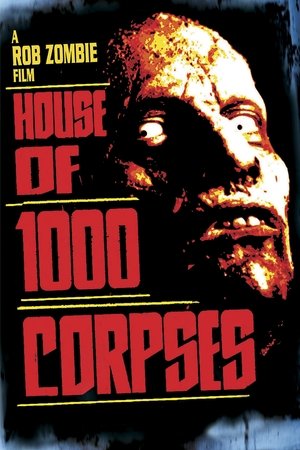
House of 1000 Corpses became Zombie's feature directorial debut, although its path to release was unusually complicated. Filmed in 2000 with Universal involved in the production, the movie eventually became too problematic for the studio to release in the form Zombie wanted. After a prolonged period in which the film remained commercially stranded, Lionsgate finally released it in 2003.
The film already contains many of the elements that would define Zombie's horror cinema. Four young travelers searching for unusual roadside attractions encounter Captain Spaulding and are eventually drawn into the world of the Firefly family. What begins as grotesque Americana gradually becomes a mixture of serial murder, torture, carnival imagery and surreal underground horror.
Zombie treats the film almost as a collision of media. Conventional narrative scenes are interrupted by distorted video, oversaturated colors, negative imagery, television fragments and abrupt shifts in texture. The result resembles the visual overload of a horror attraction more than the controlled realism of a conventional thriller. Zombie later described the production as a learning experience in which enthusiasm often exceeded his practical knowledge of feature filmmaking.
The Firefly Family
House of 1000 Corpses also established the group of performers that became central to Zombie's screen world. Sheri Moon Zombie played Baby Firefly, Bill Moseley became Otis Driftwood and Sid Haig transformed Captain Spaulding into one of the film's most immediately recognizable figures. Their characters were exaggerated, theatrical and deliberately unpleasant, yet the performances created enough individuality for Zombie to realize that the family could survive beyond the original story.
Captain Spaulding functions initially as the gateway into this universe. His gas station, fried-chicken restaurant and murder-themed roadside attraction establish the film's fascination with entertainment and violence occupying the same commercial space. Sid Haig's performance gives the character humor, hostility and charisma without making him safe. The clown makeup attracts attention, but Haig makes Spaulding memorable through personality rather than costume alone.
Otis and Baby operate differently. Moseley gives Otis an aggressive, almost ideological cruelty, while Sheri Moon Zombie builds Baby around childish energy, laughter and sudden violence. Together the characters form a family whose behavior is monstrous to outsiders but internally coherent enough for Zombie to return to them repeatedly.
The Devil's Rejects and the Reinvention of the Firefly World
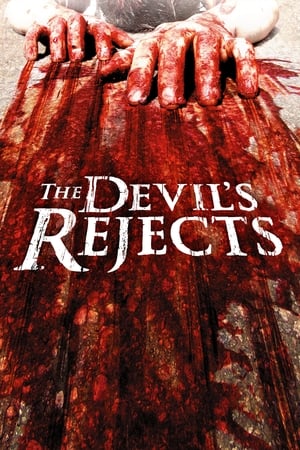
Zombie deliberately refused to make The Devil's Rejects (2005) as a simple reproduction of House of 1000 Corpses. The sequel abandons much of the first film's fluorescent visual chaos and moves into sun-bleached roads, cheap motels, dirty rooms and open landscapes. Zombie has described the decision as an attempt to reverse the previous film rather than repeat it.
The structure becomes closer to a violent road movie, crime film and 1970s exploitation picture than a conventional supernatural horror sequel. Captain Spaulding, Otis and Baby are forced out of the Firefly home and pursued by Sheriff John Wydell, whose desire for revenge gradually becomes as obsessive and brutal as the people he hunts.
The stylistic change reveals an important feature of Zombie's directing career. Recurring characters do not necessarily require recurring form. The Firefly family remains recognizable, but the cinematic world around them changes. Zombie replaces artificial nightmare imagery with heat, dust, natural light and physical exhaustion, making the violence feel less like part of a haunted attraction and more like something occurring in an unpleasantly tangible America.
Sid Haig, Bill Moseley and the Horror Repertory Company
The success of the Firefly films helped establish Zombie's preference for recurring performers. Sid Haig and Bill Moseley were not simply actors he happened to cast more than once; they became part of an expanding repertory structure in which familiar faces could return as entirely different characters or continue existing inside a shared mythology.
Zombie has repeatedly shown a particular interest in genre actors whose histories extend beyond his own films. Haig brought decades of exploitation cinema with him. Moseley already carried the legacy of The Texas Chainsaw Massacre 2. Later films would bring in performers associated with Dawn of the Dead, The Hills Have Eyes, A Clockwork Orange, E.T., Halloween and numerous other landmarks of horror and cult cinema.
The casting therefore operates on two levels. The performer serves the immediate character, but experienced horror audiences may also recognize the larger genre history attached to the face. Zombie frequently uses that recognition as part of the texture of his films without requiring the story to explain it.
Halloween and the Problem of Remaking an Icon
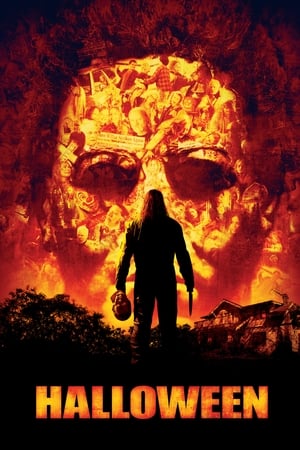
Zombie entered one of horror's most heavily protected mythologies with Halloween (2007). Instead of attempting a close reconstruction of John Carpenter's 1978 film, he substantially expanded the childhood of Michael Myers and spent far more time examining the family environment surrounding the future killer before moving into the familiar Haddonfield material.
This change altered the basic nature of Michael Myers. Carpenter had deliberately withheld conventional motivation and transformed the adult Michael into an almost abstract presence. Zombie instead gives the character a longer personal history and a physically imposing adult form through Tyler Mane. The result is less interested in unknowable evil than in the formation and eventual return of an enormous, damaged killer.
Malcolm McDowell became Dr. Samuel Loomis, Scout Taylor-Compton played Laurie Strode and Sheri Moon Zombie appeared as Deborah Myers. The film retains names, situations and iconography from the original while filtering them through Zombie's continuing interest in dysfunctional families, psychological damage and physical brutality.
Halloween II and Trauma After the Slasher Ending
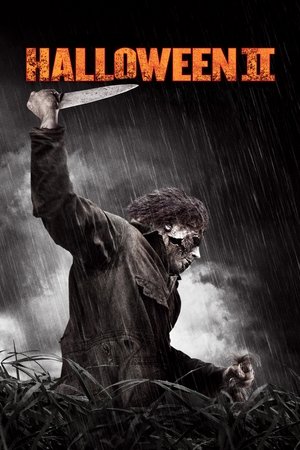
Halloween II (2009) moved further away from Carpenter's mythology and became more distinctly Zombie's own film. Rather than simply continuing the chase between Laurie and Michael, the sequel concentrates on the psychological damage left behind by the previous film. Laurie, Annie Brackett and Dr. Loomis have all survived, but survival has not restored the lives they had before the attacks.
The film also introduces dream imagery and repeated visions connected to Michael's mother, allowing Zombie to mix brutal physical horror with a more symbolic internal world. The familiar white mask deteriorates, characters behave differently after trauma and the traditional boundaries between victim, survivor and damaged personality become less stable.
Zombie's two Halloween films therefore form a distinct branch of the franchise rather than an attempt to replace Carpenter's original language. Their emphasis lies on family history, bodily violence and the consequences of surviving extreme brutality. Whatever the audience's response to the reinterpretation, the films demonstrate Zombie's refusal to treat an established horror property as something that should simply be reproduced intact.
Wayne Toth and the Importance of Physical Horror
Makeup and special-effects artist Wayne Toth became one of Zombie's most important recurring behind-the-scenes collaborators. Their work together helped establish the physical texture of films in which wounds, aging, corpses, masks and grotesque characters need to exist convincingly in front of the camera rather than simply being suggested through digital imagery.
This emphasis on practical transformation connects directly with Zombie's affection for earlier exploitation and horror filmmaking. His films often want the audience to notice physical texture: dirty skin, damaged masks, blood, teeth, scars, wigs, prosthetics and costumes. Characters appear lived-in even when they are deliberately exaggerated.
Toth's recurring involvement therefore contributed to more than isolated gore effects. Makeup becomes part of character construction. Captain Spaulding, the increasingly damaged Michael Myers and the numerous killers, victims and carnival figures populating Zombie's work all depend upon visual detail to establish the worlds they inhabit.
The Lords of Salem and Occult Horror
The Lords of Salem marked one of the strongest stylistic departures in Zombie's filmography. Instead of emphasizing relentless violence, the film builds slowly around radio DJ Heidi Hawthorne, played by Sheri Moon Zombie, after she receives a mysterious record connected to the history of witchcraft in Salem.
The film relies on repetition, music, architecture, dreams and increasingly disturbing religious imagery. Heidi's deterioration becomes the center of the story, allowing Zombie to move away from the loud confrontational personalities of the Firefly films and toward a protagonist who is gradually overwhelmed by something she cannot fully understand.
Zombie described the production as unusually free from the kind of interference he had experienced elsewhere, and the result is among his most visually controlled works. Corridors, apartments, churches and theatrical ritual spaces replace much of the rural and roadside Americana associated with his earlier films.
The recurring cast remains important. Sheri Moon Zombie carries the film, while Jeff Daniel Phillips, Ken Foree, Dee Wallace, Meg Foster, Judy Geeson and other veteran performers create another version of Zombie's repertory company. Familiar horror faces are again reorganized around an entirely different tone.
31 and Horror Under Constraint
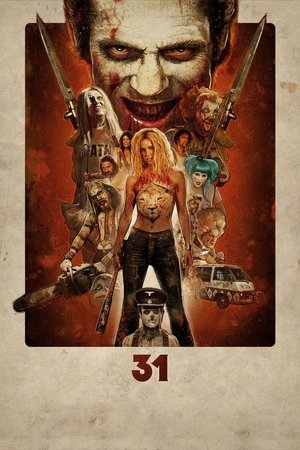
31 (2016) reduced the structure to a survival mechanism. A group of carnival workers is abducted and forced into an industrial environment where they must survive a succession of killers during a twelve-hour game. The concept allowed Zombie to work with severe production limitations by concentrating much of the action within a restricted number of practical locations.
The film returned to elements deeply associated with his visual imagination: carnivals, theatrical killers, sadistic entertainment and characters forced into grotesque performance spaces. Yet the structure is deliberately simple. Survival becomes the narrative engine, leaving Zombie free to concentrate on individual antagonists and violent confrontations.
Richard Brake's Doom-Head became the film's most prominent new figure, while Sheri Moon Zombie, Jeff Daniel Phillips, Meg Foster and other recurring collaborators continued the repertory tradition. The film demonstrates how Zombie repeatedly builds new stories from a relatively stable community of performers rather than reinventing his entire casting world for every production.
3 from Hell and the Return of the Firefly Family
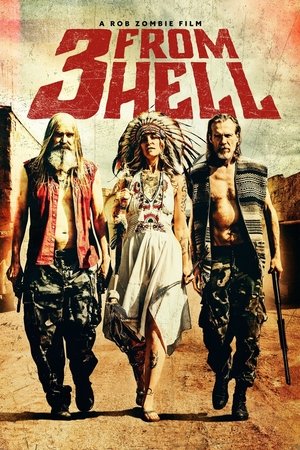
Fourteen years after The Devil's Rejects, Zombie returned to Otis, Baby and Captain Spaulding with 3 from Hell (2019). The film acknowledges that the characters themselves have acquired mythology inside their fictional world. They are no longer only fugitives; their violence has transformed them into notorious cultural figures followed and discussed by the public.
The production was complicated by Sid Haig's declining health, which greatly reduced Captain Spaulding's role. Richard Brake's Winslow “Foxy” Coltrane consequently became the third principal member of the group alongside Otis and Baby. Rather than attempt to recreate the exact trio of The Devil's Rejects, Zombie reconfigured the family around the circumstances of the production.
The film again changes form as it progresses. Prison imagery gives way to home invasion and eventually to a Mexican setting influenced by westerns and outlaw cinema. Zombie has explained that the Firefly sequels interested him partly because established characters could be moved into new genres without requiring their personalities to be reconstructed from the beginning.
Sheri Moon Zombie as the Constant Screen Presence
No performer is more consistently connected to Rob Zombie's filmmaking than Sheri Moon Zombie. Beginning with Baby Firefly, she became a recurring central presence rather than a performer repeatedly assigned the same role. Deborah Myers in Halloween, Heidi Hawthorne in The Lords of Salem and Lily Munster in The Munsters require substantially different forms of performance.
Baby is explosive, childish and violent. Deborah Myers is grounded inside a collapsing family. Heidi carries an occult psychological horror film through increasing isolation and possession. Lily Munster belongs to broad romantic comedy built around the visual vocabulary of classic monsters. The recurrence therefore reveals Zombie's preference for familiar collaborators without demanding that they repeat familiar characters.
The partnership also gives his filmography unusual continuity. Even when genre, tone and production scale change dramatically, Sheri Moon Zombie remains one of the figures through whom the audience can trace the evolution of his cinema.
Jeff Daniel Phillips and Daniel Roebuck
Jeff Daniel Phillips and Daniel Roebuck became increasingly important members of Zombie's recurring ensemble during the later films. Phillips moved through multiple supporting roles before becoming Herman Munster, while Roebuck accumulated appearances across the director's horror work before playing The Count opposite Sheri Moon Zombie's Lily.
Their careers within Zombie's films illustrate his repertory approach particularly clearly. A supporting performer in one project may become a central figure several films later. Familiarity allows Zombie to cast according to new character needs without losing the sense that the films belong to a connected creative world.
By the time of The Munsters, that method had produced a group of performers who had spent years moving through his films in different forms. The result resembles a theatrical company more than conventional franchise casting.
The Munsters and Horror Without Brutality
The Munsters (2022) revealed another side of Zombie's relationship with horror culture. Based on the 1960s television series he had admired for years, the film abandons the extreme violence normally associated with his directing and instead tells an origin story about the romance between Lily and Herman Munster.
Sheri Moon Zombie plays Lily, Jeff Daniel Phillips becomes Herman and Daniel Roebuck plays The Count. Rather than darken the source material into contemporary adult horror, Zombie embraces broad comedy, artificial sets, saturated color and the affectionate monster culture that originally made the television series distinctive.
The project is important precisely because it demonstrates that Zombie's attraction to horror imagery was never dependent entirely upon gore. Frankenstein monsters, vampires, laboratories, cemeteries and Gothic architecture can be treated with affection rather than threat. The same filmmaker responsible for the Firefly family could therefore use classic horror iconography to construct a deliberately family-friendly romantic comedy.
Recurring Actors and a Personal Horror Universe
Across his films, Zombie has created continuity without building a conventional shared fictional universe. Sheri Moon Zombie, Bill Moseley, Sid Haig, Jeff Daniel Phillips, Daniel Roebuck, Richard Brake and numerous other performers repeatedly return, sometimes as continuing characters and sometimes as completely unrelated people.
This method recalls both theatrical repertory companies and earlier genre filmmakers who relied upon trusted ensembles. The audience begins recognizing performers independently of the characters, allowing casting itself to become part of the experience. A familiar face arrives carrying memories from previous films even when the new story has no narrative connection to them.
The same principle extends behind the camera. Makeup artists, producers, camera operators and other crew members repeatedly return. Zombie's cinema therefore developed less as a sequence of isolated productions than as a changing collaboration among people who already understood his visual and tonal preferences.
1970s Exploitation and the Horror of American Debris
The strongest visual influence running through Zombie's horror is not polished Gothic elegance but the damaged surface of American exploitation cinema. Cheap motels, roadside attractions, gas stations, dirty interiors, carnival workers, faded signs and rural landscapes recur throughout his work. Even when the story becomes supernatural, the environment often feels materially worn down.
This fascination gives the films a particular relationship with nostalgia. Zombie clearly draws from older movies, television and popular culture, but the past is rarely presented as clean or comforting. It survives as debris: fragments of music, costumes, vehicles, advertisements and screen personalities accumulated inside environments where beauty and ugliness coexist.
The Firefly films represent this most completely. Their America appears assembled from horror movies, outlaw mythology, roadside entertainment and forgotten commercial spaces. The characters behave as though they belong to a culture operating parallel to ordinary society, maintaining its own traditions and aesthetics.
Violence, Performance and Entertainment
Zombie repeatedly connects violence with performance. Captain Spaulding operates a murder-themed attraction. The Firefly family stages cruelty theatrically. 31 literally turns killing into a game watched by wealthy organizers. Even Michael Myers becomes surrounded by masks, photographs and public mythology.
This relationship helps explain why carnival imagery appears so naturally in his cinema. Carnivals promise entertainment through controlled transgression: frightening images, unusual bodies and exaggerated personalities are displayed because audiences have paid to see them. Zombie frequently removes the boundary that is supposed to keep the attraction safe.
The audience inside the film may believe it is watching a performance until the violence becomes real. That transition between spectacle and threat is one of the most persistent ideas connecting his otherwise very different horror films.
Rob Zombie's Place in Modern Horror
Rob Zombie's filmography remains relatively compact, but it has developed an unusually consistent identity. He began with the maximalist nightmare of House of 1000 Corpses, refined the Firefly characters through The Devil's Rejects, entered one of horror's largest franchises with two Halloween films, explored occult atmosphere in The Lords of Salem, returned to contained exploitation with 31, resurrected the Firefly family in 3 from Hell and finally transformed his lifelong affection for classic monster television into The Munsters.
The recurring collaborators are essential to that identity. Sheri Moon Zombie became the central performer across radically different roles. Bill Moseley and Sid Haig gave the Firefly films much of their personality. Jeff Daniel Phillips and Daniel Roebuck gradually became major members of the later ensemble. Wayne Toth and other practical-effects collaborators supplied the physical texture required by Zombie's preference for bodies, masks and damaged faces that feel materially present on screen.
What connects these films is less a single genre formula than a way of looking at horror culture. Zombie treats horror as something that exists simultaneously in movies, music, roadside attractions, Halloween imagery, television, exploitation history and American popular memory. His cinema continually recycles those materials without attempting to clean them up. The stains, scratches, damaged bodies and disreputable influences are part of the point.
That approach explains why even his most radically different film, The Munsters, still feels connected to the rest of his career. Beneath the violence of the Firefly family and the bright comedy of Mockingbird Heights lies the same fascination with monsters as cultural objects. Rob Zombie's horror cinema has spent decades asking what happens when those objects are allowed to occupy the entire world rather than remain safely contained inside the screen.
Photos (3)
Images: TMDB
Selected Work
Notable Horror Collaborators
Notable collaborators and creative partners throughout Rob Zombie's horror career.
 Sheri Moon Zombie
Defining Lead & Creative Partner
Zombie built much of his recurring screen world around her, from Baby Firefly and Heidi Hawthorne to Lily Munster.
 Bill Moseley
Defining Horror Co-Star
Moseley gave the Firefly saga one of its essential figures through Otis Driftwood and remained a central presence in Zombie's horror ensemble.
 Sid Haig
Defining Horror Co-Star
Haig transformed Captain Spaulding into an icon of Zombie's early cinema and one of the defining faces of the Firefly family.
 Jeff Daniel Phillips
Recurring Lead
Phillips grew from a recurring ensemble player into one of Zombie's principal collaborators, culminating in his performance as Herman Munster.
 Daniel Roebuck
Repertory Actor
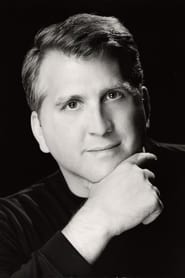
Roebuck repeatedly returned across Zombie's films before taking a central role as The Count in The Munsters.
 Wayne Toth
Defining Makeup FX Collaborator
Toth helped shape the practical makeup, damaged bodies and grotesque characters that became a major part of Zombie's visual identity.
Rob Zombie Horror Movies
Directing (10 credits)
2019
2016
2012
2009
2009
2008
2007
2005
2003
Acting (10 credits)
2024
2020
2020
2018
2016
2008
2006
2006
2004
2003
Writing (9 credits)
2022
2019
2016
2012
2009
2009
2007
2005
2003
Production (7 credits)
2019
2016
2012
2009
2008
2007
2005
Music & Sound (3 credits)
2016
2007
2003
Other Crew (2 credits)
2019
1994