
2026
Dee Wallace
Horror Actor · Biography · Horror Filmography · Family · Collaborators · Credits
Horror subgenres & themes
Most represented across this person's horror filmography:
ANIMAL
• BODY HORROR
• HALLOWEEN
• SLASHER
Biography
Dee Wallace and the Emotional Core of American Horror
Dee Wallace became one of American horror cinema's most enduring performers not by creating a single monstrous persona, but by making fear emotionally credible. Across films involving cannibal families, werewolves, rabid animals, extraterrestrial creatures, supernatural killers and occult conspiracies, Wallace repeatedly grounds extreme situations in recognizable human behavior. Her characters panic, protect, break down, fight back and survive with an emotional intensity that prevents the surrounding horror from becoming merely mechanical.
That quality made motherhood especially important to her screen identity. Wallace became internationally famous as the mother in E.T. the Extra-Terrestrial, but horror repeatedly transformed the same instinct for protection into something more desperate. In The Hills Have Eyes, family survival becomes primitive warfare. In Cujo, a mother is physically trapped beside her child while exhaustion and terror strip away every layer of ordinary behavior. Critters converts the suburban family home into a siege. Decades later, filmmakers continued using Wallace because audiences immediately understood the emotional stakes she could bring to endangered families.
Yet describing Wallace only as a screen mother misses much of her range. The Howling gave her one of the great psychological arcs of modern werewolf cinema. The Frighteners deliberately turned her nurturing screen image inside out by casting her as a woman connected to mass murder. Rob Zombie later placed her within his own repertory company, allowing a performer associated with several generations of horror to become part of a newer American genre tradition.
The Stepford Wives and the First Contact with Horror
Wallace was born in Kansas City, Kansas, in 1948 and entered professional acting during the 1970s. One of her early film appearances came in The Stepford Wives (1975), a production that sits between science fiction, psychological thriller and horror. The role was small, but the film placed Wallace close to one of the decade's most influential stories about domestic normality concealing something profoundly inhuman.
That theme would recur throughout her later genre work. Wallace often appears inside apparently ordinary American environments that become unsafe: suburban homes, family vacations, isolated communities and familiar relationships. Her performances are effective because the character usually begins inside a recognizable emotional reality before the film dismantles it.
Unlike actors whose horror identities depend upon menace, Wallace became valuable because she could communicate vulnerability without passivity. Fear in her performances often becomes active. The frightened character evaluates danger, protects someone else and eventually makes decisions under conditions that have destroyed ordinary social rules.
The Hills Have Eyes and the Desert Nightmare
Wes Craven's The Hills Have Eyes (1977) gave Wallace one of her first major horror roles. She plays Lynne Wood, part of the Carter family travelling through the American desert when their vehicle becomes stranded and they are attacked by another family living outside conventional society.
The film was produced with limited resources under physically difficult desert conditions, and the roughness became part of its identity. Craven presents the confrontation as a collapse of the distinction between civilized and savage behavior. The Carters begin the story as an ordinary travelling family, but survival increasingly requires them to answer violence with violence.
Wallace occupies the center of the family structure during the film's most brutal escalation. The horror does not arrive as an abstract supernatural force. It enters the family directly, attacking the home-like space of the trailer and transforming a vacation into a struggle in which conventional protection has disappeared.
The Hills Have Eyes became one of the films that established Wallace inside horror culture. More importantly, it introduced the kind of character she would repeatedly deepen throughout her career: a recognizable woman placed under extreme pressure rather than a genre archetype waiting passively for the next attack.
Wes Craven and the Importance of the First Breakthrough
Wallace and Wes Craven did not need a long series of films together for the connection to become historically important. The Hills Have Eyes arrived early enough in her career that its impact outweighs the numerical size of the collaboration. The film became one of the defining works of 1970s American horror and attached Wallace to the genre before many of her best-known performances existed.
Craven's cinema demanded performers capable of maintaining emotional credibility while the moral structure around them collapsed. Violence in The Hills Have Eyes is not simply something inflicted by a monster. It changes the people forced to respond to it. Wallace's work fits naturally inside that approach because she plays fear as an evolving emotional state rather than a single reaction.
The film also began a pattern visible across her career: Wallace repeatedly worked with horror directors whose films depended upon strong character response rather than monsters alone. Her later collaborations with Joe Dante, Lewis Teague and Peter Jackson would use that strength in radically different ways.
The Howling and Karen White
Joe Dante's The Howling (1981) gave Wallace one of the central roles of her horror career. She plays television journalist Karen White, who becomes psychologically traumatized after participating in a police operation involving serial killer Eddie Quist. Seeking recovery, Karen travels with her husband Bill to a therapeutic retreat known as the Colony.
The apparent sanctuary becomes another unsafe space. The Colony is populated by werewolves, and Karen gradually discovers that the people surrounding her belong to a predatory community capable of hiding behind ordinary human appearances. Dante combines transformation horror with satire, media commentary and black humor, but Wallace gives the story its psychological continuity.
Karen begins the film already damaged by what she has experienced. The supernatural threat therefore does not interrupt a perfectly stable life; it enters a mind already attempting to recover from trauma. Wallace plays fear, suspicion and exhaustion progressively, allowing the character's emotional deterioration to parallel the film's increasingly explicit transformations.
The final sequence became one of the most memorable reversals in werewolf cinema. Karen attempts to reveal the existence of werewolves to a television audience by transforming during a live broadcast. Instead of delivering a triumphant exposure, the act becomes another example of modern media's inability to guarantee belief. Wallace's transformation remains deliberately vulnerable rather than purely monstrous, preserving something recognizably human inside the creature.
Joe Dante and Horror Through Character
Joe Dante was particularly important because The Howling required Wallace to carry a much larger emotional arc than a conventional victim role. Wallace later described being attracted to the opportunity precisely because Karen moves through so many different emotional states.
Dante's humor also separates the film from a straightforward werewolf tragedy. The world around Karen contains jokes, references and eccentric characters, but her trauma is never treated as meaningless. Wallace functions as the emotional center that allows comedy and horror to coexist without cancelling each other.
The collaboration therefore represents more than one title in a filmography. The Howling became one of the movies most permanently associated with Wallace and one of the central films of the early-1980s werewolf revival. It demonstrated that her strongest genre weapon was not simply screaming convincingly, but carrying an audience through psychological transformation.
Christopher Stone: Life Partner and Horror Co-Star
The Howling also brought Wallace onto the same major horror production as Christopher Stone, who was already her partner and later became her husband. Stone plays Karen's husband Bill Neill, giving their fictional marriage an additional layer of natural familiarity.
Their relationship became professionally important again in Cujo, where Stone plays Steve Kemp. Although their characters occupy very different relationships in the two films, Wallace has repeatedly spoken about how valuable Stone's presence was during demanding productions.
The connection matters beyond a simple shared-credit count. Stone was part of two films that represent crucial stages of Wallace's horror career, and their real relationship existed alongside some of her most emotionally and physically exhausting work.
Wallace has described The Howling with particular affection partly because the two were able to support one another through a difficult production schedule. During Cujo, his presence again provided stability while she performed material requiring prolonged emotional extremity.
E.T. and the Maternal Screen Identity
Steven Spielberg's E.T. the Extra-Terrestrial (1982) is not a horror film, but it became important to Wallace's later horror identity because her performance as Mary helped establish her as one of American cinema's most recognizable screen mothers. The film's extraordinary cultural reach meant that audiences arrived at later Wallace performances carrying an expectation of warmth, protection and emotional accessibility.
Horror filmmakers could then use that expectation dramatically. Wallace rarely plays an abstract final girl detached from family responsibilities. The threat often reaches someone she is trying to protect, making survival an emotional obligation rather than an individual contest.
Cujo would exploit that association almost immediately. Instead of presenting motherhood as comforting domestic stability, the film places mother and child inside an increasingly unbearable physical trap and asks how much emotional and bodily punishment protection can survive.
Cujo and the Limits of Endurance
Lewis Teague's Cujo (1983), adapted from Stephen King's novel, gave Wallace perhaps the most physically and emotionally punishing performance of her career. She plays Donna Trenton, whose car breaks down at an isolated property with her young son Tad inside. Outside waits Cujo, a Saint Bernard transformed by rabies into an unpredictable lethal threat.
The premise strips horror down to space, heat, exhaustion and waiting. Much of the film traps Donna and Tad inside the vehicle while the dog controls the territory outside. There is no elaborate mythology to investigate and no supernatural rule to discover. The threat is brutally simple: they cannot safely leave the car, but remaining inside will eventually become impossible.
Wallace carries enormous sections of the film through physical reaction. Donna moves between calculation, panic, maternal reassurance, despair and sudden violence. The performance cannot remain at maximum intensity constantly because the audience needs to feel energy disappearing and returning as the situation changes.
Wallace has repeatedly described Cujo as the most demanding performance she has done. The difficulty was both emotional and physical, requiring repeated scenes of screaming, crying, struggling and protecting a child while the production simulated attacks from an animal that had to appear genuinely dangerous.
Lewis Teague and Wallace's Defining Horror Performance
Lewis Teague's importance to Wallace is another example of why a connection cannot be measured simply by the number of shared titles. They needed only one major horror film to produce a performance that became central to her entire career.
Wallace has credited Teague with patience and stability during the production. That mattered because Cujo depends almost completely upon the audience believing Donna's escalating emotional state. A director could have pushed the performance toward constant hysteria; instead, the film allows terror to develop in stages.
The result remains one of the clearest demonstrations of Wallace's approach to horror. She does not attempt to protect herself from the emotional ugliness of panic. Donna can become exhausted, desperate and physically violent while remaining recognizably the same person introduced earlier in the film.
Critters and the Family Under Siege
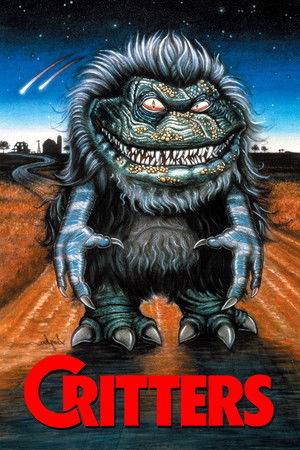
Critters (1986) placed Wallace inside a much more playful combination of science fiction, horror and creature comedy. She plays Helen Brown, mother of a Kansas family whose farmhouse becomes the target of small extraterrestrial predators known as the Krites.
The film returns Wallace to the threatened-family structure but changes almost everything about the tone. Instead of the realism and emotional punishment of Cujo, Critters embraces practical creatures, alien bounty hunters and comic escalation.
Wallace nevertheless performs Helen with the same basic commitment she brings to darker films. The absurdity of the monsters does not make the family's fear artificial. That grounding is especially important in creature features because practical effects become more convincing when the performers react as though the object in front of them can genuinely hurt them.
The success of Critters created another long-running horror franchise associated with Wallace. Decades later she returned to the mythology in Critters Attack!, demonstrating how many separate periods of genre history her career had come to connect.
Popcorn and the Early 1990s
Wallace continued moving through horror as the genre changed during the early 1990s. Popcorn (1991) placed her inside a film built around movie exhibition itself, where a horror-film marathon becomes connected to a past tragedy and a new series of murders.
The setting allows horror history to become part of the story. Old exploitation films, theatrical gimmicks and audience participation occupy the same space as contemporary violence. Wallace's presence gives the production another connection to the genre culture of the previous decade.
Her role also continued the pattern of maternal characters existing inside increasingly self-aware forms of horror. By this stage Wallace's screen identity was familiar enough that filmmakers could use audience expectations about her even when the surrounding movie belonged to a different generation of genre filmmaking.
The Frighteners and the Destruction of the Mother Image
Peter Jackson's The Frighteners (1996) gave Wallace one of the most important reversals of her established screen persona. She plays Patricia Ann Bradley, a woman whose past is tied to Johnny Bartlett, the perpetrator of a notorious mass killing.
Wallace was no longer being asked to protect a family from horror. Patricia belongs to the horror. The casting gains power precisely because audiences had spent years associating Wallace with endangered mothers, emotionally open women and characters struggling to keep other people alive.
Jackson uses that history against expectation. Patricia initially appears physically and emotionally diminished, but the story gradually reveals a much darker relationship with the murders that shaped her life. Wallace is allowed to move from apparent vulnerability toward grotesque enthusiasm and violence.
The performance proved that decades of maternal typecasting had not limited her range. Horror had made Wallace recognizable through empathy; The Frighteners demonstrated how effectively the same recognizable face could become disturbing when empathy was deliberately withdrawn.
Peter Jackson and the Power of Casting Against Type
Peter Jackson worked with Wallace only once, but the significance of The Frighteners makes him a key connection. Wallace has recalled entering the audition determined to prevent Jackson from seeing only the familiar blonde maternal image associated with her earlier work.
The resulting Patricia Bradley became one of the clearest examples of a director understanding an actor's existing cultural identity and deliberately weaponizing it. Casting against type does not simply prove versatility; it uses the audience's memory of earlier performances as part of the new character.
For Wallace, the role arrived after years in which E.T., Cujo and other projects had reinforced the image of the vulnerable or protective mother. Jackson transformed that history into misdirection.
Rob Zombie and a New Horror Generation
During the 2000s, Rob Zombie became Wallace's most important recurring horror director. Their collaboration connected an actress whose career stretched back to 1970s exploitation and 1980s creature horror with a filmmaker deliberately constructing his cinema from earlier American horror culture.
Wallace appeared in Zombie's Halloween (2007) as Cynthia Strode, bringing another layer of genre history into a film already rebuilding one of the slasher era's foundational stories. She subsequently contributed to The Haunted World of El Superbeasto and became part of the ensemble surrounding The Lords of Salem.
In The Lords of Salem, Wallace plays Sonny, a self-help personality connected to the radio program at the center of the story. Wallace has said that Zombie wrote the role specifically for her and has repeatedly spoken warmly about working with him.
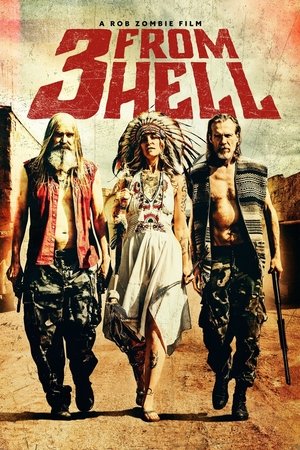
The relationship continued into 3 from Hell, making Zombie unusual within Wallace's horror filmography: not simply the director of one important title, but someone who repeatedly found new places for her within his evolving repertory company.
The Lords of Salem and Veteran Horror Faces
The Lords of Salem is especially representative of Wallace's later career because Zombie surrounds his central story with performers carrying enormous amounts of genre history. Wallace appears alongside actors such as Judy Geeson, Patricia Quinn, Meg Foster and others whose faces activate memories of earlier horror traditions.
The casting does not require those performers to recreate their famous roles. Their history becomes atmosphere. A viewer familiar with Wallace's career sees decades of endangered mothers, werewolves, rabid dogs and monsters behind the apparently ordinary media personality on screen.
This became one of the advantages of Wallace's longevity. Horror filmmakers could cast her both for the immediate performance and for the cultural memory attached to her presence.
Independent Horror and the Freedom to Keep Transforming
Wallace continued working extensively in independent horror long after many performers associated with the 1970s and 1980s had reduced their genre output. Films such as Exit Humanity, Red Christmas, Death House and numerous smaller productions allowed her to move between supernatural stories, zombie narratives, slashers and character-driven horror.
The scale of these projects varied enormously, but Wallace's approach remained consistent. She has frequently emphasized the importance of emotional truth and character rather than treating horror merely as a collection of effects or kills.
That attitude helps explain her unusual durability within the genre. A filmmaker does not need to recreate Cujo or The Howling to make use of Wallace. The important element is giving her a character with enough emotional movement to justify the extremity surrounding it.
Returning to Critters
Critters Attack! brought Wallace back into the Critters universe more than three decades after the original film. Rather than simply reproducing Helen Brown, the production used Wallace as a new character whose very presence nevertheless connected the newer installment to the franchise's history.
This kind of return has become increasingly common in modern horror, where legacy performers can provide continuity between generations without requiring strict narrative replication. Wallace is particularly suited to the approach because she belongs to several different horror histories simultaneously.
A viewer may associate her primarily with Craven, Dante, Cujo, Critters, Peter Jackson or Rob Zombie depending upon when that viewer encountered her work. Few performers possess such a broad collection of independent genre reference points.
The Mother as Horror Hero
One of Wallace's most important contributions to horror is the seriousness with which she plays maternal fear. The mother in her films is not automatically wise, morally perfect or emotionally stable. She may be exhausted, frightened, angry or trapped inside a damaged relationship. What matters is the refusal to stop responding when someone dependent upon her remains in danger.
Cujo provides the purest expression of this idea. Donna does not defeat fear by ceasing to feel it. She acts while terrified. The distinction matters because Wallace allows courage and panic to occupy the same body rather than treating them as opposites.
This complexity helped prevent characters who could easily have become generic horror mothers from functioning solely as narrative motivation. Wallace makes their emotional states part of the spectacle. The audience is not simply waiting to see whether the monster attacks; it is watching how much more the character can endure before endurance changes into action.
Dee Wallace's Horror Legacy
Dee Wallace's horror career spans nearly the entire evolution of modern American genre cinema from the 1970s onward. Wes Craven placed her inside the brutal independent landscape of The Hills Have Eyes. Joe Dante gave her the psychologically rich werewolf nightmare of The Howling. Lewis Teague pushed her through the extraordinary physical and emotional ordeal of Cujo. Critters moved her into practical creature comedy, while Peter Jackson used The Frighteners to overturn the sympathetic image audiences thought they understood.
Christopher Stone occupies a different but equally meaningful place in that history. Their real partnership existed alongside two of Wallace's most important horror productions, giving the professional connection an emotional dimension that cannot be reduced to shared-credit totals. Decades later, Rob Zombie became the recurring director who carried Wallace into another generation of American horror filmmaking.
The continuity across these films is emotional commitment. Wallace does not protect herself from the intensity of genre material by treating it ironically. A werewolf transformation, a rabid dog, a murderous ghost or an extraterrestrial creature receives the same fundamental response: the character must believe completely in what is happening.
That belief is why Wallace has remained useful to horror for so long. Monsters, effects and filmmaking fashions have changed repeatedly around her, but audiences still recognize the same essential quality. Dee Wallace makes impossible danger feel personal.
Photos (3)
Images: TMDB
Selected Work
Notable Horror Collaborators
Notable collaborators and creative partners throughout Dee Wallace's horror career.
 Wes Craven
Breakthrough Horror Director
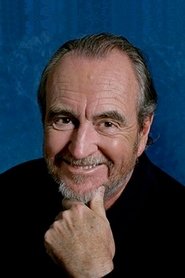
Craven gave Wallace one of her first defining horror roles in The Hills Have Eyes, establishing the emotional intensity that would become central to her genre career.
 Joe Dante
Defining Horror Director
Dante placed Wallace at the emotional center of The Howling, giving her one of the performances most closely associated with her horror identity.
 Lewis Teague
Defining Performance Director
Teague directed Wallace through the extraordinary physical and emotional ordeal of Cujo, resulting in one of the defining performances of her career.
 Christopher Stone
Defining Co-Star & Life Partner
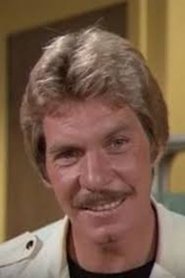
Stone shared two crucial chapters of Wallace's horror career in The Howling and Cujo while also being her husband and an important source of support during those demanding productions.
 Peter Jackson
Horror Reinvention Director
Jackson overturned Wallace's familiar maternal screen image in The Frighteners by casting her as Patricia Bradley, one of the darkest roles of her genre career.
 Rob Zombie
Recurring Horror Director
Zombie brought Wallace into a new generation of American horror and repeatedly recast her across projects including Halloween and The Lords of Salem.
Dee Wallace Horror Movies
Acting (72 credits)
2026
2026
2026
2026
2026
2026
2025
2025
2025
2024
2023
2023
2022
2022
2022
2021
2021
2020
2020
2020
2020
2019
2019
2018
2018
2018
2017
2016
2015
2014
2014
2013
2013
2012
2012
2011
2011
2010
2009
2009
2009
2009
2008
2008
2007
2007
2006
2006
2006
2005
2005
2005
2005
2004
2001
1997
1997
1996
1995
1995
1991
1991
1991
1990
1986
1986
1985
1983
1981
1977
1975
Production (2 credits)
2020
2016