
1991
Chris Walas
Horror Special Effects · Biography · Horror Filmography · Collaborators · Credits
Horror subgenres & themes
Most represented across this person's horror filmography:
BODY HORROR
• ANIMAL
• CHRISTMAS
• CANNIBAL
Biography
Chris Walas and the craft of practical horror effects
Chris Walas became one of the defining creature and special makeup effects artists of American genre cinema during the transition from the low-budget experimentation of the late 1970s to the large practical-effects productions of the 1980s and early 1990s. His horror work includes contributions to Piranha, Scanners, Gremlins, The Fly, House II: The Second Story, The Fly II, Arachnophobia and Naked Lunch. He also founded Chris Walas Inc., a creature-effects company that became an important workshop for designers, sculptors, mechanics, painters and puppeteers during the peak period of modern practical creature filmmaking.
Walas’s importance extends beyond the visibility of individual monsters. His career documents the transformation of creature effects from relatively small specialist jobs into productions requiring large teams, mechanical engineering, prosthetic design, sculpture, performance and extensive coordination with directors, cinematographers and actors. He moved through nearly every level of that process: beginning with masks and props, working within Industrial Light & Magic, supervising increasingly complex creature departments, forming his own company and eventually directing films himself. His strongest work treats the creature not as an isolated visual effect but as a performer whose design must support character, movement and photography.
A childhood shaped by monsters and practical illusion
Walas grew up in Chicago and became fascinated with monsters long before he understood how professional film effects were made. Universal horror, giant-creature science fiction of the 1950s and the stop-motion work of Ray Harryhausen were among his strongest early influences. He later described himself simply as a monster kid and remembered initially imagining that stop-motion animation might become his profession.
Harryhausen was particularly important because his creatures showed how a manufactured figure could display personality and participate in a story. Walas eventually abandoned the idea of becoming a stop-motion animator after recognizing the extraordinary patience the process required, but the underlying attraction remained. His later puppets, animatronics and prosthetic characters frequently depend on exactly the quality that had fascinated him as a child: the illusion that an obviously manufactured object has become a living participant in the scene.
Dick Smith and the accessibility of makeup effects
During his teenage years Walas became strongly influenced by Dick Smith, whose educational writing helped make professional makeup principles intelligible to young enthusiasts without access to studio workshops. Smith explained techniques using comparatively obtainable materials and encouraged an entire generation of aspiring artists to experiment with prosthetics, casting and transformation makeup.
This educational culture was especially significant before modern instructional video and internet resources. Effects knowledge was difficult to obtain, materials were less standardized and young artists frequently learned through trial, correspondence, magazines and experimentation. Walas entered the profession at a moment when much of practical-effects technology still required individual shops to develop their own methods with the available materials.
Moving to Los Angeles without a fixed career in effects
Walas moved to Los Angeles in his early twenties because he wanted to work in filmmaking, not because he had already decided to build a career exclusively in creature effects. He later emphasized that he entered special effects through professional opportunity, without having planned that particular career since childhood.
An important early job came at Don Post Studios, the mask company whose commercial monster masks had helped introduce generations of American horror fans to latex creature work. There Walas learned fundamental shop skills including mold making, rubber work, painting and prop construction. These were practical processes that could be transferred directly into low-budget motion-picture production.
The post-Star Wars demand for creatures
Walas entered Los Angeles filmmaking at an unusually favorable moment for creature artists. The success of Star Wars created enormous demand for aliens, monsters and fantastic characters throughout the American film industry. Productions of very different budgets suddenly wanted creature work, while the number of experienced specialists capable of supplying it remained comparatively small.
For Walas this meant rapid professional advancement. He began receiving work on inexpensive genre films where limitations forced young artists to improvise with whatever materials, schedules and workshop space were available. These productions were technically modest but provided something equally valuable: repeated opportunities to build, test, fail and revise effects under real production conditions.
Low-budget horror as an effects apprenticeship
Early credits included films produced within and around the Roger Corman exploitation system, among them Piranha, Up from the Depths and Humanoids from the Deep. Walas later spoke positively about low-budget work because insufficient money and time forced effects artists to become inventive. Expensive materials or long development periods were rarely options.
This environment taught him that there is seldom only one possible method for achieving an effect. If the ideal mechanical system could not be afforded, another physical solution had to be invented. If a material failed, the design could be altered. That flexibility remained fundamental even after Walas began supervising much larger productions.
Piranha and the connection with Phil Tippett
Working on Joe Dante’s Piranha became especially important because Walas met Phil Tippett there. Tippett was already developing into one of the most technically gifted artists of the new effects generation and later recruited Walas when Industrial Light & Magic required additional personnel for Dragonslayer.
The connection moved Walas from the fragmented world of small Los Angeles jobs into the most advanced effects organization in American filmmaking. It also demonstrates how strongly the practical-effects industry depended on personal networks. Shops were relatively small, specialists moved repeatedly between companies and an artist who proved reliable on one difficult production could be recommended quickly for another.
Industrial Light & Magic and a larger technical environment
Walas joined Industrial Light & Magic during a formative period for the company. He later remembered an environment that was already departmentalized but still comparatively open, with artists aware that many of the techniques they were using were being developed as they worked. The scale and expertise differed dramatically from the low-budget productions on which he had learned his earliest professional lessons.
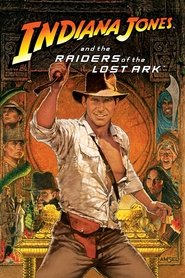
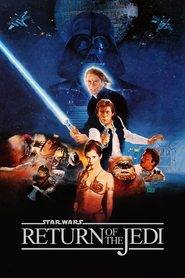
His assignments included work connected with Dragonslayer, Raiders of the Lost Ark and Return of the Jedi. These productions exposed him to model work, creature fabrication, mechanical systems and the coordination required when practical effects had to integrate with sophisticated cinematography and visual-effects photography.
Learning from large effects departments
ILM taught Walas more than individual fabrication techniques. Large productions required artists to work within systems. Designs moved between departments, molds had to reproduce pieces consistently, mechanical structures needed to fit inside sculpted forms and every object ultimately had to work convincingly on camera, where its construction would be judged in the finished shot.
This distinction became increasingly important as Walas moved toward supervision. A creature-effects leader is responsible not only for designing an attractive monster but for ensuring that dozens of separate technical processes eventually produce something usable on schedule. His later work at Chris Walas Inc. depended heavily on understanding how those specialties interacted.
Scanners and the beginning of the David Cronenberg relationship
Walas first worked on a David Cronenberg production through Scanners. He and Stephan Dupuis participated in special makeup effects on a production whose physical transformations and violent effects required considerable experimentation. The famous exploding-head sequence became one of the most widely remembered practical effects of the period, and its creation involved the contributions of several specialists.
The production began a professional relationship with Cronenberg that later became much more important through The Fly and Naked Lunch. Walas observed that Cronenberg remained calm even when effects work became technically difficult and grew increasingly precise in translating his ideas into film over the years. For Walas, working with him was an education in how a director could have a strong personal vision while still understanding the compromises required by physical production.
From effects technician to independent department head
After leaving ILM, Walas increasingly accepted responsibility for complete creature assignments, overseeing work well beyond the fabrication of individual pieces. This transition changed the nature of his job. He was no longer responsible solely for whether one mold, puppet or prosthetic worked. He had to estimate labor, organize artists, communicate with producers and guarantee that an entire effects package could be delivered.
The move also required a different kind of creativity. Supervising a creature shop means deciding which problems should be solved mechanically, which through makeup, which through puppetry and which by altering the proposed shot itself. Walas’s early exposure to multiple practical disciplines made him unusually suited to this kind of decision making.
The creation of Chris Walas Inc.
Chris Walas Inc., generally known as CWI, grew out of this professional expansion. Walas later explained that incorporating was less a personal ambition to become a businessman than a practical necessity once projects became too large to handle through informal freelance arrangements. The company provided the legal and organizational structure needed to hire substantial crews and assume responsibility for major effects contracts.
CWI subsequently became one of the prominent American creature-effects companies of its period. Its work extended across film, television and advertising and involved far more people than Walas himself. Designers, sculptors, mold makers, painters, animatronic engineers and puppeteers developed careers inside the shop, making CWI an established workplace within the practical-effects industry.
Creature design beginning with nature
Walas has described nature as his principal reference library for creature design. He does not see imagination and biological reality as completely separate categories. Animals, insects, textures, anatomical structures and patterns already provide an enormous variety of forms. Creature design becomes a process of selecting, combining and exaggerating those forms according to the fictional purpose of the character.
This approach helps prevent arbitrary complexity. A successful creature should have a plausible way to move and function, with anatomy that supports its behavior. Walas’s designs frequently retain recognizable animal or human information even when the complete organism is impossible, giving performers and audiences visual clues from which behavior can be understood.
Gremlins and the transformation of CWI
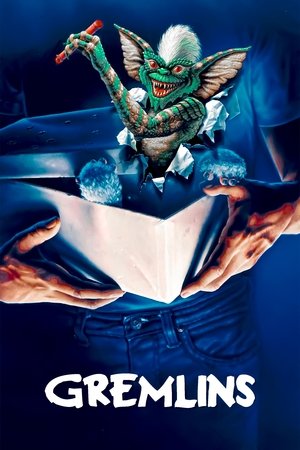
Gremlins became the production that transformed CWI from an emerging effects operation into a company responsible for characters carrying substantial portions of a major studio film. Joe Dante brought Walas into the project early, when the production was still determining whether the screenplay’s large number of creatures could be realized practically.
The challenge was fundamentally different from creating occasional monsters. Mogwai and Gremlins needed to remain on screen for extended periods, interact directly with actors, manipulate objects and perform behavior whose success affected comedy and character as much as horror. Walas and his crew therefore approached the puppets as performers whose movements had to sustain entire scenes.
Designing creatures for sustained performance
Gizmo became especially difficult because the character’s small body left very little internal space for mechanical systems. Yet the puppet required enough facial and bodily articulation to sustain close-ups and emotional interaction. The final solution depended on multiple puppets with mechanisms tailored to different actions.
This principle became fundamental to Walas’s work. Effects are usually more reliable when each device is designed around a limited task. A puppet optimized for a close facial performance does not necessarily need the same internal machinery as one intended to walk or be thrown across a set. The illusion of one living creature can therefore be assembled from several highly specialized physical objects.
Managing an effects production of unusual scale
The scope of Gremlins expanded while the film was being made. Story changes increased Gizmo’s importance, additional creatures were required and sequences became more ambitious. Walas and his crew had to respond while production was already underway. He later described the schedule as one of the most exhausting experiences of his career, with months of extremely limited sleep and continuous pressure to keep functioning puppets available for photography.
The difficulty illustrates a reality often hidden by the finished film. Practical creatures do not simply appear once construction is complete. Mechanisms fail, foam tears, paint requires repair and repeated performance gradually damages materials. An effects department therefore has to operate as both manufacturing shop and maintenance service throughout production.
Effects leadership as collaborative engineering
Large puppet sequences also required substantial crews beneath or outside the visible set. Several operators might be needed to control the face, eyes, limbs or body of one creature. Performers watched monitors while manipulating mechanisms from spaces constructed specifically to conceal them from the camera.
Walas’s role consequently became closer to directing a technical ensemble than personally operating every object. He had to coordinate artists whose individual movements combined into one apparent performance. The experience anticipated his later observation that supervising large effects teams had already taught him many organizational skills normally associated with film direction.
Gremlins and the identity of practical creature performance
The success of the puppets demonstrated a quality that Walas continued to value in practical effects: actors could respond to a physical presence actually occupying the set. Eyes could meet an object, hands could touch it and lighting could affect creature and performer simultaneously. Mechanical limitations were real, but those same limitations forced filmmakers to stage scenes around what a puppet could plausibly accomplish.
Walas later remained cautious about effects technology that allowed spectacle to expand without equivalent narrative discipline. His position was not simply that older methods were automatically superior. He argued instead that effects should remain subordinate to filmmaking and that the choice of technique matters less than the judgment of the artist using it.
The Fly and a new kind of creature assignment
After Gremlins, Walas had become one of the effects artists considered for major studio projects. When producer Stuart Cornfeld approached him about David Cronenberg’s new version of The Fly, Walas initially had little interest in participating in another remake. Reading Cronenberg’s screenplay changed his mind. He felt the material had been transformed into a distinctly personal film rather than a simple repetition of the 1958 story.
The assignment required a different kind of effects thinking from Gremlins. Seth Brundle could not suddenly become a separate monster while the human performance disappeared. Jeff Goldblum needed to remain emotionally and physically readable as his body deteriorated through several increasingly severe stages.
Designing Brundle’s progressive transformation
Walas and his team developed Brundle’s transformation as a sequence of stages. The makeup had to communicate gradual biological change while remaining consistent enough that viewers could believe each stage belonged to the same process. This required extensive design, prosthetic appliances, dental work, body pieces and eventual puppet forms.
The progression also had to respect the dramatic structure. If the design became too monstrous too early, Goldblum’s performance would lose the human continuity on which the tragedy depended. Walas therefore designed each stage of the transformation to express Brundle’s changing character through his body.
Designing prosthetics around Jeff Goldblum’s performance
Walas spent time studying Goldblum’s facial behavior before finalizing the later prosthetic stages. He regarded the actor’s eyes and mouth as particularly important expressive areas and designed appliances intended to preserve enough movement for long dialogue scenes. The makeup could distort Brundle heavily without turning Goldblum into an immobile mask.
This actor-centered approach became one of the most important lessons of Walas’s career. A technically perfect prosthetic can damage a film if it eliminates the performer responsible for carrying the scene. Special makeup therefore has to be designed not merely against an anatomical cast but around the specific strengths of the person who will wear it.
Effects, acting and the credibility of Brundle’s deterioration
Goldblum treated the prosthetics as part of the performance and experimented with how his changing body would affect speech and movement. Walas later praised the actor for using the makeup rather than simply tolerating it. The collaboration helped create a transformation whose emotional continuity survives increasingly extreme physical distortion.
For Walas this demonstrated that the best creature work is completed by the performer. Effects artists can manufacture anatomy, but only an actor can make the audience believe that the anatomy contains a character. The principle also explains Walas’s continuing interest in directing actors once opportunities arose to move behind the camera.
Running CWI during an exceptionally demanding production
The Fly placed heavy pressure on CWI because large amounts of design and fabrication had to be completed within a compressed schedule. Walas maintained work in the California shop while production proceeded in Toronto, forcing him to move repeatedly between ongoing construction and the set. Some final creature pieces were completed or refined very close to the moments when they were needed for photography.
The production demonstrates the managerial dimension of his profession. Walas could not personally manufacture every component. He depended on a large team capable of continuing work in his absence and on senior collaborators who could translate designs into molds, mechanisms and finished appliances.
Stephan Dupuis and the importance of specialist collaboration
Stephan Dupuis became one of Walas’s most important recurring collaborators. They had both worked on Scanners, and Dupuis played a major role in the makeup work of The Fly. Their combined efforts received the Academy Award for Best Makeup.
The shared credit is important because complex effects rarely belong accurately to a single individual. Walas operated as designer and supervisor, but artists such as Dupuis contributed specialized makeup knowledge essential to the finished transformation. CWI’s strongest work emerged from the combined expertise of these specialists, with Walas leading the team.
The Academy Award and professional recognition
The Academy Award for The Fly formalized Walas’s position among the leading practical-effects artists of the period. He and Dupuis won Best Makeup at the 59th Academy Awards, while the film’s effects work also received other industry recognition. The award was particularly significant because the makeup itself was fundamental to the film’s narrative and the depiction of Brundle’s deterioration.
For Walas, however, professional success also created an opportunity to pursue the part of filmmaking he had originally wanted before effects became his entry into the industry. He had long wanted to direct, and the commercial success of The Fly placed him in a position where that ambition became realistic.
Effects supervision as preparation for directing
Walas later argued that the transition into directing was less mysterious than people often assume. By the time he was given a feature, he had already spent years leading teams of dozens of artists, coordinating departments, making visual decisions and solving production problems under intense schedule pressure.
Directing nevertheless changed the scope of responsibility. An effects supervisor can concentrate on the success of the creatures while the director must balance performance, photography, editing, music, design, schedule and the overall dramatic direction of the film. Walas welcomed the broader responsibility because directing had been among his ambitions since he first entered filmmaking.
The Fly II and Walas’s move into feature direction
When development began on a sequel to The Fly, producer Stuart Cornfeld included Walas among the possible directors. David Cronenberg did not return to direct, and Walas was eventually hired. The assignment fulfilled a longstanding personal ambition while placing him immediately inside a major studio sequel whose predecessor had established exceptionally high expectations.
Walas wanted the new film to explore possibilities opened by Cronenberg’s version while moving toward the monster movies that had influenced him when he was young. He also wanted the final creature to possess enough physical expression to appear threatening and sympathetic according to the scene, making the effects problem inseparable from his responsibilities as director.
Studio filmmaking and the limits of directorial control
The production taught Walas how different feature direction could become when studio expectations conflicted with his own preferences. He later recalled disagreements concerning the screenplay and described the studio as wanting a more straightforward youth-oriented film than the more adult continuation some earlier participants had imagined.
A writers’ strike further complicated development after Frank Darabont completed an early draft for Walas. The director found himself attempting to maintain production quality while dealing simultaneously with creative restrictions and the practical demands of a large effects film. The experience became, in his words, an important part of his education in filmmaking.
Directing effects after years of creating them
One unexpected difficulty was Walas’s inability to separate himself completely from the effects department. Years of creature work meant he could see technical details that another director might leave entirely to specialists. The knowledge was useful but also created the temptation to devote attention to problems that should now have belonged to department heads.
The experience clarified an important distinction in his career. Understanding effects can make a director more realistic about what is possible, but directing requires allowing specialists to do their jobs. The same principle had already made CWI successful as a company: large productions depend on delegation.
Working with actors from the director’s chair
Walas discovered that he enjoyed directing performers. This interest is consistent with the way he had approached creature work on The Fly, where the value of the makeup depended on the human performance underneath it. As director he could shape the complete character, extending his involvement beyond the physical apparatus surrounding the performer.
He later described directing as exhausting but satisfying and rejected the idea that it belonged to an entirely separate artistic hierarchy from effects work. To Walas, every department participates in filmmaking. Direction simply concentrates more of the final decision making in one position.
Television direction and The Vagrant
Walas continued directing after The Fly II. He worked on Tales from the Crypt and later directed the horror comedy The Vagrant. These assignments allowed him to work outside the specific technical identity established by his creature-effects career and confirmed that his interest in direction had not been limited to the opportunity presented by the Fly franchise.
He never developed a long filmography as a feature director, however. Effects production remained the area in which he had built a large company and an established professional network, and CWI continued handling substantial projects while Walas’s directing opportunities developed more intermittently.
Jim Isaac and the growth of a CWI generation
Jim Isaac became one of the most important artists to develop within the CWI environment. He worked with Walas and the company on Gremlins, The Fly, Arachnophobia and Naked Lunch, eventually taking major supervisory responsibility. Walas later asked Isaac to oversee the creature-effects shop.
The relationship demonstrates how CWI functioned as more than an extension of one artist. Experienced crew members could acquire enough responsibility to manage entire projects, allowing Walas to move between design, company leadership and directing. Isaac himself later became a horror director, extending the professional lineage beyond the shop.
Arachnophobia and designing effects that should not dominate
CWI handled creature work on Arachnophobia, with Jim Isaac supervising much of the project for Walas. The production required a combination of real spiders and fabricated material while maintaining a tone built more strongly around suspense than continuous creature spectacle.
This kind of assignment suited Walas’s belief that effects should serve the film’s dramatic needs, regardless of how much the workshop could build. CWI could create elaborate material that ultimately remained unused if the director decided a simpler image worked better. Technical effort had value only when it supported the finished scene.
Naked Lunch and returning to David Cronenberg
CWI reunited with David Cronenberg for Naked Lunch, a production requiring talking insect typewriters, Mugwumps and other organic machines whose sexual and biological qualities needed to fit Cronenberg’s adaptation of William S. Burroughs. Walas participated substantially in the design phase before leaving daily production responsibilities to Jim Isaac and the CWI team while he directed The Vagrant.
The arrangement demonstrates how far his professional role had evolved. The young artist who once fabricated individual pieces was now able to establish design directions and trust an experienced company structure to execute them without his constant presence. CWI’s ability to continue functioning was itself one of Walas’s major professional accomplishments.
Choosing projects for creative interest
People who worked inside CWI later described Walas as drawn to projects whose scripts and directors engaged the company, with the quantity of effects a secondary consideration. Naked Lunch appealed because its creatures presented unusual design problems and because the team respected Cronenberg.
This distinction matters in understanding Walas as an artist. Large effects counts could provide business, but repetitive work was not necessarily more attractive than a smaller project containing an unfamiliar challenge. The practical-effects industry depended heavily on solving problems that had not yet been standardized.
Low budgets and the value of enforced invention
Despite eventually working on major studio productions, Walas continued to value lessons learned from inexpensive films. Limited money could force artists to simplify an effect until its essential mechanism became clear. Limited time could produce solutions that a longer, more bureaucratic process might never discover.
He did not romanticize poor conditions. Gremlins and The Fly demonstrated how destructive inadequate time could become when the scale of the assignment was enormous. His distinction was between productive limitation and impossible expectation. Constraint could stimulate invention, but an effects department still required enough labor and time to deliver safely and reliably.
Practical effects and the arrival of digital filmmaking
Walas’s career spans the period in which physical creature effects moved from being the primary solution for many impossible images to sharing that role with digital visual effects. He has resisted a simplistic opposition between the two. His criticisms of CGI focus more strongly on how filmmakers use the technology than on the existence of digital tools themselves.
He has argued that the ability to create almost anything can encourage productions to allow effects to become larger than the story. Practical methods possess their own artificiality, and Walas has never claimed that puppetry or stop motion automatically looks completely real. What matters is whether the chosen technique creates an image appropriate to the film.
The continuing value of physical presence
Physical creatures retain qualities Walas values because they occupy the same photographic environment as actors. They cast real shadows, respond to available light and provide performers with objects they can see and touch. Their limitations also give filmmakers a defined set of possibilities around which scenes must be designed.
Modern digital techniques can remove rods and operators that older productions had to hide physically, meaning practical puppetry itself can benefit from contemporary post-production. The history of effects is therefore not necessarily a competition in which one technology must eliminate another. Hybrid methods can preserve physical performance while removing restrictions that once complicated shooting.
Nature, mechanism and the illusion of life
Across Walas’s work, the central technical objective remains the creation of convincing behavior. Sculpture provides appearance, but a creature becomes persuasive only when movement suggests intention. Mechanical systems therefore need to serve character. Too much movement can look as artificial as too little if every available mechanism is activated simply because it exists.
This understanding is one reason the best practical creatures often require restraint from their operators. A blink, shift of weight or small turn can suggest attention more effectively than continuous mechanical activity. Walas’s experience with puppets gradually made performance direction as important as fabrication.
The effects shop as a collaborative authorship system
Public discussion of movie creatures frequently assigns a design to one famous effects artist, but Walas’s career demonstrates how misleading that simplification can become. CWI productions involved designers, sculptors, mechanical engineers, mold makers, painters, hair specialists, makeup artists and puppeteers. Different individuals could have decisive influence over different stages of the same creature.
Walas’s leadership consisted partly in maintaining coherence across those stages. A design could not become so mechanically impractical that engineering failed, while engineering could not distort the sculpture beyond recognition. The final result belonged to a coordinated workshop even when Walas remained the creative figure identified publicly with the company.
Stepping away from continuous feature production
As the industry changed and Walas moved beyond the period of continuous CWI feature assignments, he gradually stepped away from regular movie production. In later interviews he described himself as no longer actively making feature films and spoke instead about personal artwork and smaller creative projects.
This later phase reflects the unusual intensity of the period in which his reputation was established. Effects work of the 1980s often required exceptionally long hours and large physical shops operating under schedules that Walas remembered as exhausting. His retirement from constant production did not end his involvement with creature culture, retrospectives or discussions of practical-effects history.
Preserving the history of practical creature work
Walas has increasingly participated in interviews, screenings and archival discussions devoted to the techniques developed during his career. This material is historically valuable because much practical-effects knowledge was originally transmitted orally inside workshops, with relatively little recorded in standardized technical literature.
His recollections also emphasize that apparently iconic effects were often uncertain while they were being created. Techniques now described as established achievements frequently emerged through failed tests, broken mechanisms, improvised materials and solutions devised under deadline pressure. The finished creature conceals the experimental process that produced it.
Chris Walas’s contribution to horror effects
Chris Walas’s contribution to horror lies in helping transform practical creature effects into sustained screen performances while preserving the improvisational mentality of low-budget filmmaking. He moved from masks and props to ILM, from individual effects work to the management of a major creature shop and from effects supervision into directing. His career therefore encompasses both the craft and the organizational evolution of the practical-effects industry.
The strongest continuity throughout that career is his insistence that an effect must advance the film’s artistic and dramatic purpose. The Gremlins needed to perform as characters. Seth Brundle’s prosthetics needed to preserve Jeff Goldblum’s acting. CWI’s achievements depended on coordinated work across a team. That combination of design, engineering, performance and collaboration places Walas among the key practical-effects figures in modern horror cinema.
Selected Work
 Humanoids from the Deep
1980
 Gremlins
1984
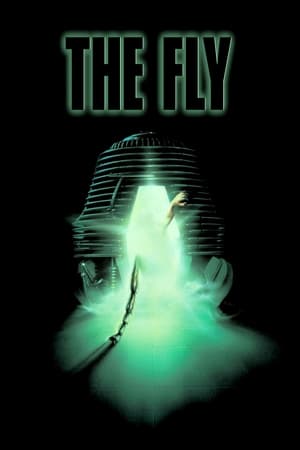 The Fly
1986
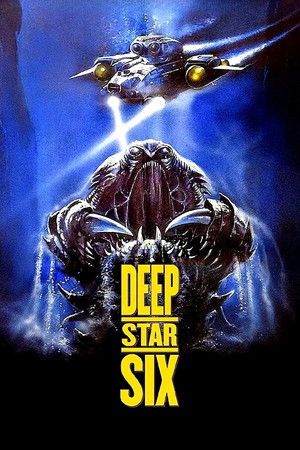 DeepStar Six
1989
 Arachnophobia
1990
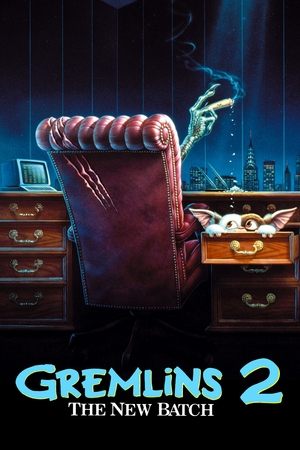 Gremlins 2: The New Batch
1990
Notable Horror Collaborators
Notable collaborators and creative partners throughout Chris Walas's horror career.
 David Cronenberg
Creature Effects Artist / Director Collaborator
Walas worked with Cronenberg on Scanners, The Fly and Naked Lunch. Their three horror and body-horror collaborations span Walas’s development from special makeup technician to Oscar-winning creature-effects supervisor and later head of an established effects company.
SD
Stephan Dupuis
Creature Effects Collaborator
Dupuis and Walas worked together on horror productions including Scanners, The Fly, The Fly II and Naked Lunch. They shared the Academy Award for Best Makeup for The Fly, while Dupuis remained an important specialist within the practical-effects work surrounding Walas and CWI.
 James Isaac
Creature Effects Collaborator
Isaac became one of the principal artists within the CWI production group, working with Walas on Gremlins, The Fly, Arachnophobia and Naked Lunch. He progressed from creature technician to project supervisor and eventually supervised the CWI shop, making him one of Walas’s most substantial recurring horror-effects collaborators.
Chris Walas Horror Movies
Special FX / Practical FX (9 credits)
1990
1990
1989
1986
1984
1981
1980
1979
Directing (3 credits)
1992
1989
1989
Visual Effects (2 credits)
1989
1978
Acting (1 credits)
1989
Production (1 credits)
2010