


2026
Robert Englund
Horror Actor · Biography · Horror Filmography · Collaborators · Credits
Horror subgenres & themes
Biography
Robert Englund and the Face Behind the Nightmare
Robert Englund became one of horror cinema's most recognizable figures by doing something unusually difficult: he turned a heavily made-up supernatural killer into a performance audiences could identify as unmistakably his. Freddy Krueger began as the creation of Wes Craven, but the way Freddy moved, watched, taunted and gradually developed a grotesque sense of humor belonged increasingly to Englund's interpretation. The burned face, glove and striped sweater became iconic objects, yet none of them would have mattered in the same way without the actor inside them.
Englund's career is often reduced to Freddy because the role became so culturally dominant, but that reduction obscures how much horror surrounds the character on both sides of his filmography. Before A Nightmare on Elm Street, Englund had already appeared in Eaten Alive, Dead & Buried and Galaxy of Terror. After Freddy made him famous, he continued moving through Gothic horror, slashers, supernatural films, monster movies, black comedy and self-aware genre projects, frequently accepting roles that played with the audience's knowledge of who he was.
What makes Englund especially important to horror is therefore not simply longevity. His career traces the transformation of the horror star itself. He began as a supporting actor who disappeared into character roles, became the human performer behind one of the defining monsters of the 1980s and eventually reached the point where filmmakers could cast Robert Englund as a symbol of horror history even when he was not playing Freddy Krueger.
Classical Training Before the Horror Icon
Robert Barton Englund was born in Glendale, California, on June 6, 1947. His interest in performance began early, and by his own account he was acting from childhood before moving through university and professional theatre training. He studied at UCLA and later at Oakland University's Academy of Dramatic Art, a professional program developed in connection with theatre director John Fernald and the Meadow Brook Theatre. Englund spent several years working in regional theatre before returning to California and pursuing film work more aggressively.
That background is important because Freddy Krueger was not created by an actor who had simply been discovered because he looked frightening under makeup. Englund had spent years learning movement, stage combat, voice and character construction. His later horror performances frequently reveal those foundations. Even when dialogue became exaggerated or grotesque, Englund remained highly conscious of posture, rhythm and physical composition, particularly when prosthetic makeup limited the range of facial expression available to him.
His first feature work arrived during the 1970s, when he established himself as a reliable character actor rather than a genre specialist. He appeared in films including Buster and Billie, Stay Hungry, A Star Is Born and Big Wednesday, often playing supporting figures, outsiders, criminals or men existing at the edge of the main story. Englund later described these years as a period in which he worked steadily without becoming a conventional leading man, an experience that helped him develop the ability to make smaller roles immediately memorable.
Eaten Alive and the First Descent into Horror
Englund entered one of the most important creative circles in American horror when Tobe Hooper cast him in Eaten Alive (1976). His character Buck appears early in the film and immediately establishes a tone of sexual aggression and menace. The role is relatively small, but it placed Englund inside the orbit of a filmmaker who had just transformed independent horror with The Texas Chain Saw Massacre.
The significance of the collaboration became clearer later because Englund and Hooper would repeatedly cross paths. Their careers developed in very different ways, yet both became associated with a form of horror in which personality mattered as much as the mechanics of violence. Hooper's environments often feel diseased or unstable, while Englund's strongest characters frequently appear completely at home inside environments where ordinary people become disoriented.
Eaten Alive also demonstrates how different Englund could appear before Freddy. There is no elaborate makeup, mythology or supernatural dimension protecting the actor from the character. Buck is simply unpleasant, predatory and threatening. The performance belongs to the grounded, human side of Englund's horror work, an aspect that would continue appearing intermittently even after the Freddy persona became almost impossible to escape.
Dead & Buried, Galaxy of Terror and the Road Toward Genre Recognition
By the beginning of the 1980s, Englund had accumulated further genre work. Dead & Buried (1981) placed him inside a coastal-town horror mystery involving murder, resurrection and a community whose apparently normal surface conceals something profoundly wrong. Englund plays Harry, one of the townspeople whose presence contributes to the film's increasingly uncanny sense that the entire population may be participating in a secret the protagonist cannot understand.
The same year brought Galaxy of Terror, a science-fiction horror film built around astronauts confronting physical manifestations of their own fears. The production belonged to the Roger Corman system and became notable for its mixture of creature effects, psychological horror and exploitation imagery. Englund again appears as part of an ensemble rather than as the central monster, but the film strengthened his connection with fantastic cinema before that connection became the defining feature of his career.
These early horror roles reveal something easily forgotten after decades of Freddy imagery. Englund was already comfortable inside genre material before Wes Craven found him. He understood low-budget production, special-effects environments and the heightened tone horror sometimes demanded. When the role that changed his life finally arrived, he was not entering an unfamiliar world. He was bringing years of character acting into a genre he had already begun to understand from the inside.
V and the Persona Freddy Was Created Against
Immediately before A Nightmare on Elm Street, Englund became widely recognizable through the television miniseries V and its sequels, playing Willie, a gentle alien who becomes sympathetic to humanity. The success of the series gave him a level of public recognition he had not previously experienced, but it also created a new problem. Audiences were beginning to associate him with a fundamentally kind and slightly awkward character.
Englund later explained that this was part of what attracted him to Freddy Krueger. He wanted a role that would contrast sharply with Willie and prevent the television success from becoming a new form of typecasting. The contrast could hardly have been more extreme. One character was vulnerable and friendly; the other was a burned child murderer capable of invading dreams and transforming the most private part of consciousness into a place of attack.
That transition is important because it demonstrates how deliberately Englund approached Freddy from the beginning. The role was not simply an opportunity to appear in another horror film. It was a chance to construct a completely different physical and psychological presence from anything the public had recently seen him perform.
A Nightmare on Elm Street and the Birth of Freddy Krueger
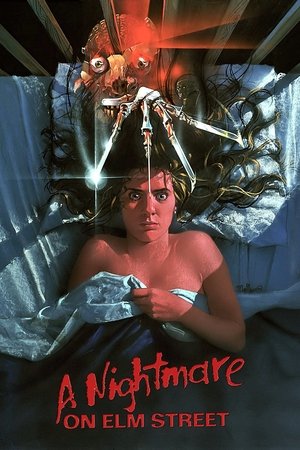
Wes Craven's A Nightmare on Elm Street (1984) introduced Freddy Krueger as something radically different from the dominant slasher killers of the period. Michael Myers and Jason Voorhees had established the power of masked figures whose silence made them feel almost mechanical. Freddy could talk. More importantly, he could control the reality surrounding his victims because the murders occurred inside dreams.
Englund understood that this freedom required a different kind of performance. Freddy could appear suddenly, change shape, manipulate space and behave with a confidence unavailable to ordinary killers. Englund used posture and movement to make the character feel theatrical without making him harmless. The tilted head, extended glove and deliberate reveal of the face all helped transform a complex prosthetic design into something immediately readable on screen.
The makeup itself required hours of preparation, restricting parts of Englund's facial movement and forcing him to communicate through eyes, body position and voice. He has described the process as involving numerous pieces of foam latex glued individually to his face. Rather than treating the makeup as something that hid the actor, Englund learned how to perform through it. Shadows from the fedora could conceal the eyes until he wanted them visible, while small movements of the head changed how much of Freddy's disfigurement the audience could see.
Craven's concept made sleep itself dangerous, and Englund's performance made that danger personal. Freddy does not simply wait for victims to enter his territory. He speaks to them, studies their fears and appears to enjoy constructing individualized nightmares. The result gave the original film a villain who seemed capable of evolving beyond the single story built around him.
Freddy's Revenge and the Expansion of the Character
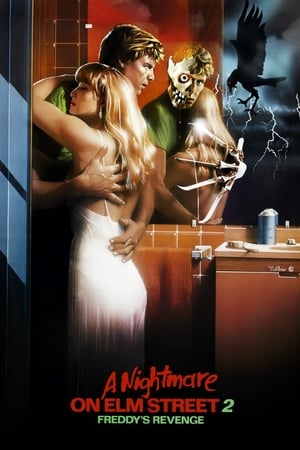
A Nightmare on Elm Street 2: Freddy's Revenge (1985) changed the rules of the first film by bringing Freddy's influence more directly into the waking body of Jesse Walsh. The sequel is stranger and more unstable than the franchise formula that would eventually develop, treating possession and bodily invasion as extensions of the dream mythology. Englund remains the visual center of the horror, but Freddy is still relatively dark, cruel and physically threatening rather than the comic personality he would later become.
The film also contains one of the clearest examples of Freddy emerging through another body, reinforcing the idea that Englund was playing more than a conventional killer. Freddy could function as infection, possession and sexual threat, moving across boundaries that later sequels would sometimes simplify in favor of elaborate dream deaths. The character had not yet become fully standardized.
Englund's performance across the first two films therefore belongs to an important transitional stage. Freddy has personality, but he has not yet become the entertainer audiences would eventually cheer as much as fear. The cruelty remains closer to Craven's original conception, and Englund's movements retain a predatory quality that later sequels would increasingly combine with humor.
Dream Warriors and the Moment Freddy Became a Star
A Nightmare on Elm Street 3: Dream Warriors (1987) became the film that fully transformed Freddy Krueger from successful horror villain into franchise personality. The story gives the surviving teenagers individual dream abilities, allowing the film to expand the visual possibilities of Freddy's world while also giving Englund more opportunities to manipulate the victims psychologically before killing them.
Freddy's humor becomes more pronounced, but the film still maintains a balance between wit and cruelty. Englund discovered that audiences were responding not only to the monster but to the anticipation of what Freddy might say or do next. The character could now deliver a line, perform for the victim and then construct a death around an aspect of that person's identity. Murder becomes grotesque theatre.
The shift was crucial because Freddy began occupying a position rare for a horror villain. He remained the antagonist while becoming one of the primary reasons audiences bought a ticket. Englund was now performing against an unusual structural problem: the films needed viewers to enjoy Freddy without allowing his popularity to remove every trace of danger.
The solution was to make personality part of the threat. Freddy enjoys the nightmare more than anyone else because he controls it. His jokes are not separate from the violence; they demonstrate how completely the victim has entered a reality governed by someone who treats death as entertainment.
The Dream Master, The Dream Child and Freddy as Pop Culture
By A Nightmare on Elm Street 4: The Dream Master (1988), Freddy had become a genuine pop-cultural phenomenon. The character appeared in merchandise, television promotions and increasingly elaborate publicity campaigns while the films grew larger and more visually extravagant. Englund later identified his performance in The Dream Master as one of his favorites because director Renny Harlin allowed him greater freedom to explore the character's movement and theatricality inside the surreal dream environments.
That freedom pushed Freddy toward something resembling a grotesque cartoon character, but Englund never completely abandoned the physical menace underneath the jokes. He understood that Freddy's power came partly from how confidently he occupied the dream. He did not move as someone worried about being attacked or surprised. He behaved as though every environment already belonged to him.
A Nightmare on Elm Street 5: The Dream Child (1989) continued the mythology through pregnancy, inherited trauma and increasingly baroque nightmare imagery. By this stage the franchise had become enormously self-aware, with Freddy's one-liners and visual transformations functioning almost as expected attractions. The danger of repetition was obvious, but Englund's commitment gave the character continuity even as directors, writers and visual styles changed around him.
The actor had effectively become the franchise's stable creative element. Freddy could survive shifts in mythology because Englund understood how the character occupied space, how long to hold a reaction and how far the humor could move before the underlying threat disappeared completely.
Freddy's Nightmares and the Monster as Host
The television anthology Freddy's Nightmares pushed the character's cultural transformation even further. Freddy often functioned less as the central killer than as a macabre host introducing or commenting on stories, effectively placing Englund in a tradition associated with horror presenters and anthology figures. The monster had become capable of standing outside individual narratives and addressing the audience almost directly.
Tobe Hooper directed the pilot episode, bringing Englund back together with one of the filmmakers responsible for his earliest horror work. The episode explored Freddy's backstory before his death and transformation, giving viewers one of the few attempts to dramatize the human figure who existed before the dream demon.
The series also revealed how thoroughly Freddy had escaped the limits of cinema. A character introduced in a relatively low-budget 1984 horror film could now support syndicated television, merchandising and a broader media identity. Englund's performance was central to that expansion because Freddy had become recognizable through behavior as much as appearance.
976-EVIL and Englund Behind the Camera
Englund's horror career was not limited to acting. He made his feature directorial debut with 976-EVIL (1989), a supernatural horror film about a telephone horoscope service that connects callers with a demonic force. The premise belongs squarely to late-1980s horror, combining adolescent alienation, occult temptation and contemporary technology in a story where an apparently ordinary service becomes a channel for corruption.
The film is particularly interesting within Englund's career because it shows how much he had absorbed from years of working inside genre production. He had watched directors including Hooper and Craven construct horror around limited budgets, practical effects and strong visual concepts. 976-EVIL gave him the opportunity to apply those lessons from the other side of the camera.
It also confirms that his identification with horror was no longer an accident produced solely by Freddy. Englund was actively interested in the mechanics of the genre, from effects and atmosphere to the way supernatural rules could be integrated with contemporary American life. Even without appearing as the monster himself, he remained inside the same imaginative territory.
The Phantom of the Opera and a Different Monster Face
In The Phantom of the Opera (1989), Englund accepted another role hidden behind disfigurement and mythology, but the character required a different form of horror from Freddy. His Phantom belongs to a Gothic tradition of obsession, murder and theatrical identity, allowing Englund to explore another character whose appearance and performance are inseparable from a damaged face.
The film deliberately emphasizes the violent side of Gaston Leroux's story rather than the romantic interpretation popularized elsewhere. Englund approached the role as something darker and more physically threatening, creating a Phantom closer to a killer moving through nineteenth-century London than a purely tragic romantic figure.
The casting inevitably invited comparison with Freddy, but the difference is revealing. Freddy's face has become an expression of supernatural identity, while the Phantom is constantly engaged with concealment, disguise and the possibility of presenting a socially acceptable surface. Englund therefore uses another prosthetic-heavy role to explore a very different relationship between appearance and monstrosity.
Freddy's Dead and the Limits of the Franchise
Freddy's Dead: The Final Nightmare (1991) arrived after the character had been pushed almost completely into mainstream pop culture. The film increases the comedy, spectacle and self-reference while attempting to close the franchise through Freddy's family history and final destruction. Englund was now playing a figure whose public identity extended far beyond the films themselves.
The problem was unavoidable. A monster becomes less mysterious when audiences already know the rules, recognize the voice and expect the joke. Englund remained committed to the role, but the franchise had reached a point where escalation could no longer substitute indefinitely for surprise. Freddy needed either reinvention or retirement.
That reinvention would eventually come from the filmmaker who created him. Wes Craven returned not by simply continuing the established mythology, but by questioning what Freddy had become outside the original film.
Wes Craven's New Nightmare and the Return of the Monster
Wes Craven's New Nightmare (1994) gave Englund one of the most unusual opportunities ever offered to an actor associated with a horror franchise. He plays both himself and a darker manifestation related to Freddy inside a story where the previous films exist as movies. Heather Langenkamp plays herself, Craven appears as himself and the boundaries between fiction, production and supernatural reality gradually collapse.
The central idea allows Craven to reclaim the character from the increasingly comic direction of the sequels. Freddy becomes less of a wisecracking franchise mascot and more of an ancient evil that has adopted the form audiences recognize. Englund alters the performance accordingly, making the figure colder, more controlled and less interested in entertaining his victims.
Englund has repeatedly identified New Nightmare as his favorite film in the series. The reason is understandable. It allowed him to examine the strange relationship between actor and monster after a decade in which Freddy had become part of his own public identity. Robert Englund appears inside the film as a performer haunted by the cultural object he helped create, turning typecasting into part of the horror itself.
The film also anticipated the self-aware direction Craven would develop more commercially with Scream. Horror history, audience expectation and the act of making horror films become part of the narrative rather than background knowledge. For Englund, it was the perfect opportunity to show that Freddy could become frightening again by changing the context rather than simply increasing the violence.
Night Terrors and The Mangler: Returning to Tobe Hooper
Englund reunited with Tobe Hooper for Night Terrors (1993), decades after their first collaboration on Eaten Alive. The film gave Englund multiple opportunities to work with theatrical villainy and historical horror, fitting naturally into the period when his name itself had become a marketable genre element.
The partnership continued with The Mangler (1995), adapted from Stephen King. Englund plays William Gartley, the grotesque owner of an industrial laundry where a massive machine becomes the center of supernatural violence. The role allows him to combine prosthetic transformation, exaggerated personality and the kind of industrial nightmare environment that Hooper repeatedly explored throughout his career.
These collaborations are significant because they connect two very different moments in American horror. Eaten Alive belonged to Englund's pre-Freddy career, while Night Terrors and The Mangler cast an actor already permanently identified with the genre. Hooper could now use that recognition deliberately, allowing Englund's presence to bring its own layer of expectation into the films.
Wishmaster, Urban Legend and the Horror Elder Statesman
By the second half of the 1990s, Englund had reached a new stage in his career. Horror filmmakers no longer needed to cast him as the central monster for his presence to matter. In Wishmaster (1997), he appears alongside a remarkable collection of genre performers, including actors associated with several major horror franchises. The film consciously celebrates horror history, and Englund's presence functions as part of that collective memory.
Urban Legend (1998) uses him differently, casting him as Professor William Wexler inside a slasher film constructed around familiar contemporary legends. The audience is encouraged to notice Englund because his horror reputation automatically makes the character suspicious. Casting itself becomes misdirection. The film can exploit what viewers know about the actor before the plot has provided any evidence about the character.
This became increasingly important to Englund's post-Freddy career. He could enter a horror film and immediately alter the audience's expectations without doing anything overtly threatening. Decades of association with Freddy had given his face narrative meaning before a scene began.
Freddy vs. Jason and the Final Feature Performance as Freddy
Freddy vs. Jason (2003) returned Englund to the role after nearly a decade and placed Freddy against another of modern horror's most famous killers. The concept transformed franchise mythology into direct confrontation, but the structural difference between the two monsters made Englund especially important. Jason is largely silent and physical; Freddy speaks, plans and manipulates.
The film therefore uses Freddy as much more than one half of a fight. He drives the narrative, exploiting Jason in order to restore fear of himself before eventually losing control of the situation. Englund could rely on nearly twenty years of accumulated character knowledge, moving easily between theatrical villainy, humor and physical combat.
The production was physically demanding, and Englund later discussed the strain of performing stunts at that stage of his life. He nevertheless performed substantial portions of the action himself. The film became his eighth and final feature-film performance as Freddy Krueger, closing one of the longest continuous actor-monster relationships in modern horror cinema.
2001 Maniacs, Behind the Mask and the New Horror Generation
Englund's horror work continued aggressively after Freddy. 2001 Maniacs (2005) cast him as Mayor Buckman, allowing him to embrace grotesque Southern hospitality, black comedy and splatter without hiding behind the Freddy makeup. The character is cheerful, theatrical and murderous, drawing upon Englund's ability to make friendliness itself feel suspicious when pushed into the wrong context.
Behind the Mask: The Rise of Leslie Vernon (2006) is even more self-aware. The film imagines a world where slasher mythology functions almost like a professional tradition, and Englund's presence connects the fictional new killer with the actual history of the genre. He does not need to play Freddy for the association to work. The audience already carries that history into the film.
The same period included roles in Hatchet, Jack Brooks: Monster Slayer, Zombie Strippers and other independent horror productions. Englund had become valuable to a new generation of filmmakers not simply because he was famous, but because casting him allowed their films to establish a direct connection with the genre history that had shaped them.
Fear Clinic, The Funhouse Massacre and the Persistence of Horror
Englund continued appearing in horror throughout the 2010s rather than treating the genre as a chapter that ended with Freddy. Fear Clinic placed him at the center of a story about experimental treatment for extreme phobias, returning him to the idea of fear as something that can be manipulated, studied and made physically dangerous. The role of Dr. Andover allowed him to occupy the position of an authority figure whose attempt to understand fear ultimately leads deeper into it.
Other films, including The Funhouse Massacre, The Midnight Man and Nightworld, continued using Englund as both actor and horror signifier. The quality and scale of these productions varied widely, but the consistency of his engagement with the genre is notable. Englund did not spend decades trying to escape the audience that knew him as Freddy. He found ways to work with that identity without allowing every new role to become an imitation of it.
Television also gave him opportunities to acknowledge his legacy directly. He returned briefly as Freddy for The Goldbergs in 2018, decades after the original film, demonstrating how completely the character had become part of nostalgic popular culture rather than something confined to the original franchise.
Stranger Things and the Horror History Inside the Casting
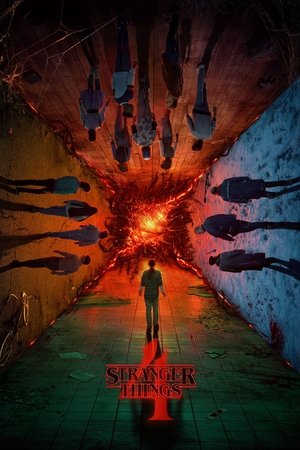
Englund's appearance in Stranger Things as Victor Creel carried particular resonance because the series is built around the horror and fantasy culture of the 1980s. Casting the actor who embodied Freddy Krueger inside a story involving psychic invasion, murder and terrifying visions immediately connected the series to the cinematic period it was referencing.
The role itself is very different from Freddy. Victor is older, damaged and defined by trauma rather than predatory control. Englund therefore becomes part of the mythology through vulnerability rather than menace. The casting works precisely because viewers know what he represents historically, while the performance refuses simply to repeat that history.
This is one of the clearest examples of Englund's late-career position inside horror. He can function simultaneously as character actor and living archive. His presence brings associations with Craven, New Line Cinema, practical makeup, the slasher boom and 1980s horror culture, but those associations do not prevent him from playing someone entirely different.
Robert Englund's Style and Legacy
Englund's greatest achievement as Freddy Krueger was maintaining the sense that a franchise icon still had a performer inside him. The makeup could have turned Freddy into an interchangeable costume, but Englund's physical choices made replacement unusually difficult. He controlled the silhouette, the angle of the head, the timing of the voice and the rhythm with which humor could suddenly become violence. The character evolved dramatically across the series, yet the performance remained recognizable.
That evolution also reflects a larger change in horror during the 1980s. Freddy began as a dark supernatural killer and became a media personality whose image could sell television shows, merchandise and sequels. Englund participated in that transformation while retaining enough understanding of Craven's original conception to move back toward darkness when New Nightmare demanded it. Few actors have been required to reinterpret the same monster across such radically different tones.
His wider horror career matters because it prevents Freddy from becoming the only measure of his contribution. Englund worked with Tobe Hooper before and after the Nightmare phenomenon, directed his own horror films, moved through Gothic material, supernatural horror, slashers and self-aware genre cinema, and spent decades supporting productions made by filmmakers who had grown up watching his earlier work.
Robert Englund ultimately became part of a tradition that horror once reserved for actors such as Karloff, Lugosi, Chaney, Cushing, Lee and Price. The connection is not that they played similar characters. It is that audiences learned to associate the performer himself with the genre. Freddy Krueger made Englund famous, but the decades that followed transformed him into something broader: a horror actor whose presence alone can carry the memory of an entire period of the genre.
Known Among Horror Fans For
Notable Horror Collaborators
Notable collaborators and creative partners throughout Robert Englund's horror career.
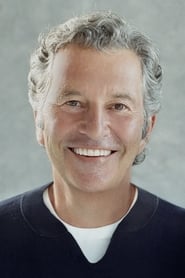 Robert Shaye
Franchise Producer
A central figure in Englund's Freddy Krueger career. Shaye produced the original A Nightmare on Elm Street and remained closely involved throughout the franchise, including multiple sequels, New Nightmare and Freddy vs. Jason.
RT
Rachel Talalay
Franchise Collaborator
A major recurring collaborator across the Nightmare series. Talalay worked in production on A Nightmare on Elm Street, Freddy's Revenge and Dream Warriors, produced The Dream Master and later directed Freddy's Dead: The Final Nightmare.
 Wes Craven
Defining Director and Writer
Craven created Freddy Krueger and directed Englund in A Nightmare on Elm Street and New Nightmare, while also returning as a writer on Dream Warriors. Their collaboration defined Englund's most important horror role.
 Heather Langenkamp
Frequent Horror Co-Star
Langenkamp and Englund shared three defining Elm Street films: A Nightmare on Elm Street, Dream Warriors and New Nightmare, making Nancy Thompson the most important recurring human counterpart to Freddy Krueger.
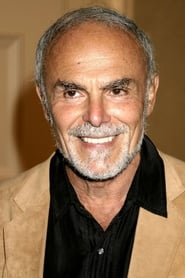 John Saxon
Frequent Horror Co-Star
Saxon worked with Englund in A Nightmare on Elm Street, Dream Warriors and New Nightmare, appearing across three major stages of the Freddy Krueger mythology.
 Tobe Hooper
Horror Director Collaborator
Hooper directed Englund in three separate horror films across nearly two decades: Eaten Alive, Night Terrors and The Mangler.
Robert Englund Horror Movies
Acting (72 credits)
2026
2024
2023
2023
2022
2022
2022
2020
2019
2018
2018
2017
2017
2016
2016
2015
2015
2015
2014
2014
2013
2013
2013
2013
2012
2012
2011
2011
2011
2009
2008
2007
2007
2006
2006
2006
2005
2005
2005
2005
2003
2001
2000
2000
1998
1998
1997
1997
1996
1996
1995
1994
1993
1992
1992
1991
1989
1989
1989
1988
1988
1988
1987
1985
1984
1982
1981
1981
1979
1978
1976
Directing (3 credits)
2008
1988
1988
Production (2 credits)
2015
1988