

2024
Brad Dourif
Horror Actor · Biography · Horror Filmography · Family · Collaborators · Credits
Horror subgenres & themes
Most represented across this person's horror filmography:
EVIL DOLL
• SLASHER
• HALLOWEEN
• BODY HORROR
Biography
Brad Dourif and the Horror of the Unstable Mind
Brad Dourif became one of horror cinema's most distinctive actors without building his career around a single type of performance. He could be frantic, vulnerable, intelligent, pathetic, sadistic or unexpectedly tender, sometimes allowing several of those qualities to exist inside the same character. His face and voice became particularly effective tools for horror because he rarely played madness as something simple. Even at his most disturbing, Dourif's characters often seem to possess an internal logic that makes sense to them, forcing the audience to confront a person rather than an abstract symbol of evil.
Chucky inevitably dominates his horror legacy. Dourif gave the killer doll a voice across decades of Child's Play films and eventually television, creating one of the rare modern monsters whose personality depends as heavily on vocal performance as physical design. Yet Chucky represents only one part of a much larger genre career. The Exorcist III, Graveyard Shift, Spontaneous Combustion, Trauma, Alien Resurrection and Rob Zombie's Halloween films all used different parts of Dourif's ability to make instability feel immediate.
His horror work is also inseparable from the dramatic career that preceded it. Dourif arrived in cinema with an Academy Award nomination for one of the most vulnerable performances of the 1970s, then spent years being cast as disturbed men, outsiders and killers. Horror did not create those qualities in his screen persona. It recognized how useful they could become when the boundary between emotional damage and physical danger disappeared.
Billy Bibbit and the Vulnerability Behind the Horror Actor
Bradford Claude Dourif was born in Huntington, West Virginia, on March 18, 1950. After developing an interest in performance, he worked in theatre before his film career changed dramatically through Miloš Forman's One Flew Over the Cuckoo's Nest (1975). Dourif played Billy Bibbit, a young psychiatric patient whose severe insecurity and stutter conceal an intense emotional sensitivity. The performance earned him an Academy Award nomination for Best Supporting Actor and a Golden Globe for his motion-picture acting debut.
Billy is important to understanding Dourif's later horror performances because the role establishes how effective he could be when fear and vulnerability were visible directly beneath the surface. His body seems permanently tense, his speech is interrupted by anxiety and even moments of happiness appear fragile. When the character is finally psychologically destroyed, Dourif makes the collapse feel devastating because Billy has never seemed protected from the world around him.
The success created opportunities, but it also contributed to a recurring problem. Filmmakers recognized Dourif's ability to play damaged or unstable people and increasingly offered him characters located somewhere outside normal social behavior. Over time he became associated with killers, fanatics, eccentrics and men whose intelligence existed beside some form of dangerous obsession.
Dourif himself later acknowledged the pattern with humor, describing periods when he seemed constantly to be handed weapons on film sets. Horror benefited enormously from this typecasting, but the best examples of his genre work reveal that he rarely played the same disturbed character twice.
From David Lynch to the Edge of Horror
Before Chucky, Dourif developed a strong association with characters who could make ordinary scenes feel unstable. John Huston's Wise Blood gave him the central role of Hazel Motes, a tormented man whose obsession with faith and rejection of religion gradually become inseparable. David Lynch later cast him as Piter De Vries in Dune, where Dourif transformed the calculating Mentat into a precise, unsettling presence through voice, movement and small physical gestures.
Dourif initially worried that playing Piter would lead to further casting as sociopaths. The concern proved justified. His ability to suggest intelligence without emotional stability made him exceptionally useful whenever filmmakers needed a character who could become threatening without conventional physical intimidation. Dourif could make a pause, stare or sudden change in vocal rhythm do much of the work normally assigned to more obvious displays of aggression.
That quality made the transition into horror natural. He did not require heavy visual transformation to make an audience uncomfortable. Horror could place him inside supernatural or grotesque circumstances and allow his performance to provide the human instability necessary to make those circumstances believable.
Child's Play and the Birth of Charles Lee Ray
Child's Play (1988) gave Dourif the role that permanently changed his relationship with horror. He appears physically at the beginning as Charles Lee Ray, a serial killer known as the Lakeshore Strangler. Mortally wounded after being pursued into a toy store by Detective Mike Norris, Charles uses a voodoo ritual to transfer his soul into a Good Guy doll before his human body dies.
The film's central challenge was obvious. A small plastic doll had to become genuinely threatening without immediately turning the story into comedy. Animatronics, puppetry, makeup effects and physical performers gave Chucky a body, but Dourif supplied the personality that unified those different techniques. The voice needed to convince audiences that the intelligence inside the toy belonged to the same dangerous man they had seen during the opening sequence.
Dourif was not initially available to record all of Chucky's dialogue because he was working on Mississippi Burning. Another vocal approach was tried before the filmmakers returned to him. Dourif later explained that he believed the essential mistake was attempting to perform the character as though the comedy itself were the objective. His solution was to treat Chucky seriously. The absurdity could remain funny to the audience, but Chucky himself needed to believe completely in what he was doing.
That principle became fundamental to the character's survival. Chucky could insult people, swear and eventually deliver elaborate jokes, but underneath the humor remained someone who genuinely enjoyed killing. Dourif understood that if the character became only a comedian, the monster would disappear. His performance therefore maintained a line between entertainment and threat that later films could move in either direction without completely breaking.
The Voice That Made the Doll Human
Dourif's contribution to Chucky demonstrates how powerful vocal performance can become in horror. The doll's face changed over the years as effects techniques improved and the fictional body accumulated burns, stitches and physical damage, but the voice remained immediately recognizable. Dourif gave Chucky continuity even when directors, effects crews and visual styles changed around him.
He also approached recording physically. Rather than standing calmly at a microphone and attempting to manufacture energy through voice alone, Dourif sometimes moved aggressively before delivering lines so that the breathing, tension and physical intensity would remain audible. The result helped prevent Chucky from sounding detached from the violence occurring on screen.
The voice also contains an unusual mixture of qualities. Charles Lee Ray is an adult criminal, yet the body surrounding the voice is a brightly colored children's toy. Dourif does not attempt to make the contradiction disappear. The adult anger, profanity and sadism become more disturbing precisely because they emerge from an object designed to represent childhood innocence.
As the franchise evolved, the vocal performance became increasingly elastic. Dourif could move from whispers and threats to manic laughter and deliberately theatrical insults while retaining the sense that all of them belonged to the same personality. Few horror characters have depended so completely on one actor's voice across such a long period.
Child's Play 2 and Chucky Becomes the Franchise
Child's Play 2 (1990) removed much of the uncertainty surrounding Chucky's existence. The audience already knew the doll was alive, allowing the sequel to spend less time hiding him and more time developing his personality. Dourif's performance became correspondingly more prominent. Chucky no longer needed to pretend for most of the film that he was an ordinary toy. He could speak, threaten and express frustration almost continuously.
The sequel also strengthens the relationship between Chucky and Andy Barclay. Chucky needs Andy's body to escape the doll, turning the child from incidental witness into the center of his obsession. Dourif's voice communicates increasing desperation as Chucky discovers that the supernatural rules governing his situation are becoming more restrictive.
The climax inside the Good Guy factory is particularly appropriate because Chucky is surrounded by thousands of identical bodies. Visually he becomes one manufactured toy among many, while Dourif's performance is what makes him individual. The setting therefore emphasizes exactly what the actor contributed to the character. Chucky's body can be reproduced. His personality cannot.
Spontaneous Combustion and the Body Turning Against Itself
The same year brought Tobe Hooper's Spontaneous Combustion, giving Dourif a very different horror role. He plays Sam Kramer, a man whose life becomes connected to an experiment involving radiation and whose body begins developing terrifying abilities and symptoms. Rather than playing the controlling monster, Dourif becomes the person whose own physical existence can no longer be trusted.
The role fits his particular talent for portraying mounting psychological pressure. Sam attempts to understand what is happening while the film repeatedly increases the physical consequences of his condition. Dourif moves between confusion, pain and anger as knowledge transforms rather than protects him.
Hooper's film is interested in conspiracy, science and bodily destruction, making Dourif the emotional center of a story where invisible forces become visible through flesh. It therefore represents an important contrast with Chucky. In one film Dourif's personality survives the destruction of the human body by escaping into an artificial one. In the other, the human body itself becomes the source of horror.
The Exorcist III and the Gemini Killer
The Exorcist III (1990) gave Dourif one of the defining performances of his career. Written and directed by William Peter Blatty from his novel Legion, the film follows Lieutenant William Kinderman as a series of murders begins reproducing the methods of the Gemini Killer, a serial murderer who had supposedly been executed years earlier. The investigation eventually leads to a psychiatric patient connected to Father Damien Karras and to a supernatural conflict involving possession, identity and revenge.
Dourif's Gemini Killer spends much of his most memorable screen time confined inside a cell, which removes many of the physical tools available to a horror performer. He cannot pursue victims through corridors or dominate elaborate action sequences. Instead, the threat must be constructed through speech, facial control and sudden shifts of emotional intensity.
The resulting monologues demonstrate Dourif's extraordinary ability to make language violent. He moves between amusement, contempt, rage and apparent vulnerability without allowing the character to settle into a single emotional state. The Gemini seems to enjoy the act of speaking because conversation itself becomes another method of controlling the person listening.
The film's complicated production history also makes the performance unusual. Blatty's original conception placed Dourif more completely at the center of the possessed patient, while studio-mandated changes brought Jason Miller back as Father Karras and altered the structure. Even within the revised theatrical version, Dourif's scenes remain among the film's most intense moments because they require almost no visual spectacle. The horror is concentrated in a human face describing terrible things with complete confidence.
Graveyard Shift and the Man Beneath the Mill
Dourif returned to horror in Graveyard Shift (1990), adapted from Stephen King. The story centers on workers in a decaying textile mill infested with rats and something far more dangerous beneath the building. Dourif plays Tucker Cleveland, an exterminator brought in to deal with the infestation.
Cleveland could easily have been a functional supporting character, but Dourif turns him into one of the film's most memorable presences. His intense delivery and obsession with rats give the character an unstable energy before the larger creature threat has fully emerged. Once again, Dourif makes expertise itself slightly frightening. Cleveland understands vermin, but the fascination seems to have brought him psychologically closer to what he destroys.
The role also demonstrates how effectively Dourif could dominate relatively limited screen time. Horror repeatedly used him this way throughout his career. A film did not always require him as its primary villain or protagonist. His presence could destabilize the atmosphere around a larger story simply because audiences never knew how far a Dourif character might go.
Child's Play 3 and the First End of an Era
Child's Play 3 (1991) returned Chucky only one year after the second film and moved Andy Barclay into adolescence. The military-school setting gives the series a new environment while Dourif continues developing the killer as an increasingly confident personality. By this point there is little need to establish who Chucky is. The audience arrives expecting the voice, insults and escalating frustration.
The rapid production schedule contributed to a sense that the original version of the franchise had reached a natural stopping point. Three films had taken Chucky from mysterious supernatural doll to fully recognizable slasher personality, and repeating the same structure indefinitely risked making him predictable.
Dourif's performance had nevertheless established something unusually durable. Unlike masked killers who could be recast without audiences immediately noticing, Chucky had become inseparable from a specific voice. Continuing the character without Dourif would therefore require changing one of the franchise's most recognizable elements.
Trauma and Dario Argento's American Nightmare
Dourif entered Dario Argento's world with Trauma (1993), the director's American production involving a young woman, a series of decapitations and a killer whose crimes are connected to buried personal history. Dourif appears as Dr. Lloyd, becoming part of a cast that places his particular screen intensity inside Argento's mixture of psychological damage and stylized murder.
The role is not as dominant as Chucky or the Gemini Killer, but it reflects how firmly Dourif had become associated with genre cinema by the early 1990s. Horror directors could use his presence as immediate shorthand for uncertainty. Even before a character's intentions were clear, audiences familiar with his work were likely to remain suspicious.
This became both an advantage and a form of typecasting. Dourif's reputation allowed him to make supporting roles memorable, but it also meant that ordinary behavior could appear sinister simply because he was the actor performing it. Good horror filmmakers understood how to exploit that expectation rather than fight it.
Death Machine and Technological Horror
Death Machine (1994) gave Dourif one of his most unrestrained genre roles as Jack Dante, a weapons designer whose intelligence is matched by profound instability. He works inside a corporation developing military technology, including a mechanical killing machine capable of tracking fear in its targets.
The character brings together several qualities already familiar in Dourif's work. Dante is brilliant, theatrical and dangerous, but the performance is intentionally larger than many of his earlier killers. Dourif treats technological power as a form of personal entertainment, turning scientific ability into an extension of emotional disorder.
The film belongs to the industrial science-fiction horror tradition in which corporate ambition produces monsters more dangerous than the people supposedly controlling them. Dourif fits naturally inside that environment because Dante behaves as though he understands the destructive possibilities better than everyone else and considers that knowledge exciting rather than alarming.
Alien Resurrection and the Scientist Who Loves the Monster
Jean-Pierre Jeunet's Alien Resurrection (1997) placed Dourif inside one of science-fiction horror's most important franchises. He plays Dr. Jonathan Gediman, a scientist involved in experiments that clone Ellen Ripley and restore the Xenomorph species. The role again uses Dourif's ability to make scientific curiosity appear dangerously detached from ordinary human reactions.
Gediman is fascinated by the creatures rather than simply afraid of them. This creates a familiar tension within the Alien series, where institutional and scientific interest repeatedly conflicts with the obvious fact that the organism is catastrophically dangerous. Dourif makes the fascination feel almost intimate, particularly when observing the captured Xenomorphs as though their violence confirms rather than undermines his admiration.
The character is eventually placed physically close to the creatures he helped produce, collapsing the distance between observer and experiment. The irony suits Dourif's horror persona. His characters often believe they have understood the dangerous system surrounding them until that system reveals that understanding does not equal control.
Bride of Chucky and the Reinvention of the Monster
After seven years away from the franchise, Bride of Chucky (1998) radically changed its tone. The film openly embraced black comedy, self-awareness and the cultural status Chucky had accumulated during the previous decade. Instead of pretending the character was still an unknown threat, the sequel treated him as an established horror personality.
Dourif adjusted without allowing the voice to become completely weightless. Chucky is funnier, more talkative and more self-conscious, but the actor continues to insist upon the character's essential seriousness about murder. Chucky may understand jokes, but he does not consider killing a joke. That distinction allows comedy to grow around the monster without entirely replacing him.
The introduction of Tiffany also changes the structure of Dourif's performance. Chucky now has another supernatural personality capable of arguing with him as an equal. Their relationship transforms murder into a form of dysfunctional domestic partnership, giving Dourif opportunities to play jealousy, irritation and even a grotesque version of romantic attachment.
The film demonstrated the unusual elasticity of the franchise. Instead of attempting to recreate the suspense of the 1988 original, it accepted that Chucky had become famous and built a different kind of horror around that fact. Dourif's ability to preserve the core personality made the transition possible.
Seed of Chucky and Horror Becomes Self-Parody
Seed of Chucky (2004) pushed the franchise further into comedy and self-reference. Don Mancini, who had created the original story and written the series, directed for the first time and constructed a film openly interested in Hollywood, celebrity, family dysfunction and the absurdity of Chucky's accumulated mythology.
Dourif's performance becomes correspondingly theatrical. Chucky is no longer struggling to prove himself frightening to the audience. He behaves like someone completely comfortable with what he has become. The central conflict eventually involves whether he even wants to regain a human body, a dramatic reversal of the obsession that motivated the original films.
This is an important stage in the character's development because Dourif allows Chucky to become self-aware without turning him into a different person. The killer's priorities change, but his delight in murder remains stable. Chucky has effectively discovered that being an apparently immortal killer doll may offer advantages over the ordinary human existence he spent several films trying to recover.
Halloween and a Different Kind of Horror Father
Rob Zombie cast Dourif as Sheriff Lee Brackett in Halloween (2007), giving him a role almost completely opposed to the psychopaths for which he had become famous. Brackett is a police officer, friend of Dr. Loomis and father of Annie Brackett. He belongs to the social structure attempting to understand and contain Michael Myers rather than to the violence threatening it.
The casting works partly because Dourif brings decades of audience expectation into a role that refuses to satisfy it. There is no hidden revelation turning Brackett into another disturbed killer. He is protective, practical and increasingly frightened by a situation that places the people closest to him in danger.
Halloween II (2009) gives Dourif substantially more emotional material. The consequences of Michael's violence become personal, and Brackett's reaction to the destruction around his family allows Dourif to access the vulnerability that had been present since Billy Bibbit. The performance is painful precisely because the film temporarily removes the eccentricity audiences often expect from him.
These films demonstrate that Dourif's horror value was never dependent upon playing evil. By this stage, merely placing him inside a horror story carried historical weight, and allowing him to play an ordinary father confronting violence revealed how much range had sometimes been hidden by decades of villainous casting.
Curse of Chucky and the Return to Darkness
Curse of Chucky (2013) brought the franchise back toward suspense after the overt comedy of Bride and Seed. Don Mancini designed the film to initially resemble a more traditional haunted-house story, placing a seemingly intact Good Guy doll inside an isolated family home and delaying the full return of the familiar Chucky personality.
Dourif benefits enormously from the tonal shift. The humor has not disappeared, but menace once again comes first. When Chucky finally reveals himself completely, the voice carries the history of the earlier films while the narrative treats him as genuinely dangerous rather than primarily entertaining.
The film also introduced Fiona Dourif as Nica Pierce. Her casting created an unusual generational connection inside the franchise, but the importance of Nica extends beyond being the daughter of the actor who voices Chucky. She became a major character in her own right and eventually one of the central figures of the later mythology.
Curse also expands Charles Lee Ray's past, allowing Brad Dourif to appear physically in material connected to the period before the original film. The distinction between actor and voice therefore narrows again. Chucky is not merely an animated object carrying Dourif's performance. The human criminal behind the doll becomes increasingly important to the mythology.
Cult of Chucky and the Multiplication of Personality
Cult of Chucky (2017) expands the supernatural rules by allowing Chucky's consciousness to exist across multiple bodies. For Dourif, the idea creates a vocal challenge: several versions of the same character can occupy the story simultaneously, each sharing the basic personality while developing slightly different rhythms and attitudes.
The concept also completes a transformation that began decades earlier. Charles Lee Ray originally transferred his consciousness into one doll because he was desperate to avoid death. Now the personality has become reproducible. The individual monster has effectively turned into a network.
Dourif remains the element tying those bodies together. Differences in physical design or behavior can suggest separate versions, but the voice establishes that each contains the same underlying consciousness. The franchise therefore turns the very consistency of his performance into a supernatural rule.
Chucky on Television and the Expansion of Charles Lee Ray
The television series Chucky allowed Don Mancini to expand the franchise across a much longer narrative than the films had permitted. Dourif continued voicing Chucky while the story incorporated characters and continuity from multiple eras of the series. The television format made it possible for the franchise to move between teenage protagonists, returning survivors and increasingly elaborate variations of Chucky himself.
One of the most interesting developments involved separating the voice and body of Charles Lee Ray across different periods. Fiona Dourif portrayed younger versions of Charles while her father's voice remained connected to the character, creating an unusually literal collaboration between generations of performers.
The series eventually gave Brad Dourif opportunities to appear physically as well, bringing the actor himself into a franchise in which audiences had spent decades primarily hearing him. By this point the distinction between Dourif, Charles Lee Ray and Chucky had become part of the mythology's appeal. The series could acknowledge the history openly because the performance had remained continuous for so long.
That continuity is particularly remarkable because the 2019 theatrical remake of Child's Play created a separate version of Chucky with another voice actor, while Mancini's original continuity continued independently. Dourif therefore remained attached not simply to a brand name but to the specific Charles Lee Ray mythology that began in 1988.
Working With Don Mancini Across Decades
Don Mancini is the central creative relationship of Dourif's horror career. The original Child's Play grew from Mancini's story, and he remained involved through the sequels before eventually becoming the primary directing force behind the franchise. Dourif has repeatedly credited Mancini with finding new ways to change the genre and tone without abandoning the character.
Their collaboration is unusual because Chucky has moved through several distinct horror modes. The original film combines supernatural horror with domestic suspense. The early sequels move toward slasher structure. Bride of Chucky becomes horror comedy, Seed approaches outright satire, Curse returns toward Gothic suspense and the television series incorporates all of these histories simultaneously.
Dourif's voice provides continuity while Mancini repeatedly changes the framework around it. The collaboration therefore resembles a long experiment in how much a horror character can evolve before losing identity. Chucky has changed enormously since 1988, but Charles Lee Ray's personality remains recognizable enough that each reinvention still feels connected to what came before.
Playing Monsters Without Simplifying Them
Dourif's horror performances share a resistance to simplicity. The Gemini Killer is monstrous but intellectually articulate. Chucky is sadistic but genuinely afraid of oblivion. Sheriff Brackett is a genre authority figure whose emotional vulnerability becomes more important than his professional power. Even minor characters often acquire unusual specificity because Dourif seems interested in discovering what private logic makes them function.
His voice is central to this process. Dourif can suddenly accelerate a sentence, reduce his volume almost to a whisper or push a word into a burst of anger. These changes often make the listener uncertain about what emotional state will follow. In horror, that uncertainty becomes extremely useful because it prevents conversation from feeling safe.
His eyes perform a similar function on screen. Dourif frequently creates the impression that a character is observing more than he is saying, making stillness as effective as overt mania. Filmmakers who understand this quality can delay the explosion and allow the audience to become uncomfortable simply waiting for it.
Brad Dourif's Style and Horror Legacy
Brad Dourif belongs to a relatively small group of actors whose names became part of horror culture even though their careers extended far beyond the genre. His achievement is particularly unusual because the character most responsible for that status often does not show his face. Chucky demonstrates that an actor can become inseparable from a horror icon through voice, timing and personality alone.
Yet concentrating only on Chucky would underestimate what Dourif brought to the genre. The Exorcist III demonstrates the power of his live-action intensity almost entirely through dialogue. Spontaneous Combustion turns him into the victim of his own body. Graveyard Shift uses him as an eccentric specialist. Alien Resurrection makes scientific fascination disturbing, while the Halloween films prove how effective he can be when playing a fundamentally decent man inside a violent world.
The diversity of those performances explains why horror continued returning to him. Dourif does not merely look dangerous. He can make intelligence dangerous, vulnerability dangerous, humor dangerous or obsession dangerous depending upon what the story requires. His most unsettling characters often remain recognizably human even when their behavior has become monstrous.
Chucky nevertheless remains the extraordinary center of that legacy. Beginning with Charles Lee Ray in 1988 and continuing through films and television across several decades, Dourif created one of modern horror's longest-running continuous character performances. The physical doll could be rebuilt, burned, stitched together, replaced and multiplied, but the voice kept returning. That continuity transformed a piece of plastic into a personality, and the personality became one of horror cinema's most recognizable monsters.
Known Among Horror Fans For
Notable Horror Collaborators
Notable collaborators and creative partners throughout Brad Dourif's horror career.
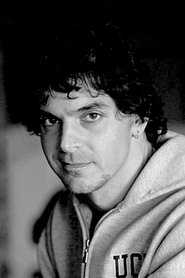 Don Mancini
Defining Franchise Creator
Dourif's most important horror collaborator. Mancini created Chucky and wrote the original Child's Play series, later directing Seed of Chucky, Curse of Chucky, Cult of Chucky and the Chucky television series.
 David Kirschner
Franchise Producer
A central producer throughout Dourif's Chucky career. Kirschner produced the original Child's Play and remained closely involved across multiple sequels, including Bride of Chucky, Seed of Chucky, Curse of Chucky and Cult of Chucky.
 Jennifer Tilly
Frequent Horror Co-Star
Tilly became one of Dourif's principal recurring partners in the Chucky franchise, sharing Bride of Chucky, Seed of Chucky, Curse of Chucky, Cult of Chucky and the Chucky television series.
 Alex Vincent
Frequent Horror Co-Star
Vincent shares several major stages of the Chucky mythology with Dourif, appearing in Child's Play, Child's Play 2, Curse of Chucky, Cult of Chucky and the Chucky television series.
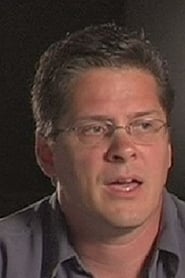 Kevin Yagher
Creature Effects Collaborator
Yagher was one of the principal artists responsible for bringing Chucky physically to life, working on Child's Play, Child's Play 2, Child's Play 3 and Bride of Chucky while Dourif supplied the character's voice.
 Christine Elise
Frequent Horror Co-Star
Elise shares three major Chucky productions with Dourif as Kyle: Child's Play 2, Cult of Chucky and the Chucky television series.
Brad Dourif Horror Movies
Acting (56 credits)
2022
2022
2021
2018
2018
2017
2017
2014
2013
2013
2013
2013
2012
2011
2011
2010
2010
2009
2009
2009
2008
2008
2007
2007
2006
2005
2004
2004
2003
2001
2000
1998
1998
1998
1997
1997
1997
1996
1995
1993
1992
1991
1991
1990
1990
1990
1990
1989
1989
1989
1988
1983
1982
1979
1978