
2023
George Eastman
Horror Writer · Biography · Horror Filmography · Collaborators · Credits
Horror subgenres & themes
Biography
George Eastman and Italian horror cinema
George Eastman, born Luigi Montefiori in Genoa on August 16, 1942, was an Italian actor, screenwriter and director whose career crossed some of the most characteristic forms of Italian popular cinema from the 1960s onward. He first became familiar to audiences through westerns, thrillers and adventure films, but his later association with horror gave him one of his most enduring screen identities. His exceptional height, powerful build and severe features made him particularly effective in physically threatening roles, while his parallel work as a screenwriter gave him considerably more creative involvement than his reputation as a cult actor alone might suggest.
Eastman's importance to horror is concentrated primarily in the period between the late 1970s and early 1990s. During those years he became one of Joe D'Amato's closest collaborators, wrote and performed the title monster in Anthropophagus, created and played another apparently indestructible killer in Absurd, worked within erotic horror and giallo, wrote Michele Soavi's StageFright and eventually directed the science-fiction horror film Metamorphosis. His horror career was therefore unusual in combining writing, performance and production rather than depending on a long succession of acting roles alone.
From Genoa to the Italian genre film industry
Montefiori moved from Genoa to Rome as a young man and briefly attended the Centro Sperimentale di Cinematografia after developing an interest in acting. His imposing physique quickly became an advantage in the rapidly expanding Italian genre industry. As was common for Italian performers working in productions intended for international distribution, he adopted the English-language screen name George Eastman and began appearing regularly in westerns during the second half of the 1960s. Films such as My Name Is Pecos, Django, Prepare a Coffin, Hate Thy Neighbor and Boot Hill established him as a recognizable presence in a field that depended heavily on actors who could communicate character through physical appearance as much as dialogue.
His career soon moved beyond the western. Federico Fellini used his unusual stature for the Minotaur in Fellini Satyricon, while Corrado Farina cast him as Arno Treves in Baba Yaga, the 1973 adaptation of Guido Crepax's Valentina material. Mario Bava later gave him one of his strongest non-supernatural roles in Rabid Dogs, where Eastman's physical menace was placed within an increasingly claustrophobic crime narrative. These productions were not a straightforward progression toward horror, but they established characteristics that later became central to his genre image: bodily presence, unpredictability and the ability to appear threatening without requiring elaborate characterization or supernatural explanation.
George Eastman and Joe D'Amato
The defining professional relationship of Eastman's genre career was with Aristide Massaccesi, better known as Joe D'Amato. Their collaboration began outside horror and extended across westerns, erotic films, post-apocalyptic science fiction and exploitation cinema. Eastman did not function merely as one of D'Amato's recurring actors. He became a dependable screenwriter and story contributor, frequently working behind the scenes on projects in which he did not necessarily occupy the central role. D'Amato later described the relationship in remarkably simple terms, explaining that Montefiori had written many of his screenplays and that their collaboration had continued for approximately two decades.
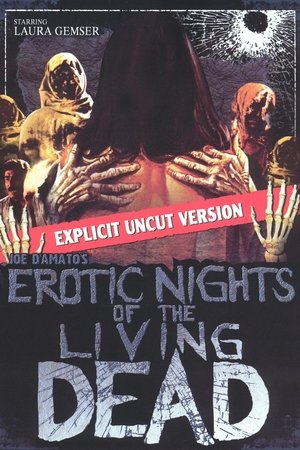
This partnership became particularly important during the period in which D'Amato was moving between explicit erotic production and increasingly extreme horror. Eastman contributed to this environment both as performer and writer. Erotic Nights of the Living Dead placed him alongside Laura Gemser in a production that deliberately combined zombie imagery, Caribbean locations and sexually explicit material. The result belongs to the hybrid exploitation culture surrounding D'Amato rather than to conventional zombie cinema, but it demonstrates how easily Eastman moved between erotic material and horror during the period. His writing credits around the same years also included genre projects such as The Great Alligator, showing that his involvement with horror was already developing behind the camera before his most famous performance.
Anthropophagus and the creation of a horror icon
Anthropophagus in 1980 transformed Eastman's relationship with horror. He contributed to the screenplay and played Klaus Wortmann, the cannibalistic figure who hunts a group of visitors through an apparently deserted Mediterranean island. The film was produced at extremely low cost and relied heavily on atmosphere, isolated locations and practical gore, but Eastman's physical appearance supplied an essential element that could not easily have been created through effects alone. Makeup exaggerated his face and body into something nearly monstrous while still leaving the character recognizably human.
The film became notorious for several acts of explicit violence, particularly a sequence in which the killer tears what appears to be a fetus from a pregnant victim and eats it. The effect was created using animal material and artificial blood, yet the image became central to the film's reputation and to censorship controversies surrounding European horror during the home-video era. Another frequently remembered image has the dying cannibal biting into his own exposed intestines. These scenes helped make Anthropophagus one of the films most closely associated with the extreme end of early 1980s Italian horror, especially in Britain, where it became part of the wider controversy surrounding so-called video nasties.
Eastman himself later discussed the production with considerable irony and without attempting to elevate it beyond the conditions in which it had been made. That attitude is useful in understanding his position within Italian exploitation cinema. He could acknowledge the crude production methods and deliberately shocking material while remaining closely associated with the film's creation. His contribution was also substantially greater than that of an actor hired simply to inhabit the monster makeup. The combination of writing and performance made the cannibal one of the clearest examples of Eastman shaping his own horror persona from both sides of the camera.
Absurd and the move toward the slasher
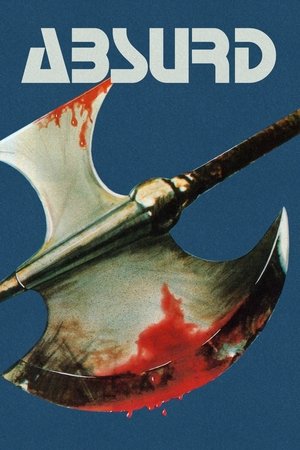
D'Amato and Eastman returned to similar territory with Absurd in 1981, although the film was not conceived by Eastman as a conventional continuation of Anthropophagus. D'Amato wanted to capitalize on the earlier film's success, while Eastman later recalled being dissatisfied with an existing treatment and rewriting the material himself. The resulting story shifts away from Mediterranean cannibal horror toward a structure much closer to the American slasher film. Eastman plays Mikos, a man whose experimentally altered body regenerates from severe injuries and who becomes the seemingly unstoppable killer at the center of the narrative.
The difference between the two films is important to Eastman's development as a horror writer. Anthropophagus builds its threat around isolation and the revelation of a cannibalistic survivor, whereas Absurd places its killer inside suburban spaces and increasingly organizes the action around pursuit, home invasion and repeated attacks. Eastman later compared the rewritten concept to the style of American thrillers such as Halloween. The film was marketed in several territories as if it were a direct sequel to Anthropophagus, but its structure and mythology are substantially different.
Once again Eastman's physical scale was central to the film. Mikos can survive wounds that would kill an ordinary person, making the actor's already imposing presence part of the character's apparent indestructibility. Absurd also strengthened the creative network surrounding D'Amato and Filmirage. Donatella Donati produced the film, while the cast included a young Michele Soavi in a small role. That network later became significant when Eastman moved away from playing the monster himself and contributed instead to one of the most important Italian slashers of the late 1980s.
StageFright and horror screenwriting
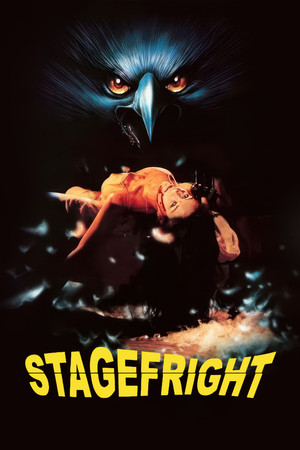
By the second half of the 1980s Eastman was increasingly valuable as a screenwriter. His most important horror screenplay from this period became StageFright, Michele Soavi's 1987 feature directing debut. Produced by Joe D'Amato and Donatella Donati, the film confines a theatre company inside a building with an escaped killer while rehearsals for a musical provide a setting in which performance and real violence continually intersect. Eastman wrote under the pseudonym Lew Cooper, with Sheila Goldberg contributing dialogue.
The production demonstrates a different side of Eastman's horror work. Instead of constructing a monster around his own physical presence, he supplied a practical narrative designed for limited locations and economical production. Soavi later recalled that D'Amato presented him with the script and that Montefiori had written a precise story that could be filmed efficiently. Soavi was then given room to alter details and develop the visual conception, including the now famous owl-headed mask worn by the killer. The resulting film transformed a relatively simple locked-theatre slasher premise through elaborate camera movement, theatrical lighting and increasingly stylized murder sequences.
StageFright became one of the strongest demonstrations that Eastman's significance to horror was not confined to Anthropophagus. His name could disappear behind a pseudonym and his face could remain largely absent while his narrative construction still formed the basis of an internationally successful genre film. During the same period he continued acting, appearing in Lamberto Bava's Delirium, a giallo centered on the murders surrounding the owner of an adult magazine. His horror identity in the late 1980s therefore encompassed both visible character work and screenwriting for younger filmmakers emerging from the Italian genre tradition.
Metamorphosis and directing horror
Eastman eventually moved into credited feature direction with Metamorphosis, also released as DNA Formula Letale. Produced within the Filmirage environment by Donatella Donati, the film was written and directed by Eastman under the name G. L. Eastman. Its story follows genetic researcher Peter Houseman, whose attempt to overcome aging through experimental manipulation of DNA leads him to test a serum on himself. The apparent scientific breakthrough gradually produces a violent physical transformation, placing the film within the tradition of laboratory horror and stories derived from the basic dramatic model of Dr. Jekyll and Mr. Hyde.
The film is less extreme than Anthropophagus or Absurd, and Eastman did not build it around his own established monster persona. Instead, it shows his attempt to organize an entire horror production as writer and director. Genetic experimentation, bodily mutation and uncontrolled scientific ambition provided a different type of threat from the human predators he had previously written. The production nevertheless remained connected to his established professional circle, including Filmirage, Donatella Donati and Laura Gemser. Metamorphosis became his principal credited solo directing work and effectively marked the final substantial phase of his career as a creator of theatrical horror films.
George Eastman's contribution to horror
From the 1990s onward Eastman increasingly concentrated on screenwriting for Italian television and appeared less frequently in the genre cinema that had defined his international cult reputation. His later writing included mainstream television productions far removed from the exploitation films of the D'Amato period. He nevertheless remained closely associated with Italian horror through interviews, retrospective releases and restored editions of the films in which he had participated. He died in Rome in May 2026 at the age of 83, after a career that had moved from the height of the spaghetti western through several successive cycles of Italian popular cinema.
Within horror, Eastman occupies a distinctive position because his most memorable performances cannot be separated from his writing. The cannibal of Anthropophagus and the regenerative murderer of Absurd used his extraordinary physical presence, but Eastman also helped construct the stories in which those bodies operated. Later, StageFright demonstrated that he could create an effective horror framework for another director without relying on his screen persona, while Metamorphosis extended that progression into direction. His work with Joe D'Amato remains the central relationship of this career, linking acting, writing and exploitation production across many years and making George Eastman one of the most recognizable creative figures associated with the extreme branch of Italian horror at the end of the 1970s and during the 1980s.
Photos (1)
Images: TMDB
Selected Work
Notable Horror Collaborators
Notable collaborators and creative partners throughout George Eastman's horror career.
 Joe D'Amato
Actor-Writer / Director Collaborator
D'Amato was the central collaborator of Eastman's horror career. Eastman wrote and acted for him across numerous productions, including Anthropophagus, Erotic Nights of the Living Dead and Absurd, while their wider partnership continued for roughly two decades across horror, exploitation and science-fiction cinema.
DD
Donatella Donati
Writer-Director / Producer Collaborator
Donati was a key producer within the Filmirage production network surrounding Eastman. Their shared horror work includes Absurd, StageFright and Metamorphosis, connecting Eastman's period as monster actor and screenwriter with his eventual move into feature direction.
 Michele Soavi
Writer / Director Collaborator
Soavi appeared in a small role in Absurd before making his feature directing debut with StageFright from Eastman's screenplay. The latter became one of Eastman's most important horror writing credits and a major early work in Soavi's directing career.
 Laura Gemser
Actor / Exploitation-Horror Collaborator
Gemser and Eastman worked together repeatedly within the Joe D'Amato production circle. Their horror-related collaborations include Erotic Nights of the Living Dead and Metamorphosis, alongside several earlier exploitation productions that established their recurring professional association.
RL
Rosanna Landi
Writer-Director / Editor Collaborator
Landi edited two significant late horror projects connected to Eastman's development behind the camera: StageFright, written by Eastman for Michele Soavi, and Metamorphosis, which Eastman wrote and directed himself. Her work links two of his most substantial non-acting contributions to the genre.
GB
Gianlorenzo Battaglia
Actor-Director / Cinematographer Collaborator
Battaglia photographed Eastman in Lamberto Bava's Delirium and later served as cinematographer on Metamorphosis, Eastman's own science-fiction horror feature. The two productions connect Eastman's late acting work in Italian horror with his transition into direction.
George Eastman Horror Movies
Writing (10 credits)
1990
1987
1982
1981
1980
1980
1980
1979
1976
Acting (10 credits)
1990
1987
1987
1983
1981
1980
1980
1977
1975
1973
Directing (2 credits)
1990
1976
Production (1 credits)
1980