


2022
Jamie Lee Curtis
Horror Actor · Biography · Horror Filmography · Family · Collaborators · Credits
Horror subgenres & themes
Biography
Jamie Lee Curtis and the Evolution of the Final Girl
Jamie Lee Curtis became one of the defining figures of modern horror through a character who was originally remarkable precisely because she did not look like a conventional hero. Laurie Strode begins Halloween as an ordinary teenage babysitter walking through an apparently safe American suburb. She has no special knowledge, physical training or supernatural ability. What distinguishes her is attention. Laurie notices what other people dismiss, understands that something is wrong before anyone believes her and survives because fear does not completely destroy her ability to think.
That performance gave Curtis an immediate place in horror history, but her relationship with the genre became much larger than a single film. Within only a few years she moved through supernatural horror, slashers and psychological thrillers, becoming the performer most closely associated with the early American “scream queen” phenomenon. Decades later she returned to Laurie repeatedly, transforming a teenage survivor into an adult character shaped by memory, trauma, fear and eventually confrontation. Few horror actors have been able to revisit the same role across more than forty years while allowing the character to age alongside both performer and audience.
Halloween and the Birth of Laurie Strode
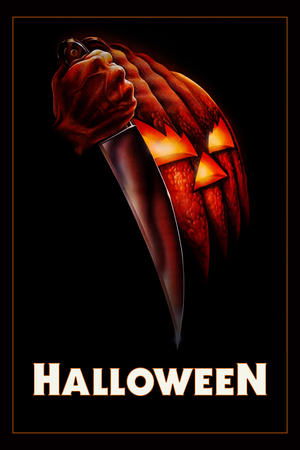
Born in Los Angeles in 1958 to actors Janet Leigh and Tony Curtis, Jamie Lee Curtis entered professional acting through television before receiving her first major film role in John Carpenter's Halloween (1978). Carpenter and producer-co-writer Debra Hill were making a small independent horror film about babysitters stalked through a quiet suburban neighborhood by a masked killer. Curtis's connection to Janet Leigh, whose murder sequence in Alfred Hitchcock's Psycho had become one of cinema's defining horror moments, added an obvious historical resonance, but Laurie Strode ultimately succeeded because Curtis gave the character a distinct personality of her own.
Laurie is cautious without being passive. While her friends Annie and Lynda treat Halloween night as an opportunity to escape adult supervision, Laurie repeatedly senses that somebody is watching her. Curtis gradually changes the performance as suspicion becomes certainty. Small glances across streets and through windows give way to panic, physical resistance and finally a sustained fight for survival inside the Doyle house.
The effectiveness of the performance depends on how little separation exists between Laurie and the ordinary world around her. Carpenter, Hill and cinematographer Dean Cundey place the character inside recognizable streets, bedrooms, kitchens and living rooms rather than a traditionally Gothic environment. Michael Myers enters those spaces almost silently. Curtis supplies the emotional measurement of that intrusion: the safer Haddonfield initially appears, the more frightening Laurie's realization becomes that safety has vanished.
John Carpenter, Debra Hill and the Halloween Ensemble
The creative structure surrounding Curtis was essential to the film. Carpenter directed, co-wrote and composed the score. Hill co-wrote and produced while giving the teenage dialogue an everyday quality that made Laurie and her friends feel distinct from the archetypes they would later inspire. Dean Cundey's widescreen cinematography repeatedly places Michael Myers within the same environments occupied by Laurie, often allowing the audience to notice him before she does.
Nick Castle supplied much of the physical performance of Michael Myers, creating a deliberately economical presence opposite Curtis. Laurie communicates constantly through speech, breath, panic and reaction; Myers removes almost all conventional expression. Their opposition therefore became one of horror cinema's most durable visual relationships: the visibly terrified human survivor against an almost unreadable figure who simply continues moving toward her.
Producer Moustapha Akkad was equally important to the film's survival beyond its original production. As Halloween developed from an independent success into a continuing property, Akkad remained one of the principal figures maintaining the franchise. Curtis's relationship with Laurie would repeatedly intersect with that production history over the following decades.
The Fog and a Different Kind of Carpenter Horror
Curtis reunited with Carpenter and Hill for The Fog (1980), but Elizabeth Solley could hardly be further from Laurie Strode. She is a young hitchhiker travelling along the California coast who becomes trapped in Antonio Bay as a supernatural fog carries the ghosts of murdered sailors back toward the town responsible for their deaths.
The role allowed Curtis to move from the stripped-down stalker structure of Halloween into a traditional ghost story built around atmosphere, history and collective guilt. Carpenter and Hill expanded the scale from one teenager pursued through a neighborhood to an entire community confronting violence concealed in its past. Curtis became part of a larger ensemble that included Adrienne Barbeau, Tom Atkins, Hal Holbrook and Janet Leigh.
The presence of Leigh created an especially visible link between different generations of horror cinema. By 1980 Curtis was no longer simply the daughter of the actress from Psycho; she had already established a genre identity strong enough for mother and daughter to occupy the same supernatural horror film as recognizable performers in their own right.
Prom Night, Terror Train and the Scream Queen Years
The success of Halloween rapidly made Curtis one of the most sought-after young performers in horror. In 1980 alone she starred in The Fog, Prom Night and Terror Train, creating an extraordinarily concentrated period in which her face became closely associated with the developing slasher cycle.
Prom Night places Curtis at the center of a high-school murder mystery surrounding a group of teenagers connected to a childhood death. As Kim Hammond, she again occupies the position of the young woman who survives long enough to confront the violence around her, but the film builds its mystery through buried guilt and revenge rather than the apparently motiveless evil of Michael Myers.
Terror Train relocates the structure onto a moving train during a New Year's Eve costume party. Curtis plays Alana Maxwell, another young woman connected to an earlier traumatic event that returns in violent form. The confined environment gives the killer an unusual advantage: disguises can be exchanged, passengers cannot easily escape and every carriage becomes another enclosed stage for suspicion.
Those films helped solidify the public image of Curtis as the era's quintessential scream queen. Yet the label can obscure the intelligence of the roles themselves. Curtis was repeatedly playing women who noticed danger, resisted it and remained active during the final confrontation. The scream was memorable, but survival depended upon much more than vocal power.
Roadgames and the End of the First Horror Cycle
Richard Franklin's Australian thriller Roadgames (1981) offered another variation. Curtis plays Pamela Rushworth, nicknamed Hitch, a hitchhiker drawn into truck driver Pat Quid's suspicion that a serial killer may be travelling the same highways. The enormous Australian landscape replaces the suburban streets and enclosed interiors of her earlier horror films, while the story builds tension through observation, mistaken interpretation and the uncertainty of seeing potentially important events from a distance.
By this point Curtis had completed an extraordinary run of genre films in only a few years. Halloween, The Fog, Prom Night, Terror Train, Roadgames and Halloween II established an association with horror powerful enough to risk becoming a permanent professional limitation. Curtis therefore began moving deliberately toward comedy, drama and mainstream studio filmmaking rather than allowing herself to remain confined to the image of the repeatedly endangered young woman.
The decision ultimately strengthened her horror legacy rather than weakening it. Because Curtis spent long periods away from the genre, every later return to Laurie Strode could become an event rather than another routine sequel appearance.
Halloween II and the First Goodbye to Laurie
Halloween II (1981) begins immediately after the events of Carpenter's original, following Laurie into Haddonfield Memorial Hospital while Michael continues pursuing her. Rick Rosenthal directed, while Carpenter and Hill returned as writers and producers and Dean Cundey again photographed the film.
The sequel made the violence more explicit and introduced the revelation that Laurie and Michael were siblings, an idea that would shape the franchise for years. Curtis spends much of the film physically injured and emotionally exhausted, making this Laurie very different from the alert teenager of the original. Survival now means continuing after the character has already endured the supposedly impossible.
For Curtis, however, the film largely closed the first chapter of her relationship with horror. Her uncredited vocal appearance in Halloween III: Season of the Witch was essentially an Easter egg rather than another Laurie performance, and the actress moved decisively toward other genres during the remainder of the decade.
Leaving Horror Without Escaping Halloween
Curtis successfully broke the typecasting that might have followed her early horror career. Films including Trading Places, A Fish Called Wanda and True Lies demonstrated comic, dramatic and action abilities far removed from Laurie Strode. Yet Halloween never disappeared from the public understanding of her career.
This distance gradually changed what Laurie represented. As the original film accumulated influence and new generations encountered it through theatrical revivals, television and home video, Curtis became increasingly aware that the role remained meaningful to audiences long after she had left the genre. Laurie was no longer simply an early job. She had become part of horror history.
Halloween H20 and Laurie as a Survivor
The twentieth anniversary of the original film created the opportunity for Curtis to reconsider the character directly. Halloween H20: 20 Years Later (1998) originated in large part from her desire to explore what Laurie Strode might realistically have become after surviving the events of her youth. Rather than return as the same frightened babysitter, Curtis wanted the new film to acknowledge that surviving an attack does not mean escaping its psychological consequences.
Laurie is now living under the identity Keri Tate and working as the headmistress of a private school. She has a son, a career and an apparently functional life, but Michael Myers remains embedded in the way she understands danger. Alcohol, nightmares and constant vigilance reveal that the night in Haddonfield never truly ended for her.
The film's most important shift comes when Laurie refuses another escape. Instead of waiting for Michael to reach her, she closes the school gates, takes an axe and deliberately goes back inside to confront him. The reversal turns a central image of slasher cinema inside out: the former victim chooses to pursue the figure who once pursued her.
Janet Leigh's appearance in the film added another layer of genre history. Mother and daughter, already connected through Psycho and Halloween, now shared a film consciously aware of both legacies. Curtis had reached the point where her own horror history was long enough to be quoted and reinterpreted inside the films themselves.
Resurrection and Another Exit
Halloween: Resurrection (2002) brought Curtis back briefly to resolve the ending of H20. Laurie is now institutionalized after discovering that the man she killed at the end of the previous film was not Michael Myers. Their confrontation opens the film and ends this particular continuity of Laurie Strode.
The appearance was much smaller than H20, and Curtis again moved away from the franchise afterward. By then, however, Laurie had already existed in multiple stages: teenager, traumatized adult and finally survivor attempting to reclaim control over the story that had defined her life.
Scream Queens and Playing With the Scream Queen Image
Television gave Curtis another opportunity to engage directly with her horror reputation through Ryan Murphy, Brad Falchuk and Ian Brennan's Scream Queens. Beginning in 2015, Curtis played Dean Cathy Munsch in a series combining slasher murders, black comedy and exaggerated campus culture.
The casting depended partly upon the audience already knowing who Jamie Lee Curtis was within horror history. Instead of asking her to reproduce Laurie Strode, the series used the accumulated cultural idea of the “scream queen” as part of the joke. Curtis could now parody conventions that her earliest films had helped establish without treating the genre itself with contempt.
Cathy Munsch also allowed her to occupy a radically different position from Laurie. She is older, authoritative, manipulative, sexually confident and frequently more intimidating than the younger characters surrounding her. Horror no longer required Curtis to embody the endangered young woman at the center of the story.
Halloween 2018 and the Trauma of Survival
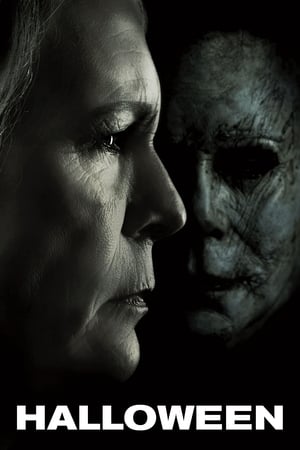
David Gordon Green's Halloween (2018) created another continuity, ignoring every previous sequel and treating Carpenter's 1978 film as the only earlier chapter. Forty years have passed since Michael attacked Laurie, and Curtis returned to a version of the character who has organized much of her adult life around the possibility that he might return.
This Laurie has transformed her home into a defensive structure, trained herself with firearms and raised her daughter Karen inside an atmosphere of constant preparation. The cost is immediately visible. Laurie's determination to survive has damaged her family relationships and allowed Michael Myers to remain psychologically present even during the decades in which he has been physically confined.
Curtis described the film in terms of trauma extending beyond the individual survivor and into the family around her. The structure makes Laurie's daughter and granddaughter part of the confrontation, turning the original final girl into the beginning of a generational story rather than simply repeating the teenager-versus-killer formula.
Curtis also served as an executive producer, giving her a different relationship with the material from the young actor who had entered Carpenter and Hill's independent production four decades earlier. John Carpenter returned as executive producer and composer, while Nick Castle again appeared as the Shape and Malek Akkad continued the production history established by his father Moustapha.
Halloween Kills and the Community Around Laurie
Halloween Kills (2021) expands the consequences of Michael Myers beyond Laurie and her immediate family. Haddonfield itself reacts to the continuing violence as survivors and residents attempt to organize against him, allowing the franchise to revisit characters and memories extending back to 1978.
Laurie spends much of the film hospitalized after the injuries sustained in the previous chapter, deliberately echoing the physical vulnerability of Halloween II. Her influence nevertheless extends through the story because the confrontation is no longer only personal. Michael has become a source of collective fear, and the town's attempt to fight that fear generates its own destructive consequences.
The film also reconnects Curtis with elements of the original ensemble and mythology. Characters who had once existed around teenage Laurie are now older survivors themselves, emphasizing how radically unusual the franchise had become: a slasher series was allowing its victims and witnesses to age across decades rather than endlessly replacing them with younger equivalents.
Halloween Ends and the Question of Moving Forward
Halloween Ends (2022) completed David Gordon Green's trilogy and brought Curtis's most sustained Laurie Strode arc to a conclusion. Several years after the previous film, Laurie is attempting something she has rarely been allowed to do: live without constructing every moment around Michael Myers. She is writing about her experiences, rebuilding her relationship with granddaughter Allyson and trying to create an identity not defined entirely by survival.
The film therefore approaches Laurie differently from the militarized figure of 2018. Curtis plays a woman who has finally recognized that constant preparation can become another form of captivity. Michael's eventual return forces one final confrontation, but the emotional objective is no longer simply killing the attacker. Laurie must reach a point where the story of Michael Myers no longer determines how she lives.
Curtis publicly treated the film as a farewell to Laurie, reflecting on a role that had accompanied her across forty-four years. Whether or not popular culture ever completely separates the actress from the character, Halloween Ends gave this version of Laurie something the teenager in 1978 could never have imagined: the possibility of a life existing beyond the night she survived.
Laurie Strode and the Changing Meaning of the Final Girl
The longevity of Curtis's relationship with Laurie changed the meaning of a horror archetype normally associated with youth. Most final girls exist within one film or a short series of closely spaced sequels. Laurie Strode was allowed to become middle-aged and later older, carrying the consequences of survival into entirely different periods of life.
H20 interpreted survival through repression, alcoholism and the need to confront buried fear. The 2018 film imagined trauma as obsessive preparation transmitted through a family. Halloween Ends asked whether surviving ultimately requires learning how to stop giving the attacker ownership of the survivor's identity. These continuities contradict one another narratively, but together they demonstrate how flexible Laurie became as a figure through which filmmakers could discuss what happens after the traditional horror ending.
Curtis was essential to that development because audiences aged with her. The frightened teenager, the damaged school headmistress and the armed grandmother are not interchangeable final girls. They are different interpretations of the same cultural memory, each reflecting the period in which the character returned.
Jamie Lee Curtis's Horror Legacy
Jamie Lee Curtis spent much of her career proving that she could do far more than horror, yet horror remained the foundation to which her screen history repeatedly returned. The initial run from Halloween through The Fog, Prom Night, Terror Train, Roadgames and Halloween II made her one of the defining genre performers of the late 1970s and early 1980s. Her later returns demonstrated that the association did not need to remain frozen in nostalgia.
The collaborators surrounding that journey form an unusually continuous network. John Carpenter and Debra Hill created Laurie and gave Curtis her first major film role. Dean Cundey supplied the visual language of the early films. Moustapha Akkad helped sustain the franchise long enough for Laurie to return decades later. Nick Castle became the physical image opposing her in the original film and again in the modern continuation. David Gordon Green then rebuilt the character around age, trauma and family rather than attempting to reproduce the teenager audiences remembered.
Curtis has openly acknowledged that she is not personally a devoted consumer of horror, even while recognizing how profoundly the genre shaped her life and career. That distance makes her relationship with horror unusually interesting. She did not remain because it was the only kind of work available to her. She repeatedly left, succeeded elsewhere and then returned when Laurie Strode offered something new to explore.
Her place in horror history therefore extends beyond the label “scream queen.” The scream helped make her famous, but Laurie Strode endured because Curtis gave fear a progression. At seventeen, Laurie notices the danger. As an adult, she carries it. Decades later, she confronts what carrying it has cost. Through that evolution, Jamie Lee Curtis helped turn the final girl from the last survivor of a horror movie into a character whose survival could become an entire life.
Known Among Horror Fans For
Notable Horror Collaborators
Notable collaborators and creative partners throughout Jamie Lee Curtis's horror career.
 John Carpenter
Defining Horror Director
Carpenter launched Curtis's horror career with Halloween and The Fog, beginning a creative relationship that remained tied to Laurie Strode for decades.
 Debra Hill
Defining Creative Partner
Hill co-created Laurie Strode and helped shape the early films that established Curtis as one of the defining performers of modern horror.
 Moustapha Akkad
Defining Franchise Producer
Akkad helped sustain Halloween across generations, accompanying Curtis through several major stages of Laurie Strode's screen history.
 Dean Cundey
Defining Cinematographer
Cundey photographed Curtis throughout her formative Carpenter horror period, helping create the visual identity of Halloween, The Fog and Halloween II.
 David Gordon Green
Revival Director
Green directed Curtis throughout the modern Halloween trilogy, rebuilding Laurie Strode around survival, trauma and the consequences of forty years of fear.
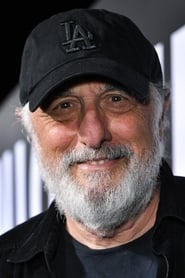 Nick Castle
Defining Horror Co-Star
Castle's original Shape became the iconic physical counterpart to Curtis's Laurie Strode and returned opposite her decades later in the modern Halloween cycle.
Jamie Lee Curtis Horror Movies
Acting (18 credits)
2021
2018
2018
2015
2006
2003
2002
2000
1999
1998
1982
1981
1981
1980
1980
1980
1978
Production (5 credits)
2024
2022
2022
2021
2018
Directing (1 credits)
2015