



2025
Charles Band
Horror Director · Biography · Horror Filmography · Family · Collaborators · Credits
Horror subgenres & themes
Most represented across this person's horror filmography:
EVIL DOLL
• CANNIBAL
• CLOWN
• HAUNTED HOUSES
Biography
Charles Band and the Factory of Independent Horror
Charles Band built one of the most persistent independent horror operations in American cinema by treating low budgets not as a temporary obstacle but as the foundation of an entire production system. Across companies including Empire Pictures and Full Moon, Band produced, directed, distributed and developed films built around monsters, killer toys, vampires, mad scientists, mutations and practical creatures. Individual productions could be extremely inexpensive, but the larger strategy was ambitious: create recognizable horror concepts, maintain ownership of recurring properties and keep new films moving continuously into the marketplace.
Band's horror identity is therefore larger than his work as a director. His greatest influence came from constructing environments in which filmmakers, actors, composers and effects artists could return repeatedly. Stuart Gordon, Richard Band, David Schmoeller, Ted Nicolaou, David Allen and David DeCoteau all became part of different phases of that system. Their films do not share one style, yet together they created the recognizable world surrounding Empire and Full Moon.
The most durable result was Puppet Master. What began as one low-budget horror feature about animated killer puppets became the central Full Moon franchise, expanding through sequels, prequels, spin-offs and decades of new productions. Around it grew other recurring properties including Subspecies, Demonic Toys and later horror-comedy cycles. Band effectively transformed independent horror production into a repertory business where monsters could become long-term assets rather than disappear after one film.
Mansion of the Doomed and the Beginning of a Horror Career
One of Band's earliest important horror productions was Mansion of the Doomed (1976), directed by Michael Pataki. The film stars Richard Basehart as a surgeon whose daughter loses her sight after an accident. His attempt to restore her vision leads him to abduct victims and remove their eyes for transplantation.
The film already contains several ideas that would recur throughout Band's later horror production: damaged bodies, medical obsession, physical effects and a concept strong enough to sell a movie before audiences knew anything about the characters.
The American Film Institute credits Band as producer and his brother Richard Band as an assistant director. Even at this early stage, the Band family was already functioning inside the same independent production structure.
Tourist Trap and the Power of a Simple Horror Concept
Tourist Trap (1979), directed by David Schmoeller, became one of the most important horror productions of Band's early career. A group of young travelers becomes stranded near an isolated roadside attraction filled with mannequins, only to discover that the apparently lifeless figures belong to a much stranger and more dangerous world.
The film combines slasher structure, supernatural suggestion and the uncanny quality of human-shaped objects. Mannequins become frightening because they occupy the boundary between object and body, an idea Band would later revisit on a much larger scale through puppets, dolls and toys.
Tourist Trap also began several long-term professional relationships. Schmoeller would later direct the first Puppet Master, while Ted Nicolaou worked on the film as an editor before becoming one of Band's most important recurring directors.
David Schmoeller and the Road to Puppet Master
David Schmoeller occupies a particularly important place in Band's horror history because his collaborations connect the early independent period directly with the creation of Full Moon's most famous franchise.
Tourist Trap demonstrated that inexpensive horror could build an entire atmosphere around practical objects and a contained location. A decade later, Schmoeller directed Puppet Master, taking the idea of threatening artificial figures even further.
The relationship is historically more important than the number of films they made together. Two collaborations helped define two separate stages of Band's career: the independent horror producer of the late 1970s and the direct-to-video horror entrepreneur of the Full Moon era.
Parasite and Band as Horror Director
Band also moved behind the camera himself. Parasite (1982) is a science-fiction horror film built around a genetically engineered organism that enters human bodies and threatens to reproduce through them.
The film belongs to the early 1980s fascination with biological mutation and creature effects. Band approaches the premise through the same practical logic that would characterize much of his later work: if a movie promises a monster, the audience eventually needs to see a physical monster interacting with performers.
This preference for tangible creatures became increasingly important as Band built larger production companies. Puppets, demons, mutants and prosthetic monsters offered something that could be photographed directly, reused, redesigned and marketed visually.
Empire Pictures and the Expansion of Independent Horror
Band formed Empire Pictures during the early 1980s and used the company to develop and distribute an increasingly ambitious range of genre films. Horror quickly became one of the company's most important identities.
Empire's catalogue included films such as Ghoulies, Re-Animator, From Beyond, Dolls and Troll. These productions varied enormously in tone, from Lovecraftian body horror to creature comedy and dark fantasy, but they shared a willingness to foreground practical effects and strong high-concept imagery.
The company also allowed Band to work with filmmakers whose styles were much more personal than conventional low-budget exploitation might suggest. Stuart Gordon became the clearest example.
Stuart Gordon and the Creative Peak of the Empire Era
Stuart Gordon became one of the most important horror filmmakers associated with Band's companies. Re-Animator emerged during the Empire period and became one of the defining American horror films of the mid-1980s, combining H. P. Lovecraft, practical gore, black comedy and Jeffrey Combs' extraordinary performance as Herbert West.
Gordon's relationship with the Band production world continued through From Beyond and Dolls. Each film used practical effects differently. From Beyond transforms perception into grotesque bodily mutation, while Dolls turns childhood toys into miniature agents of supernatural punishment.
Years later Gordon returned within the Full Moon environment for films including The Pit and the Pendulum and Castle Freak. The collaboration therefore survived the transition between Band's two most important production companies.
Gordon was particularly valuable because his films demonstrated that low-budget horror produced inside Band's system could still possess a distinctive directorial personality. They were not merely products filling a release schedule. At their strongest they became lasting cult films independent of the company that financed or distributed them.
Re-Animator and the Empire Horror Identity
Re-Animator became especially important to the reputation of Empire-era horror. Stuart Gordon, producer Brian Yuzna, Jeffrey Combs, Barbara Crampton, composer Richard Band and other collaborators created a film whose extreme gore and black comedy helped define an entire branch of 1980s cult horror.
The movie demonstrated the value of building relationships with recurring creative teams. Several of the people involved would work together again, creating a network around Band's companies rather than a sequence of productions assembled from completely unrelated crews.
This repertory approach would become even more visible during the Full Moon period, when recognizable names returned across franchises and apparently unrelated films.
Richard Band and the Sound of Empire and Full Moon
Composer Richard Band, Charles Band's brother, became one of the most important creative constants across his horror career. His scores helped give films such as Re-Animator, From Beyond, Puppet Master, The Pit and the Pendulum and Castle Freak a musical scale that could exceed their production budgets.
The collaboration is important because music became one of the ways Band's films could suggest production value. A relatively contained film could acquire a much larger Gothic, orchestral or supernatural atmosphere through the score.
Richard Band's recurring presence also created continuity across companies and filmmakers. The director might change from Stuart Gordon to David Schmoeller or another Full Moon filmmaker, but familiar musical sensibilities could connect the productions.
The brothers therefore collaborated not simply as family members but across decades of independent horror production, giving Richard a structural role in the sound of Charles Band's genre catalogue.
Ghoulies, Troll and the Empire Creature Factory
Empire became strongly associated with creature-driven horror during the 1980s. Ghoulies offered small demonic creatures and occult imagery, while Troll built an entire fantasy-horror world around practical monsters invading an apartment building.
These movies reinforced the commercial usefulness of creatures that possessed strong silhouettes and easily recognizable designs. A monster did not need to be enormous to become marketable. Small creatures could be photographed, placed prominently on artwork and developed into recurring properties.
John Carl Buechler became particularly important to this practical-effects environment, working on creature effects and eventually directing Troll. The period helped establish the production culture from which Full Moon's later puppet-centered horror would naturally evolve.
Dolls and the Horror of Objects Coming Alive
Dolls, directed by Stuart Gordon, is one of the clearest transitional films between Empire's creature horror and the identity Band would later develop at Full Moon. The story traps travelers inside a mansion inhabited by an elderly toy maker and a collection of dolls capable of moving and killing.
The movie combines fairy-tale morality with practical miniature horror. The dolls possess distinct appearances and methods of attack, allowing objects normally associated with childhood to become individualized monsters.
This basic appeal would become central to Puppet Master. Small physical characters could function almost like a cast of recurring horror personalities, each recognizable through shape, weapon and behavior.
The End of Empire and the Creation of Full Moon
Empire eventually collapsed financially during the late 1980s, but Band quickly rebuilt his production model through Full Moon. Rather than abandon low-budget genre filmmaking, he adapted it more directly to the expanding home-video market.
The new company concentrated heavily on horror, science fiction and fantasy designed for video audiences. Productions could be developed around clear concepts, recognizable artwork and recurring franchises while bypassing much of the expense and uncertainty associated with theatrical distribution.
The first major Full Moon horror success was Puppet Master in 1989. The film effectively became the foundation on which the company's identity was built.
Puppet Master and the Full Moon Model
Puppet Master follows a group of psychics investigating the secrets of puppeteer Andre Toulon and discovering that his handmade creations are alive. Blade, Pinhead, Tunneler, Leech Woman and Jester were designed as distinct characters rather than interchangeable monsters.
This individuality proved crucial. Each puppet could be recognized instantly, giving the franchise a miniature ensemble of horror icons. New puppets could be introduced in later films while existing favorites returned repeatedly.
Band produced the film, David Schmoeller directed and effects artist David Allen played a major role in bringing the puppets to life. Richard Band's score contributed another layer of recognizable identity.
The result became much more than a successful direct-to-video film. It established a production philosophy Full Moon could repeat: strong practical monster design, contained horror stories, recurring characters and sequels produced frequently enough to maintain audience recognition.
David Allen and the Physical Life of the Puppets
David Allen was one of the most important effects collaborators in Band's horror career. His stop-motion and practical-effects expertise helped give Puppet Master the illusion that its miniature killers possessed weight, intention and personality.
The distinction matters because the franchise depends completely upon audiences accepting the puppets as characters. They cannot remain inert props moved only when the camera looks away. They need to walk, attack and interact physically with the human cast.
Allen's work also extended through other Band productions, including creature and fantasy projects such as Dolls. His technical approach became part of the handmade visual quality associated with both Empire and Full Moon.
For Band, practical effects were not simply one department within production. They were often the principal selling point of the film itself.
Puppet Master Becomes a Franchise
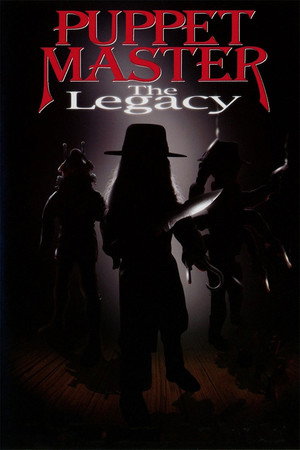
The success of the first film led rapidly to sequels. Puppet Master II expanded the mythology and introduced new creations, while Puppet Master III: Toulon's Revenge moved backward in time to explore Andre Toulon and the origin of his puppets.
The series continued through numerous additional installments, later prequels and spin-offs. Over time, Blade became especially recognizable, eventually receiving a standalone feature within the larger universe.
The durability of the franchise demonstrates Band's strongest commercial instinct. A practical monster could become more valuable over time if the company retained the character and continued producing new contexts in which audiences could encounter it.
Full Moon therefore treated horror monsters almost like a comic-book publisher treats recurring characters: reusable intellectual property capable of supporting stories across decades.
David DeCoteau and Puppet Master III
David DeCoteau became another important recurring filmmaker within Band's production world. Their relationship began during the Empire period and extended deeply into Full Moon.
DeCoteau directed Puppet Master III: Toulon's Revenge, one of the most important early entries in the franchise. The film transforms Andre Toulon from the mysterious figure surrounding the original story into a much more sympathetic protagonist and places the living puppets within a World War II setting.
The prequel also demonstrates how Band's franchises could expand by altering genre emphasis. The puppets remain horror creations, but the film gives them a different narrative role and deepens their mythology rather than simply repeating the original structure.
DeCoteau's continued work around Empire and Full Moon made him part of the production network through which Band could maintain a high volume of genre releases.
Ted Nicolaou: From Tourist Trap to Subspecies
Ted Nicolaou has one of the longest creative relationships in Band's career. He worked as an editor on early Band productions including Tourist Trap and Ghoulies before moving into directing.
Nicolaou directed TerrorVision during the Empire period, a grotesque horror-comedy about an alien creature entering a suburban home through a satellite television system. The film combines monster effects, media satire and deliberately exaggerated family dysfunction.
His most important contribution to Full Moon, however, became Subspecies. Beginning in 1991, the series developed the vampire Radu Vladislas into one of Full Moon's most durable horror characters.
The relationship between Band and Nicolaou consequently spans multiple companies, production roles and decades. It is one of the clearest examples of Band's preference for long-term collaborators who could grow within his production system.
Subspecies and Full Moon Gothic Horror
The Subspecies series gave Full Moon a horror identity very different from the miniature monsters of Puppet Master. Filmed around Romanian castles and landscapes, the films build their mythology around ancient vampire bloodlines, Gothic architecture and the increasingly monstrous Radu.
Anders Hove's performance gave Radu an immediately recognizable physical identity: elongated fingers, corpse-like appearance and predatory movement separated him from the romantic vampires dominating much contemporary popular culture.
Nicolaou returned repeatedly to direct the series, allowing its mythology and atmosphere to develop with unusual consistency across decades.
The franchise demonstrates the range of Band's production strategy. Full Moon did not need every successful property to resemble Toxie-style splatter or killer-toy horror. What mattered was possessing a strong creature, a recognizable world and enough continuity to bring audiences back.
VideoZone and the Full Moon Audience
Full Moon also cultivated its audience through the VideoZone featurettes included with its home-video releases. These behind-the-scenes segments showed effects work, sets, actors and production processes at a time when extensive supplementary material was not yet standard on home-video releases.
The strategy made low-budget filmmaking part of the entertainment. Rather than conceal the practical methods behind a puppet or monster, Full Moon invited viewers to see how the illusion had been built.
This helped create a direct relationship between Band and the audience. Fans were encouraged not only to consume the finished horror film but to understand the recurring crews, effects artists and production philosophy behind it.
Castle Freak and the Return of the Gordon Ensemble
Castle Freak reunited Stuart Gordon, Jeffrey Combs and Barbara Crampton within the Full Moon era. Loosely inspired by H. P. Lovecraft's The Outsider, the film follows a damaged American family that inherits an Italian castle and discovers a horribly abused man hidden inside it.
The production is much darker and more emotionally severe than the comic energy associated with Re-Animator. Family grief, alcoholism, sexual frustration and inherited cruelty become inseparable from the creature horror.
For Band, the film demonstrated that the creative relationships developed during the Empire period could survive inside Full Moon. Gordon did not need to reproduce Herbert West or From Beyond; the company could support a different kind of horror while using many of the same collaborators.
Demonic Toys and the Full Moon Monster Universe
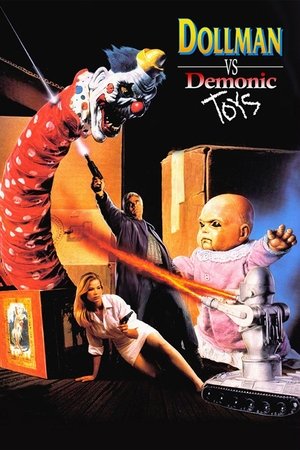
Demonic Toys extended Full Moon's fascination with murderous objects beyond the Puppet Master mythology. Toys including Baby Oopsy Daisy and Jack Attack became recognizable monsters with distinct personalities and visual identities.
The conceptual similarity was deliberate enough to allow crossovers later. Full Moon increasingly behaved like a shared catalogue of monsters whose value came from audience familiarity as much as from the individual films introducing them.
This strategy anticipated the increasingly franchise-driven nature of modern genre production on a far smaller economic scale. Band understood that a low-budget monster could accumulate identity over multiple films just as effectively as a much more expensive studio property.
Horror-Comedy and the Later Full Moon Identity
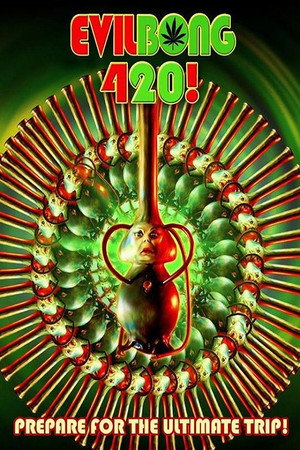
As Full Moon evolved, Band increasingly embraced openly comic horror concepts. Films and franchises such as The Gingerdead Man and Evil Bong pushed the company toward intentionally absurd premises in which the title itself could communicate most of the joke.
This period differs significantly from the atmosphere of Tourist Trap, Re-Animator or Subspecies, but the production logic remains recognizable. A strong central object or creature becomes the anchor for inexpensive sequels and recurring audience recognition.
The approach also demonstrates Band's willingness to adapt Full Moon's identity rather than preserve one definition of horror indefinitely. Gothic vampires, killer puppets and outrageous horror-comedy could all exist under the same company because the deeper brand was independent genre filmmaking itself.
Practical Effects as the Full Moon Language
Practical effects became one of the strongest visual connections across Band's horror catalogue. Stop-motion puppets, mechanical creatures, prosthetic demons, miniature monsters and physical gore allowed films with limited resources to offer images audiences could not encounter in ordinary drama.
The effects artists therefore became unusually important collaborators. David Allen's animation, John Carl Buechler's creature work and numerous makeup and puppet teams helped create characters that could survive beyond the films in which they first appeared.
Band's companies frequently marketed those creatures as aggressively as the actors. This was sensible because a puppet, demon or vampire could become proprietary iconography belonging entirely to the production company.
Charles Band as Horror Director
Although Band is most important historically as producer and company builder, he continued directing horror himself. His directing filmography moved through creatures, killer objects, supernatural horror and increasingly comic concepts.
The distinction between director and producer is often less rigid in his career than it would be within a major studio. Band's strongest creative role has always been identifying a concept that can become a film, assembling the people capable of executing it and finding a production method inexpensive enough to keep the operation moving.
This makes him closer to the tradition of independent genre producers such as Roger Corman than to filmmakers whose legacy is defined primarily through personal visual style.
Keeping Horror Production Continuous
The defining feature of Band's career is persistence. Production companies collapse, distribution technologies change and entire markets disappear, yet his response has repeatedly been to find another method of producing and delivering genre films.
Theatrical exploitation gave way to VHS. VHS gave way to DVD and later digital distribution and streaming. Full Moon adapted its catalogue and continued creating new material around properties developed decades earlier.
This continuity allowed franchises such as Puppet Master and Subspecies to exist across technological eras that destroyed many comparable independent companies.
Charles Band's Horror Legacy
Charles Band's importance to horror is not based on one directing masterpiece. It comes from building a production ecosystem capable of generating horror continuously for decades.
Stuart Gordon represents the ambitious auteur side of that ecosystem, producing films such as Re-Animator, From Beyond, Dolls and Castle Freak. Richard Band supplied a musical identity across many of its strongest films. David Schmoeller connected Tourist Trap directly to the creation of Puppet Master. Ted Nicolaou evolved from editor to director and built Subspecies into Full Moon's great vampire saga. David Allen gave physical life to the miniature monsters on which the company increasingly depended, while David DeCoteau became one of the directors capable of carrying franchises and productions forward.
What Band understood especially well was that independent horror could survive by creating recognizable objects of fascination. A puppet with a knife, a grotesque vampire, a demonic toy or another miniature monster could become more valuable than the budget of the original film suggested.
Empire Pictures and Full Moon therefore became factories in the most productive sense of the word: places where filmmakers repeatedly assembled strange physical things, photographed them and sent them back into the world. Charles Band's horror legacy is the persistence of that factory and the enormous catalogue of monsters it continues to leave behind.
Photos (1)
Images: TMDB
Selected Work
Notable Horror Collaborators
Notable collaborators and creative partners throughout Charles Band's horror career.
 Stuart Gordon
Defining Horror Director
Gordon became the most important auteur associated with Band's horror companies through Re-Animator, From Beyond, Dolls, The Pit and the Pendulum and Castle Freak.
 Richard Band
Defining Horror Composer
Richard Band, Charles' brother, created the musical identity of many major Band productions including Re-Animator, From Beyond, Puppet Master and Castle Freak.
 David Schmoeller
Foundational Horror Director
Schmoeller connects two defining stages of Band's career by directing Tourist Trap and later the original Puppet Master, the film that launched Full Moon's central horror franchise.
 Ted Nicolaou
Defining Long-Term Horror Director
Nicolaou worked with Band for decades, moving from editor on Tourist Trap and Ghoulies to director of TerrorVision and the long-running Subspecies vampire series.
DA
David Allen
Defining Horror Effects Collaborator
Allen helped give physical life to Band's miniature monsters and practical creatures, most importantly through the stop-motion and effects work surrounding Puppet Master.
 David DeCoteau
Recurring Horror Director
DeCoteau became a major recurring filmmaker across the Empire and Full Moon eras and directed Puppet Master III, one of the key early expansions of Band's flagship horror mythology.
Charles Band Horror Movies
Directing (55 credits)
2025
2025
2024
2024
2024
2024
2023
2021
2020
2020
2018
2018
2017
2017
2016
2016
2015
2014
2013
2013
2013
2012
2012
2012
2011
2011
2009
2009
2008
2007
2007
2006
2006
2005
2005
2005
2004
2003
1999
1997
1997
1997
1996
1993
1992
1991
1990
1990
1988
1988
1984
1983
1982
1976
Production (200 credits)
2026
2025
2025
2025
2024
2024
2024
2024
2024
2024
2023
2023
2023
2023
2023
2023
2023
2023
2022
2022
2022
2022
2022
2021
2021
2021
2021
2021
2021
2021
2020
2020
2020
2020
2019
2019
2019
2018
2018
2018
2018
2018
2017
2016
2016
2014
2013
2013
2013
2013
2012
2012
2012
2012
2012
2011
2011
2010
2010
2009
2009
2008
2008
2007
2007
2006
2006
2005
2005
2005
2005
2005
2005
2005
2005
2004
2004
2003
2003
2003
2002
2002
2002
2002
2002
2002
2002
2002
2002
2002
2002
2001
2001
2001
2001
2001
2001
2001
2001
2001
2001
2000
2000
2000
2000
2000
2000
2000
2000
2000
2000
2000
1999
1999
1999
1999
1999
1999
1999
1999
1999
1998
1998
1998
1998
1998
1998
1997
1997
1997
1997
1997
1997
1996
1996
1996
1995
1995
1994
1994
1994
1994
1994
1993
1993
1993
1993
1993
1993
1992
1992
1992
1992
1992
1992
1991
1991
1990
1990
1990
1990
1989
1989
1989
1988
1988
1988
1988
1988
1988
1988
1988
1988
1988
1987
1987
1987
1987
1987
1987
1987
1986
1986
1986
1986
1986
1986
1986
1986
1985
1984
1984
1983
1982
1980
1979
1978
1977
1976
1976
Writing (44 credits)
2024
2024
2023
2023
2021
2021
2019
2018
2018
2017
2017
2016
2016
2014
2013
2013
2012
2011
2009
2006
2005
2005
2005
1999
1999
1999
1999
1999
1996
1994
1993
1993
1993
1992
1992
1992
1992
1992
1992
1991
1990
1990
1989
1984
Acting (9 credits)
2025
2024
2022
2021
2018
1997
1991
1986
1976