




2025
Doug Bradley
Horror Actor · Biography · Horror Filmography · Collaborators · Credits
Horror subgenres & themes
Most represented across this person's horror filmography:
BODY HORROR
• CANNIBAL
• HALLOWEEN
• MEDICAL
Biography
Doug Bradley, Pinhead and the Hellraiser series
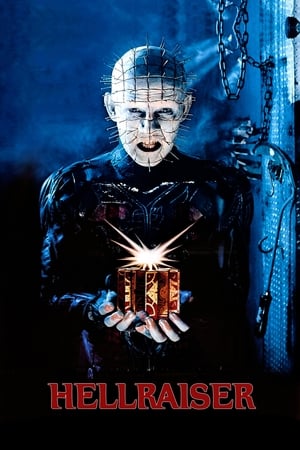
Doug Bradley holds a distinctive place in modern horror acting through his portrayal of the Lead Cenobite, later universally known as Pinhead, across eight Hellraiser films released between 1987 and 2005. The character became one of the major screen monsters to emerge from 1980s horror, alongside figures such as Freddy Krueger and the already established Michael Myers and Jason Voorhees. Bradley’s contribution was unusually important because the original character had limited screen time and arrived beneath an elaborate prosthetic design that could easily have dominated the actor wearing it. His measured delivery, restricted physical movement and formal vocal style helped establish a personality that remained recognizable as the franchise changed directors, writers and production models.
Bradley’s association with Clive Barker preceded Hellraiser by many years. They had known each other since school in Liverpool and later worked within the same experimental theatre circle. That history gave Bradley unusual familiarity with Barker’s interests before the writer became internationally successful through the Books of Blood. Their collaboration extends from early experimental films such as Salome and The Forbidden through Hellraiser and Nightbreed. Bradley consequently entered Barker’s cinema as a longstanding collaborator rather than as an actor hired after the mythology had already been defined.
Early work with Clive Barker and experimental theatre
Bradley was born in Liverpool on September 7, 1954 and knew Barker from their school years. During the 1970s both became involved in theatre and experimental performance, an environment that also included future Barker collaborators such as Peter Atkins and Simon Bamford. The work was produced on a scale far removed from the international horror franchises that followed, yet it provided practical experience with stylized performance, masks and physical transformation. Barker’s early plays and films already contained several interests that later became central to his fiction, particularly altered bodies, ritualized violence and characters moving outside conventional social identities.
Bradley appeared as Herod in Barker’s short film Salome and also participated in The Forbidden, an experimental black-and-white film made years before The Hellbound Heart. These projects are historically useful because they document the continuity between Barker’s early collaborative work and his later commercial cinema. Bradley had already performed inside Barker’s visual and theatrical language before New World Pictures financed Hellraiser. When Barker eventually prepared his first feature as director, he approached an actor whose working habits and temperament he knew well.
Hellraiser and the creation of the Lead Cenobite
During preparations for Hellraiser, Barker offered Bradley a choice between a small human part as one of the removal men and the unnamed Lead Cenobite. Bradley later recalled that he briefly considered the human role because Hellraiser would be his first feature and appearing without prosthetics had an obvious professional advantage. He chose the Cenobite instead. The decision placed him inside one of the film’s most elaborate makeup designs, created under Bob Keen’s Image Animation team. Early applications of the makeup required several hours, and Bradley used his first opportunity in front of a mirror to study how small movements affected the prosthetic face.
Barker repeatedly encouraged Bradley to reduce his performance. Coming from theatre, Bradley initially expected that the character required more visible physical expression. He subsequently recalled Barker telling him to do less until he discovered that the makeup itself registered strongly when his face and body remained controlled. Barker described the character to him through the image of an administrator combined with a surgeon, somebody capable of performing an operation while also supervising the institution in which it takes place. Bradley translated that idea into an authoritative physical manner and a formal delivery that separated the Lead Cenobite from the more impulsive screen killers surrounding contemporary horror.
The performance behind the Pinhead makeup
The significance of Bradley’s interpretation has been acknowledged repeatedly by other principal contributors to the series. Bob Keen later credited the actor with providing most of the character’s identity beyond the visual design, particularly the sense of command visible in his stillness and voice. Peter Atkins, who became a major screenwriter in the series, likewise emphasized Bradley’s ability to avoid obvious or exaggerated readings of dialogue that could easily have become theatrical in the wrong way. Barker’s own writing about Bradley identifies details such as the measured walk and angle of the head as elements supplied by the actor rather than by makeup or costume.
These accounts clarify why Pinhead became more than a successful prosthetic design. Bradley treated the Cenobite as a character with a coherent perspective, even when the first film supplied very little explicit biography. He and Barker discussed the possibility that the figure had once been human, an idea that gave Bradley a private basis for the performance before the sequels established Captain Elliott Spencer as canonical history. The actor could therefore suggest intelligence and memory without explaining either to the audience. The first Hellraiser benefited from that restraint because the Cenobites appeared to belong to a system extending far beyond the information disclosed by the narrative.
Hellbound and the development of Elliott Spencer
Hellbound: Hellraiser II expanded the mythology significantly and revealed that Pinhead and the other Cenobites had human origins. A photograph identifies Bradley’s character as British Army officer Elliott Spencer, providing the first concrete biographical information about the figure beneath the pins. The sequel also enlarges the supernatural environment through the labyrinth of Hell and Leviathan. Pinhead therefore changes from an enigmatic visitor summoned through the puzzle box into part of a more extensively defined hierarchy.
For Bradley, the development validated an aspect of the performance he had already considered while making the first film. Human identity could survive beneath the transformed exterior in partial form. Hellbound ultimately allows that residual humanity to become dramatically relevant when Kirsty confronts the Cenobites with evidence of their former lives. The scene gave Bradley a different register to play while retaining the controlled manner established in 1987. Ashley Laurence’s Kirsty consequently became the human character with whom Bradley shared the most sustained dramatic relationship in the early series.
Hellraiser III and the separation of Pinhead and Elliott Spencer
Hellraiser III: Hell on Earth develops the division between Elliott Spencer and Pinhead into a central narrative device. The events of Hellbound have separated the human identity from the Cenobite, allowing Bradley to portray both the former officer and a version of Pinhead freed from the remaining influence of Spencer’s humanity. The screenplay by Peter Atkins therefore required a more explicit contrast between two aspects previously contained within one performance. Bradley and Atkins had discussed the character extensively since the second film, and the third entry gave those discussions a larger place within the story.
The production also changed the spatial scale of the series. Pinhead operates openly in an American city and participates in action sequences far removed from the confined domestic setting of the original. Barker observed at the time that Bradley’s performance had become darker as the role expanded. The increased screen presence carried a risk of overexposure, since the first film had derived part of the Cenobites’ effectiveness from scarcity. Bradley maintained the deliberate speech and physical control that had defined the character even as the franchise placed him in more conventional antagonist territory.
Bloodline and the later Hellraiser films
Hellraiser: Bloodline in 1996 attempted to extend the history of the Lament Configuration across several centuries and into the future. The production underwent substantial changes during editing and was ultimately credited to the Directors Guild pseudonym Alan Smithee, yet it remained the fourth consecutive feature with Bradley as Pinhead and Peter Atkins as a principal writer. By this stage the character functioned as the most stable element of a franchise whose setting and protagonists could change extensively from one installment to another.
From Hellraiser: Inferno onward, the series moved primarily into direct-to-video production. Bradley returned for Inferno, Hellseeker, Deader and Hellworld. His appearances varied considerably in length and narrative importance, and several of these productions used Pinhead as a franchise connection within stories whose structures differed from Barker’s original conception. Bradley nevertheless described an active effort to remain responsive to each director rather than treating his long ownership of the role as a reason to resist direction. His three consecutive films with Rick Bota, beginning with Hellseeker, provided rare directorial continuity within the series.
Ending the original eight-film run as Pinhead
Hellraiser: Hellworld in 2005 became Bradley’s eighth and final feature appearance as Pinhead. When another sequel, Hellraiser: Revelations, was mounted under unusually compressed production conditions, Bradley did not participate. The recasting demonstrated how strongly the screen identity of Pinhead had become associated with one performer. Later actors were free to reinterpret the role, but comparison with Bradley became unavoidable because the character’s established speech, posture and timing had developed through nearly two decades of his work.
The length of the run is historically significant within horror performance. Bradley played the same transformed figure under several directors and production regimes while the surrounding mythology changed substantially. The continuity came from performance rather than an unchanging creative team. His work therefore offers a useful example of how an actor can become a custodial presence inside a long-running horror franchise while still distinguishing the character from his own public identity.
Nightbreed and Doug Bradley as Dirk Lylesberg
Bradley’s other major collaboration with Barker came in Nightbreed in 1990, where he played Dirk Lylesberg, one of the senior figures within the hidden community of Midian. The role placed him under substantial makeup again, although the performance had a very different function from Pinhead. Lylesberg represents institutional caution within Midian and helps define the rules governing its inhabitants. Bradley later spoke candidly about finding the part difficult to inhabit and feeling somewhat peripheral to the finished film.
The theatrical history of Nightbreed also affected Bradley directly. His dialogue was redubbed in post-production with a German accent by another performer, a decision Bradley disliked because voice was especially important when much of his face was concealed by prosthetics. During later restoration work on the film, Bradley returned to rerecord Lylesberg’s dialogue for material assembled from surviving workprints and restored footage. His participation connected him directly with the long effort to recover a version closer to Barker’s intended film and documented his continuing engagement with the production decades after its original release.
Horror work outside Hellraiser
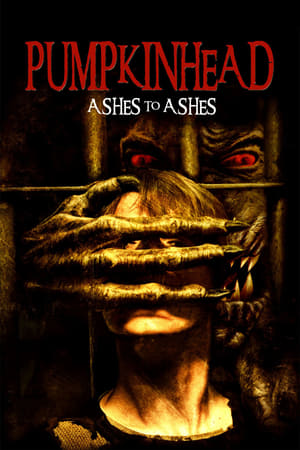
Bradley continued working extensively in horror after the most important period of the Hellraiser series. His credits include Pumpkinhead: Ashes to Ashes, Book of Blood, Exorcismus, The Reverend and Wrong Turn 5: Bloodlines, alongside numerous lower-budget genre productions and voice roles. These projects frequently used the authority associated with his voice and horror reputation while placing him in characters with little direct resemblance to Pinhead. In Wrong Turn 5, for example, his Maynard operates within rural slasher horror rather than Barker’s supernatural cosmology.
His later career also includes narration, documentary participation and voice acting linked with horror culture. Bradley appeared in the documentary In Search of Darkness and in Leviathan: The Story of Hellraiser and Hellbound. This work matters because Bradley became a first-hand source on the production history of one of the major British horror franchises of the late twentieth century. His extensive interviews have preserved details about acting under prosthetics, Barker’s direction and the evolution of Pinhead that are otherwise easy to simplify into franchise mythology.
Sacred Monsters and Bradley’s work on horror performance
Bradley’s relationship with horror history also extends into writing. His 1996 book Sacred Monsters: Behind the Mask of the Horror Actor examines performers associated with famous screen monsters and considers the relationship between actor, makeup, mask and public identity. The subject reflects his own professional experience, since audiences often recognized Pinhead immediately while remaining less familiar with the unmade-up actor responsible for the performance.
The book is relevant to evaluating Bradley because it shows that he thought systematically about monster performance rather than treating Pinhead as an accidental success. Extensive prosthetics can restrict conventional facial expression while simultaneously giving an actor a powerful new visual instrument. Bradley’s own account of learning to reduce movement during Hellraiser illustrates that process directly. The performance became effective when he learned how much information the makeup conveyed without additional emphasis.
Doug Bradley’s contribution to horror acting
Bradley’s historical importance rests primarily on the creation and sustained development of Pinhead, a role whose visual design and performance became inseparable in popular memory. Barker supplied the character and mythology, Bob Keen’s team created the physical makeup, and writers including Peter Atkins expanded the biography across the sequels. Bradley provided the continuous screen interpretation that connected those contributions. His controlled delivery and restrained physical technique gave the Cenobite an authority distinct from the dominant slasher villains of the same period.
His wider filmography gives that achievement useful context. Work with Barker before Hellraiser explains the creative trust behind the casting, Nightbreed demonstrates another branch of their collaboration, and later genre roles show how Bradley continued working within horror after his association with Pinhead was firmly established. His writing and documentary appearances have also made him an important witness to the history of practical monster performance. Within horror acting, his career remains a particularly clear example of an actor turning an elaborate prosthetic design into a sustained dramatic character.
Photos (1)
Images: TMDB
Selected Work
Notable Horror Collaborators
Notable collaborators and creative partners throughout Doug Bradley's horror career.
 Clive Barker
Actor / Writer-Director Collaborator
Bradley and Barker knew each other from their school years in Liverpool and later worked together in experimental theatre and film before Hellraiser. Their horror collaborations include The Forbidden, Hellraiser, Hellbound and Nightbreed, with Barker repeatedly crediting Bradley’s performance as fundamental to the screen identity of Pinhead.
 Peter Atkins
Actor / Writer Collaborator
Atkins and Bradley came from the same creative circle around Barker and worked together throughout the early Hellraiser sequels. Hellbound, Hellraiser III and Bloodline gave Atkins an important role in developing Pinhead and Elliott Spencer while Bradley maintained the character’s performance continuity across the changing mythology.
 Ashley Laurence
Acting Collaborator
Laurence and Bradley share Hellraiser, Hellbound and Hellraiser: Hellseeker. Kirsty Cotton became the principal recurring human character directly associated with Pinhead, and their three films connect Barker’s original domestic horror with the later continuation of the franchise.
 Bob Keen
Actor / Makeup Effects Collaborator
Keen and his effects teams created the practical forms through which Bradley performed in several Barker productions, including Hellraiser, Hellbound and Nightbreed. Keen has specifically credited Bradley’s voice and controlled physical performance with supplying much of the personality that made Pinhead effective beyond the makeup design.
 Rick Bota
Actor / Director Collaborator
Bota directed Bradley in Hellraiser: Hellseeker, Hellraiser: Deader and Hellraiser: Hellworld. This three-film run gave Bradley unusual directorial continuity during the later period of the franchise and allowed actor and director to develop an established working relationship around the recurring Cenobite character.
 Simon Bamford
Acting Collaborator
Bamford and Bradley share a creative history extending from Barker’s theatre circle into Hellraiser, Hellbound and Nightbreed. Their recurring work links the collaborative environment that existed before Barker’s literary fame with the practical creature performances of his first major horror films.
Doug Bradley Horror Movies
Acting (49 credits)
2025
2025
2024
2024
2024
2023
2023
2022
2022
2021
2020
2019
2018
2018
2017
2017
2015
2015
2015
2012
2012
2012
2012
2012
2011
2011
2010
2009
2008
2006
2005
2005
2005
2003
2002
2000
1998
1998
1997
1996
1996
1995
1992
1990
1988
1987
1978
1973
Special FX / Practical FX (1 credits)
1992