




1996
Erwin C. Dietrich
Horror Producer · Biography · Horror Filmography · Collaborators · Credits
Horror subgenres & themes
Most represented across this person's horror filmography:
SEXUAL
Biography
Erwin C. Dietrich and the Production of European Horror
Erwin C. Dietrich (4 October 1930 – 15 March 2018) was a Swiss film producer, distributor and occasional director whose commercial organisation supported a distinctive group of European horror and exploitation films. His most consequential association with the genre developed in the mid-1970s through Spanish filmmaker Jesús Franco. Their productions included the serial-killer thriller Jack the Ripper (1976) and the satanic convent drama Love Letters of a Portuguese Nun (1977). Decades later, Dietrich also participated in the production of Martin Walz's creature-horror comedy Killer Condom (1996). These works occupy a relatively small part of a career devoted predominantly to erotic cinema, crime thrillers and commercial entertainment, but they reveal the production conditions under which several unusual European horror films reached international audiences.
Dietrich operated through companies and distribution networks connecting Switzerland with West Germany and other European territories. His importance to the genre lay especially in financing productions, arranging crews and locations, negotiating markets, and preserving control over circulation. Franco's visual and narrative choices remained those of the director; cinematographers, performers and effects technicians supplied their respective artistic contributions. Dietrich's influence was concentrated in making these films economically feasible while providing a production environment in which stories of murder, religious persecution and bodily violence could be filmed on modest resources.
Swiss Production Networks and the Economics of Exploitation
Born in Glarus, Dietrich trained for the stage in Zurich before moving into independent film production. He established Urania-Film in 1955 and initially worked with regional dramas, comedies and crime pictures. His involvement with commercial thrillers accustomed him to the requirements of suspense-oriented filmmaking before he entered the more provocative market of the late 1960s. He also learned that relying on independent distributors could expose a producer to serious financial losses when payments failed to arrive. Building his own routes to cinemas became a central part of his business strategy.
The success of erotic features gave Dietrich the financial basis for working outside the narrow Swiss domestic market. His companies combined production and distribution, and he sometimes wrote or directed under names including Manfred Gregor and Michael Thomas. In a retrospective interview, he explained that dubbing into English and French was considered during budgeting because the films were intended for buyers in several countries. This international orientation affected horror as well: a story set in Victorian London, for example, could be photographed in Zurich and sold abroad through its recognisable subject, performers and genre imagery.
His approach helps explain the unusual conjunction of European Gothic motifs and the commercial exploitation market. Dietrich did not establish a specialist horror studio. He supplied an adaptable infrastructure through which Franco could make productions in different genres while reusing trusted technical collaborators and accessible locations. The distinction matters because the partnership is often discussed as though all its films belonged to horror. In fact, many were erotic dramas or women-in-prison thrillers; only some incorporated supernatural threats, murder or other elements central to the horror tradition.
Jesús Franco and the Horror Films of the Mid-1970s
Dietrich's working relationship with Franco began after contact through his Italian distribution operation. Dietrich recalled that he and cinematographer Peter Baumgartner had established a company in Rome and that Franco subsequently sought a meeting in Zurich. Their first jointly produced picture was Barbed Wire Dolls (1976), a prison exploitation film whose commercial success encouraged a sustained partnership. The collaboration developed rapidly, although contemporary and retrospective accounts disagree slightly about the precise number of productions completed during the period. The Swiss Cinémathèque places the partnership in 1975–1977, while Dietrich later recalled sixteen films made for him over roughly three years.
Franco brought experience in Gothic horror, eccentric medical villains and stories organised around captivity and psychological domination. His work with Dietrich gave those interests access to Swiss production resources and crews able to operate on compressed schedules. The resulting cinema often crossed genre boundaries: scenes of imprisonment or sexual coercion could belong primarily to exploitation, while satanic rituals or serial murder pushed particular titles into horror. Identifying the actual content of each film is therefore more useful than classifying the entire partnership under one generic label.
Dietrich's own recollections emphasise the business relationship and Franco's productivity. He regarded the director as a close friend and discussed their work in terms of practical arrangements, shooting locations and access to performers. His account also acknowledges disagreement about the appearance of some productions. Such differences make the partnership an instructive case in European genre filmmaking: the producer encouraged rapid, saleable features while the director retained a personal interest in recurring grotesque characters, provocative situations and unconventional visual treatment.
Jack the Ripper: Klaus Kinski and a Victorian Horror Film Shot in Zurich
Jack the Ripper was the most clearly horror-centred result of the collaboration. Franco cast Klaus Kinski as a physician who murders women in the streets of a reconstructed Victorian London. The film combines the historical legend of the Whitechapel murderer with elements of Franco's earlier stories about murderous doctors. Kinski's character is named Dr. Orloff, linking the picture to a fictional figure the director had used elsewhere, although the narrative remains a distinct treatment of the Ripper material. The killings and the killer's divided social identity provide the main sources of terror.
Dietrich financed and produced the film with an international audience in mind. He later recalled that Franco proposed the subject with Kinski already envisaged for the leading part. London was considered unsuitable for the budget and labour arrangements, so streets and buildings in Zurich stood in for the British capital. Swiss locations thus became part of the film's visual character, photographed to suggest the gaslit neighbourhoods of its nineteenth-century setting. Peter Baumgartner served as cinematographer, helping the production turn familiar local spaces into the environment of a period murder story.
The relationship between the frightening imagery and the industrial circumstances is especially visible here. A recognisable historical killer supplied an immediately marketable subject, Kinski gave the project an established international name, and Franco used his experience with Gothic villains to sustain a narrative of stalking and mutilation. Dietrich's role was crucial to the organisation of that combination. Dietrich recalled a cooperative working relationship with Kinski during the shoot.
The film also connects Swiss popular cinema to an international exploitation-horror market often discussed mainly through Spanish, Italian or British examples. Its transnational character lies in the movement of personnel, genre conventions and distribution rights through a Swiss production base. The restored film has subsequently received attention from Swiss cinema institutions, supporting the view that this phase of commercial filmmaking forms a legitimate part of the country's film history.
Love Letters of a Portuguese Nun and the Boundaries of Occult Horror
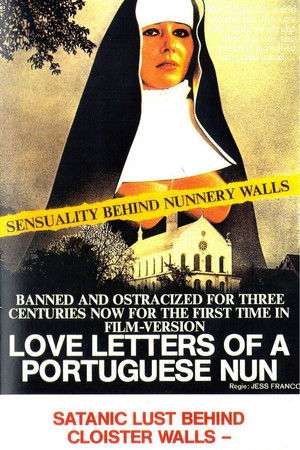
Another significant undertaking was Franco's convent drama, built around a novice confined to a religious institution controlled by abusive authority figures. Its story includes a concealed satanic cult and rituals that turn the convent into a setting of persecution. The film belongs to the European nunsploitation cycle, where religious iconography and sensational sexual material frequently appear together. Its strongest connection to horror is the use of diabolical worship, coerced participation in sinister ceremonies and the threat of a closed institution from which the protagonist struggles to escape.
Dietrich's involvement went beyond financing: the film's credits identify him with the original story and screenplay, alongside dialogue contributions by Christine Lembach. Cinematographer Peter Baumgartner and composer Walter Baumgartner were part of the Swiss-linked production apparatus. Their participation illustrates the continuity of technicians across projects that Franco directed for Dietrich. The religious setting also gave the production a visual vocabulary different from that of Jack the Ripper, relying on ceremonial spaces, ecclesiastical dress and the contrast between outward piety and the institution's concealed practices.
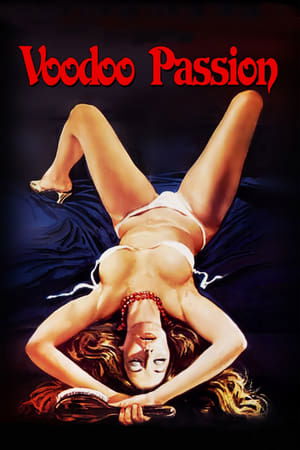
The occult imagery continued in Voodoo Passion (1977), a Franco production mixing ritual menace with explicit erotic material. Dietrich contributed the screenplay under the Manfred Gregor name, and Walter Baumgartner composed its music. The broader association also produced Greta, the Mad Butcher, released under titles linking it to the Ilsa exploitation cycle. Its spectacle of institutional cruelty belongs chiefly to women-in-prison cinema, despite obvious proximity to sadistic horror. Dietrich said the idea emerged from his experience distributing earlier films featuring Dyanne Thorne. That commercial explanation is useful when assessing the producer's involvement: a recognisable performer and an established market could determine the direction of a new feature. Treating these films according to their actual narrative mechanisms avoids inflating his horror filmography with productions whose principal aims were erotic or exploitation-oriented.
Killer Condom and a Later Return to Creature Horror
Killer Condom marked a very different engagement with the genre in 1996. Directed by Martin Walz and adapted from comic material by Ralf König, it follows a New York police investigation into attacks by living, carnivorous condoms. The premise makes bodily vulnerability the basis of grotesque comedy, joining a police story to a miniature monster threat. Its combination of sexual imagery and creature horror recalled the commercial territories in which Dietrich had worked earlier, but the film belonged to a newer production environment and a different creative generation.
Dietrich is credited as one of its producers, alongside Ralph S. Dietrich and Harald Reichebner. The participation of the younger Dietrich reflects the family company's continuing activity in German-speaking film production. Walz directed the picture and the film's artists developed its practical and visual creature material. Dietrich's established distribution and production experience supplied an industrial context for a project that transformed material associated with sexuality into deliberately absurd physical menace.
The film provides a useful counterpoint to his 1970s work. Jack the Ripper sought terror through murder, pursuit and period atmosphere, while Killer Condom explicitly uses a bizarre predatory organism for horror comedy. In both instances, unusual subject matter depended on access to financing and the circulation of a finished film beyond one national audience. Their aesthetic differences also show why Dietrich should be assessed primarily as a producer of particular horror projects, without assigning a single directing style to films made by separate filmmakers.
Dietrich's Place in European Horror Production
The history of Dietrich's work is closely tied to changes in the commercial conditions of European cinema. His integration of production and distribution helped sustain films that occupied the margins of established national cinema, including material whose violence or sexual content complicated conventional classification. The same system could accommodate a serial-killer film, an occult convent story or a grotesque monster comedy. It also enabled him to move into action productions and other entertainment fields as market demand changed, leaving horror as an intermittent but identifiable element of his career.
His connection to Franco has particular historical value because it reveals how a prolific horror director operated within a producer's network of locations, technicians, dubbing arrangements and foreign sales. The horror content came from the specific projects, scripts and directorial decisions; the Swiss infrastructure made those works practicable and helped determine how they reached viewers. Dietrich died in Zurich on 15 March 2018. The preservation of Elite Film company records by the Cinémathèque suisse offers a material basis for studying his involvement in the broader exploitation industry and the horror productions it occasionally supported.
Selected References
ComingSoon (Shock) — Interview: Swiss Exploitation Producer Erwin C. Dietrich on Jess Franco, Klaus Kinski and More. Extended first-person discussion of his production arrangements, his Franco partnership and the filming of the Ripper thriller in Zurich.
Neue Zürcher Zeitung (author's archive) — Nackte Haut und volles Kino: Die seltsamen Methoden des Erwin C. Dietrich. Johannes Binotto's substantial 2006 profile of Dietrich's production methods and Franco collaborations, preserved on the author's website.
Selected Work
Notable Horror Collaborators
Notable collaborators and creative partners throughout Erwin C. Dietrich's horror career.
 Jesús Franco
Producer / Director
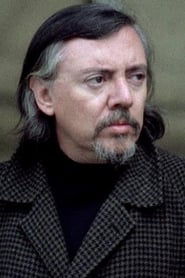
Dietrich financed several Franco productions at the boundary of horror and exploitation, including Jack the Ripper (1976) and Love Letters of a Portuguese Nun (1977). Their sustained Swiss-based collaboration gave Franco access to production facilities and international distribution.
PB
Peter Baumgartner
Producer / Cinematographer
Baumgartner photographed the Franco horror productions Jack the Ripper (1976) and Love Letters of a Portuguese Nun (1977), both backed by Dietrich. He was also a longstanding production and distribution associate within Dietrich's Swiss film operation.
 Walter Baumgartner
Producer / Composer
Walter Baumgartner composed music for the Dietrich-produced Jess Franco horror titles Jack the Ripper (1976), Love Letters of a Portuguese Nun (1977) and Voodoo Passion (1977). His scores formed part of the recurring Swiss technical partnership behind these productions.
Erwin C. Dietrich Horror Movies
Production (10 credits)
1977
1977
1977
1977
1977
1976
1976
1976
1966
Writing (7 credits)
1977
1977
1977
1977
1977
1974
1966
Directing (1 credits)
1974