




2021
Claudio Fragasso
Horror Director · Biography · Horror Filmography · Collaborators · Credits
Horror subgenres & themes
Biography
Claudio Fragasso and the final decades of Italian exploitation horror
Claudio Fragasso became one of the characteristic filmmakers of the final major period of Italian exploitation horror, working as screenwriter, assistant director, uncredited co-director and eventually independent director across productions designed primarily for international distribution. His horror career includes work on Hell of the Living Dead, The Other Hell, Women’s Prison Massacre, Rats: Night of Terror, Monster Dog, Zombie 3, After Death, Shocking Dark, Troll 2, Beyond Darkness and Night Killer. These films were made within an industry increasingly dependent on inexpensive international co-productions, English-language casts, pseudonyms and rapid responses to successful foreign genre cycles.
Fragasso’s importance cannot be understood simply by treating those productions as isolated low-budget horror titles. His professional development connects several stages of Italian genre filmmaking: the large domestic production environment of the 1970s, the international export system of the 1980s, the collapse of that system around the beginning of the 1990s and the later cult rediscovery of films originally considered disposable commercial entertainment. He learned filmmaking through editing rooms, assistant-directing assignments and screenwriting before spending years in an unusually close partnership with Bruno Mattei. He subsequently developed his own directing identity with Rossella Drudi as his principal writing collaborator.
Rome, childhood moviegoing and filmmaking before the profession
Claudio Fragasso was born in Rome on October 2, 1951. His interest in cinema developed early. He has recalled spending large amounts of time in a neighborhood parish cinema that screened several films each day and beginning to make small films with friends while still a child. Action, gunfights and the direct excitement of popular movies were part of this early education long before he entered professional production.
The possibility of making images himself became as important as watching them. Fragasso experimented with small-gauge filmmaking and learned through the most basic version of the complete process: inventing material, photographing it and then having to understand how separate pieces became a finished sequence. This early independence preceded both his later ambitions toward serious personal cinema and his eventual career inside commercial genres.
Learning filmmaking through assistant work and editing
Fragasso entered the Italian film industry during the 1970s, initially working in junior production positions that included assistant directing and editing assistance. His first experiences were practical rather than prestigious. He had to learn what a professional set required, how scenes were broken down, what material an editor needed and how production decisions made during photography affected the finished film.
Editing became especially important to his later development. Fragasso began writing relatively early, but he has admitted that his first instinct as a director was to concentrate heavily on the scene and the actors without always thinking sufficiently about how the material would cut together. The colleague who corrected that weakness most decisively was Bruno Mattei, an experienced editor whose approach to shooting was inseparable from his understanding of montage.
An early ambition toward personal and politically engaged cinema
Fragasso did not initially enter filmmaking with the intention of becoming an exploitation-horror director. His early independent work developed within the climate of politically engaged and formally experimental Italian cinema of the 1970s. Passaggi, shot in Super 8 and connected with the social and political atmosphere surrounding the student movement, belonged to a very different creative environment from the films that later made him familiar to horror audiences.
He and Rossella Drudi invested personal resources in the project, and the film received enough attention to confirm that Fragasso could pursue filmmaking seriously. His first 35 mm feature continued the more intellectual direction of his early ambitions. Fragasso later acknowledged, however, that he discovered he enjoyed genre production more. The transition was therefore not merely an economic surrender. He came to regard popular filmmaking as a demanding professional form in which craft, speed and audience communication mattered as much as the cultural prestige associated with more explicitly serious cinema.
Screenwriting as Fragasso’s principal early strength
Writing became one of Fragasso’s main routes into continuous professional employment. Italian production during the 1970s still generated large numbers of crime films, thrillers, comedies, westerns and horror pictures, creating demand for writers able to produce usable genre material quickly. Fragasso moved between story development, screenplay work and assistant directing while building relationships with directors and editors already established in the industry.
His later collaboration with Mattei was partly successful because Fragasso understood his own strongest skill at that stage. Mattei possessed extensive editorial experience and a practical sense of how to assemble films efficiently. Fragasso considered himself stronger in writing and in working with actors. Rather than competing for the same professional territory, the two men initially complemented one another.
Bruno Mattei and an unusually fluid filmmaking partnership
Fragasso met Bruno Mattei through the production and editing environment and eventually formed one of the most productive partnerships in Italian exploitation cinema. Their division of labor was frequently more complicated than the official credits suggest. On some productions Mattei was clearly the credited director while Fragasso wrote, assisted or directed additional material. On others they divided directing responsibilities more substantially. Fragasso later described occasions when one man was shooting while the other was preparing or filming material elsewhere.
This fluidity was made possible by the economic conditions of the films. Producers frequently needed several productions completed rapidly, sometimes using the same locations, actors or technical resources. The conventional idea of one director presiding over a completely separate production did not always correspond to reality. Mattei and Fragasso developed a working system adapted to this industrial pressure.
Learning to shoot for the edit
Fragasso has described Mattei as an important professional teacher because of the older filmmaker’s background in editing. Mattei insisted that a scene had to be photographed with its later construction in mind. Coverage, inserts and changes of angle were not optional technical details but the material through which pace could be controlled after shooting.
The lesson changed Fragasso’s directing. His own interest remained strongly focused on actors and the intensity of a scene, but he increasingly understood that performance had to be supported by material capable of being shaped in post-production. The partnership worked, in Fragasso’s own retrospective description, because each man compensated for something the other handled less naturally.
Horror inside the Mattei-Fragasso production system
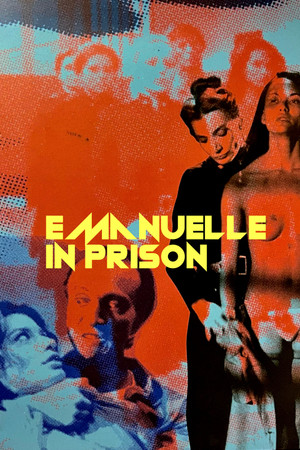
Horror became one of the principal areas in which the partnership developed during the early 1980s. Hell of the Living Dead placed Fragasso inside the renewed commercial demand for zombie cinema. The Other Hell combined religious settings with supernatural and exploitation material. Women-in-prison productions further blurred boundaries among horror, violence and other export genres, while Rats: Night of Terror combined post-apocalyptic science fiction with animal horror.
These projects trained Fragasso to work under conditions where originality was only one production requirement among many. Producers frequently wanted films that audiences could identify immediately with a currently successful cycle. The filmmaker’s task was to supply enough familiar commercial elements to make the project marketable while finding whatever individual scenes, characters or visual ideas could still be created inside the available resources.
Rats: Night of Terror and increasing directorial responsibility
Rats: Night of Terror became particularly important in Fragasso’s progression toward directing independently. He co-wrote the screenplay with Mattei and later described himself as substantially involved in direction, a role now acknowledged in retrospective material surrounding the production. The film required a large quantity of live rats, a contained location and an ensemble cast, making logistical control as important as conventional horror staging.
Producer interest in Fragasso increased after the film. By this stage he was no longer simply a writer learning from Mattei. He had demonstrated that he could manage actors and sequences himself within the limited budgets and schedules expected of international exploitation production.
Rossella Drudi and a long-term writing partnership
Rossella Drudi became the most important continuous creative collaborator of Fragasso’s career. Their relationship was personal as well as professional, but its importance to horror rests on the large amount of writing they developed together. Drudi brought a strong interest in story construction and became increasingly involved in the screenplays that defined Fragasso’s independent directing career.
Their collaboration covered projects including Rats: Night of Terror, Monster Dog, Zombie 3, After Death, Shocking Dark, Troll 2, Beyond Darkness and Night Killer. Credits were not always an accurate representation of her participation, particularly during periods when she worked under pseudonyms or remained uncredited. The continuing partnership nevertheless gave Fragasso a writer who already understood his production habits, preferred character dynamics and the practical limitations under which their scripts would have to be shot.
Writing for films that had to travel internationally
Fragasso and Drudi worked increasingly within a market in which Italian horror was designed to appear less specifically Italian. English-language dialogue, international casts and foreign locations became standard tools for producers trying to keep films competitive abroad. Scripts therefore had to function within a production system assembled from personnel of different nationalities and levels of experience.
This requirement shaped Fragasso’s cinema substantially. His later horror films often take place outside Italy and were conceived less as domestic productions intended to travel afterward than as export products from the beginning. The geographical ambiguity and Americanized surfaces of the films are therefore part of their industrial history rather than arbitrary stylistic decoration.
Pseudonyms and the manufactured international identity of Italian horror
Fragasso frequently worked under names including Clyde Anderson and Drake Floyd. He has explained that English-language pseudonyms were used because international distributors wanted films that could be presented as American or at least as culturally neutral commercial products. The practice was widespread among Italian genre filmmakers and had historical precedents stretching back through westerns and other export cycles.
The pseudonyms complicate modern attempts to reconstruct authorship. A filmmaker could write under one name, direct under another and work without credit on a collaborator’s production. Fragasso’s career is particularly dependent on interviews and production histories because the names appearing on original prints do not always communicate the complete division of labor.
Monster Dog and the establishment of Fragasso as an independent horror director
Monster Dog represented an important step away from the shared Mattei production system. Producer Eduard Sarlui approached Fragasso after seeing his earlier genre work and offered him a horror production starring Alice Cooper. Fragasso and Drudi developed the screenplay, while filming took place in Spain with an international production structure.
The significance of the assignment lies less in the werewolf and animal-horror material than in Fragasso’s professional position. He was now responsible for an English-language horror feature carrying an internationally recognizable performer without Mattei serving as the principal director. The experience established a model he would follow repeatedly during the remainder of the decade: an Italian writer-director traveling abroad to create inexpensive English-language genre films for international circulation.
Directing performers rather than approaching horror as effects alone
Fragasso’s self-description as the more actor-oriented member of his partnership with Mattei helps explain his later directing. Even when working in films sold through monsters, zombies or graphic violence, he remained strongly concerned with the intensity of performances. His direction could be forceful and highly demonstrative, particularly when language differences made subtle verbal communication on international sets more difficult.
Accounts from performers sometimes describe this approach as loud or demanding. Fragasso, however, treated commitment as essential. He distrusted ironic distance from the material and expected actors to play improbable situations as dramatic reality. This insistence on sincerity became particularly important to his later defense of Troll 2.
Zombie 3 and the practical culture of rescuing troubled productions
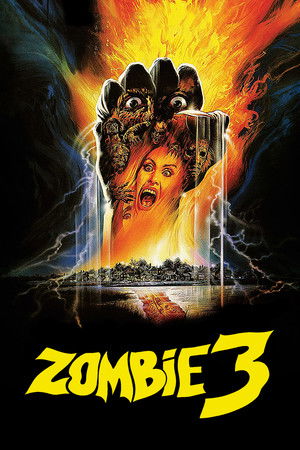
Zombie 3 demonstrates another part of Fragasso’s professional identity: the ability to enter an unstable production and finish what was required. Lucio Fulci began the film in the Philippines but left before completion. Bruno Mattei and Fragasso were subsequently brought into the remaining work, with Fragasso already involved in the writing alongside Rossella Drudi.
The final film consequently contains contributions originating from several different production stages. Fragasso never needed to claim sole authorship for the project in order for it to matter to his career. Its importance lies in his role inside an Italian genre system where practical completion could become as important as the original plan. Producers relied on people such as Mattei and Fragasso because they were capable of generating usable material quickly under difficult circumstances.
The Philippines and efficient international production
Several projects associated with the Mattei-Fragasso circle used the Philippines because existing crews, locations and production relationships allowed multiple inexpensive action and horror films to be mounted efficiently. Personnel could move from one project to another, and the same actors or stunt performers frequently reappeared.
Fragasso’s experience in this environment helped separate his filmmaking from the controlled conditions of conventional studio production. Scripts had to adapt to locations already available, casting could be determined by people working nearby and technical problems often had to be solved immediately rather than postponed for expensive reshoots.
After Death and the move from production collaborator to principal horror filmmaker
After Death gave Fragasso direct control of a zombie production closely connected with the personnel and locations of his previous international work. Rossella Drudi wrote the screenplay, while Massimo Vanni and other performers from the wider Italian exploitation network appeared in the cast. Fragasso directed under the Clyde Anderson name.
The film illustrates his position by the end of the 1980s. He had absorbed the commercial grammar of zombie cinema through years of collaboration but was now capable of directing the complete production himself. The pseudonymous credit could conceal that development from general audiences, yet within the industry Fragasso had moved substantially beyond the assistant and secondary-director roles of the beginning of the decade.
Working within imitation without considering imitation the complete job
Fragasso spent much of the 1980s inside an industry built around rapid response to commercially successful films. Zombie cycles, post-apocalyptic action, science-fiction hybrids and other internationally recognizable forms supplied producers with marketing categories before a new screenplay was completed. Fragasso never denied this economic reality.
His own view was that working from a familiar model did not eliminate the need to believe in the individual production. He later argued repeatedly that audiences could sense when filmmakers themselves had no commitment to what they were making. The statement helps explain his strong resistance to interpretations of his cult films as intentional jokes created without serious investment.
Joe D’Amato, Filmirage and another production network
As the Mattei partnership approached its final phase, Fragasso also became connected with Joe D’Amato’s Filmirage organization. D’Amato had built one of the most active independent structures serving the remaining international market for Italian horror and fantasy. The company produced films by several directors rather than functioning solely as a vehicle for D’Amato’s own work.
Filmirage gave Fragasso access to another international production route at a time when traditional Italian genre financing was becoming increasingly fragile. Troll 2 and Beyond Darkness emerged from this environment, combining Italian creative personnel with American locations and English-speaking casts.
Troll 2 and the requirement to make horror without gore
The project eventually released as Troll 2 began under very different intentions from the identity later imposed by distribution. Fragasso and Drudi developed an original story about goblins rather than a sequel to Troll. According to both filmmakers, the production required family-accessible horror without the blood and splatter that had defined much Italian export horror earlier in the decade.
This restriction forced Drudi and Fragasso to find another physical system for their monsters. Instead of conventional bloodletting, the goblins transform people into vegetable matter before consuming them. The premise allowed the production to retain cannibalistic horror while replacing red blood with green plant imagery. The underlying production problem was characteristic of their career: a producer supplied commercial restrictions, and the writers had to construct a complete genre mechanism capable of functioning inside them.
Drake Floyd and the peculiar authorship of Troll 2
Fragasso directed the film under the pseudonym Drake Floyd, continuing the long Italian practice of concealing nationality for export. The decision became especially ironic once Troll 2 developed a cult following precisely because viewers became fascinated with the collision between an American setting and the sensibility of the Italian filmmakers directing it.
Fragasso’s later public relationship with the film is inseparable from questions of authorship. He has consistently rejected the idea that he secretly intended to make a deliberately incompetent parody. Whatever judgments audiences make about the result, his own stated position is that the film was made sincerely. He regards its unusual tone as part of the work itself rather than evidence that nobody involved cared about what they were doing.
The unexpected second life of Troll 2
The film initially circulated primarily through home video and television before developing an American cult reputation years later. Audiences organized screenings, repeated dialogue and celebrated the production as an exceptional example of so-called bad cinema. This rediscovery eventually returned Fragasso to the United States to encounter viewers who knew individual scenes with an intensity the filmmakers had never anticipated.
The phenomenon changed his public identity. A director whose career included many films in several genres became internationally recognizable to a new generation almost entirely through one production. Fragasso appreciated the continuing audience but frequently resisted the interpretation through which that audience approached the film.
Best Worst Movie and the struggle over how a filmmaker’s work is remembered
Michael Paul Stephenson, who had acted in Troll 2 as a child, later directed the documentary Best Worst Movie about the film’s cult following. Fragasso appears prominently and becomes one of the documentary’s central figures because his interpretation of the production differs so strongly from that of several actors and fans.
This disagreement is biographically important. Fragasso does not regard critical failure as sufficient reason to surrender authorship or accept that the film’s value belongs solely to ironic spectators. He continues to discuss intentions, themes and production choices seriously. His reaction provides an unusually visible example of the tension that can develop when cult audiences redefine a film independently of the people who made it.
Beyond Darkness and Fragasso’s preferred form of supernatural horror
Shortly after Troll 2, Fragasso and Drudi made Beyond Darkness within the Filmirage production system. The film returned them to more conventional supernatural horror and was shot in the United States. Fragasso later expressed considerably greater satisfaction with this production than with several other inexpensive horror assignments.
Its importance within his career lies in the degree to which he and Drudi could combine several established supernatural traditions within one original project rather than simply service a sequel commissioned around an existing character. Even though distributors later associated the film with unrelated franchises in certain territories, the project itself was developed by Fragasso and Drudi as its own story.
Marketing titles that changed the identity of films after production
Fragasso’s horror career repeatedly demonstrates how little control directors sometimes possessed over the identity under which exploitation films reached audiences. Troll 2 was marketed as a sequel despite its goblins having no relationship with the earlier film. Beyond Darkness was incorporated into an unofficial Italian sequence associated with successful American haunted-house films. Night Killer was marketed in Italy through a title connecting it with The Texas Chain Saw Massacre even though Fragasso had not made it as part of that series.
Such practices were normal within a distribution culture in which a familiar title could be more valuable than accurate continuity. For Fragasso, however, they often meant that audiences approached a film expecting something its director had never attempted to provide.
Night Killer and the breakdown of the Mattei partnership
Night Killer became important to Fragasso personally because it exposed the limits of the production relationships that had sustained his earlier career. He conceived the project primarily as a psychological thriller and completed a version with relatively little graphic violence. Producers considered the result insufficiently marketable as horror and commissioned additional gore material.
Bruno Mattei, who was involved in editing the film, participated in the added material. Fragasso strongly objected because the inserts altered the tone he had intended. The dispute contributed to a serious rupture between two men who had worked together for years. They later reconciled personally, but the episode effectively belongs to the end of their principal filmmaking partnership.
The end of an exploitation production culture
The disagreement arrived while the larger Italian genre industry itself was collapsing. During the 1970s and early 1980s producers could finance inexpensive films for a network of domestic cinemas and international distributors hungry for new material. By the beginning of the 1990s that system had contracted dramatically. Home video had changed distribution, American low-budget production had become more competitive and the economic advantages of manufacturing American-looking films in Italy were disappearing.
Fragasso understood the change directly. The model that had allowed him and Mattei to travel internationally, reuse crews and deliver several genre films in rapid succession could no longer sustain the same volume of production. Continuing to make exactly the same horror indefinitely was therefore neither economically practical nor creatively attractive to him.
Leaving horror for contemporary Italian subjects
Fragasso subsequently redirected his career toward crime, social conflict and contemporary Italian subjects. The move returned him in some respects to the serious filmmaking ambitions of his youth while retaining the directness he had learned through years of genre production. His later theatrical career demonstrated that the pseudonymous international horror phase had been one professional period rather than the entirety of his identity.
This transition also separates Fragasso from several colleagues who remained almost exclusively associated with exploitation. He was able to re-enter mainstream Italian production and direct films aimed primarily at domestic audiences under his own name, after spending much of the previous decade deliberately disguising that name for the export market.
Horror as a continuing part of Fragasso’s public identity
Even after moving into other genres, Fragasso never became disconnected from horror culture. Restorations, home-video editions, festivals and documentaries repeatedly returned attention to his 1980s and early-1990s work. He participated in interviews about Hell of the Living Dead, Rats: Night of Terror, Zombie 3, After Death, Troll 2, Beyond Darkness and Night Killer, providing extensive testimony about how these productions were actually assembled.
This retrospective role has become important because official credits from Italian exploitation cinema often hide the reality of production. Fragasso’s accounts clarify when he directed material without credit, how work was divided with Mattei, why pseudonyms were used and how producers altered films after shooting. His testimony must still be compared with the memories of other participants, but it preserves information that would otherwise be difficult to reconstruct.
Sincerity as Fragasso’s central idea about genre filmmaking
One of the most consistent ideas in Fragasso’s later interviews is that a filmmaker has to believe in the movie being made, regardless of budget or genre. He has argued that audiences eventually recognize indifference and that a low-budget film made with conviction can survive longer than an expensive production assembled without emotional investment.
This attitude helps explain both his strengths and the combative way he has defended controversial work. Fragasso does not separate exploitation cinema into films deserving serious effort and films too ridiculous to matter. Once he accepted an assignment, he expected actors and collaborators to treat its fictional world seriously. The later ironic reception of Troll 2 therefore collided directly with his understanding of what he believed he had been doing as a director.
Working with actors under severe production limitations
Fragasso’s emphasis on actors sometimes produced performances that audiences later found excessive, particularly in films made with inexperienced English-speaking casts. Yet the approach originated from a coherent professional priority. He wanted visible emotional commitment and often preferred strong expression to detached naturalism.
Low-budget international production magnified this tendency. Rehearsal periods could be short, language differences significant and replacement takes expensive. Fragasso frequently had to generate intensity quickly. His method was consequently more forceful than the controlled process possible on productions with weeks of rehearsal and large numbers of takes.
Writing, directing and the desire to control the complete dramatic idea
Fragasso became increasingly comfortable when he could participate in writing as well as directing. His dissatisfaction with externally imposed changes to Night Killer demonstrates how strongly he had moved from being a hired writer toward identifying himself as the author of the finished dramatic structure.
Rossella Drudi’s continuing presence made this possible on many productions. The pair could develop a concept together and remain available during shooting to adjust it. Their shared work represents one of the most sustained writer-director partnerships in the final period of Italian export horror.
Fragasso, Mattei and the problem of assigning authorship
Modern filmographies frequently struggle to describe the Mattei-Fragasso period because the production process does not fit neatly into conventional credit categories. A film may officially list Mattei as director while Fragasso recalls shooting substantial sections. On another project Fragasso may be credited for writing and assistant direction while retrospective evidence identifies him as an active co-director.
The appropriate conclusion is not that every credit should simply be replaced. Instead, their careers demonstrate the collective and economically improvised character of Italian exploitation production. Authorship was sometimes distributed according to practical necessity before it was simplified into one name for titles, contracts and publicity.
Claudio Fragasso’s place in Italian horror history
Fragasso represents a generation of Italian genre filmmakers whose careers developed at the intersection of craftsmanship and industrial instability. He was trained through actual production, learned editing from one of his closest collaborators, developed scripts with his wife and repeatedly traveled abroad to create films intended to disguise their Italian origins. His horror career therefore preserves the working methods of an industry that depended on adaptability more than specialization.
His historical position is broader than the cult reputation of Troll 2. Fragasso participated in the zombie revival of the early 1980s, the post-apocalyptic and animal-horror cycles, the final period of Italian splatter, international English-language production and the decline of the export system itself. The later rediscovery of these films transformed work created under severe commercial pressure into documented horror history. Fragasso’s career is particularly valuable because he occupied almost every position within that process, from assistant and screenwriter to uncredited co-director, principal director and eventually one of its most outspoken surviving witnesses.
Photos (1)
Images: TMDB
Selected Work
Notable Horror Collaborators
Notable collaborators and creative partners throughout Claudio Fragasso's horror career.
 Rossella Drudi
Director-Writer / Screenwriter Collaborator
Drudi was Fragasso’s principal writing collaborator across his horror career. Their shared genre work includes Rats: Night of Terror, Monster Dog, Zombie 3, After Death, Shocking Dark, Troll 2, Beyond Darkness and Night Killer, with Drudi contributing stories and screenplays across both the Mattei partnership and Fragasso’s independent directing period.
 Bruno Mattei
Writer-Co-Director / Director-Editor Collaborator
Mattei was Fragasso’s defining professional partner during the 1980s. Their recurring horror work includes Hell of the Living Dead, The Other Hell, Violence in a Women’s Prison, Women’s Prison Massacre, Rats: Night of Terror and Zombie 3, with their collaboration frequently extending beyond the simplified official directing credits.
 Massimo Vanni
Director-Writer / Actor-Stunt Collaborator
Vanni worked within Fragasso’s recurring horror production group on Rats: Night of Terror, Zombie 3 and After Death. Their three shared horror films connect the Mattei-Fragasso ensemble period with Fragasso’s subsequent work as principal director of an English-language zombie feature.
CC
Carlo Maria Cordio
Director / Composer Collaborator
Cordio composed the scores for Troll 2, Beyond Darkness and Night Killer, giving Fragasso a recurring musical collaborator across three English-language horror productions made during the director’s transition away from the Mattei partnership and toward independently directed international features.
Claudio Fragasso Horror Movies
Directing (14 credits)
2012
1990
1990
1990
1990
1988
1988
1984
1983
1982
1981
1980
1974
Writing (12 credits)
2012
1990
1990
1990
1989
1988
1988
1984
1983
1982
1981
1980
Acting (6 credits)
2022
2011
1990
1990
1988
1980