
2027
John Krasinski
Horror Director · Biography · Horror Filmography · Family · Collaborators · Credits
Biography
John Krasinski and the Horror of Making a Sound
John Krasinski entered horror through a remarkably simple rule: if the creatures hear you, they kill you. From that premise, A Quiet Place transformed silence from an absence of sound into the central mechanism of suspense. Everyday actions become dangerous because dropping an object, stepping incorrectly or crying at the wrong moment can reveal a family's position to predators capable of attacking almost immediately.
Krasinski's contribution to modern horror is concentrated almost entirely within the A Quiet Place universe, but that concentration gives the work unusual coherence. He directed the first two films, co-wrote the first and wrote the sequel, played Lee Abbott and helped develop the franchise beyond the original family story. Across those films, horror grows from the relationship between sound, parenthood, disability, grief and survival rather than from elaborate mythology alone.
The monsters are important, but the Abbott family is the reason the premise works. Krasinski repeatedly frames survival as a parental problem: how can adults prepare children for a world where a single mistake may be fatal, and how much of themselves will they sacrifice to keep those children alive?
Entering Horror Through A Quiet Place
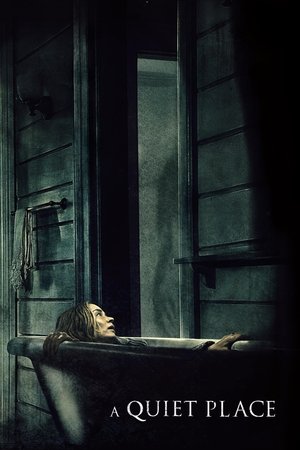
A Quiet Place (2018) was Krasinski's first major work as a horror filmmaker. Scott Beck and Bryan Woods originated the story and wrote the initial screenplay before Krasinski joined the project, revised the screenplay and directed the film.
The basic concept immediately creates a form of suspense based on behavior rather than pursuit alone. The world has been devastated by creatures that hunt through extraordinarily sensitive hearing. Human survival therefore depends upon suppressing one of the most ordinary consequences of being alive: making noise.
Krasinski recognized that the premise could operate as more than a creature feature. He has described responding strongly to the story as a metaphor for parenthood and the fear of being unable to protect one's children. The Abbott family therefore became the emotional structure around which the horror mechanics were organized.
The film begins after the catastrophe has already happened. Rather than explaining the invasion in detail, Krasinski places the audience inside a family that has developed routines for surviving it. Barefoot paths, warning lights, sand, sign language and carefully organized spaces communicate the new rules without requiring lengthy exposition.
Bryan Woods and Scott Beck: The Original Horror Concept
Bryan Woods and Scott Beck are fundamental to Krasinski's horror career because the premise of A Quiet Place originated with them. They developed the story around creatures that hunt through sound and constructed the initial screenplay before Krasinski became involved as director and co-writer.
The concept gives sound an unusually direct narrative function. In most horror films, noise may reveal a monster or signal that danger is approaching. Here, noise itself can cause the attack. A sound does not merely accompany danger; it creates danger.
Krasinski retained that central idea while reshaping the material around the Abbott family. The resulting collaboration between Beck, Woods and Krasinski produced a film whose formal experiment is inseparable from its emotional story.
The relationship is therefore foundational rather than merely contractual. Without Beck and Woods there is no original premise; without Krasinski's development of the family drama, the final film would not have taken the form that established the franchise.
Emily Blunt and Evelyn Abbott
Emily Blunt became Krasinski's most important performer within the horror series. As Evelyn Abbott, she carries much of the emotional and physical pressure of both A Quiet Place and A Quiet Place Part II.
The first film places Evelyn inside one of the franchise's most punishing situations: she is pregnant in a world where childbirth itself creates potentially fatal sound. Krasinski builds suspense from an event that normally requires noise and medical assistance, turning labor into a survival sequence.
Blunt plays the role without reducing Evelyn to passive vulnerability. The character is frightened because the danger is overwhelming, but fear exists beside planning, endurance and the constant responsibility of protecting her children.
Her collaboration with Krasinski is especially important because the horror of A Quiet Place depends upon believable family relationships. The extreme premise works only if the audience accepts the Abbotts as people whose fear for one another is stronger than the abstract need to survive individually.
Millicent Simmonds and Regan's Perspective
Millicent Simmonds became essential to the identity of A Quiet Place. She plays Regan Abbott, the deaf daughter whose experience of the world gives the film both a practical survival mechanism and one of its most distinctive approaches to sound.
Simmonds is herself deaf, and the film incorporates American Sign Language as a natural part of family communication. Because the Abbotts already communicate visually with Regan, they possess a survival advantage once speech and ordinary noise become dangerous.
Krasinski also uses shifts in sound design to place hearing audiences closer to Regan's perspective. Moments of reduced or absent sound are not simply stylistic tricks; they change what information the viewer possesses and how danger is perceived.
Regan becomes increasingly important as the series develops. Her hearing device and understanding of the creatures' sensitivity to certain frequencies eventually become part of the family's ability to fight back. Disability is therefore not treated merely as vulnerability. It becomes inseparable from knowledge and survival.
Silence as a Horror Mechanism
The most important formal achievement of A Quiet Place is the transformation of silence into suspense. Krasinski repeatedly forces the audience to pay attention to sounds that conventional films might ignore: footsteps, breathing, objects touching surfaces and small movements inside domestic spaces.
The result changes the relationship between spectator and soundtrack. Instead of waiting for a loud sound to produce a scare, the viewer becomes anxious about the possibility that any sound may occur at all.
This structure also makes anticipation more important than graphic violence. The audience can frequently see the object that may produce noise before the characters interact with it. Suspense comes from understanding the physical problem and waiting to discover whether someone will make the mistake the film has prepared.
The creatures consequently become part of an acoustic system rather than ordinary movie monsters. Their most important characteristic is not appearance but hearing. Krasinski constructs horror around what they can detect.
Marco Beltrami and Music Inside a Film About Silence
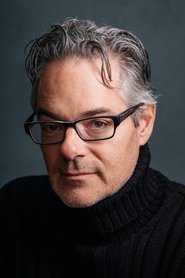
Marco Beltrami composed the music for both A Quiet Place and A Quiet Place Part II, an especially delicate task for films in which silence and controlled sound are central to the storytelling.
The score cannot simply overwhelm the absence of dialogue without weakening the premise. Music must coexist with moments in which tiny environmental noises carry enormous dramatic significance.
Beltrami's work therefore becomes part of the balance between emotional storytelling and acoustic suspense. The score can support grief, family attachment and danger while leaving enough space for the sound design to determine when the audience should listen closely to the environment itself.
The collaboration across both films helped preserve a consistent musical identity even as the second installment expanded the story beyond the Abbott farm.
Michael Bay and the Production of the Franchise
Michael Bay became an important horror connection through Platinum Dunes and the production structure behind A Quiet Place. Bay produced the first film and continued as a producer on A Quiet Place Part II and later franchise installments.
The relationship matters because Krasinski's original film combines the concentration of a relatively intimate horror story with the infrastructure of a major studio release. The concept depends upon restraint, but the creatures, ruined environments and large-scale destruction still require substantial production resources.
Platinum Dunes had already spent years producing American horror before A Quiet Place, and the partnership gave Krasinski access to producers experienced in developing genre material for wide theatrical audiences.
The commercial success of the first film transformed what could have remained a single high-concept horror production into an expanding franchise.
Lee Abbott and the Parent as Horror Hero
Krasinski also plays Lee Abbott, allowing him to place himself directly inside the family structure he was directing. Lee is not an action hero in the conventional sense. Much of his work consists of maintenance, planning, observation and teaching his children how to remain alive.
The character's relationship with Regan becomes one of the emotional centers of the film. Grief and guilt have created distance between them, while Lee's repeated attempts to modify her hearing device reveal a father trying to solve a problem he cannot completely control.
That relationship eventually connects emotional and horror mechanics. The device Lee has been trying to improve becomes important in understanding a weakness in the creatures.
Lee's final sacrifice completes Krasinski's interpretation of the story as parental horror. Survival is not simply about remaining alive personally. The parent's ultimate responsibility becomes ensuring that the children have enough time to continue without him.
A Quiet Place Part II and Expanding the Horror World
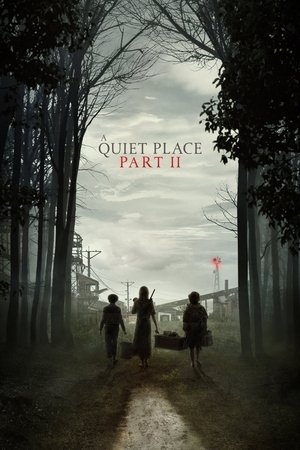
A Quiet Place Part II expanded the original premise while Krasinski remained writer and director. The sequel opens by returning to the first day of the catastrophe, allowing the audience to see ordinary life collapse when the creatures initially arrive.
The sequence changes the scale immediately. The first film mostly explores a world in which the rules have already been learned. The sequel briefly shows those rules being discovered through panic, confusion and sudden death.
After returning to the surviving Abbott family, Krasinski moves the story beyond the farm and introduces other survivors whose responses to the apocalypse differ dramatically. The danger is no longer limited to the creatures. Human beings have also been changed by prolonged fear and isolation.
The sequel nevertheless preserves the formal identity of the first film. Sound remains central, and the narrative repeatedly shifts between characters whose separate actions are connected through editing and acoustic cues.
Regan Becomes the Center
One of the most important developments in A Quiet Place Part II is the movement of Regan toward the center of the story. Millicent Simmonds' character is no longer simply the daughter whose perspective helps define the family's survival system.
Regan begins acting independently on the knowledge discovered in the first film. Her decision to pursue a possible means of broadcasting the frequency that affects the creatures transforms her from protected child into an active participant in humanity's response.
Krasinski structures parts of the sequel around parallel acts of courage involving Regan and her brother Marcus, allowing the younger generation to inherit responsibilities previously carried by their parents.
The development reinforces the underlying family structure of the series. Lee's sacrifice matters because the children eventually become capable of applying what their parents taught them without his presence.
The Abbott Family and Horror as Protection
The A Quiet Place films belong to creature horror, post-apocalyptic horror and science-fiction horror, but their emotional logic remains domestic. The global catastrophe matters because it places ordinary family responsibilities under impossible pressure.
Food must still be found. Children must still be taught. Pregnancy, grief, illness and disagreement continue even after civilization has collapsed. Krasinski repeatedly builds suspense by taking ordinary responsibilities and asking how they would function in a world where sound attracts death.
This approach distinguishes the series from apocalyptic horror focused primarily on military response or large-scale destruction. The viewer experiences the catastrophe through family routines before understanding the larger world.
The monsters consequently remain terrifying without requiring elaborate explanation. Their purpose is clear within the drama: they create the environmental condition that forces every human relationship to operate differently.
John Krasinski's Horror Legacy
John Krasinski's place in horror is unusual because it rests primarily on one interconnected body of work rather than a long career moving through unrelated genre films. Yet A Quiet Place became immediately recognizable through a concept strong enough to alter the basic behavior of both characters and audience.
Bryan Woods and Scott Beck supplied the foundational story and screenplay from which Krasinski developed the first film. Emily Blunt gave the family its central adult survivor, while Millicent Simmonds became crucial to the series' relationship with silence, sign language and subjective sound. Michael Bay helped provide the production structure through which the concept became a major theatrical franchise, and Marco Beltrami created a musical identity capable of existing beside a soundtrack built around listening.
Krasinski's strongest horror idea remains extremely simple: survival depends upon controlling something human beings normally produce without thinking. Once sound becomes lethal, every domestic object can become dangerous, every movement requires calculation and silence becomes more frightening than noise.
That reversal gave A Quiet Place its distinctive place in modern horror. Krasinski did not merely create monsters that hear well. He created a world in which the audience learns to fear hearing anything at all.
Photos (12)
Images: TMDB
Selected Work
Notable Horror Collaborators
Notable collaborators and creative partners throughout John Krasinski's horror career.
 Emily Blunt
Defining Horror Co-Star
Blunt became Krasinski's central screen collaborator in A Quiet Place, carrying the Abbott family through both films and anchoring their horror in parental survival.
MS
Millicent Simmonds
Defining Horror Performer
Simmonds made Regan essential to the series' use of silence, sign language and subjective sound, becoming increasingly central across both A Quiet Place films.
 Bryan Woods
Foundational Horror Writer
Woods co-created the original A Quiet Place story and screenplay, establishing the sound-sensitive creature premise that Krasinski developed into the finished film.
 Scott Beck
Foundational Horror Writer
Beck co-created the original A Quiet Place concept and screenplay, providing the central survival rule around which Krasinski built the Abbott family story.
 Michael Bay
Recurring Horror Producer
Bay produced the A Quiet Place films and helped provide the production framework through which Krasinski's intimate survival horror expanded into a major franchise.
 Marco Beltrami
Defining Horror Composer
Beltrami scored both A Quiet Place and A Quiet Place Part II, creating music designed to coexist with a horror language built unusually around silence and controlled sound.
John Krasinski Horror Movies
Directing (3 credits)
2021
2018
Writing (4 credits)
2027
2024
2021
2018
Production (5 credits)
2027
2024
2024
2021
2018
Acting (2 credits)
2021
2018