
2025
Neil Marshall
Horror Director · Biography · Horror Filmography · Family · Collaborators · Credits
Horror subgenres & themes
Most represented across this person's horror filmography:
HALLOWEEN
• HORROR ANTHOLOGY
• WITCHCRAFT
Biography
Neil Marshall and the Survival Horror of Closed Spaces
Neil Marshall established himself as one of the most distinctive British horror filmmakers of the early twenty-first century by repeatedly placing groups of people inside environments where escape becomes progressively less possible. In Dog Soldiers, soldiers are surrounded by werewolves in the Scottish Highlands and forced into a farmhouse siege. In The Descent, six women crawl deeper into an underground cave system before discovering that the darkness contains predators. Even when Marshall expands into the apocalyptic scale of Doomsday or the military creature horror of The Lair, his strongest genre instinct remains essentially the same: isolate the characters, restrict their options and then make physical survival increasingly brutal.
Marshall's horror is strongly connected to practical filmmaking. Creatures occupy the same physical spaces as the performers, cave systems are constructed as tangible sets, makeup effects visibly damage bodies and action is often staged so that the audience understands where characters are in relation to the threat. This gives his films a muscular quality unusual in horror that relies primarily on suggestion. The monsters matter, but so do geography, exhaustion, injury and the physical problem of finding a way out. His best films turn the environment itself into part of the attack.
Dog Soldiers and the Werewolf Siege
Dog Soldiers (2002) was Marshall's feature directing debut and immediately established the combination of horror and action that would recur throughout his career. A squad of British soldiers conducting a training exercise in the Scottish Highlands discovers the remains of another military unit and gradually realizes that the attackers are werewolves. The survivors retreat to an isolated house where military tactics become almost useless against creatures capable of overpowering them physically and attacking from the surrounding darkness.
Marshall wrote, directed and edited the film, giving the production a particularly concentrated authorship. The horror develops through the collision between professional soldiers and a threat their training has not prepared them to understand. Rather than presenting the werewolves as romantic or psychologically conflicted figures, the film treats them primarily as predators. They are fast, physical and territorial, forcing the soldiers into a siege structure closer to a war movie than a traditional Gothic werewolf story.
The humor is equally important. Sean Pertwee, Kevin McKidd, Darren Morfitt and the rest of the unit behave like soldiers who already possess a shared language of insults, jokes and loyalty before the creatures arrive. Marshall does not stop the characters from joking simply because the situation becomes horrific. The humor therefore strengthens rather than weakens the violence because it establishes a believable group before members begin disappearing.
Sean Pertwee and the Marshall Ensemble
Sean Pertwee became one of Marshall's most durable horror actors beginning with Dog Soldiers, where he plays Sergeant Harry Wells. Wells is wounded relatively early, forcing him to lead while increasingly physically compromised, yet Pertwee maintains the authority and abrasive humor that define the squad. The role makes him one of the emotional anchors of Marshall's first feature and provides the director with a performer capable of making military dialogue feel spontaneous while still carrying the pressure of a horror siege.
Marshall later brought Pertwee back for Doomsday as Dr. Talbot and again for The Reckoning as witch-hunter John Moorcroft. These characters have almost nothing in common, which makes the recurrence more meaningful than simple typecasting. Pertwee moves from beleaguered soldier to scientist to religious persecutor while remaining part of three distinct stages of Marshall's horror career. His presence connects the director's breakthrough period directly with the later return to independent horror.
Sam McCurdy and the Image of Marshall Horror
Cinematographer Sam McCurdy became one of Marshall's most important visual collaborators. He photographed Dog Soldiers, The Descent and Doomsday, giving three very different productions a coherent emphasis on readable physical space, textured darkness and aggressive practical lighting. The collaboration was particularly important because Marshall's horror frequently takes place in environments where visibility itself becomes a dramatic problem. A forest at night, an unlit cave and a quarantined wasteland all require the camera to show enough for the audience to understand danger without destroying the darkness that makes the environment threatening.
The Descent represents the most extreme version of that challenge. McCurdy and Marshall used different practical sources within the cave environment, including headlamps, flares and other motivated light, to give sections of the underground world distinct visual identities. The darkness never becomes merely empty black space; it remains textured enough that the viewer begins searching the background for movement. McCurdy later photographed The Descent Part 2 as well, maintaining visual continuity with the world Marshall had created even though Jon Harris took over directing the sequel.
The Descent and Horror Beneath the Ground
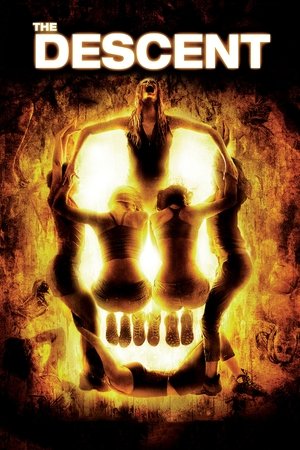
The Descent (2005) became Marshall's defining horror achievement. The film follows Sarah, played by Shauna Macdonald, as she joins a group of women on a caving expedition after a devastating personal loss. Long before the creatures appear, Marshall builds terror from the cave itself. Narrow passages, unstable rock, darkness and the possibility of becoming permanently lost create a complete survival-horror structure without requiring a monster.
The decision to delay the Crawlers is crucial. By the time the women discover that they are not alone underground, the audience has already learned that the environment can kill them. The creatures therefore do not replace the existing horror; they intensify it. Escape from a Crawler may require entering a tunnel barely wide enough for a human body, and fighting one may attract others in a location where there is nowhere to run. Marshall combines creature horror with claustrophobia so completely that the two threats become inseparable.
The emotional structure is equally important. The expedition is already marked by grief, secrets and unresolved conflict before survival destroys the remaining social stability. Marshall allows relationships among the women to deteriorate under pressure rather than reducing them to anonymous victims waiting for individual death scenes. This gives the violence additional weight because the audience understands that the group is disintegrating internally at the same time the Crawlers are attacking from outside.
Shauna Macdonald and Sarah's Transformation
Shauna Macdonald gives The Descent its central human transformation as Sarah. Marshall has described her as the emotional core of the story, and the structure supports that description. Sarah begins as a woman still carrying overwhelming grief and gradually becomes one of the most physically dangerous survivors underground. The transformation is not presented as uncomplicated empowerment. It emerges through fear, loss, rage and the progressive destruction of the person who entered the cave.
Macdonald's performance is particularly effective because Marshall gives Sarah long stretches in which dialogue becomes secondary to physical behavior. Crawling through tight spaces, emerging covered in blood and learning to kill the creatures change the character visually before she can explain anything about herself. The horror therefore becomes a process of adaptation. Sarah survives by becoming increasingly compatible with the violent environment around her, creating an unsettling ambiguity over how much of the person who entered the cave remains by the end.
Macdonald returned in The Descent Part 2, with Marshall serving as executive producer. Although he did not direct the sequel, Sarah remained the principal bridge connecting the continuation to the original film. Her return demonstrates how completely Marshall's first story had been organized around her transformation rather than simply around the Crawlers as franchise monsters.
Simon Bowles and the Construction of the Cave
Production designer Simon Bowles became another defining Marshall collaborator across Dog Soldiers, The Descent and Doomsday. His work on The Descent is especially important because the cave system that appears natural on screen was largely constructed as sets. Marshall and Bowles needed spaces that felt genuinely restrictive to the performers while remaining adaptable enough for cameras, lighting and repeated shooting. Sections could be reconfigured and reused to create the impression of a much larger underground network.
The design directly serves the horror rather than functioning only as background. Passages can narrow around a performer, chambers can suddenly open into enormous darkness and apparently safe routes can become traps. Bowles and Marshall deliberately treated constricted spaces as essential to the action, ensuring that the creatures would sometimes have to be encountered where neither the characters nor the camera could move freely. The result is one of the clearest examples in modern horror of production design becoming part of the monster mechanism itself.
Bowles continued with Marshall on Doomsday, where the scale expanded dramatically from constructed caves to ruined cities, quarantined zones and competing survivor societies. The visual world changes completely, yet the production design remains tied to Marshall's interest in environments that explain how people have adapted to catastrophe.
Paul Hyett and the Crawlers
Paul Hyett designed the special makeup effects for the Crawlers in The Descent, creating creatures that are frightening precisely because they retain recognizably human anatomy. Marshall did not want them to feel like conventional aliens or fantasy beasts. Their pale bodies, adapted eyes and feral movement suggest a population that has changed over generations underground rather than something that simply arrived from another world. That decision gives the creatures an evolutionary plausibility even while the film avoids overexplaining their origin.
The collaboration continued on Doomsday, where Hyett worked on the physical effects associated with the Reaper virus and the film's extensive bodily violence. He also returned to the underground mythology for The Descent Part 2. Across these productions, his effects work supports Marshall's preference for tangible physical horror. Wounds, infected bodies and creatures have surface texture and weight because the actors can interact directly with prosthetic material rather than responding entirely to elements that will be added later.
Doomsday and Apocalyptic Horror
Doomsday (2008) expands Marshall's scale from isolated survival groups into an entire society threatened by the return of the Reaper virus. After Scotland has been quarantined for decades, a military team enters the sealed territory in search of a possible cure and discovers that surviving populations have developed radically different social structures. The film combines post-apocalyptic horror with action, plague imagery, cannibalism and deliberately excessive practical violence.
Marshall treats the quarantined territory as another enclosed environment, only this time the enclosure covers an entire country. The basic pressure remains similar to Dog Soldiers and The Descent: a trained group enters a hostile zone believing it understands the mission and gradually discovers that the environment follows rules it did not anticipate. Sean Pertwee, Sam McCurdy, Simon Bowles and Paul Hyett all reconnect the production with Marshall's earlier horror work, making Doomsday a larger-scale extension of an established creative team rather than an isolated genre experiment.
The Descent Part 2 and the Survival of the Underground World
Marshall did not direct The Descent Part 2, but he remained involved as executive producer while Jon Harris, editor of the first film, moved into the director's chair. The continuation returns Shauna Macdonald's Sarah to the caves and attempts to preserve the combination of Crawlers and claustrophobia that had defined the original. Sam McCurdy again photographed the film and Paul Hyett returned to the creature-effects department, maintaining several important creative links with Marshall's production.
The sequel is significant to Marshall's horror career because it demonstrates that The Descent had become more than a self-contained film. The underground environment, creature design and Sarah's survival were strong enough to sustain another production even after Marshall chose not to direct. His executive-producer role allowed him to remain connected with the mythology without simply repeating his own film from behind the camera.
Constantine and Horror Television
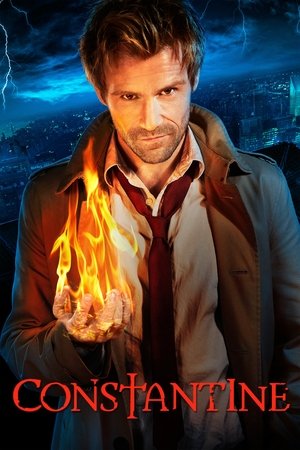
Marshall later brought his genre experience into television through Constantine, directing the pilot episode and another installment of the supernatural horror series. The material was particularly compatible with his interests because John Constantine exists in a world where demons, possession and occult threats intrude into recognizably contemporary spaces. Marshall's pilot had to establish not just one story but the rules, tone and visual expectations of an entire television series, making his role structurally different from directing an isolated feature.
The move into television did not eliminate his physical approach to horror. Supernatural entities still need clear spatial relationships with human characters, while occult imagery must feel embedded in real environments rather than disconnected from them. The series gave Marshall another opportunity to work with horror mythology while adapting his filmmaking to shorter production schedules and an episodic format.
Hannibal and Psychological Horror
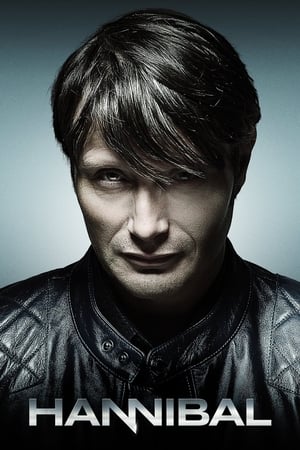
Marshall also directed “The Great Red Dragon,” an episode from the third season of Hannibal introducing a major phase of the Francis Dolarhyde storyline. The assignment placed him inside a very different form of horror from werewolves or subterranean creatures. Violence in Hannibal is often stylized, psychological and ritualized, with the aftermath of murder carrying as much visual importance as the attack itself.
The episode demonstrates that Marshall's effectiveness in horror does not depend entirely upon action. The Red Dragon material requires control, atmosphere and the ability to make a human figure appear increasingly mythic through his own psychological construction. Marshall could therefore work inside another creator's established visual language without simply importing the siege mechanics that had defined his films.
Tales of Halloween and the Return to Creature Comedy
Marshall returned directly to anthology horror with the “Bad Seed” segment of Tales of Halloween. He wrote and directed the story, which turns a jack-o'-lantern into an aggressively mobile killer and combines practical creature effects with police-investigation comedy. The segment deliberately embraces a lighter and more absurd form of horror than The Descent, but its basic pleasures remain strongly Marshallian: a tangible creature, physical attacks and characters attempting to apply ordinary procedures to a threat that makes no rational sense.
The short format allows Marshall to exaggerate the creature-feature element without building a larger mythology around it. The homicidal pumpkin is ridiculous by design, yet the effects and attacks are played with enough physical commitment that the comedy comes from the premise rather than from treating the horror as irrelevant. The segment reinforces Marshall's long-standing comfort with letting humor and violent genre mechanics occupy the same film.
Hellboy and Supernatural Gore
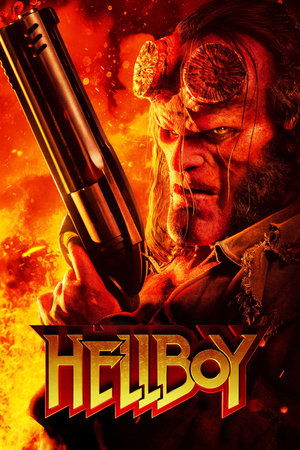
Hellboy (2019) moved Marshall into a substantially larger production based on Mike Mignola's supernatural comic-book mythology. The film is primarily an action-fantasy production, but its R-rated violence, demons, witches, monsters and extensive gore allowed Marshall to bring a much more explicit horror sensibility to material involving an established comic character. Bodies are torn apart, supernatural creatures invade ordinary spaces and the apocalypse is visualized through grotesque physical destruction rather than sanitized spectacle.
The production differs significantly from Marshall's independent horror because he was directing inside an existing franchise with major producers, studio expectations and a predetermined central character. Even so, the attraction is understandable within his filmography. Hellboy operates as another physically powerful figure confronting creatures directly, while the world surrounding him allows Marshall to stage monsters and bodily violence at a scale far beyond the resources of Dog Soldiers or The Descent.
The Reckoning and the Return to Independent Horror
Marshall returned explicitly to independent horror with The Reckoning (2020), a witch-hunt story set during the period of the Great Plague. Charlotte Kirk plays Grace Haverstock, a widow accused of witchcraft after rejecting the advances of her landlord. Sean Pertwee plays John Moorcroft, the witch-hunter who subjects her to sustained physical and psychological abuse while the possibility of a genuinely supernatural presence remains intertwined with trauma and hallucination.
The film reconnects Marshall with several of his recurring interests while changing the historical setting completely. Grace becomes another protagonist trapped in an environment controlled by hostile forces, and survival depends upon enduring both bodily punishment and psychological manipulation. The plague creates an atmosphere of fear in which superstition can become institutional violence, allowing Marshall to combine historical brutality with demonic imagery rather than building the horror around a conventional creature attack.
Charlotte Kirk and the Late Horror Collaboration
Charlotte Kirk became a major creative collaborator during Marshall's return to horror. She co-wrote The Reckoning and played Grace, placing her on both sides of the project's central character construction. Their collaboration continued with The Lair, where Kirk again co-wrote the screenplay and starred, this time as Royal Air Force pilot Kate Sinclair. The two films therefore form a connected late-career phase in which Marshall returned to independently produced horror while working repeatedly with the same lead writer-performer.
The projects use Kirk very differently. Grace is imprisoned and persecuted inside a historical witch-hunt, while Kate is a military protagonist confronting biological creatures in an underground installation. The contrast allows Marshall to revisit both sides of his earlier horror career: the psychological and bodily ordeal associated with The Descent, and the armed creature combat associated with Dog Soldiers. Kirk's recurring involvement makes her one of the clearest creative links across this modern period.
The Lair and the Return to Military Creature Horror
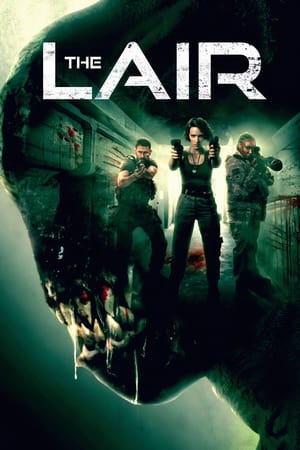
The Lair (2022) returns Marshall directly to the fusion of soldiers, enclosed spaces and monsters that launched his feature career. After being shot down, RAF pilot Kate Sinclair discovers an abandoned underground facility containing biological creatures created through secret experimentation. The film gradually moves from survival in hostile territory into an all-out creature siege involving soldiers attempting to contain organisms that are faster and stronger than expected.
The resemblance to Dog Soldiers is deliberate enough to make the film feel like a return to Marshall's original horror grammar without repeating the same mythology. The military characters again possess training and weapons, but neither guarantees survival once the enemy stops behaving according to human tactical assumptions. The underground installation also reconnects the material with The Descent, creating another environment where entering deeper means moving farther away from safety.
Neil Marshall's Horror Legacy
Neil Marshall's strongest horror work is built from a remarkably consistent set of principles. Characters enter a location believing they understand it, the route of escape disappears, physical exhaustion begins damaging their ability to make decisions and a creature or hostile human force makes the environment even less survivable. Dog Soldiers turns a military exercise into a werewolf siege. The Descent transforms a caving expedition into a claustrophobic nightmare. Doomsday expands the enclosed zone to the scale of a quarantined nation, while The Lair returns directly to soldiers confronting biological monsters underground.
The collaborators surrounding those films are essential to their identity. Sam McCurdy gave Marshall's early horror a consistent photographic language across radically different environments. Simon Bowles constructed spaces whose physical design became part of the suspense. Paul Hyett supplied the tangible creatures and bodily damage through which Marshall's preference for practical horror became visible. Sean Pertwee connected several stages of the director's career as a recurring actor, while Shauna Macdonald gave The Descent the human transformation at the center of its horror. Charlotte Kirk later became a recurring writer and lead as Marshall returned to independent genre filmmaking with The Reckoning and The Lair.
Marshall's horror is therefore less about one recurring monster than about the mechanics of survival. His characters become frighteningly vulnerable when geography, injury and panic reduce the choices available to them. The creatures matter because the environment has already made escape difficult; the violence matters because the audience understands exactly how physically costly survival has become. That combination of spatial clarity, practical effects and relentless physical pressure is the clearest signature running through Neil Marshall's horror cinema.
Photos (1)
Images: TMDB
Selected Work
Notable Horror Collaborators
Notable collaborators and creative partners throughout Neil Marshall's horror career.
SM
Sam McCurdy
Defining Horror Cinematographer
McCurdy photographed Dog Soldiers, The Descent and Doomsday and later returned for The Descent Part 2, making him central to the visual identity of Marshall's formative horror period.
SB
Simon Bowles
Defining Horror Production Designer
Bowles designed Dog Soldiers, The Descent and Doomsday, most crucially creating the artificial cave system whose physical claustrophobia became fundamental to The Descent.
 Sean Pertwee
Recurring Horror Actor
Pertwee worked with Marshall across Dog Soldiers, Doomsday and The Reckoning, linking the director's breakthrough horror period with his later return to the genre.
 Paul Hyett
Defining Creature & Makeup FX Collaborator
Hyett designed the Crawlers for The Descent and continued working within Marshall's horror world on Doomsday and The Descent Part 2, giving the films a strongly practical physical identity.
 Shauna Macdonald
Defining Horror Lead
Macdonald carried The Descent as Sarah, the emotional and physical center of Marshall's defining horror film, and returned in The Descent Part 2 while Marshall remained involved as executive producer.
CK
Charlotte Kirk
Recurring Horror Co-Writer & Lead
Kirk co-wrote and starred in both The Reckoning and The Lair, becoming the central performer and writing collaborator of Marshall's modern return to independent horror.
Sean Pertwee
Recurring Horror Actor
Pertwee worked with Marshall across Dog Soldiers, Doomsday and The Reckoning, linking the director's breakthrough horror period with his later return to the genre.
Paul Hyett
Defining Creature & Makeup FX Collaborator
Hyett designed the Crawlers for The Descent and continued working within Marshall's horror world on Doomsday and The Descent Part 2, giving the films a strongly practical physical identity.
Shauna Macdonald
Defining Horror Lead
Macdonald carried The Descent as Sarah, the emotional and physical center of Marshall's defining horror film, and returned in The Descent Part 2 while Marshall remained involved as executive producer.
CK
Charlotte Kirk
Recurring Horror Co-Writer & Lead
Kirk co-wrote and starred in both The Reckoning and The Lair, becoming the central performer and writing collaborator of Marshall's modern return to independent horror.
Neil Marshall Horror Movies
Directing (11 credits)
2024
2022
2021
2019
2015
2014
2013
2005
2002
1992
Writing (7 credits)
2024
2022
2021
2015
2005
2002
1992
Production (7 credits)
2026
2022
2021
2016
2013
2012
1992
Editing (3 credits)
2022
2002
1992
Acting (3 credits)
2024
2022
2014